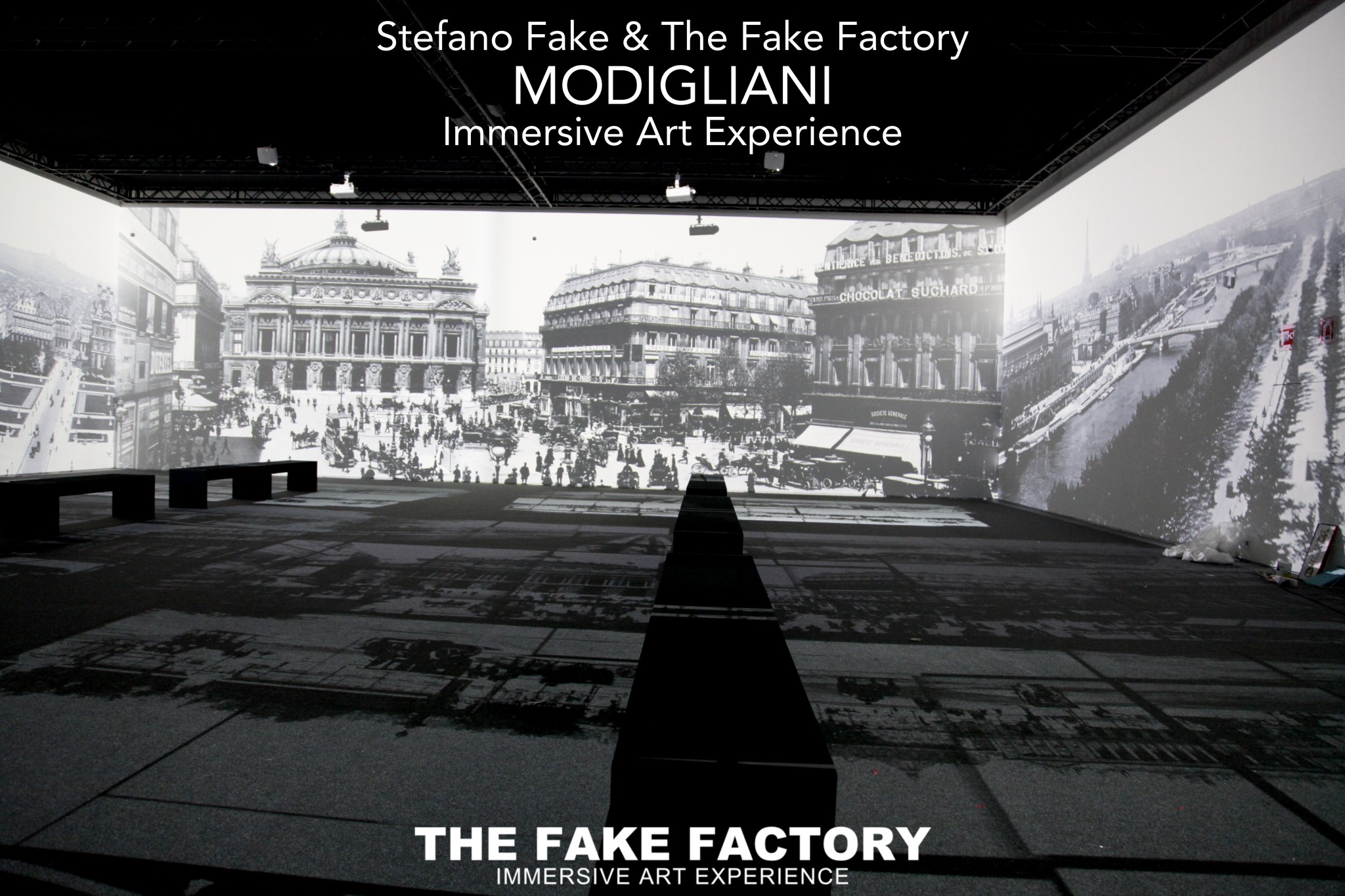
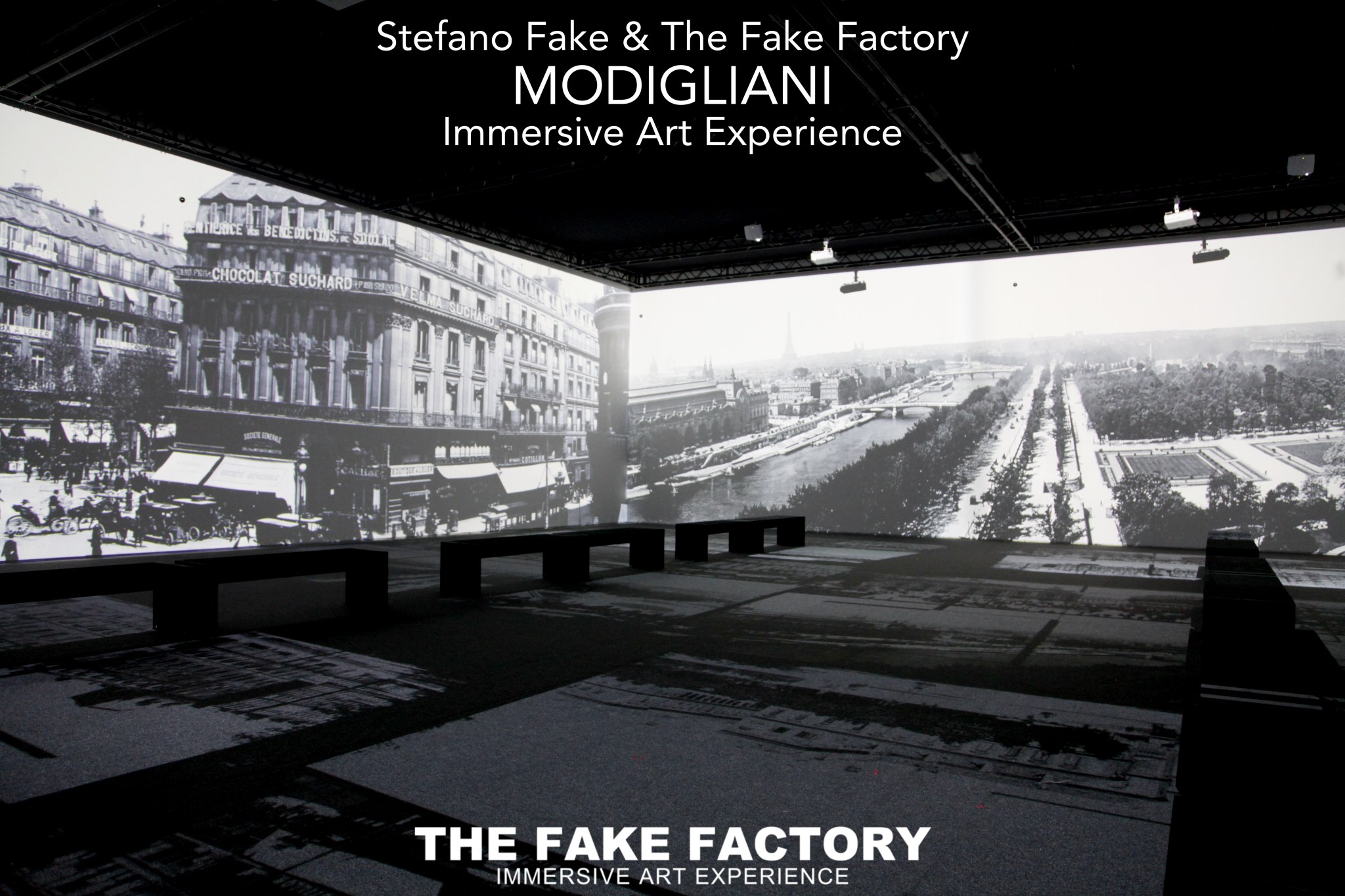
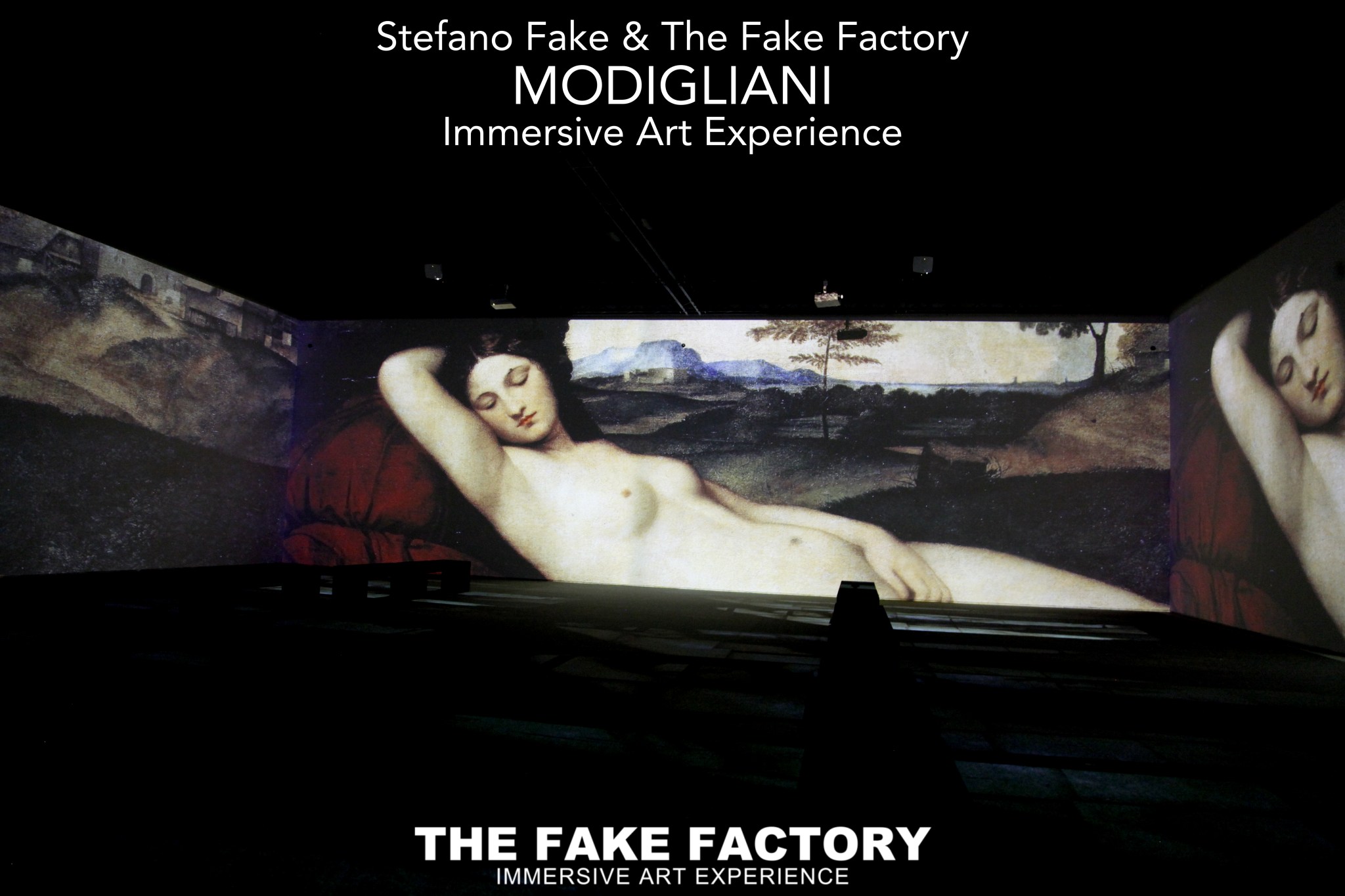
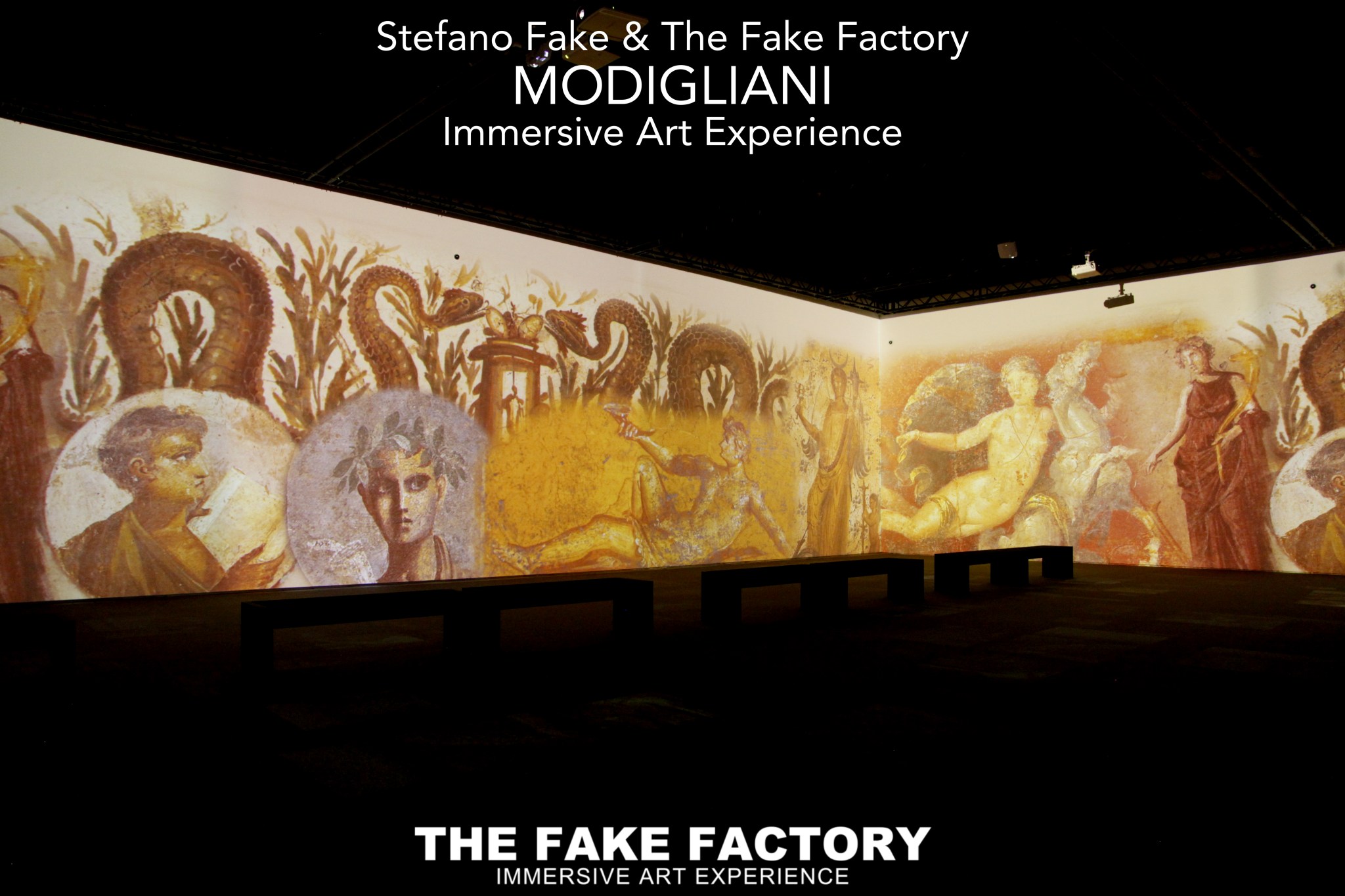
STEFANO FAKE & THE FAKE FACTORY – IMMERSIVE ART EXPERIENCE
When art meets technology – a trend towards immersive art experiences.
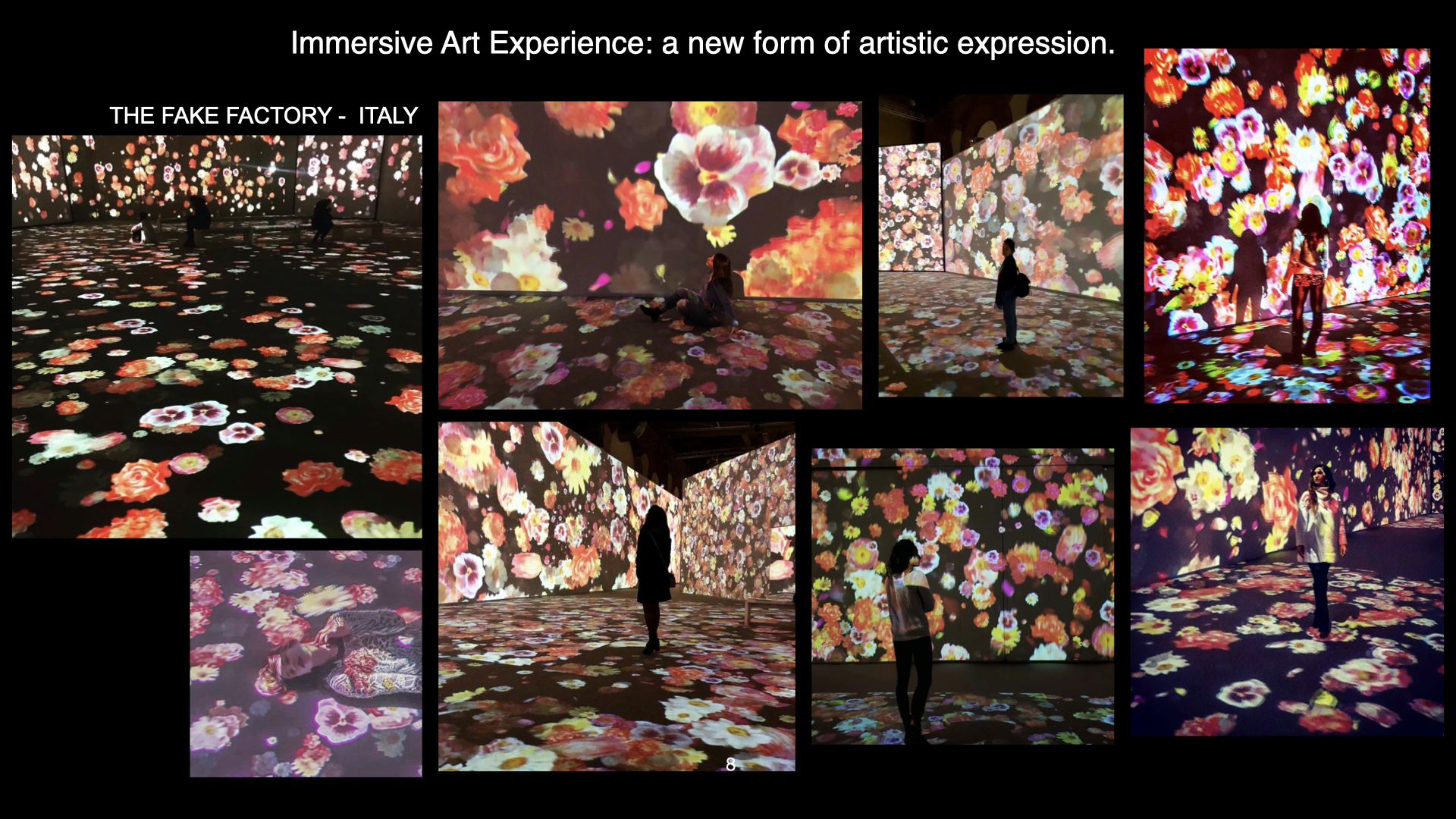
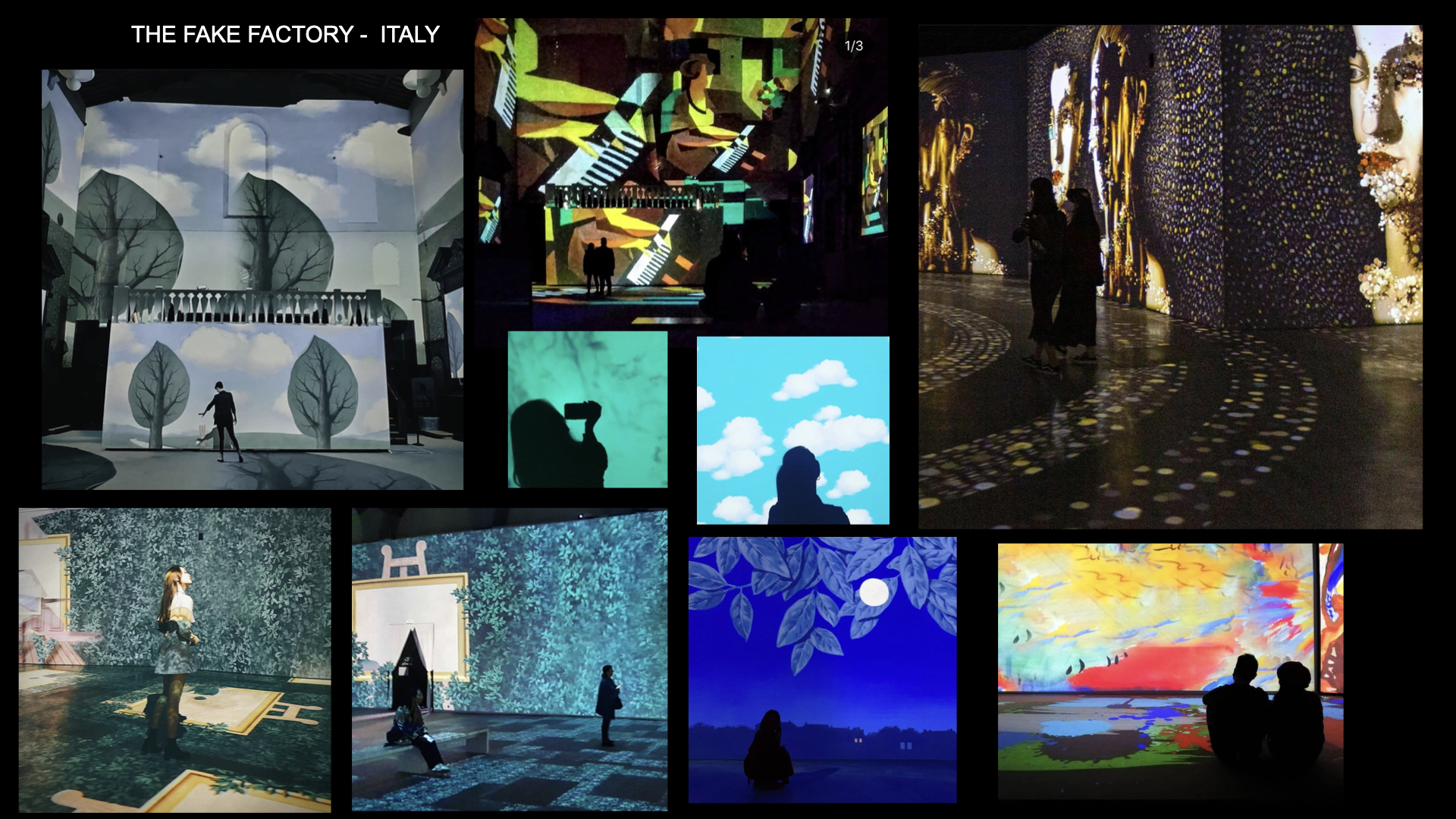
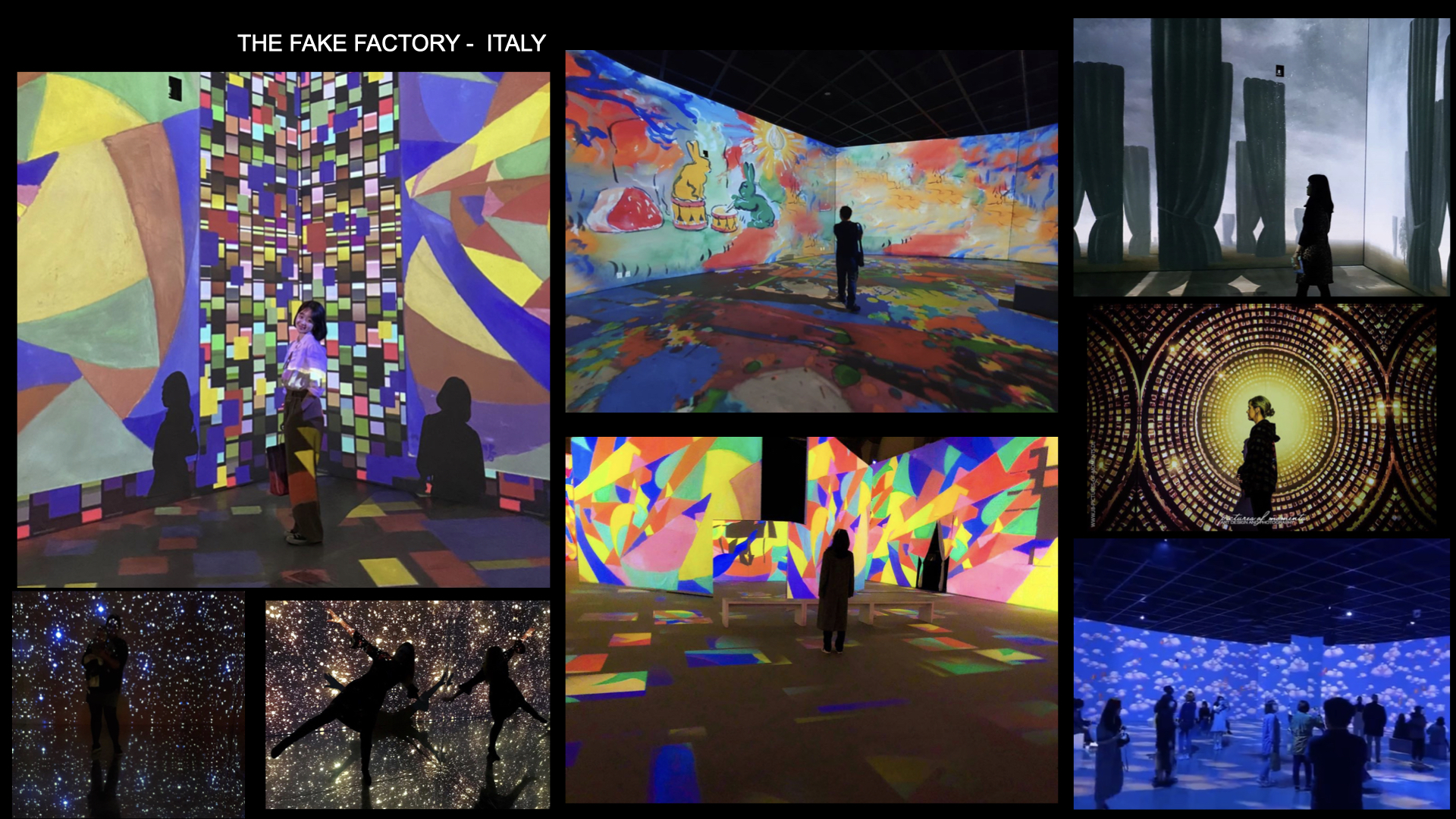
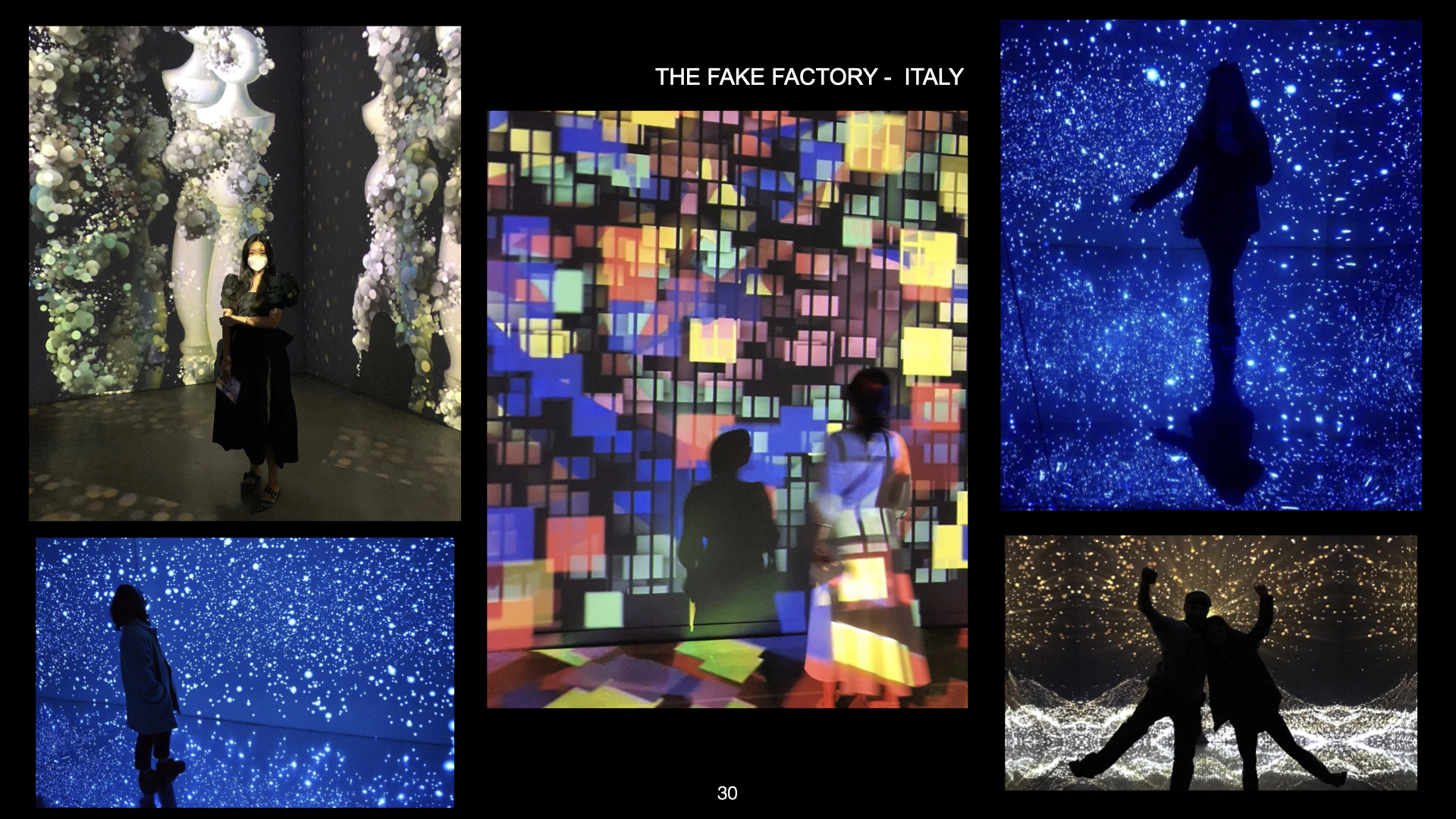
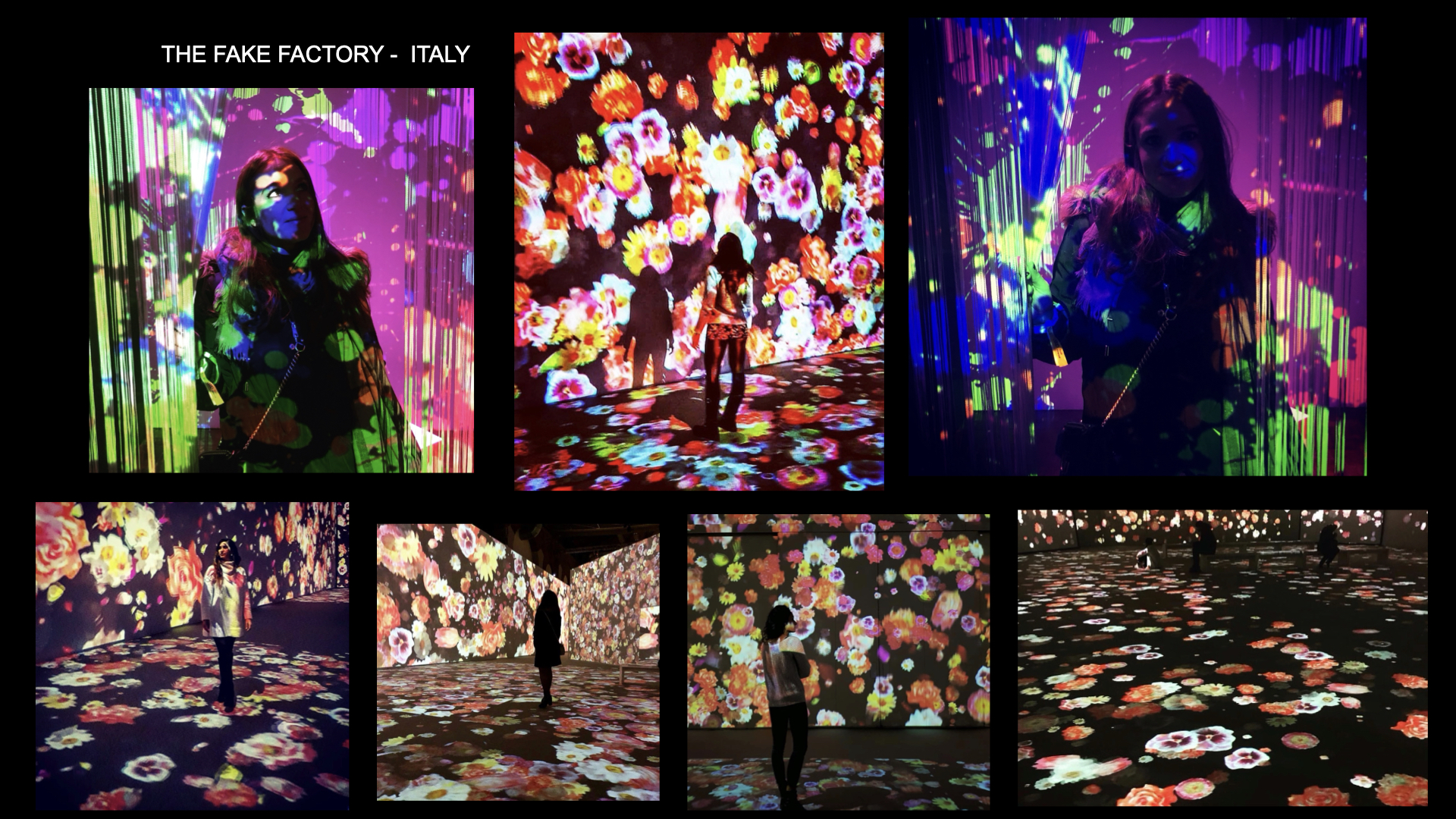
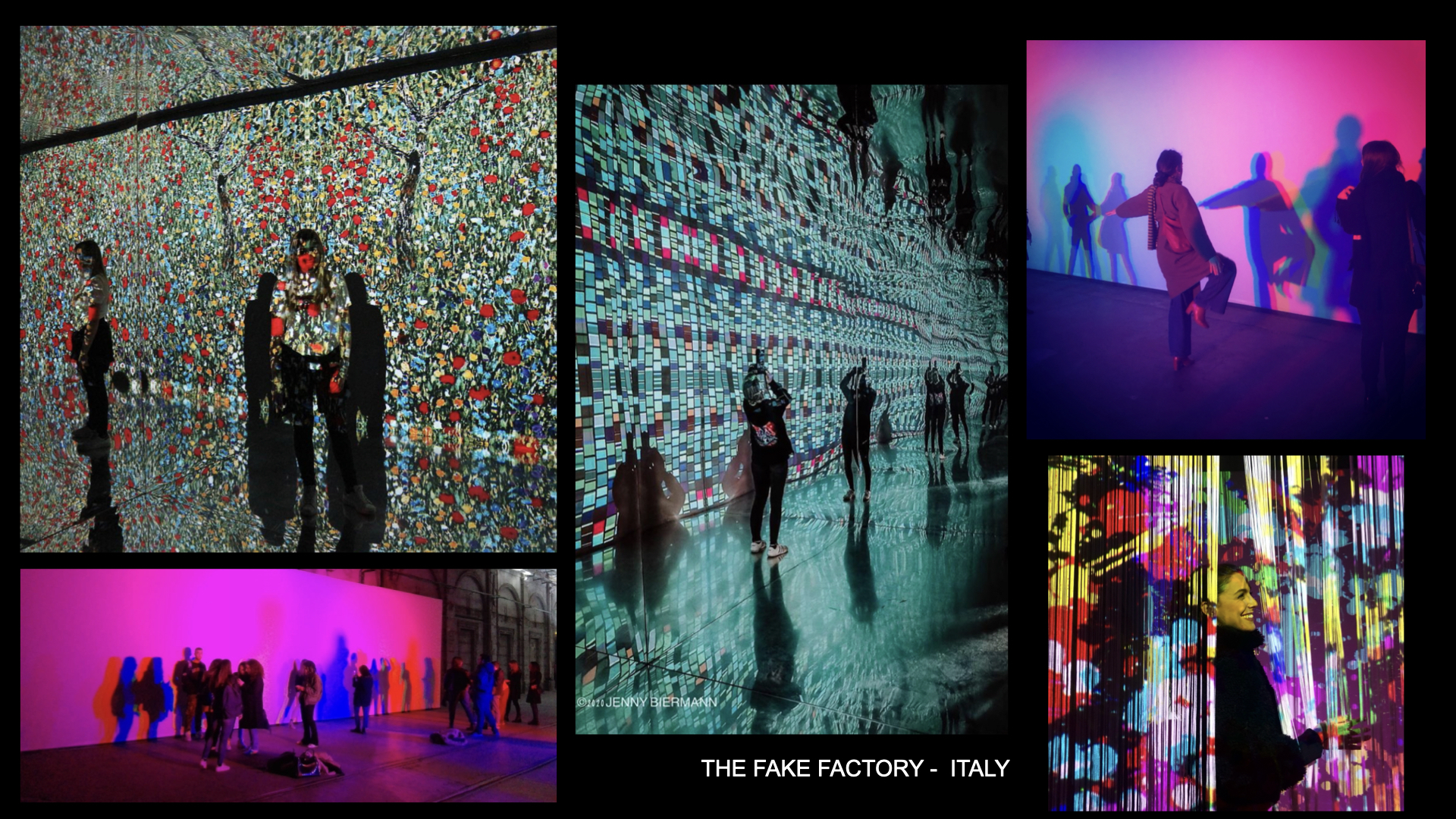
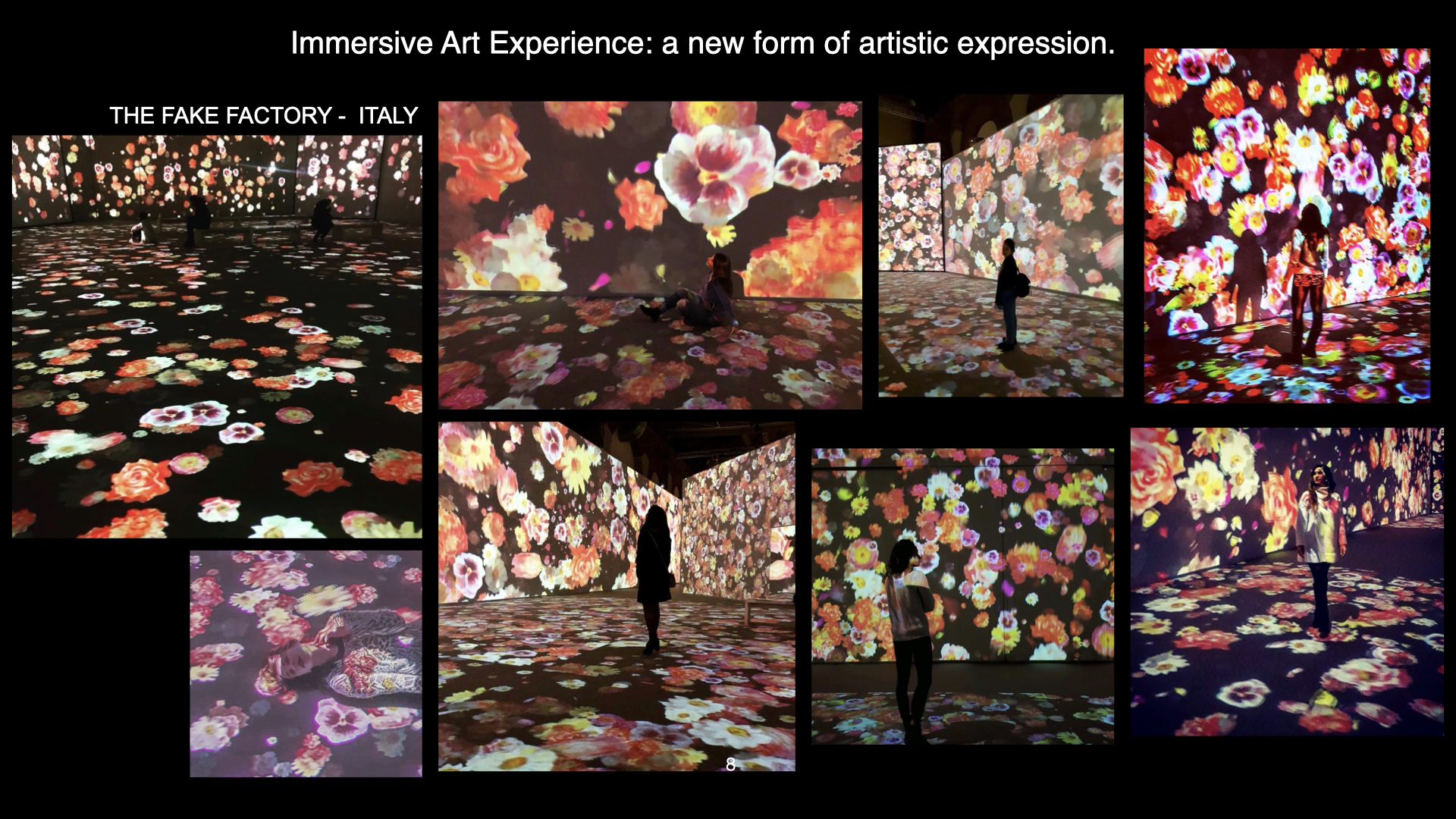
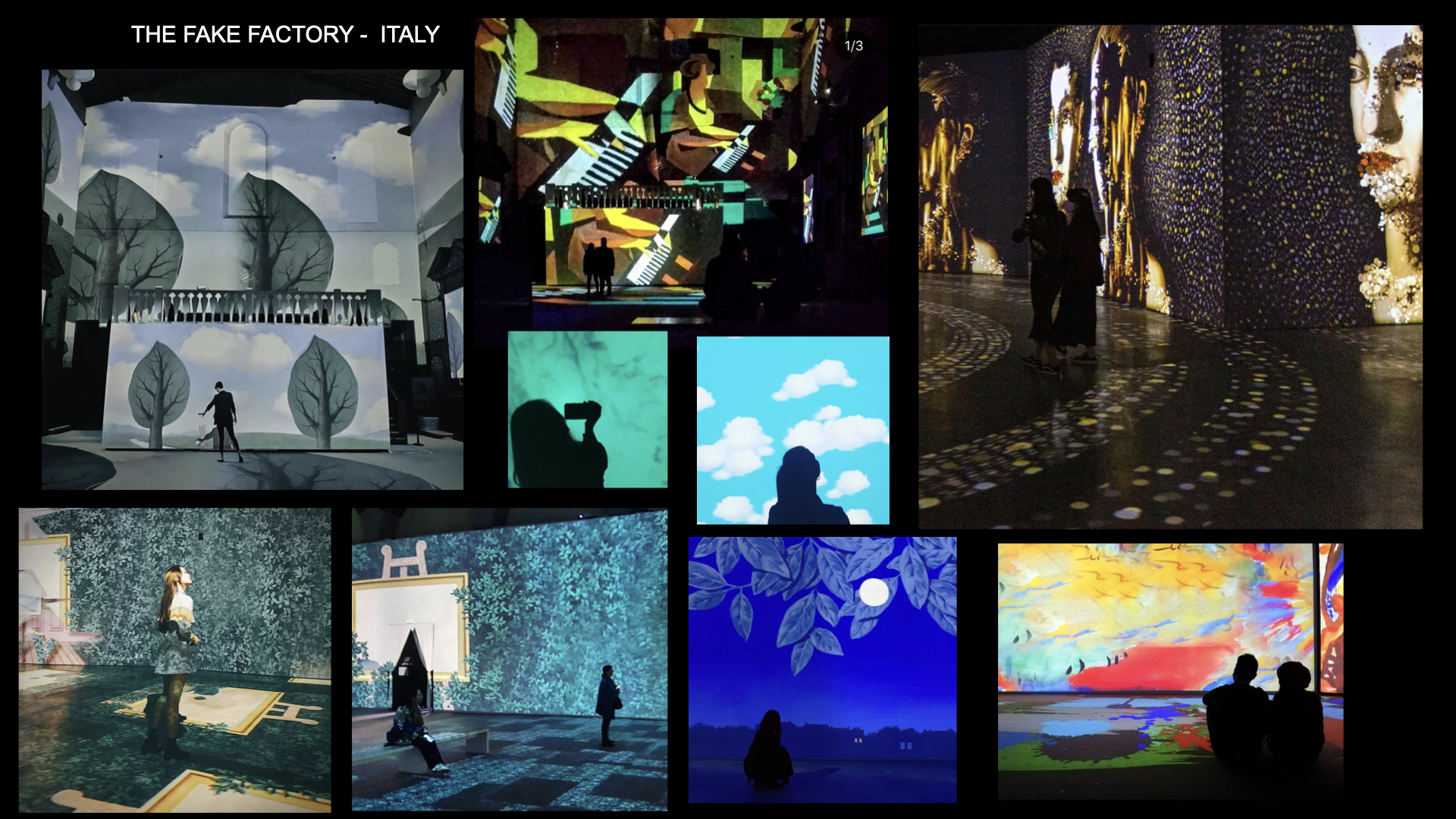
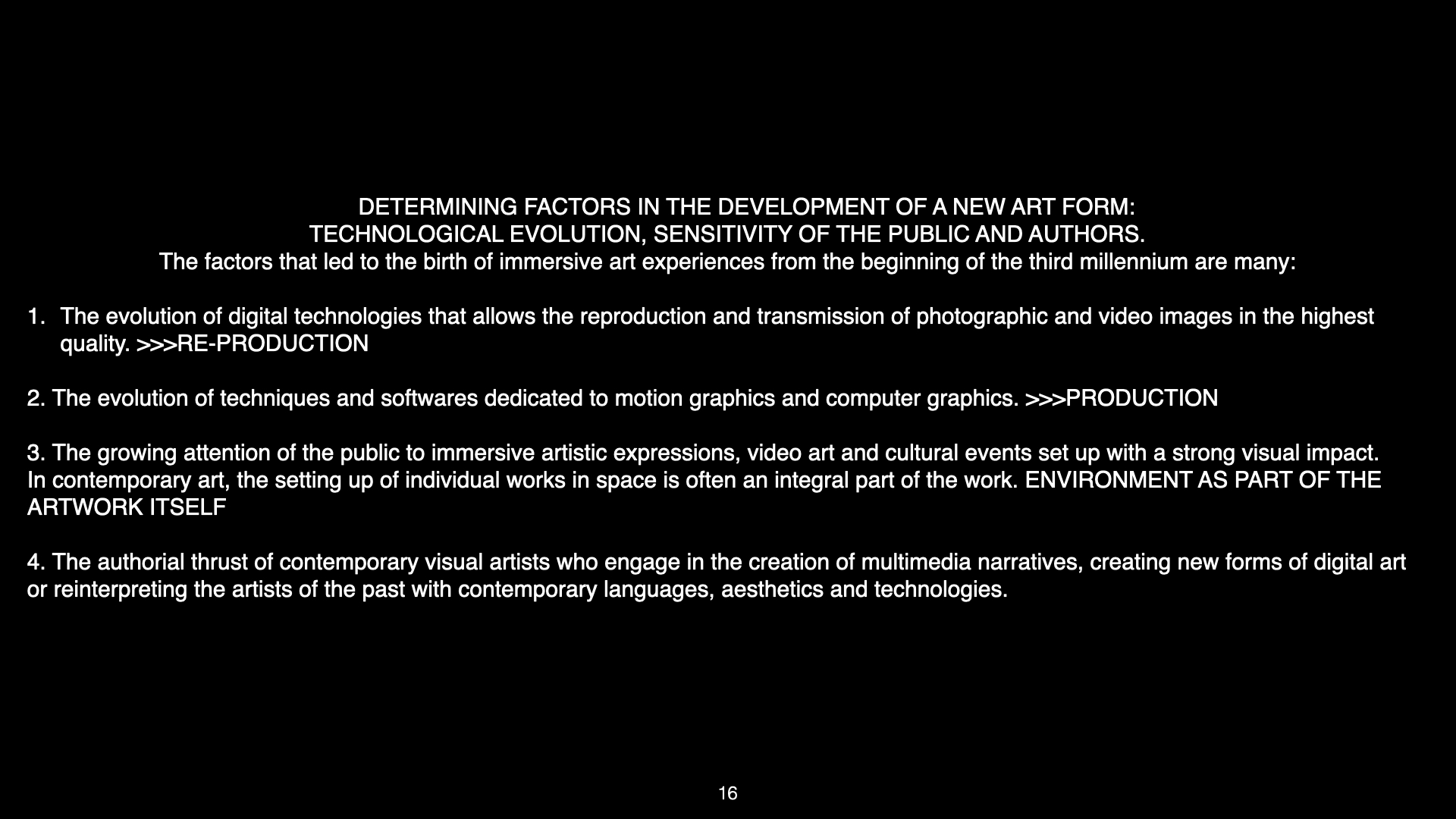
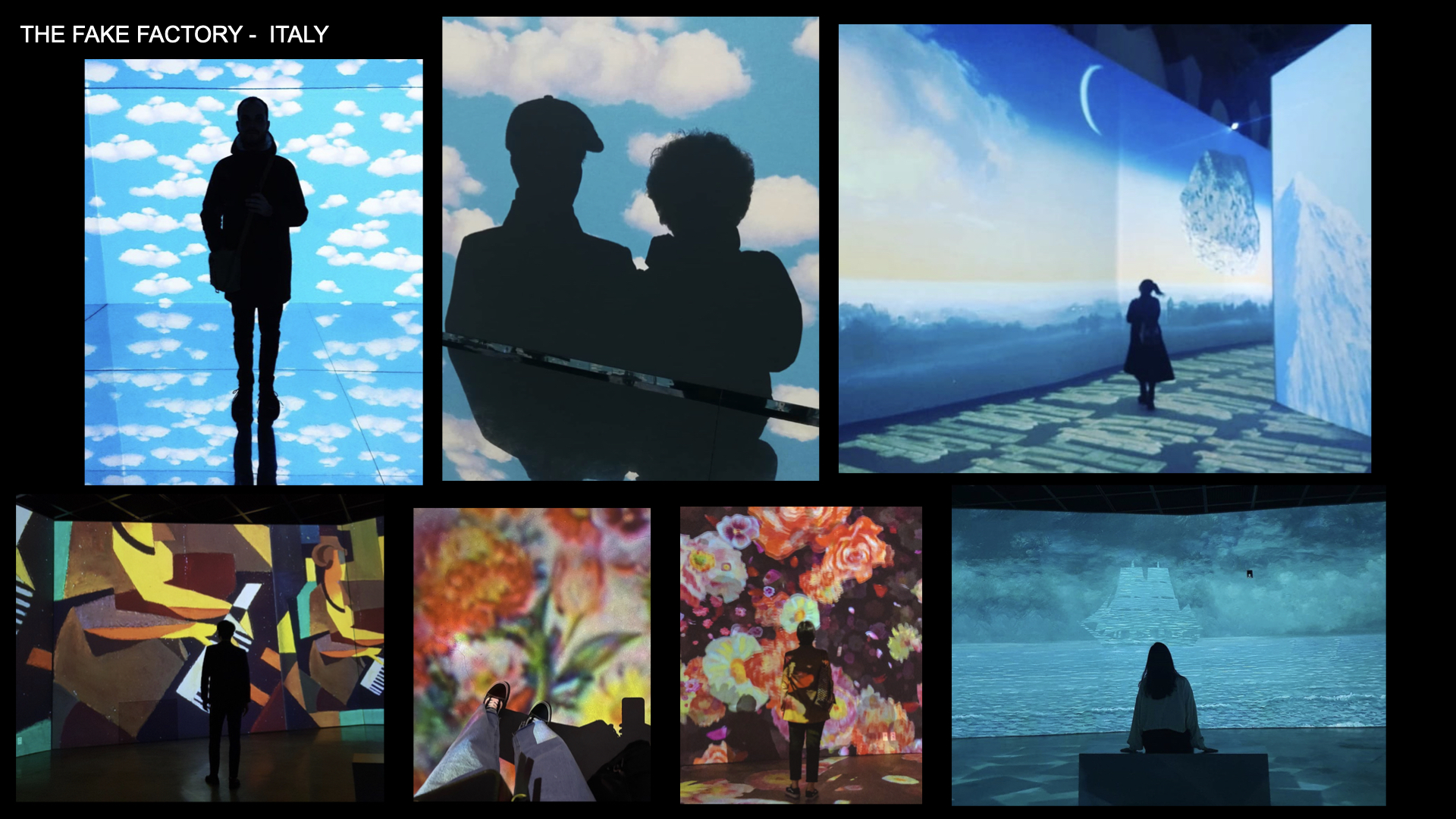
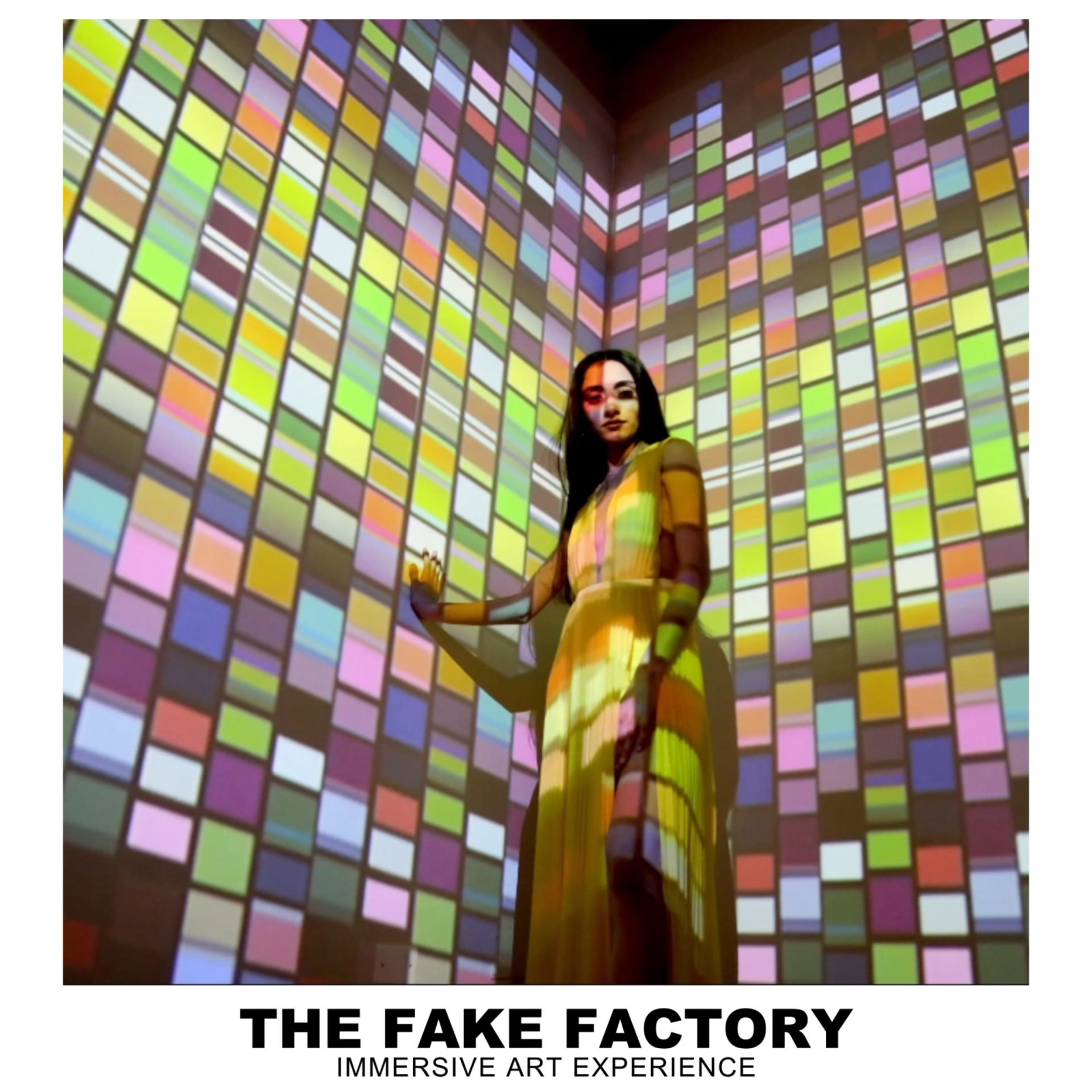
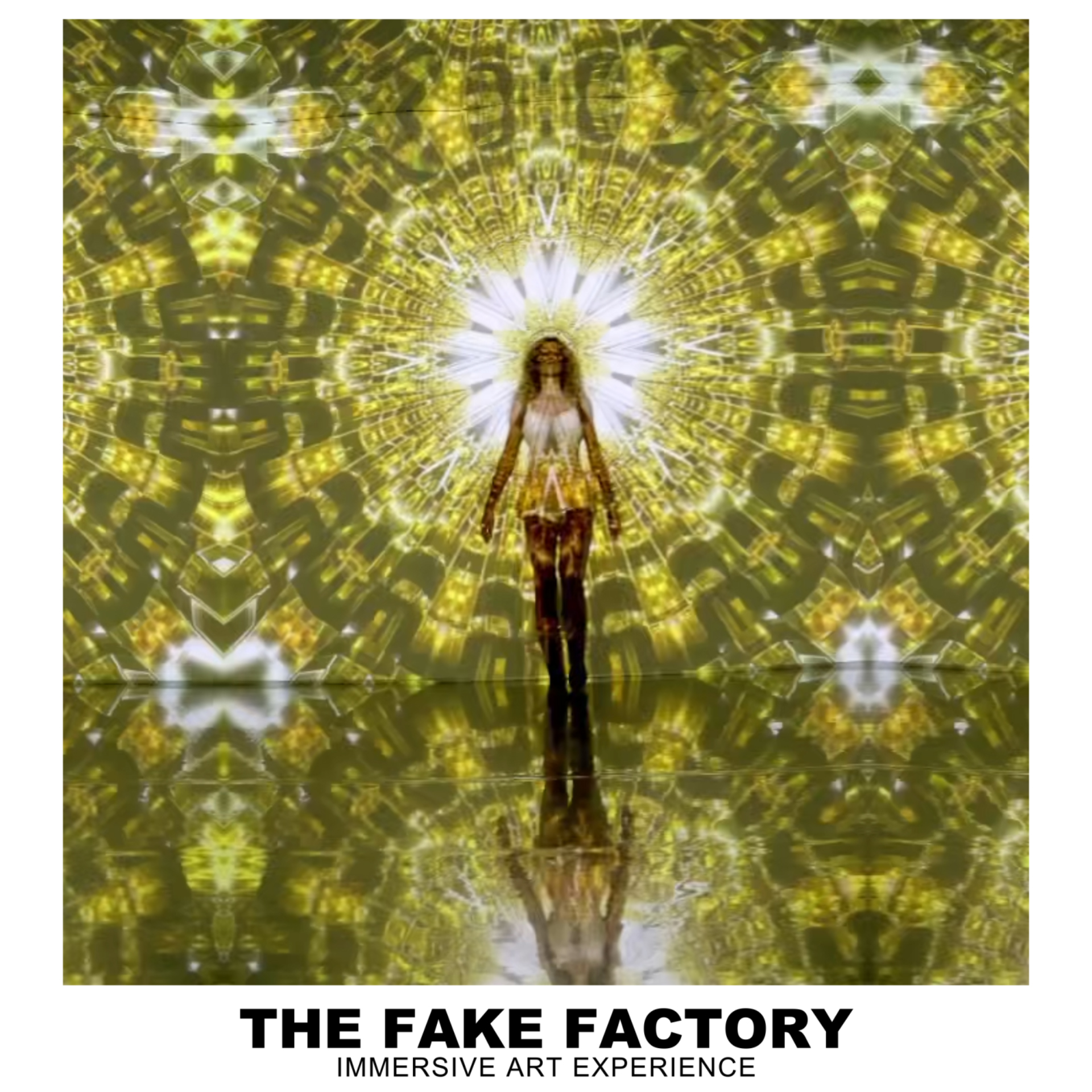
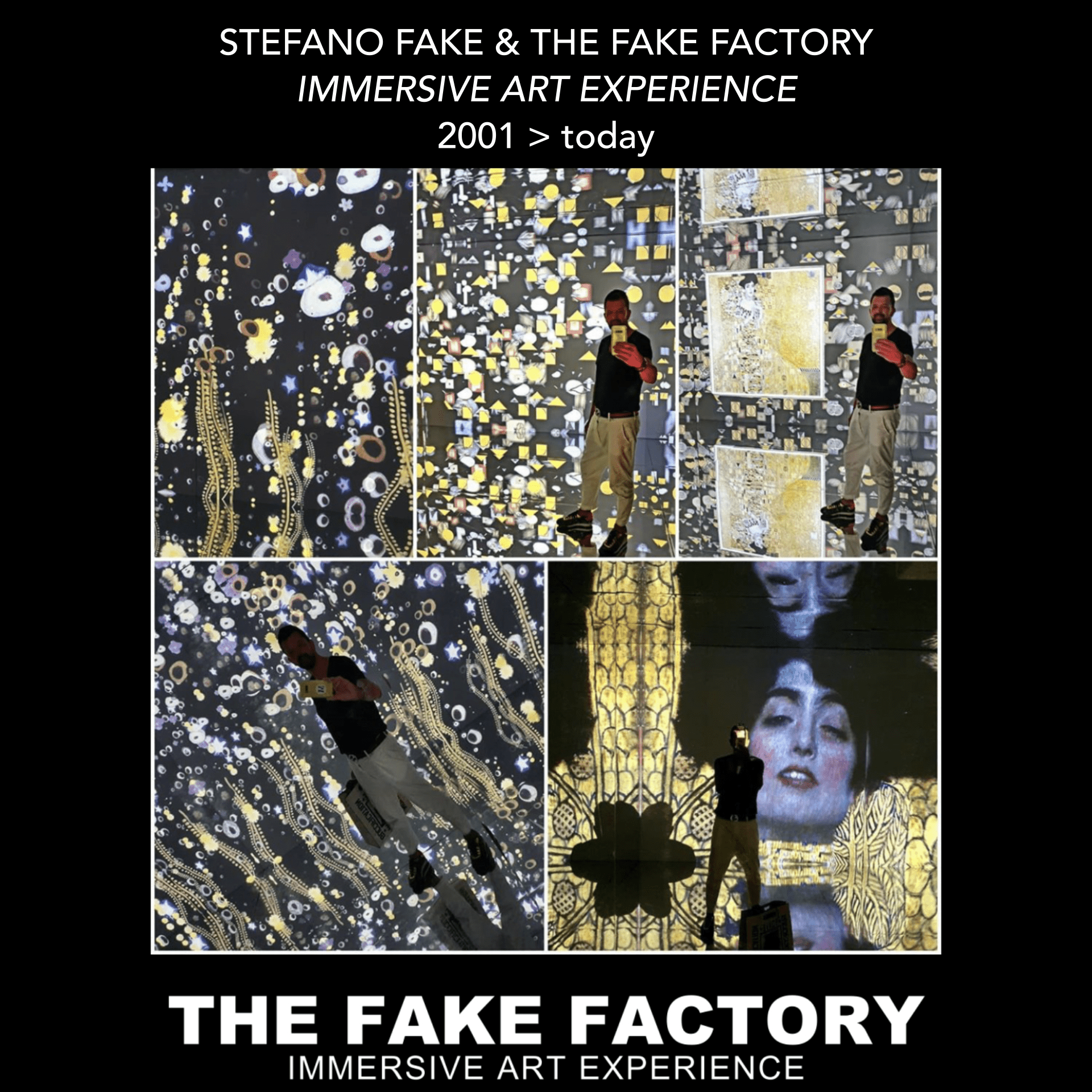
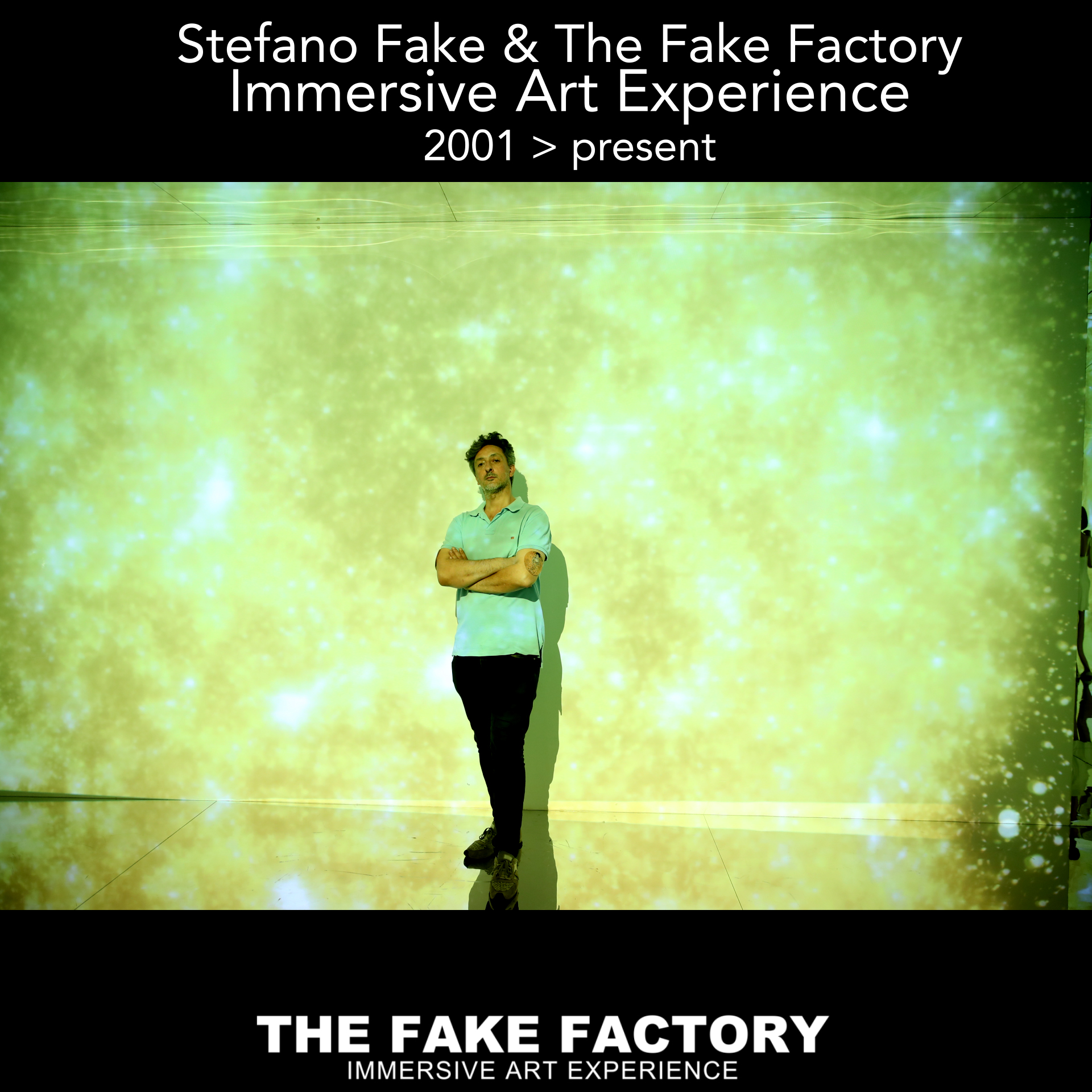
THE FAKE FACTORY is a pioneer in the immersive art field. Founded by the Italian artist Stefano Fake, THE FAKE FACTORY is now an international collective of artists, programmers, architects, animators, poets, philosophers, performers. Stefano Fake consider digital technologies a tool, like a paint brush. He is most interested in what these technologies enable artists to create.
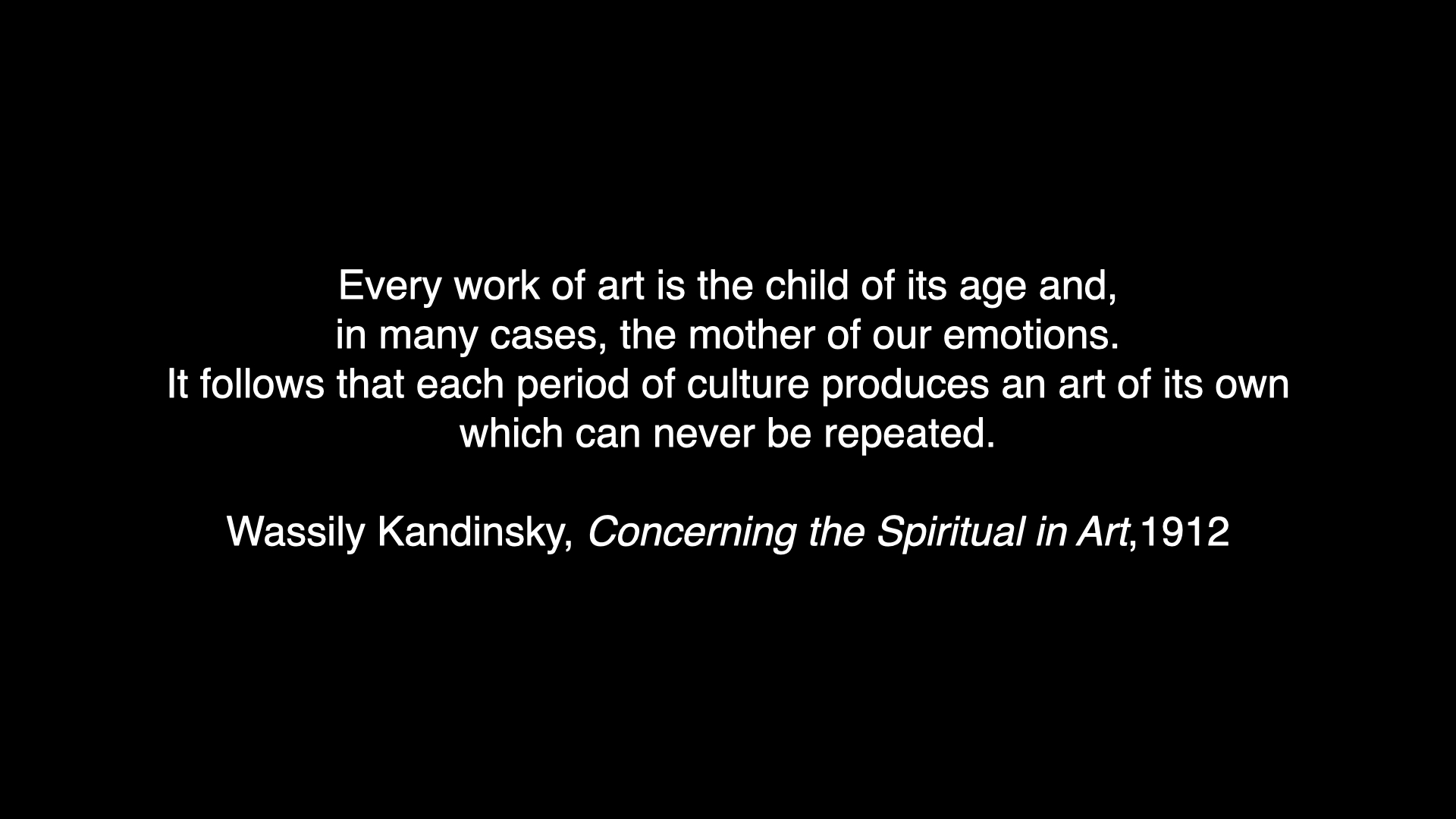
“Digital technology liberates artistic expression from the constraints of the material world, enabling it to assume fluid and mutable forms. Immersive environments, wherein viewers and digital artworks coexist, provide a dynamic context in which the modes of expression and transformation can be actively experienced.” (Stefano Fake)
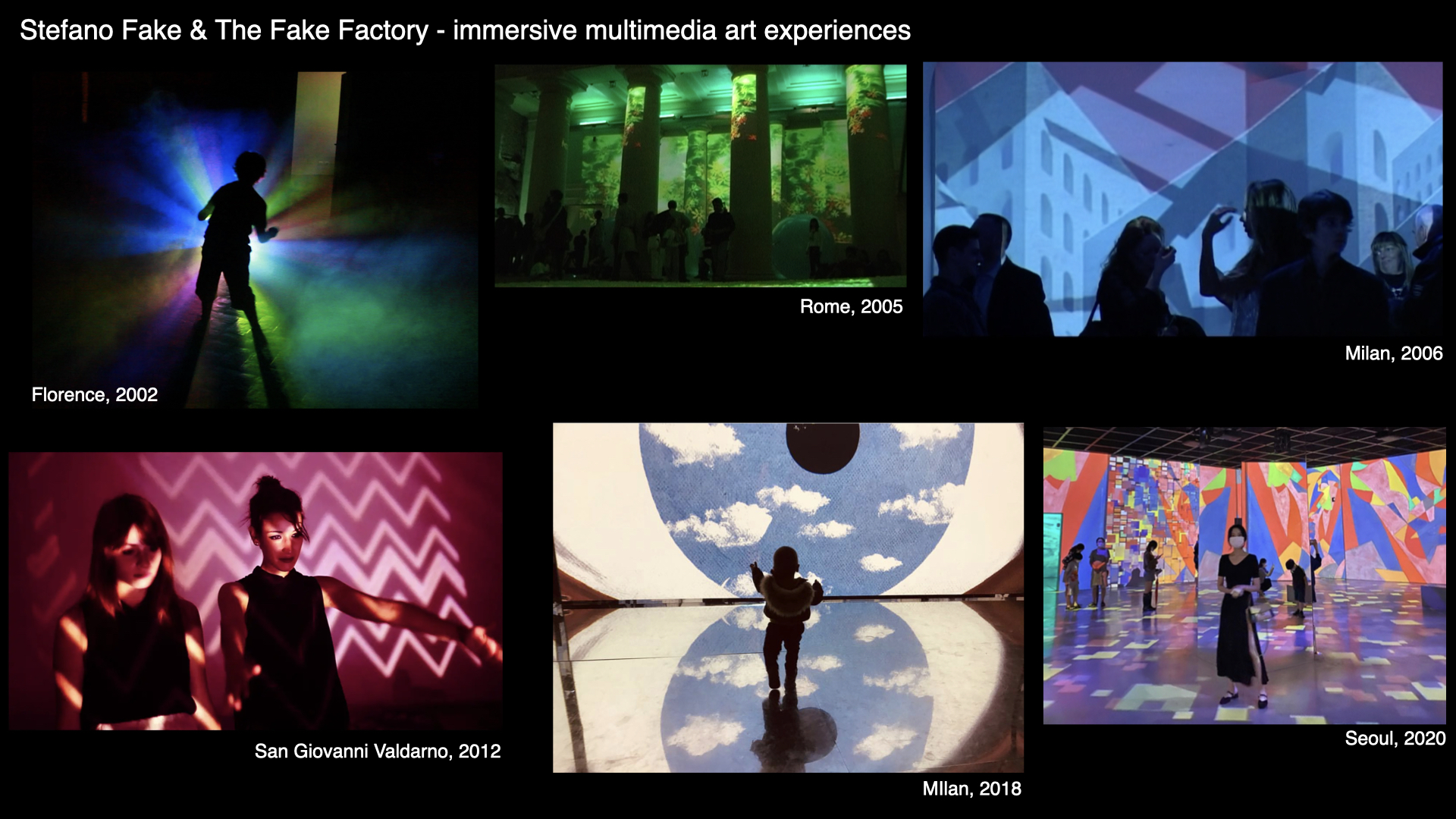
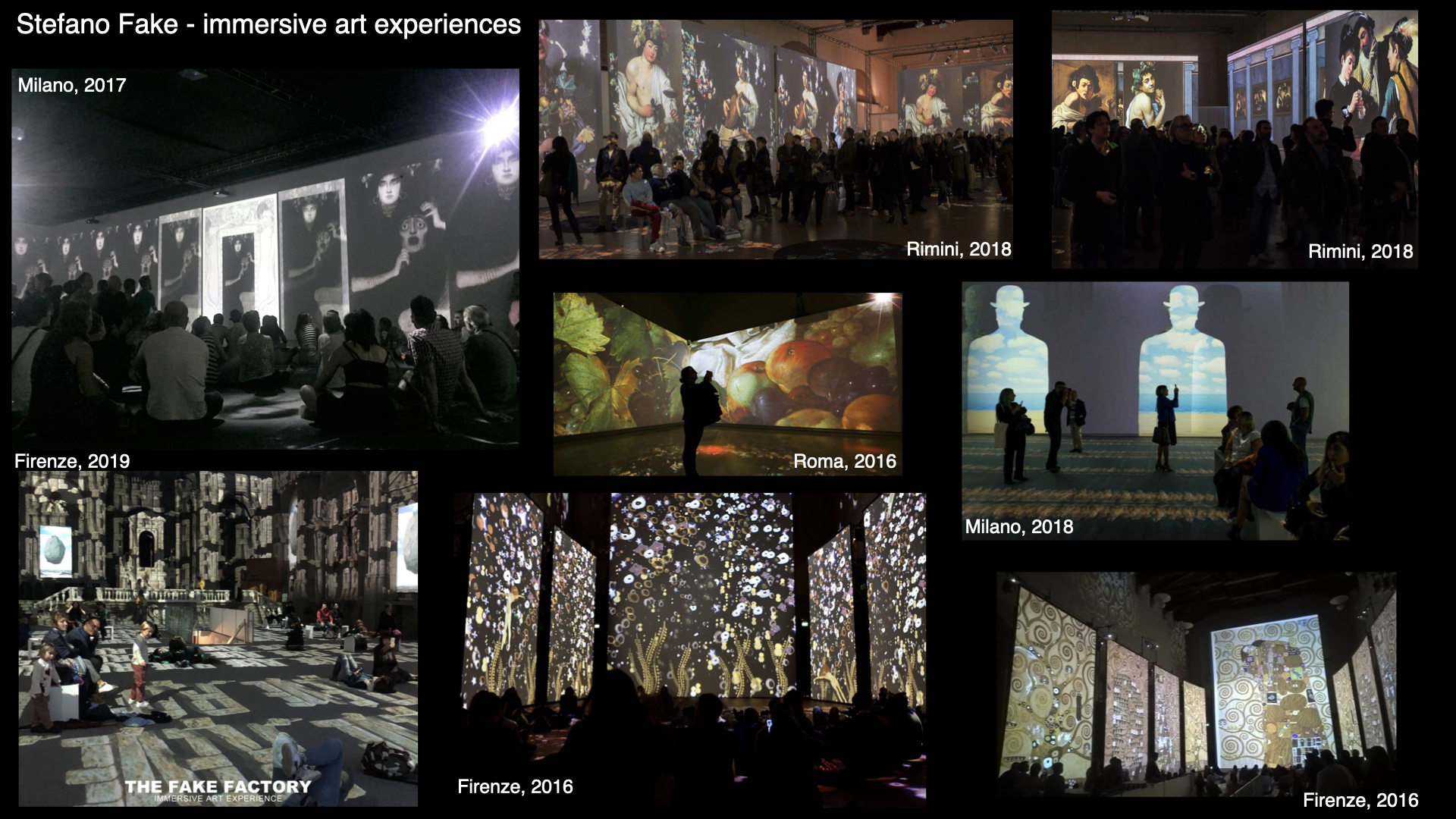
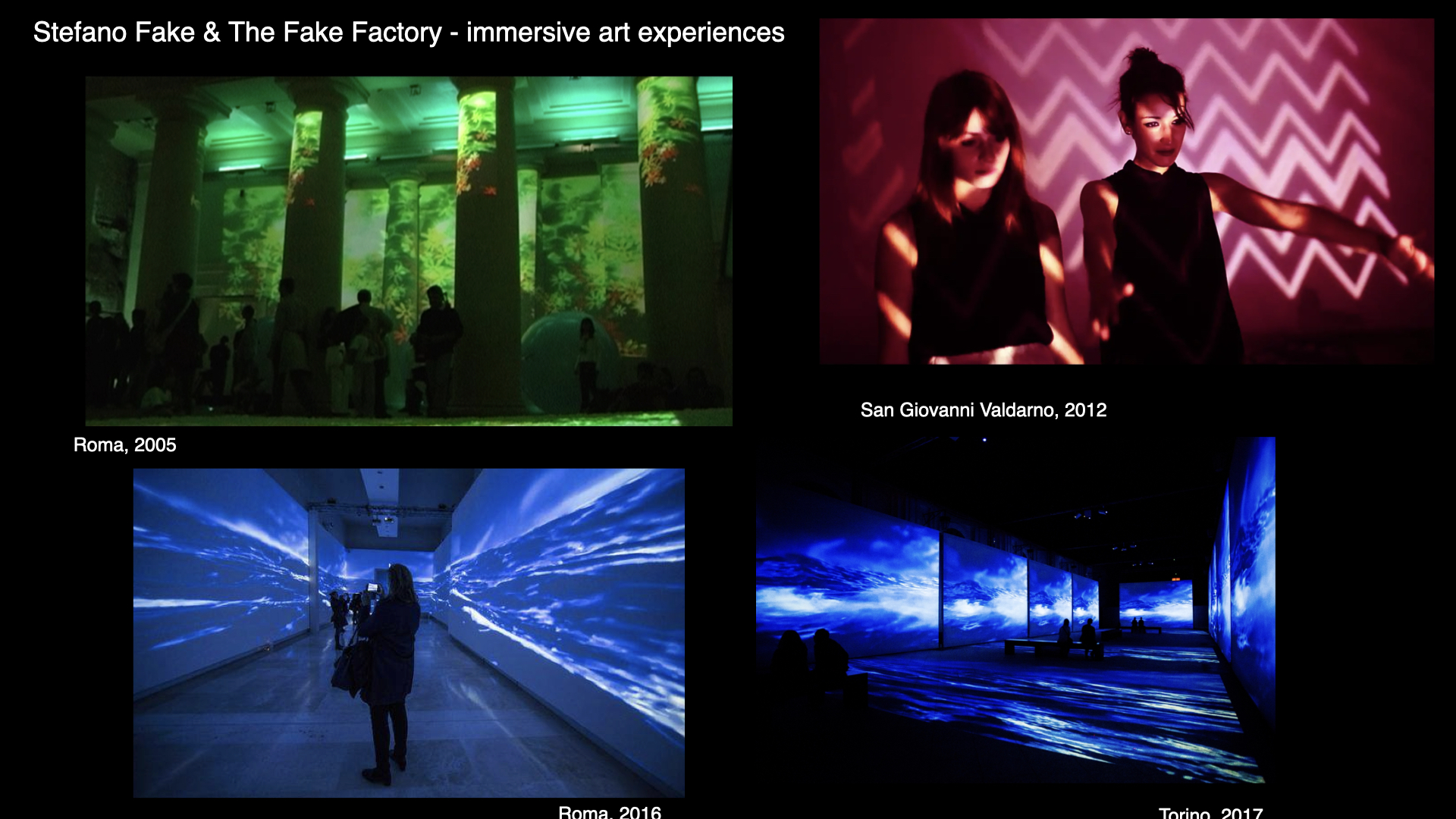
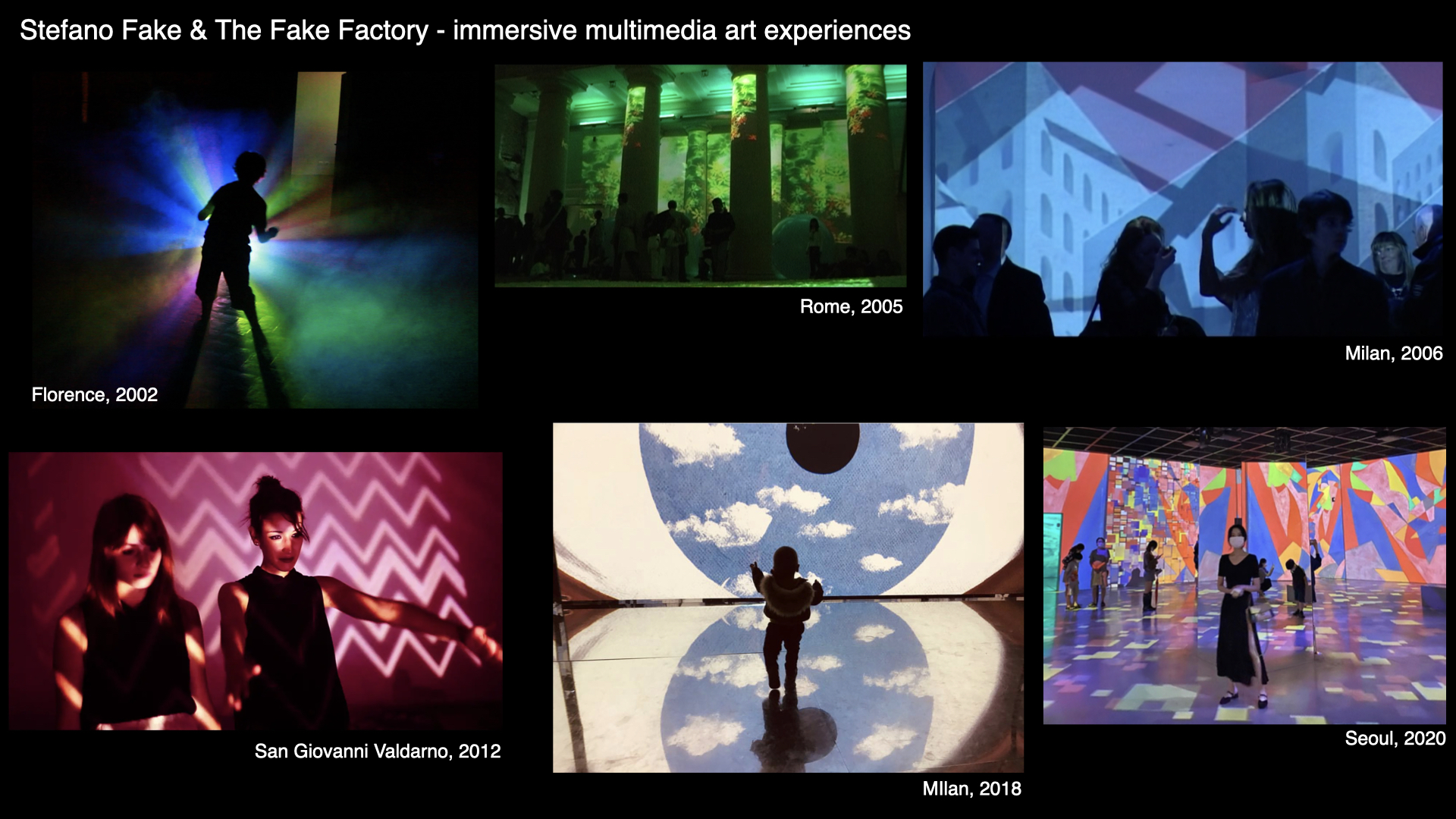
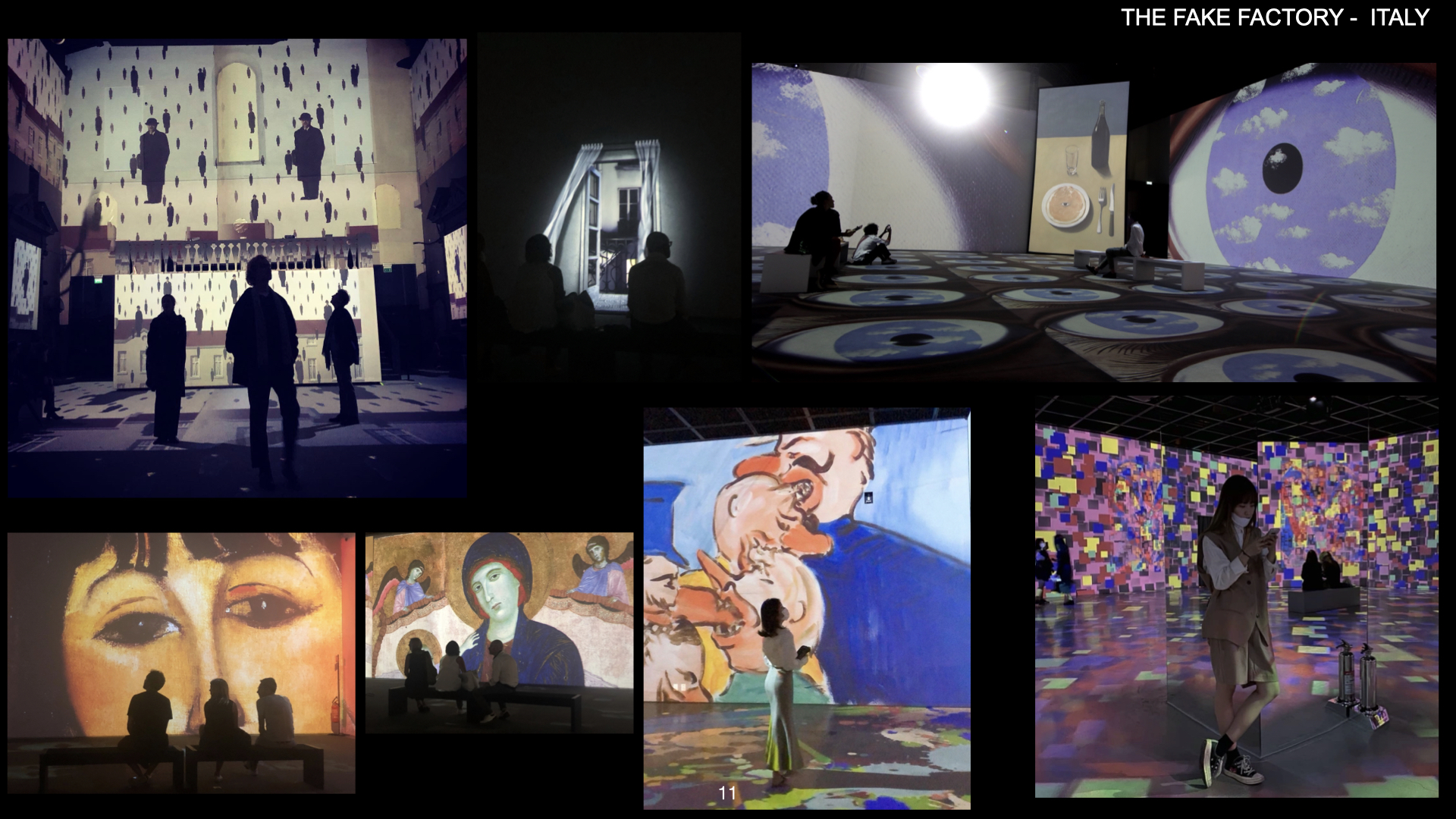
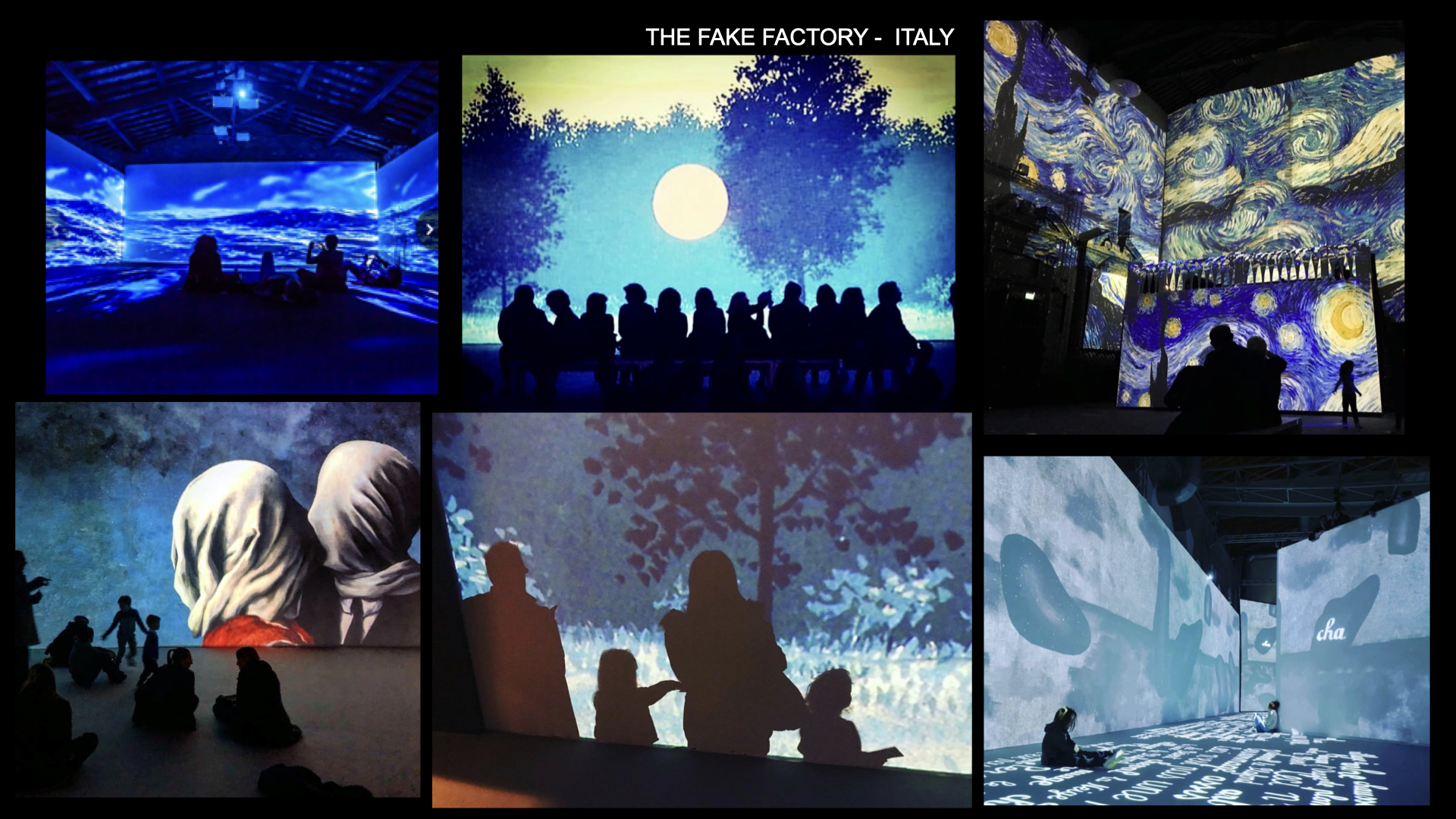
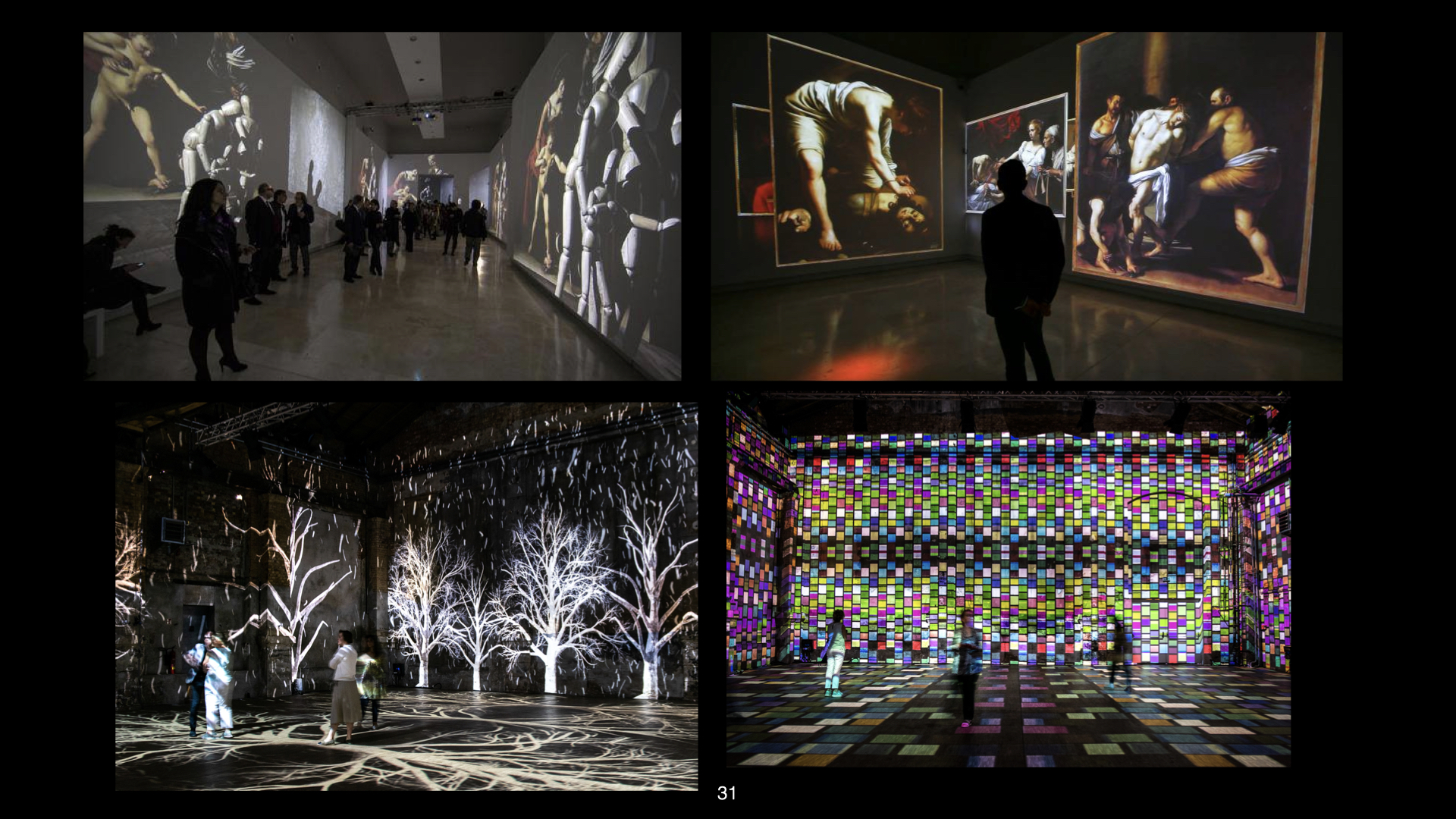
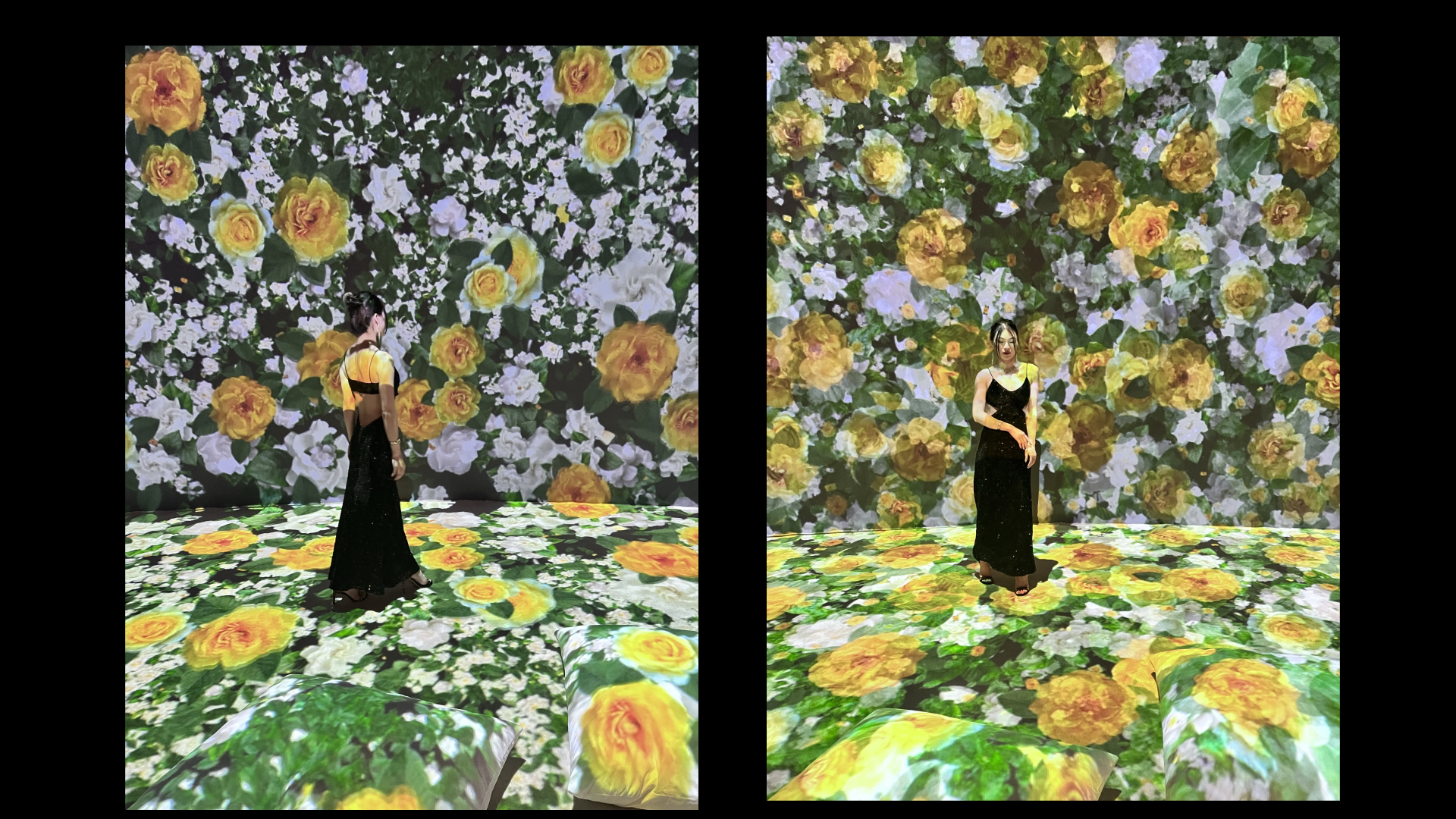
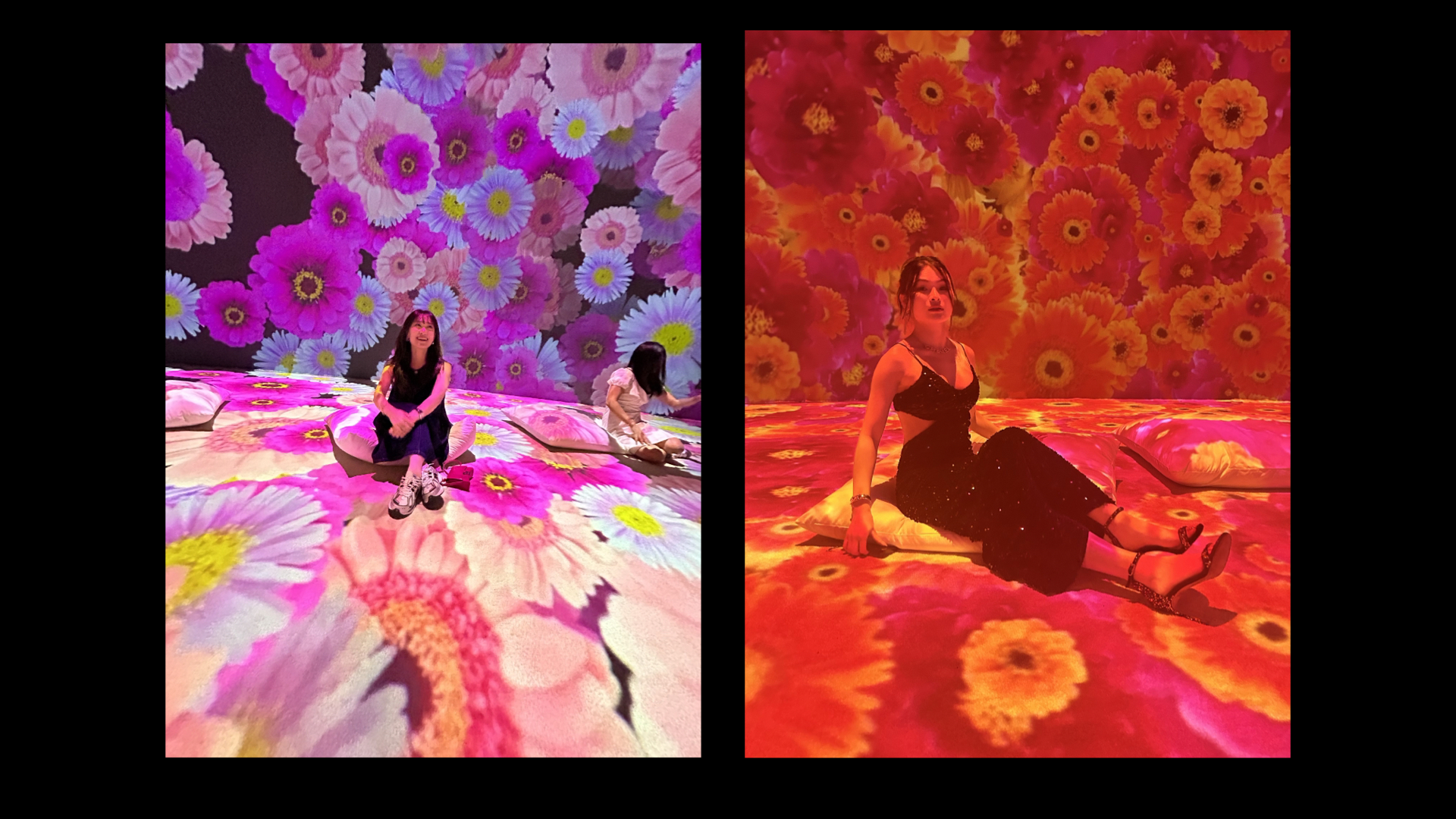
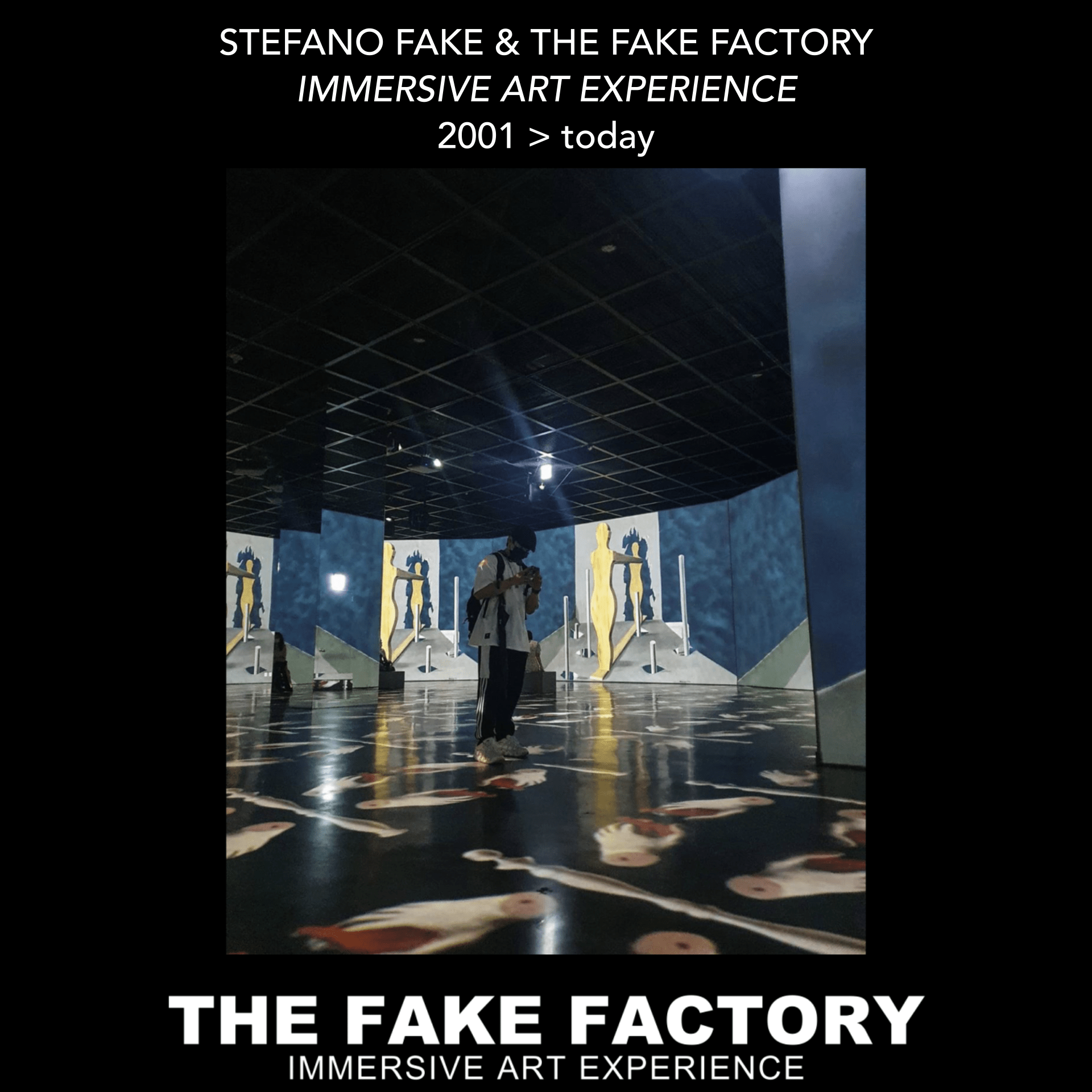
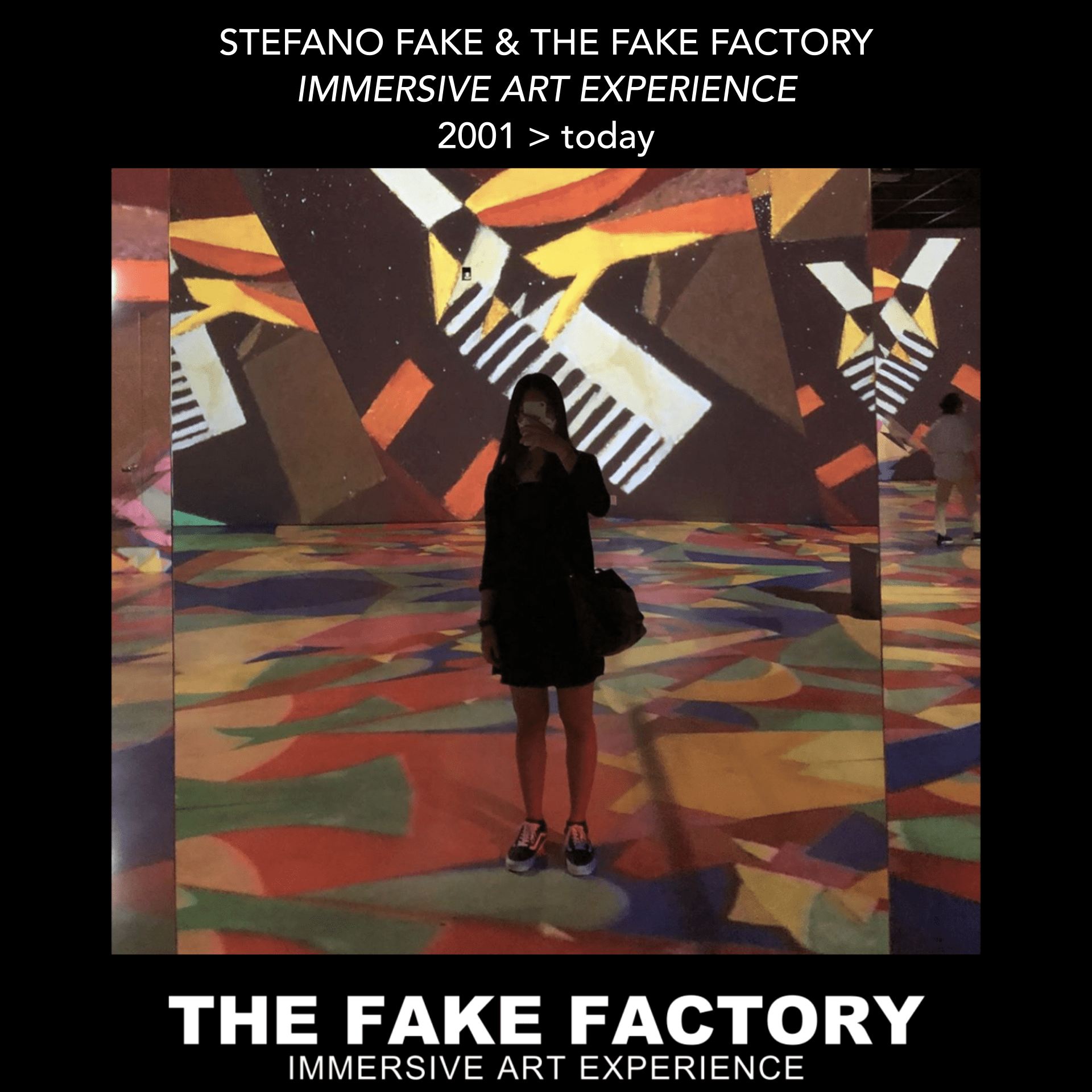
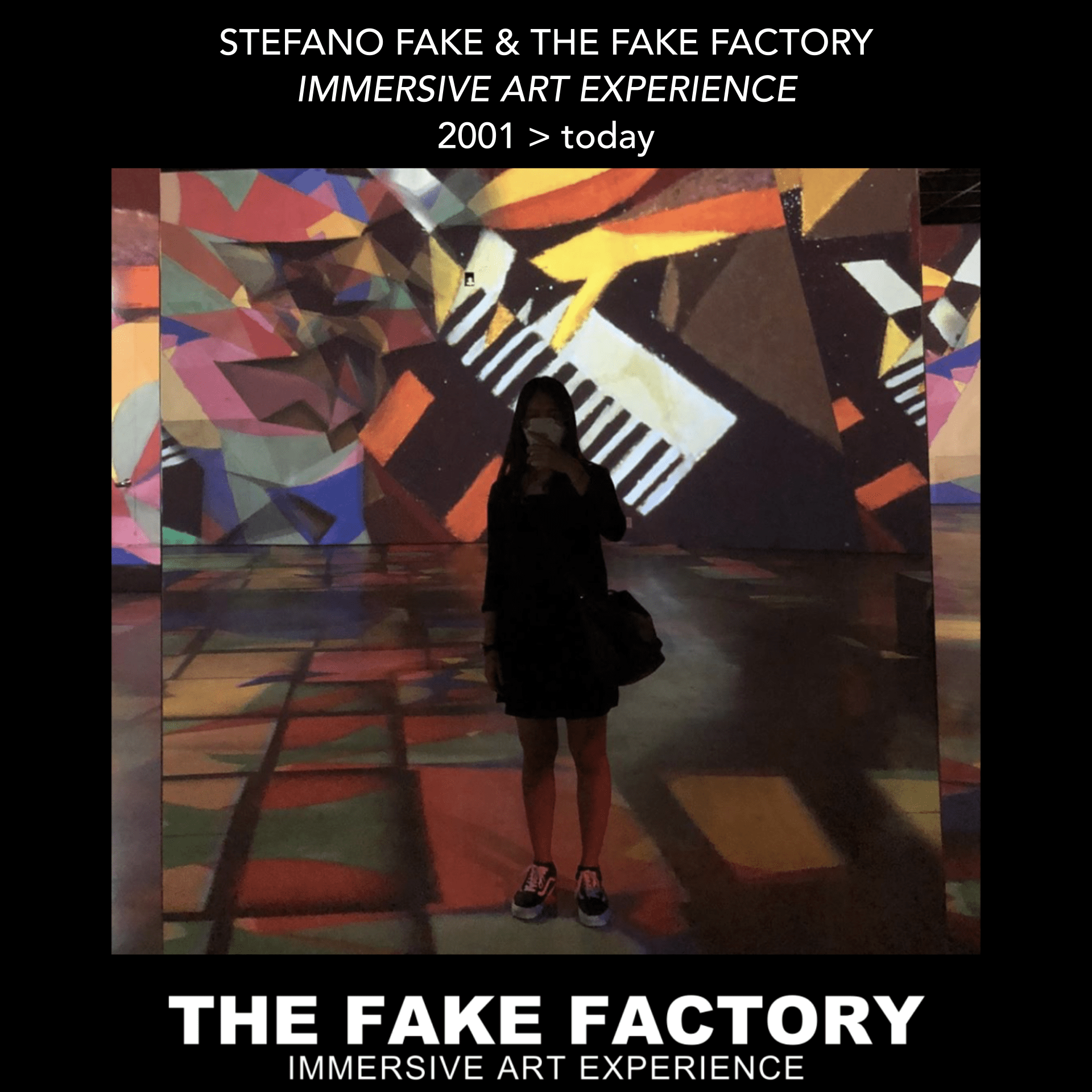
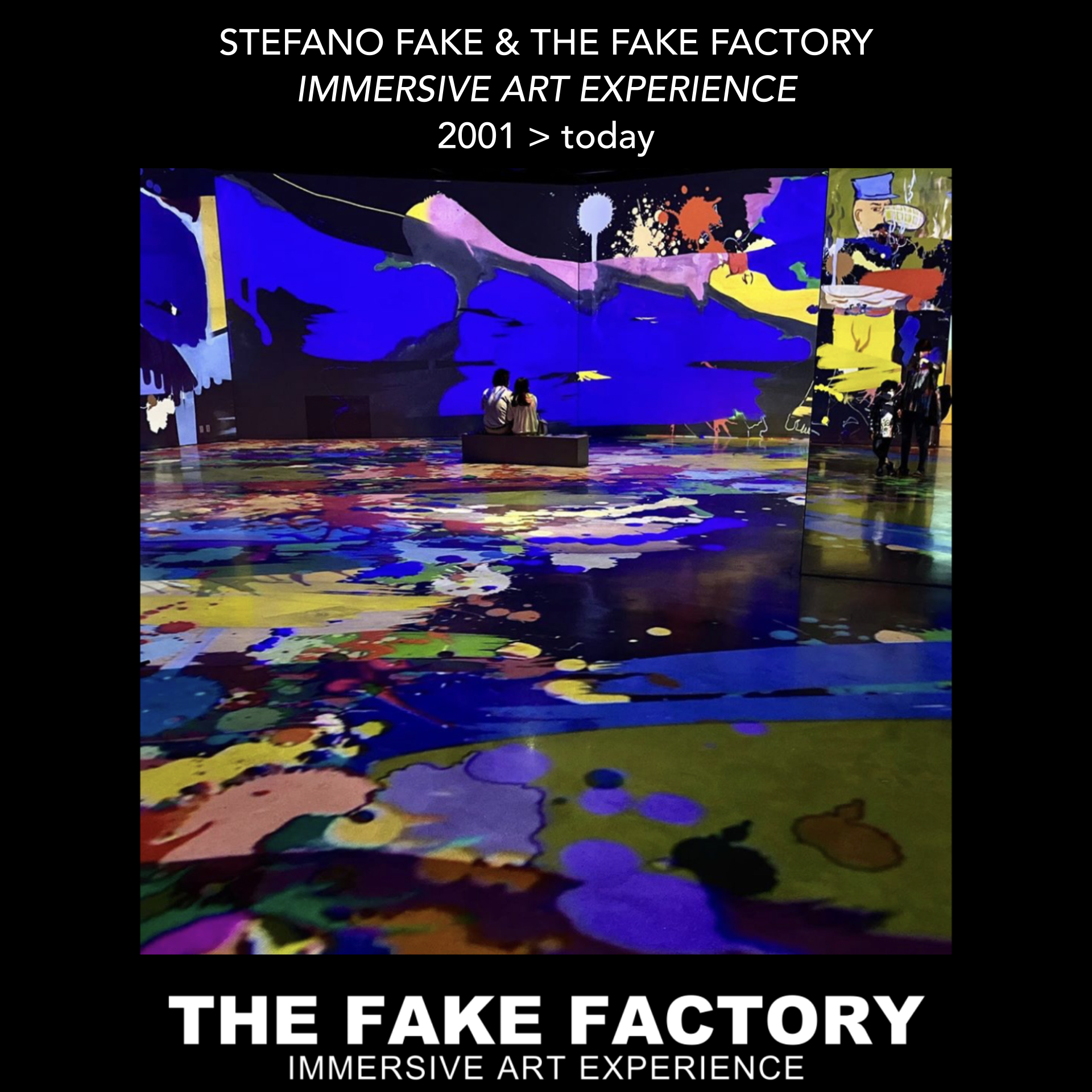
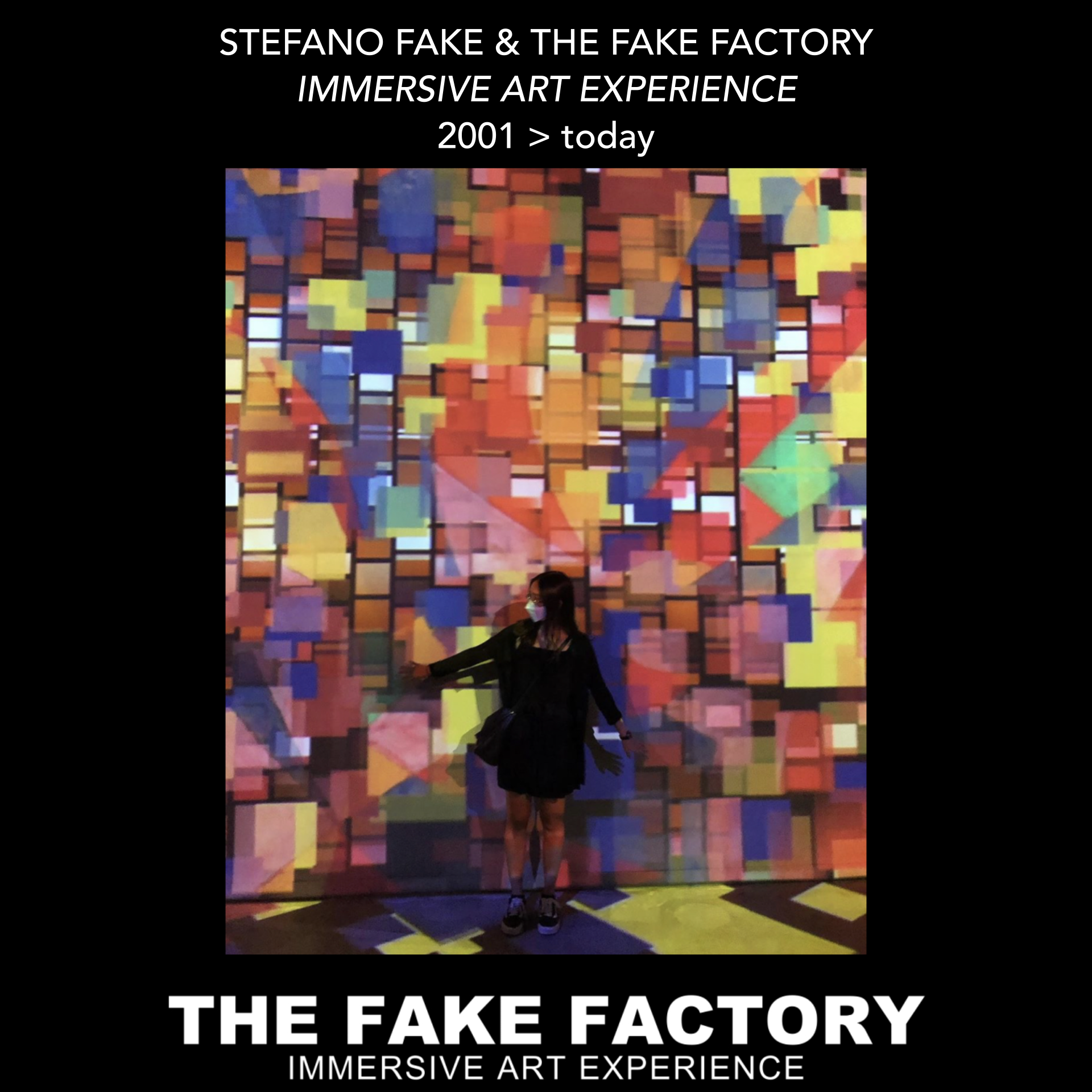
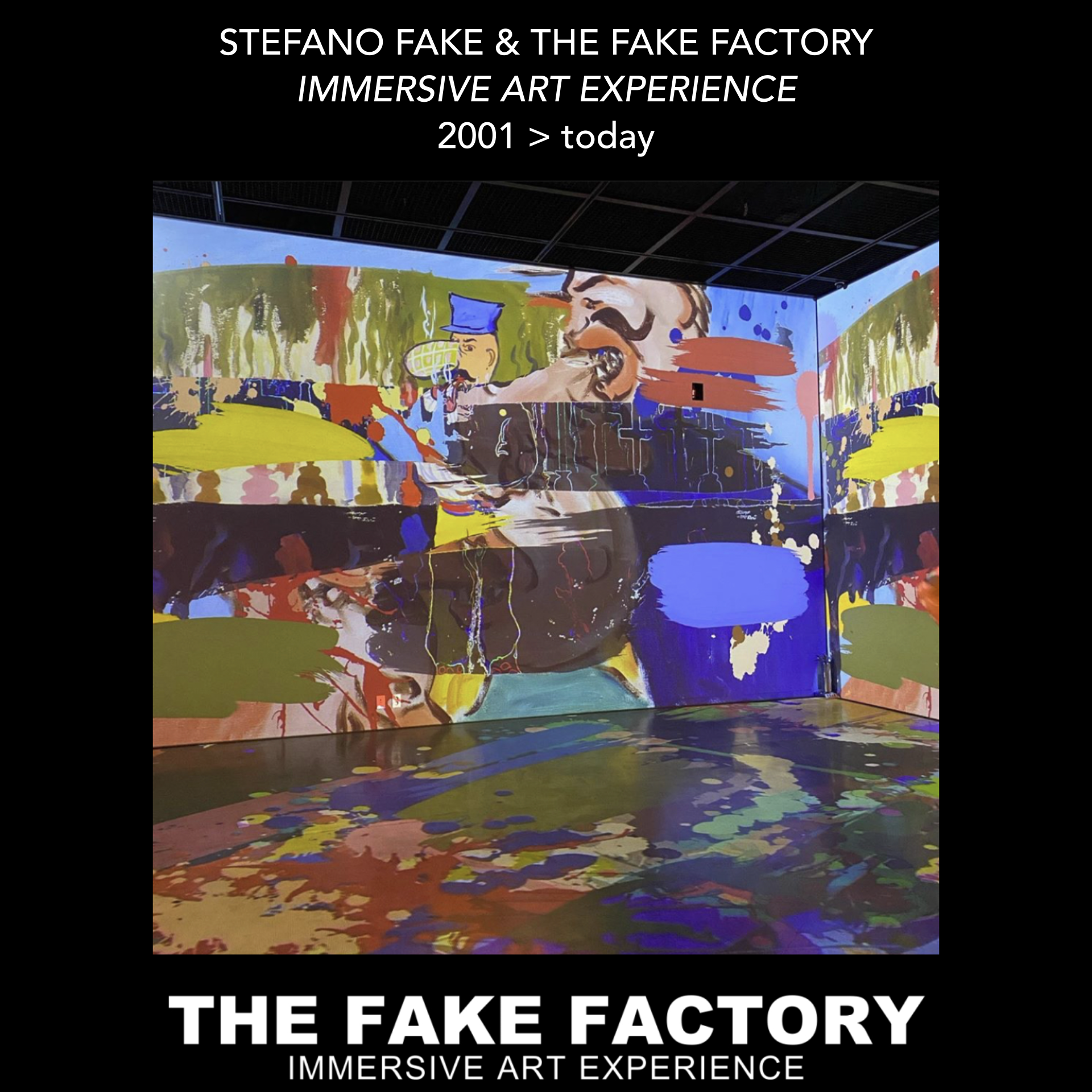
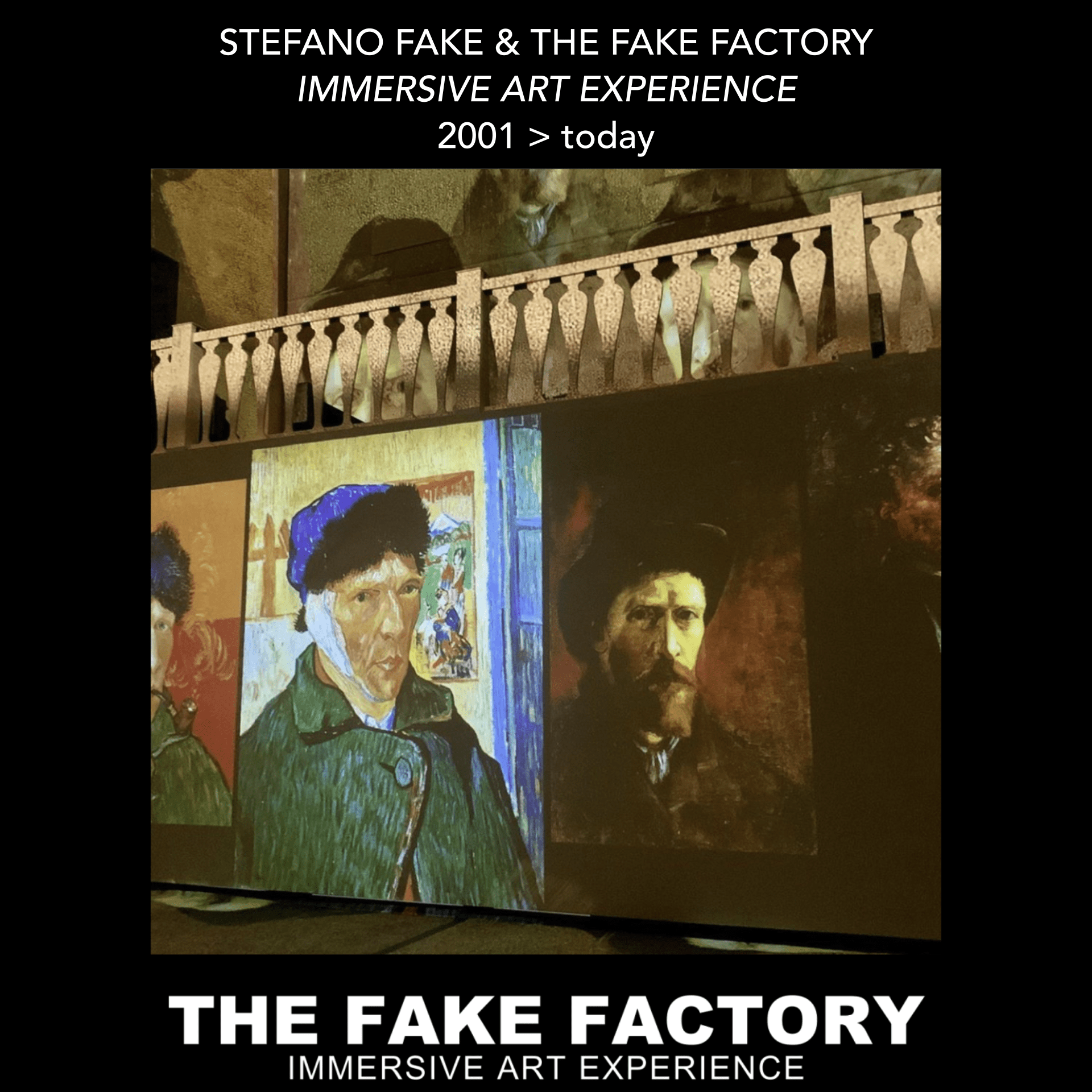
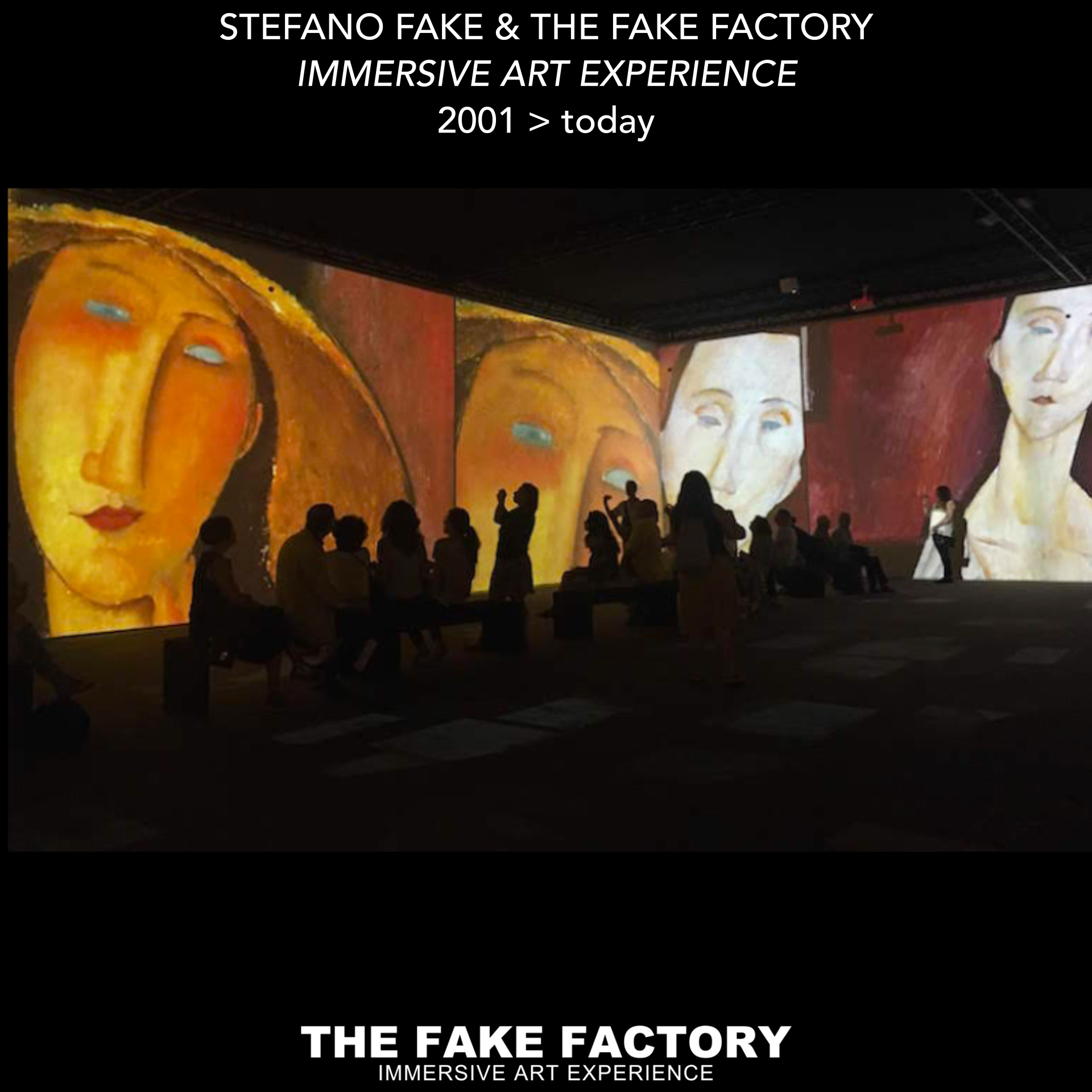
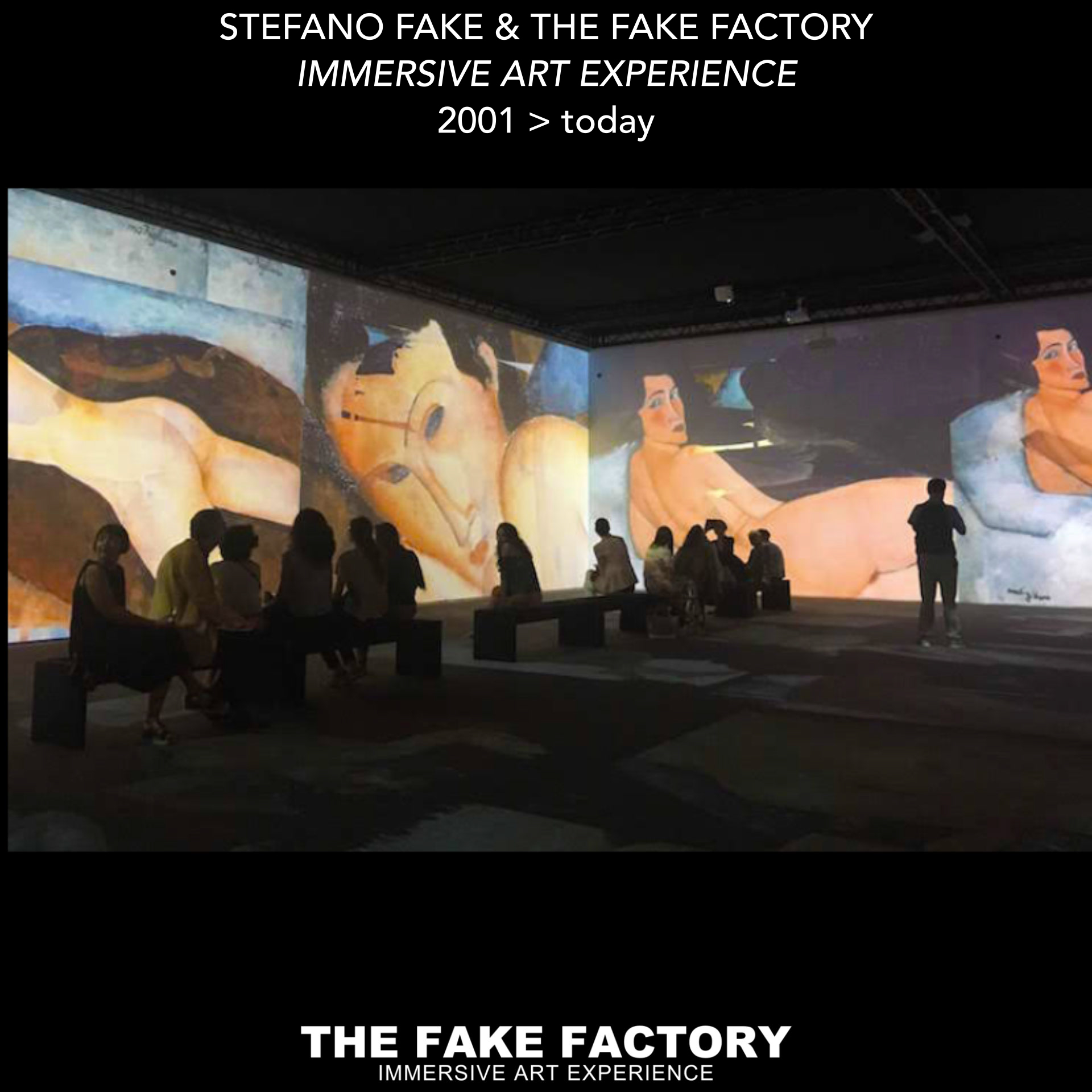
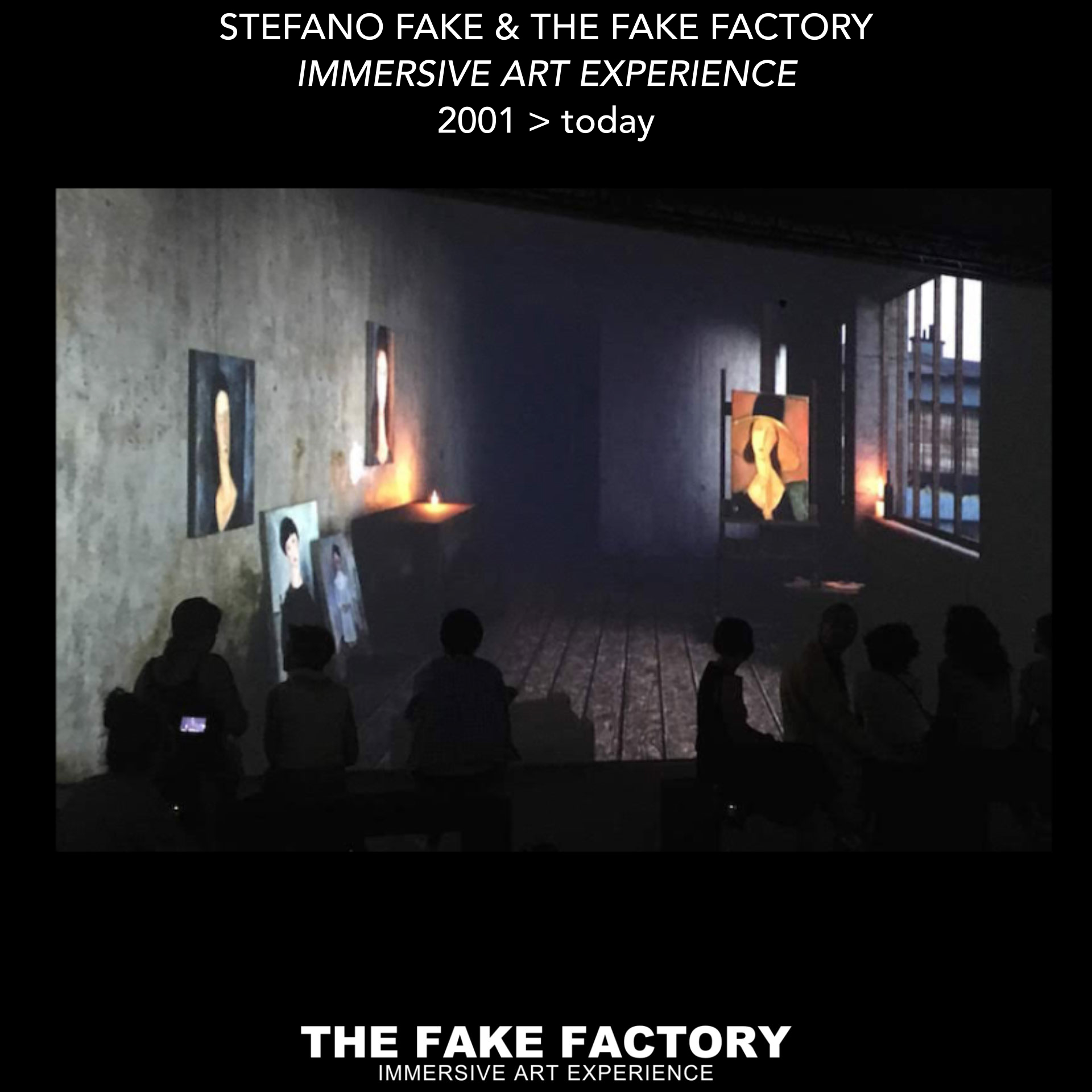
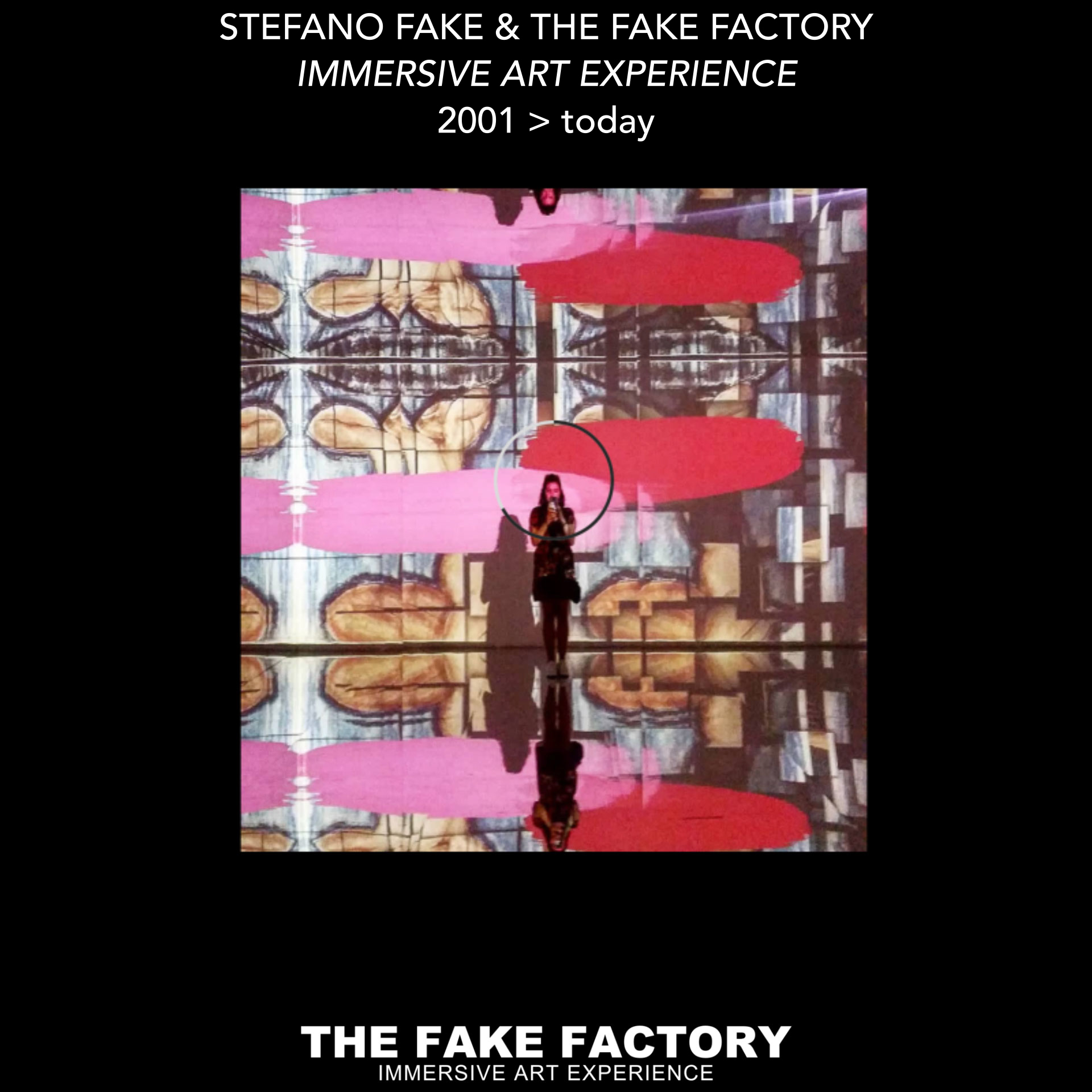
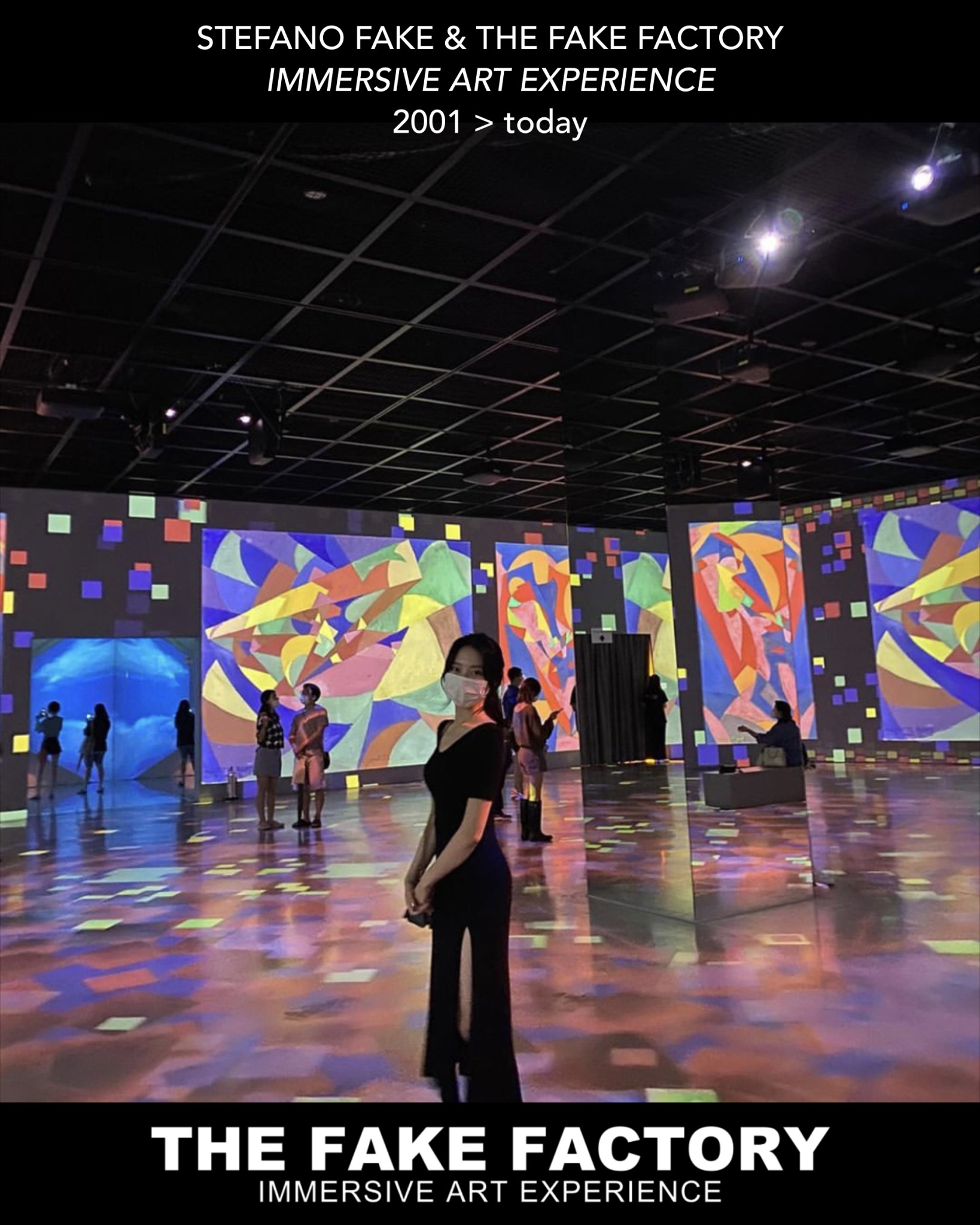
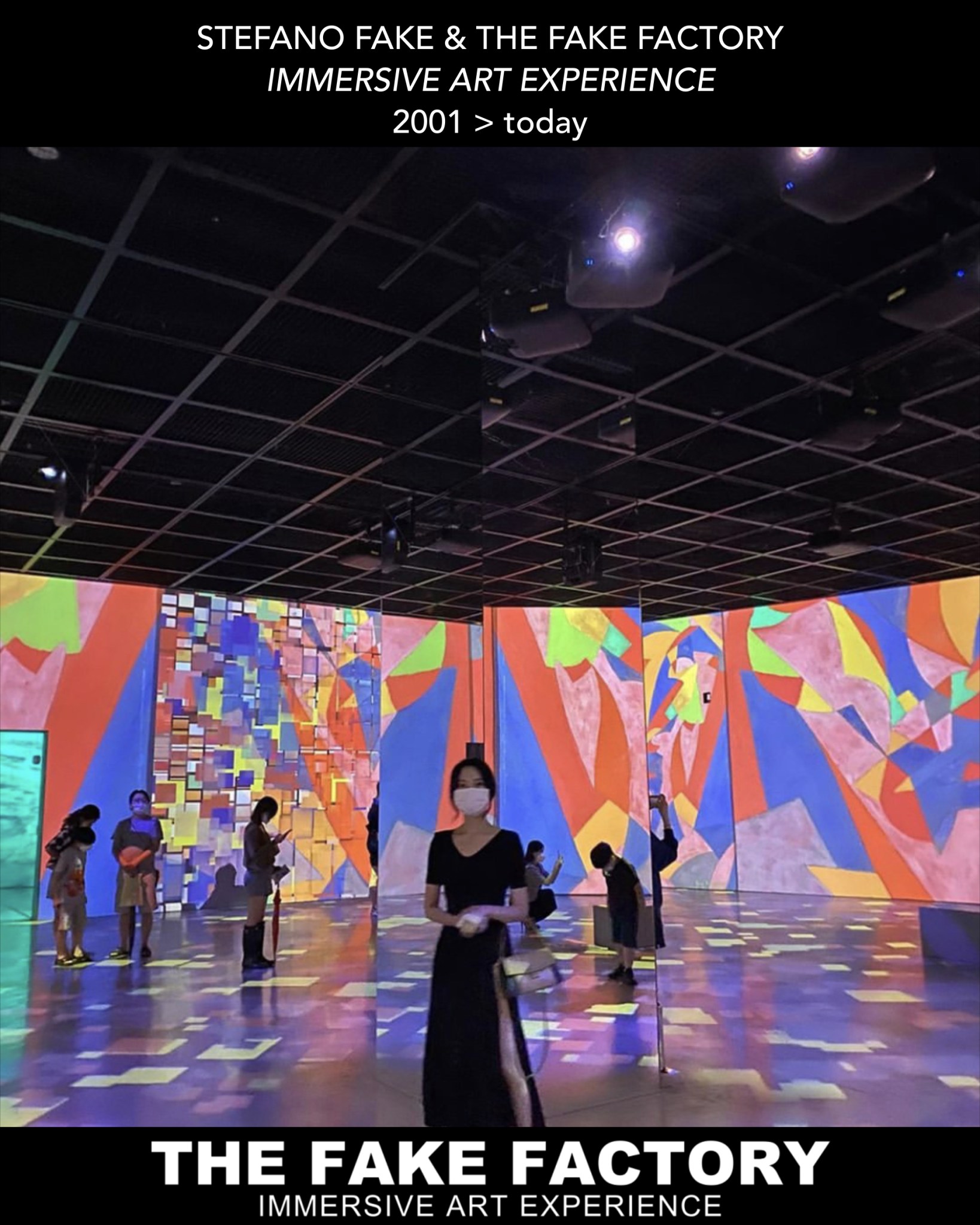
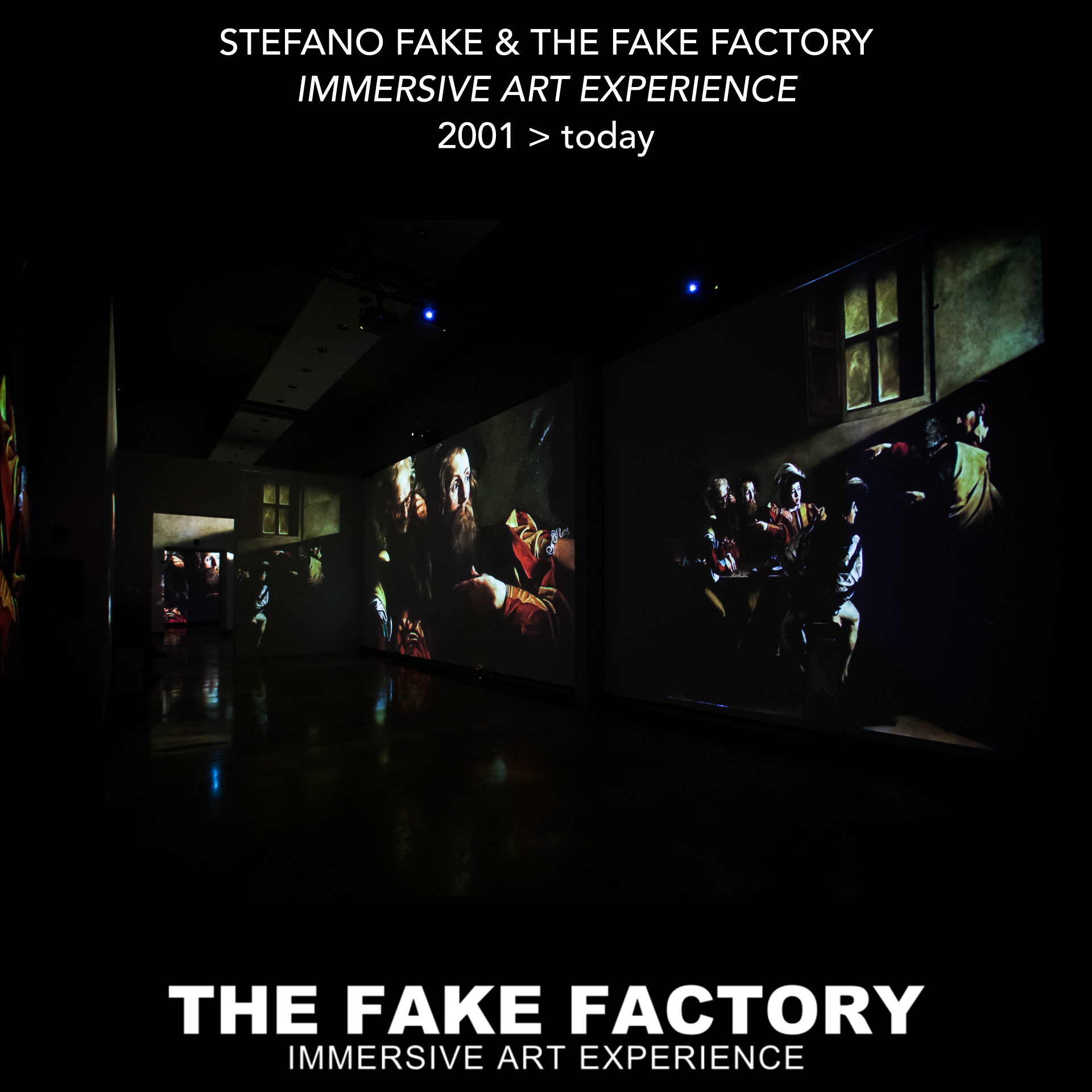
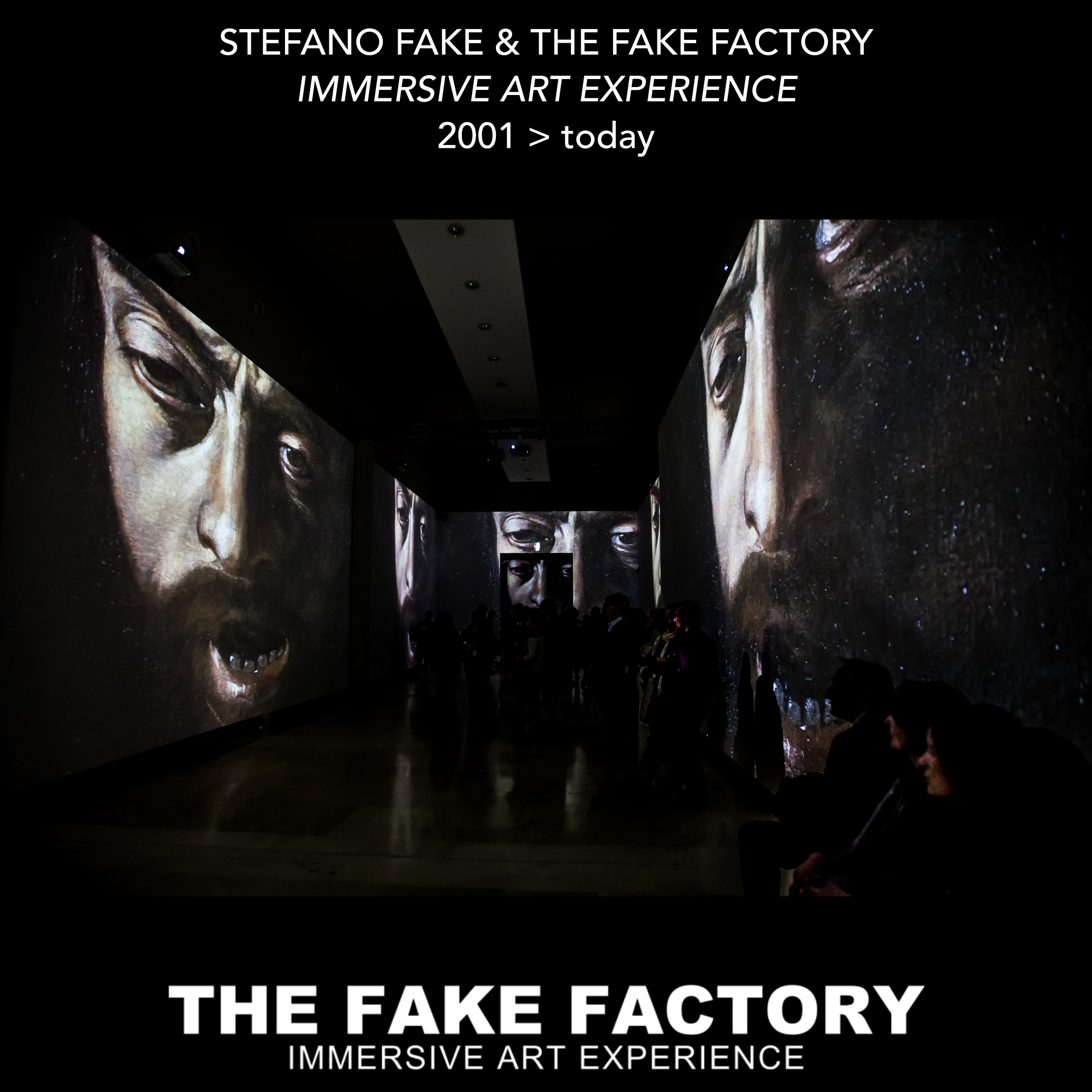
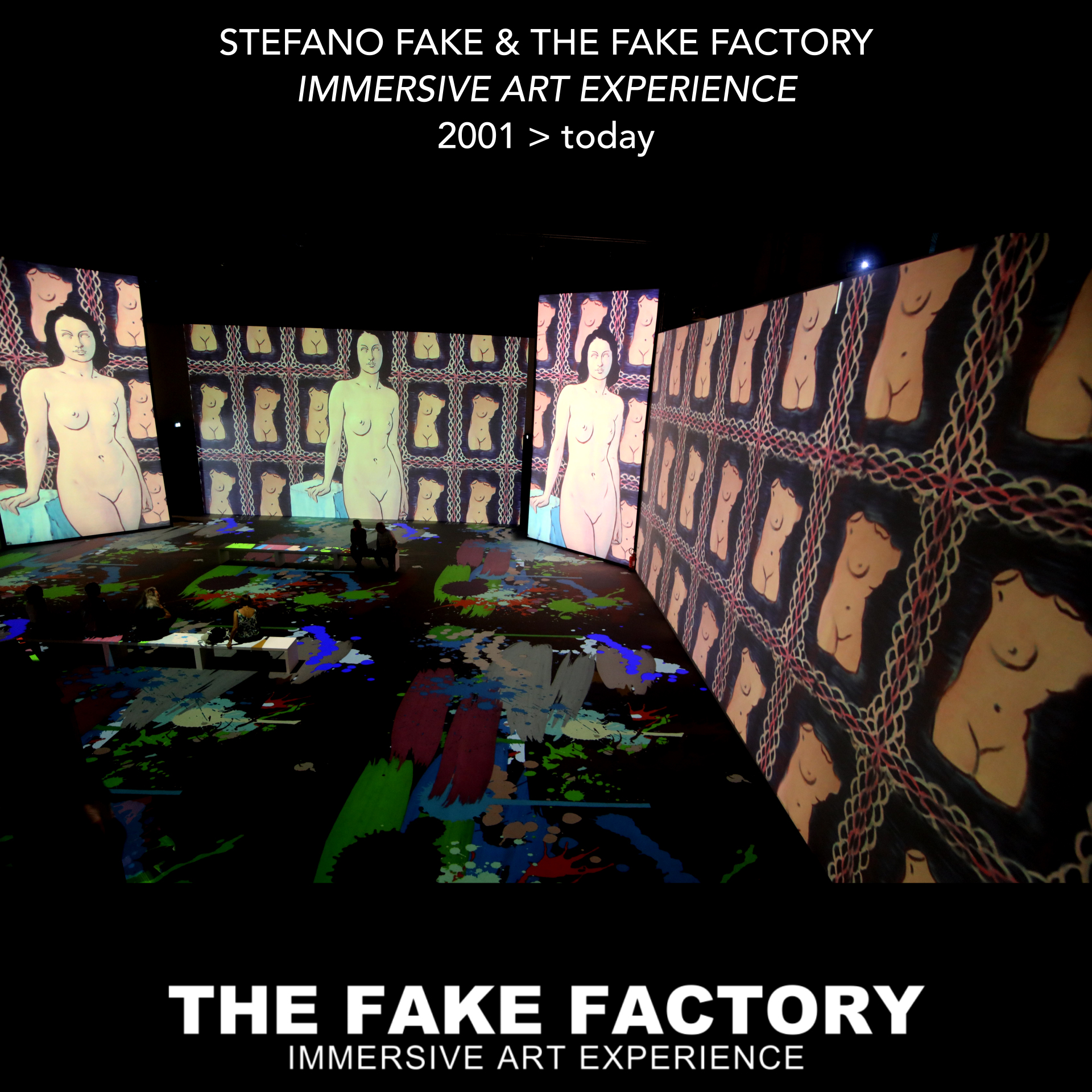
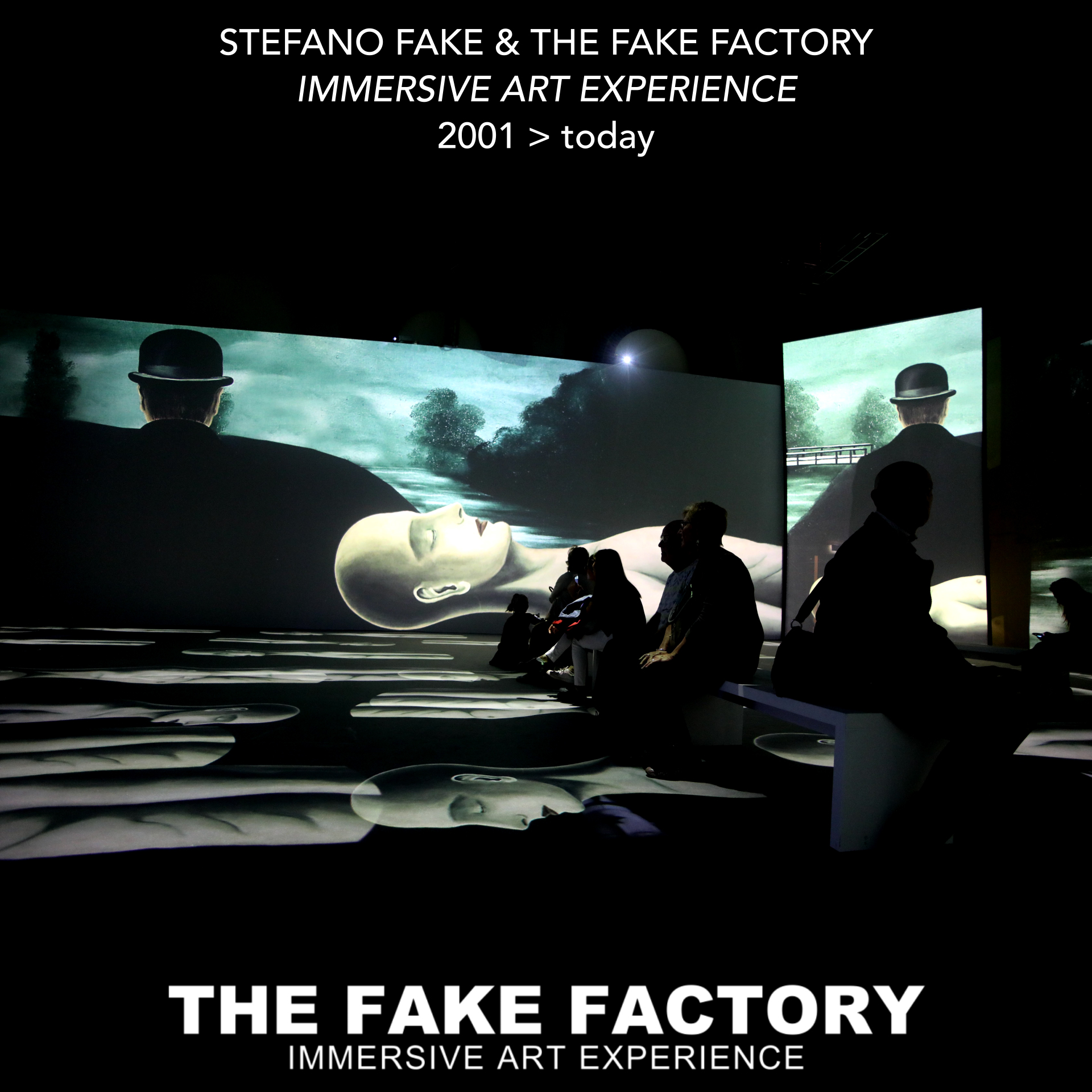
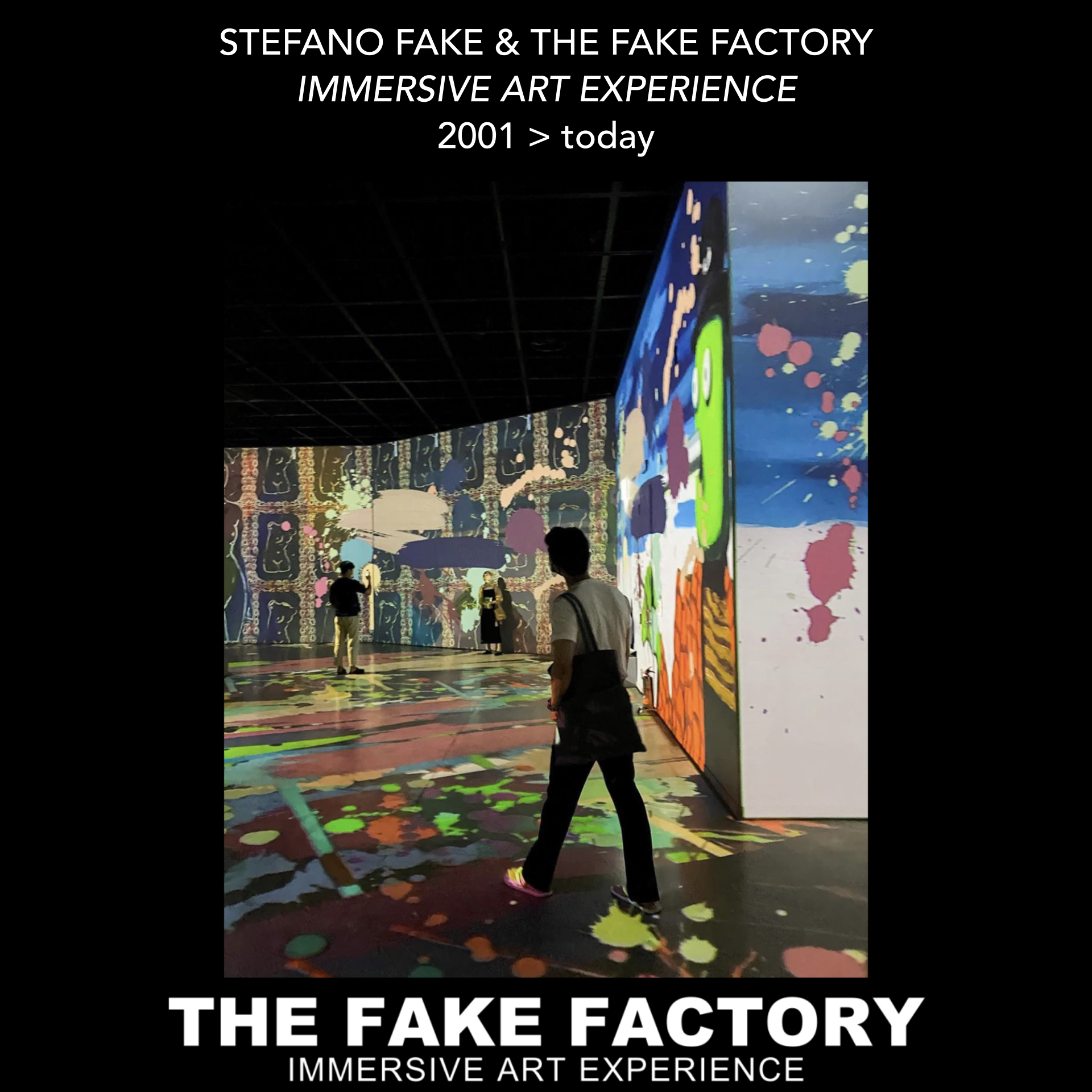
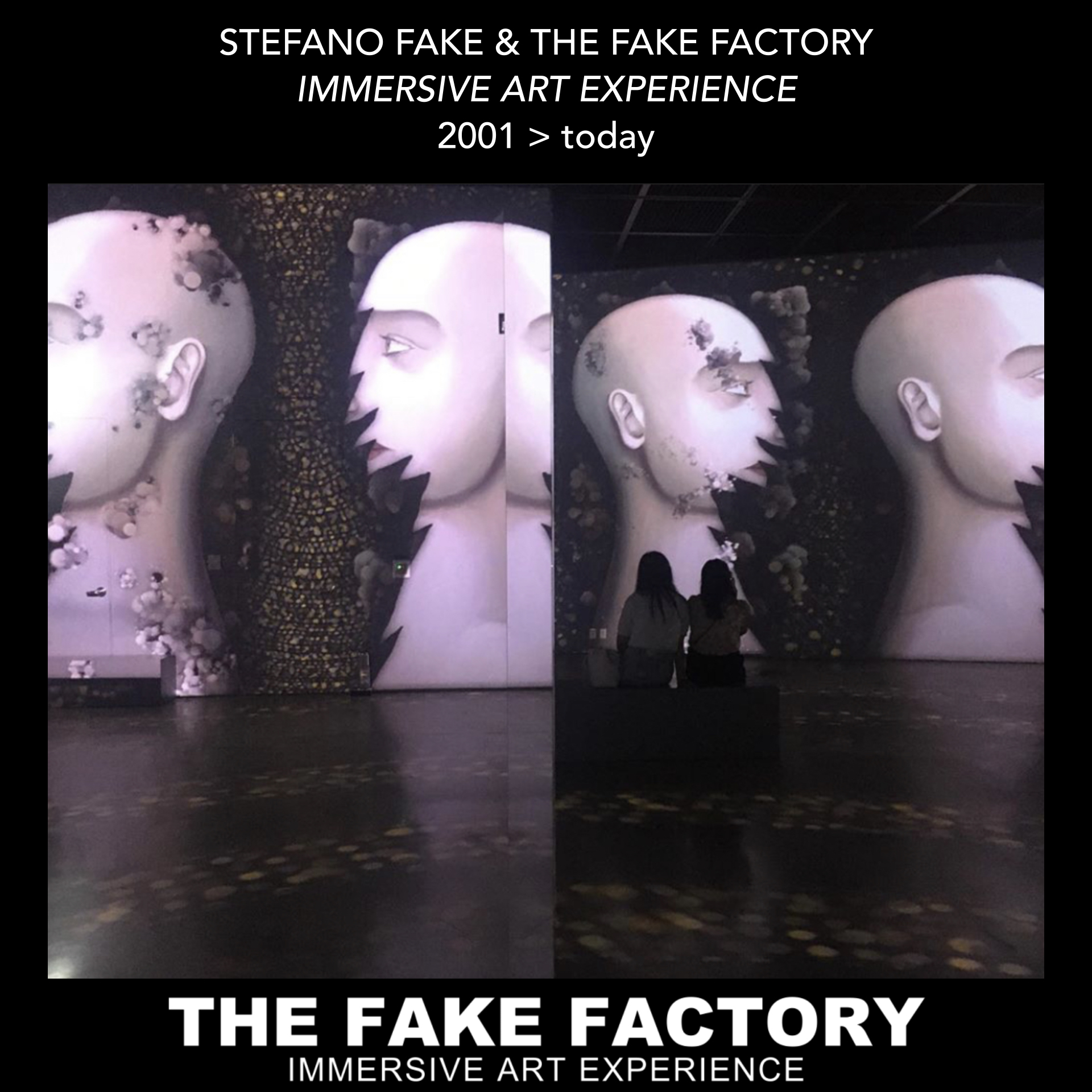
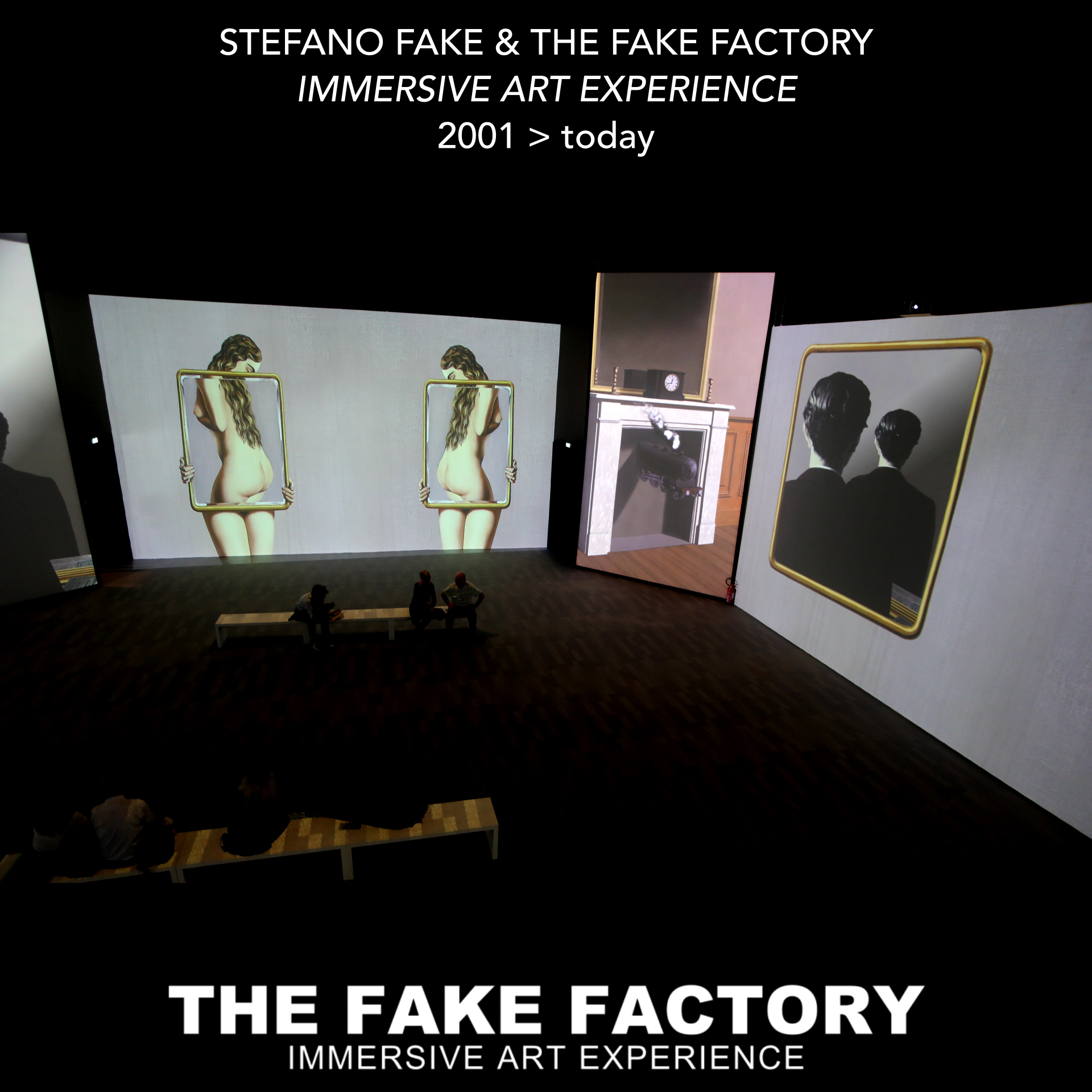
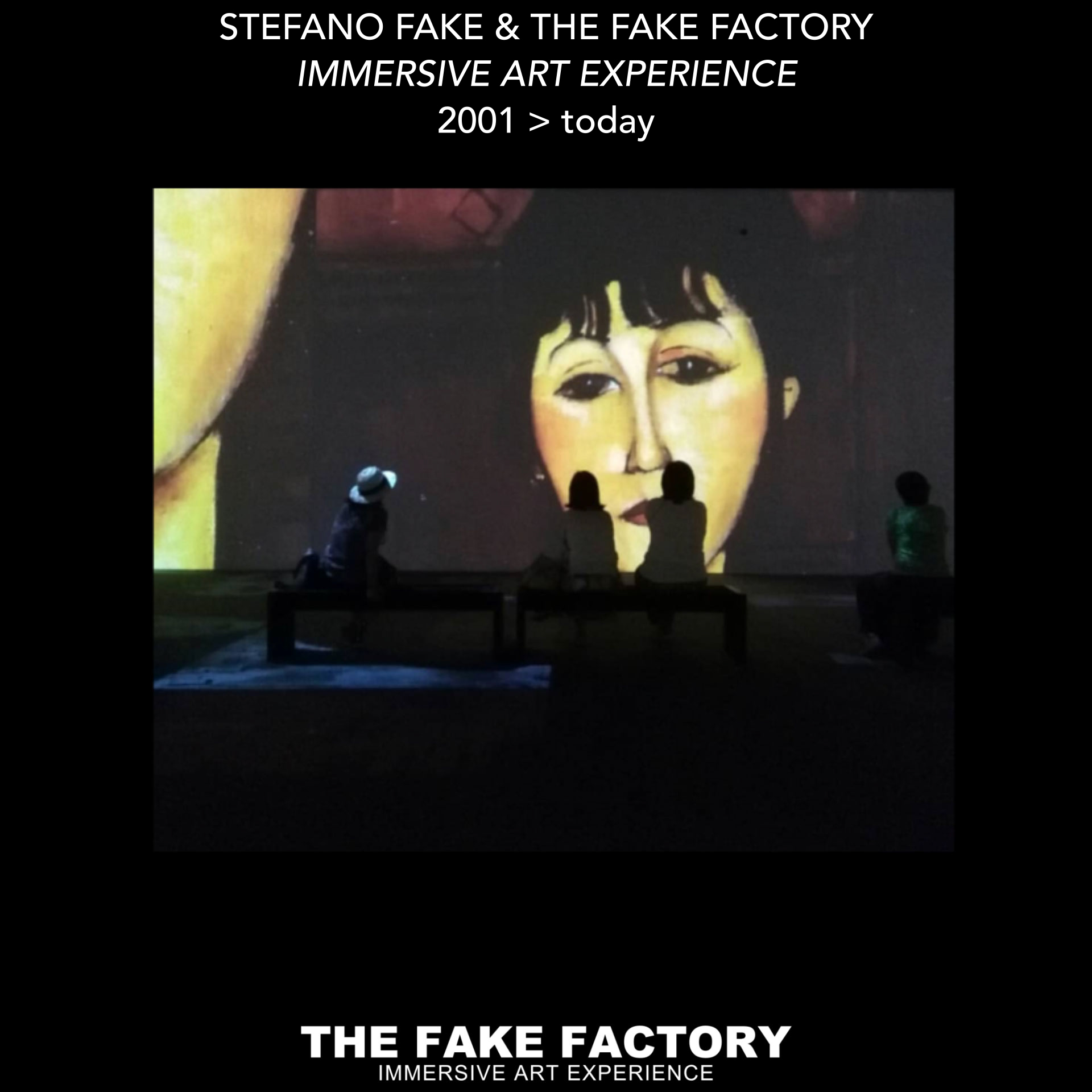
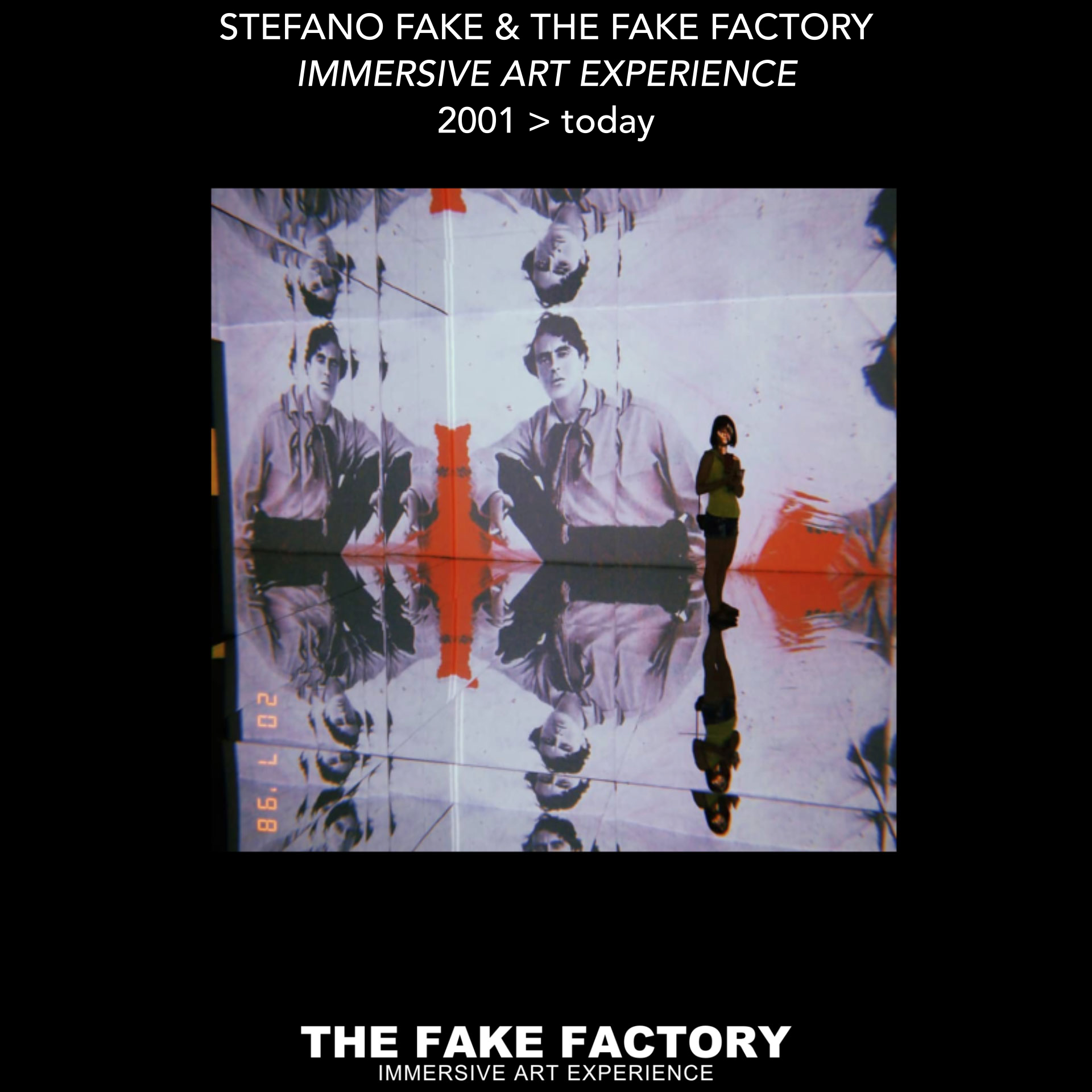
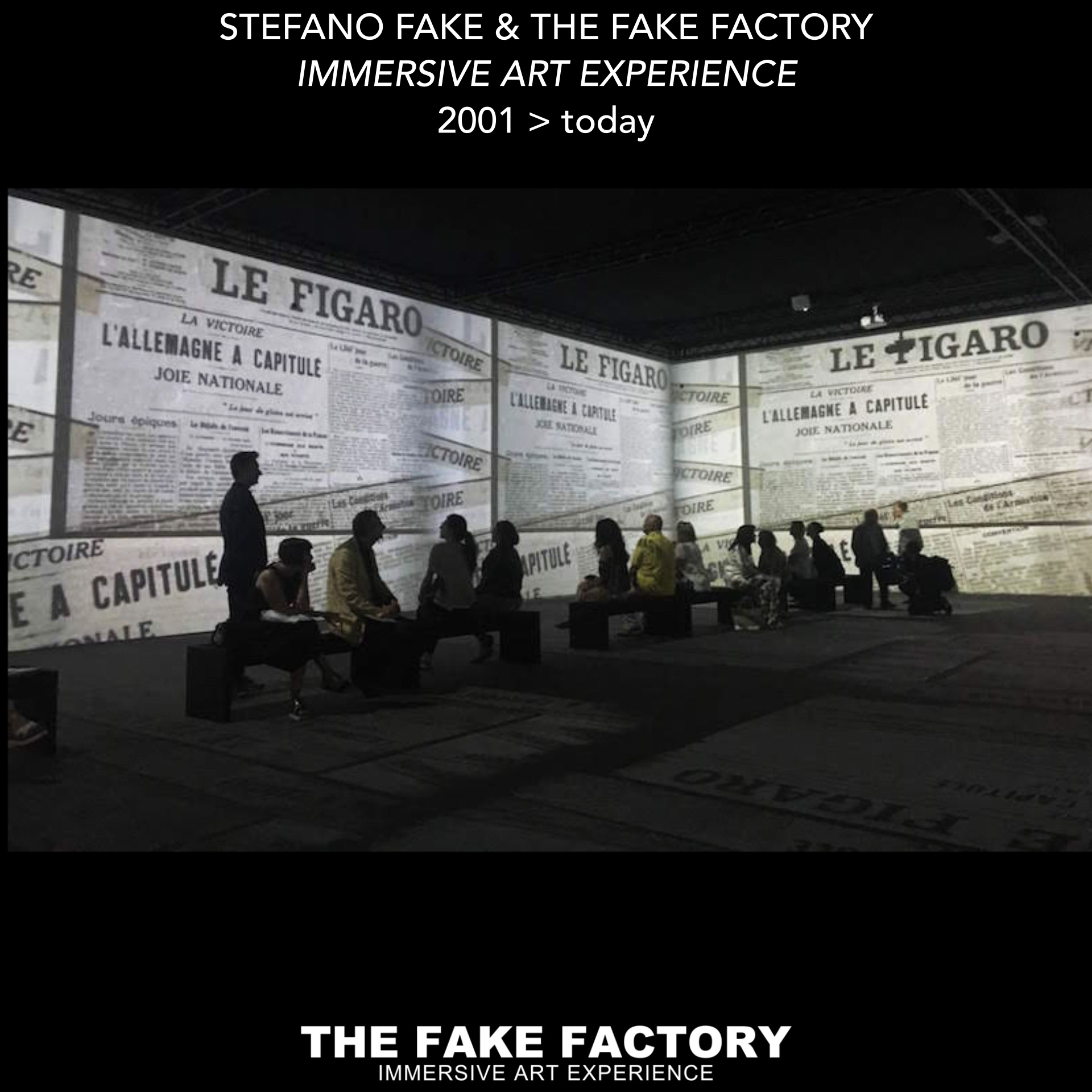
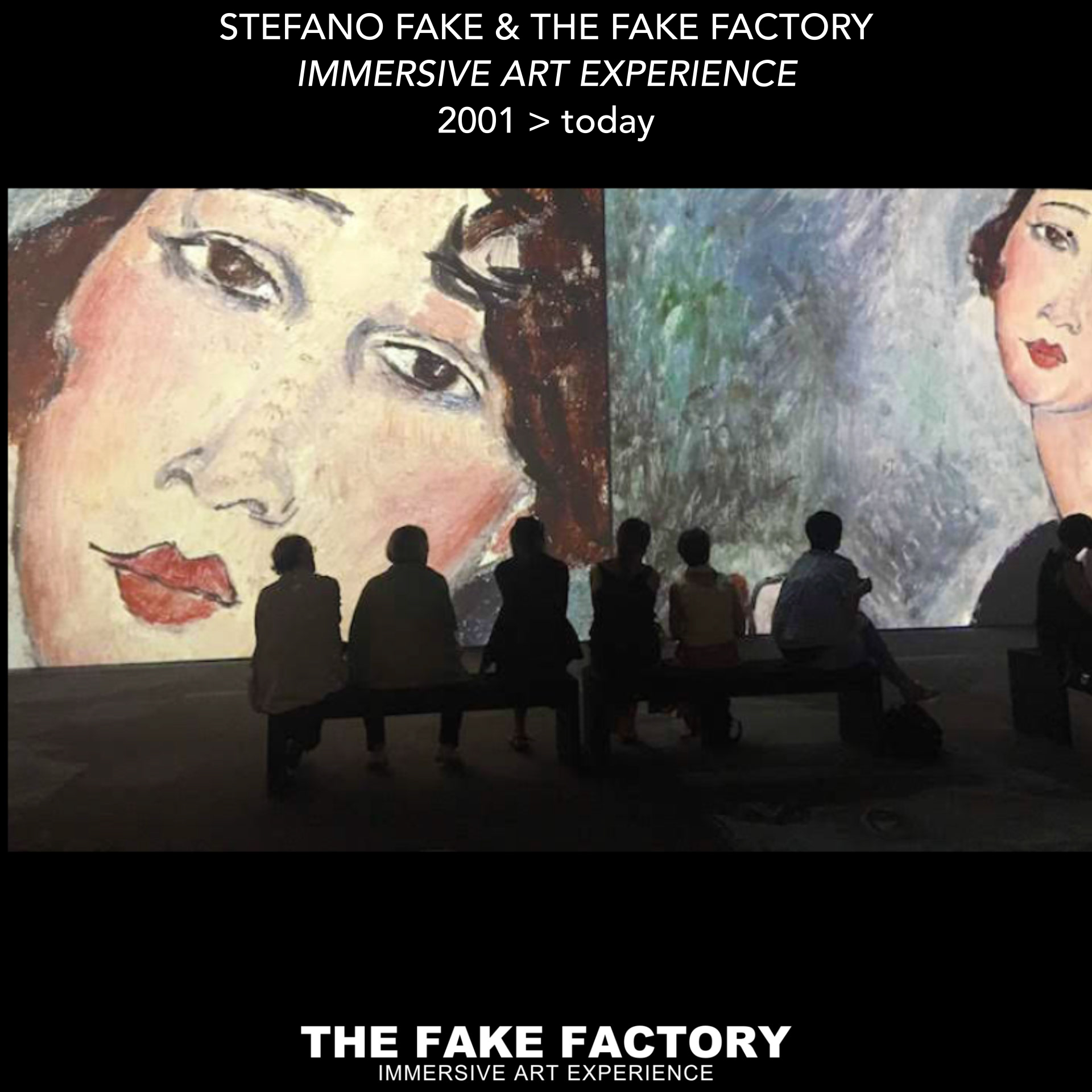
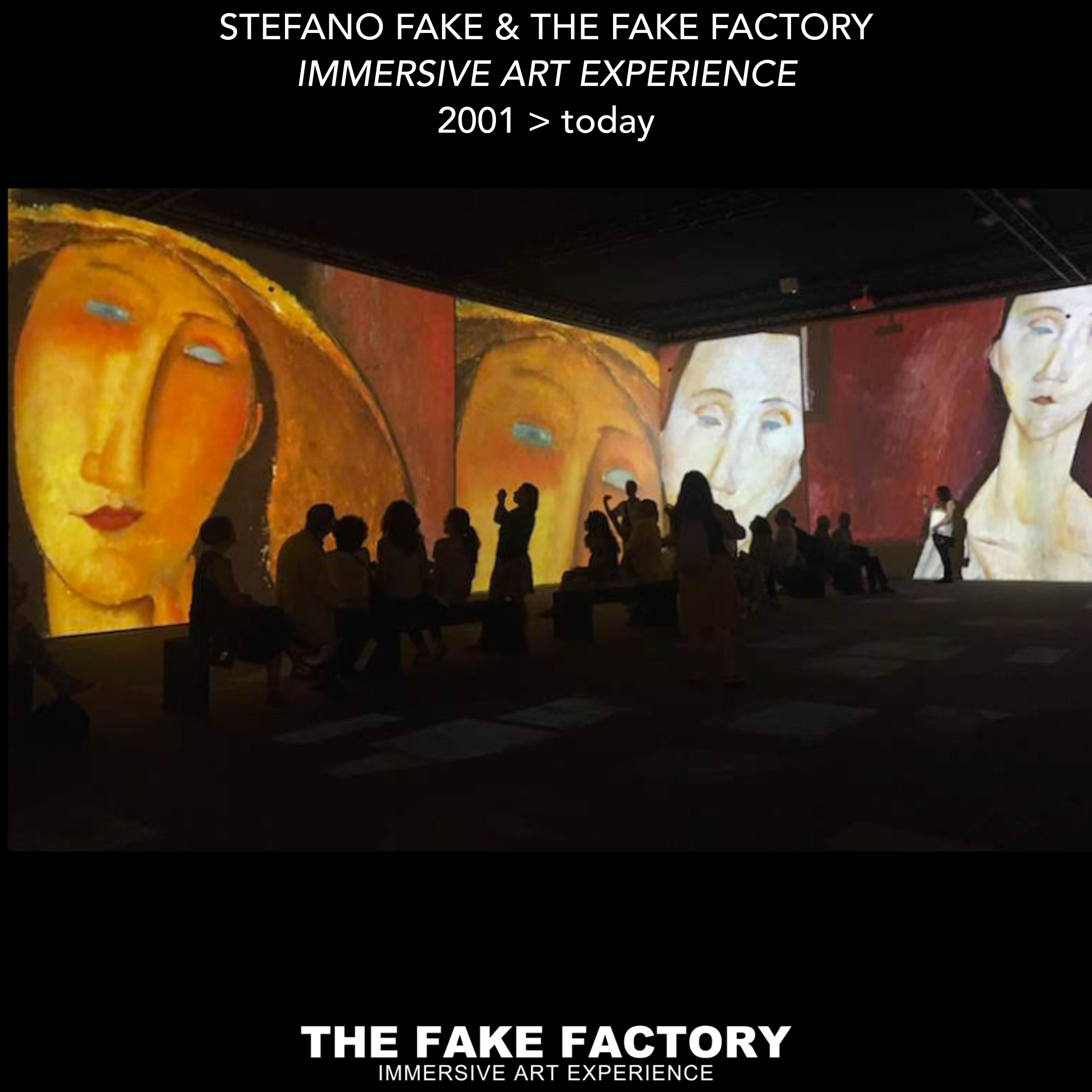
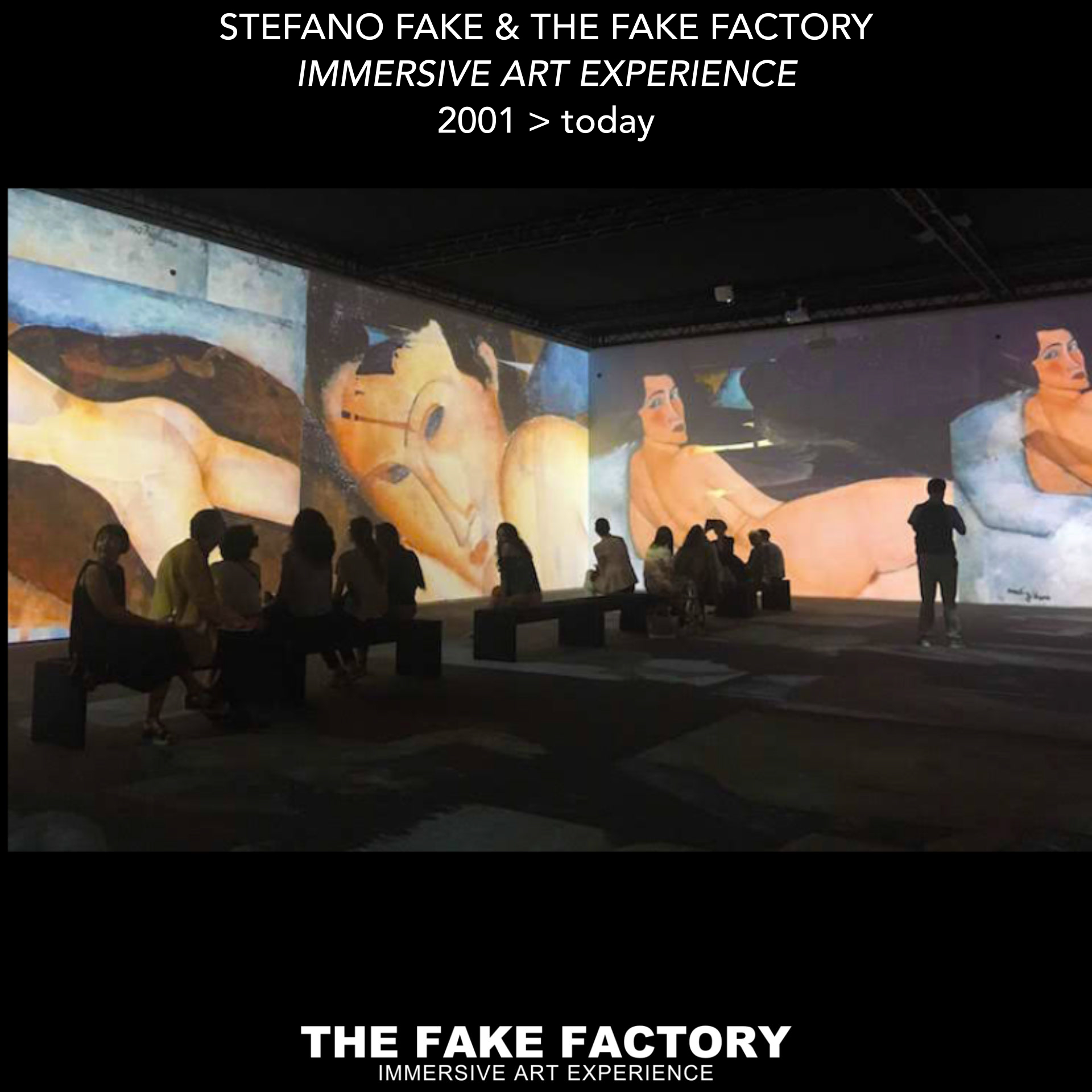
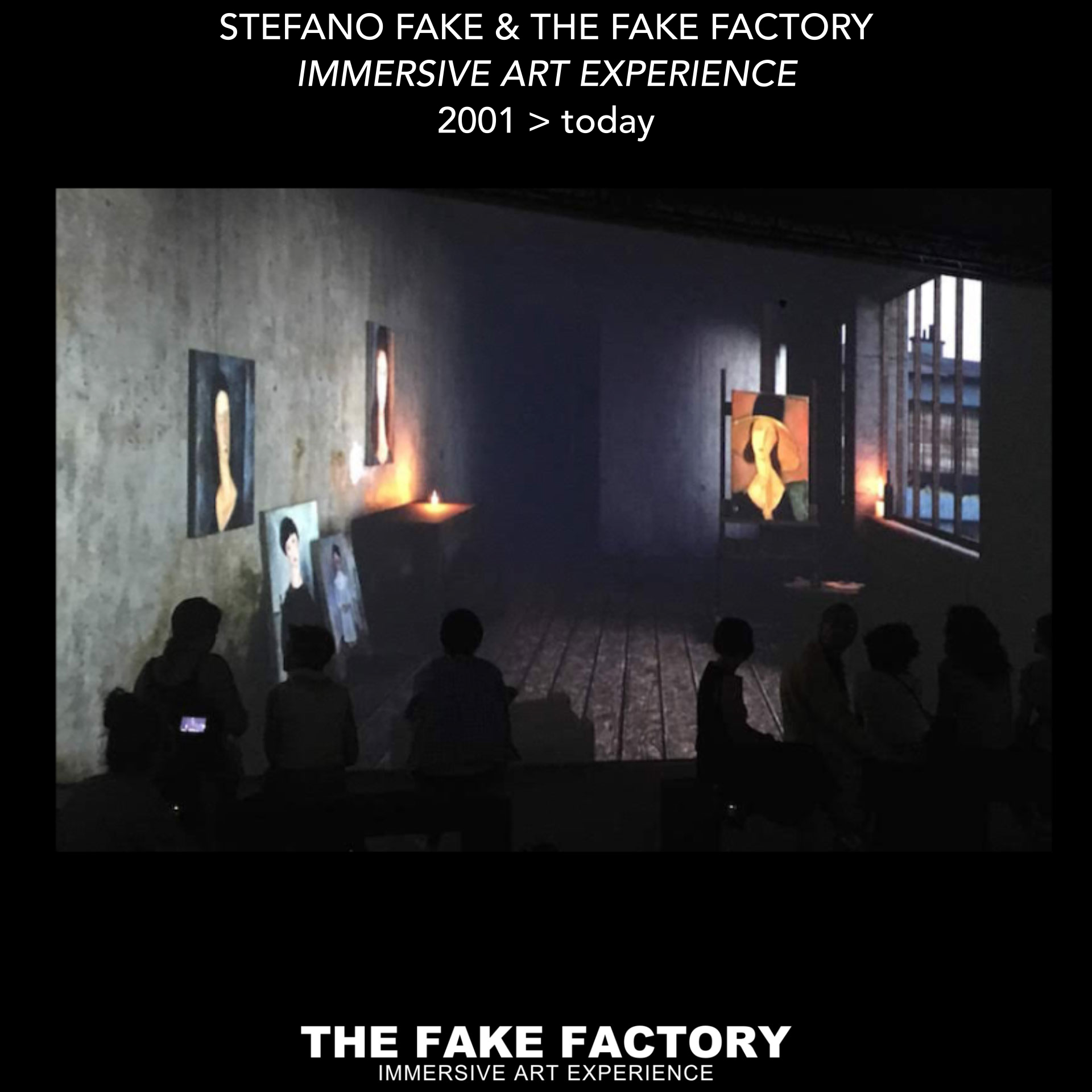
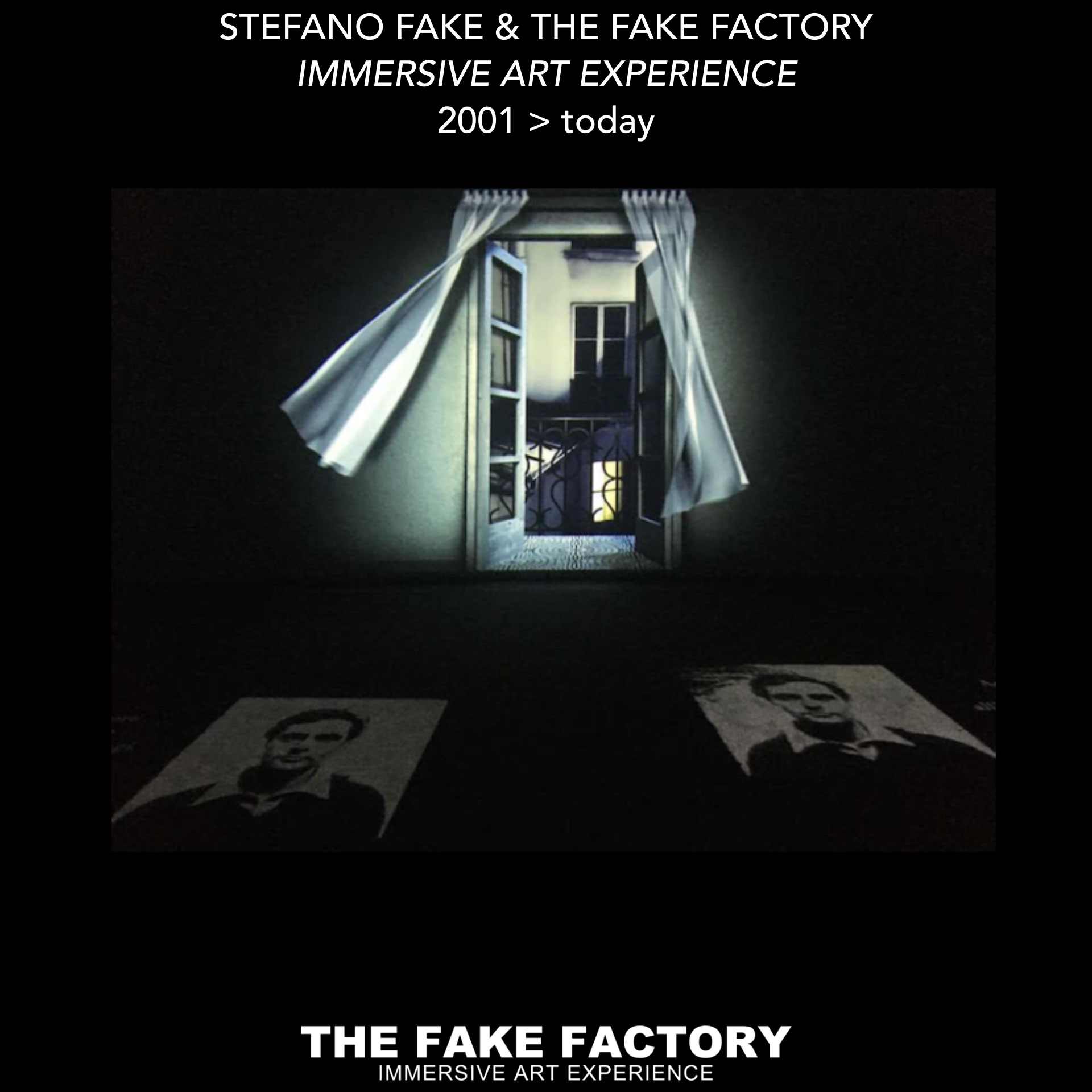
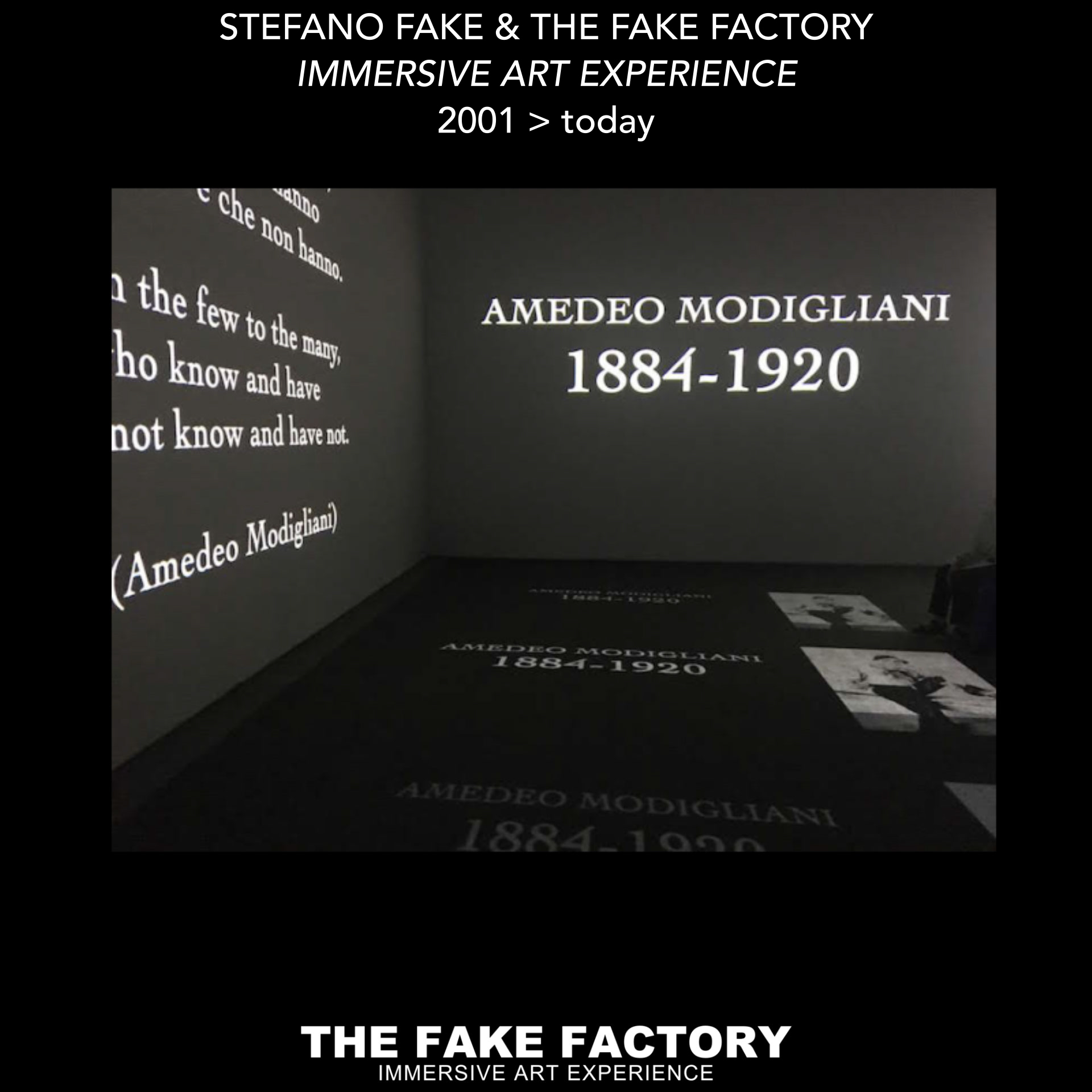
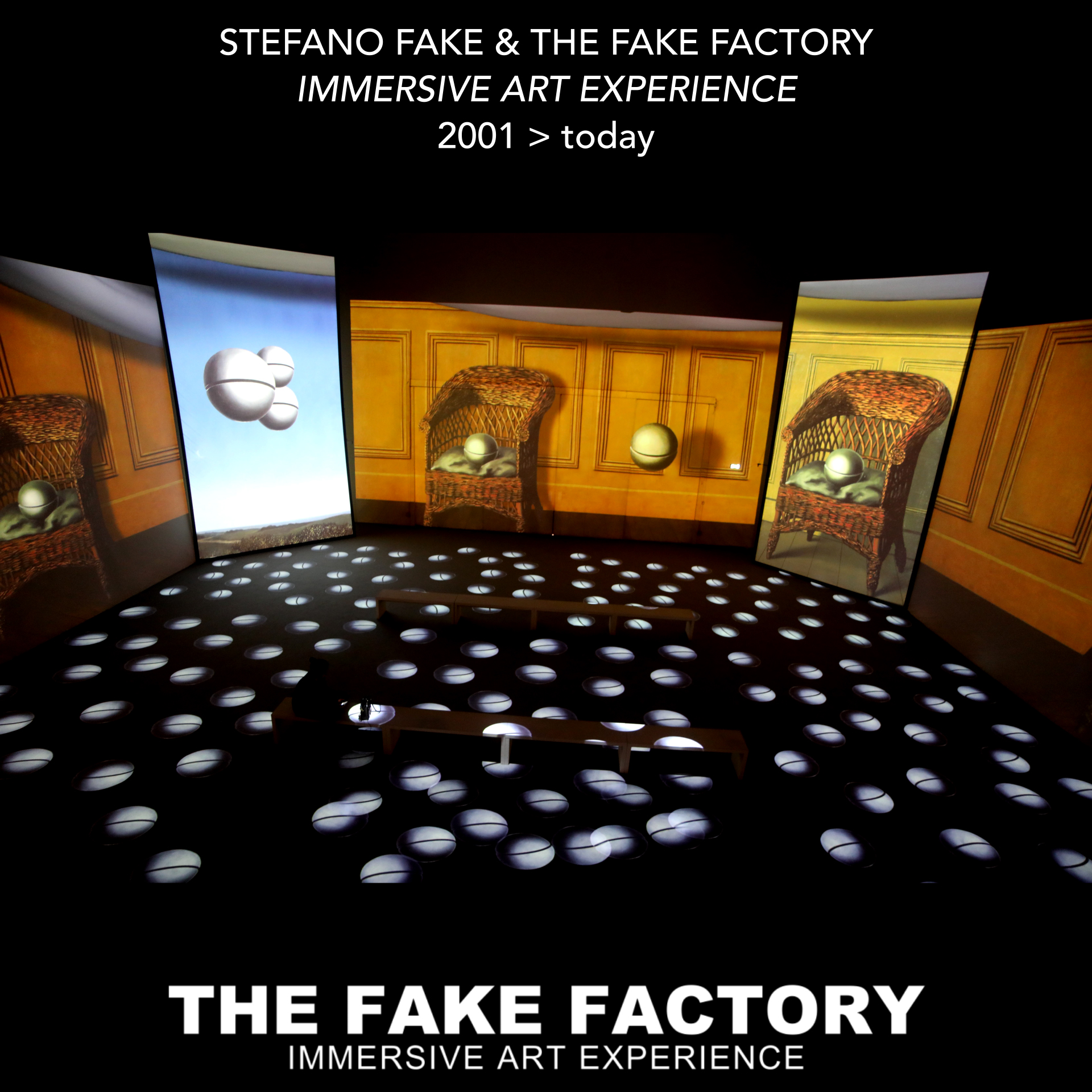
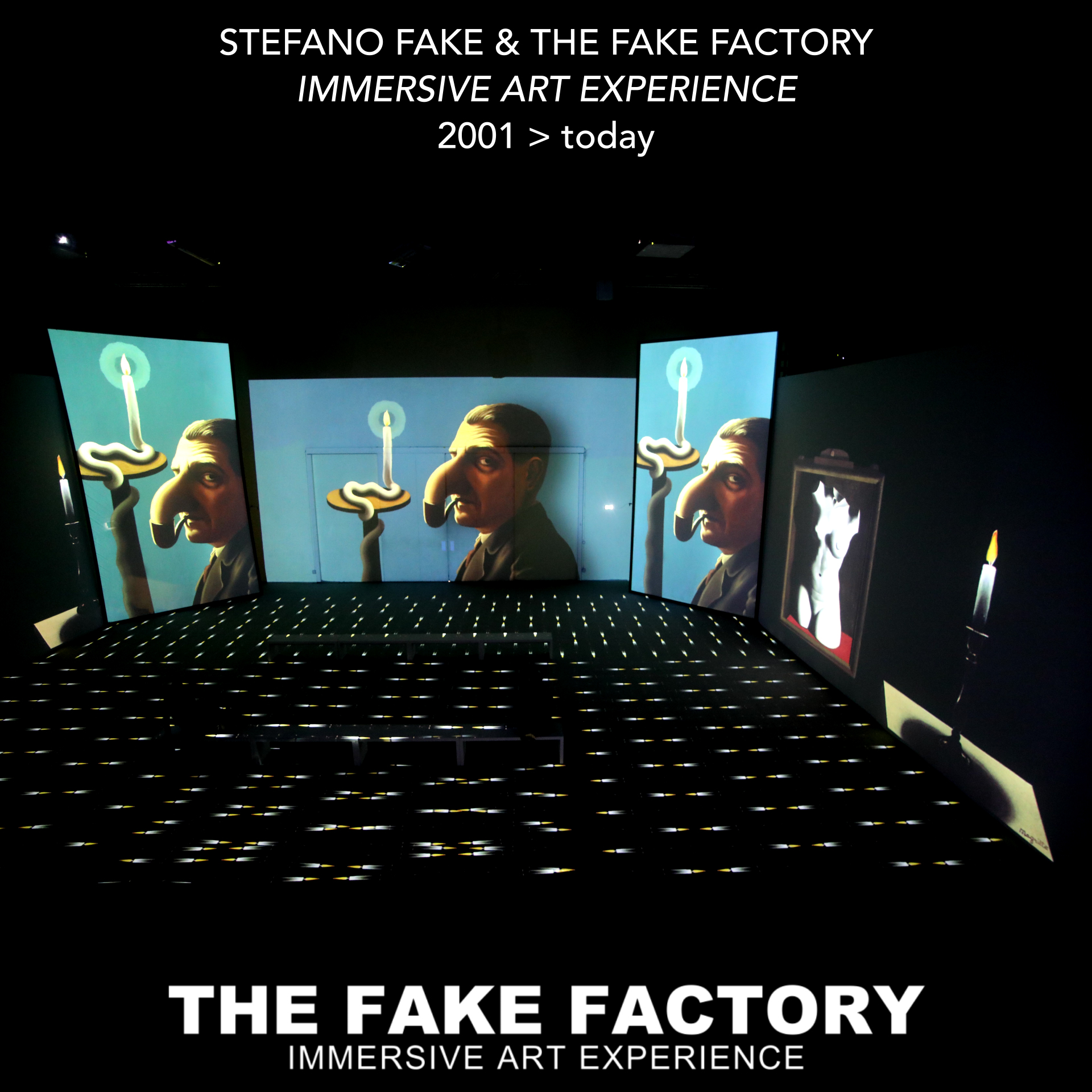
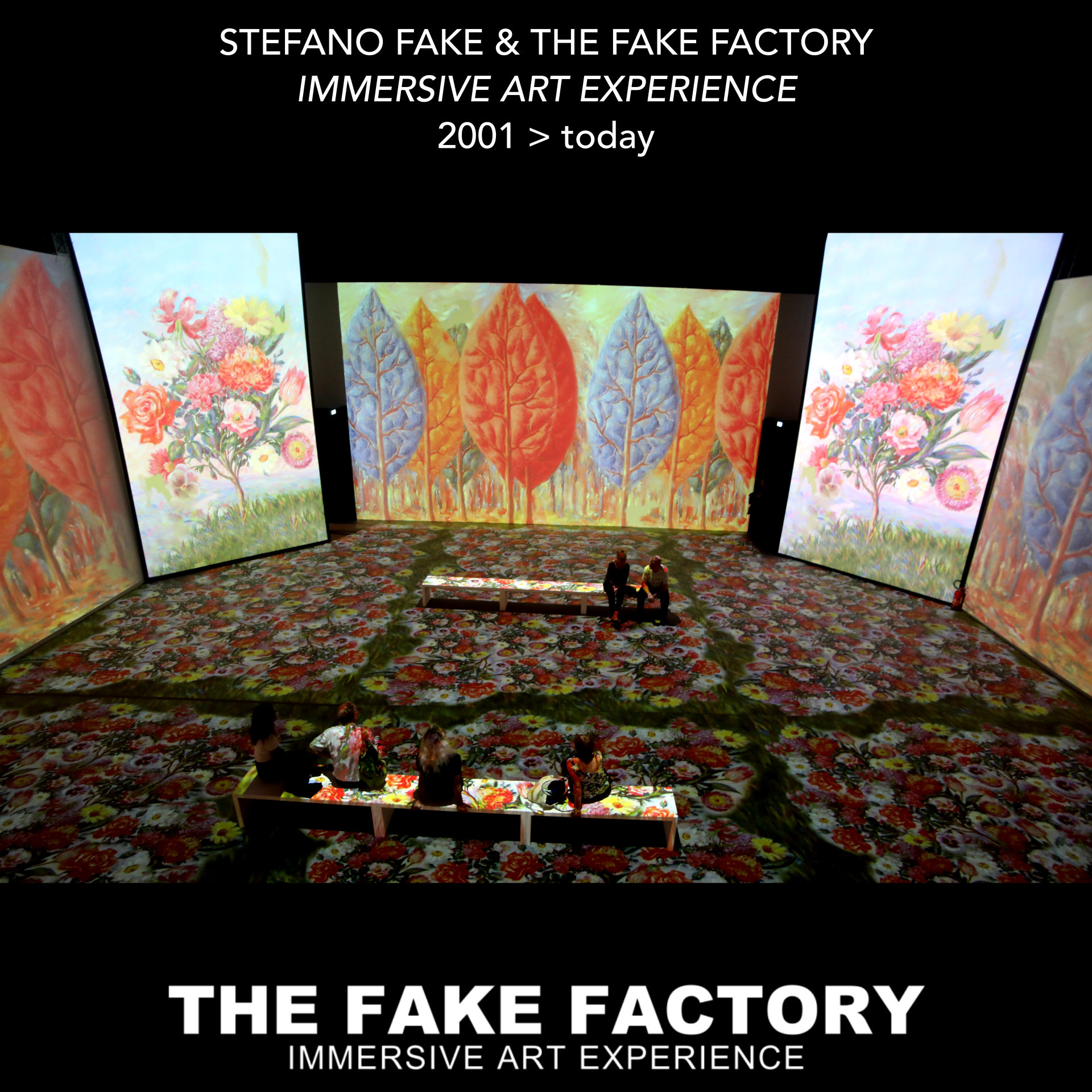
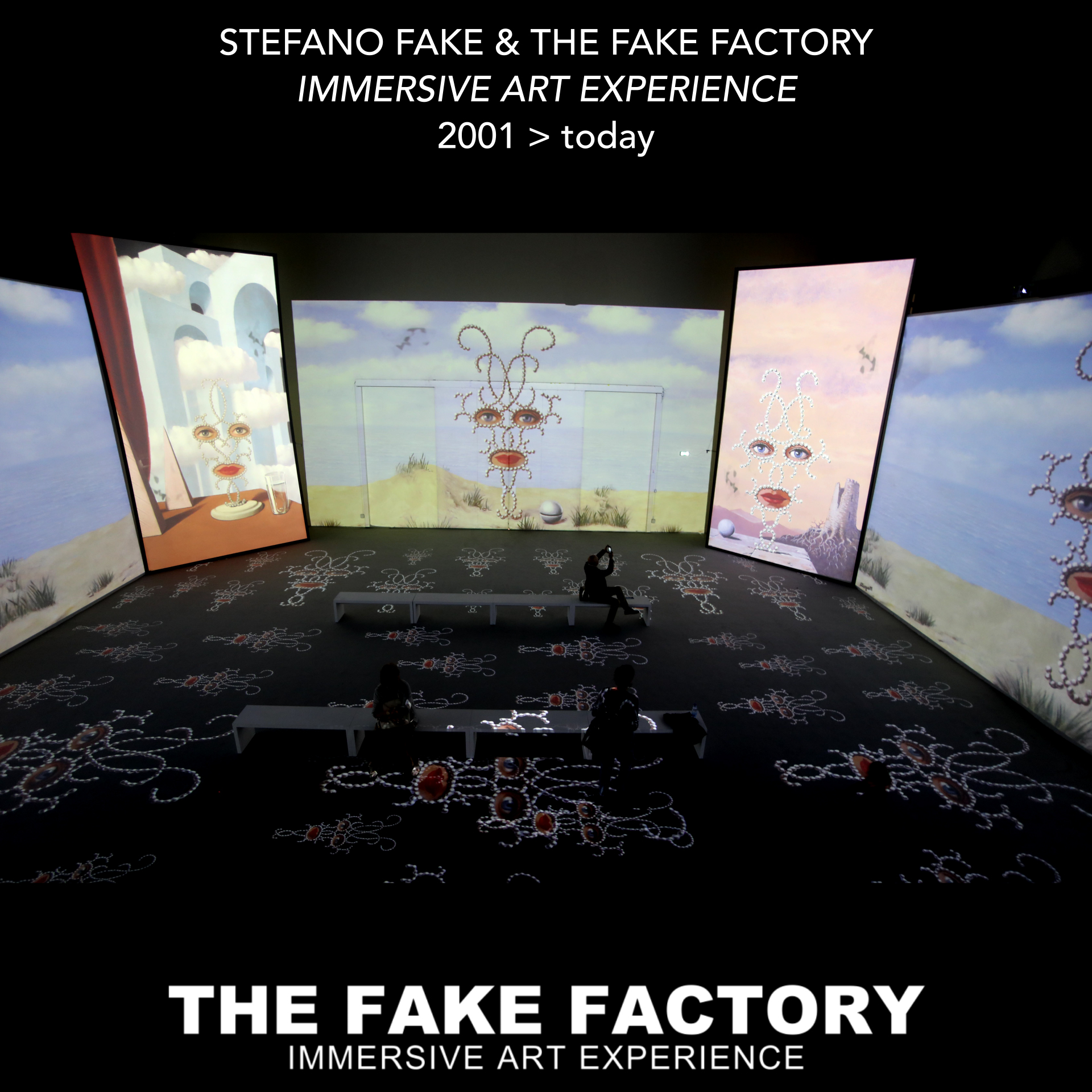
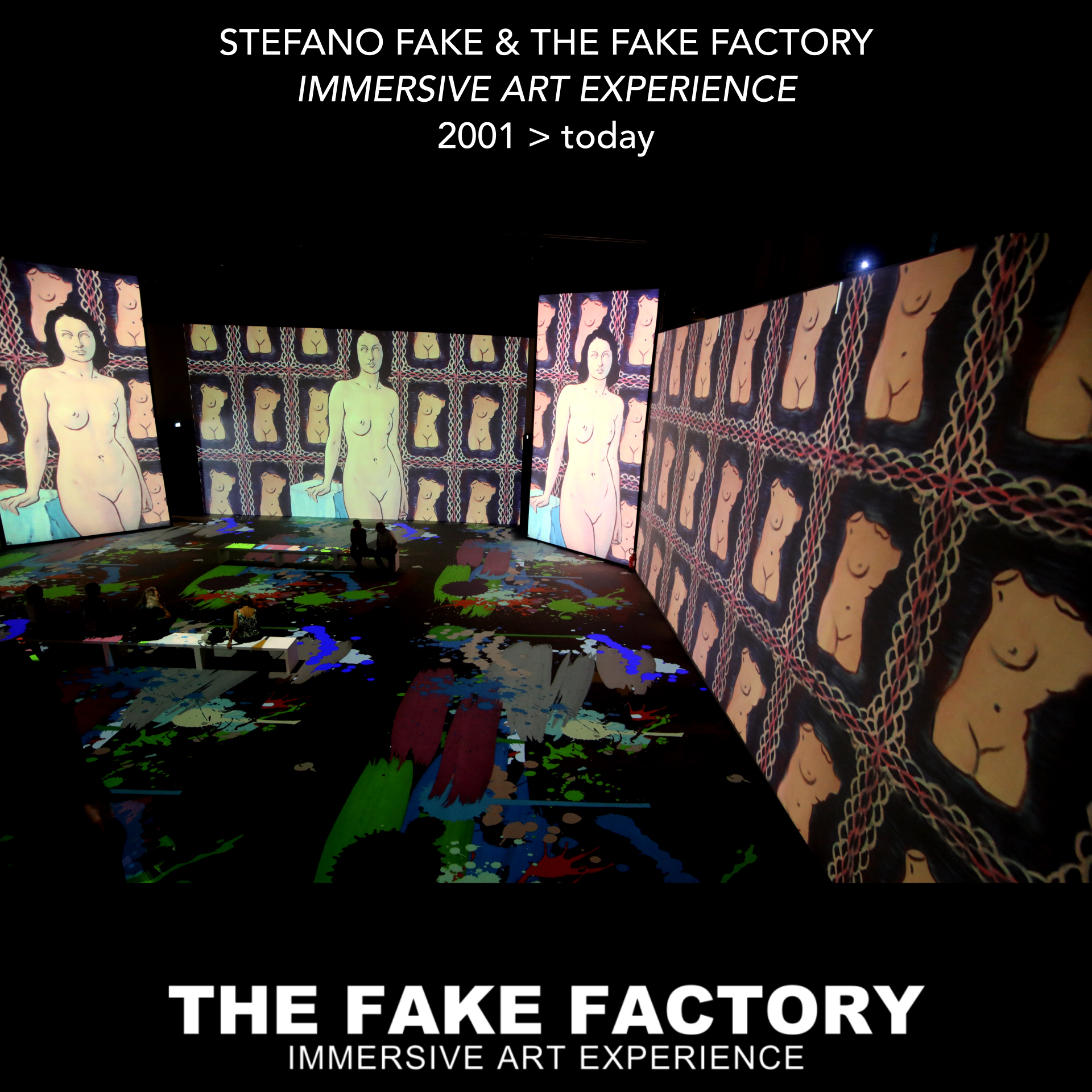
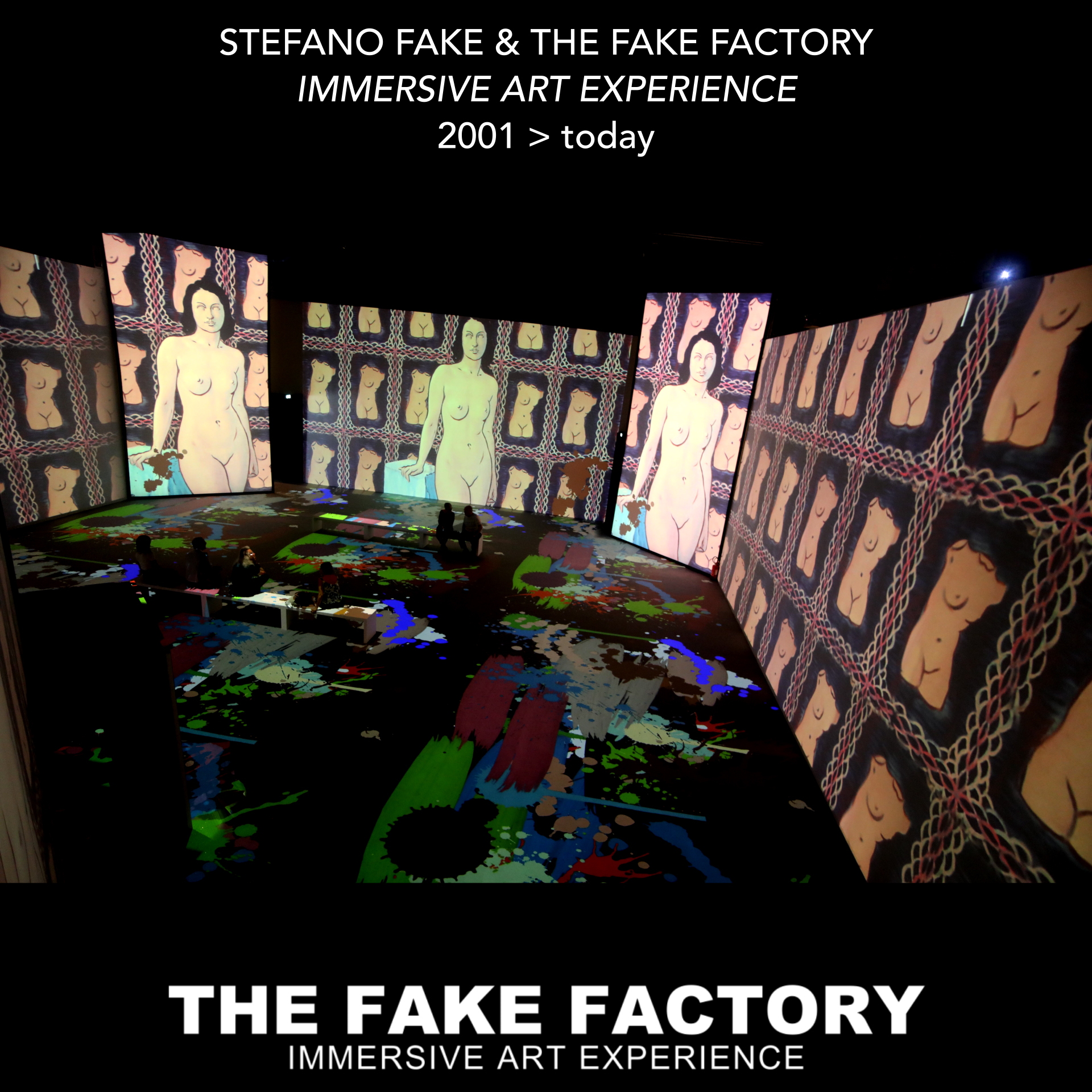
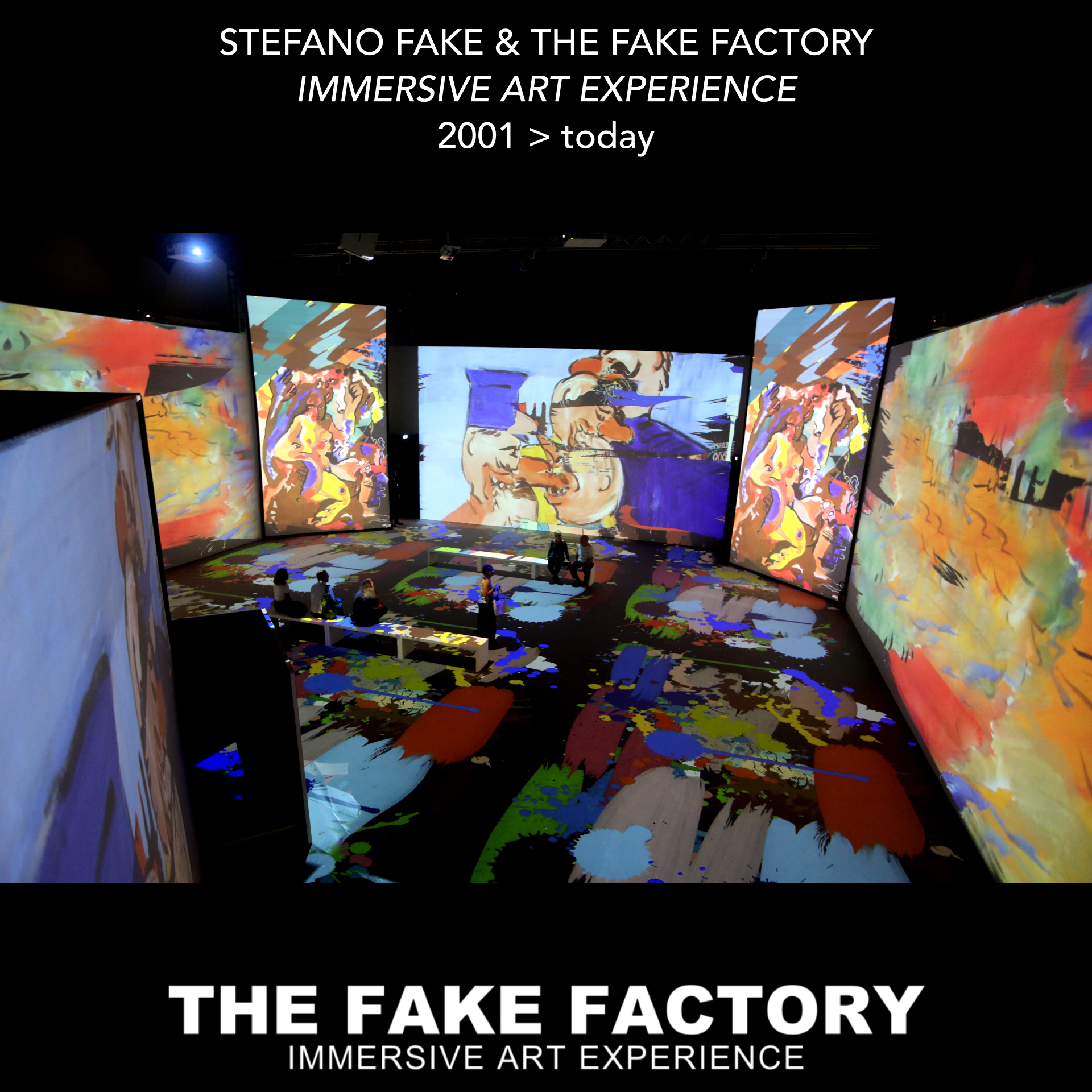
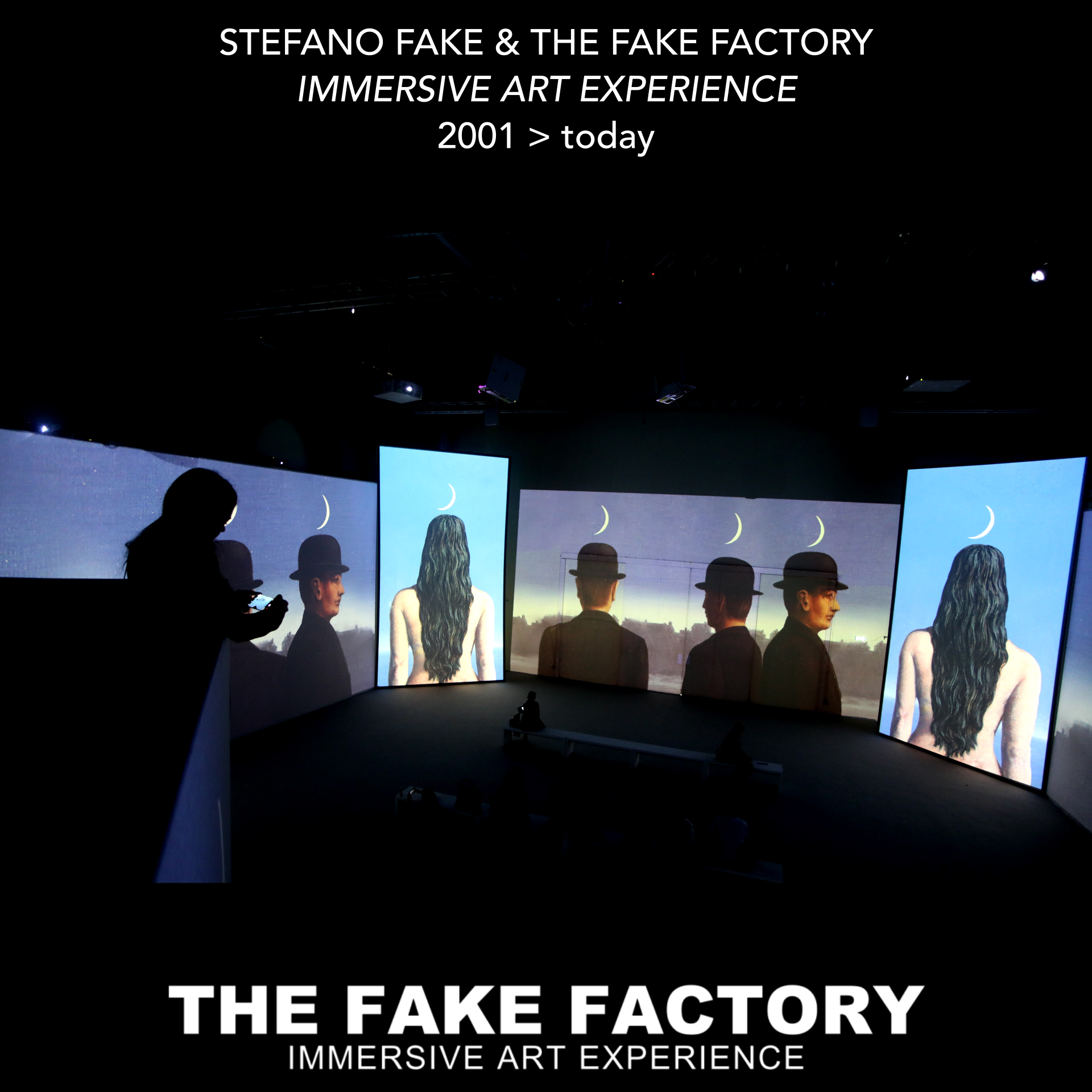
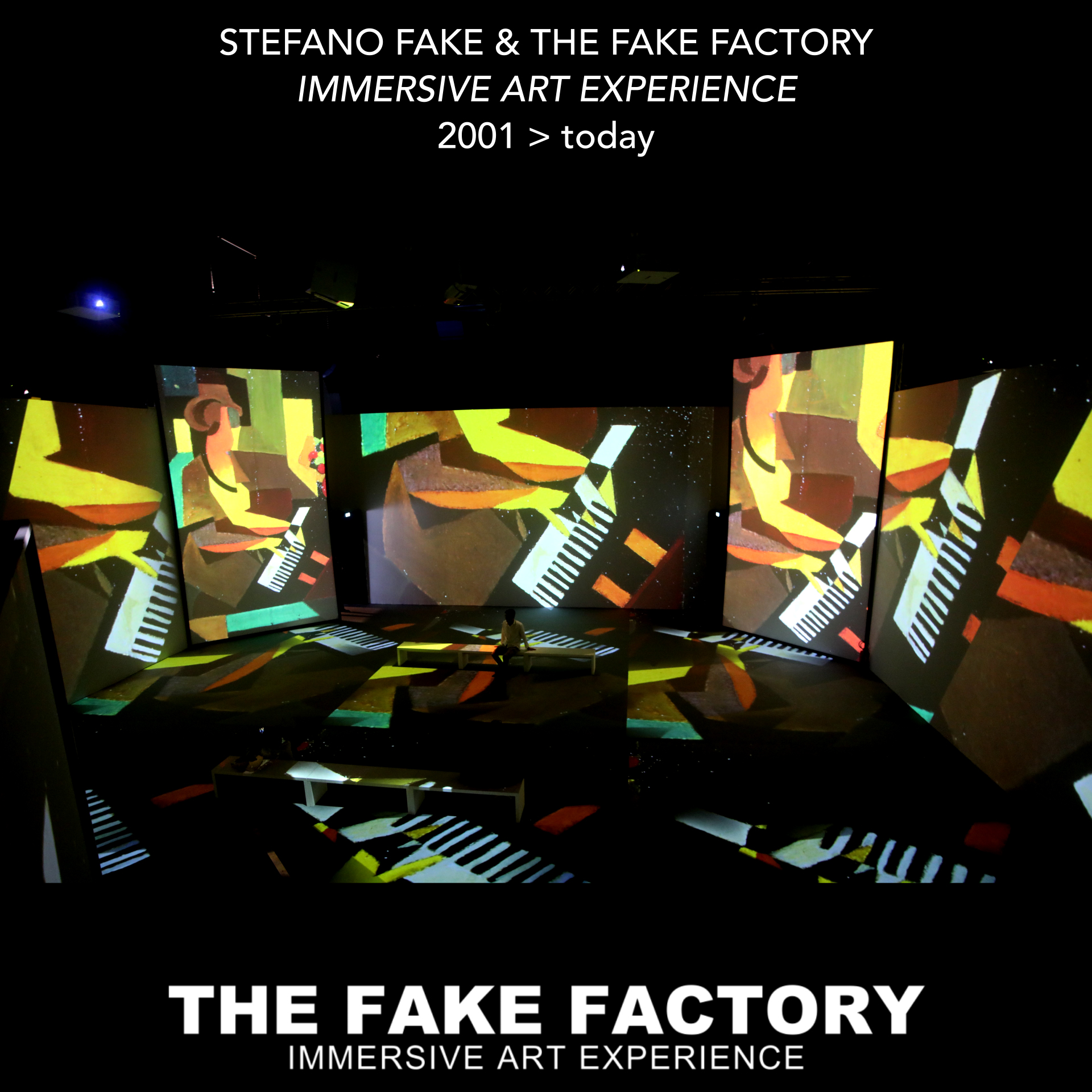
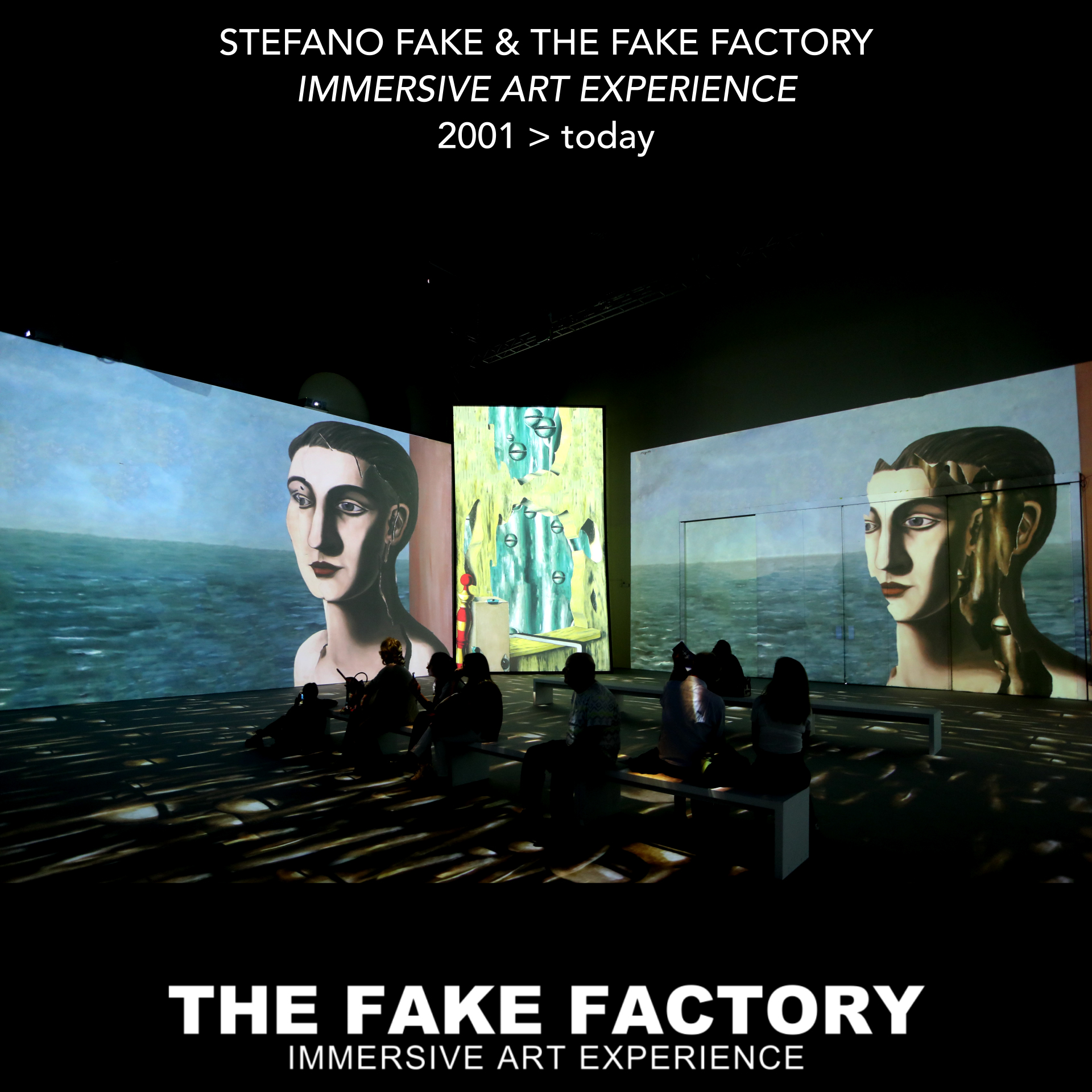
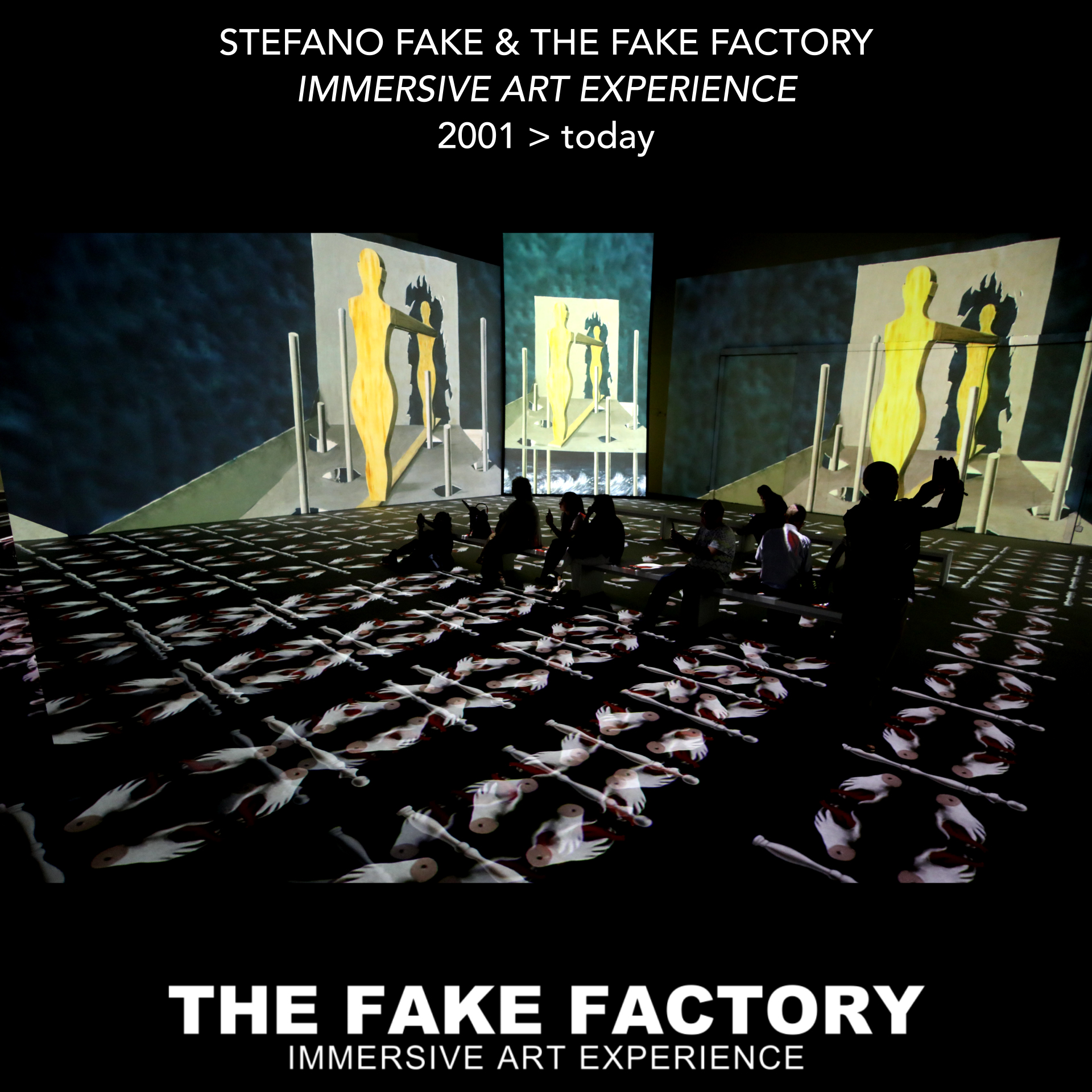
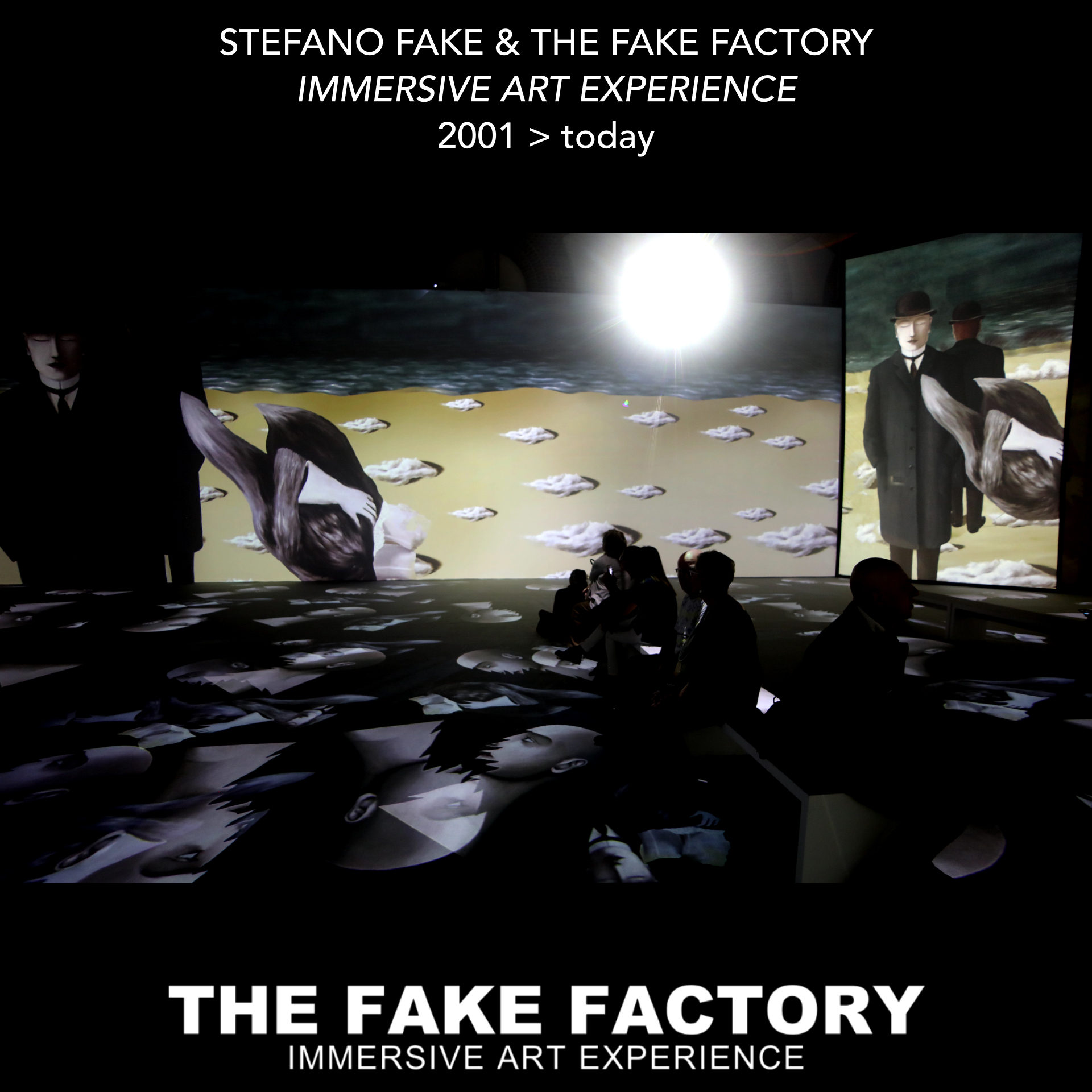
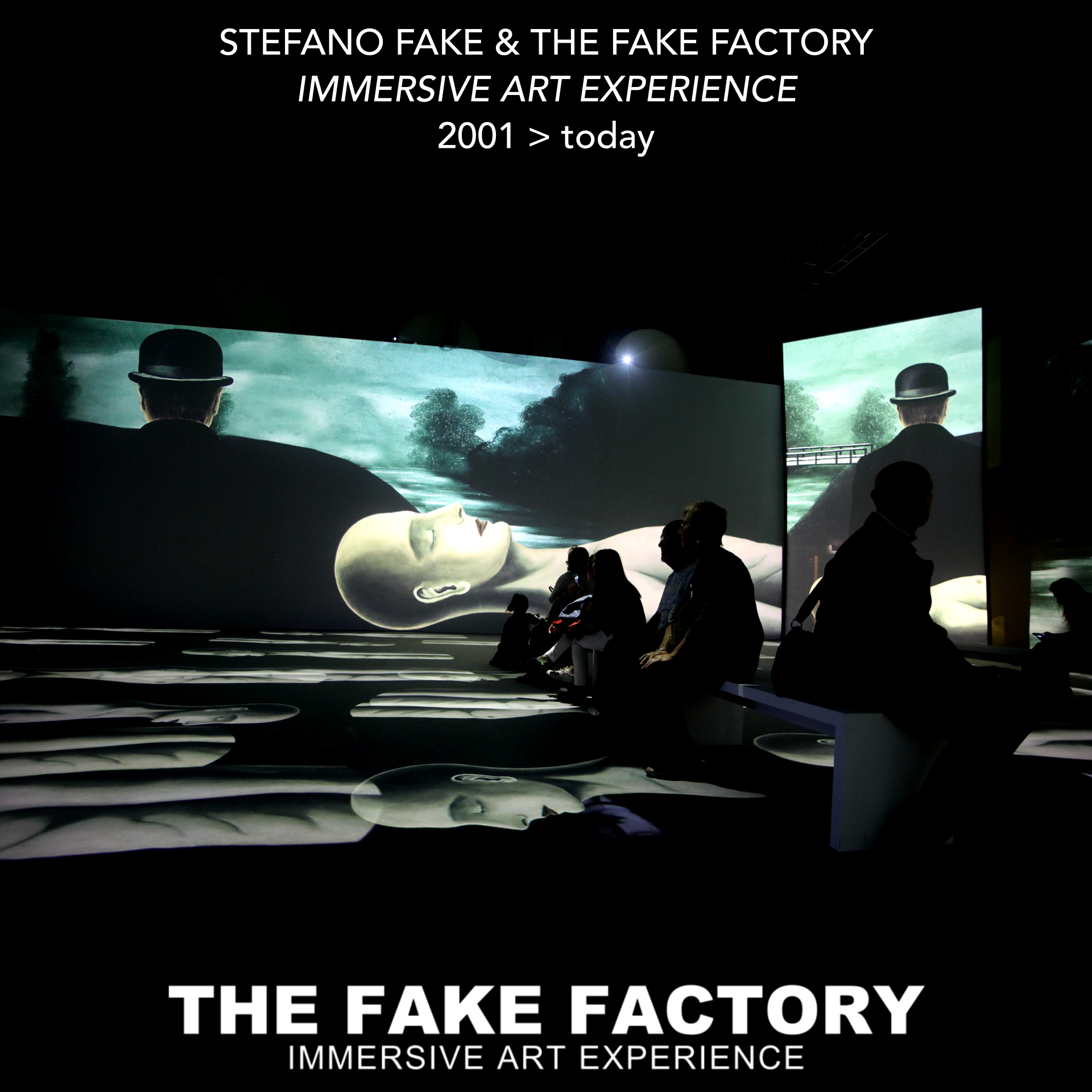
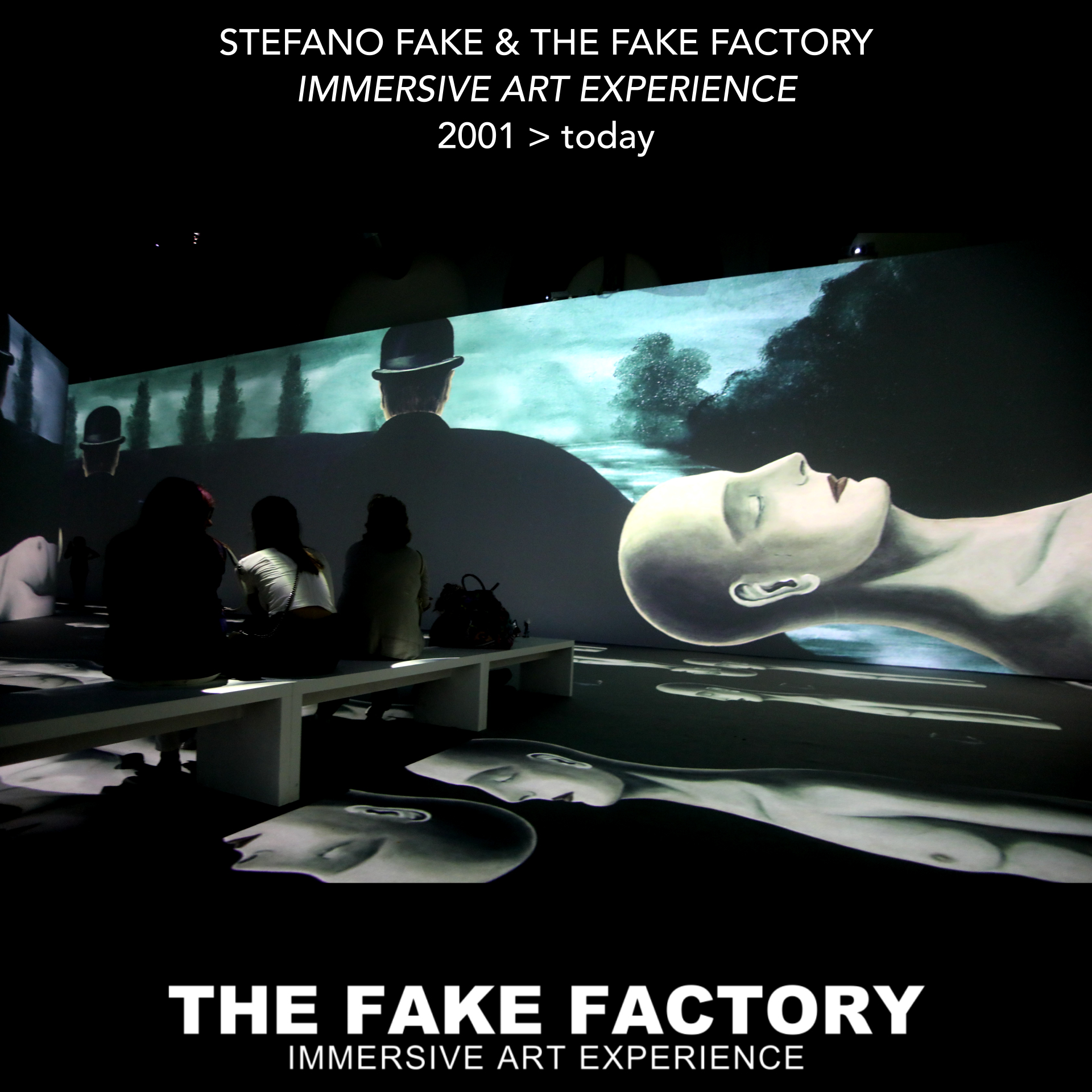
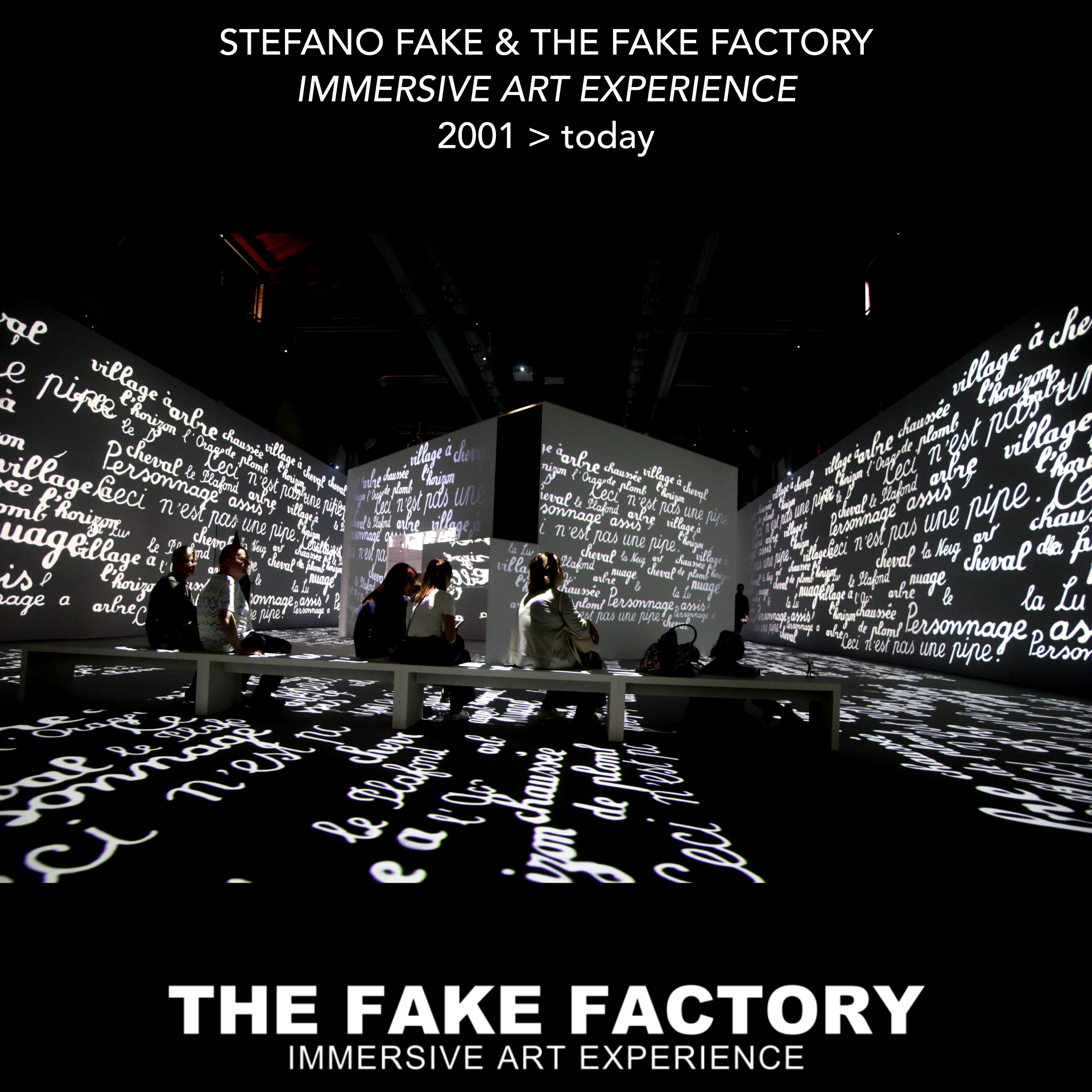
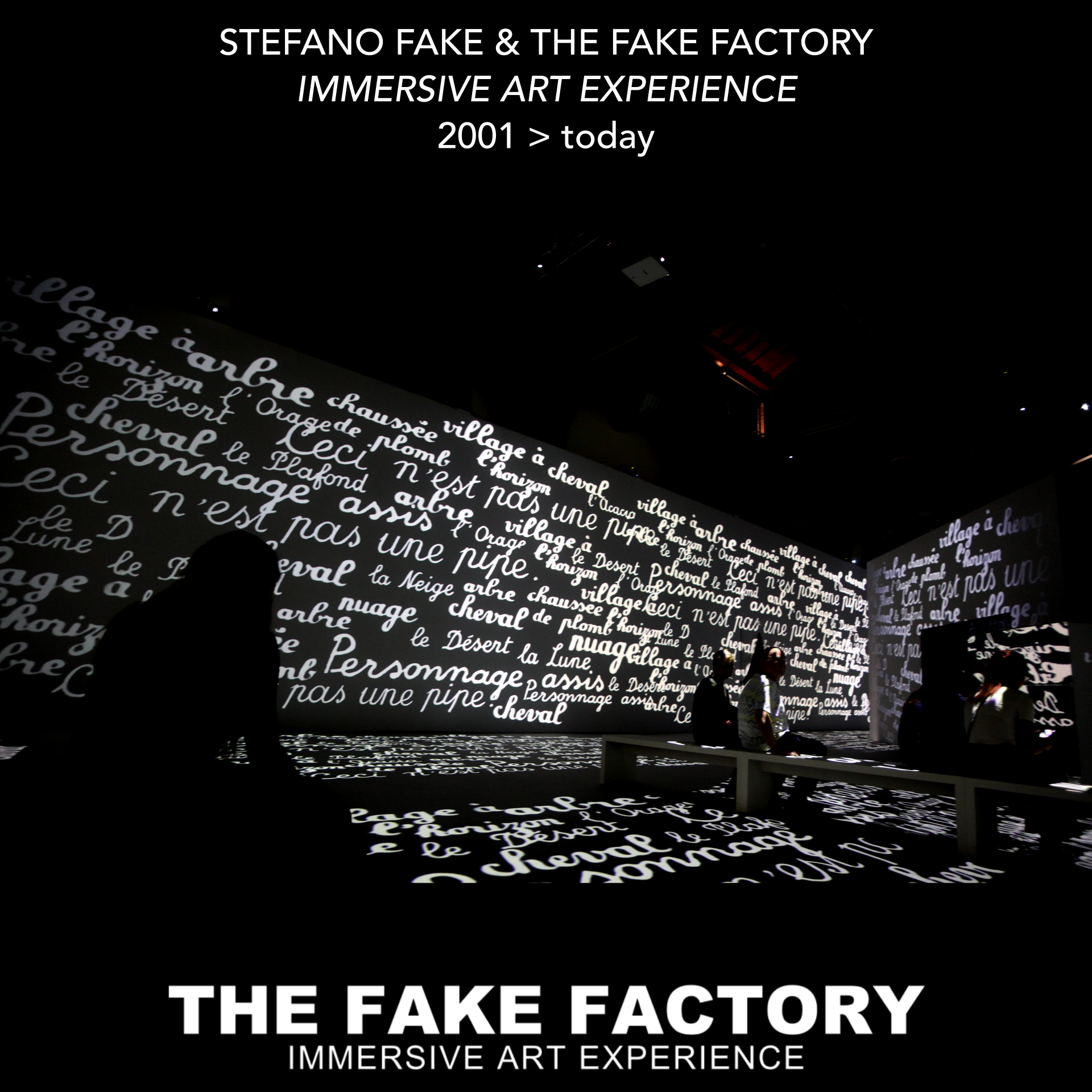
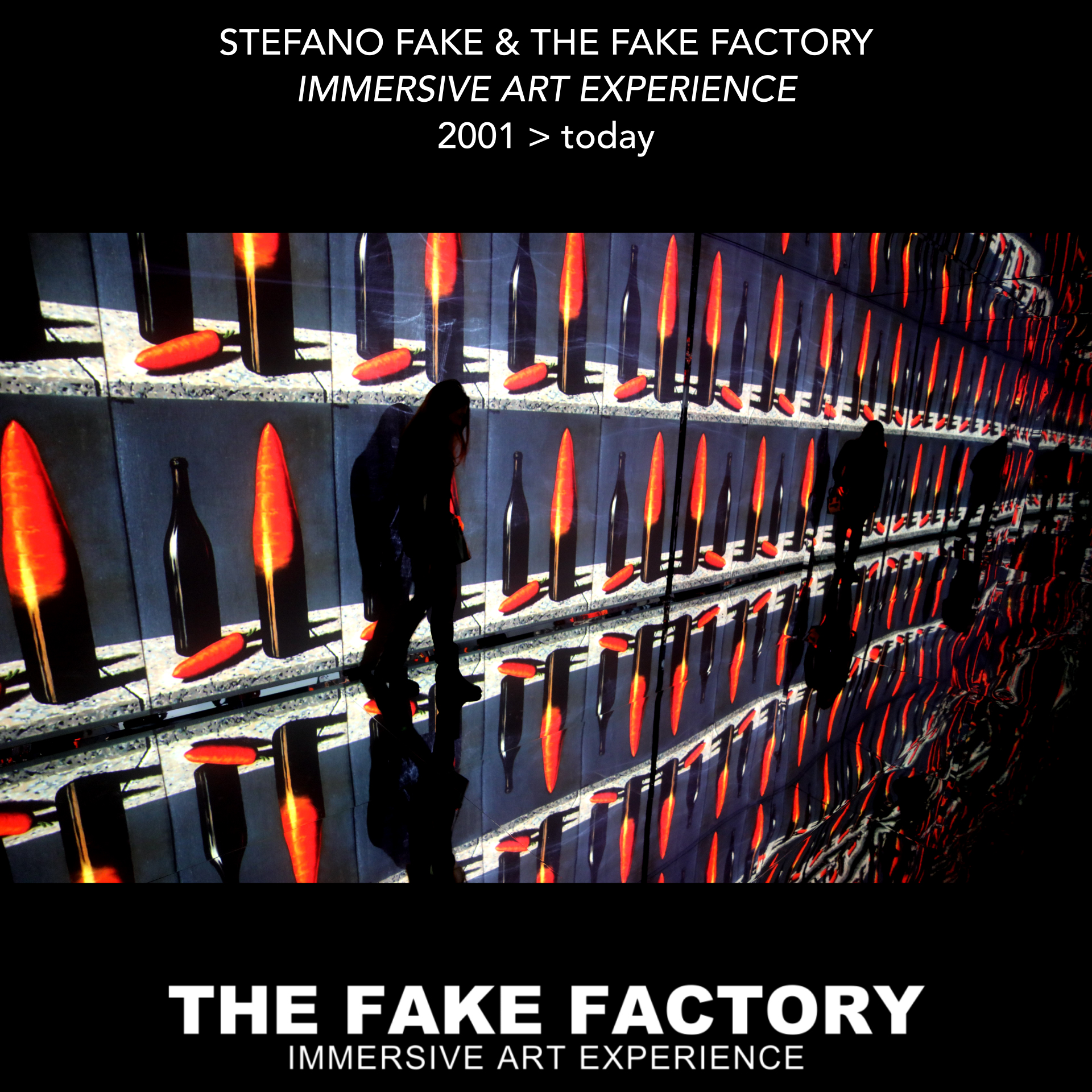
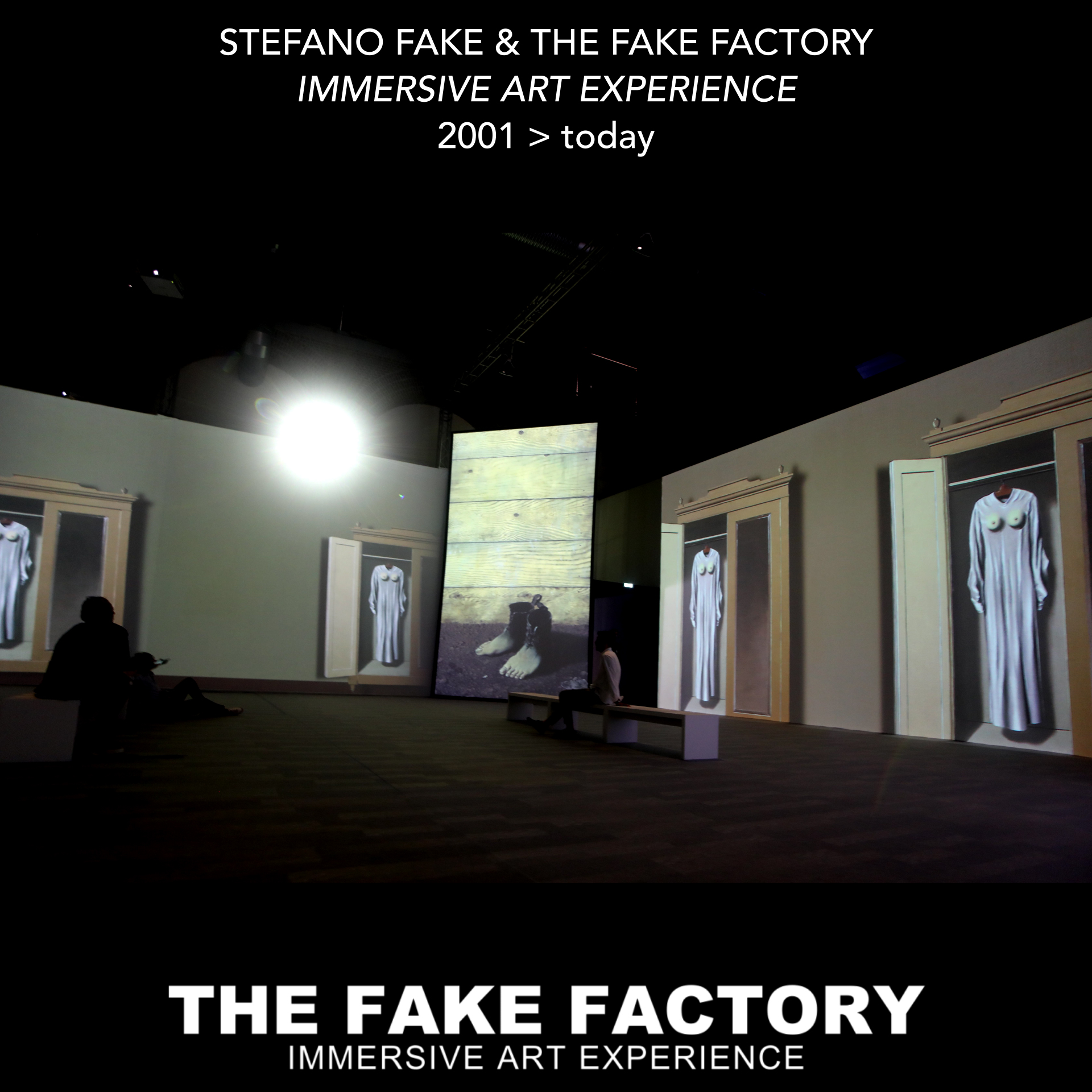
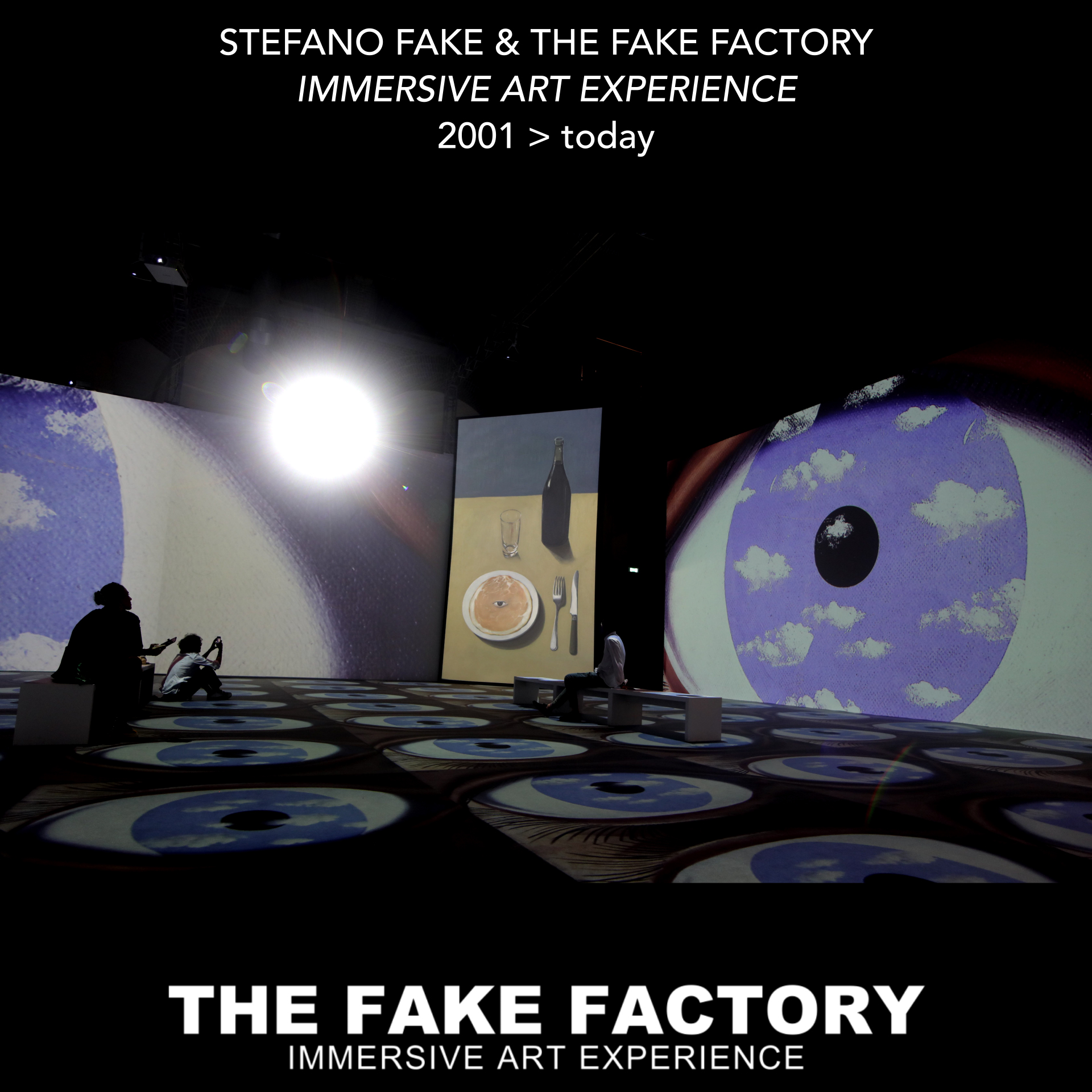
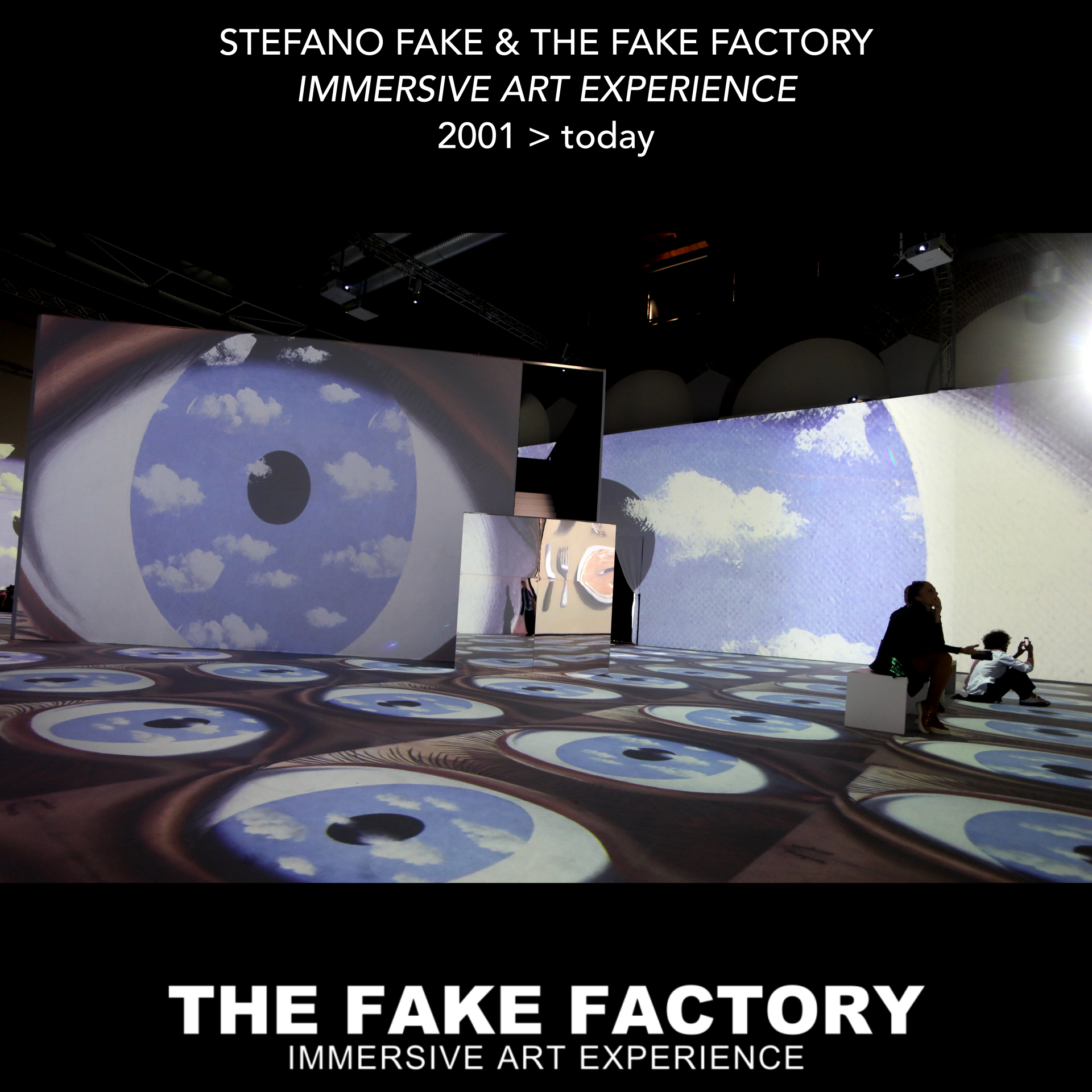
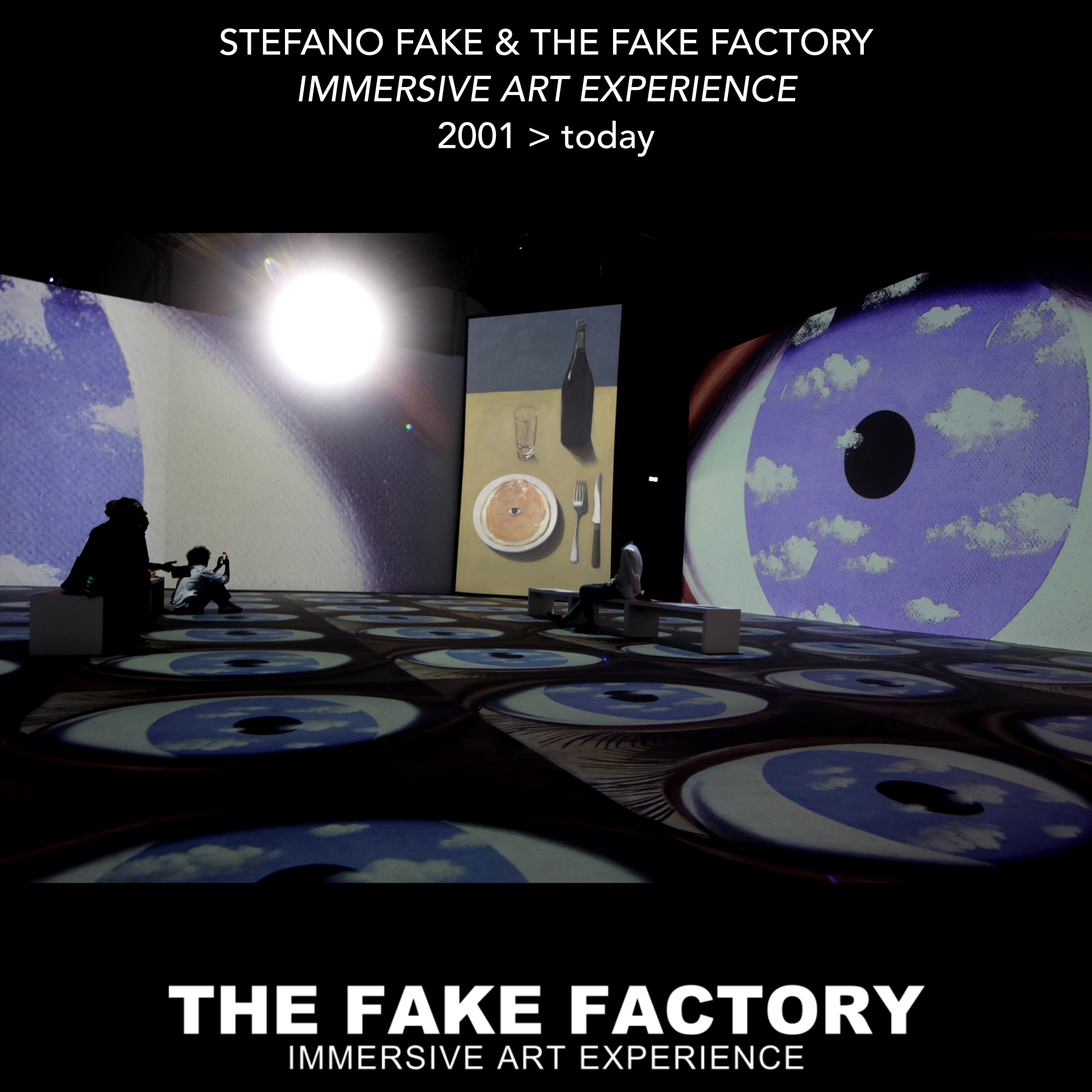
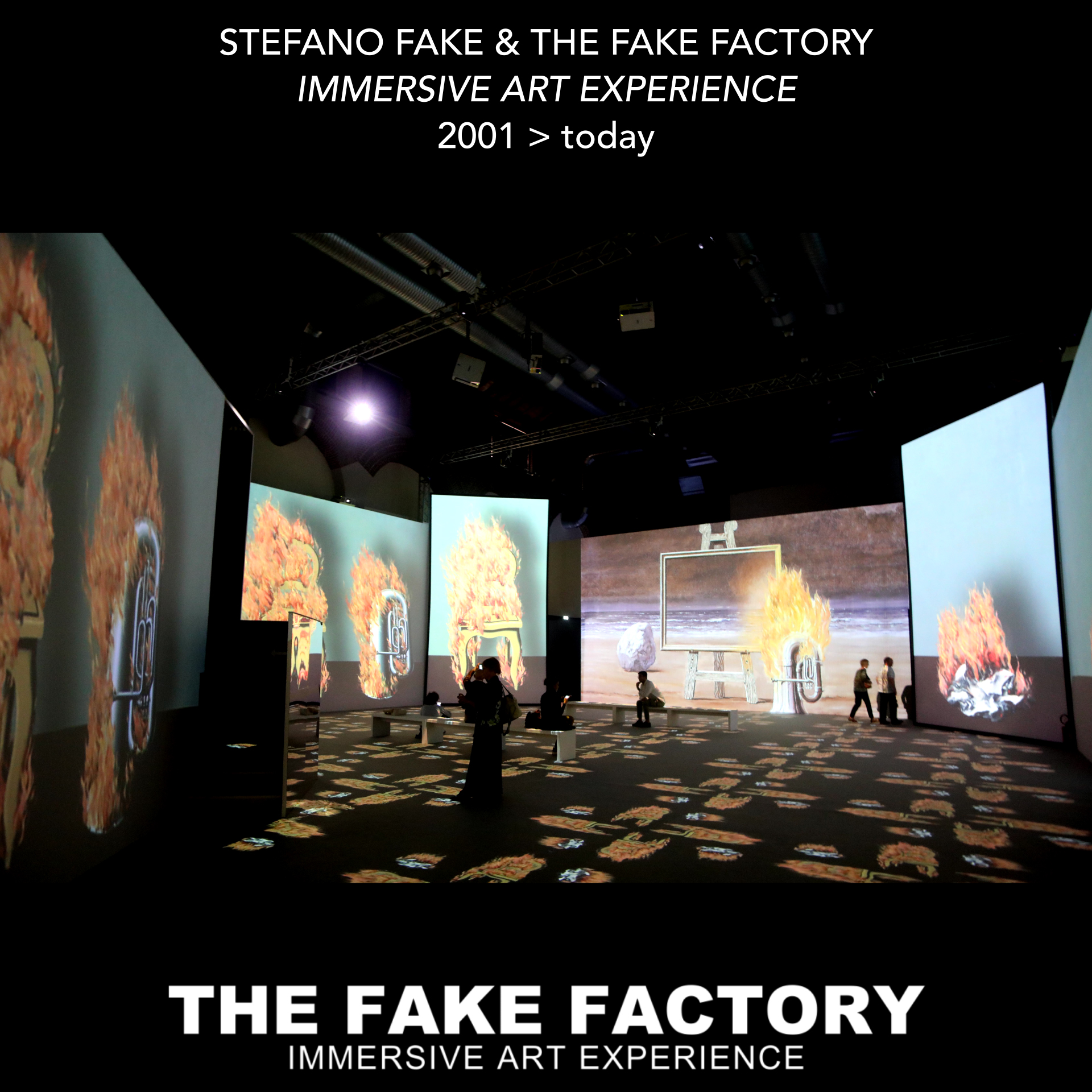
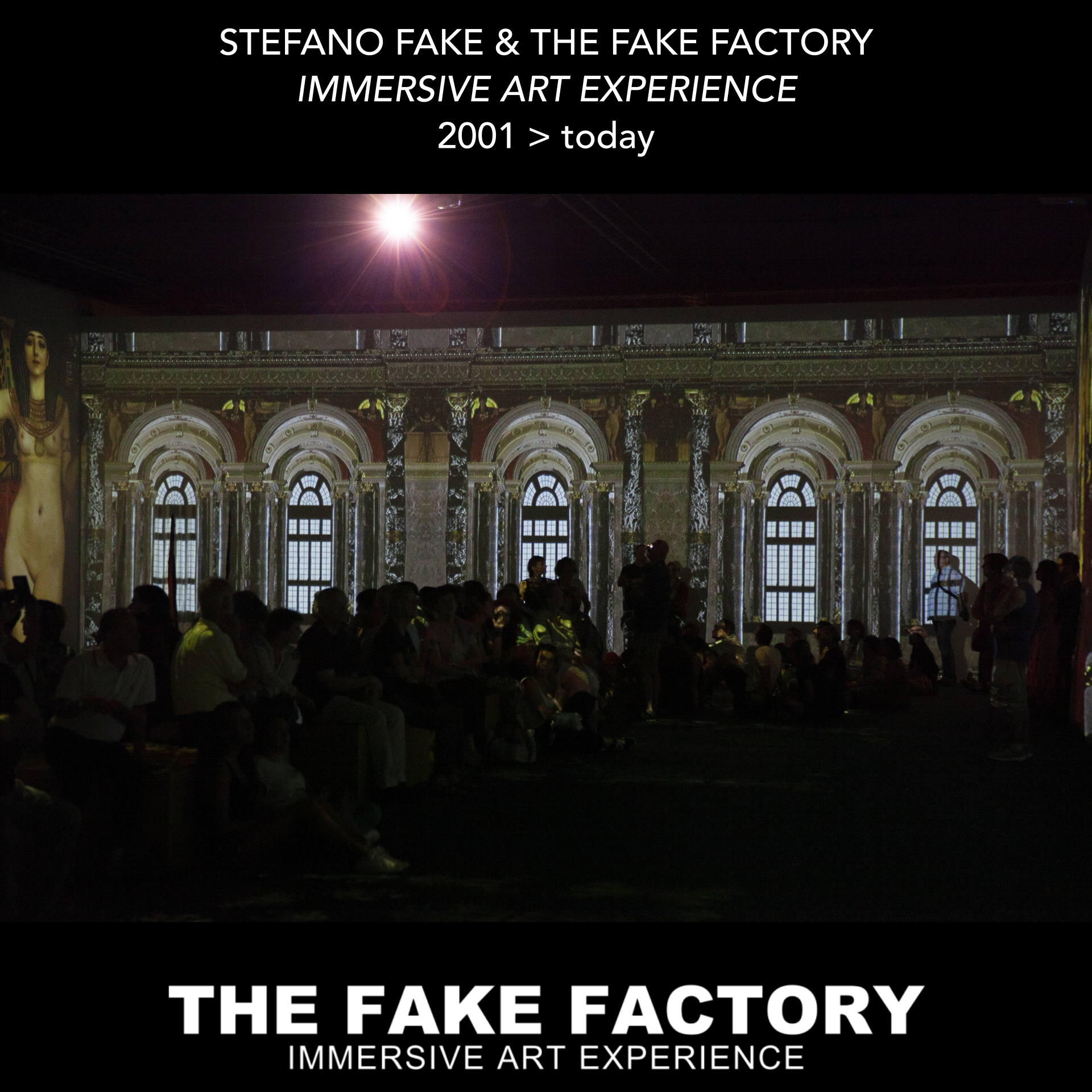
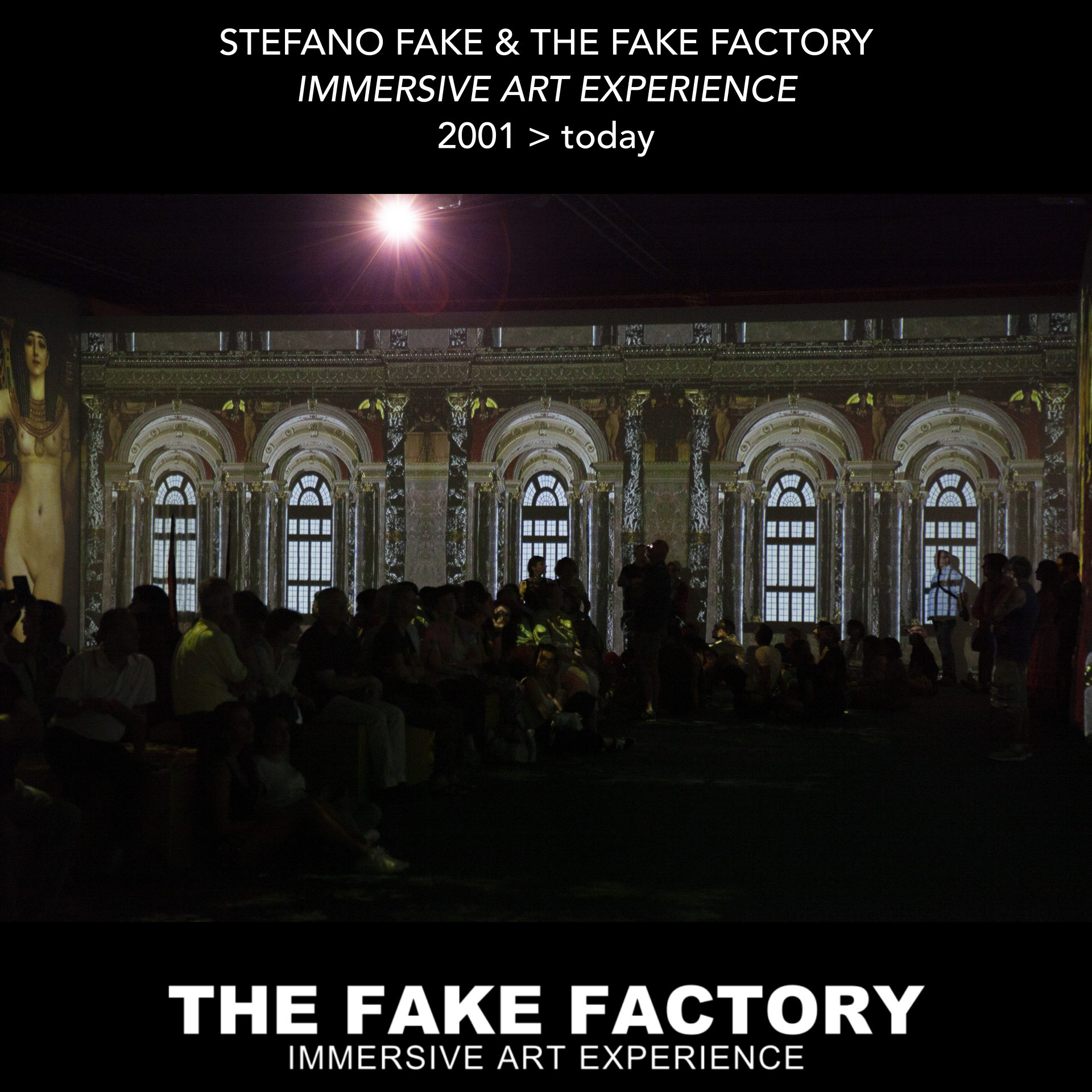
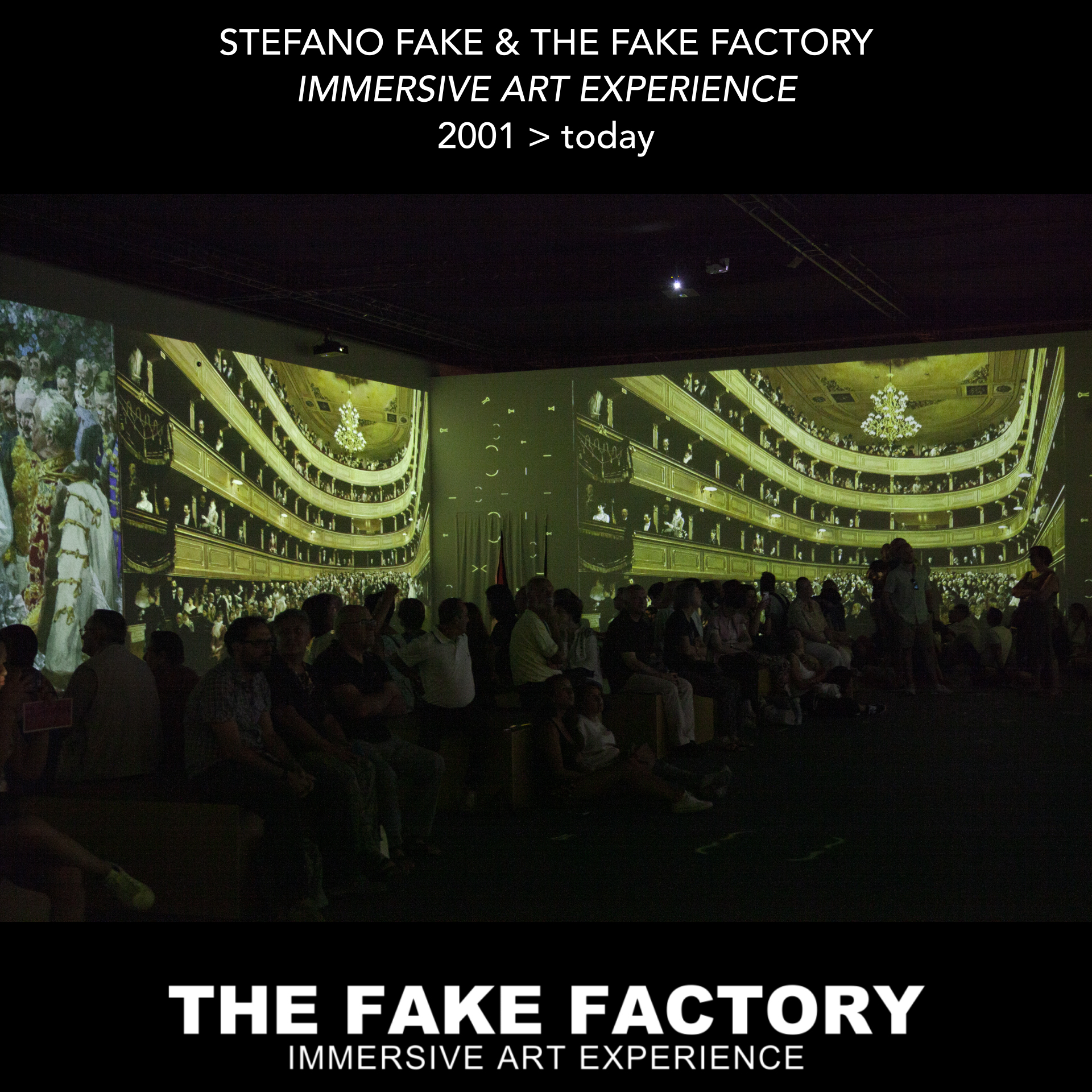
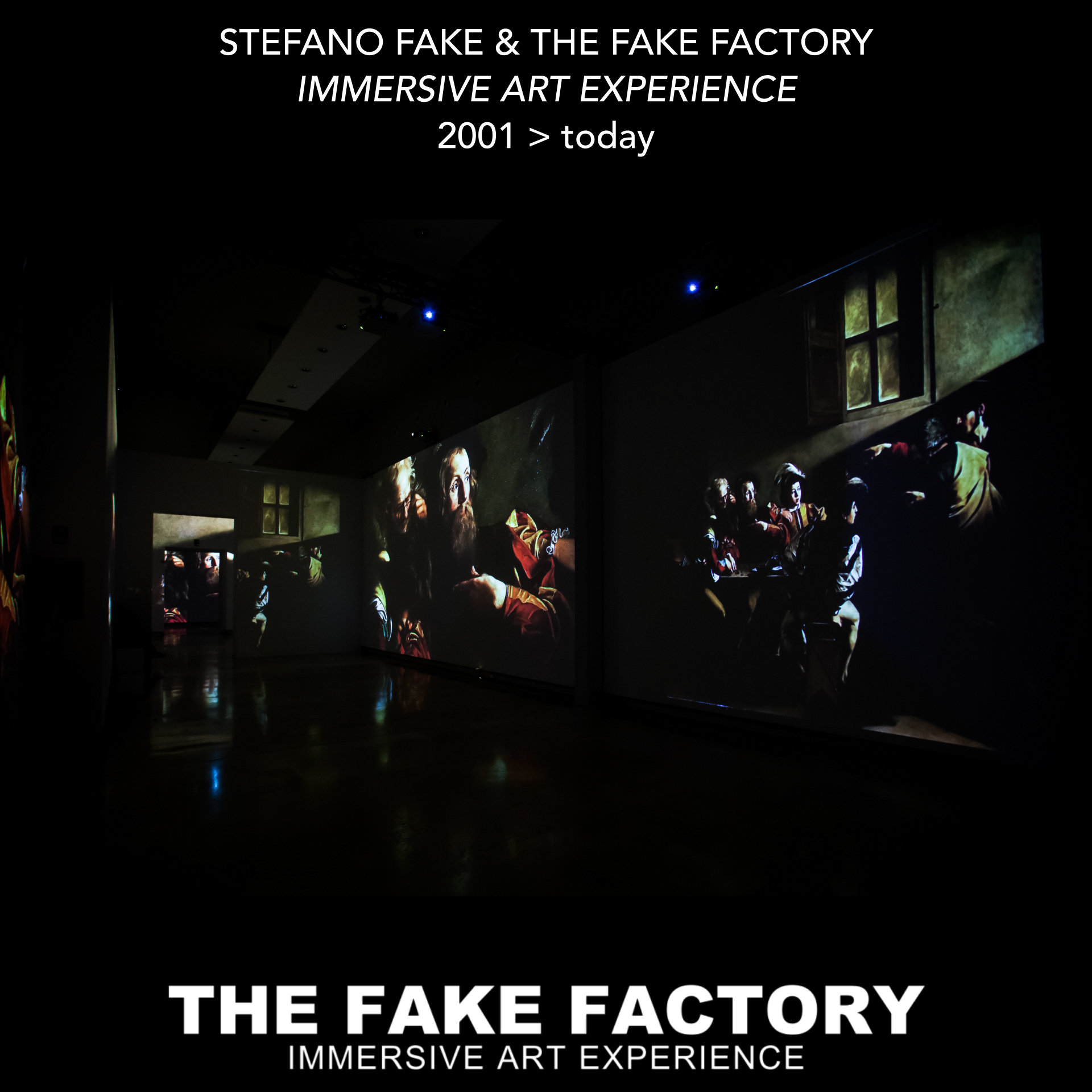
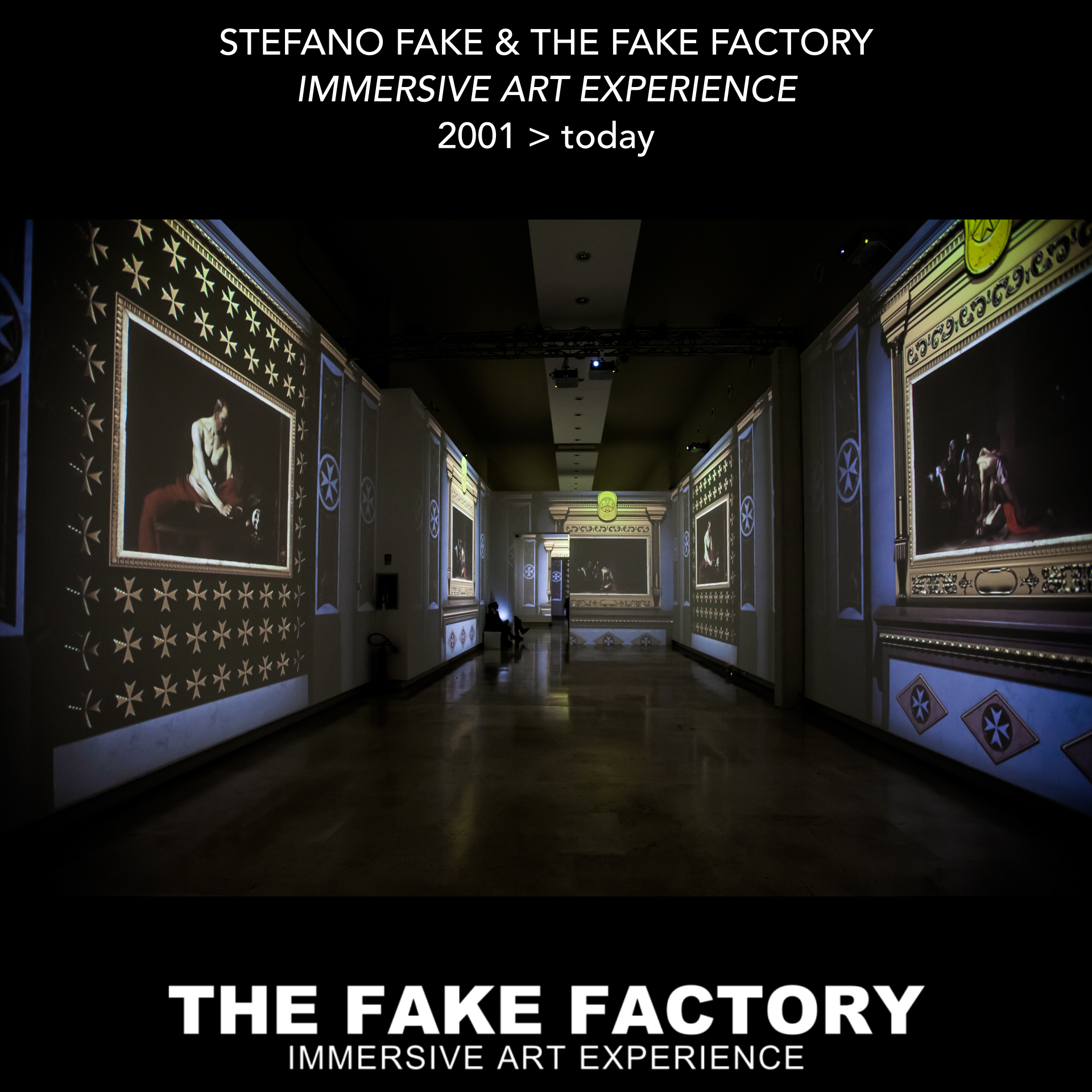
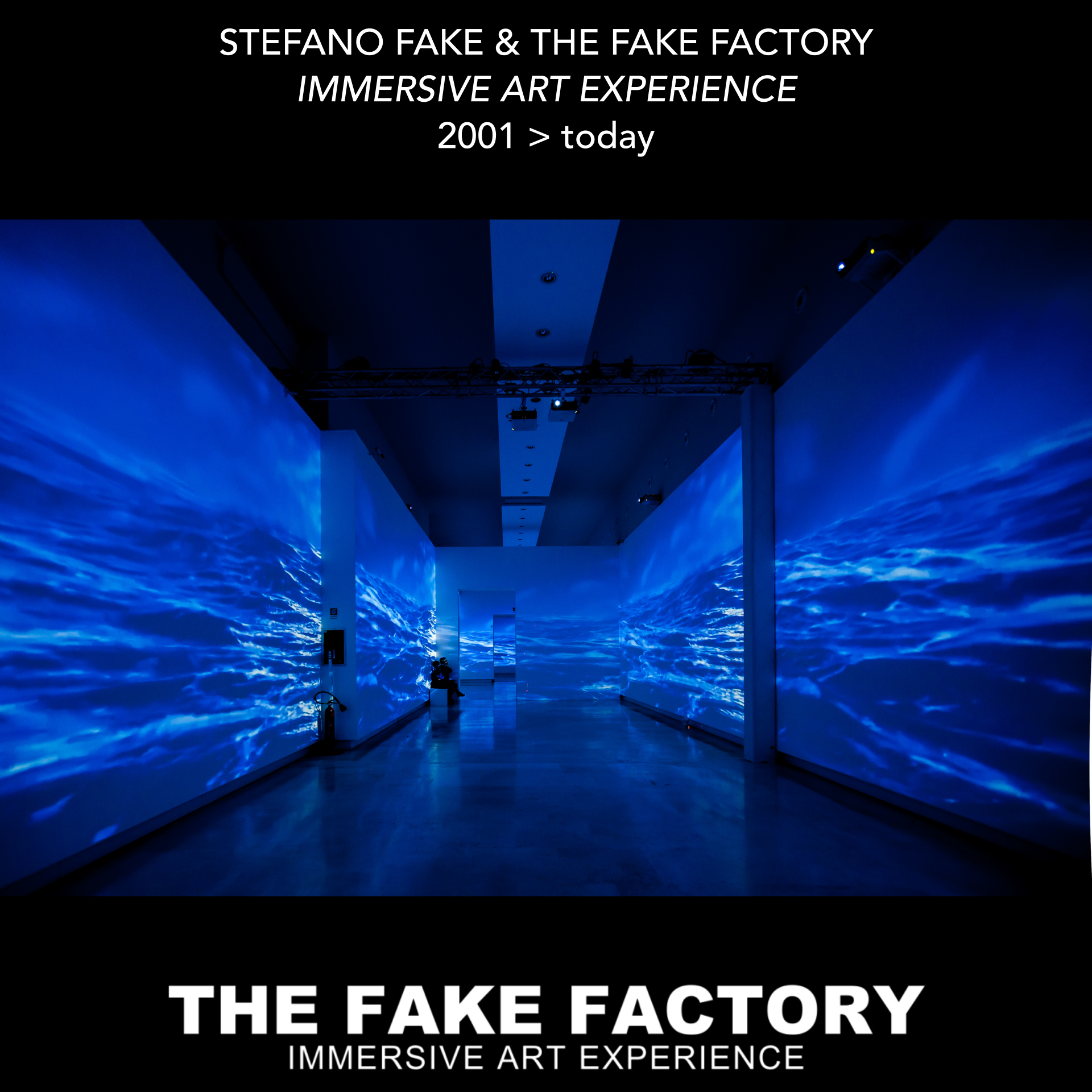
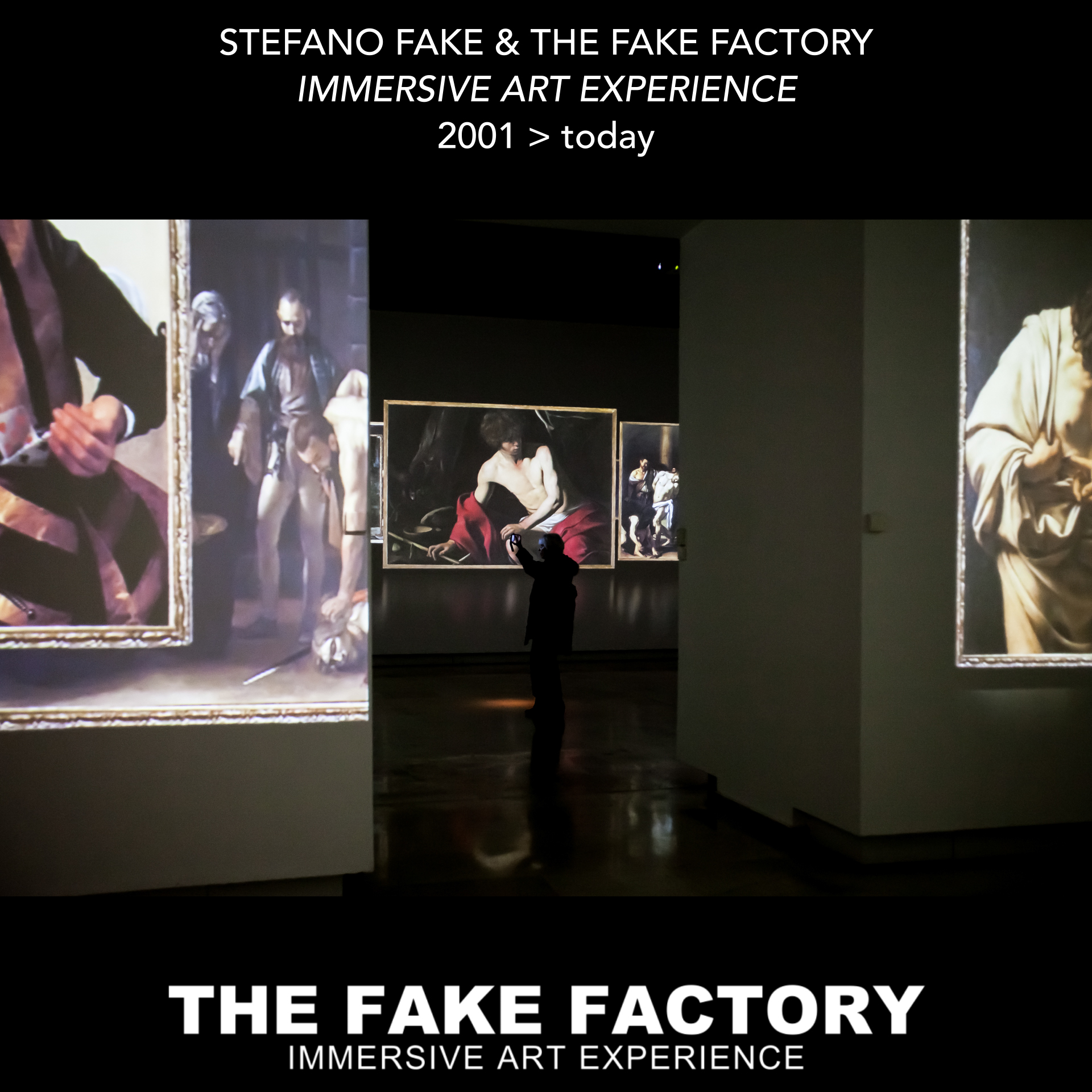
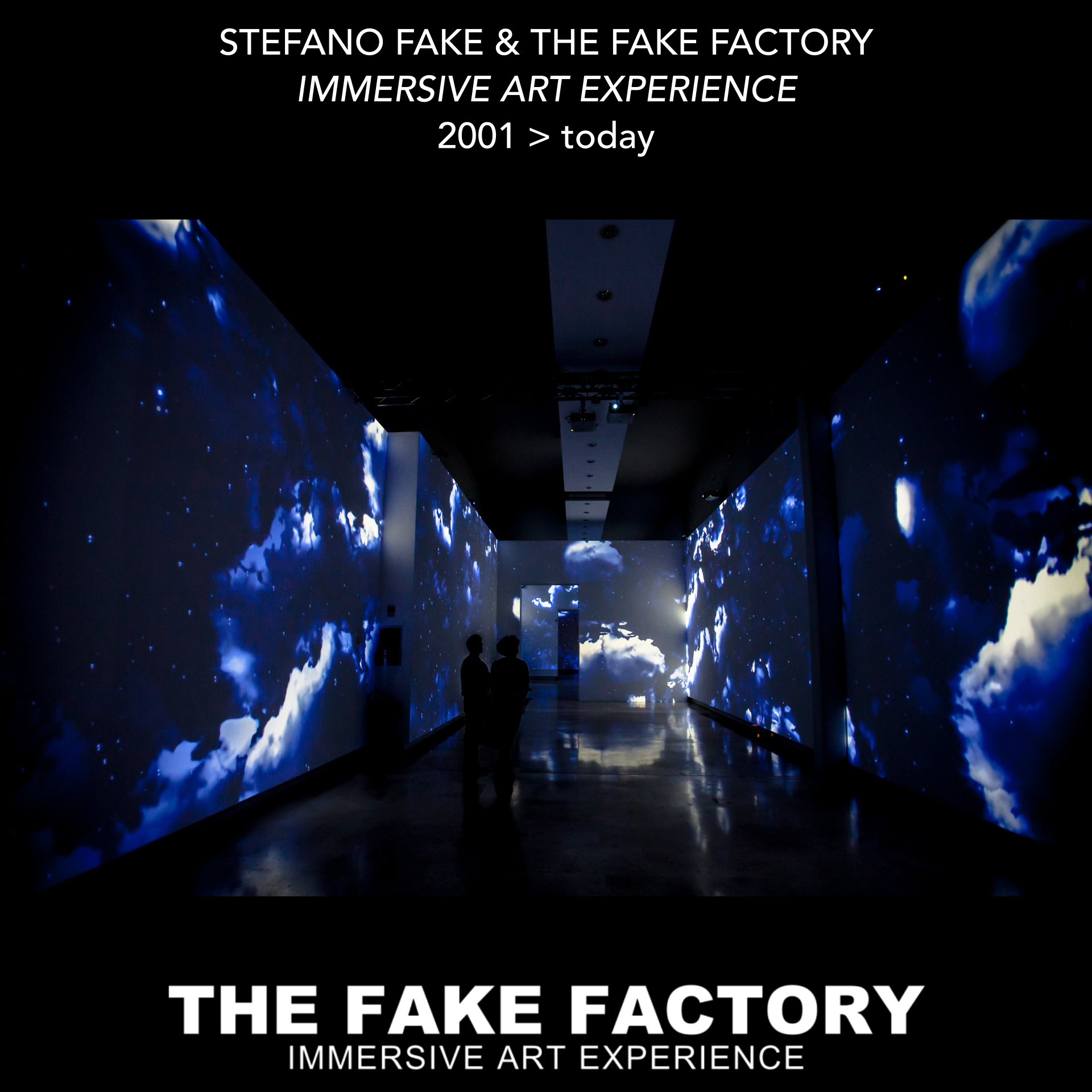
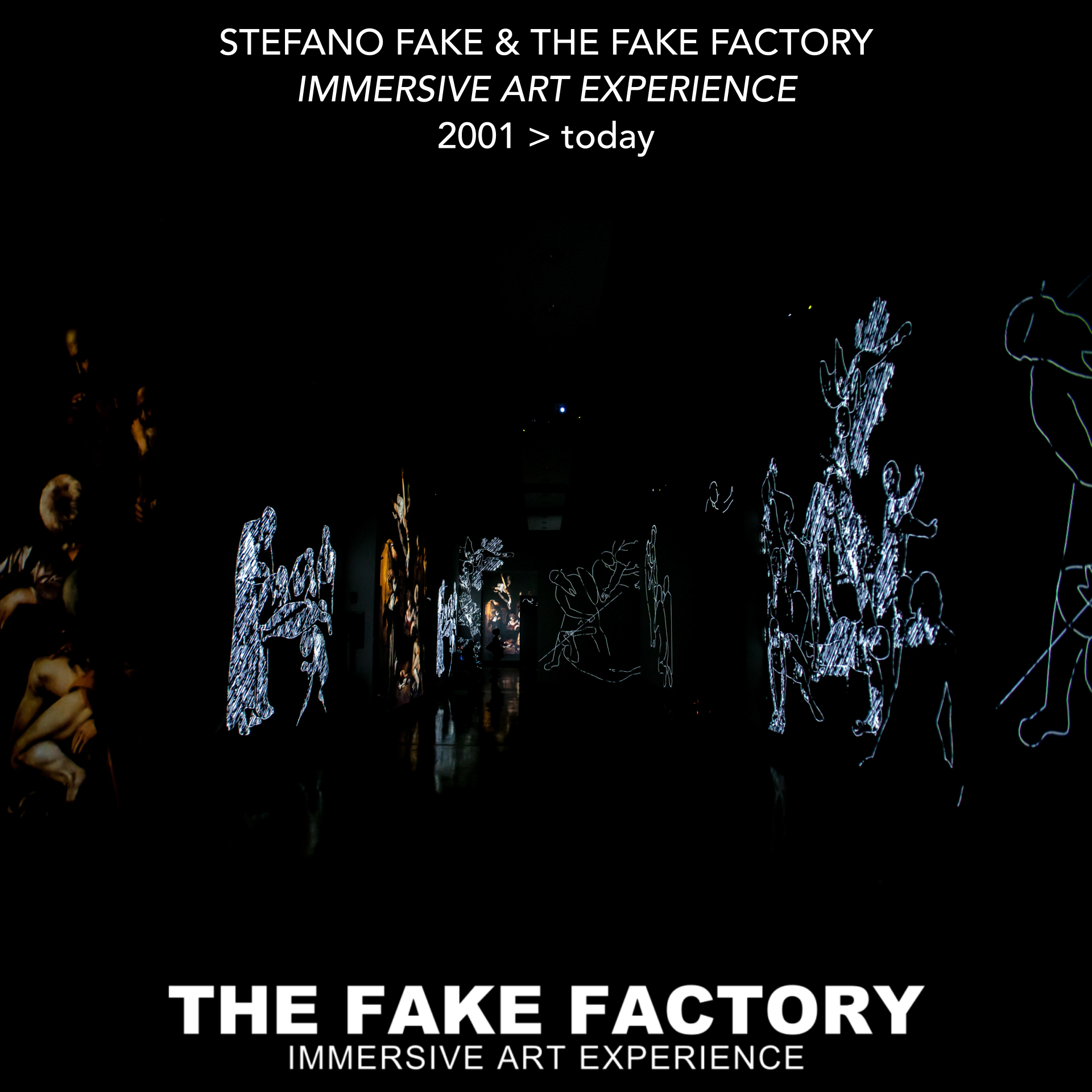
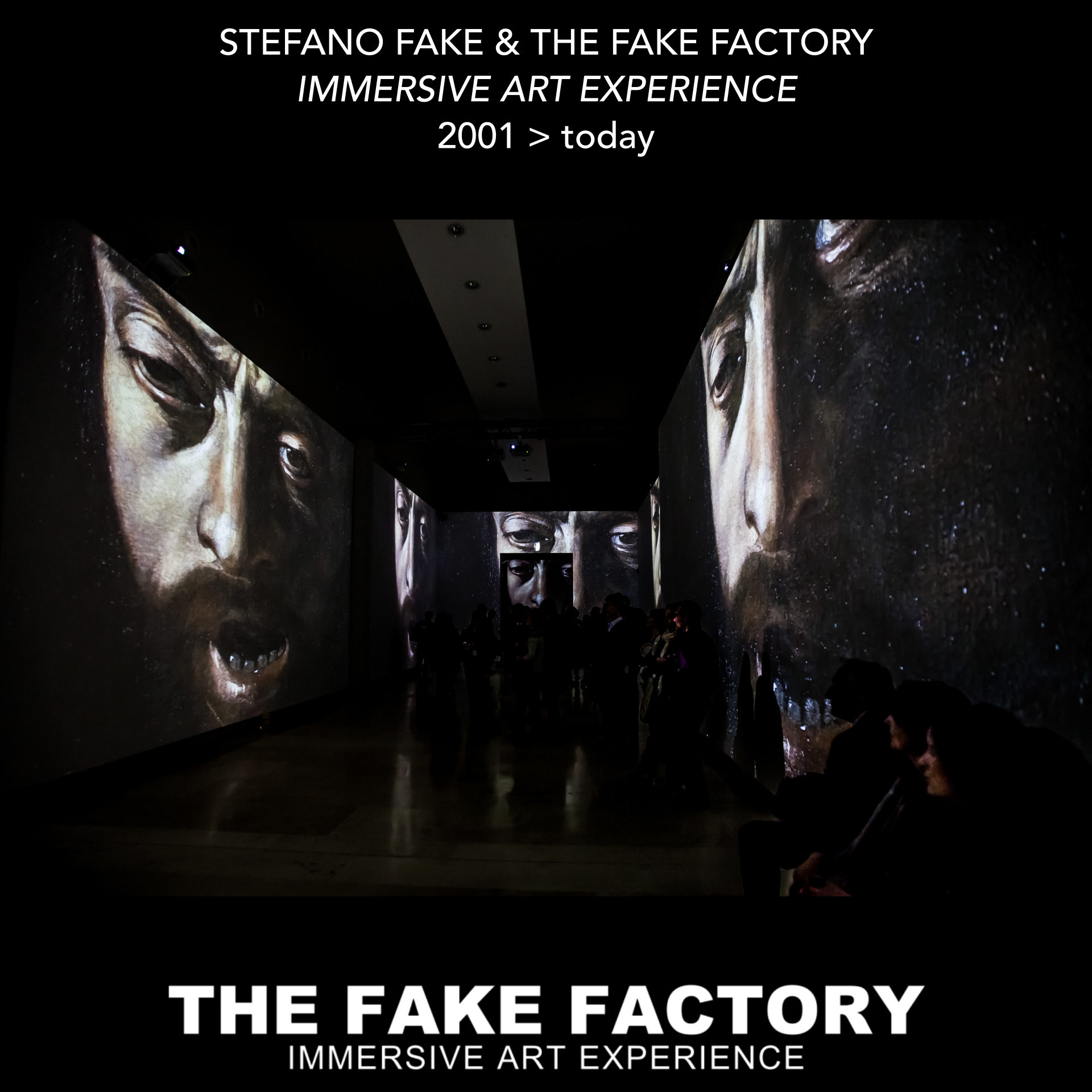
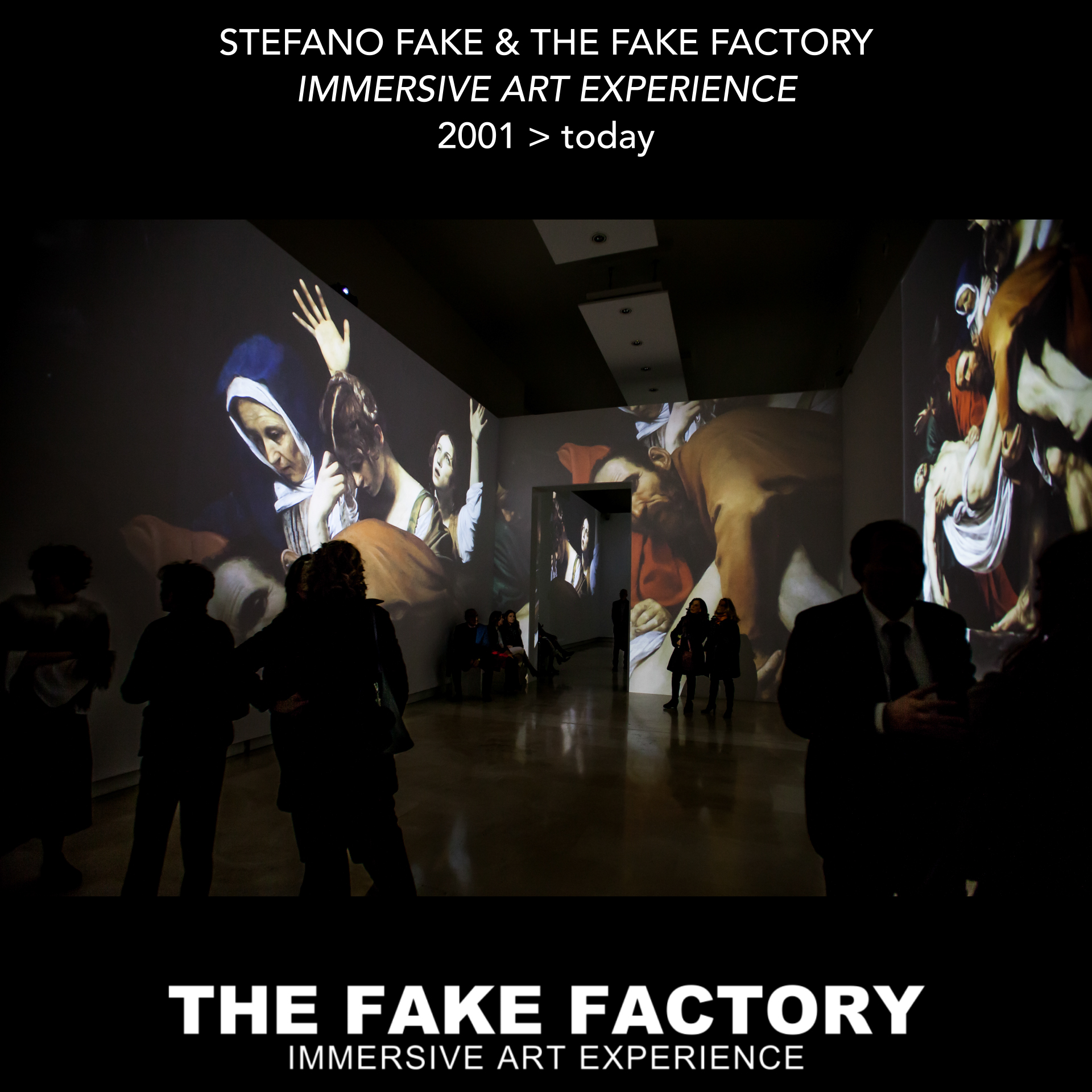
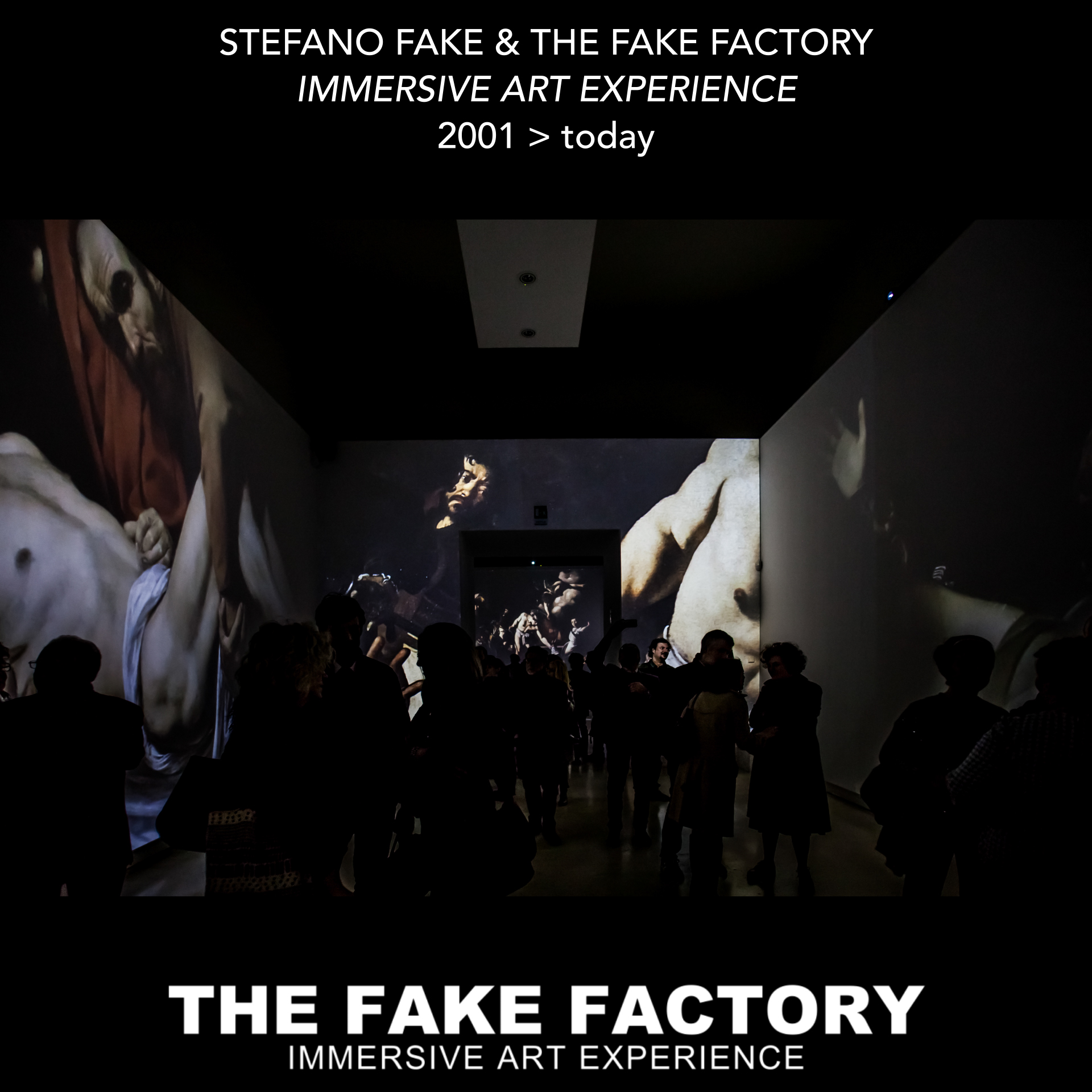
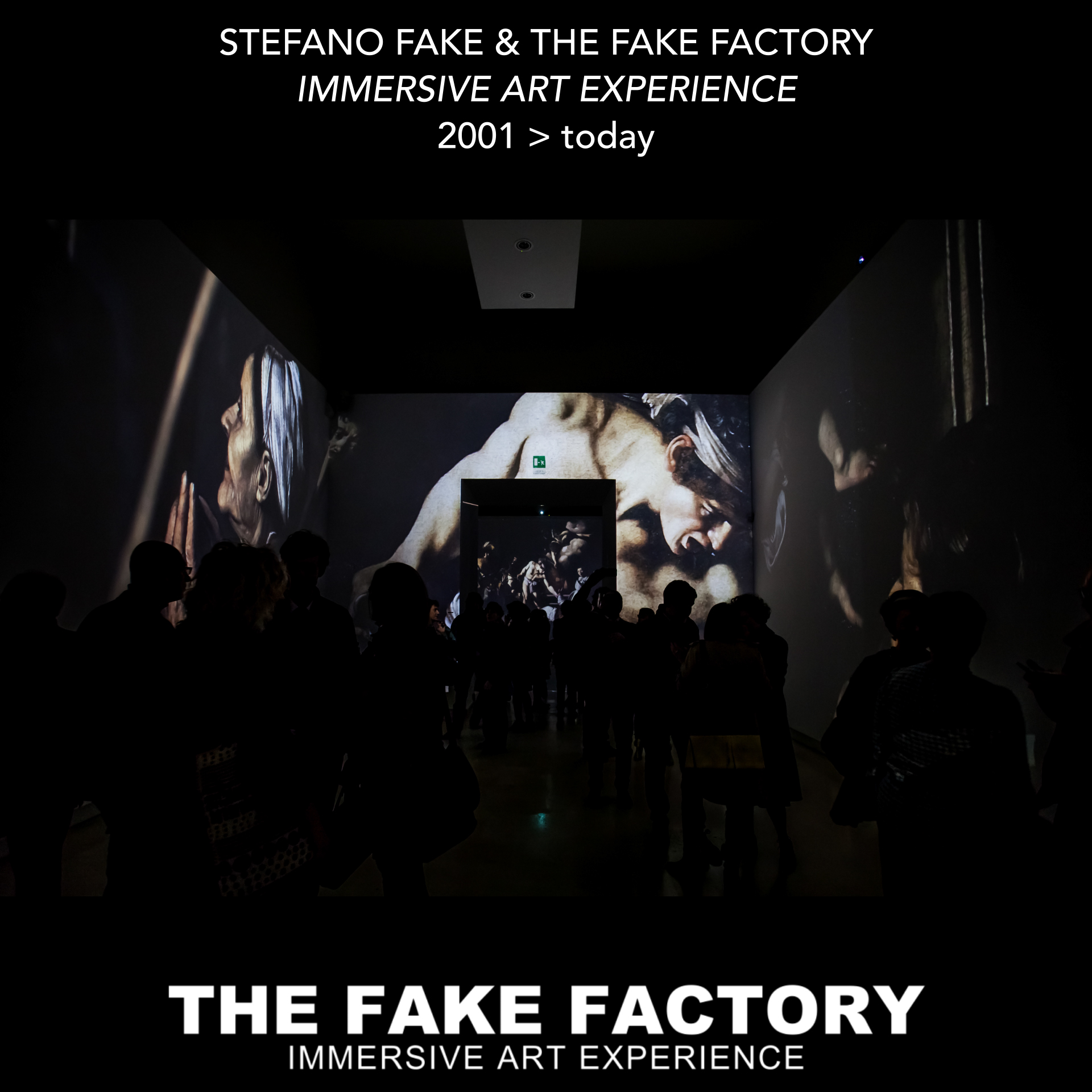
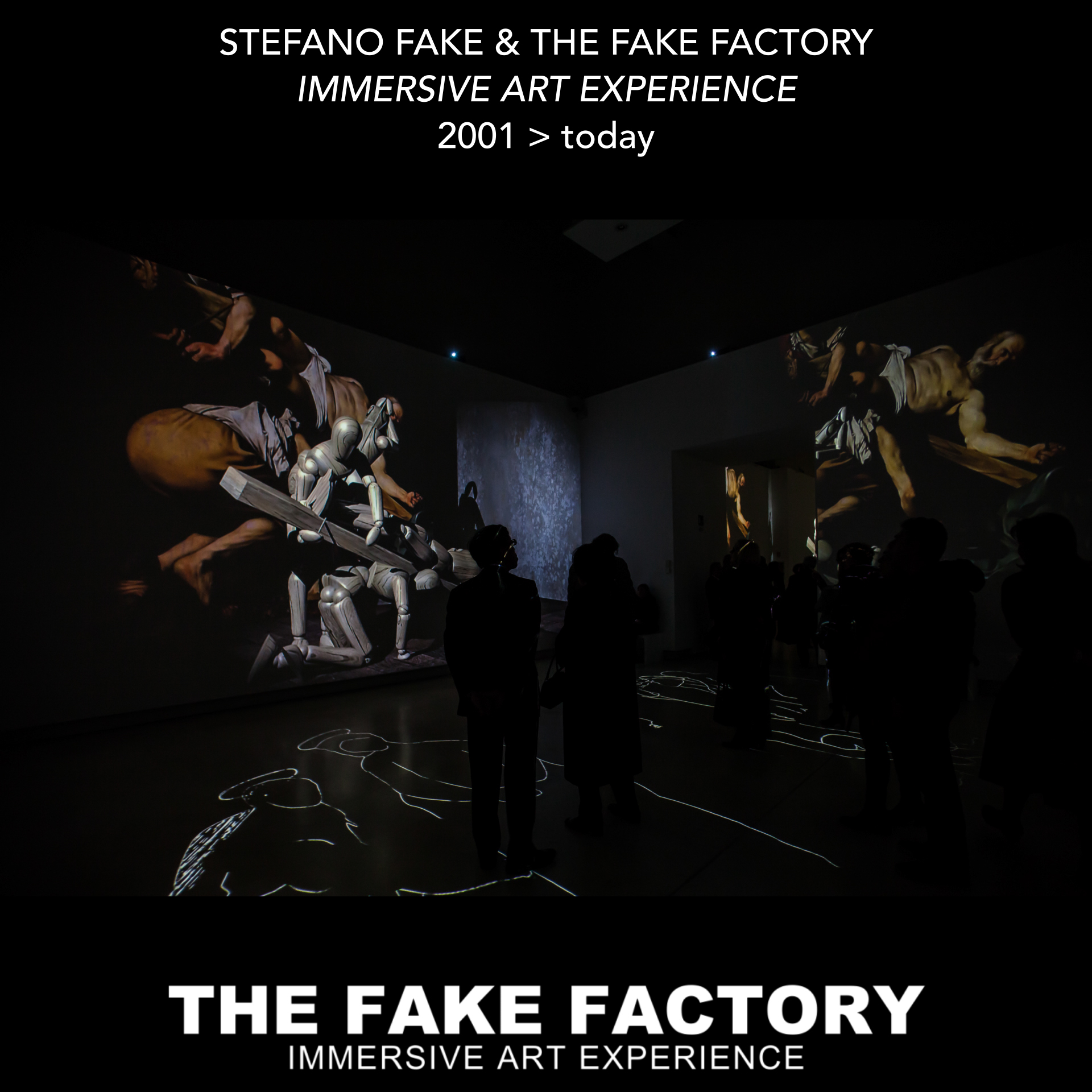
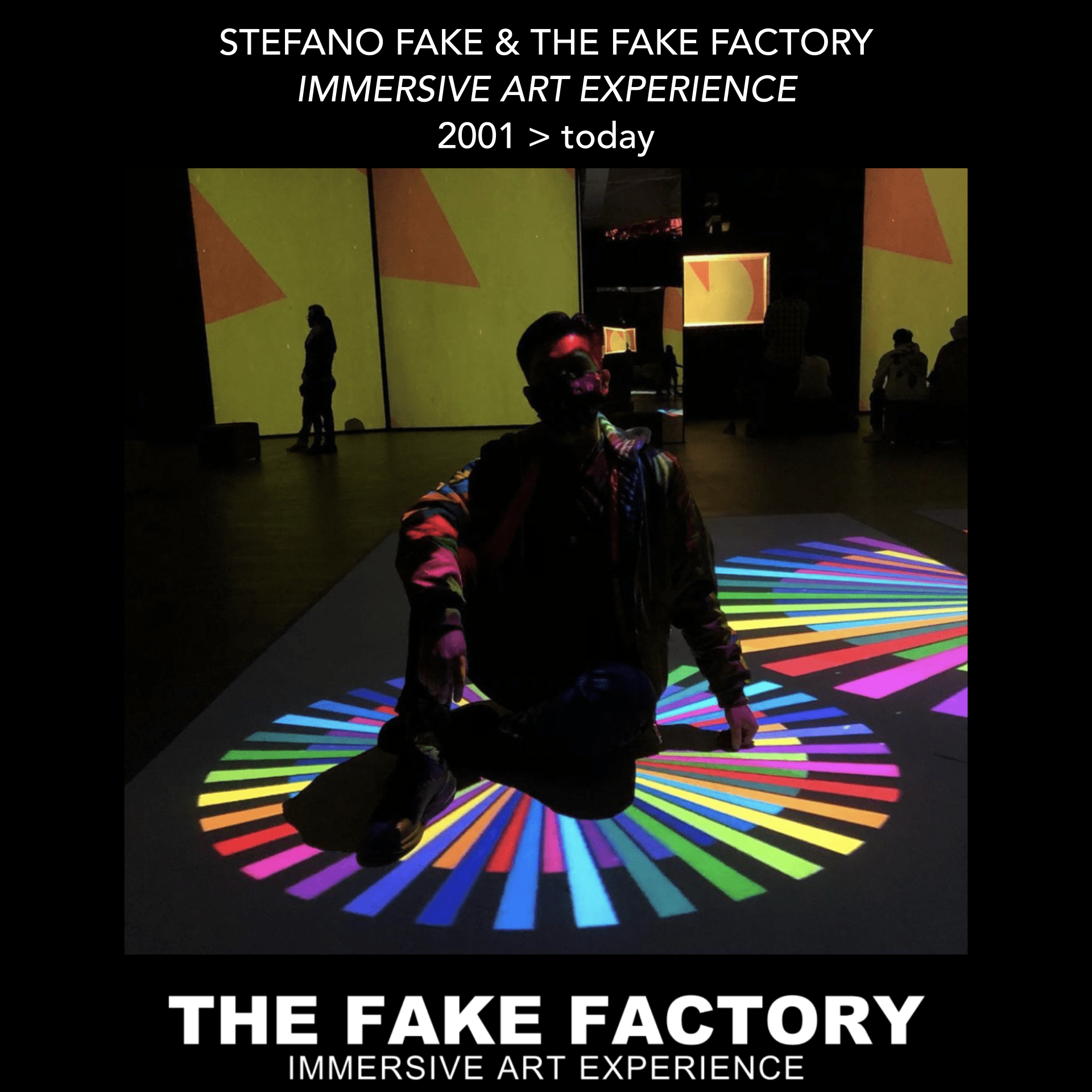
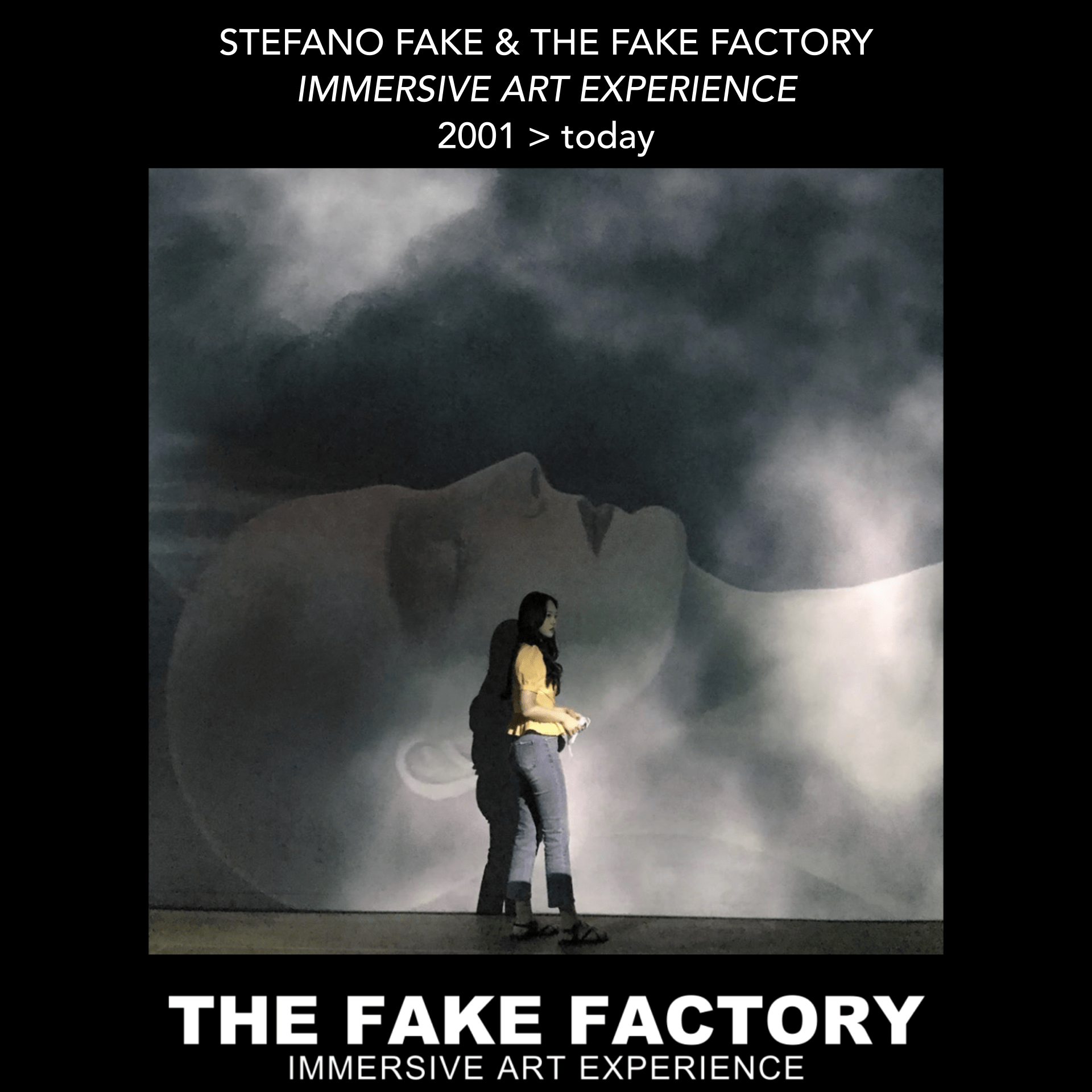
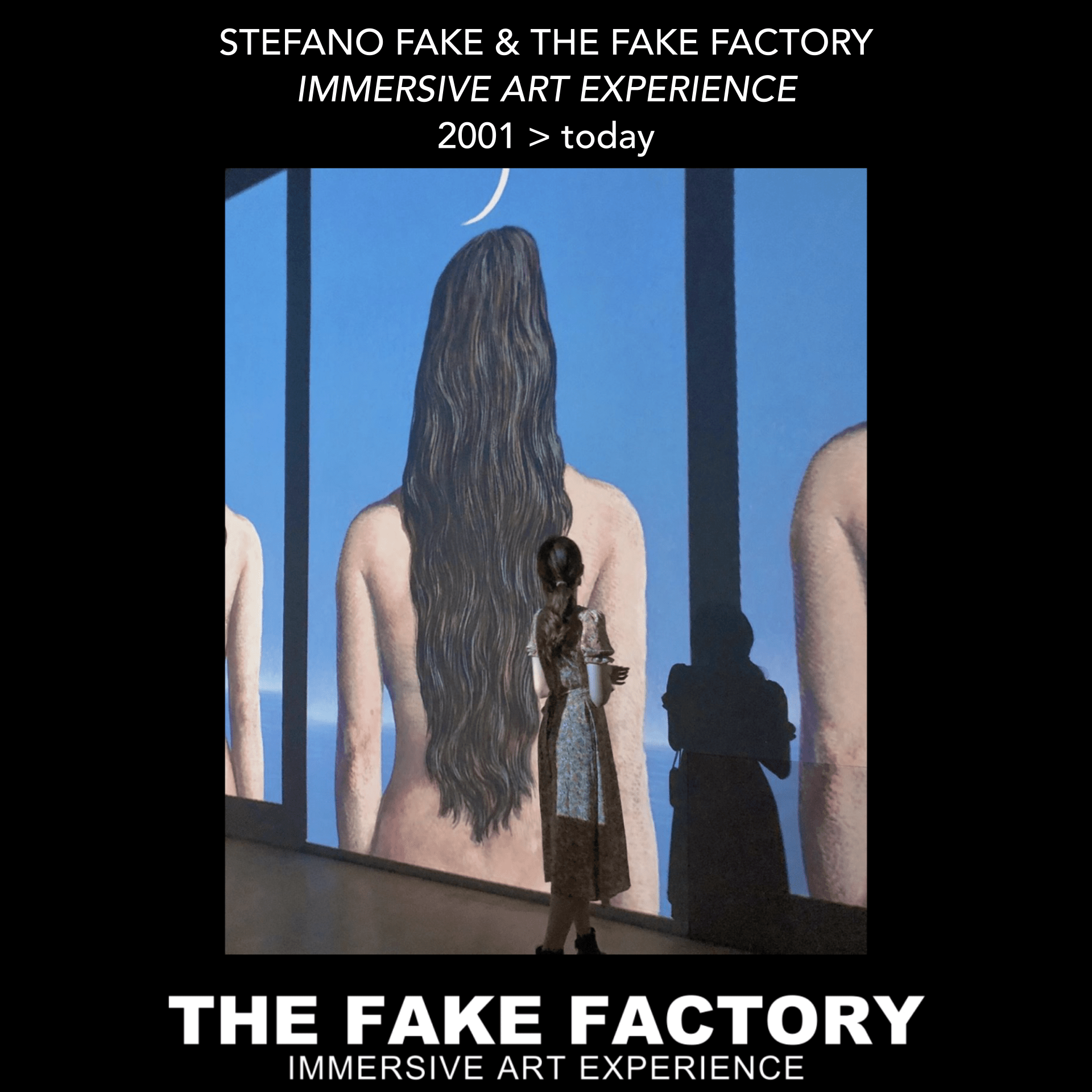
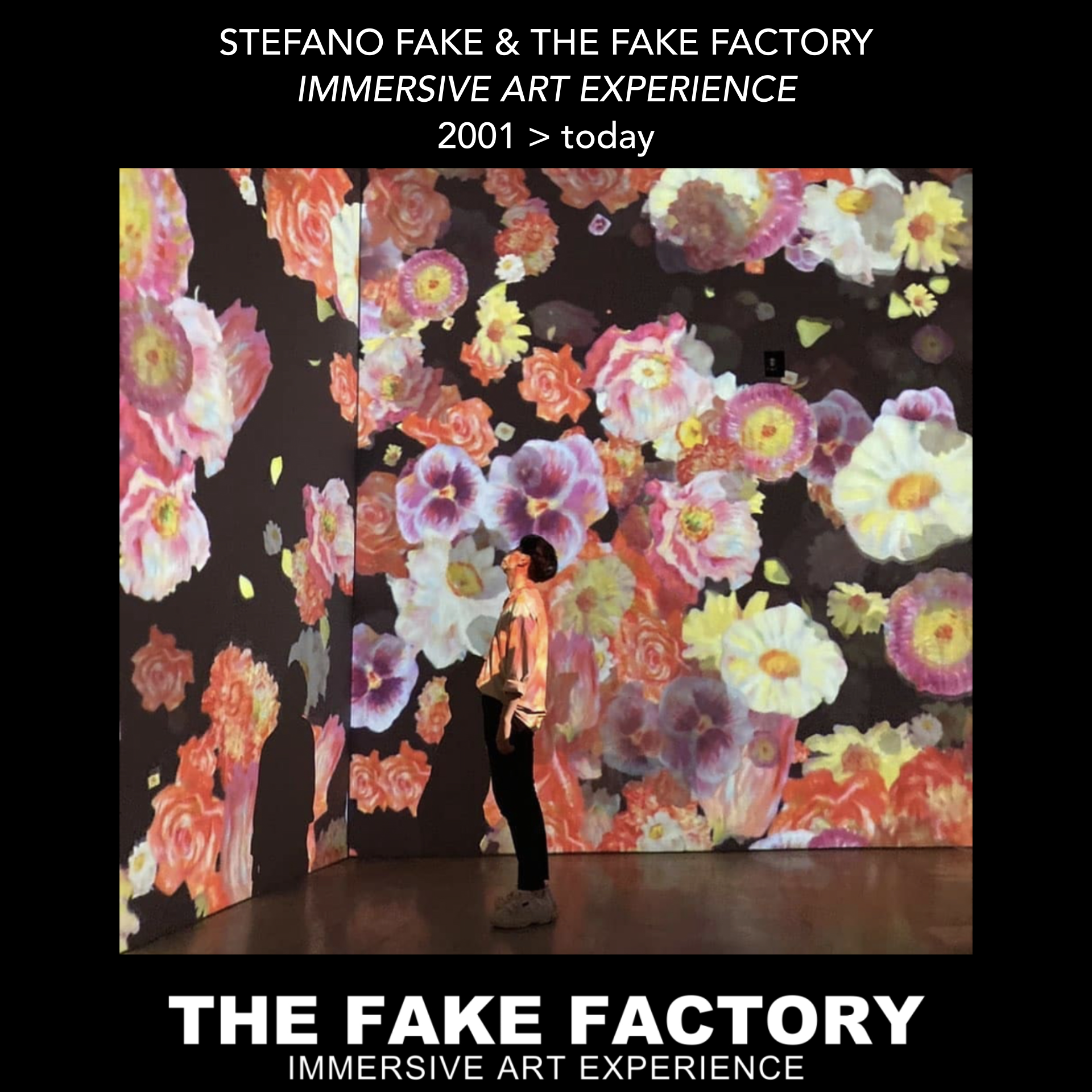
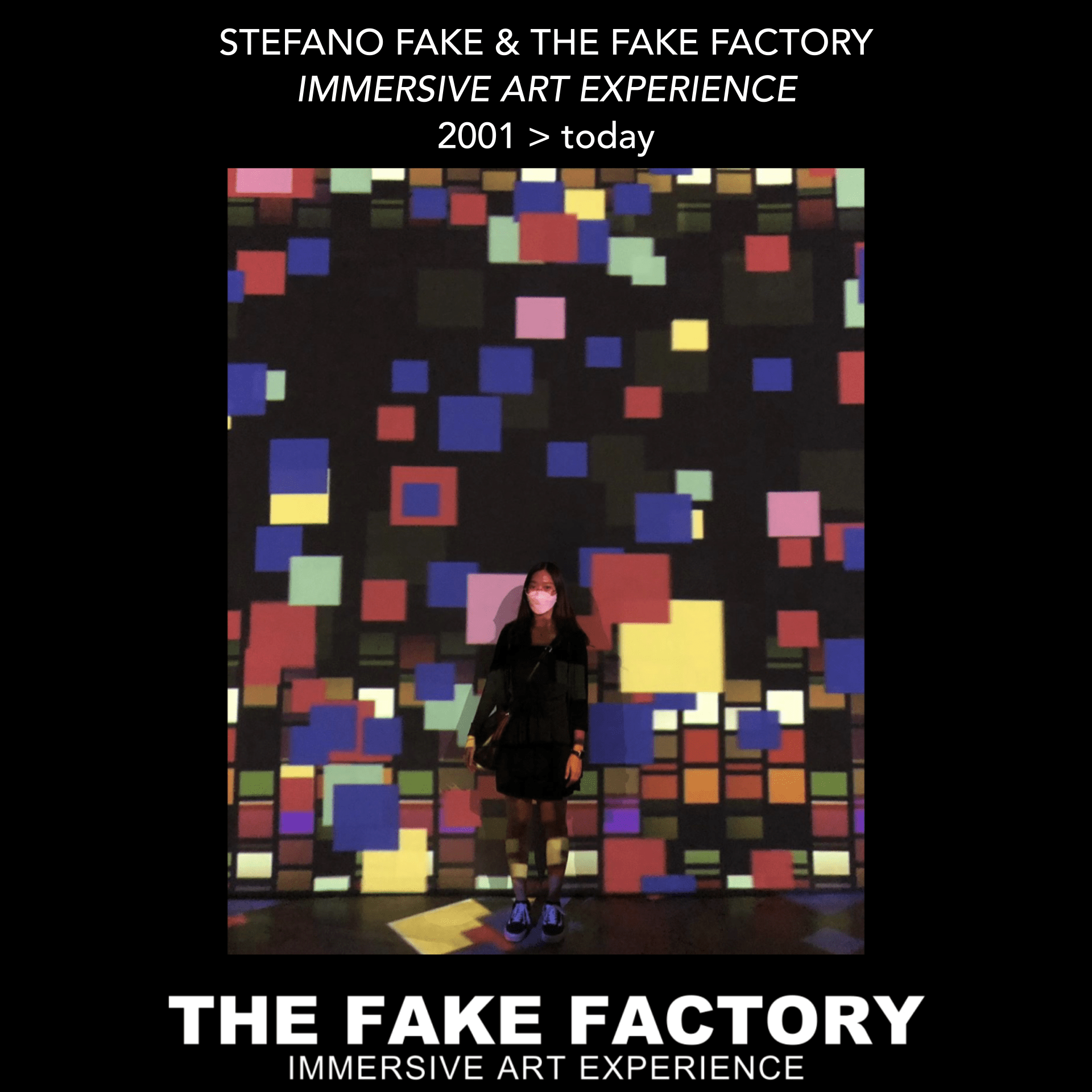
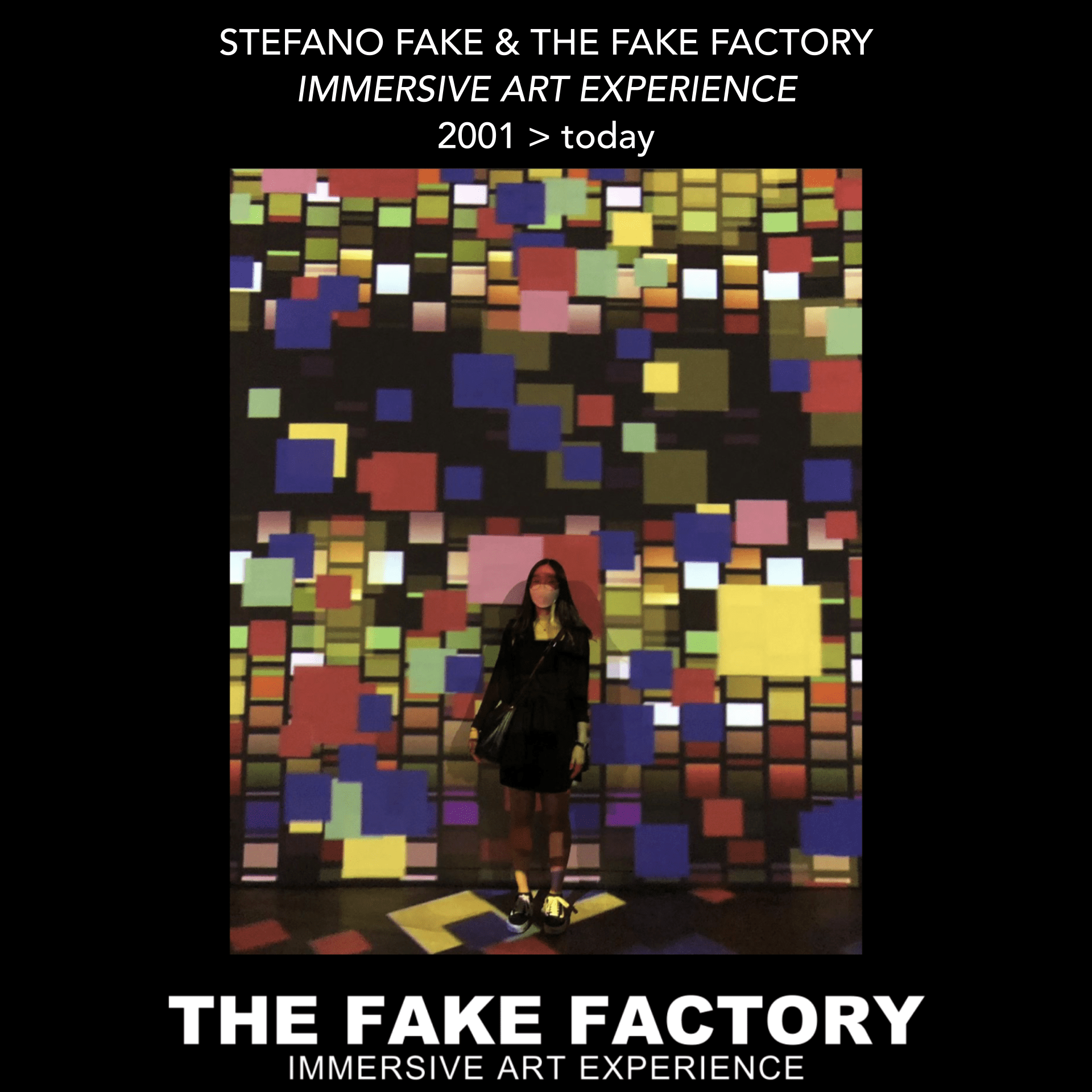
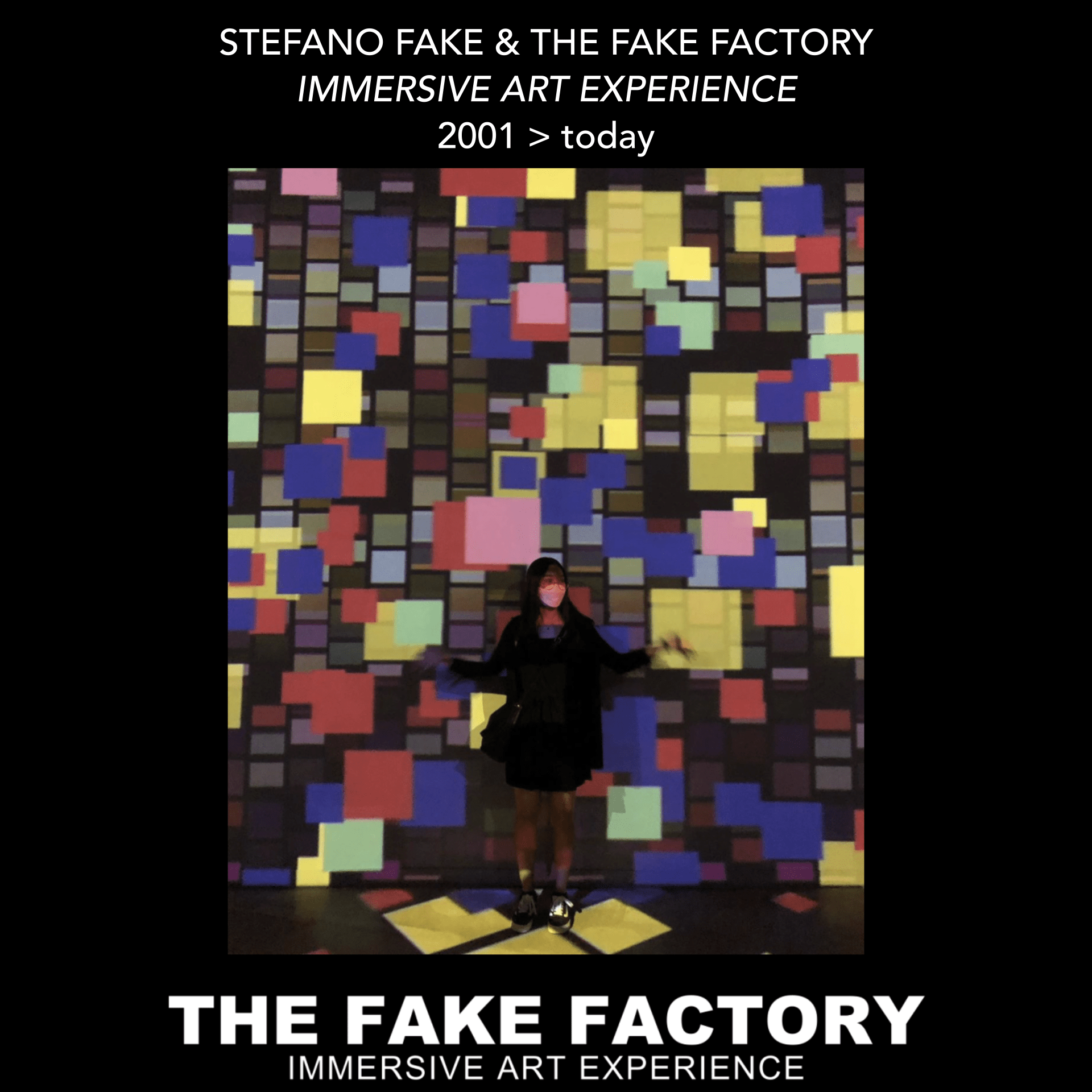
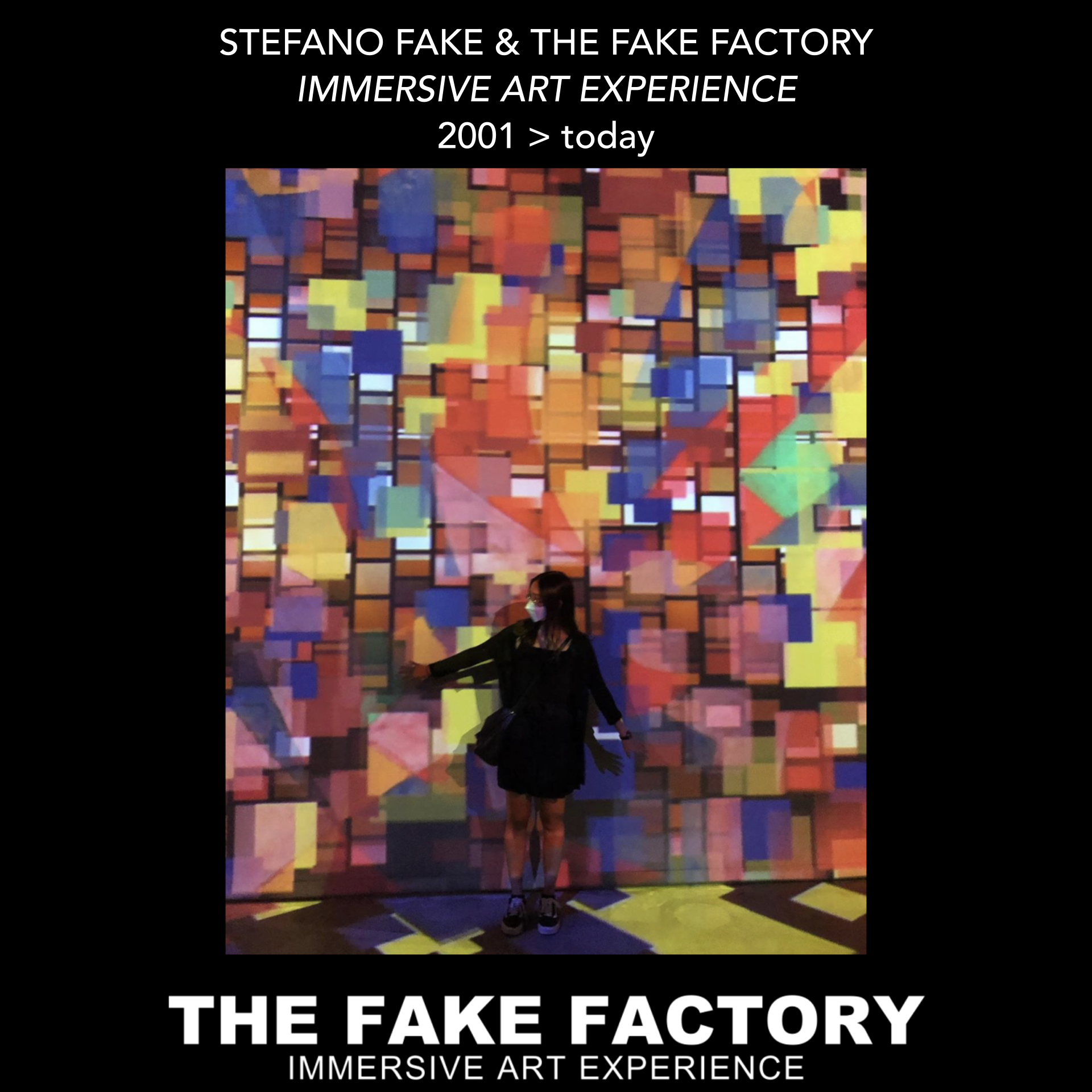
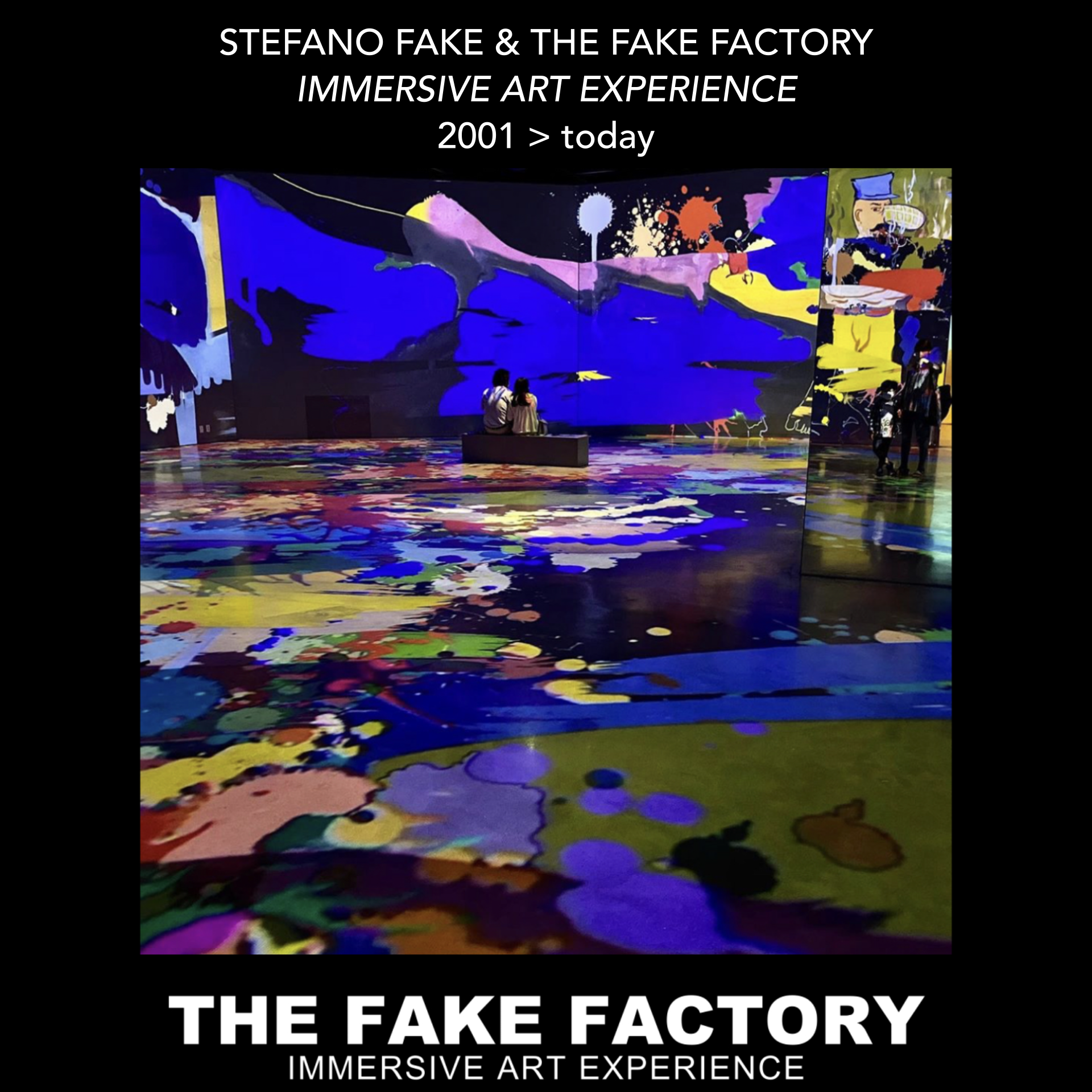
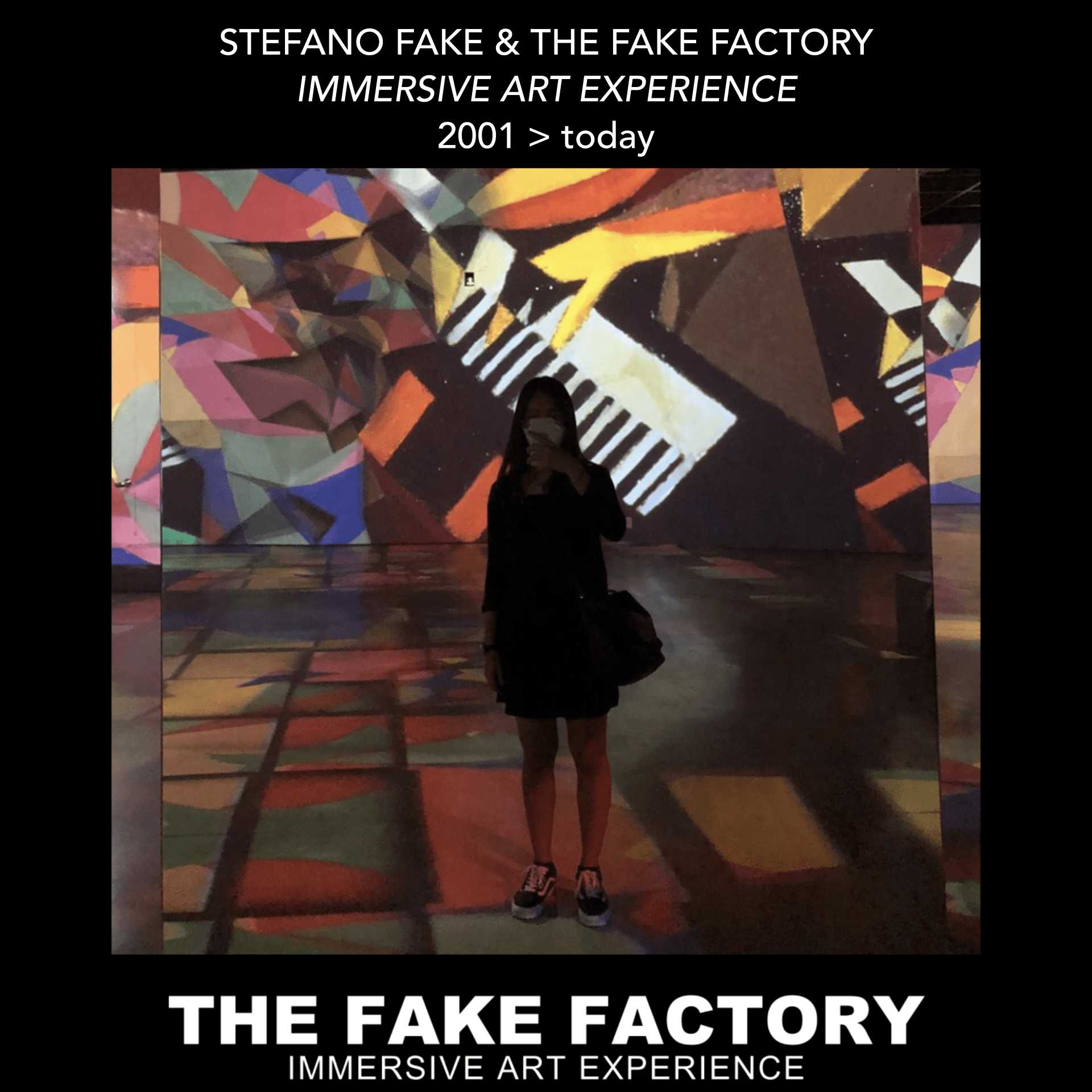
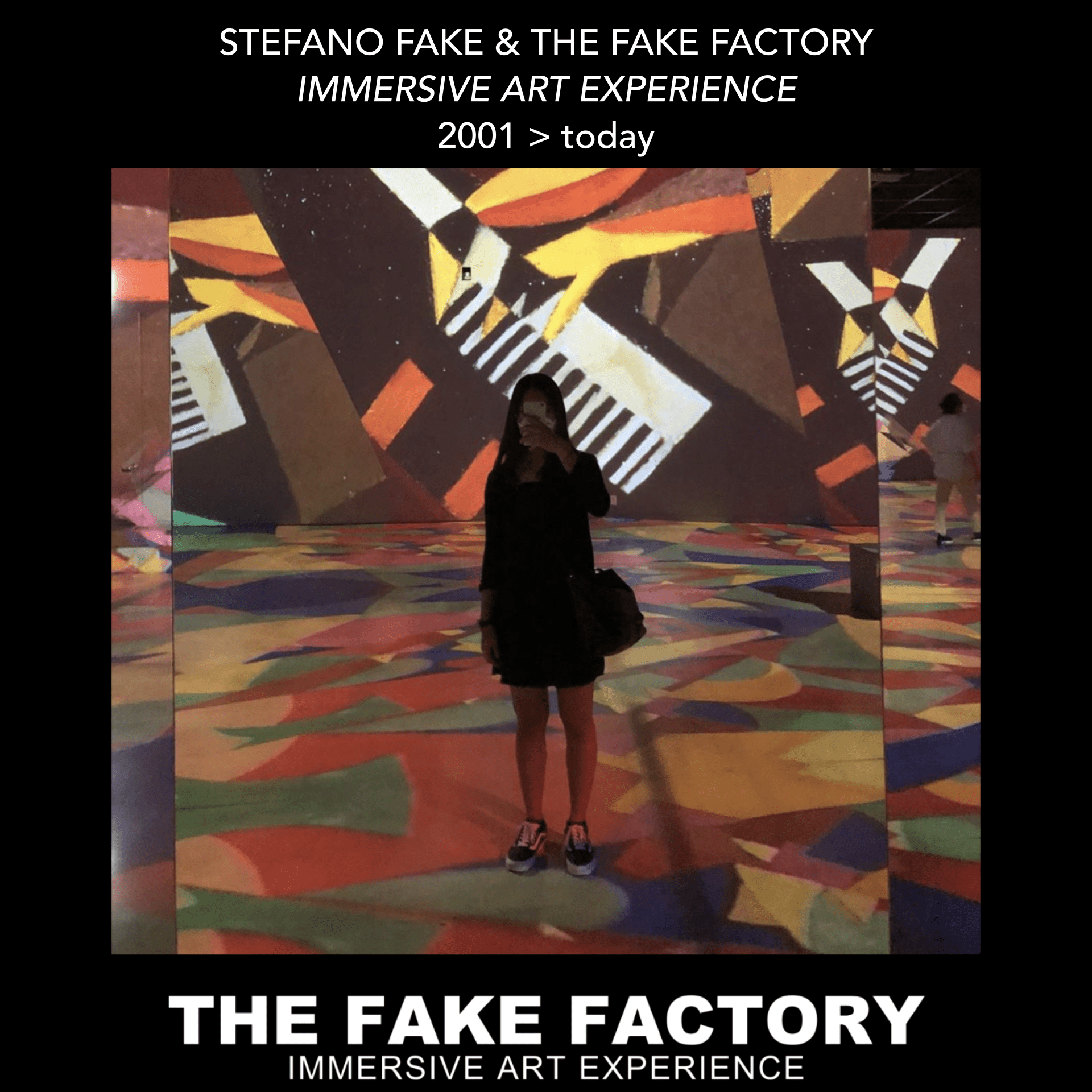
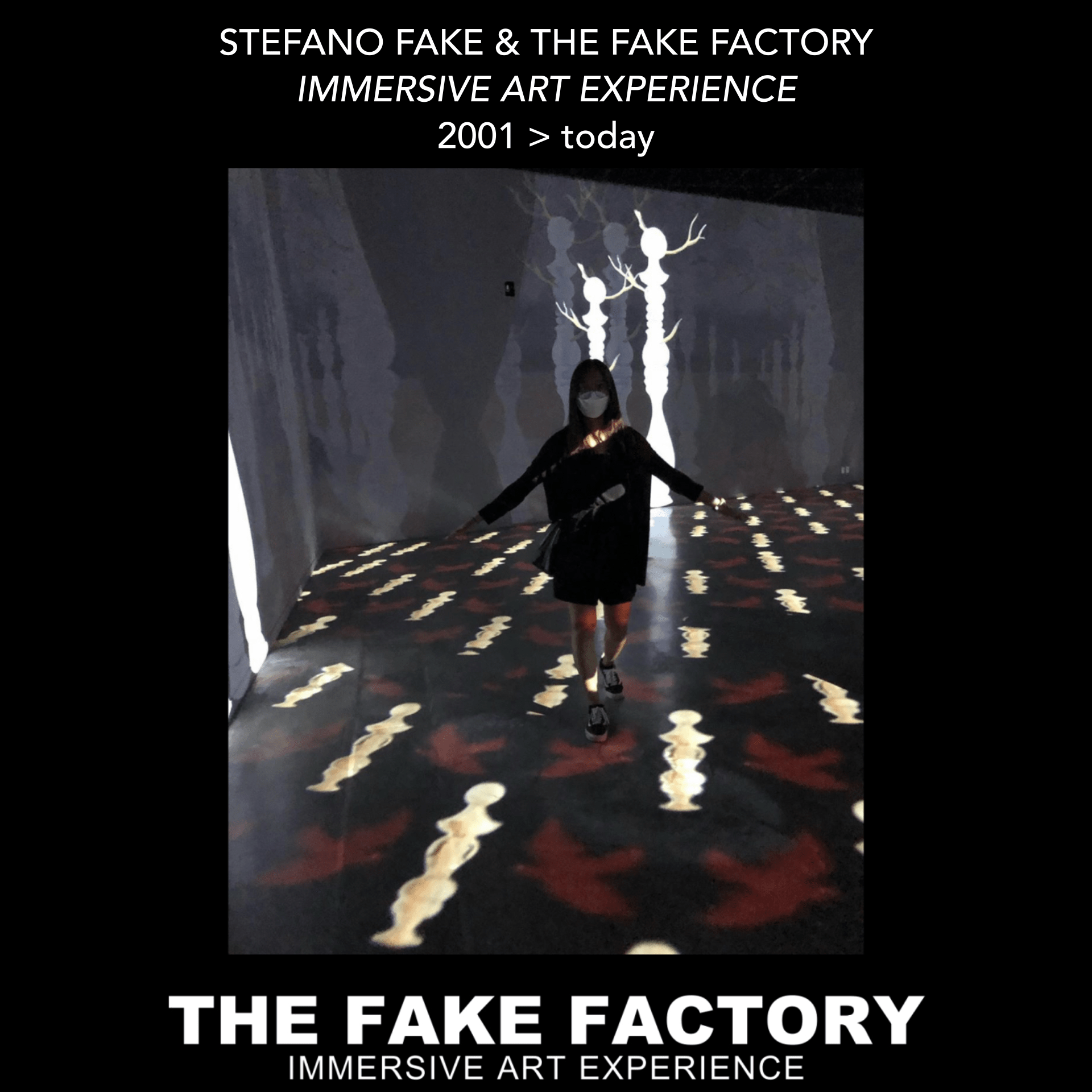
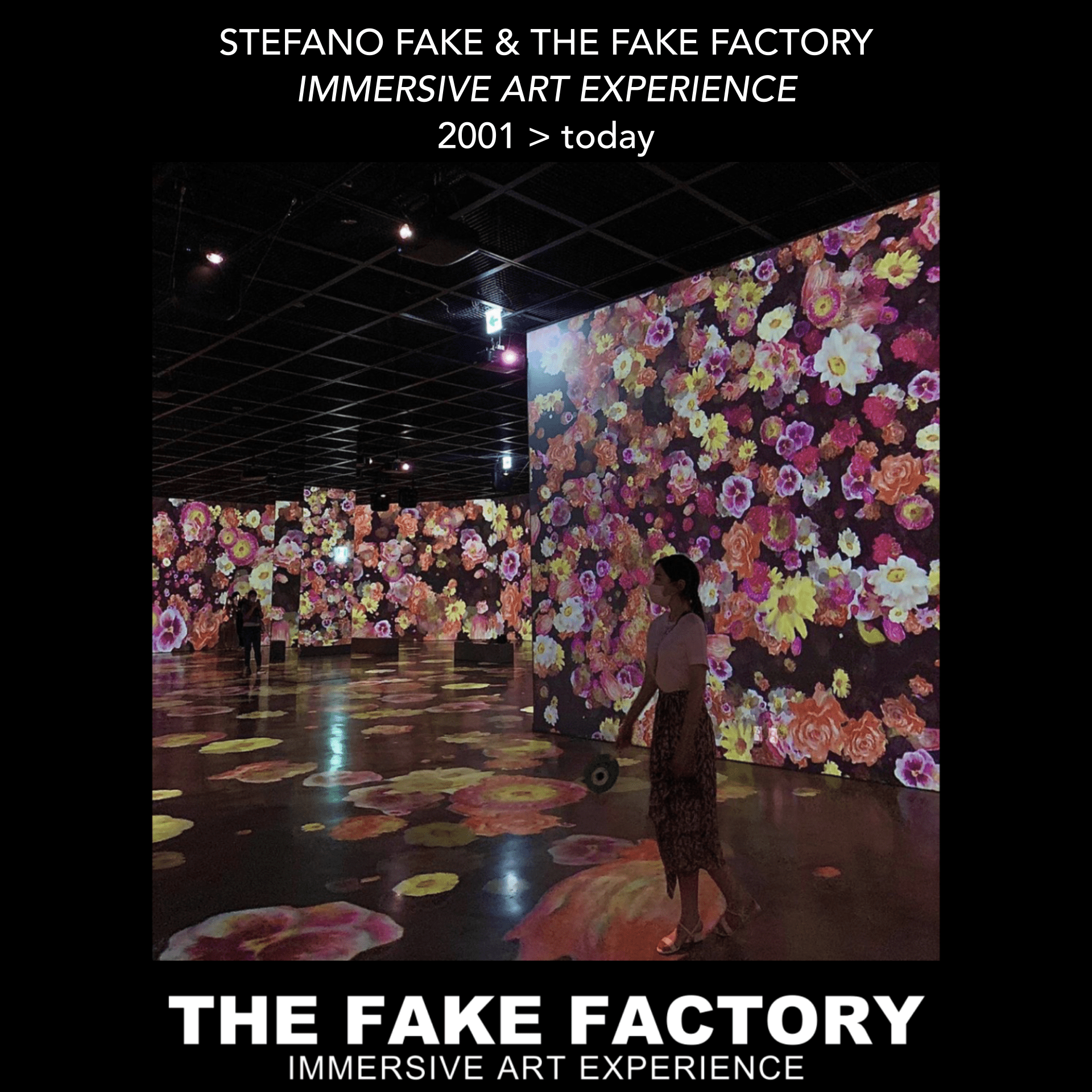
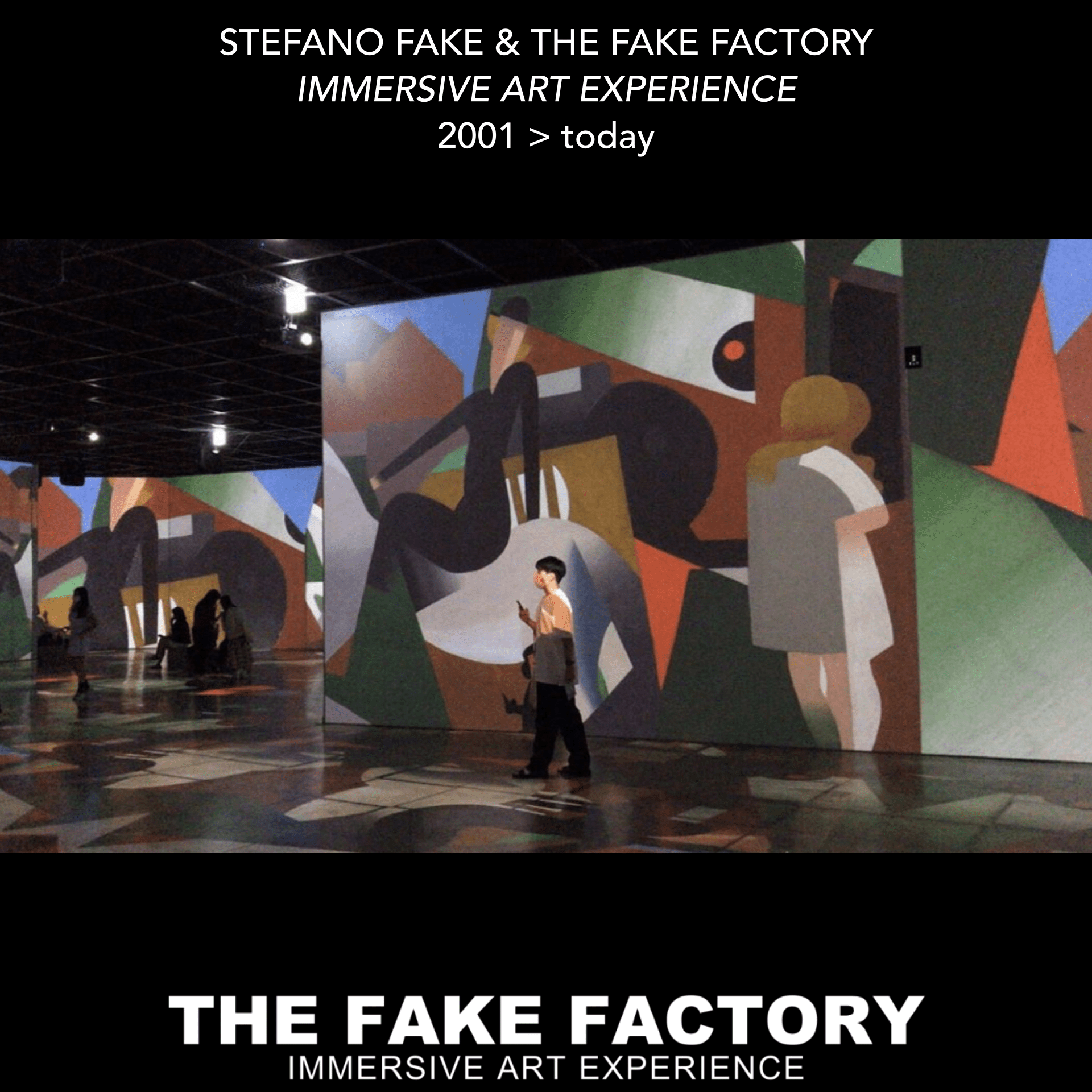
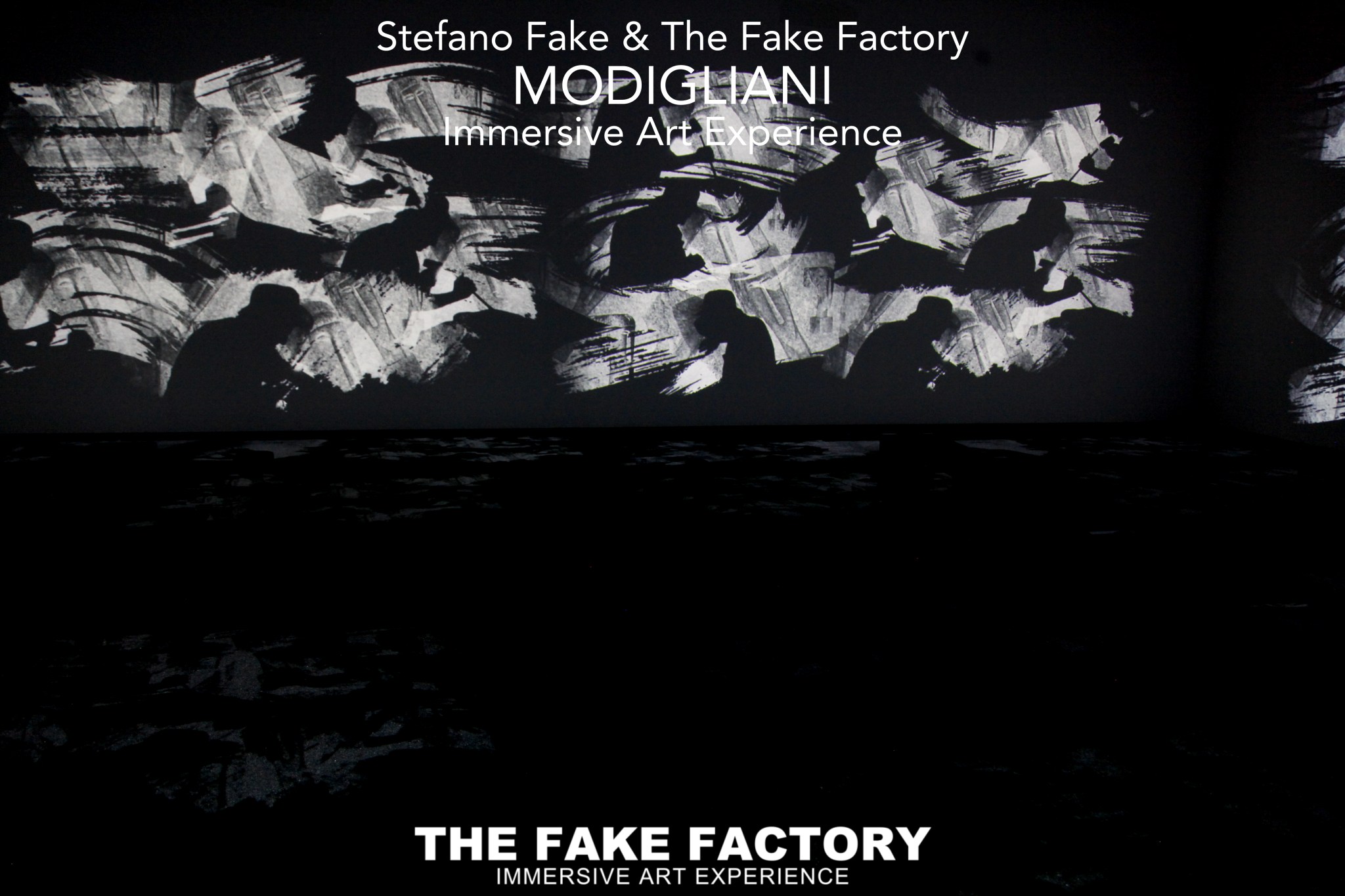
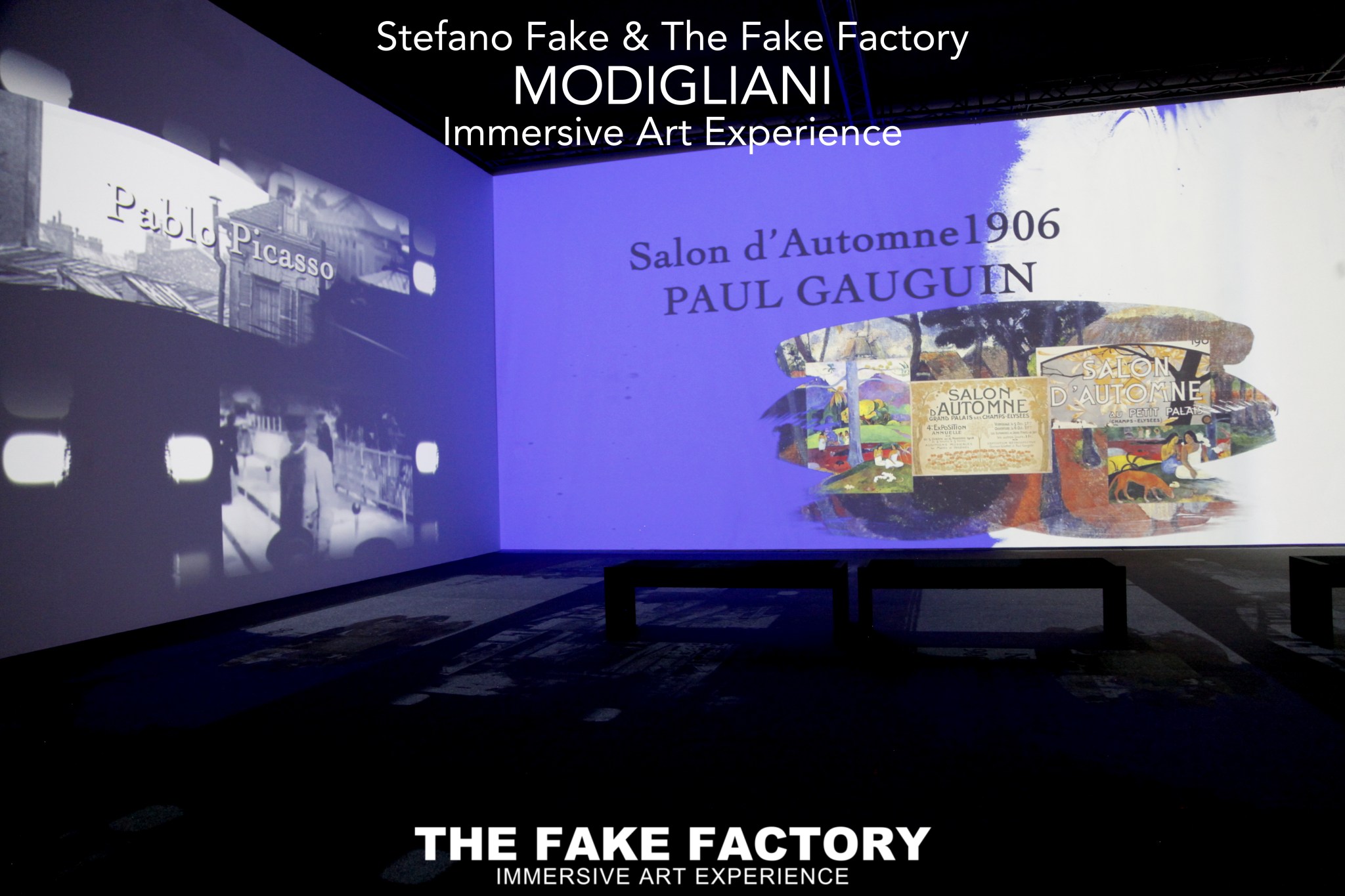
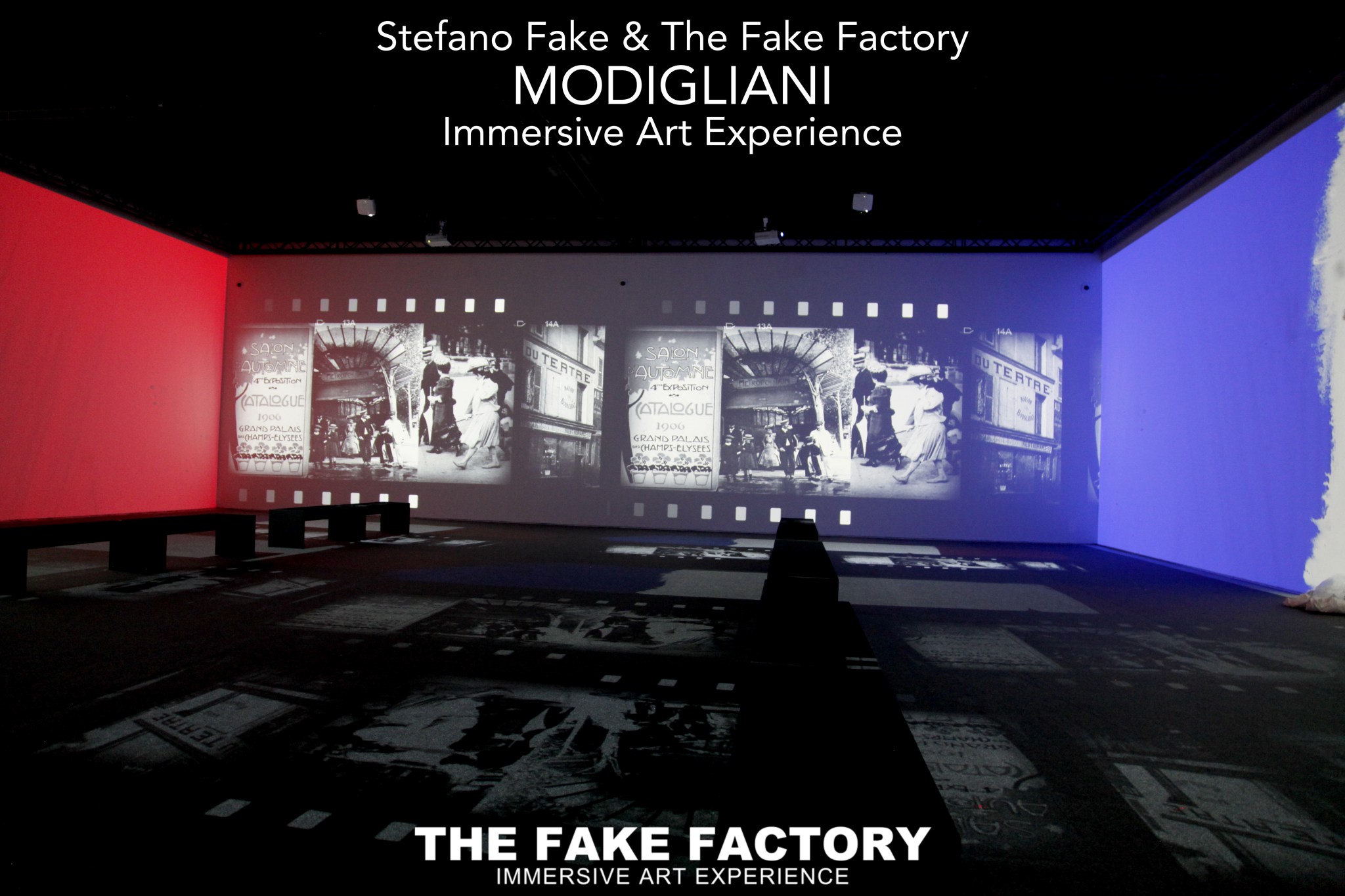
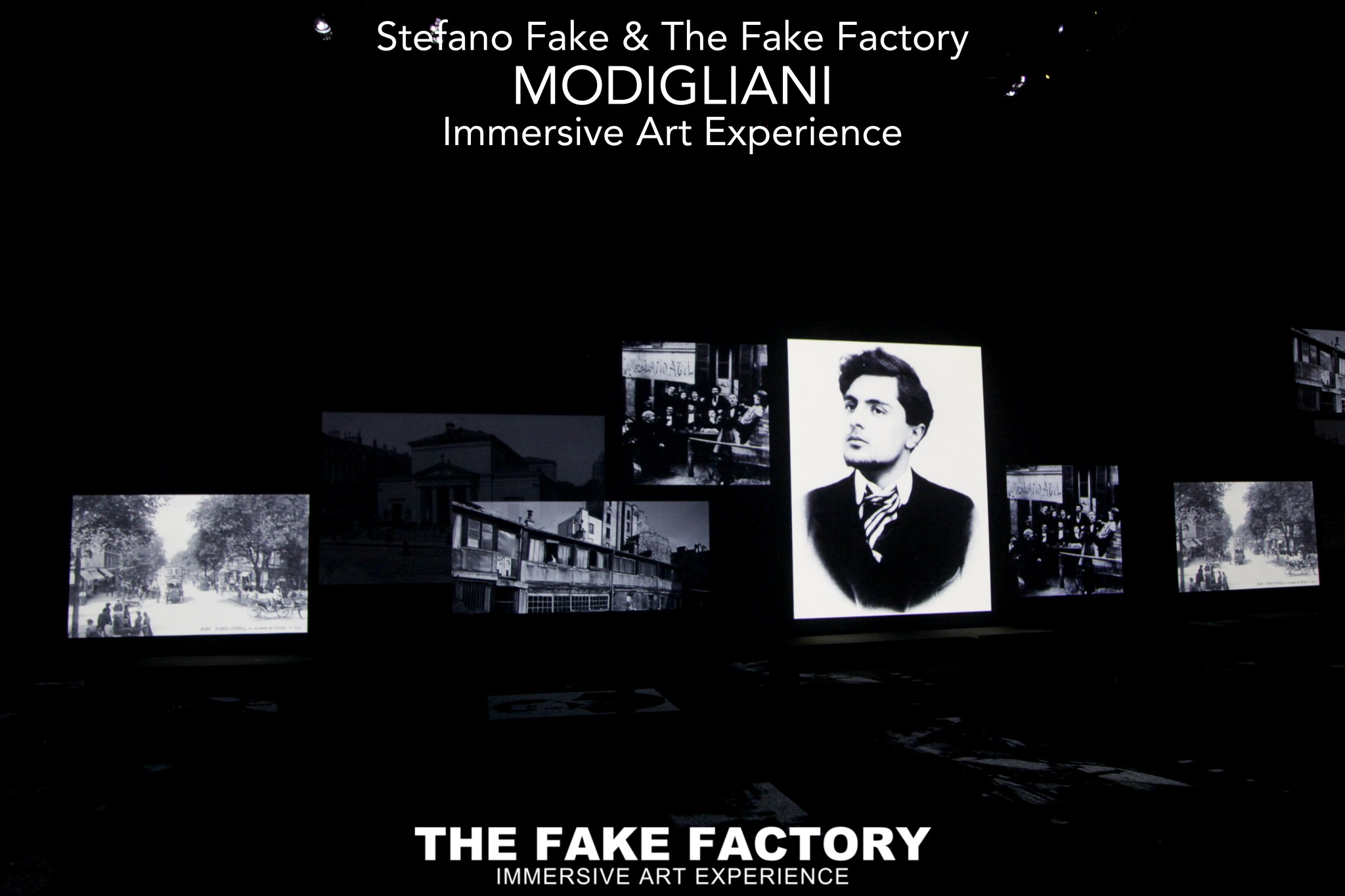
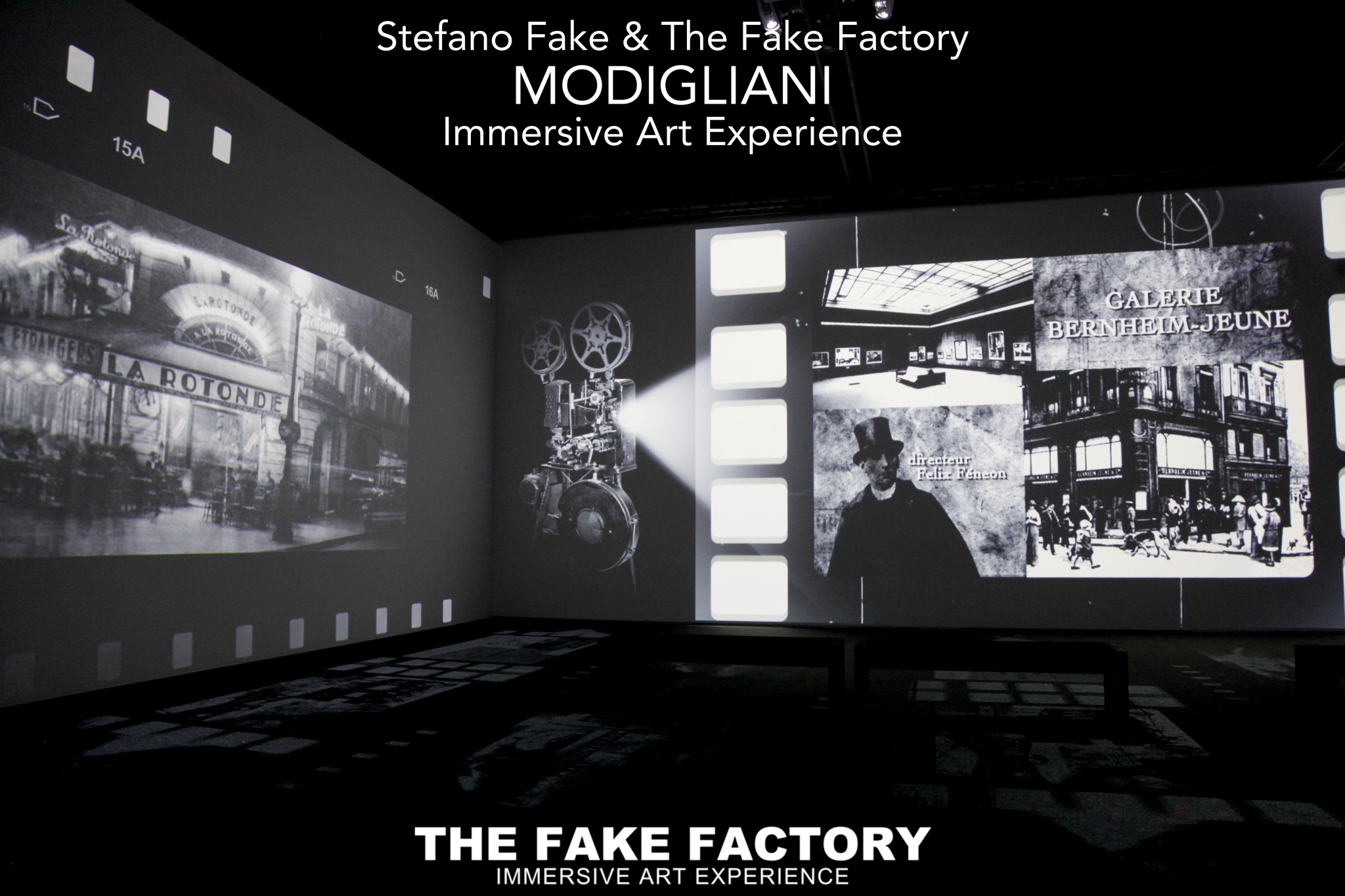
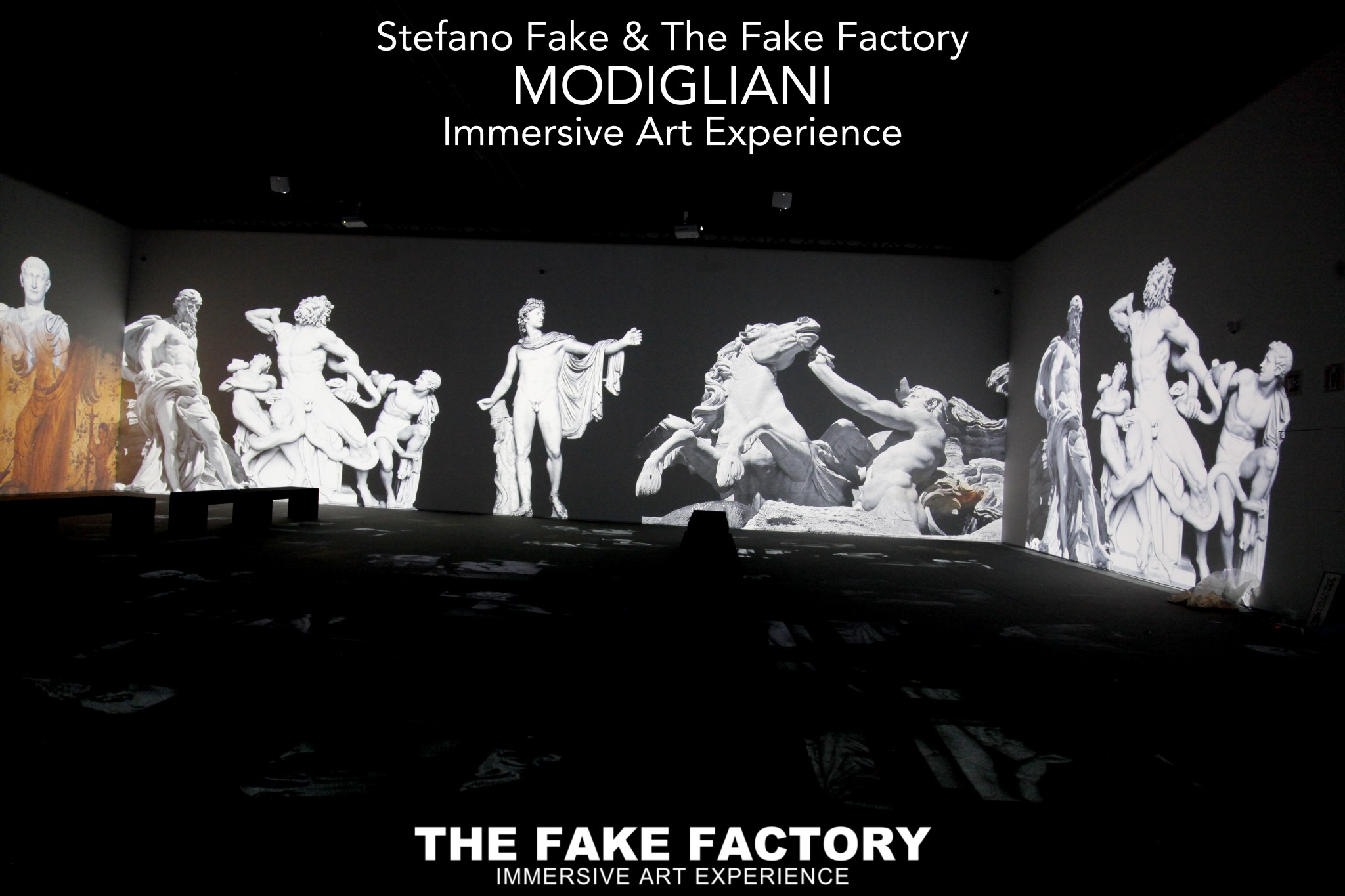
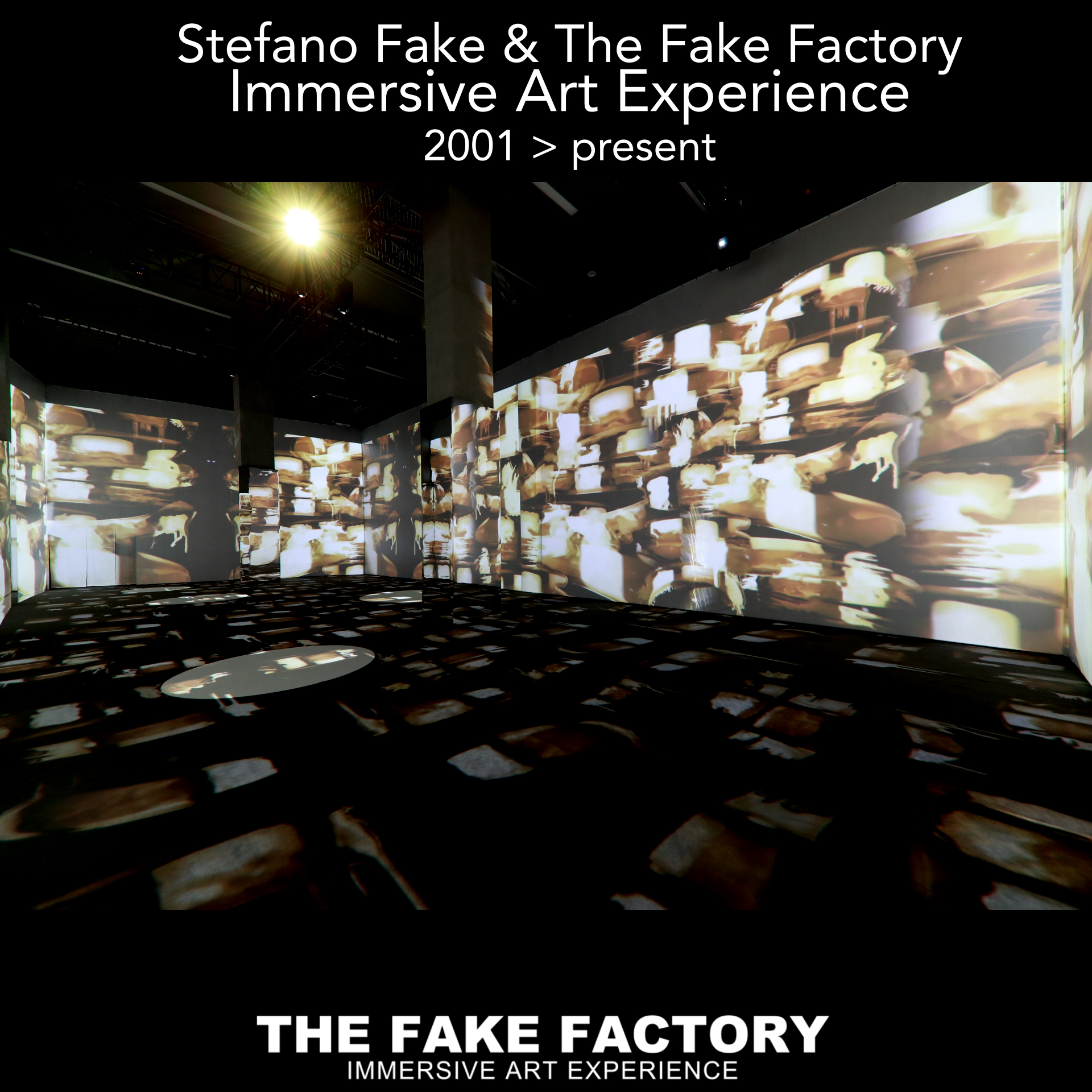
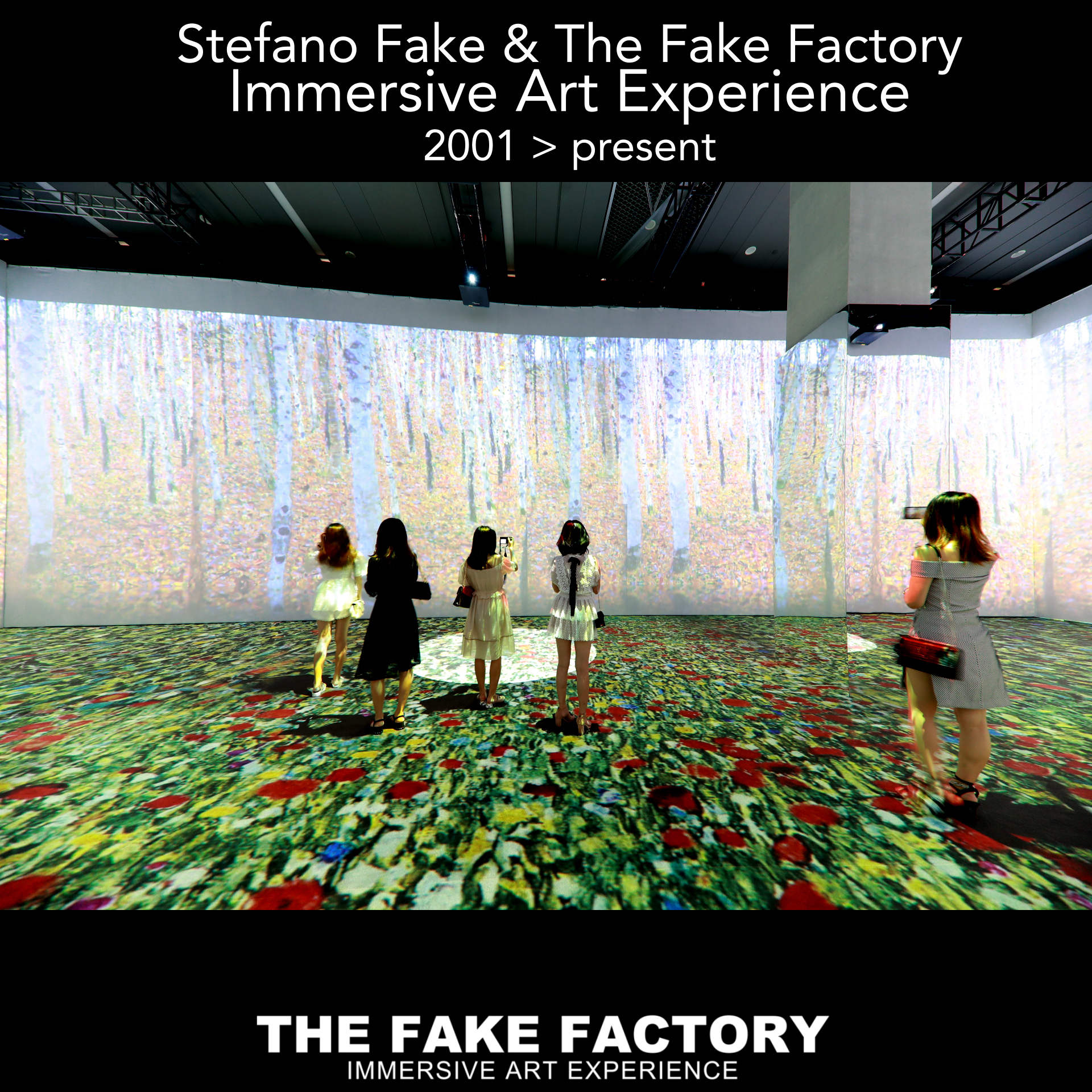
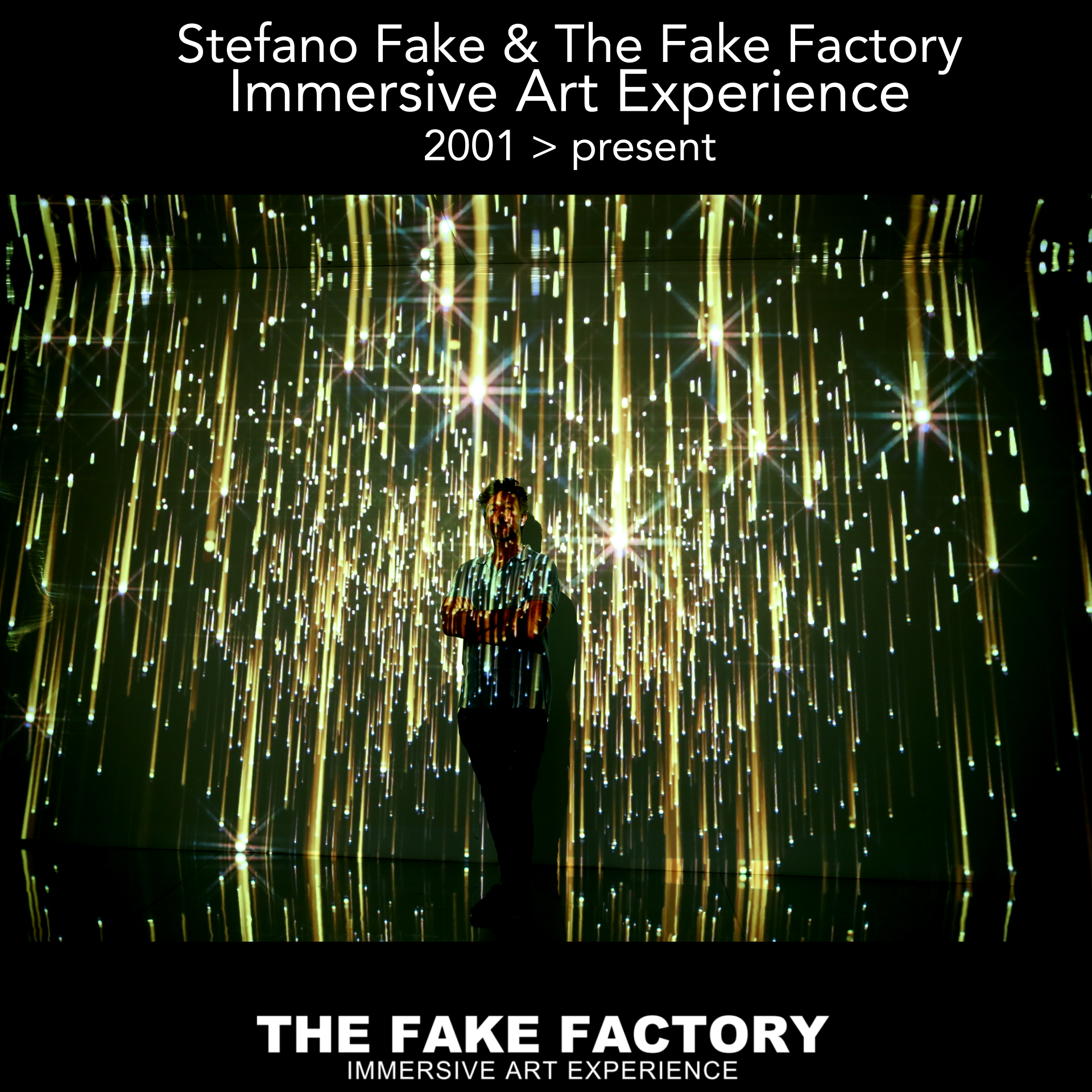
It took time for technology to catch up to The Fake factory’s vision. Their first exhibit, in 2001, consisted of a small empty white room filled only with television reproducing 16million colors in a 30 minutes experience. The last one in 2022 was inside the Hangar Bicocca, a 2.000 square meters venue filled with monumental video-projections.
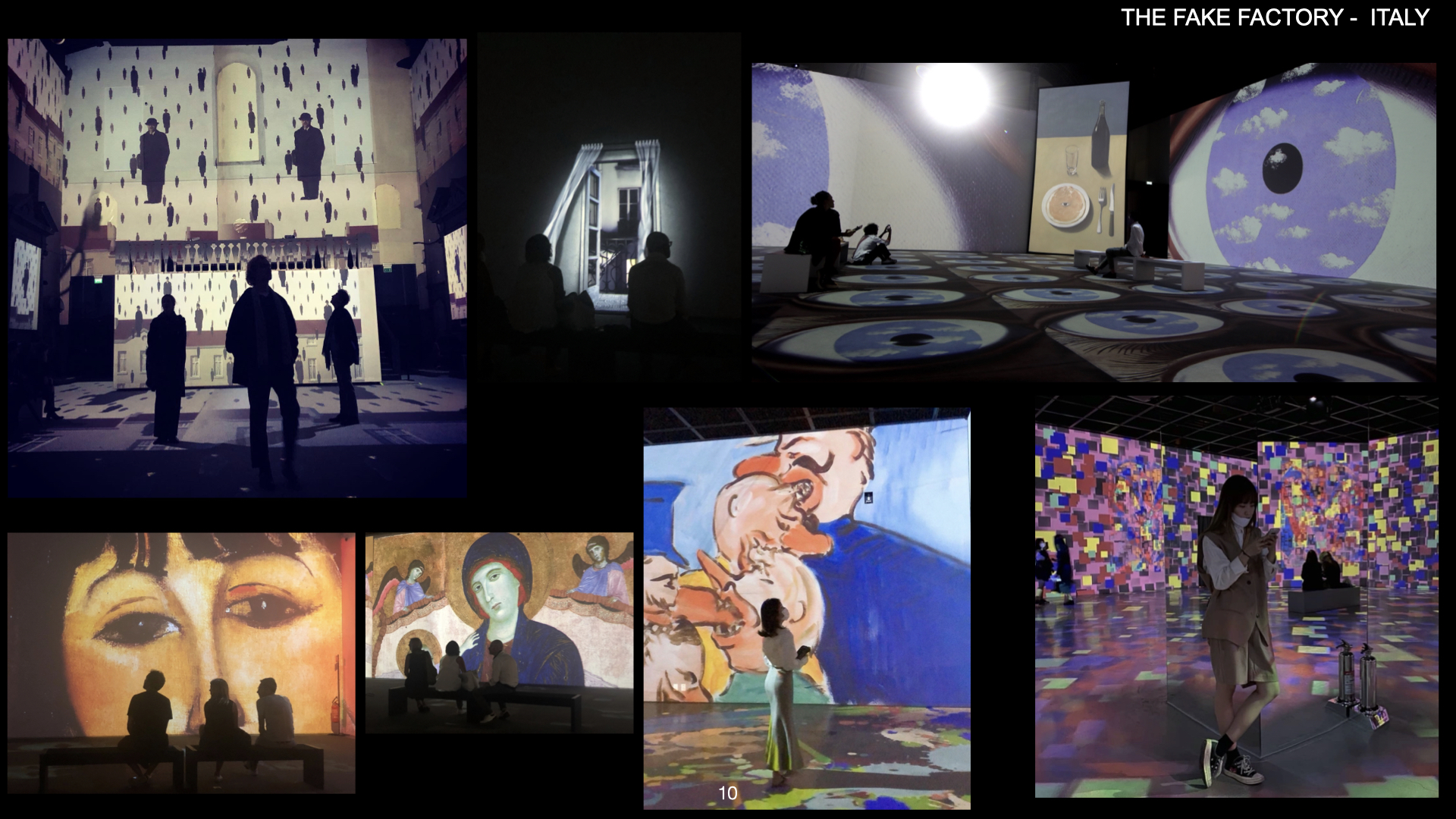
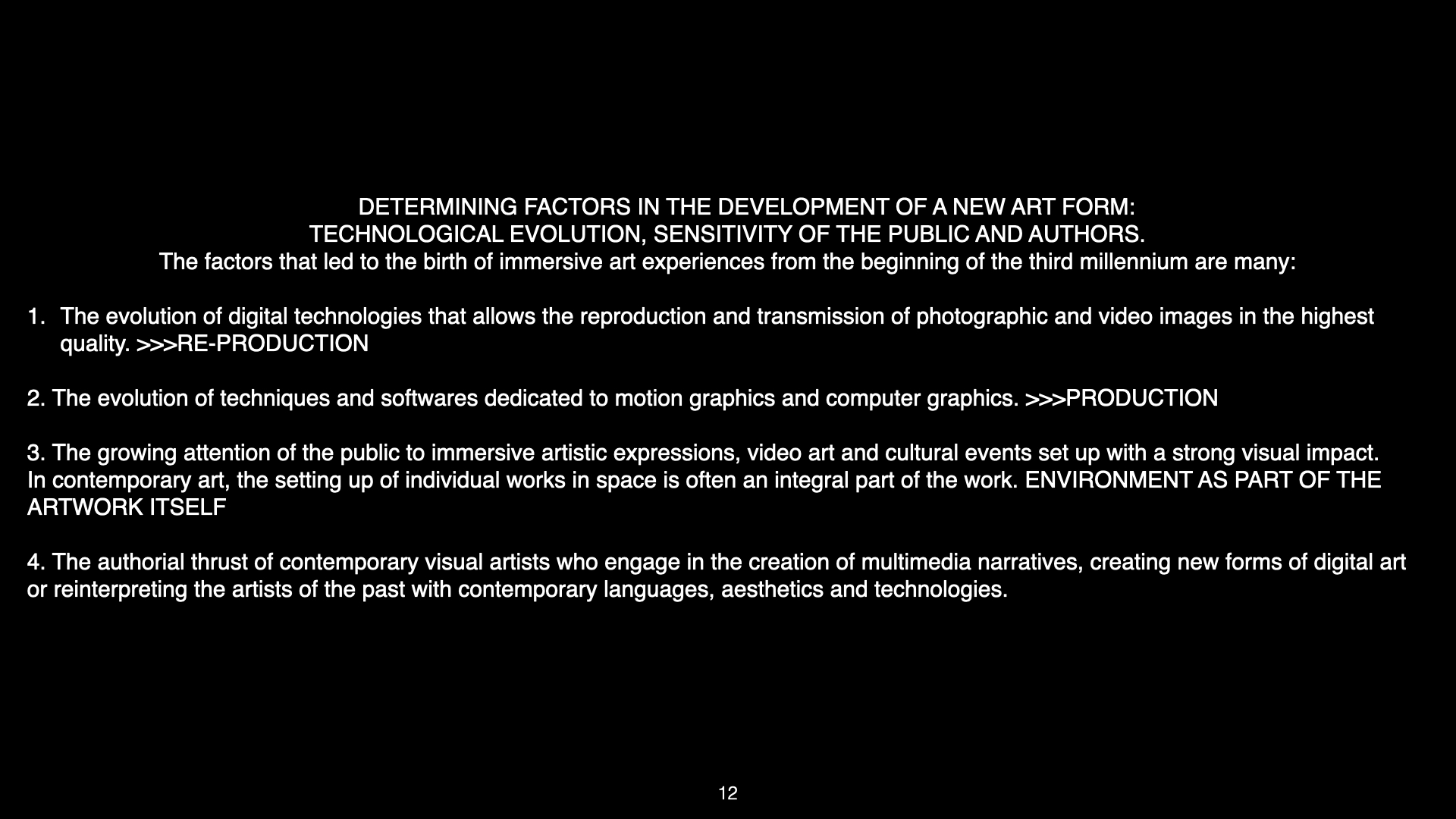
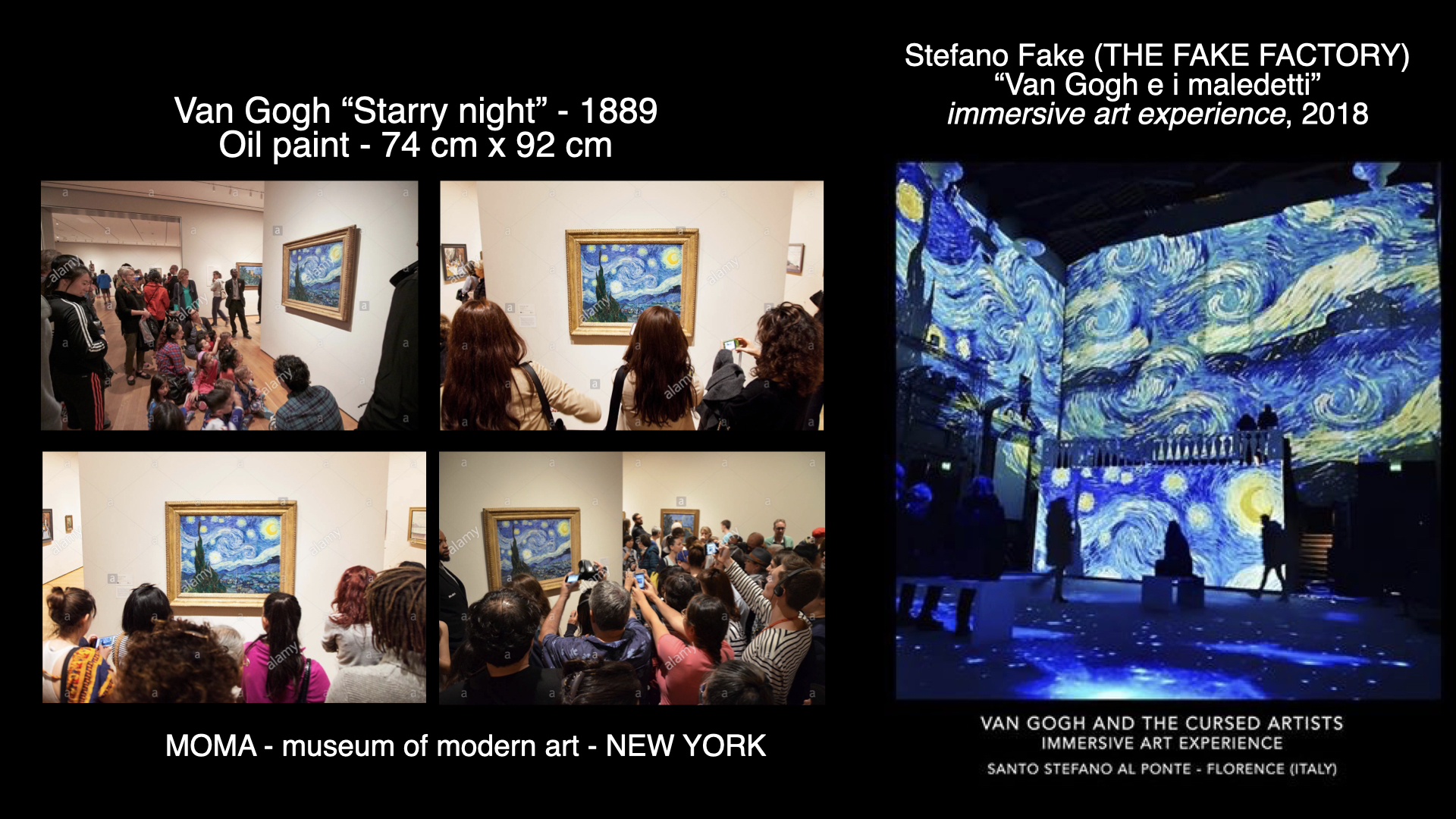
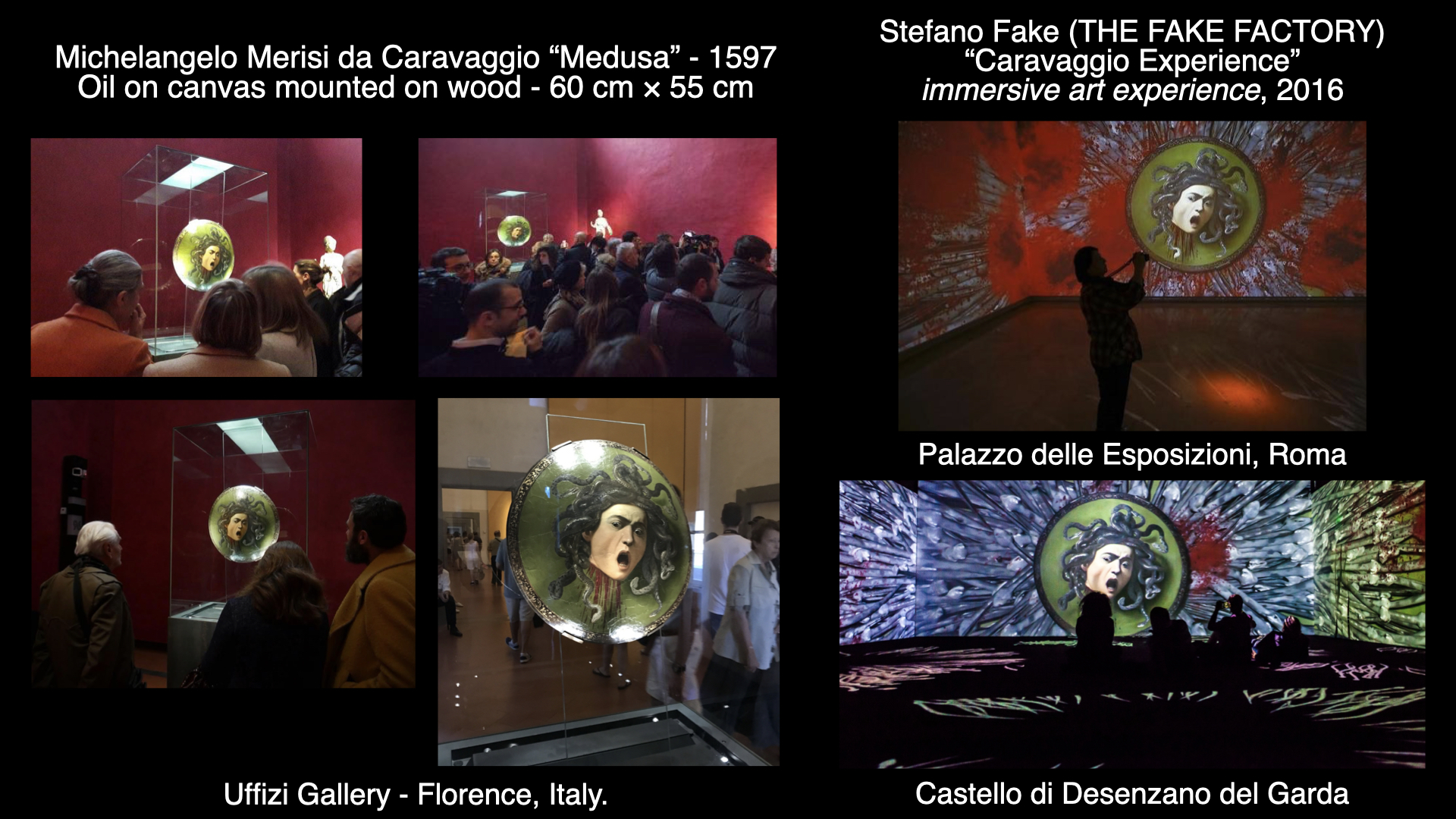
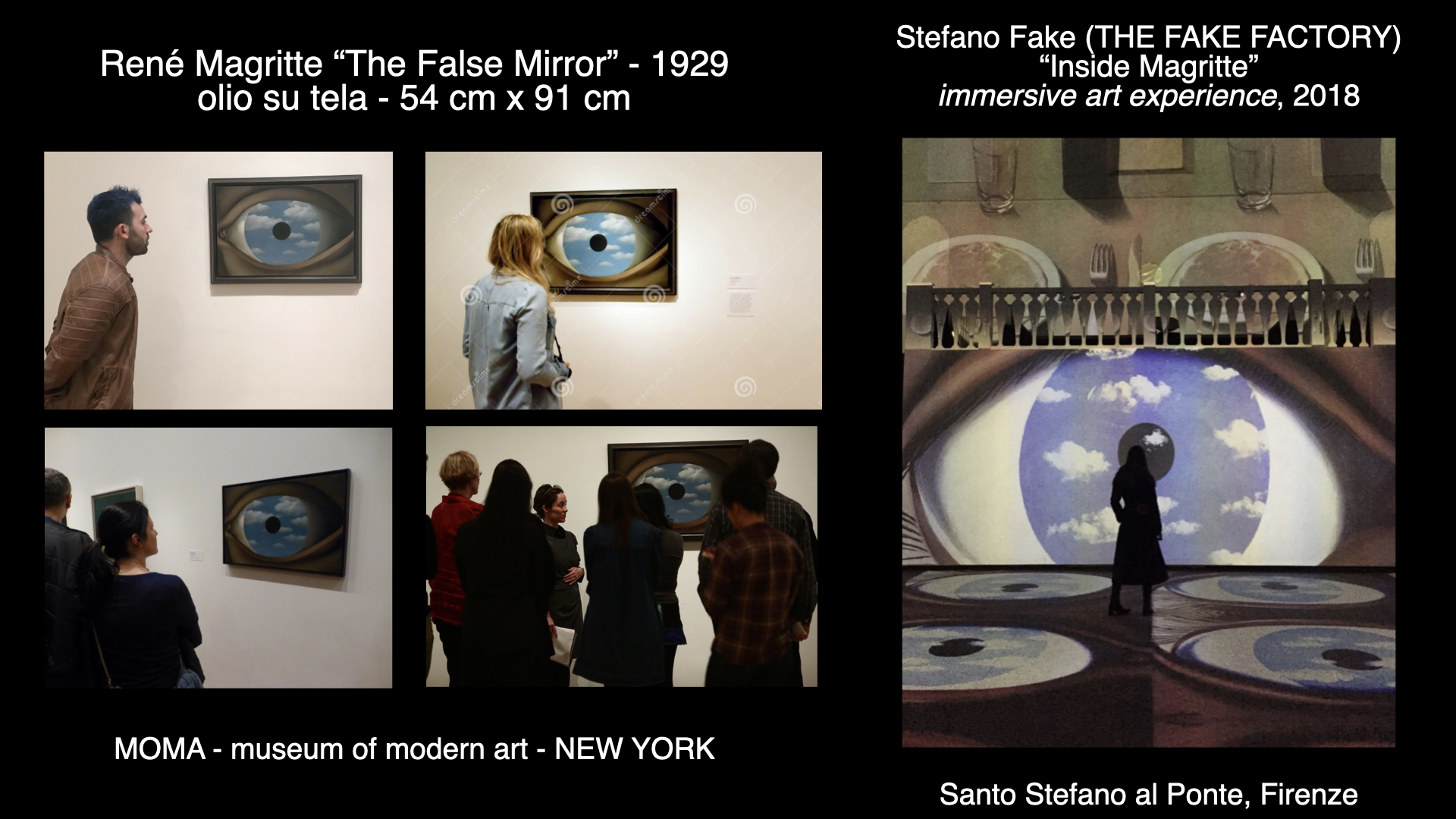
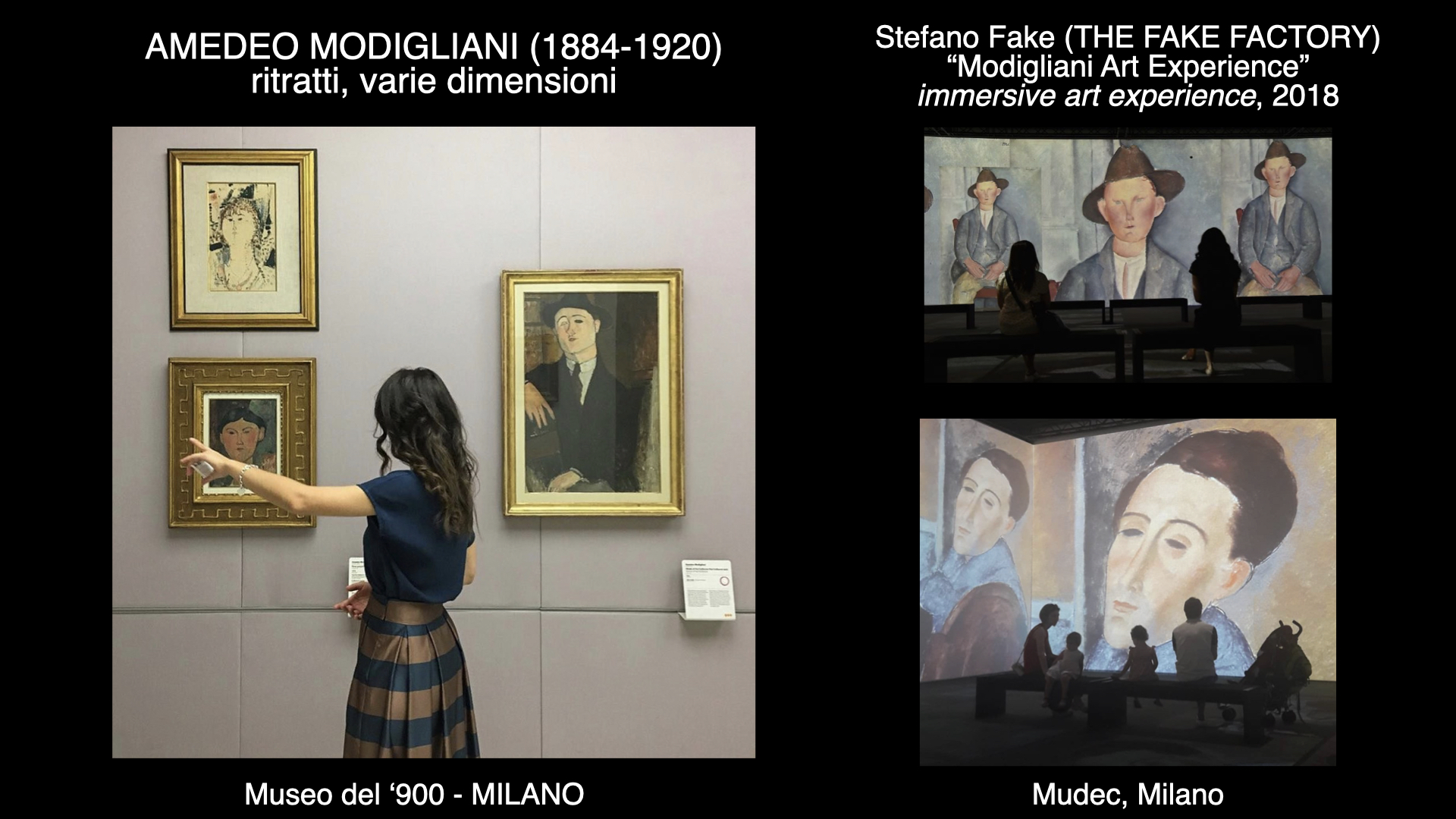
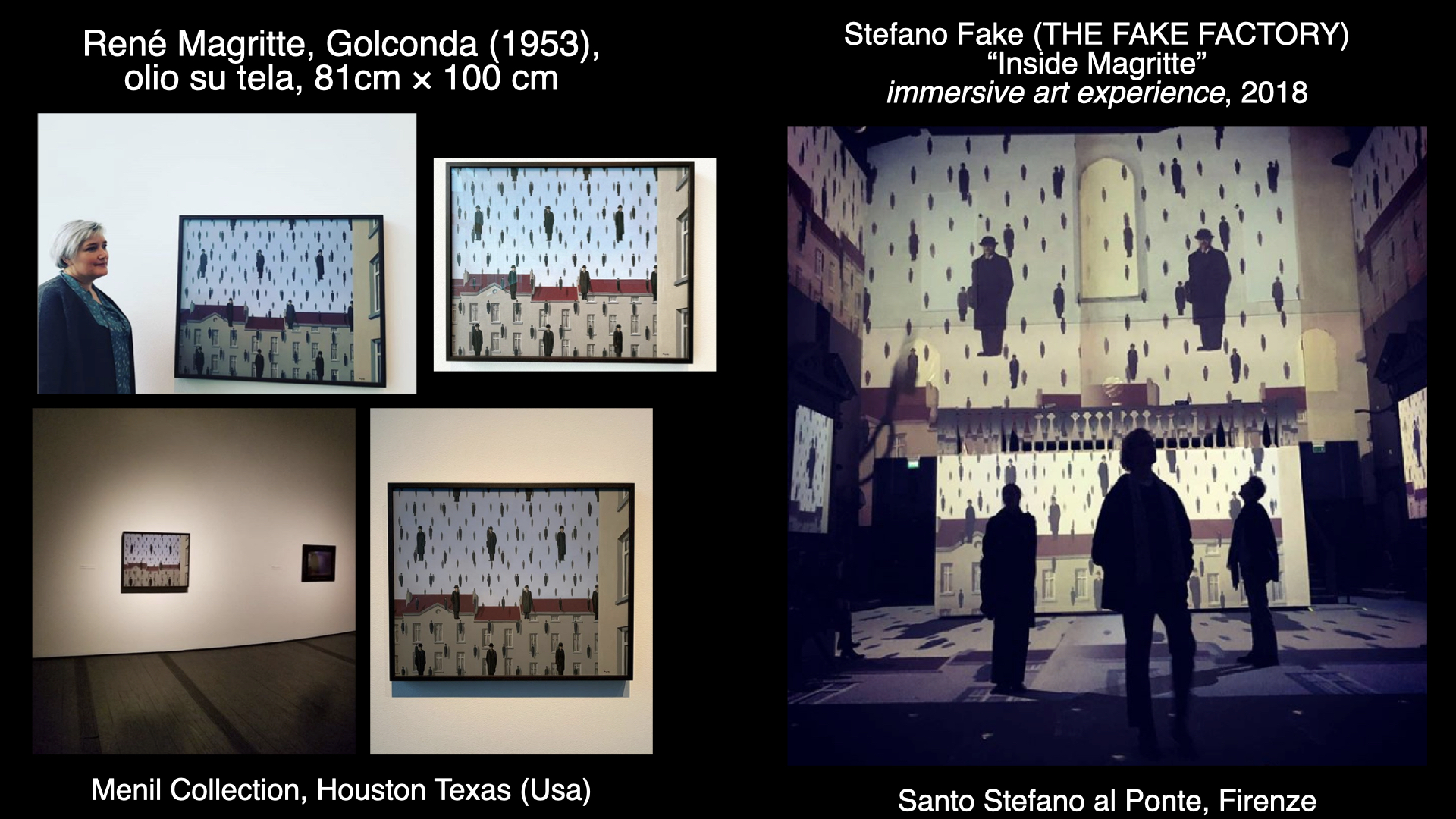
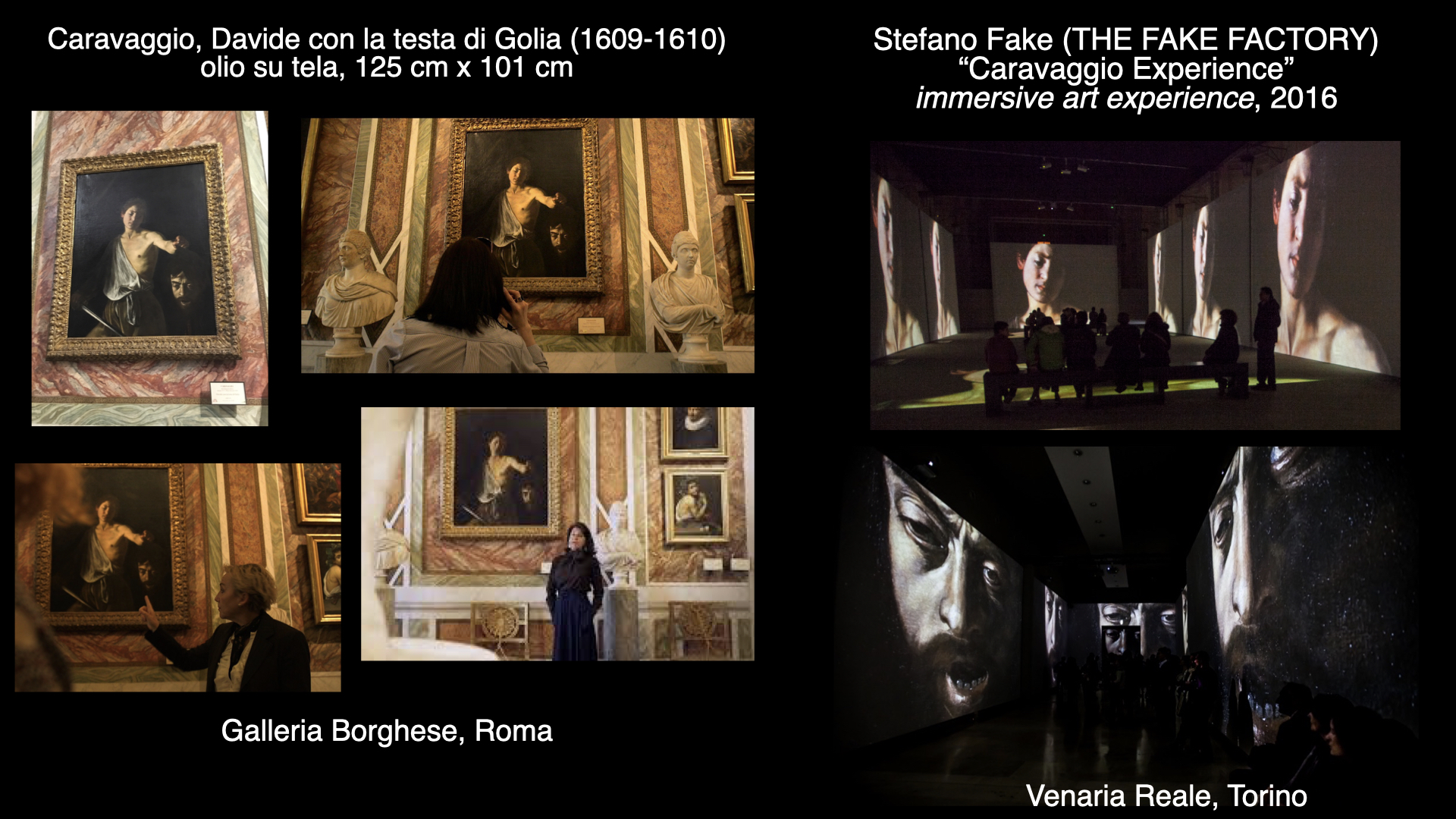
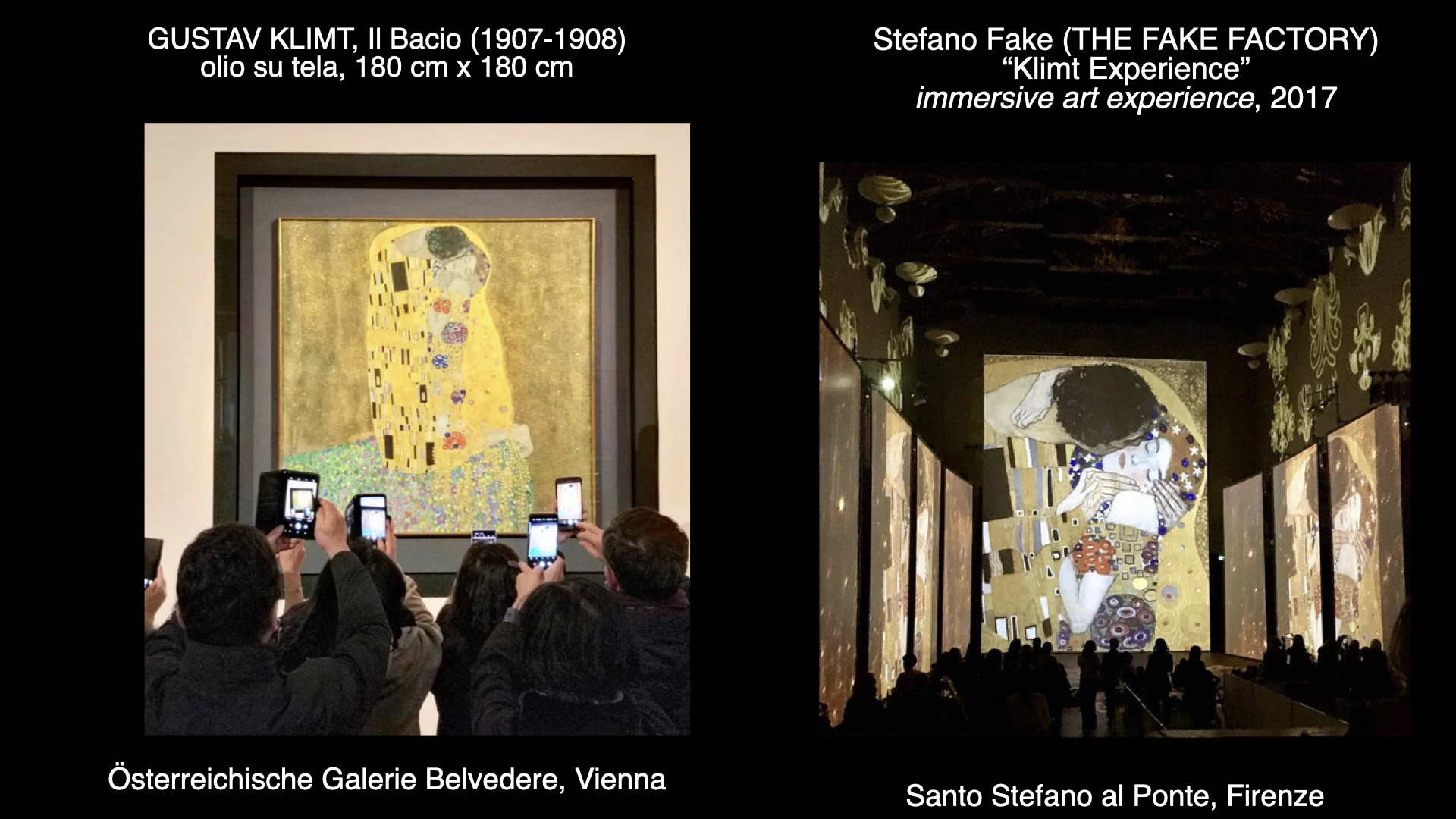
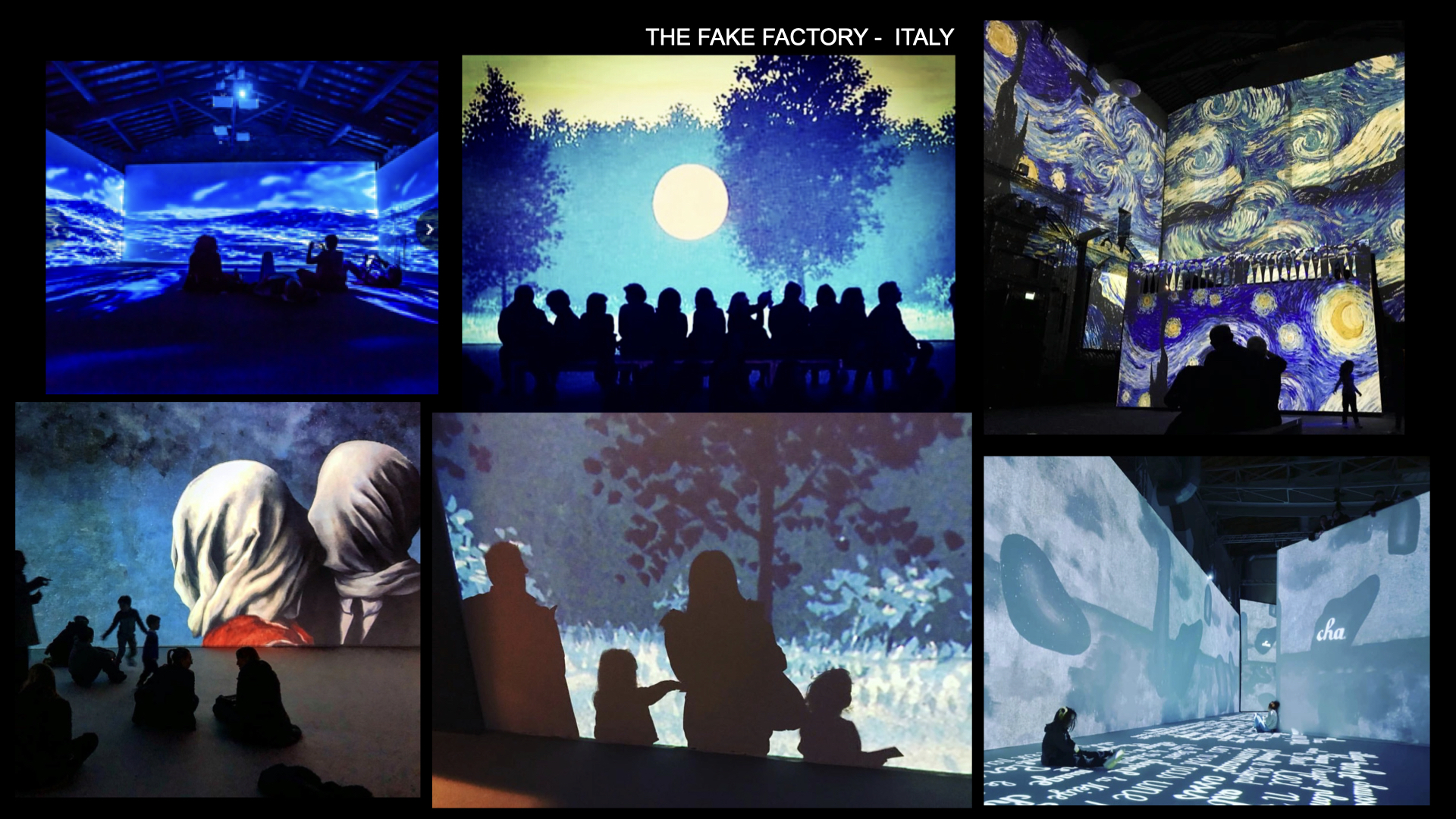
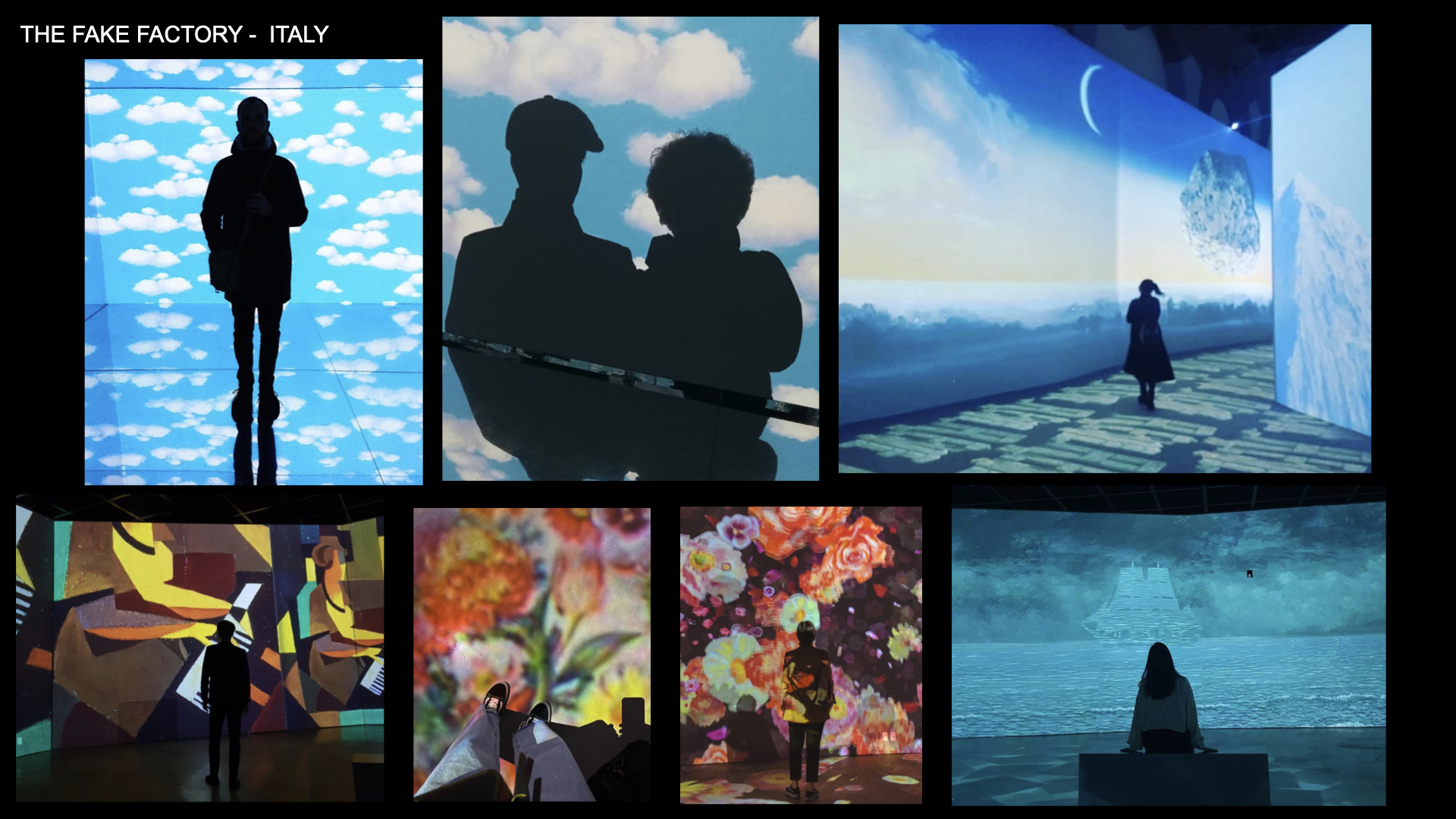
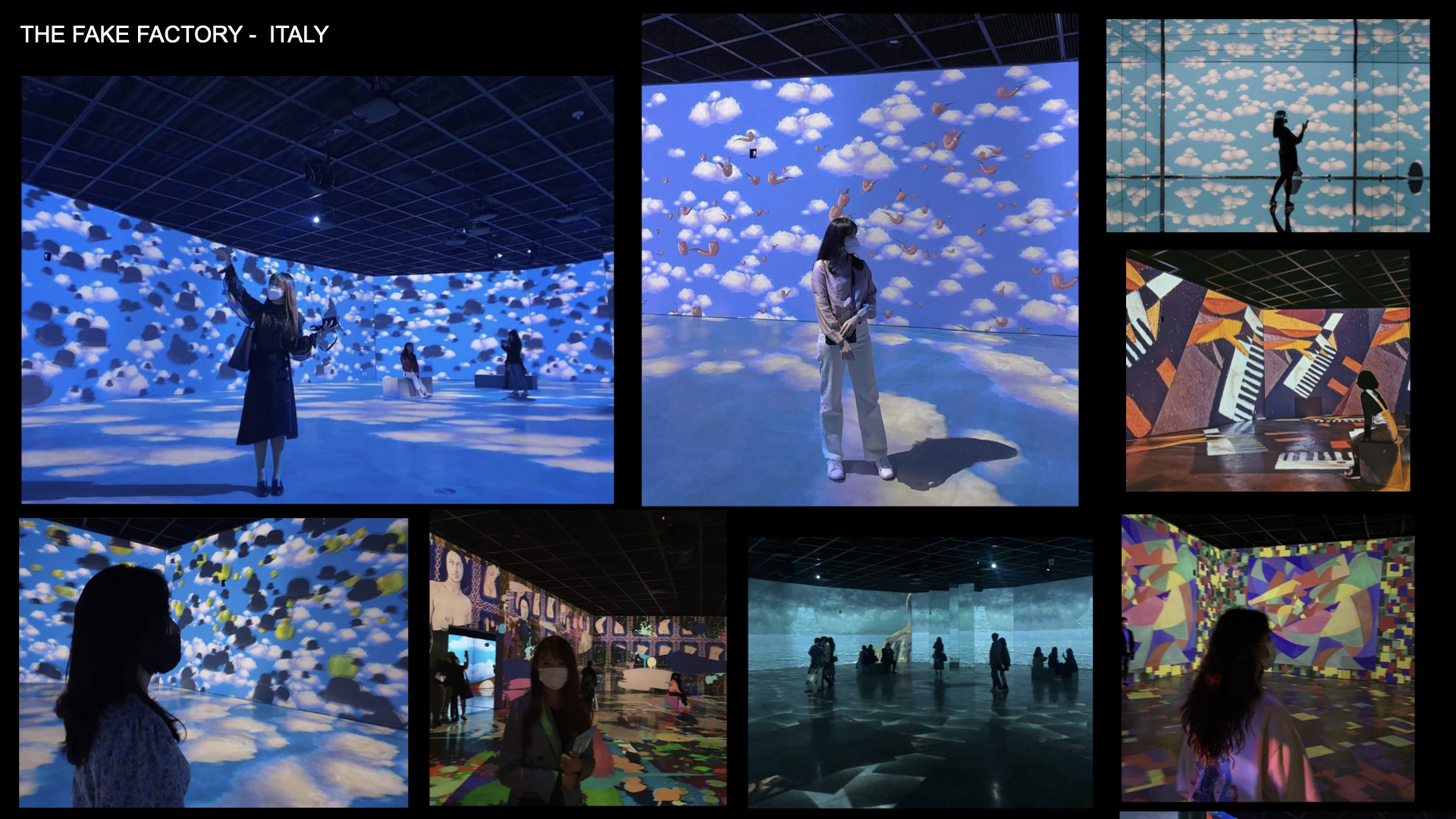
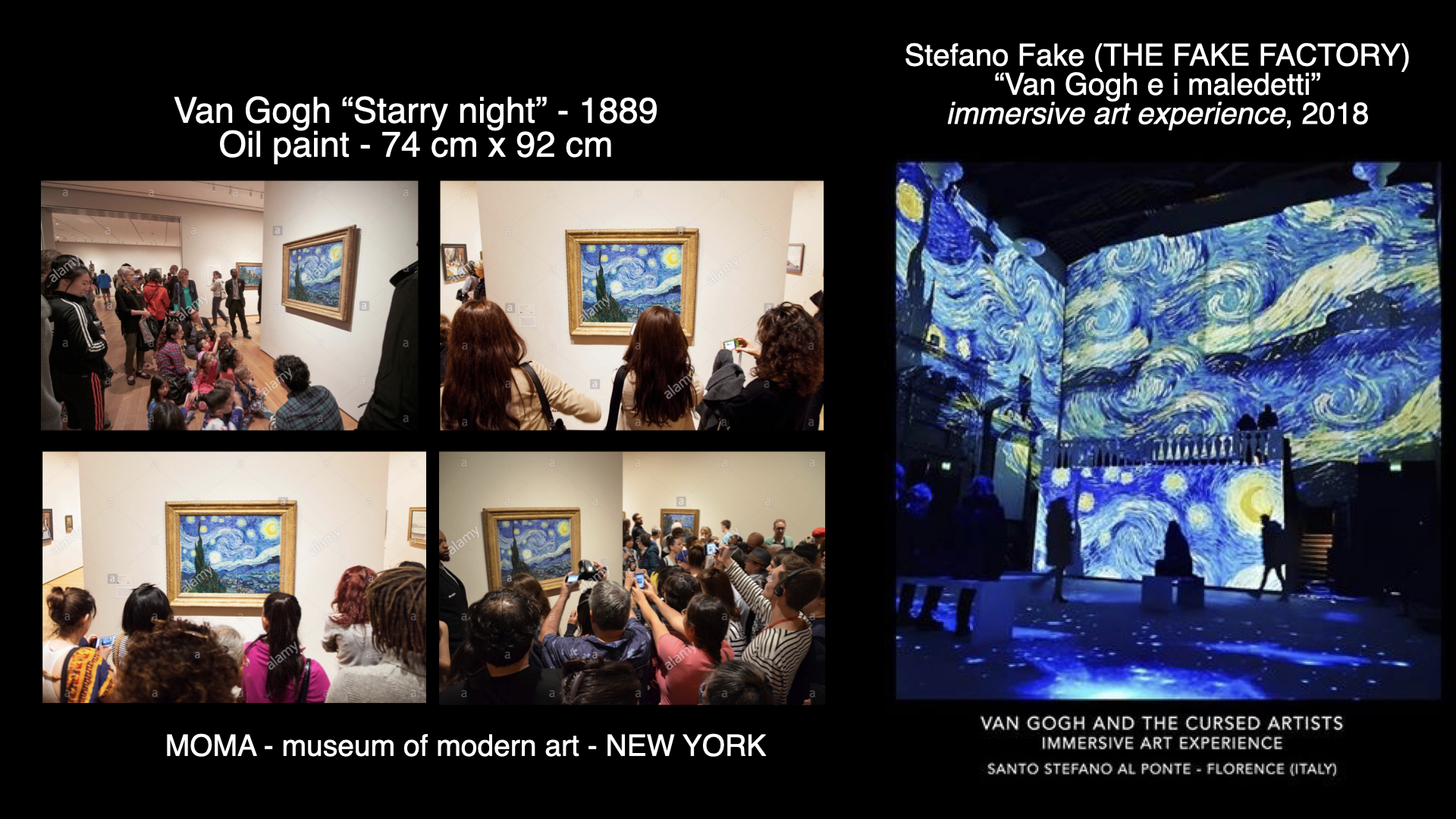
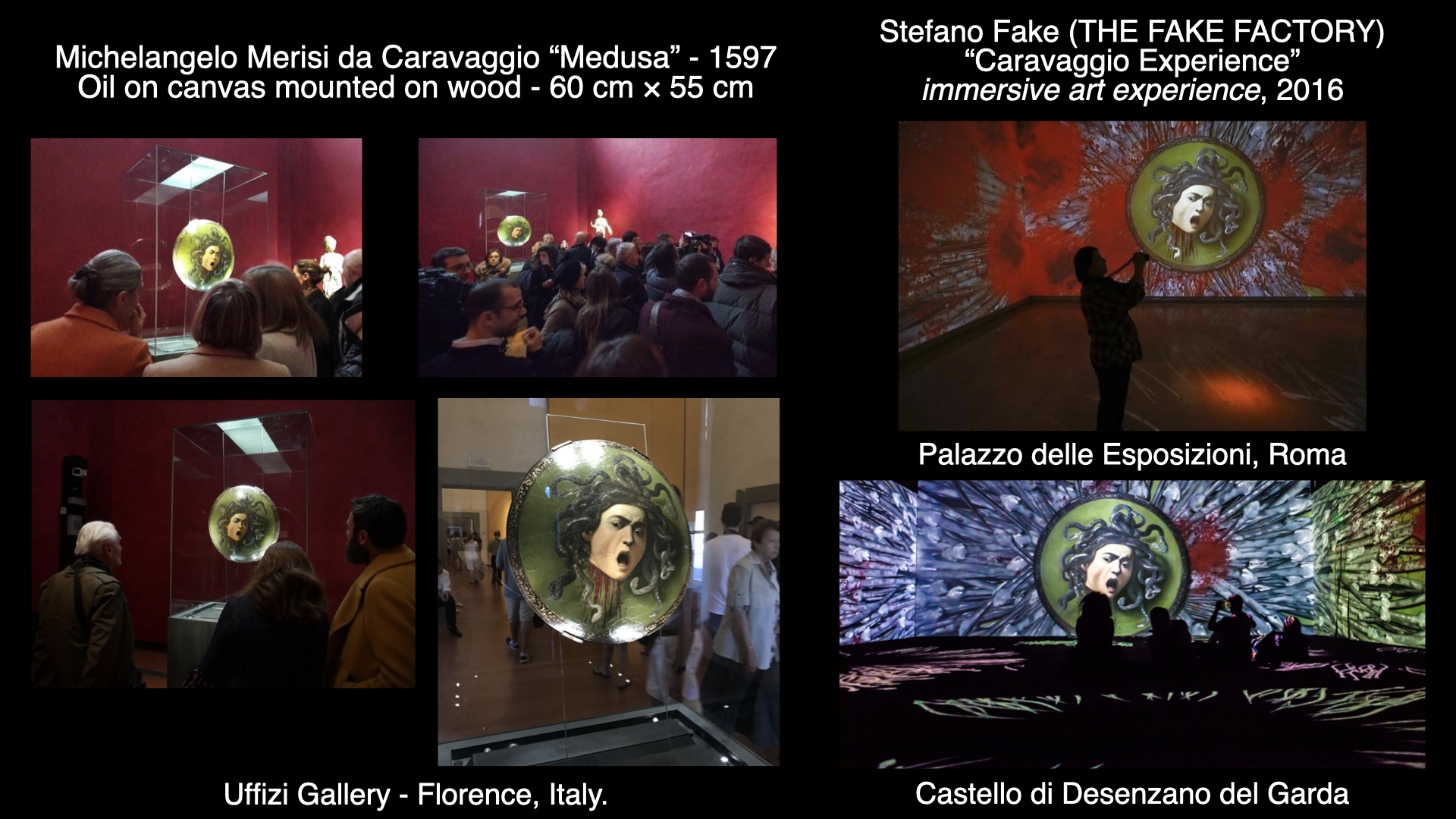
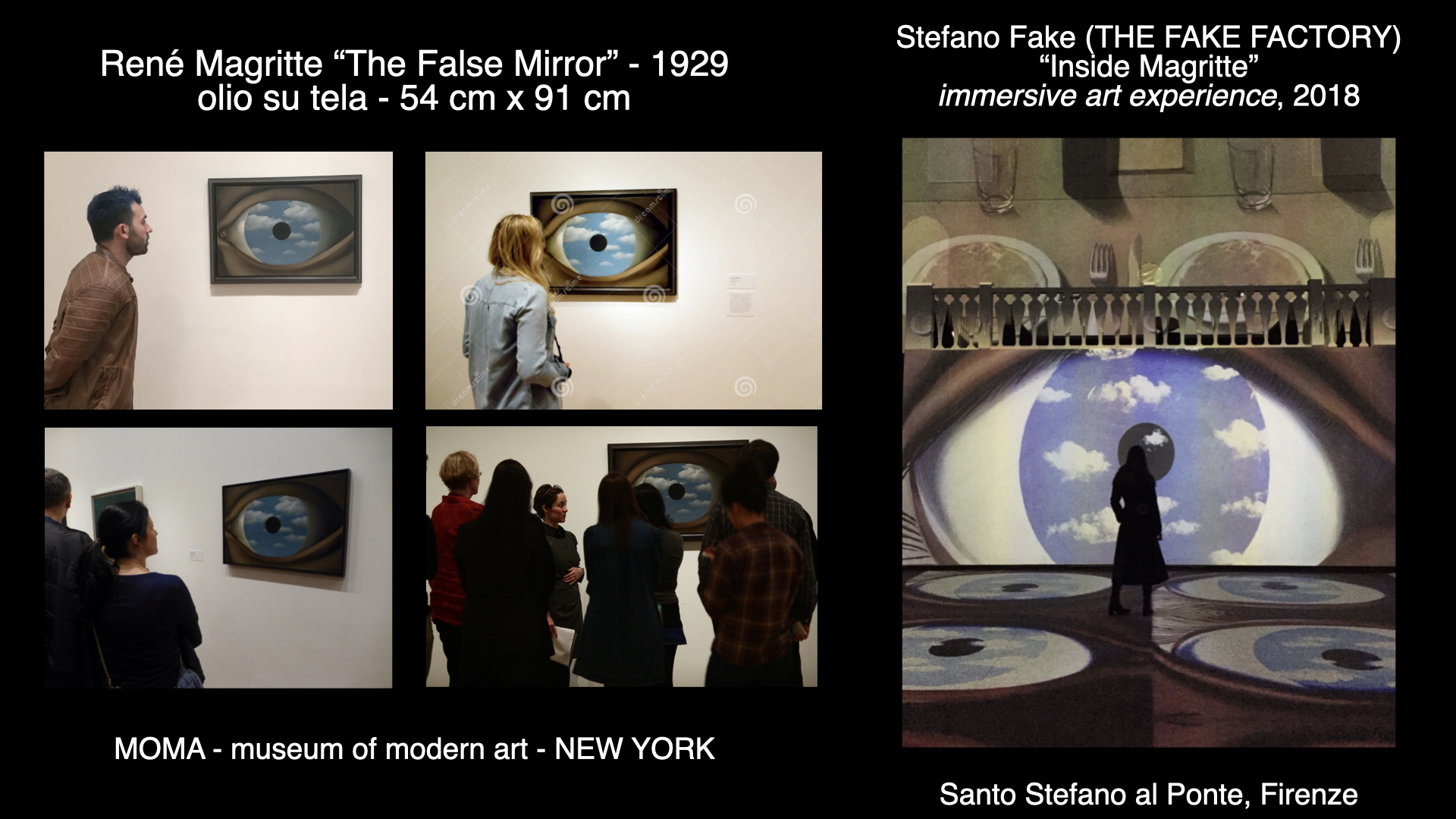
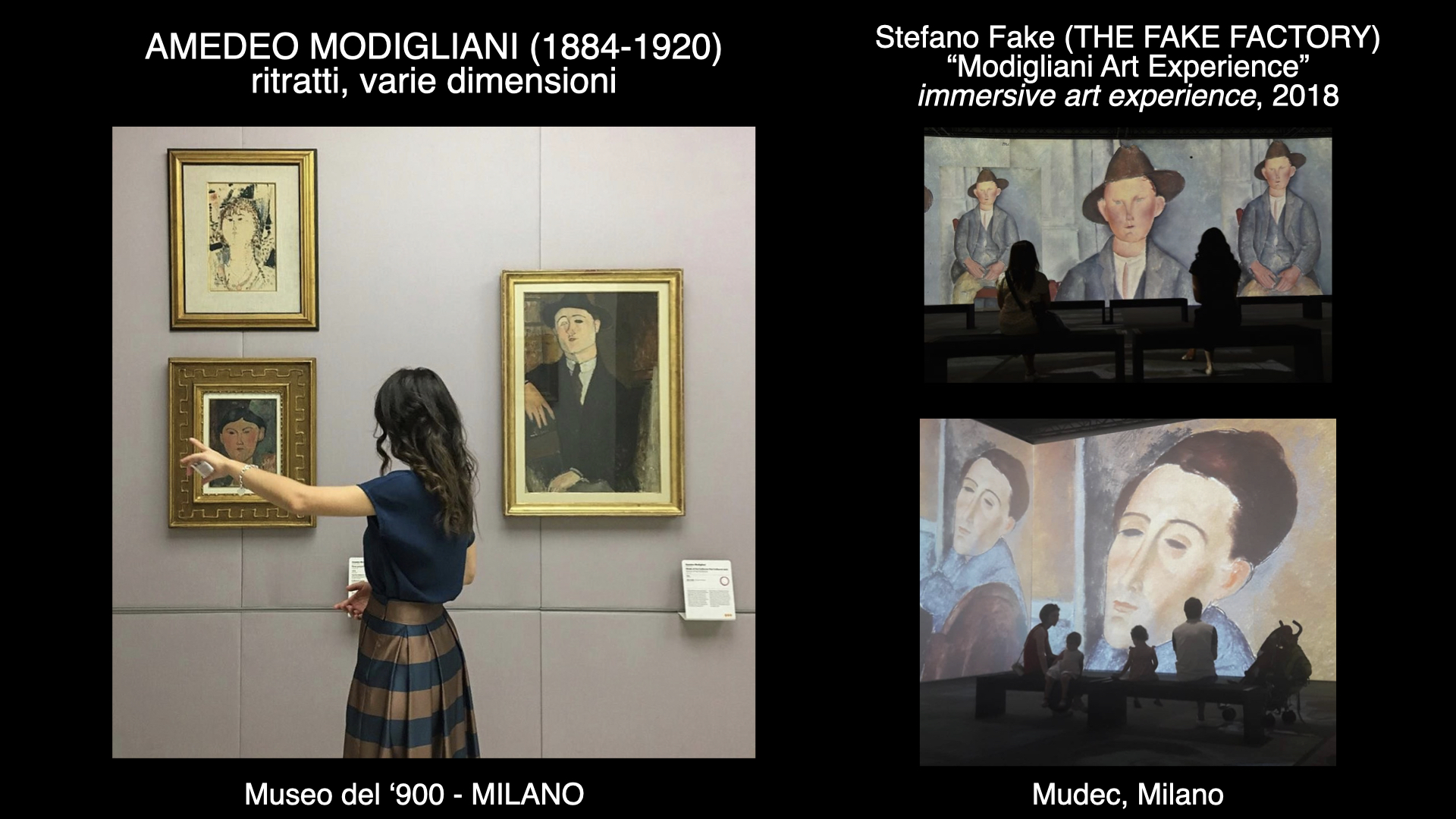
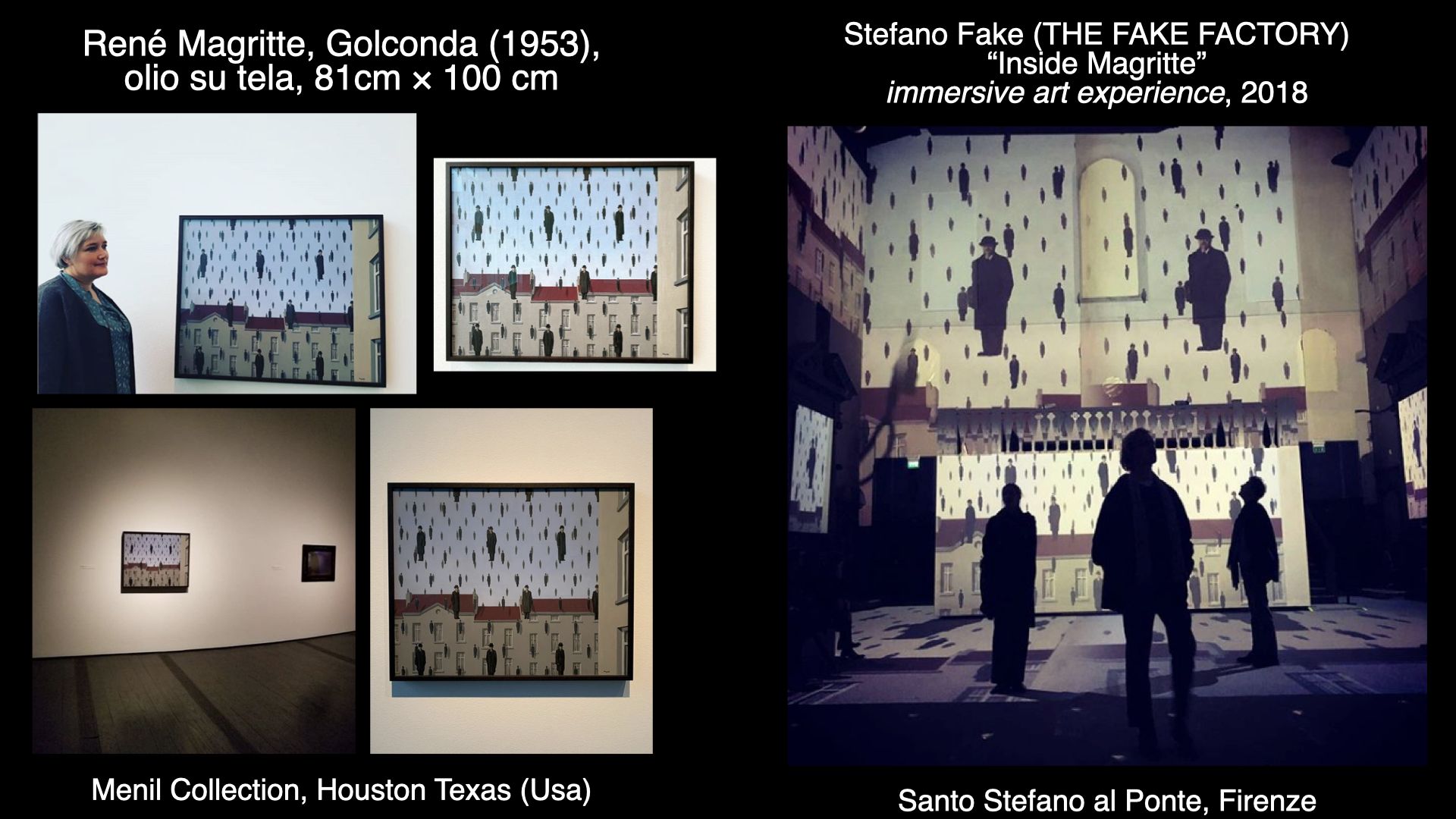
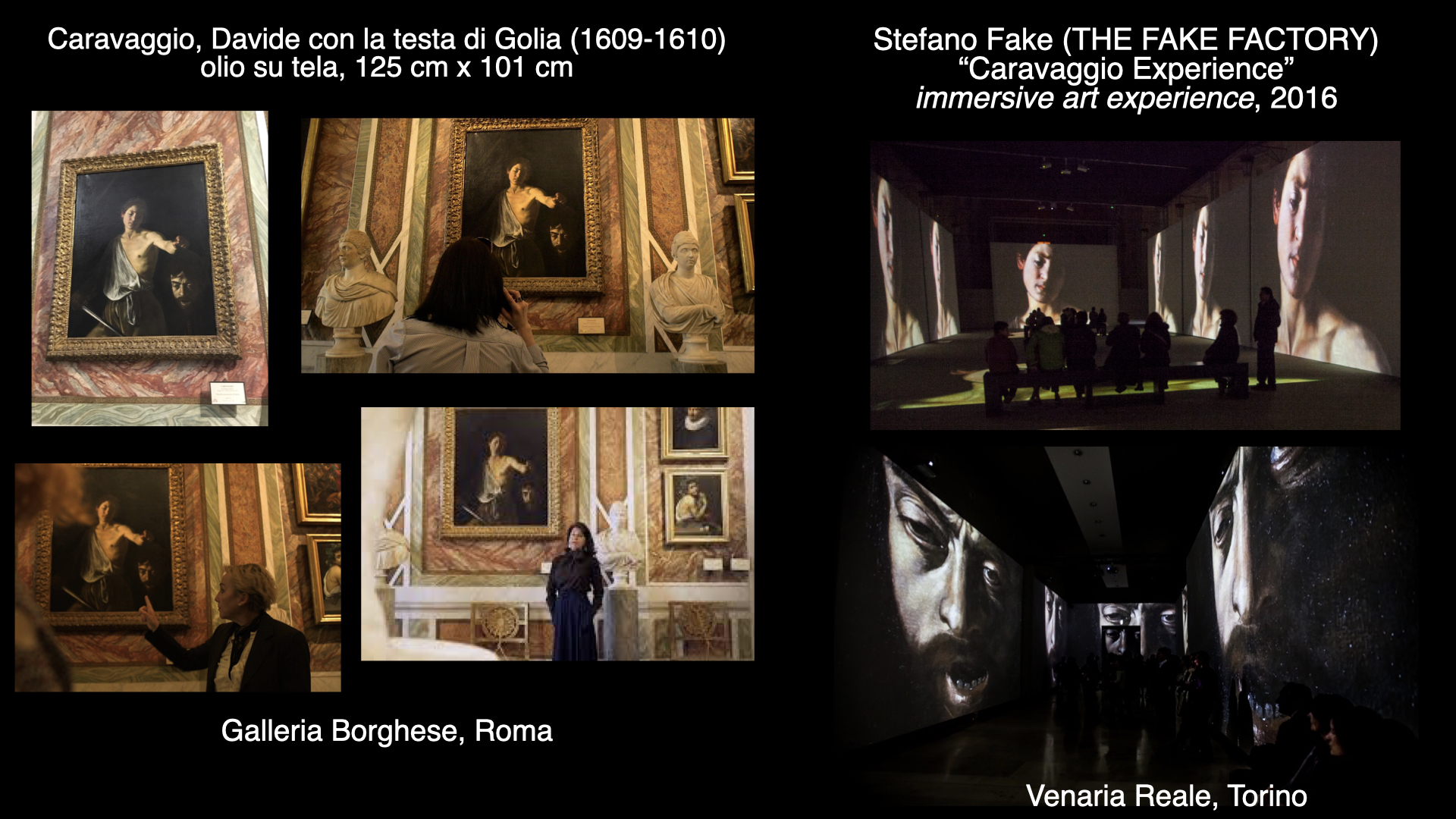
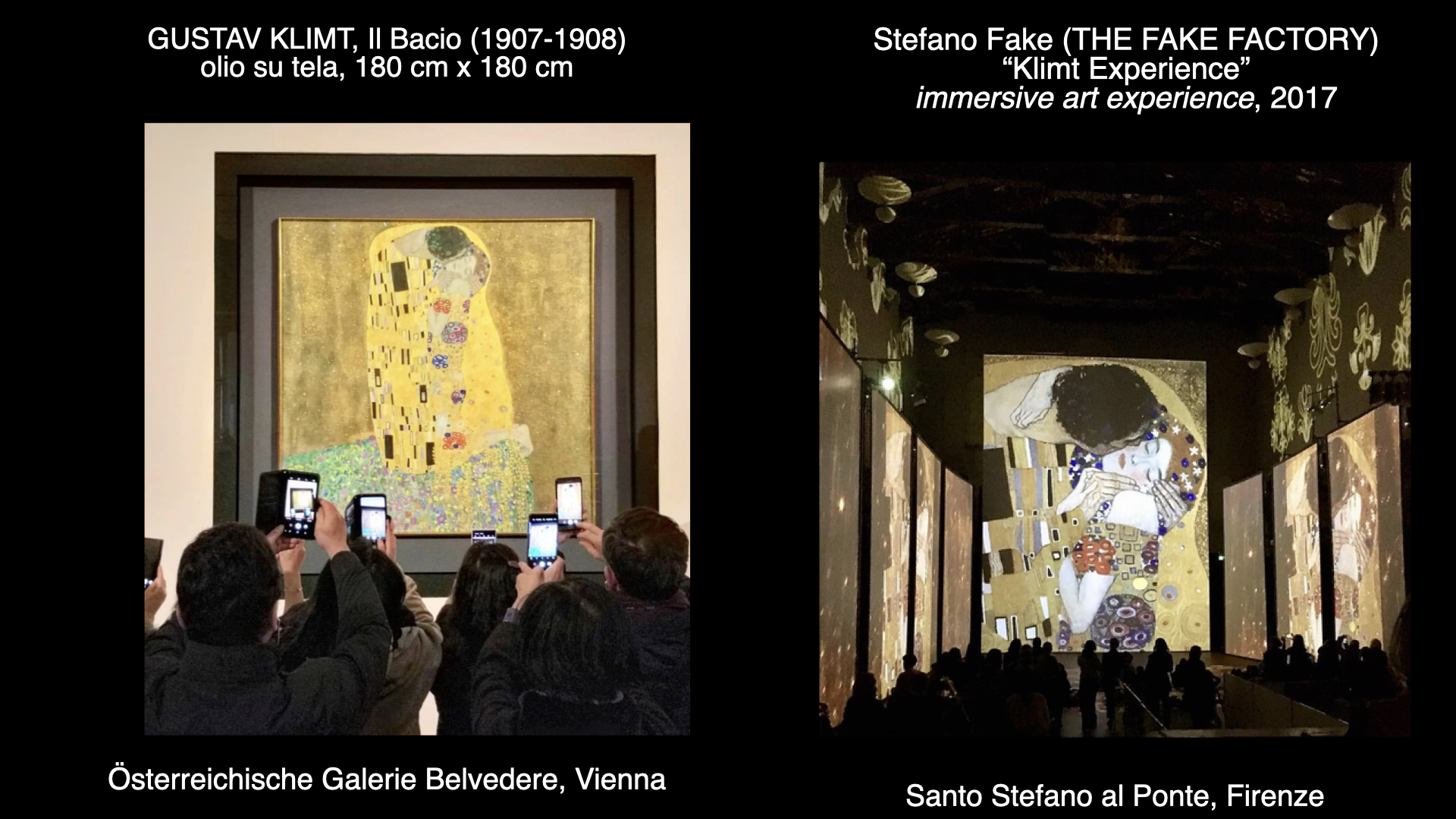
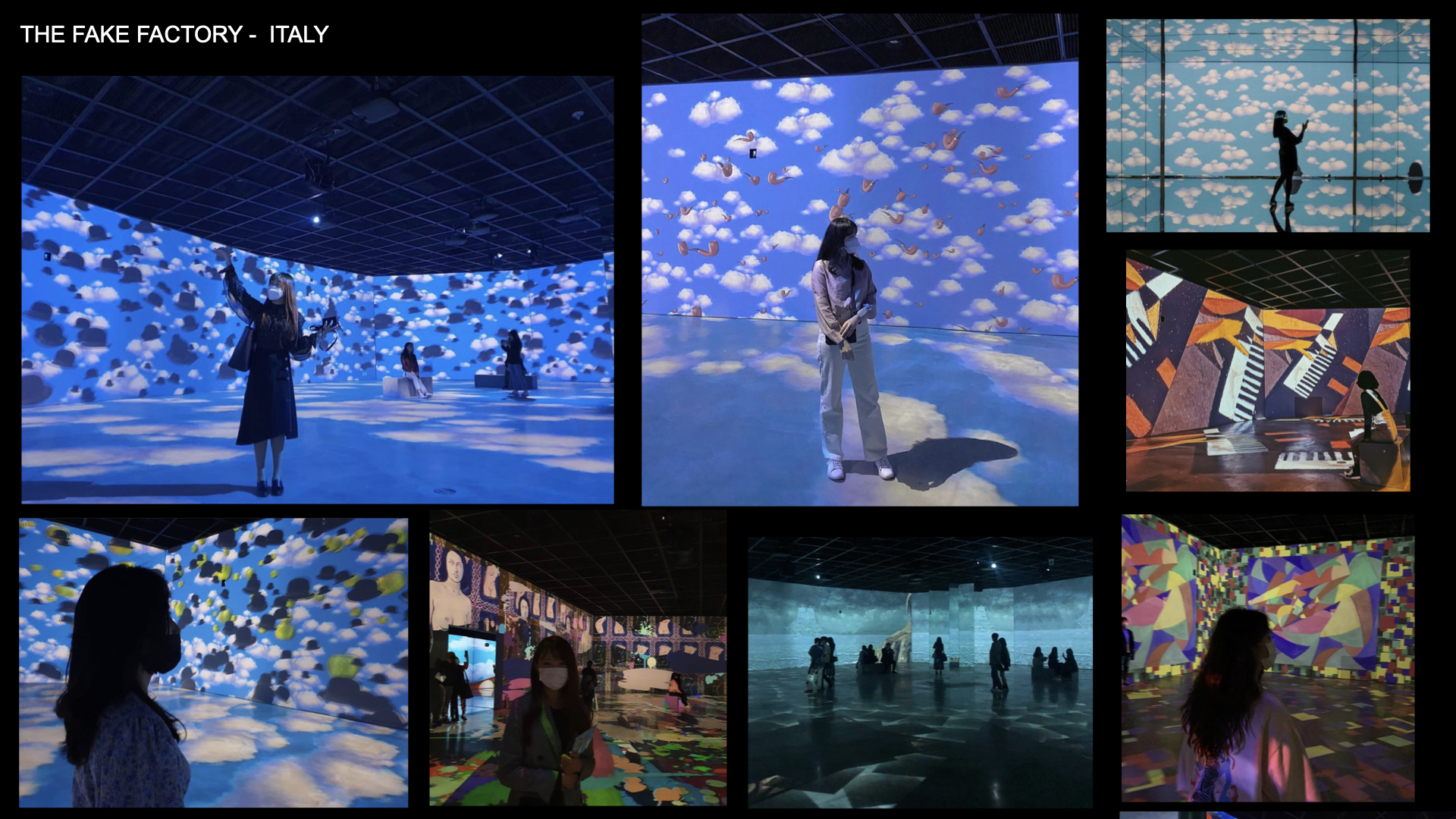
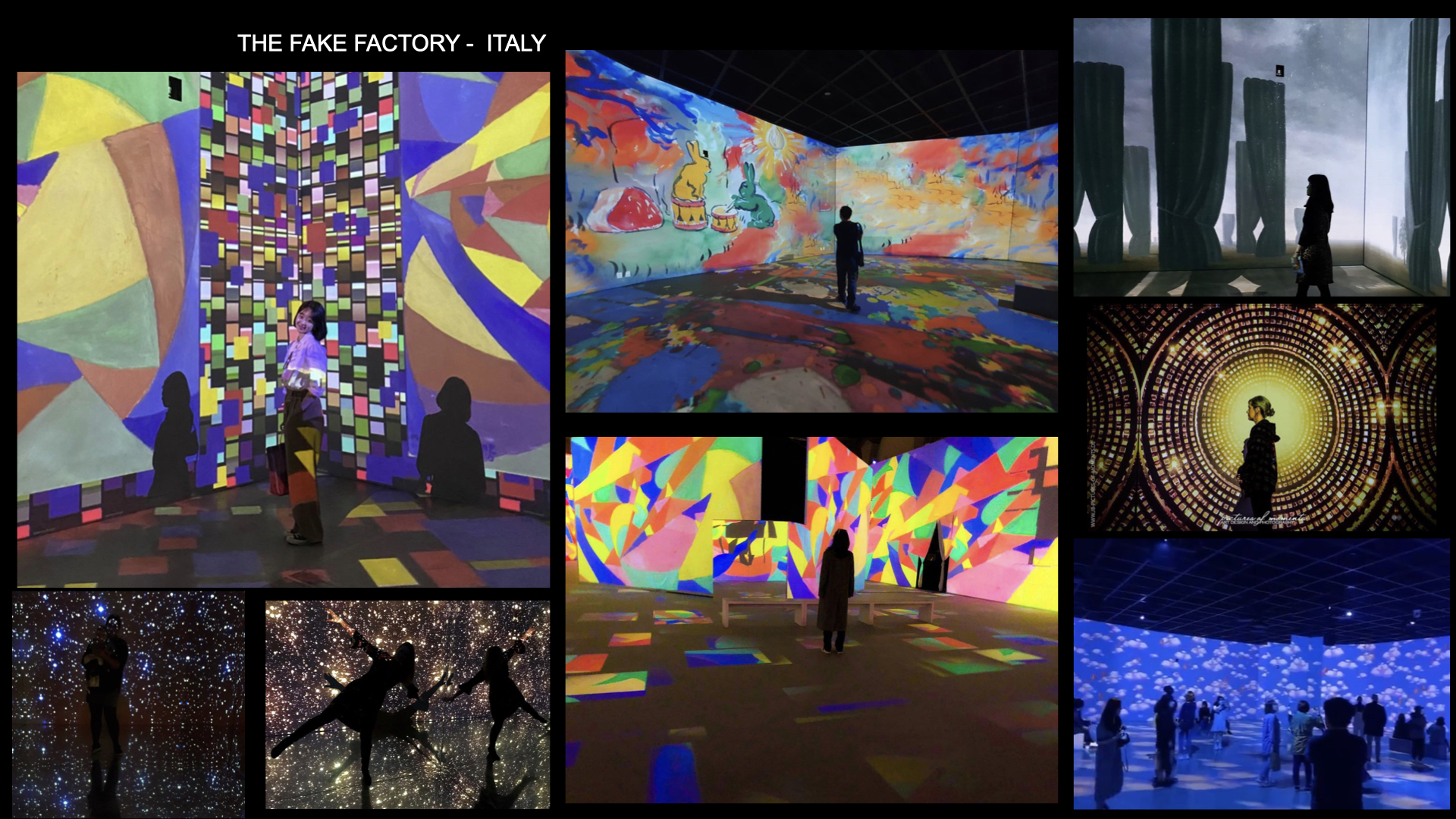
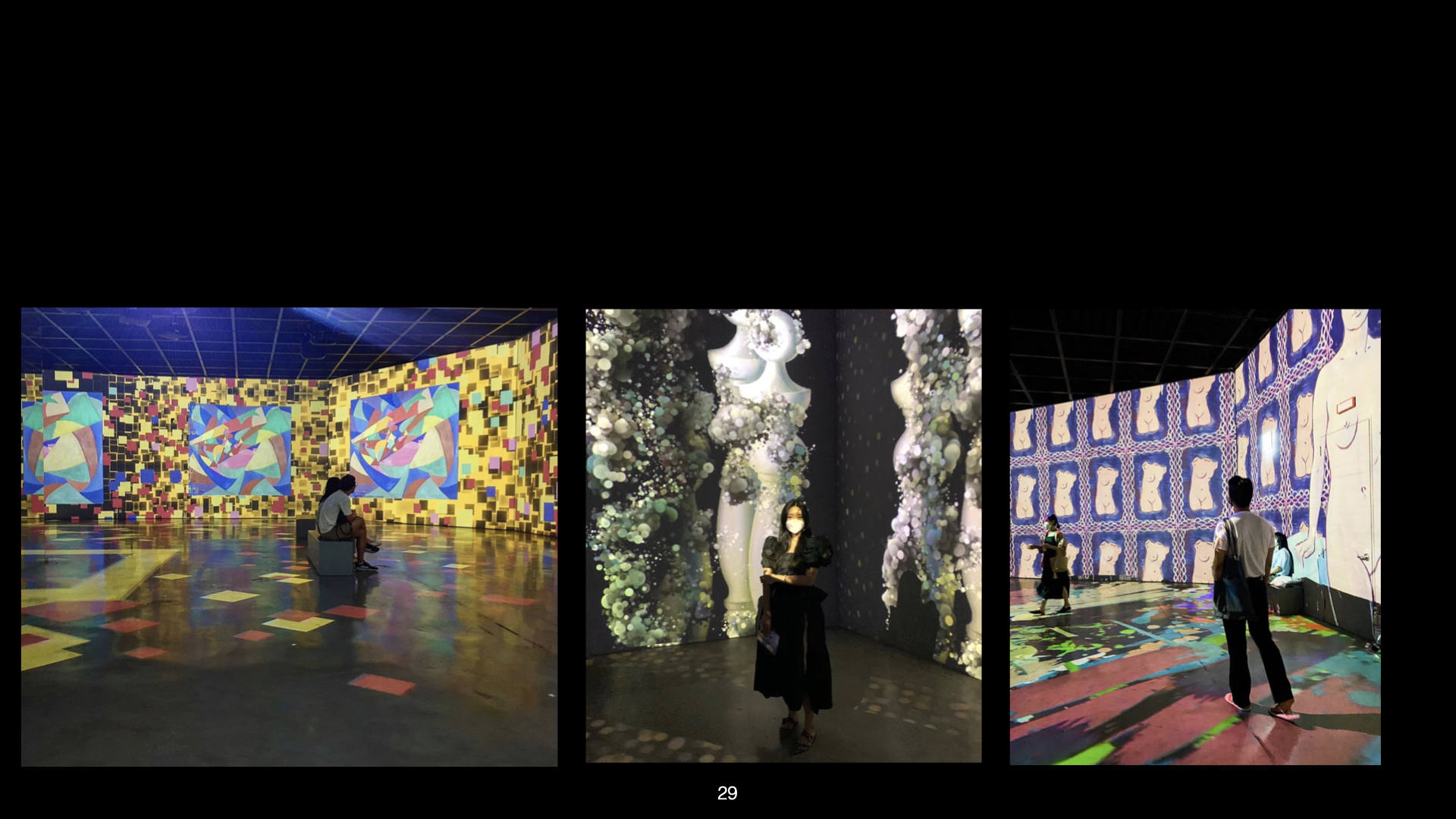
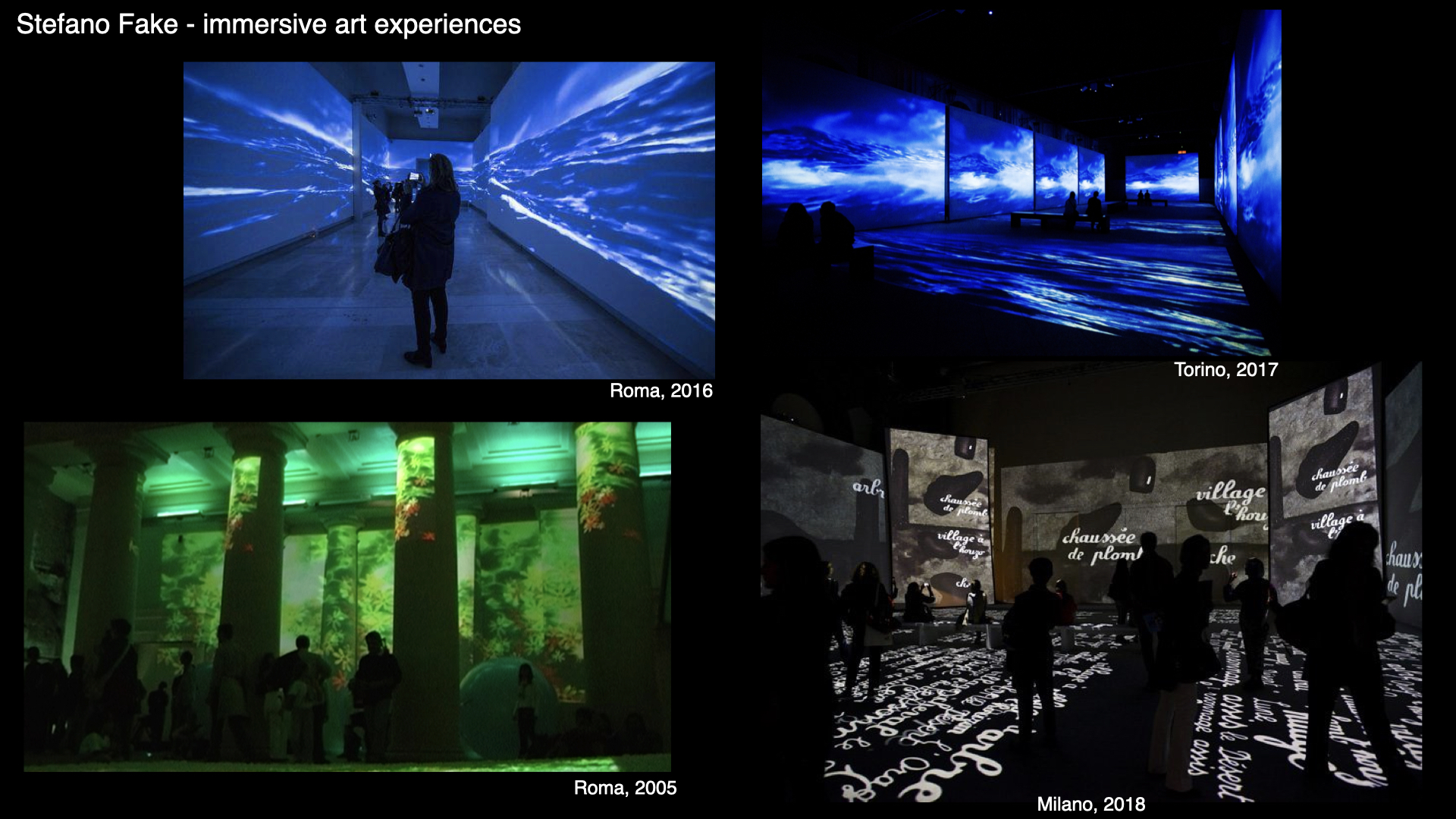
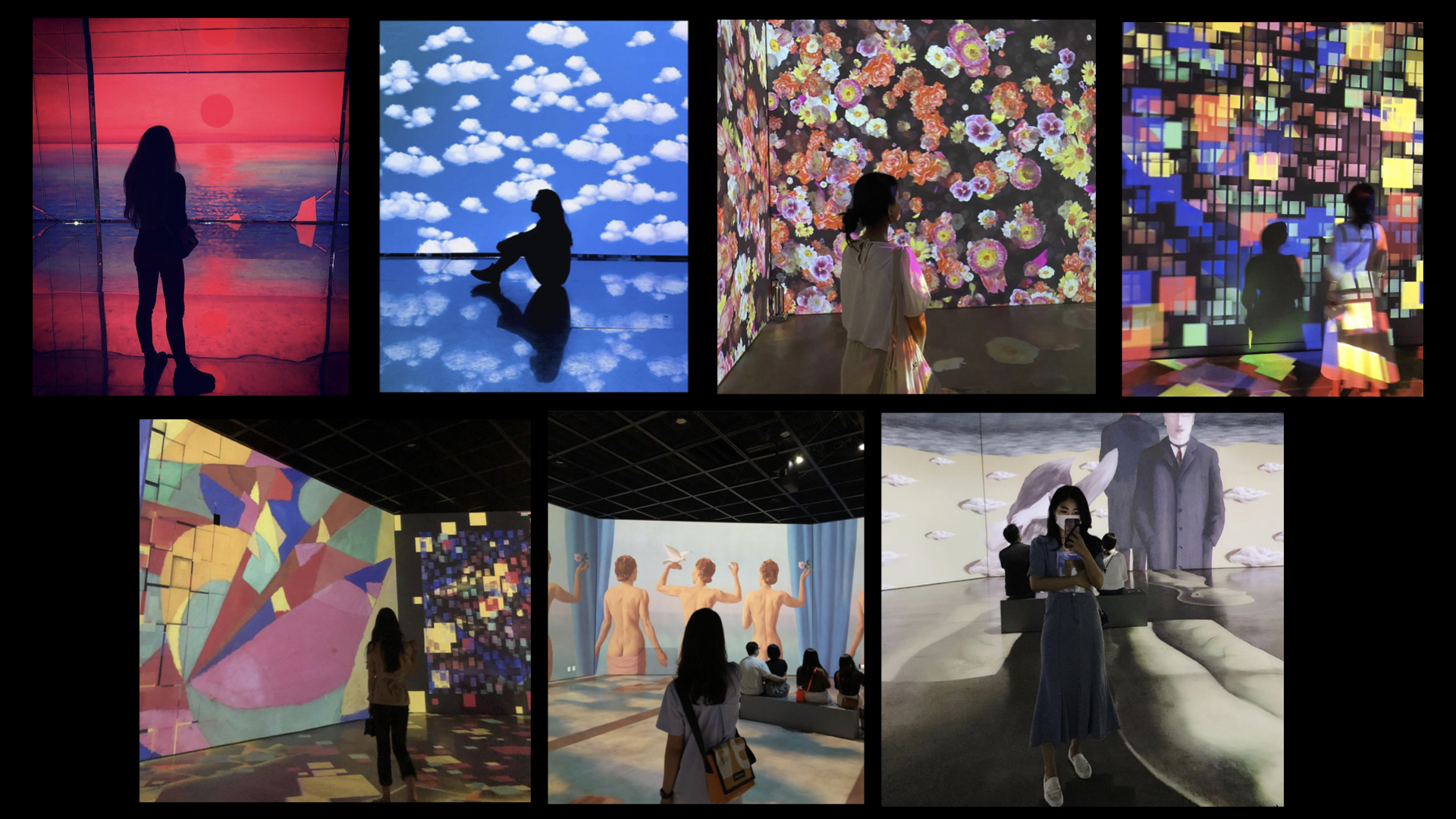
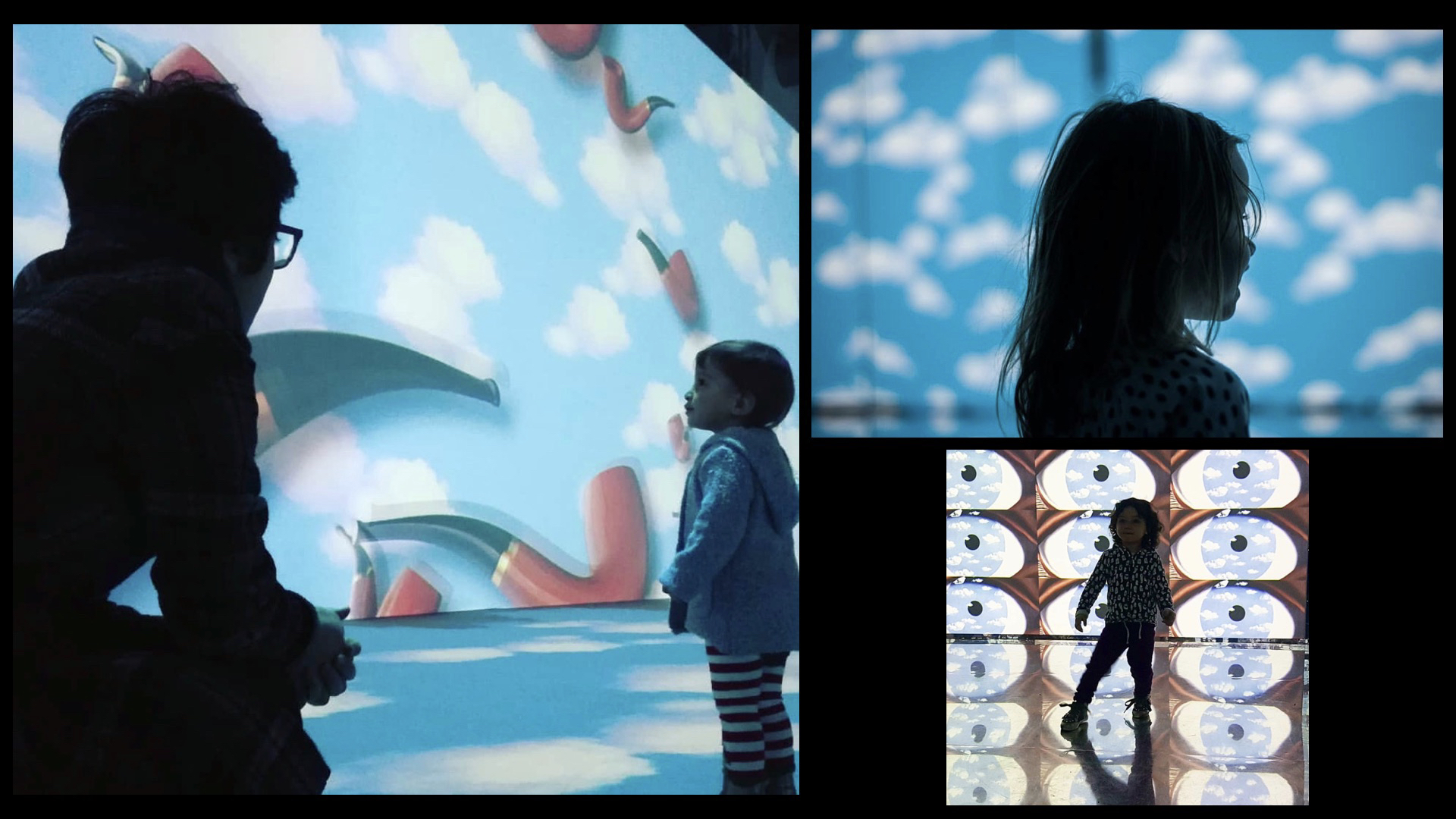
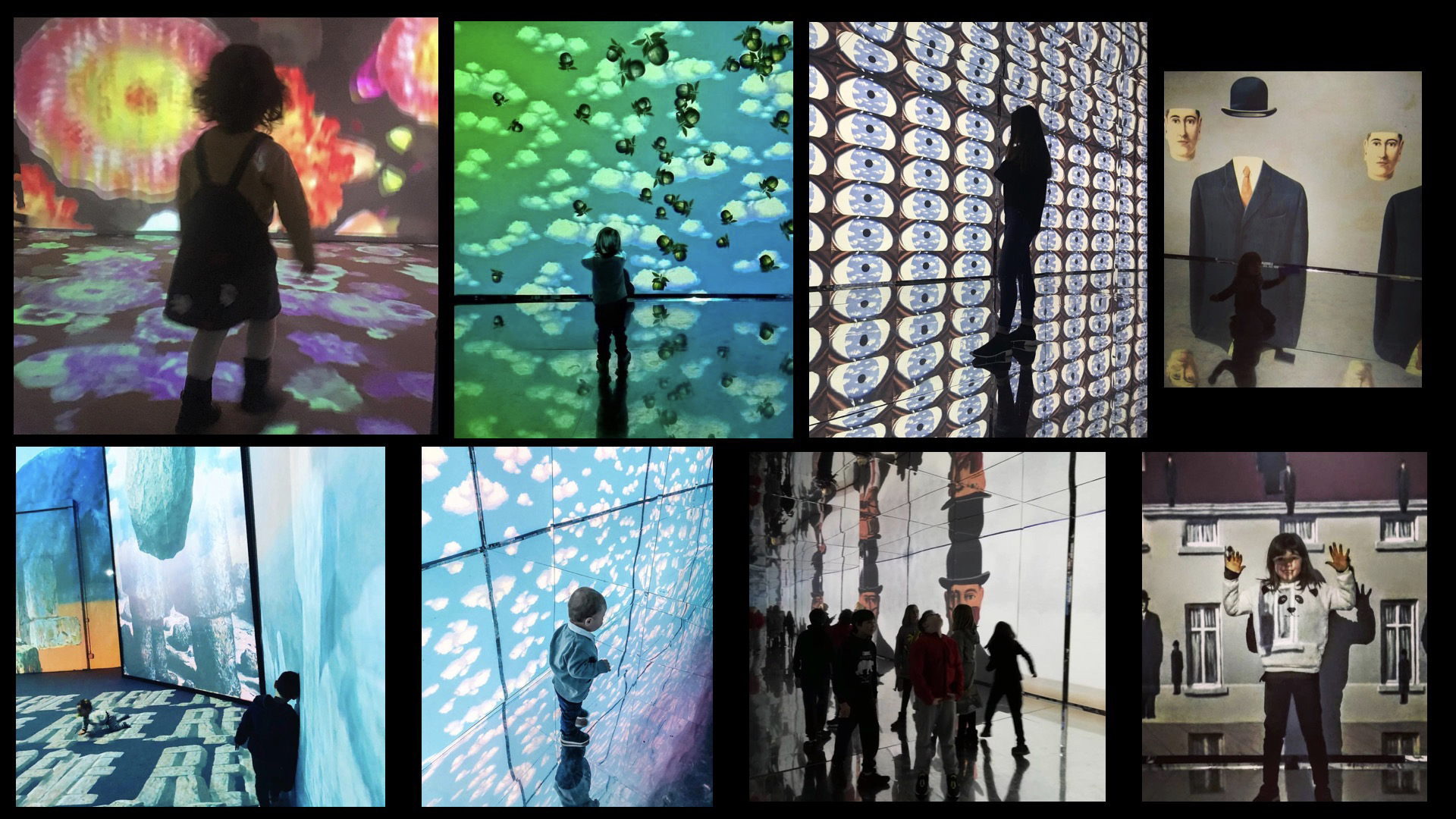
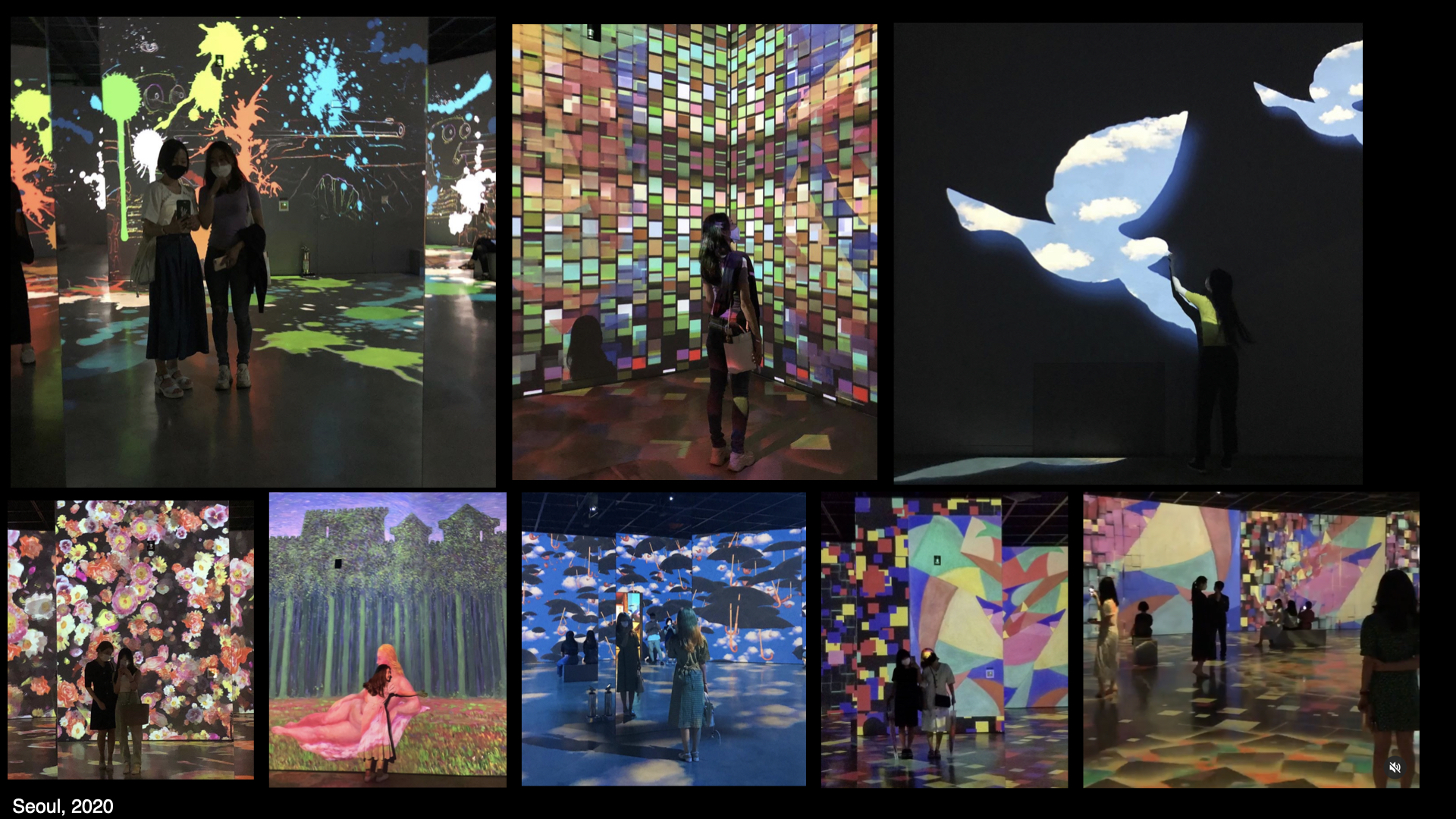
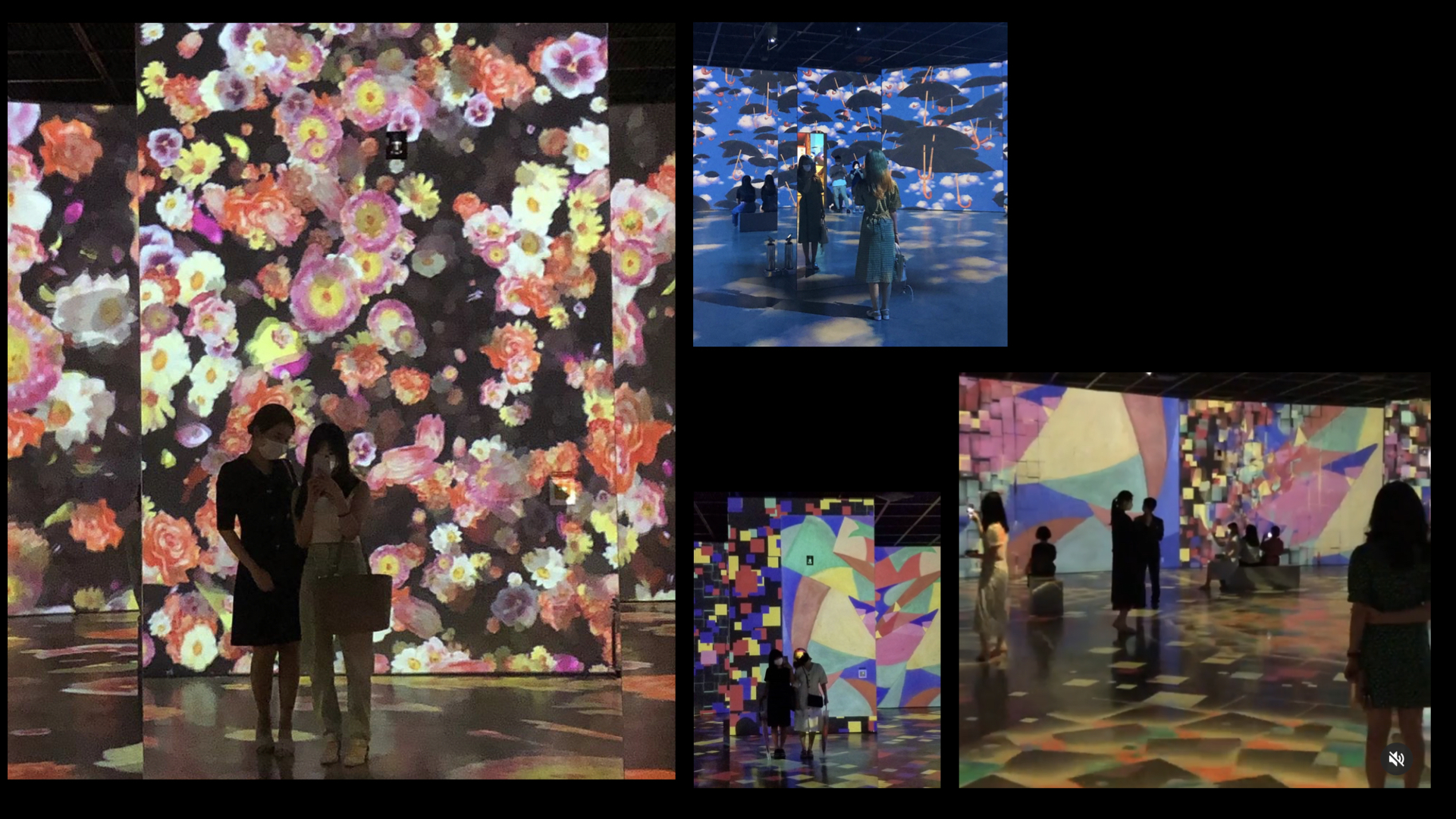
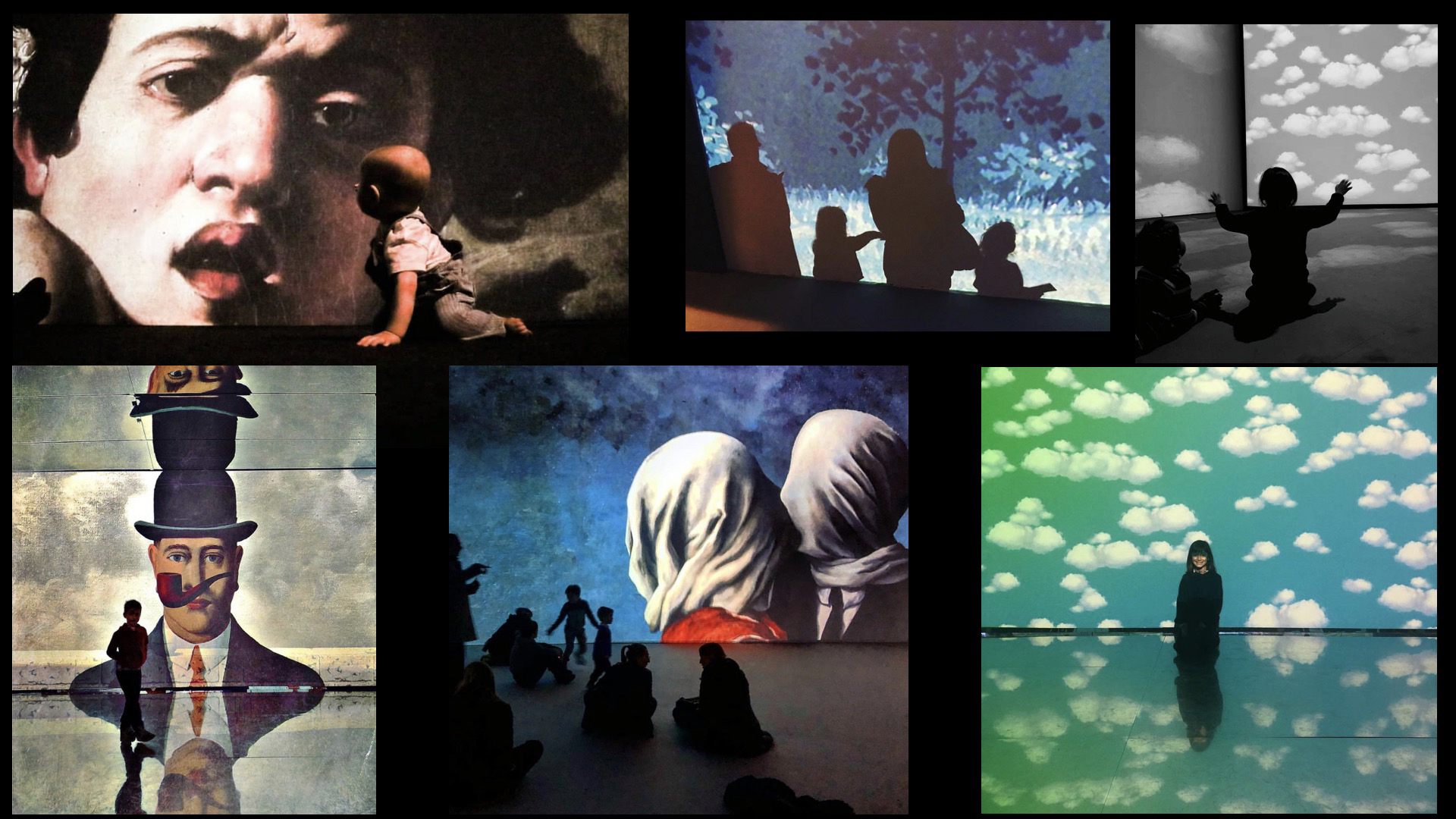
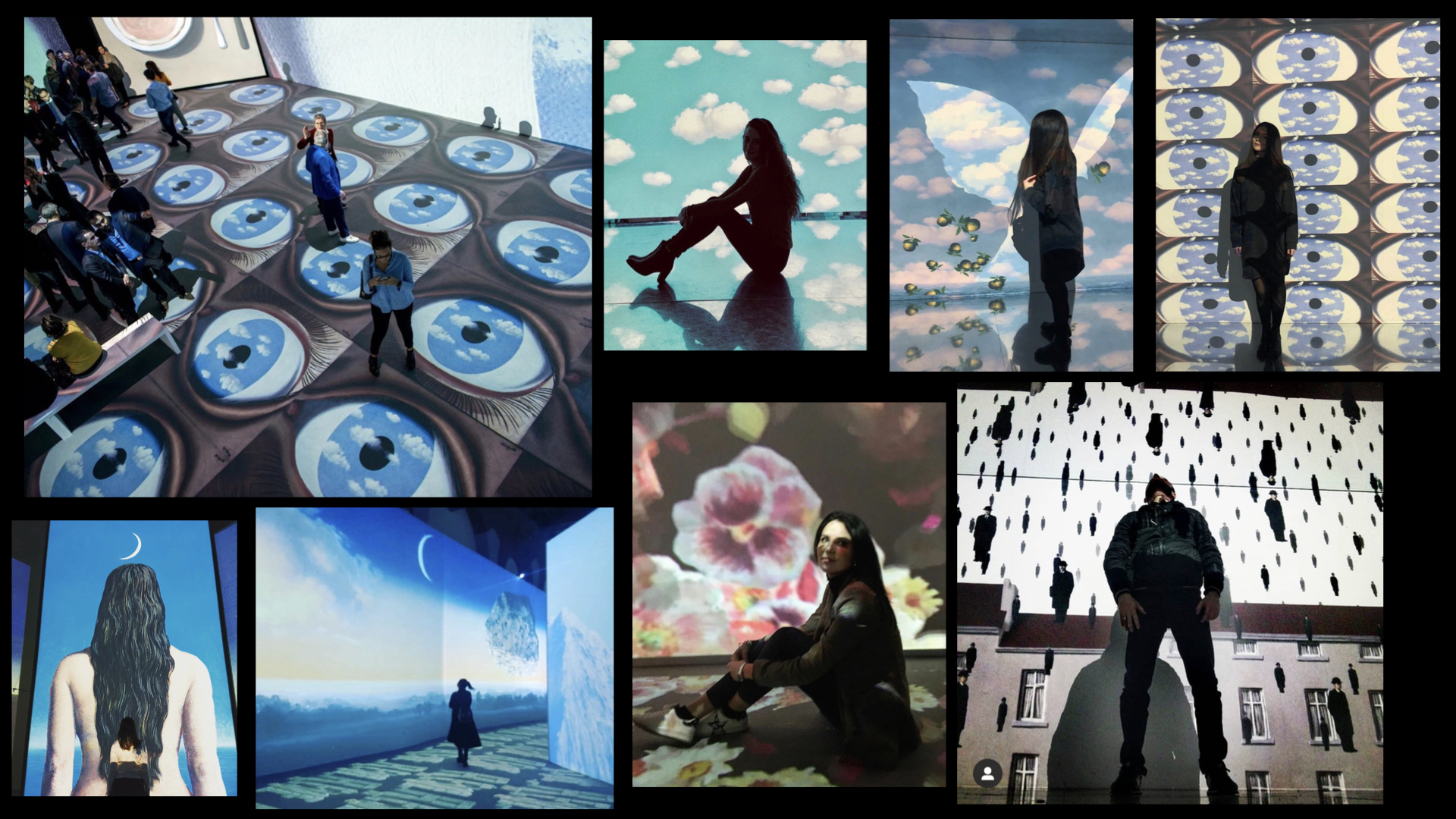
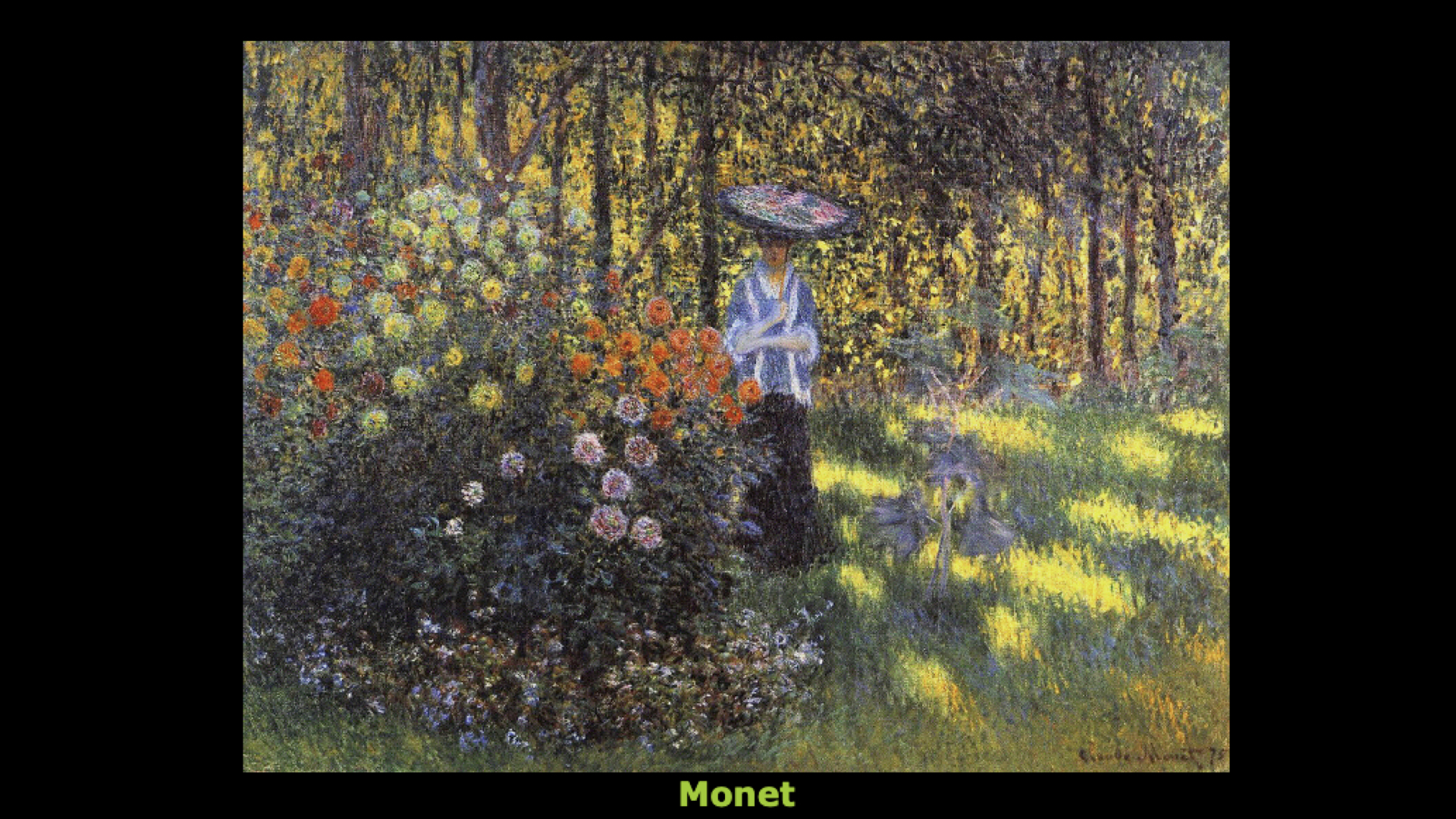
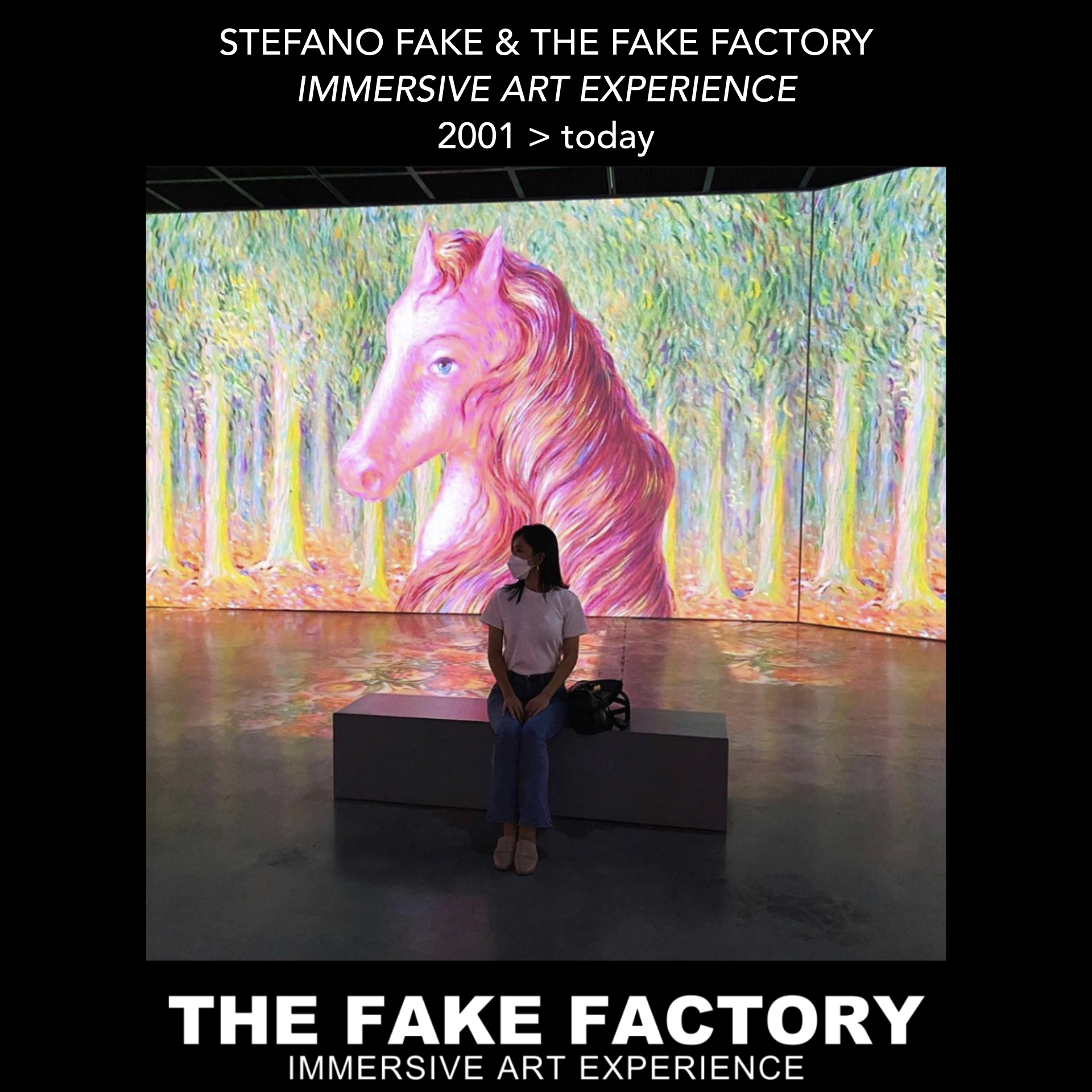
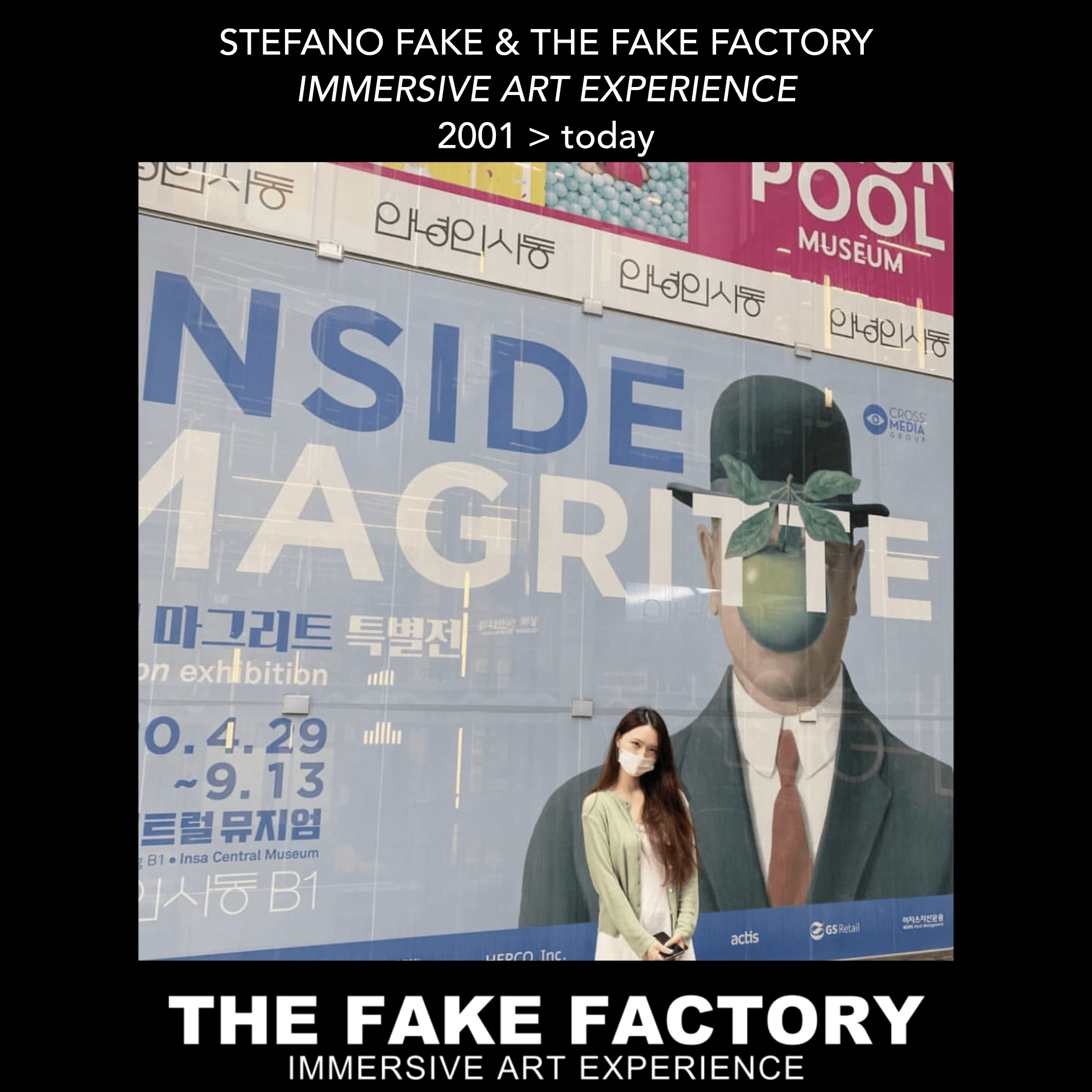
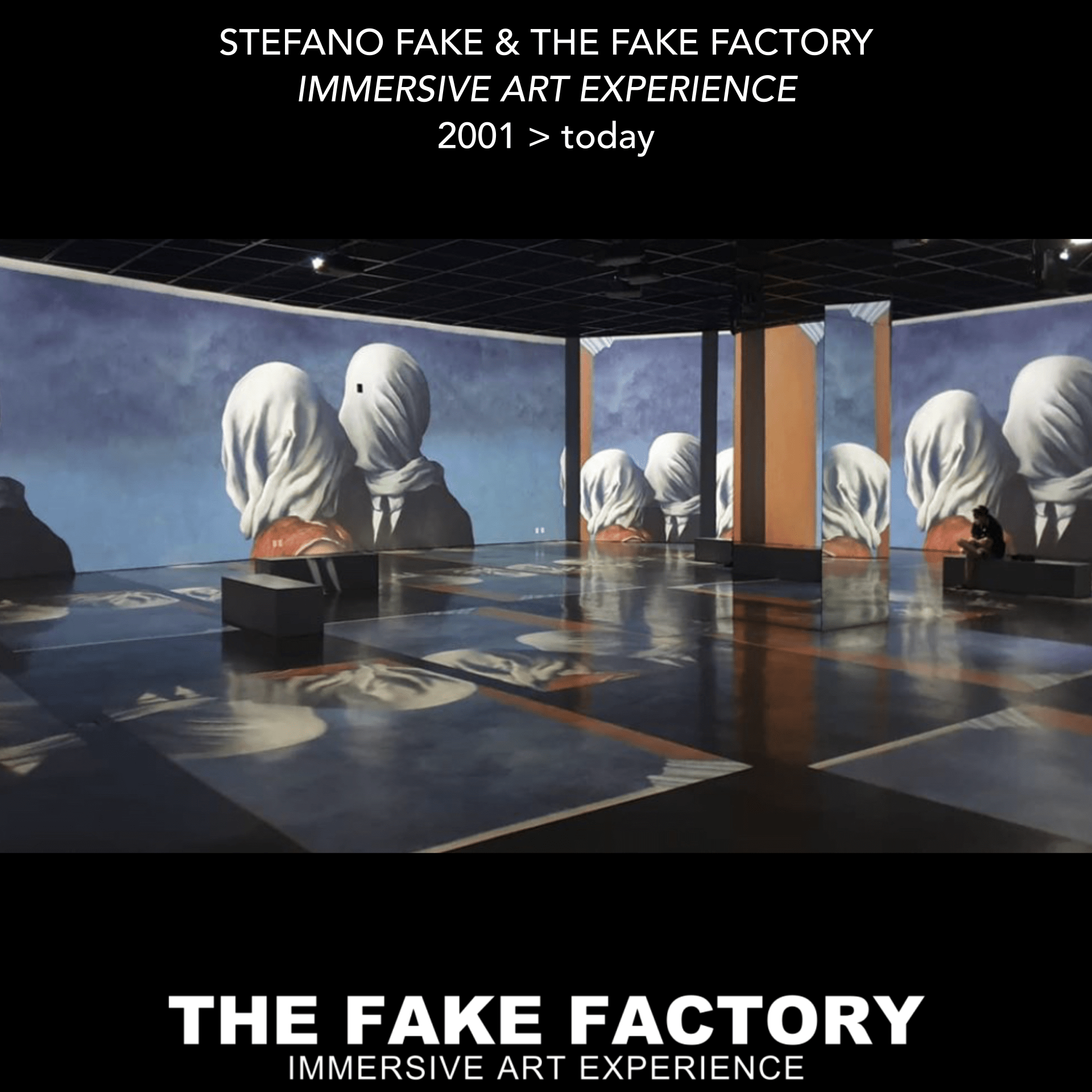
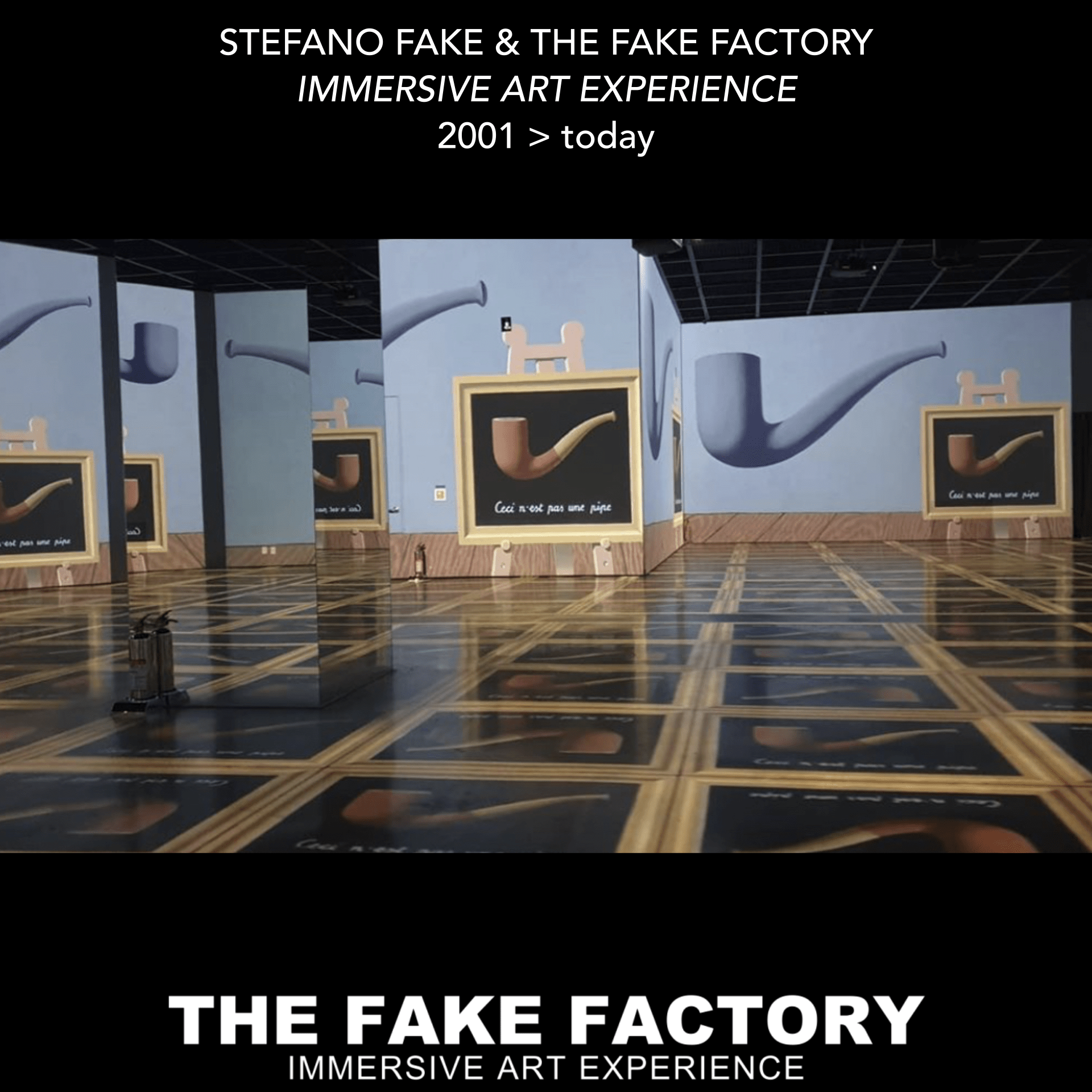
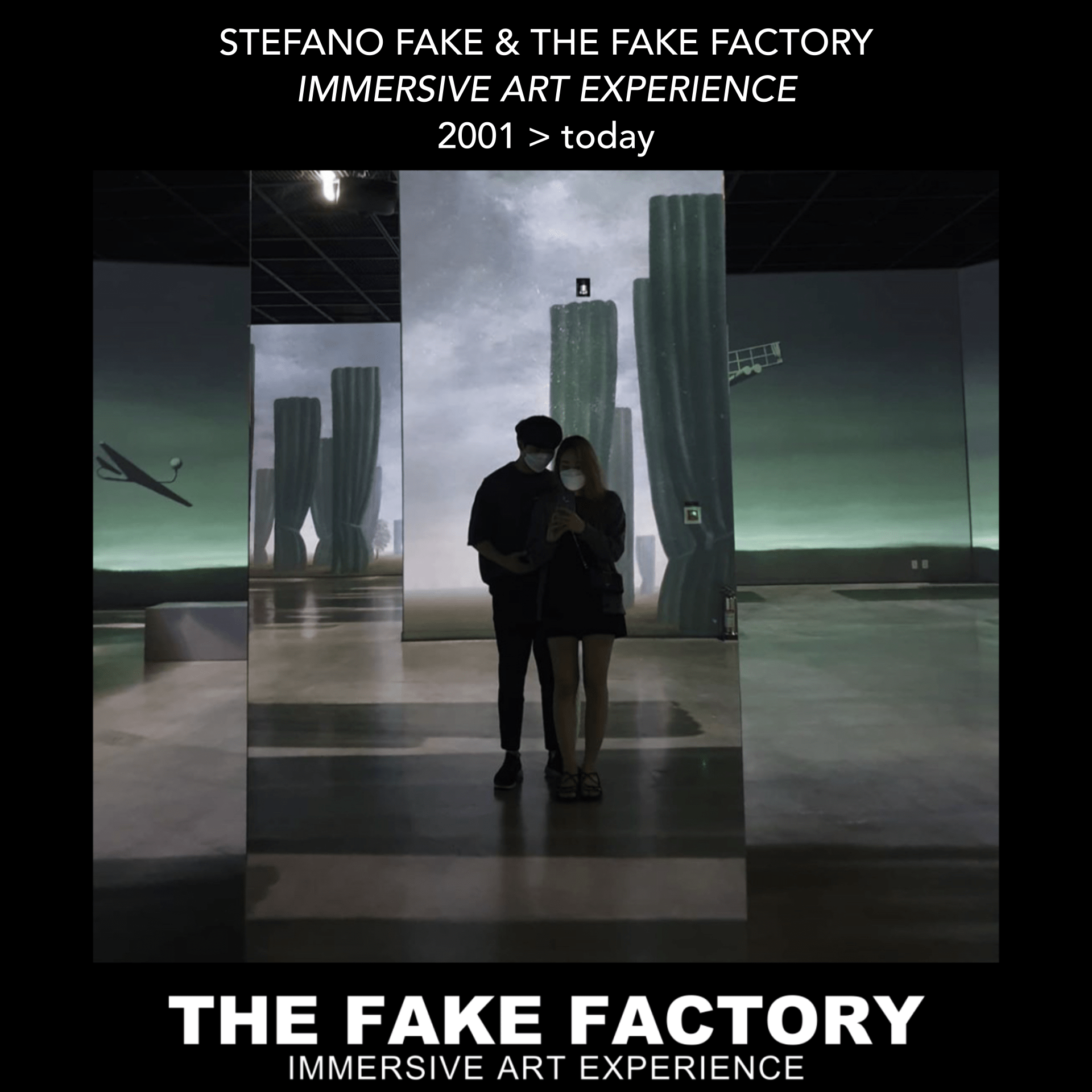
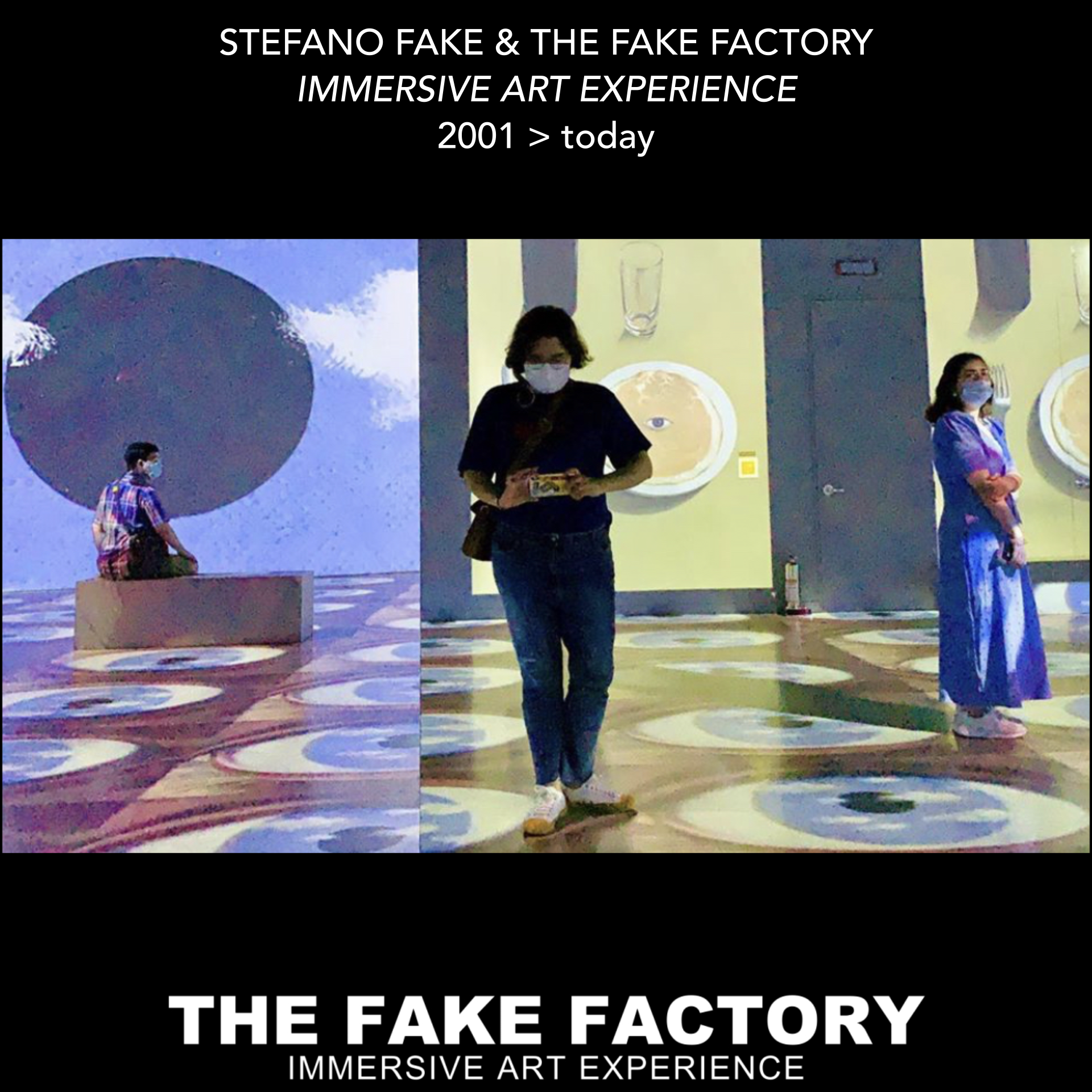
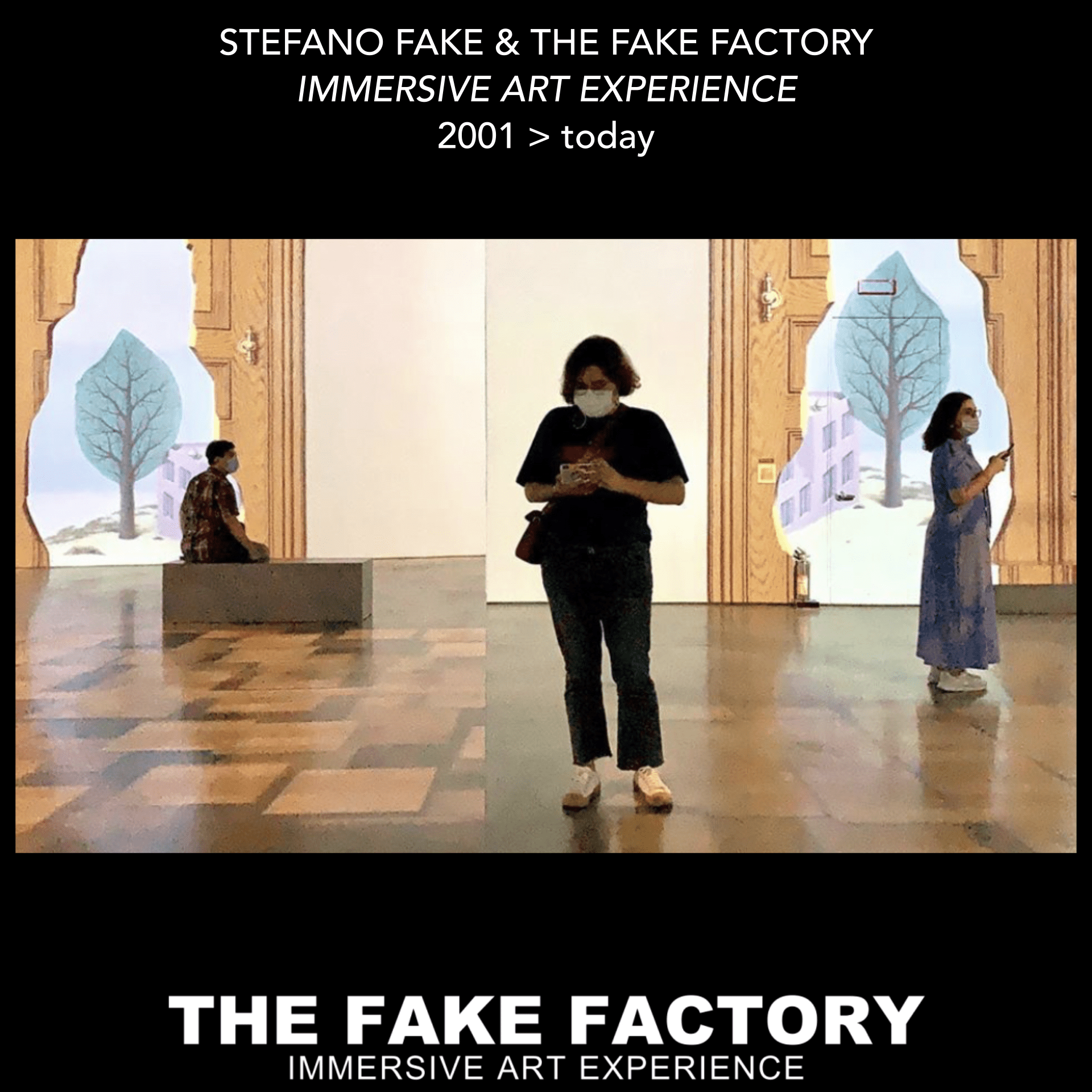
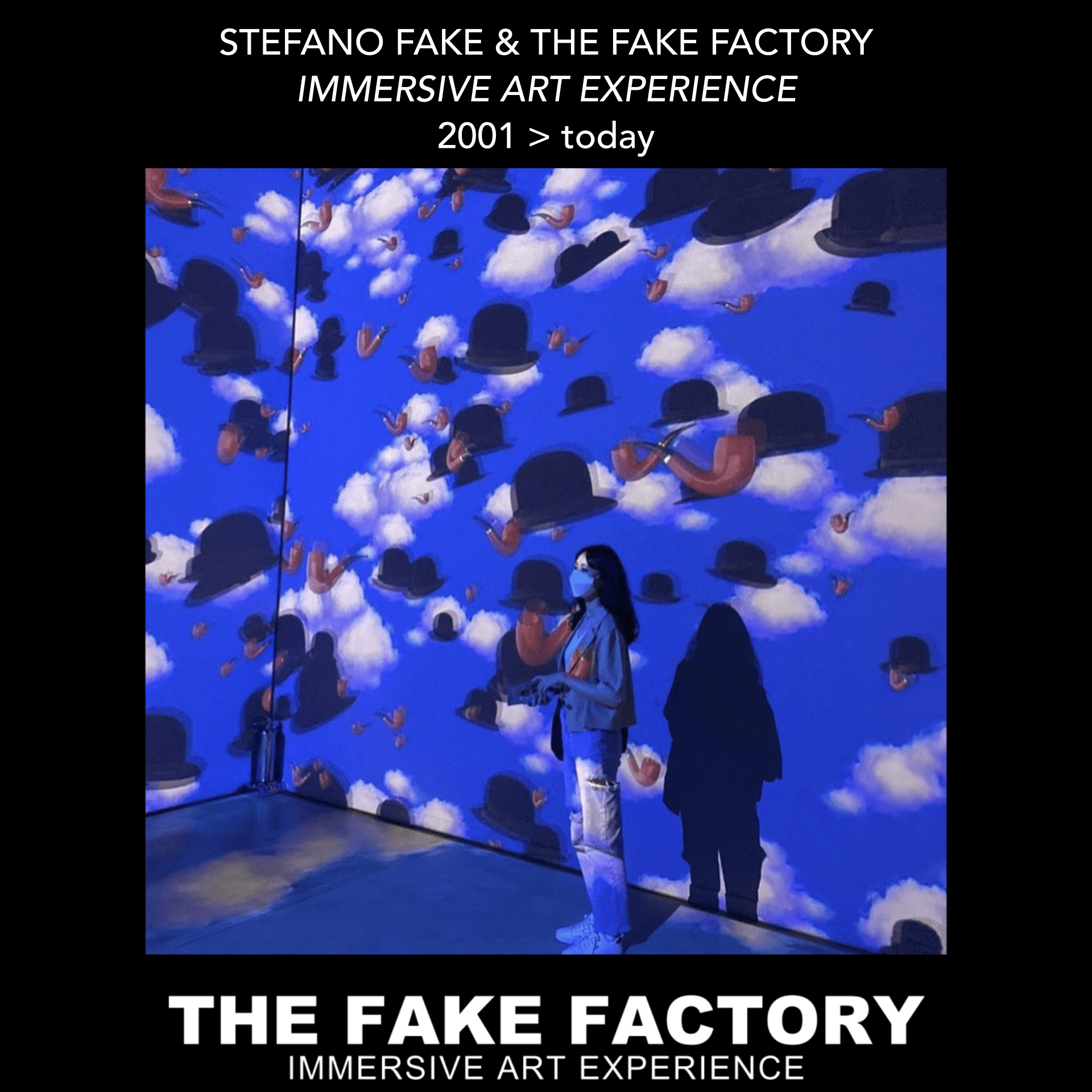
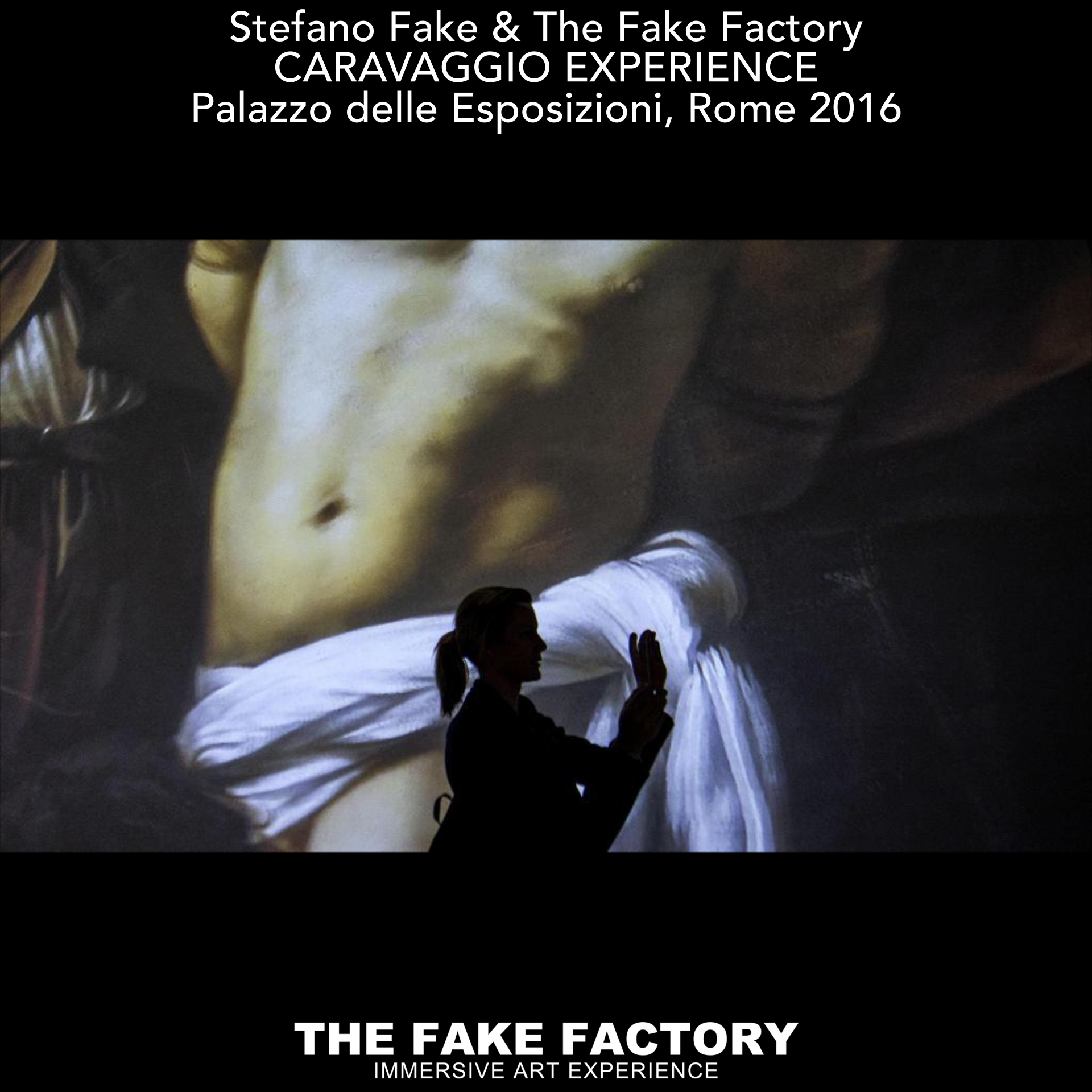
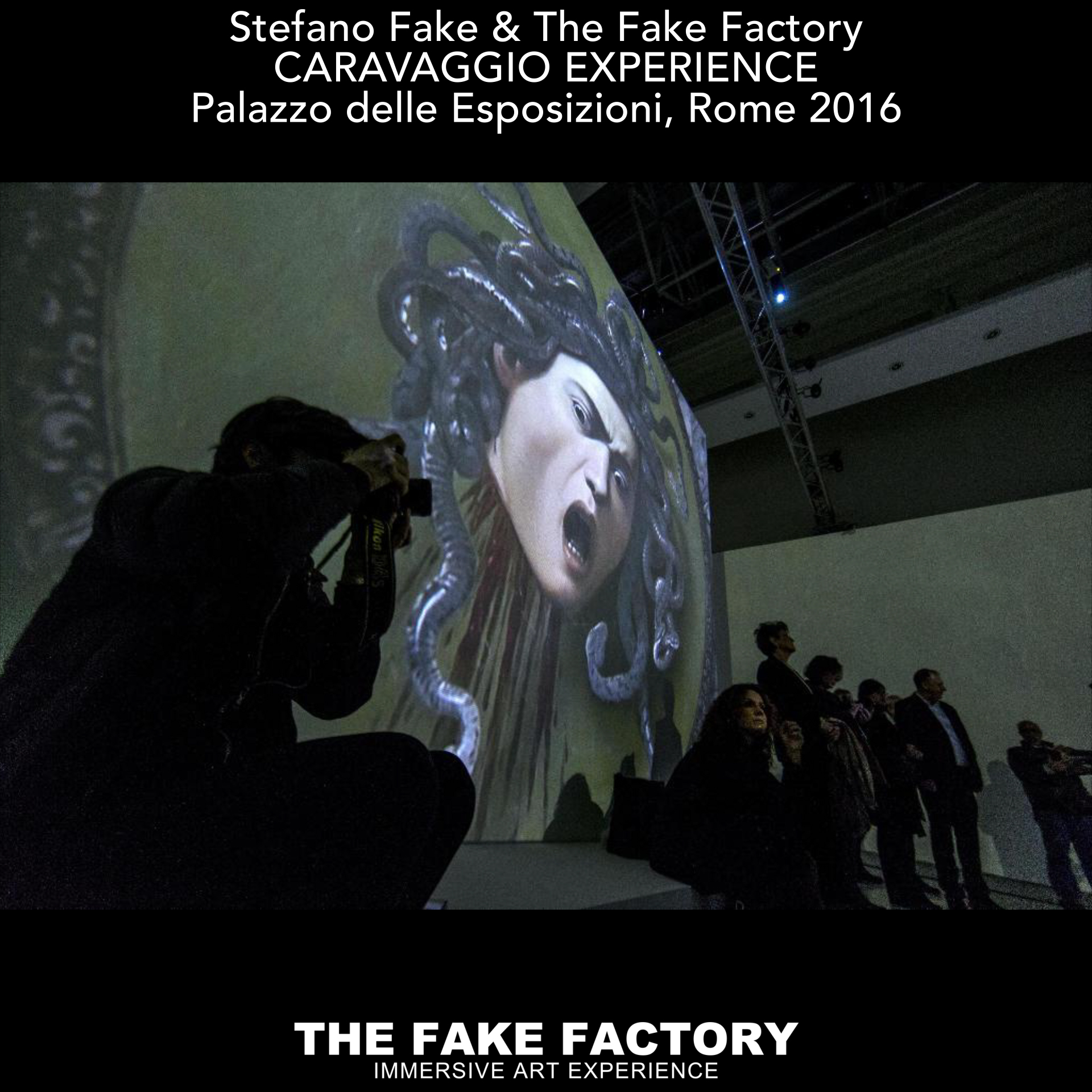
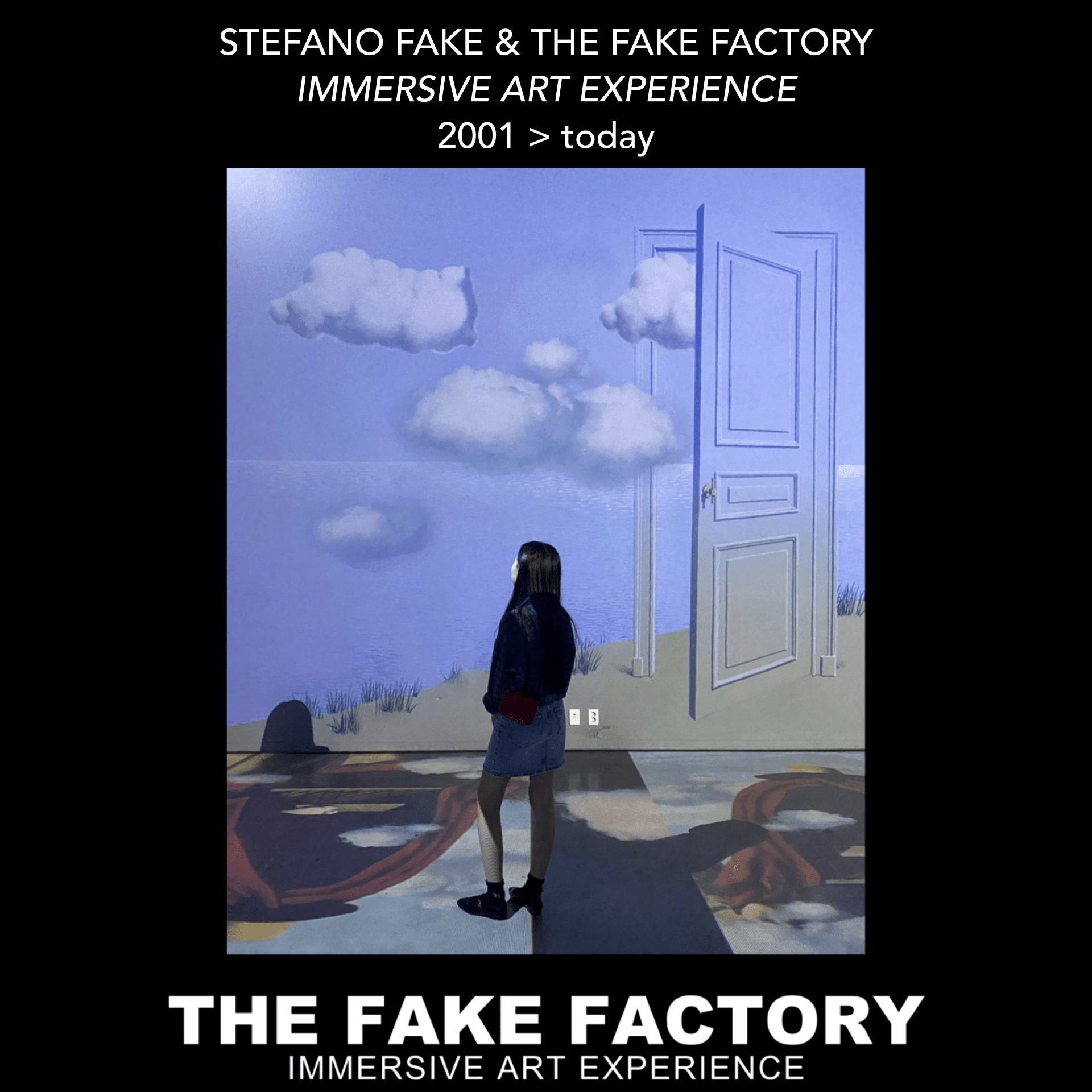
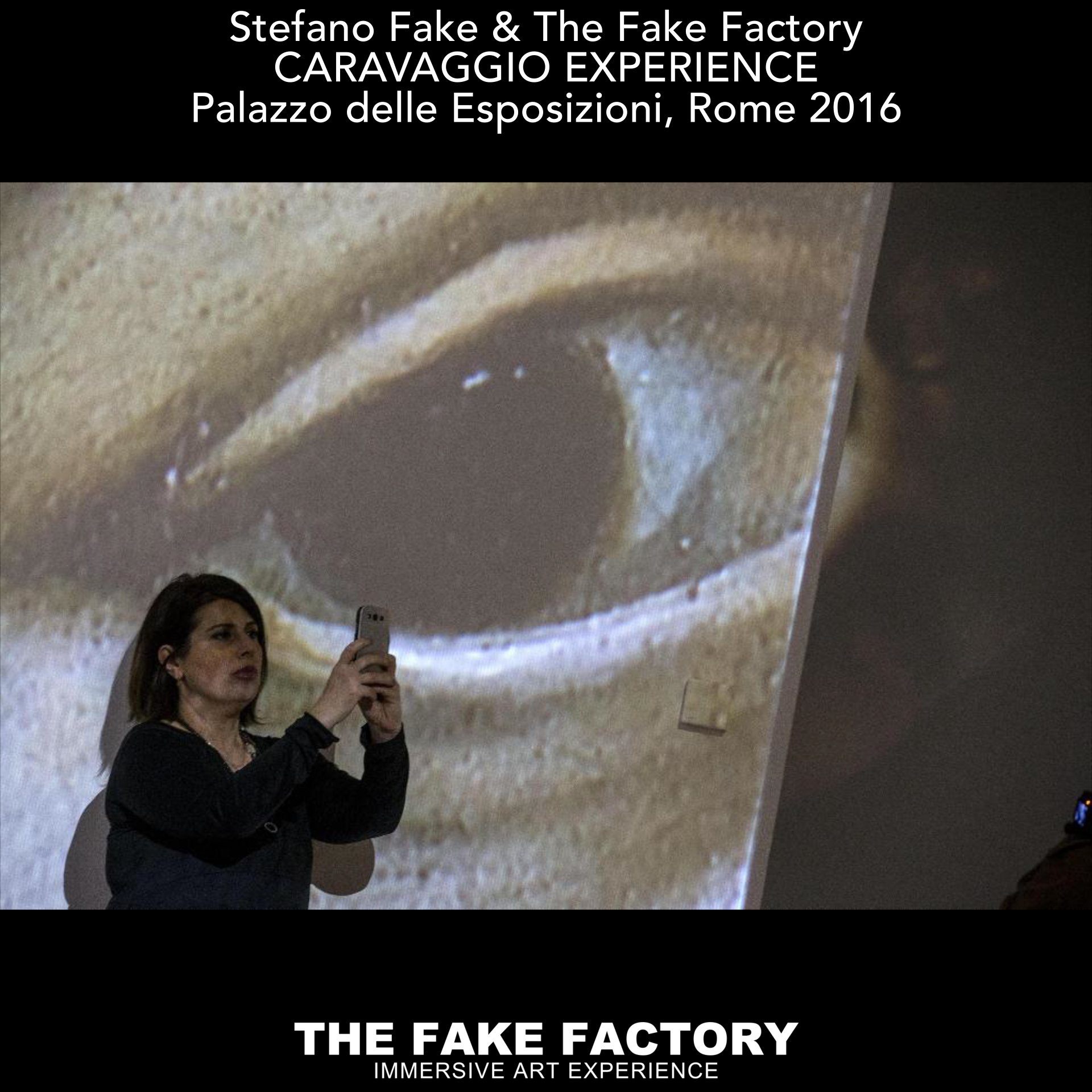
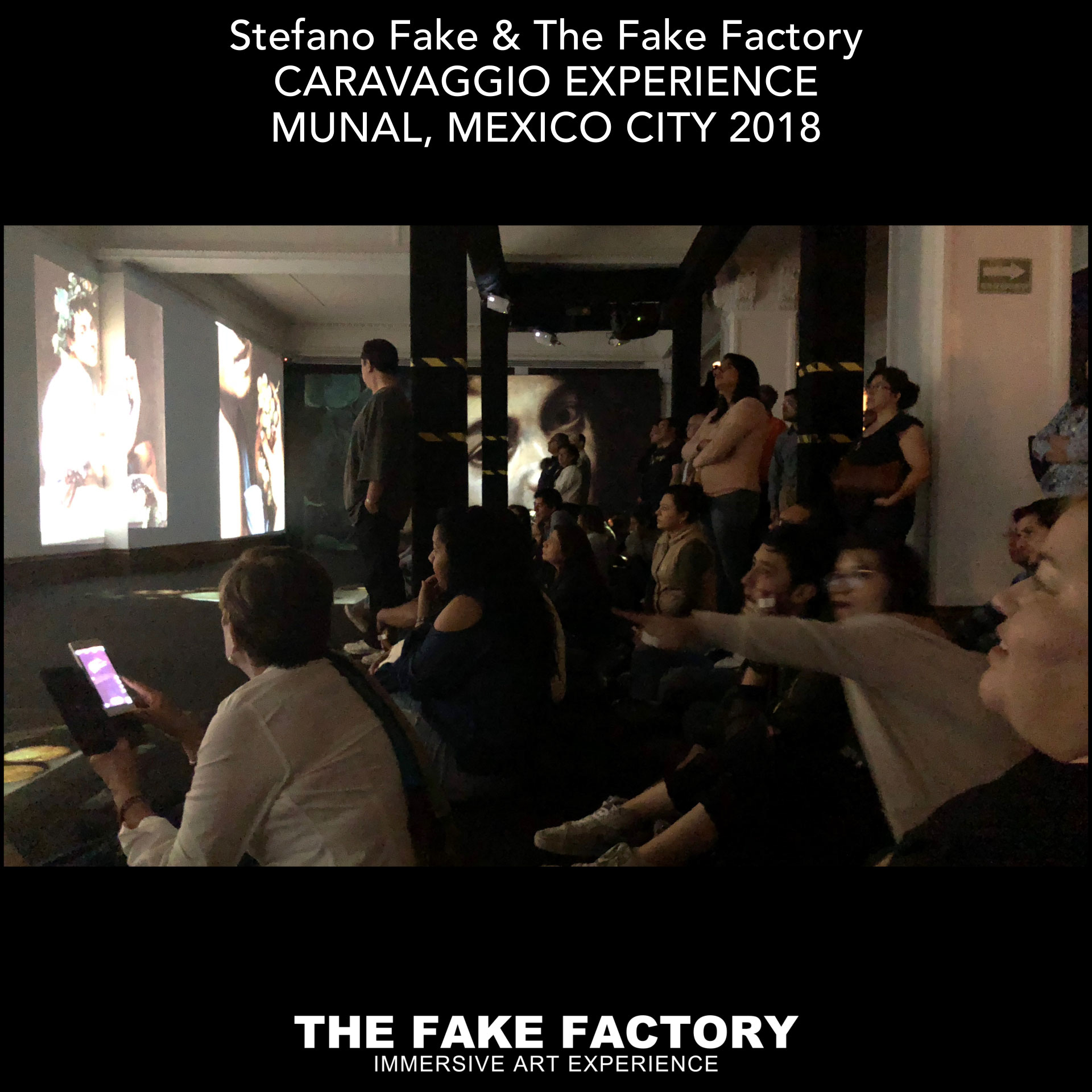
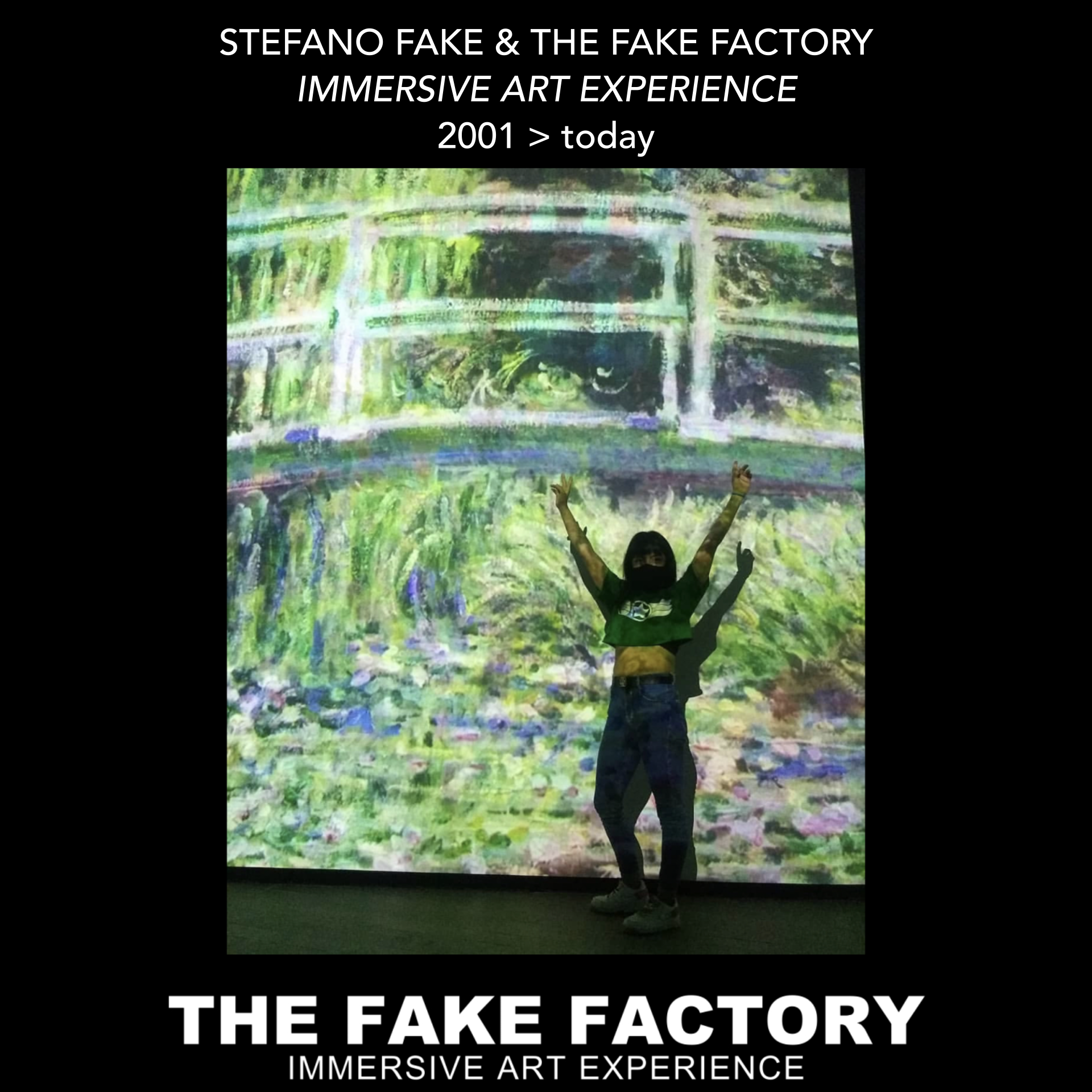
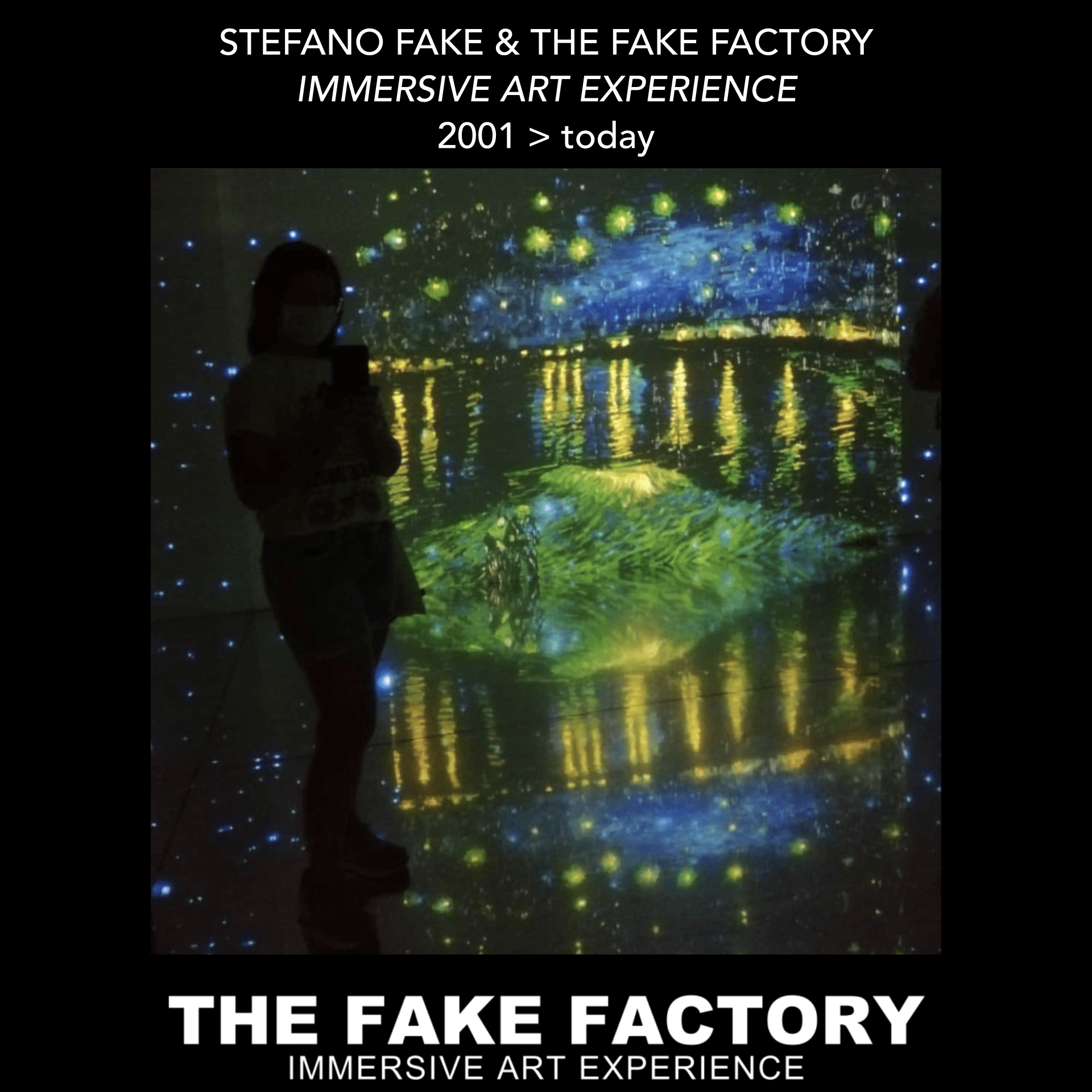
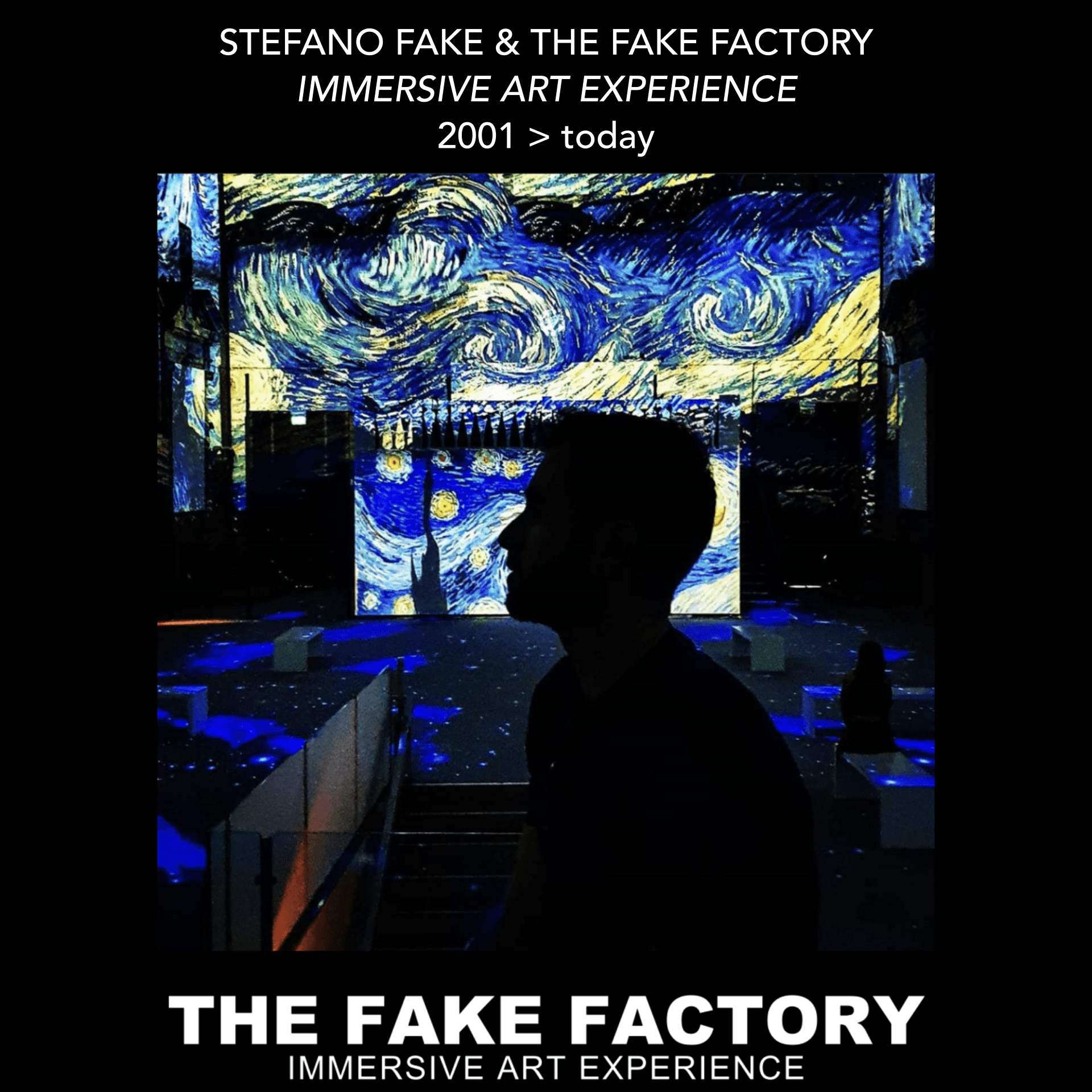
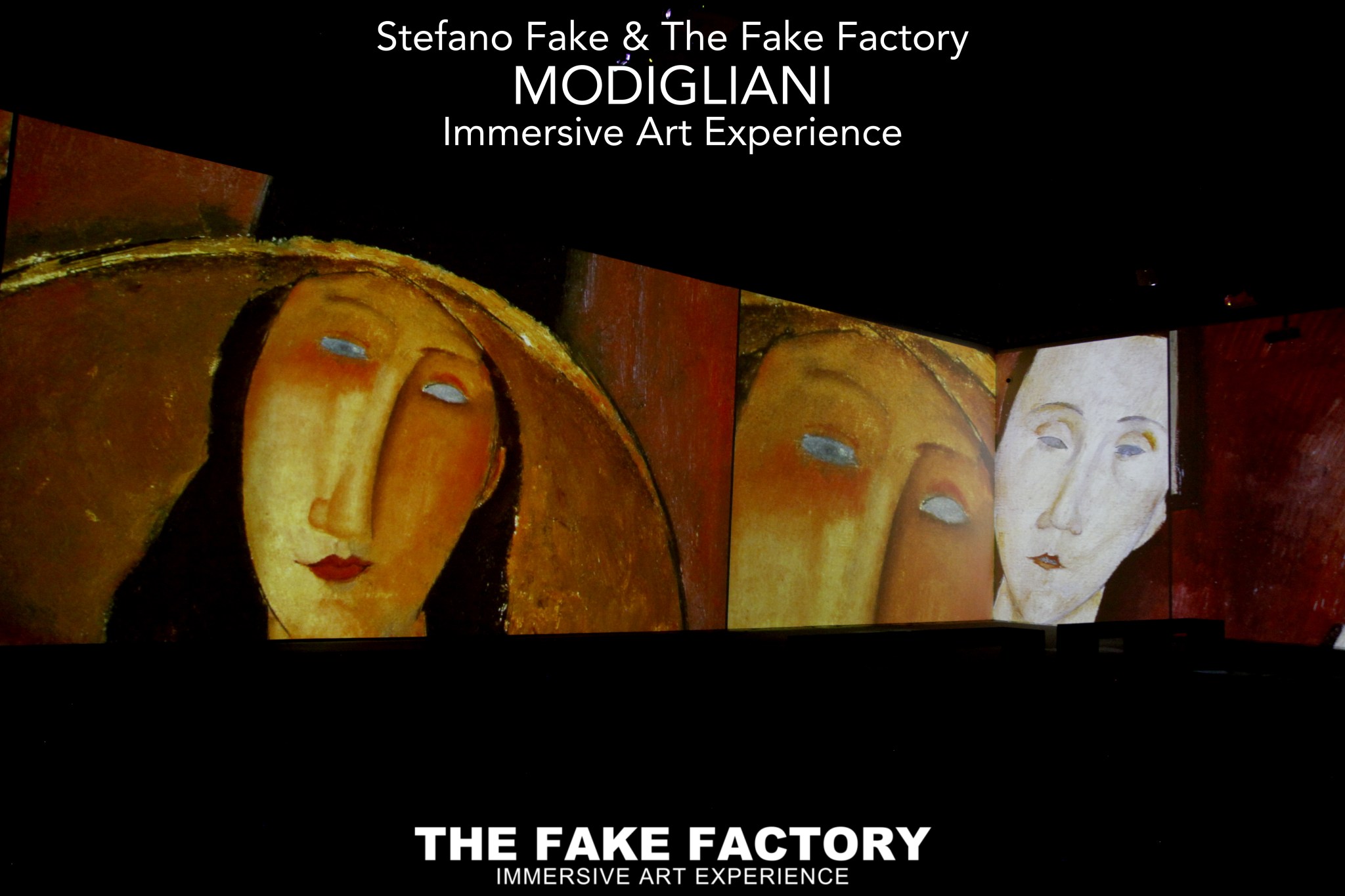
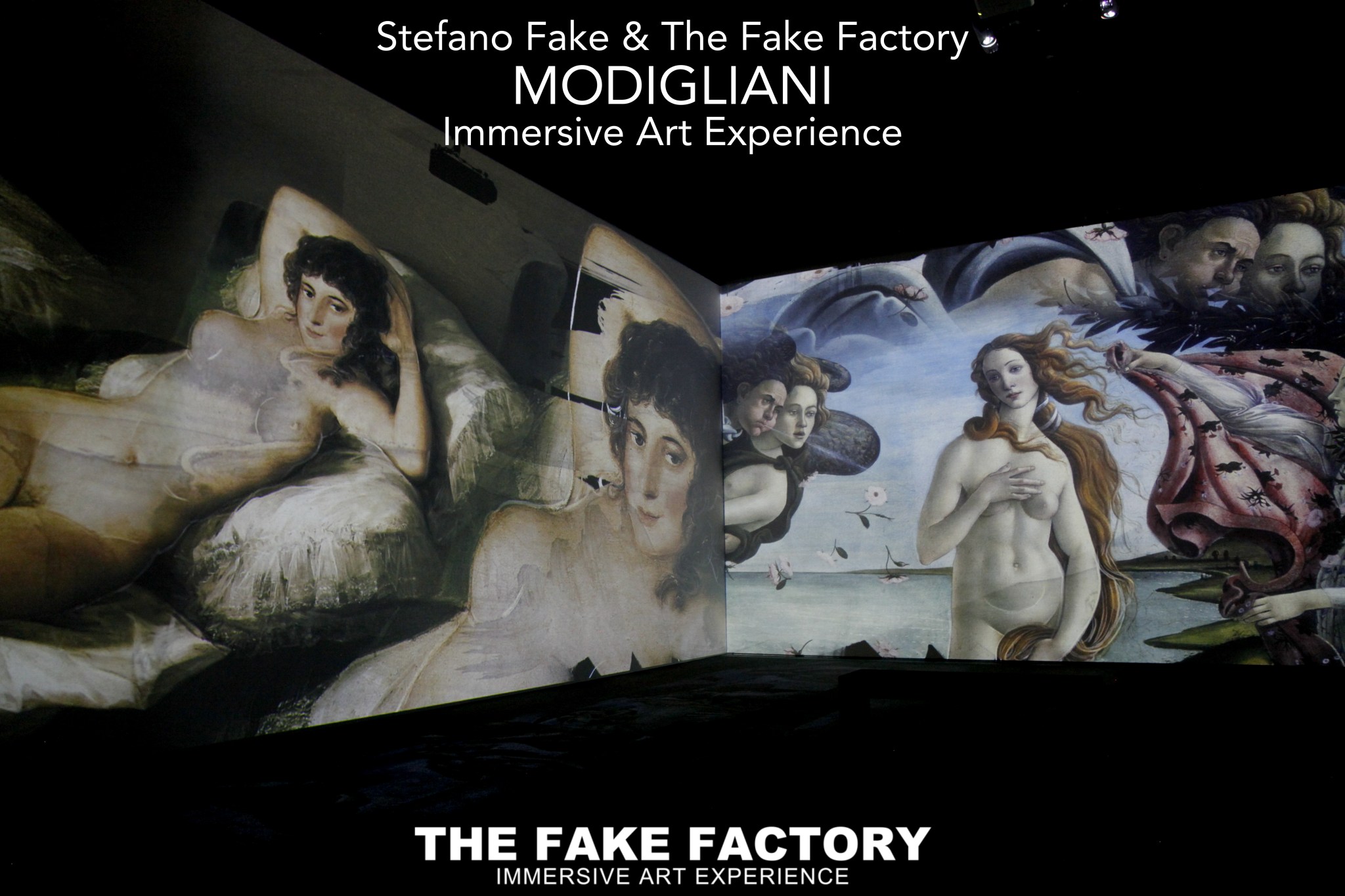
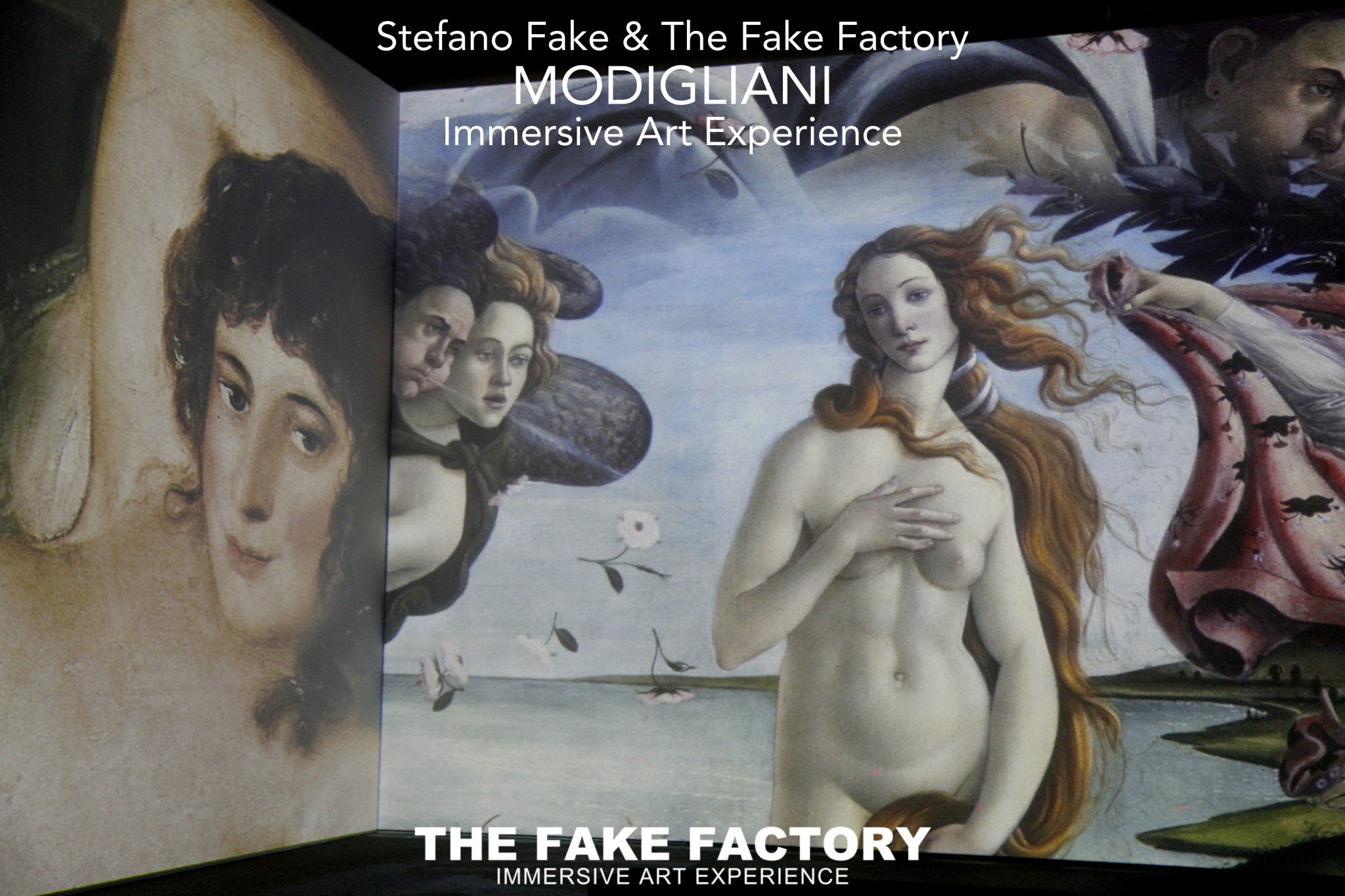
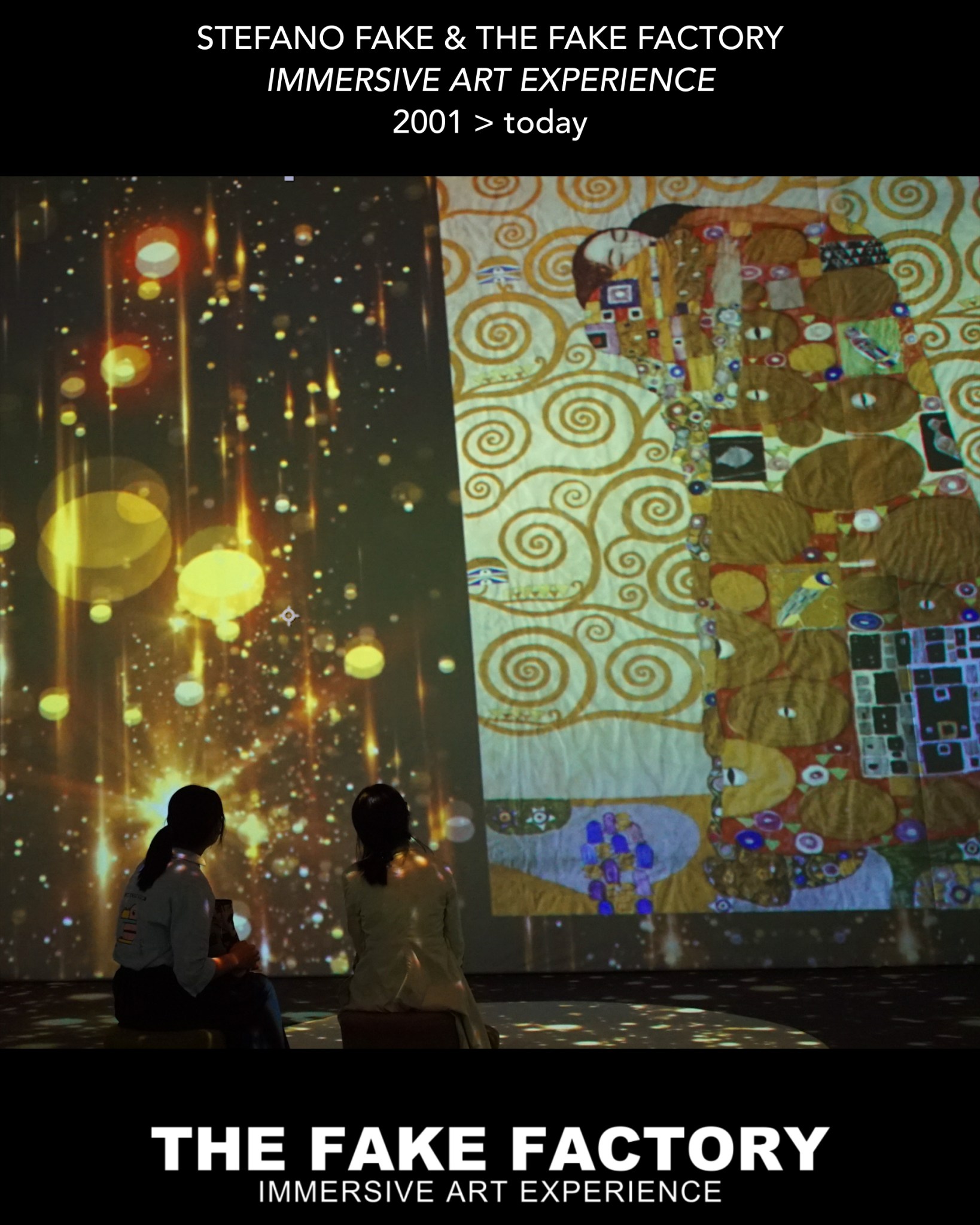
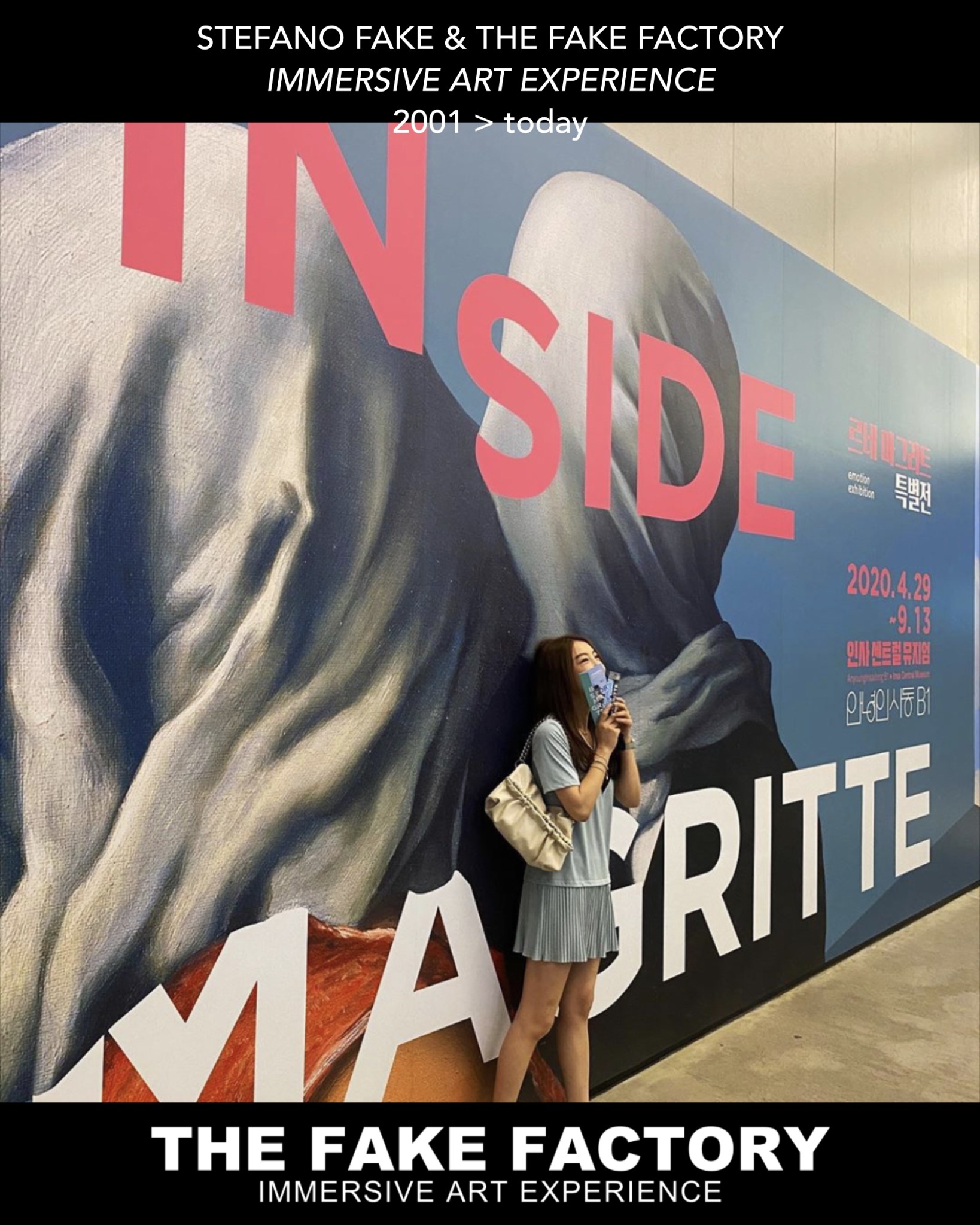
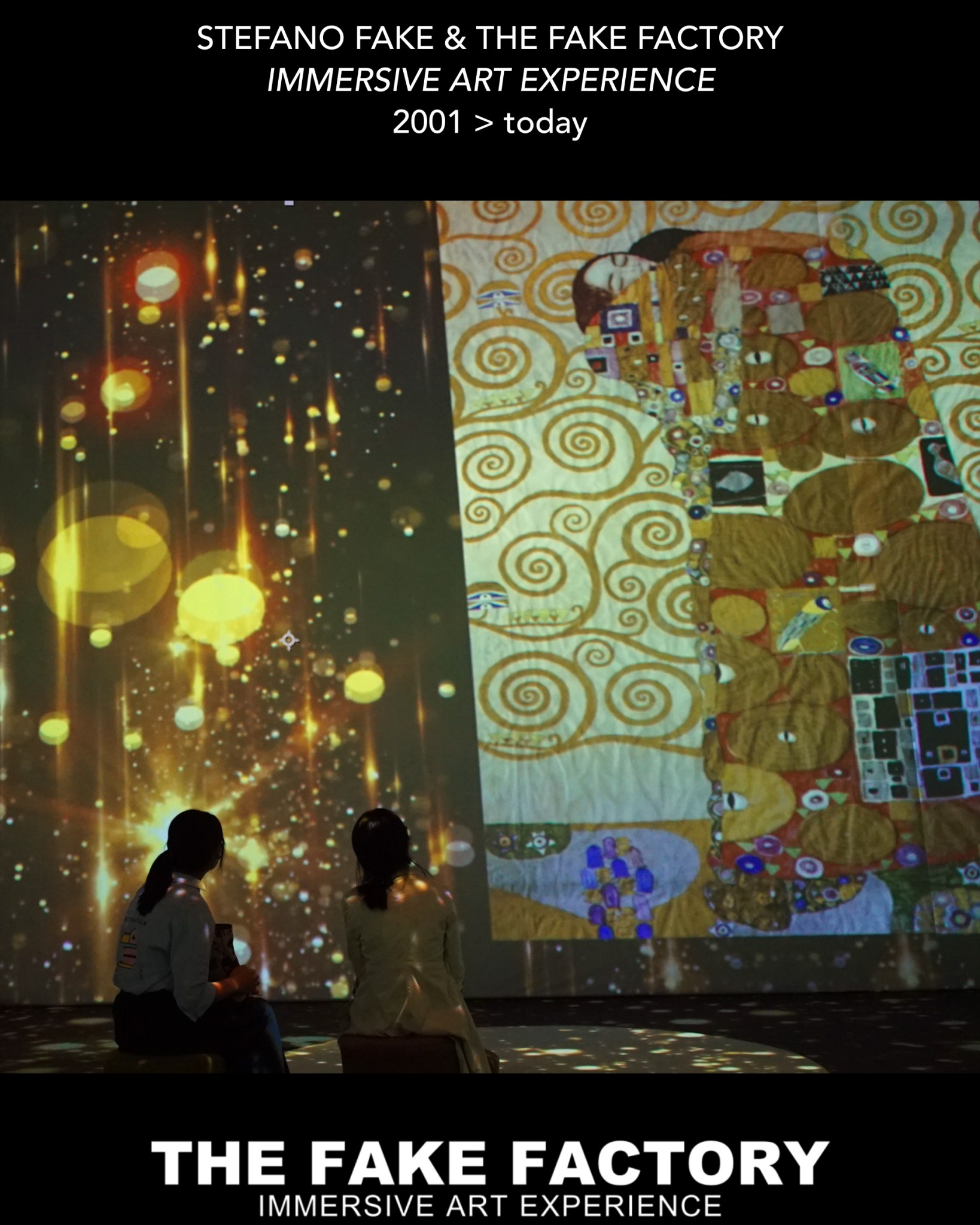
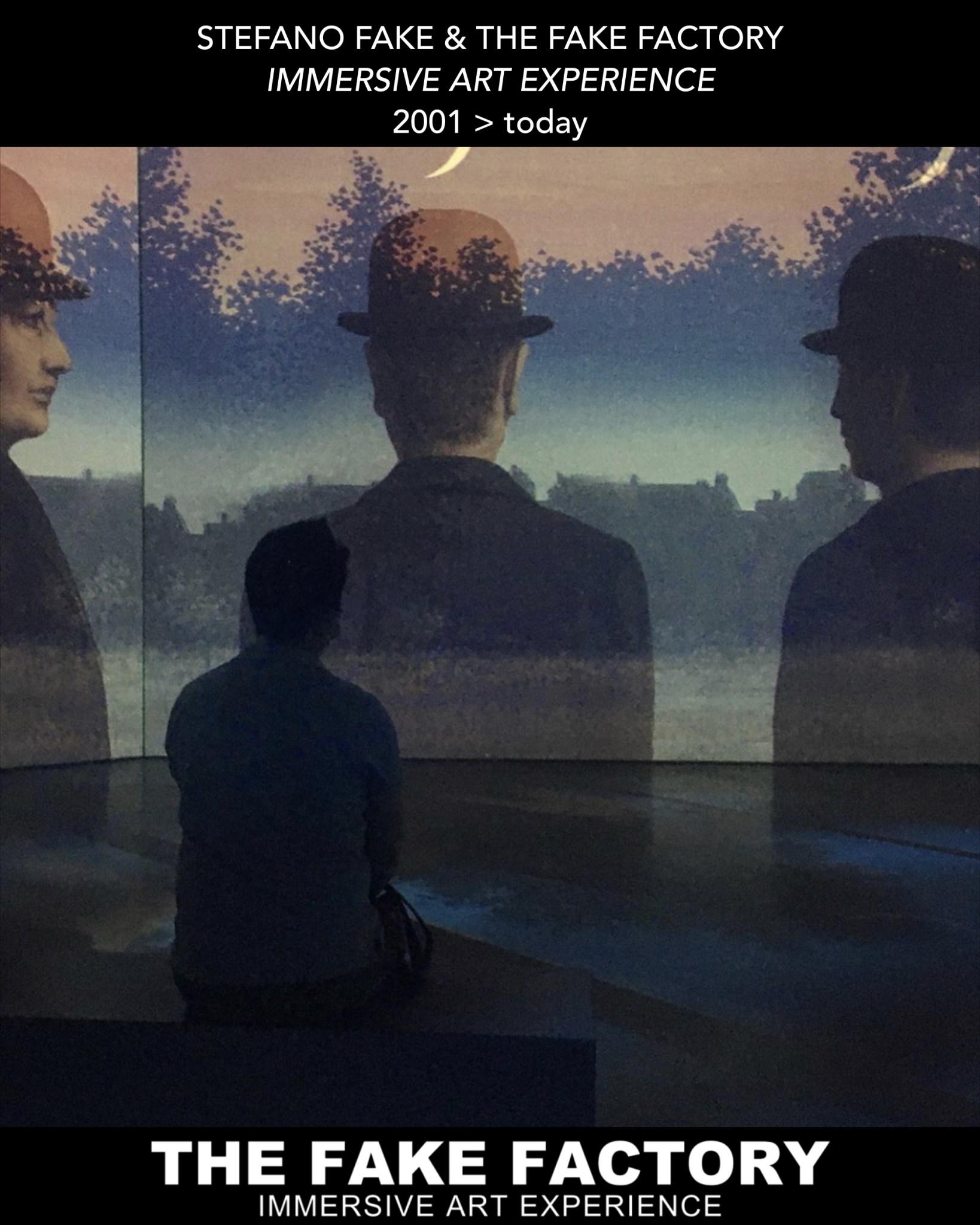
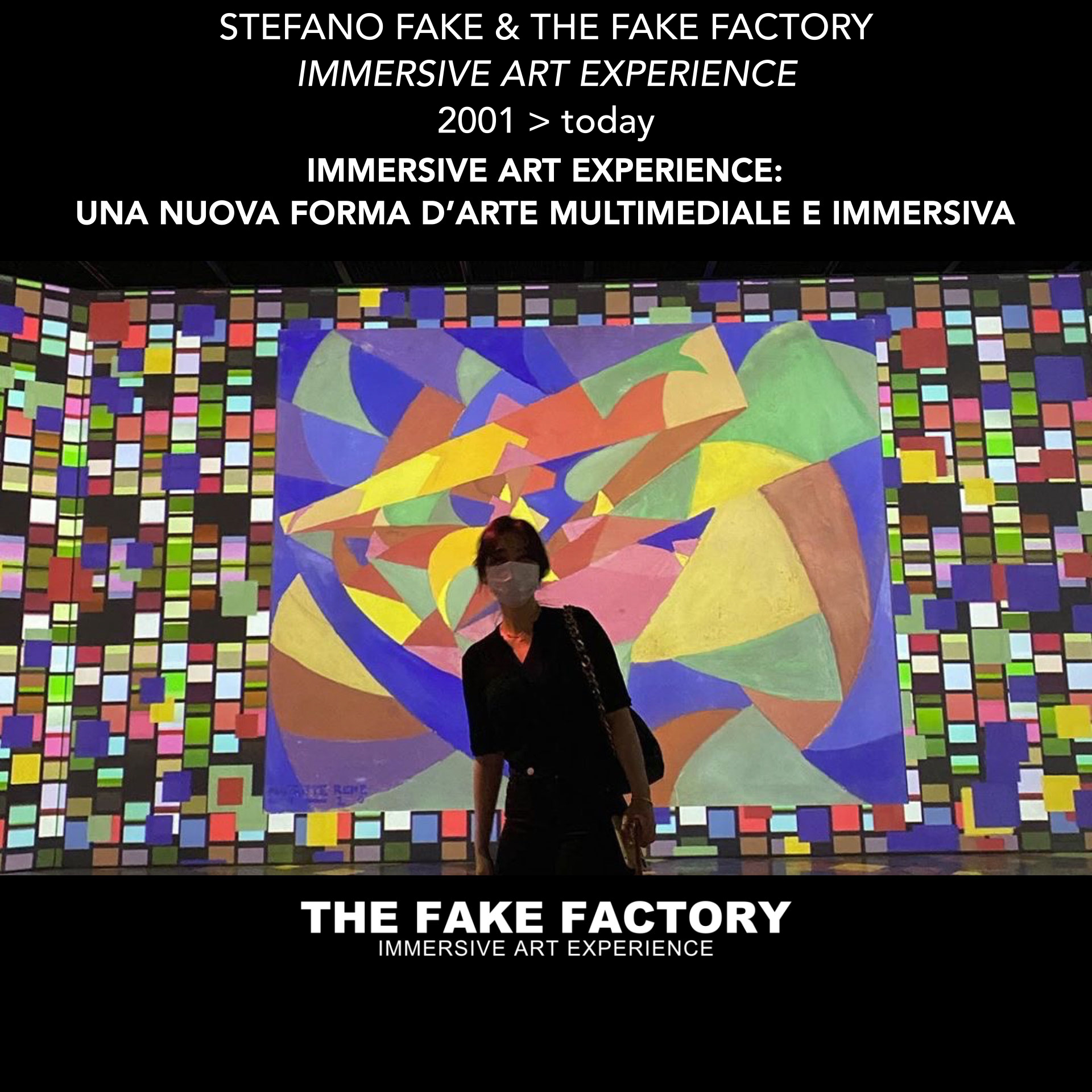
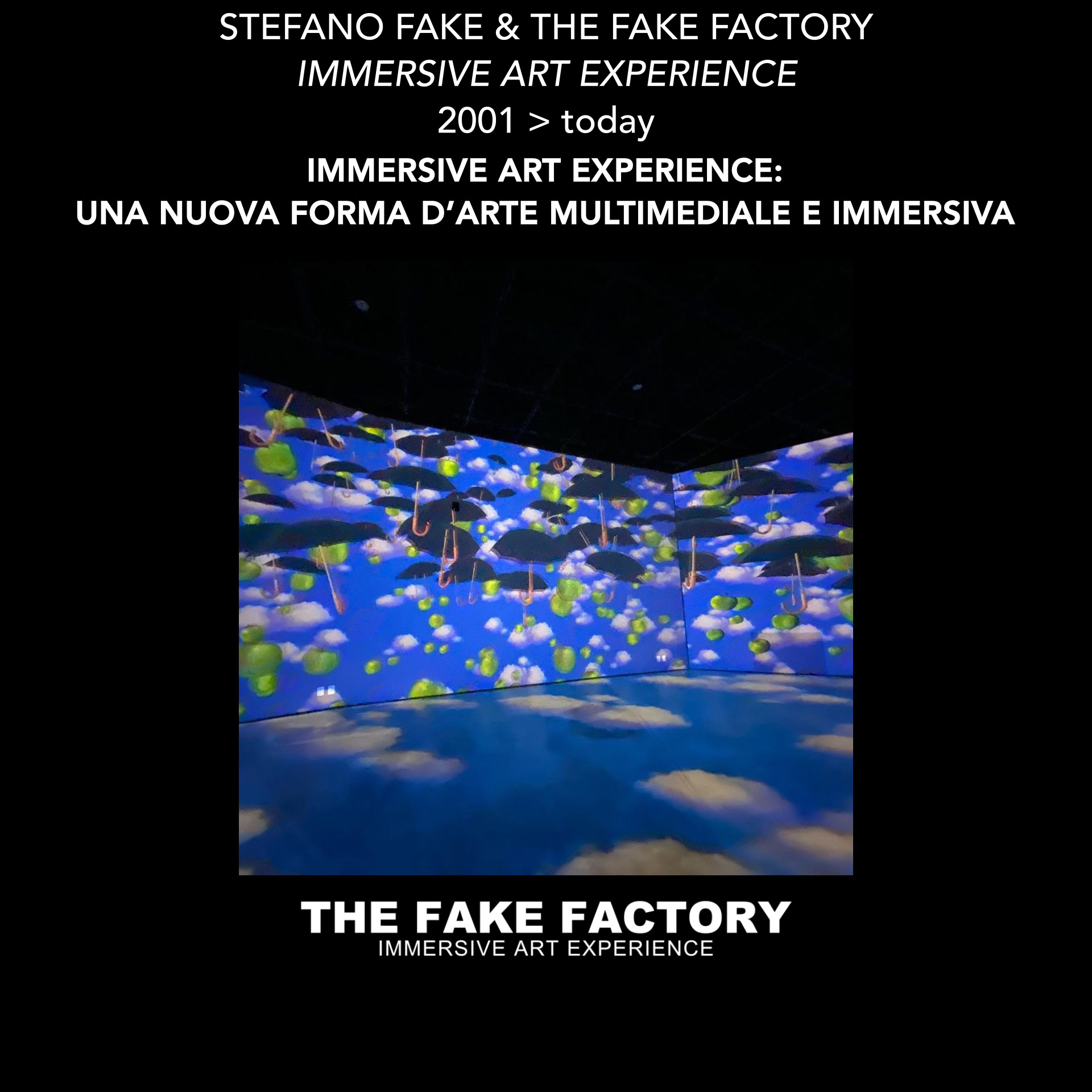
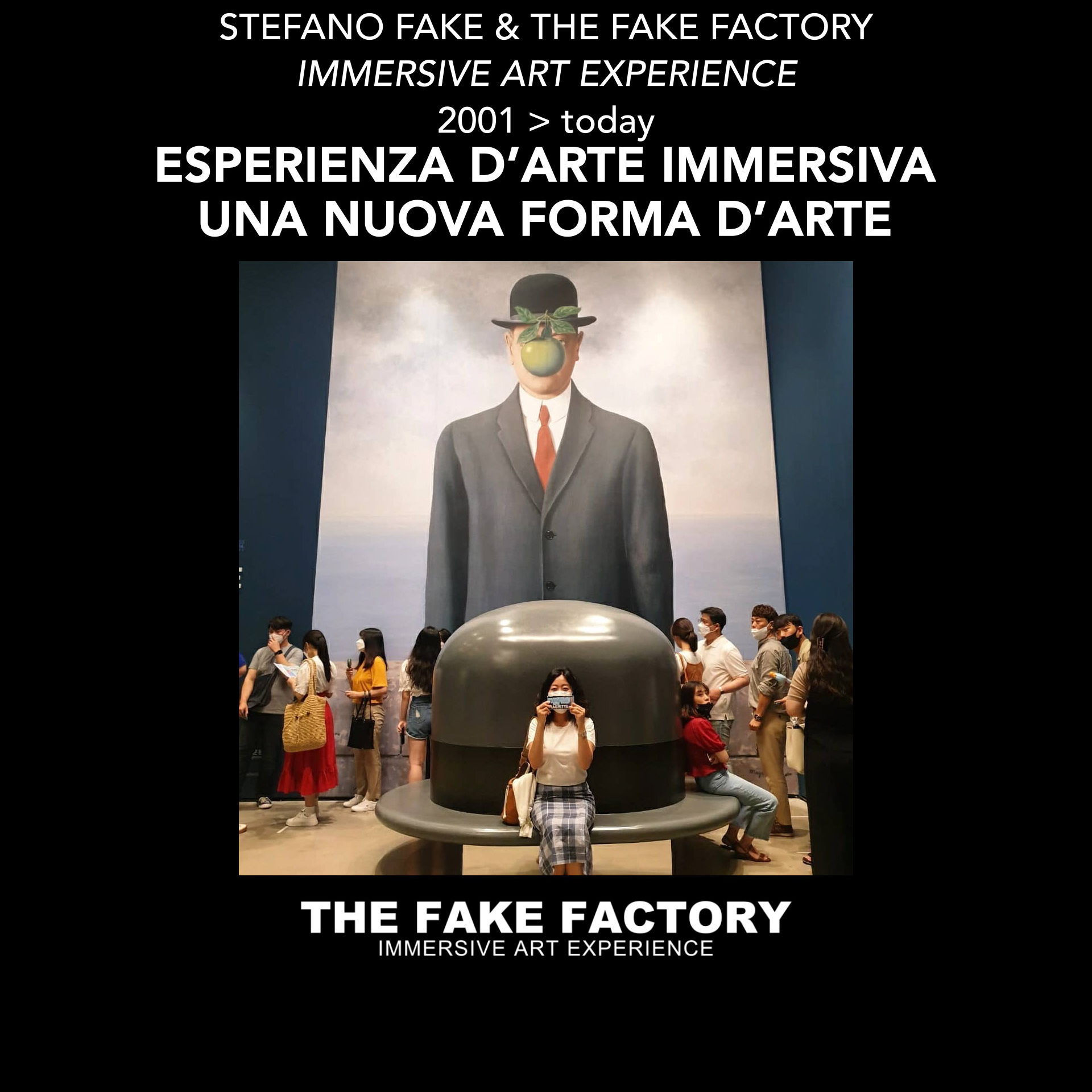
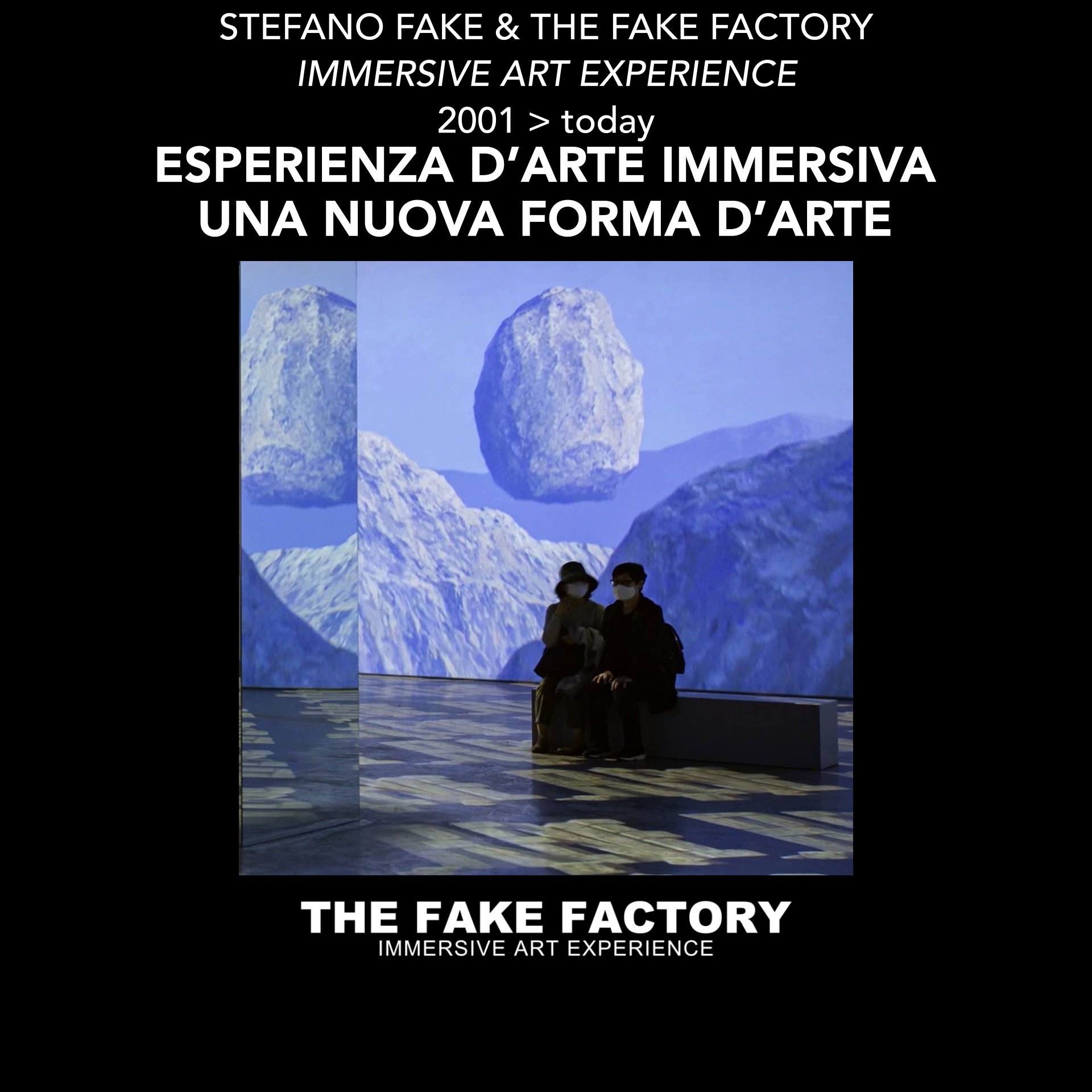
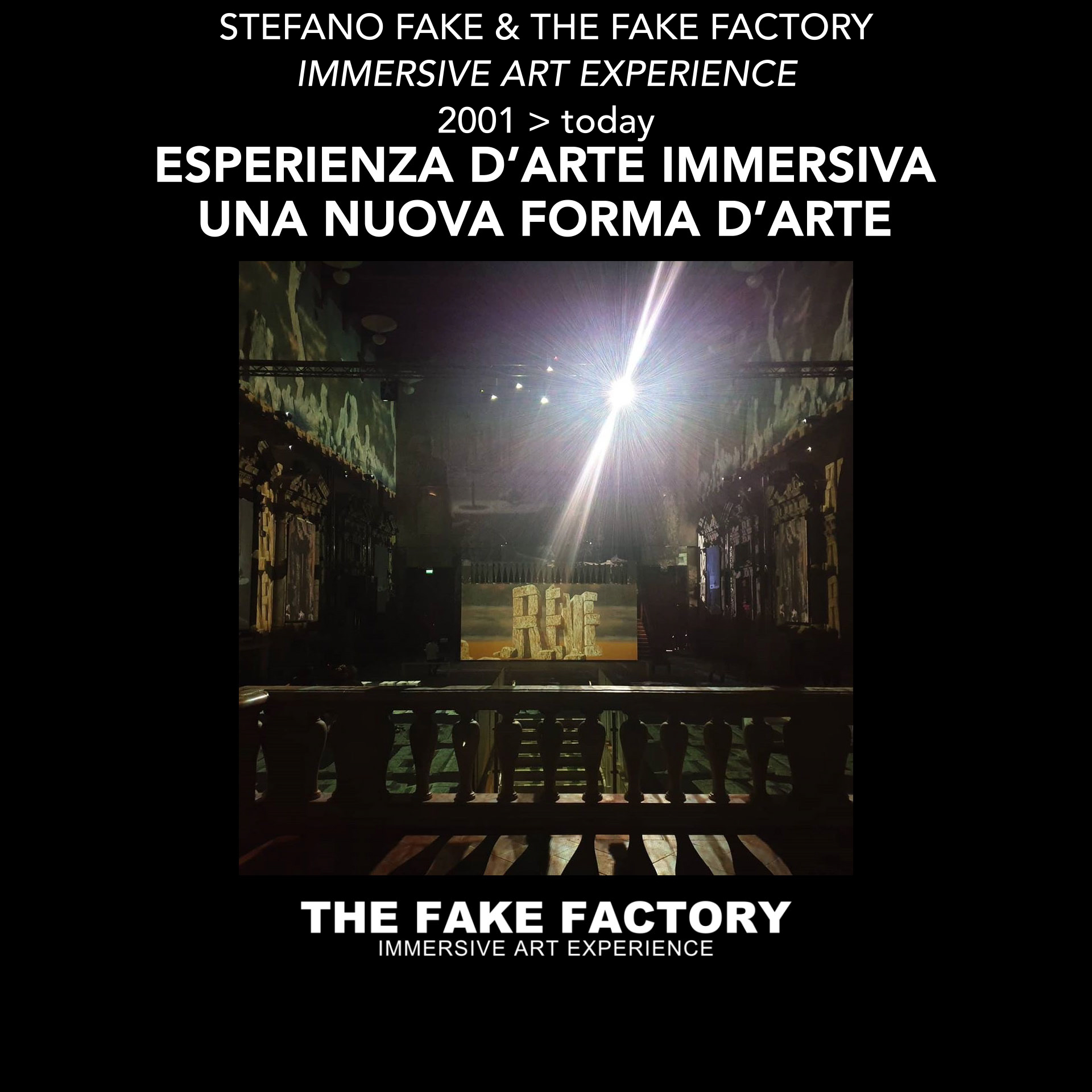
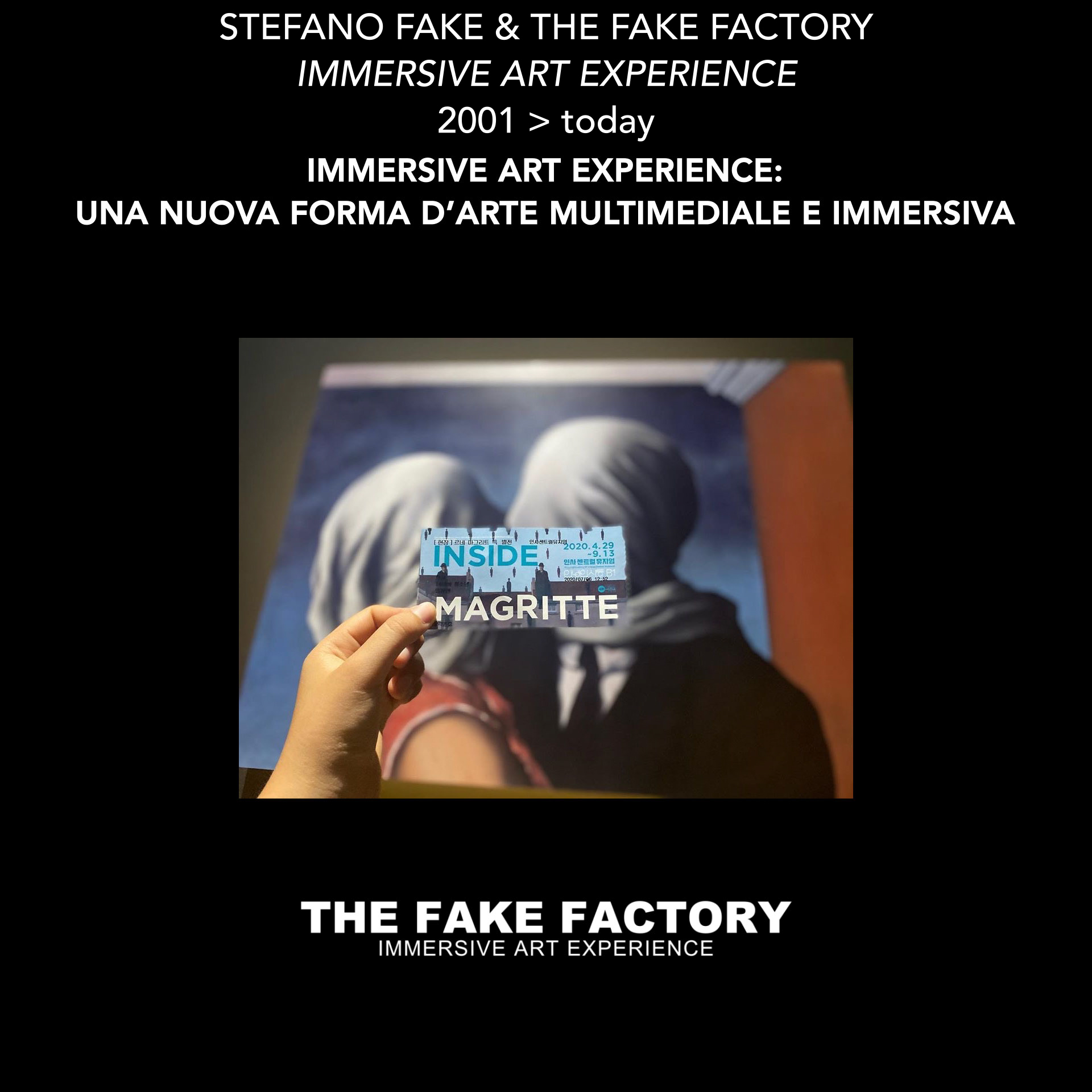
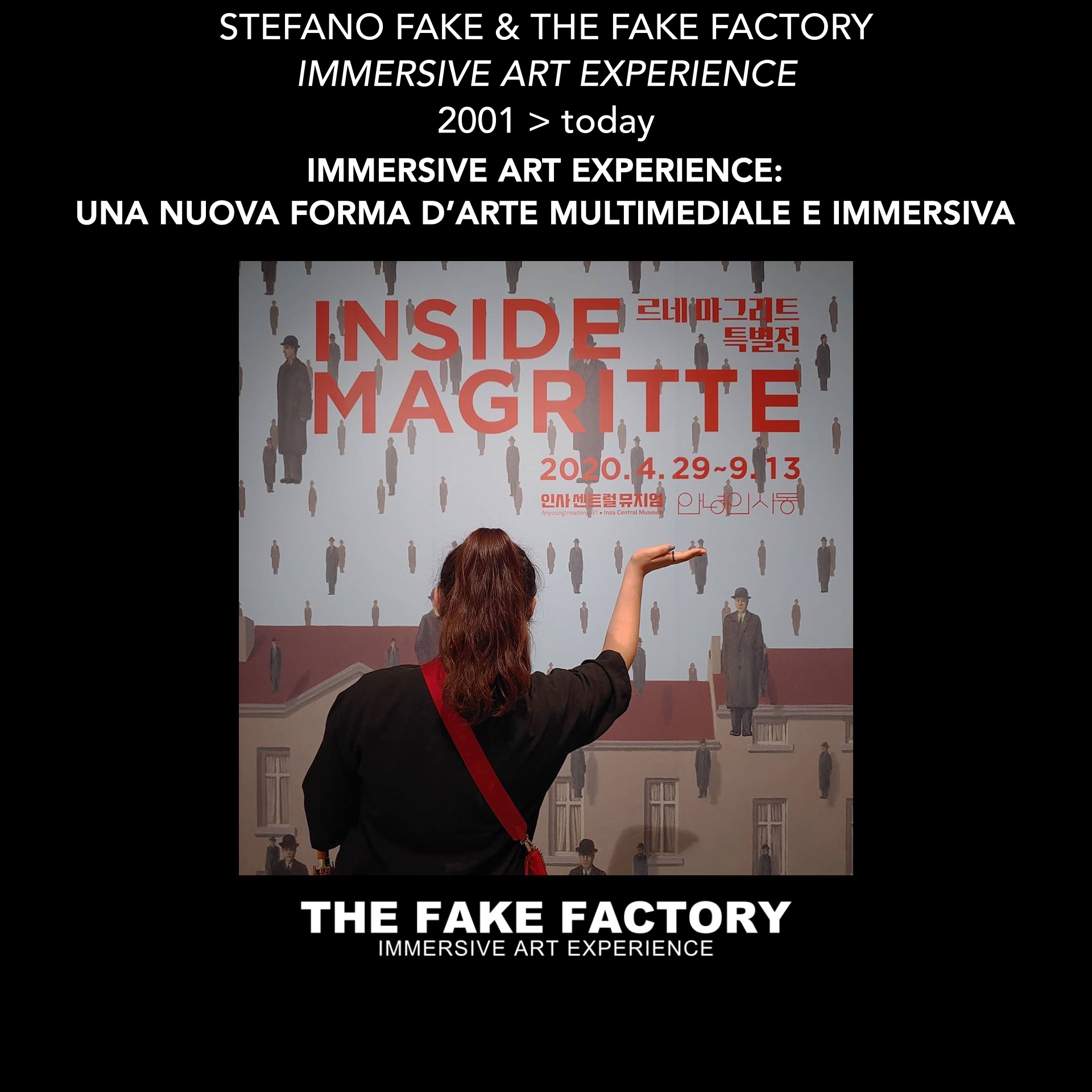
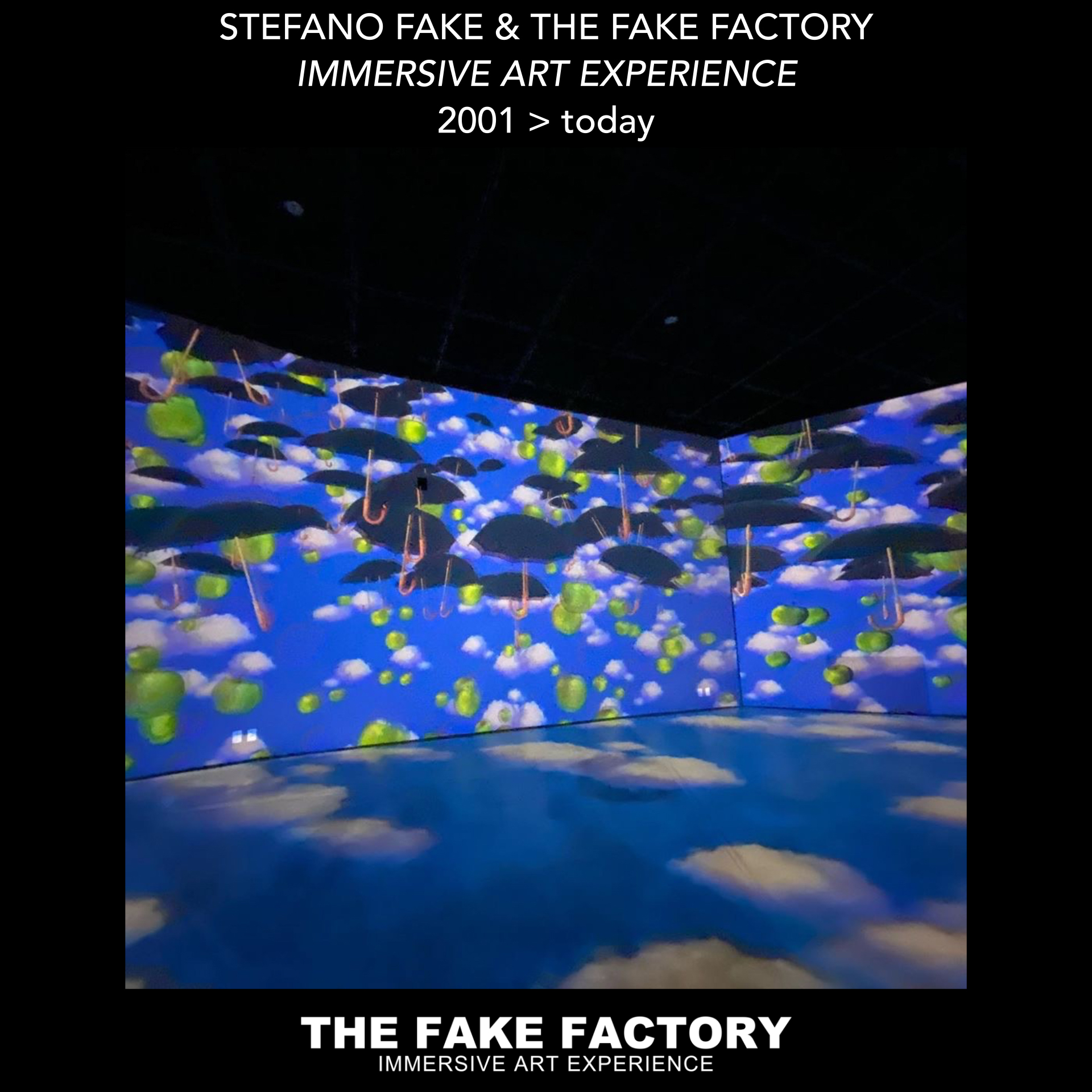
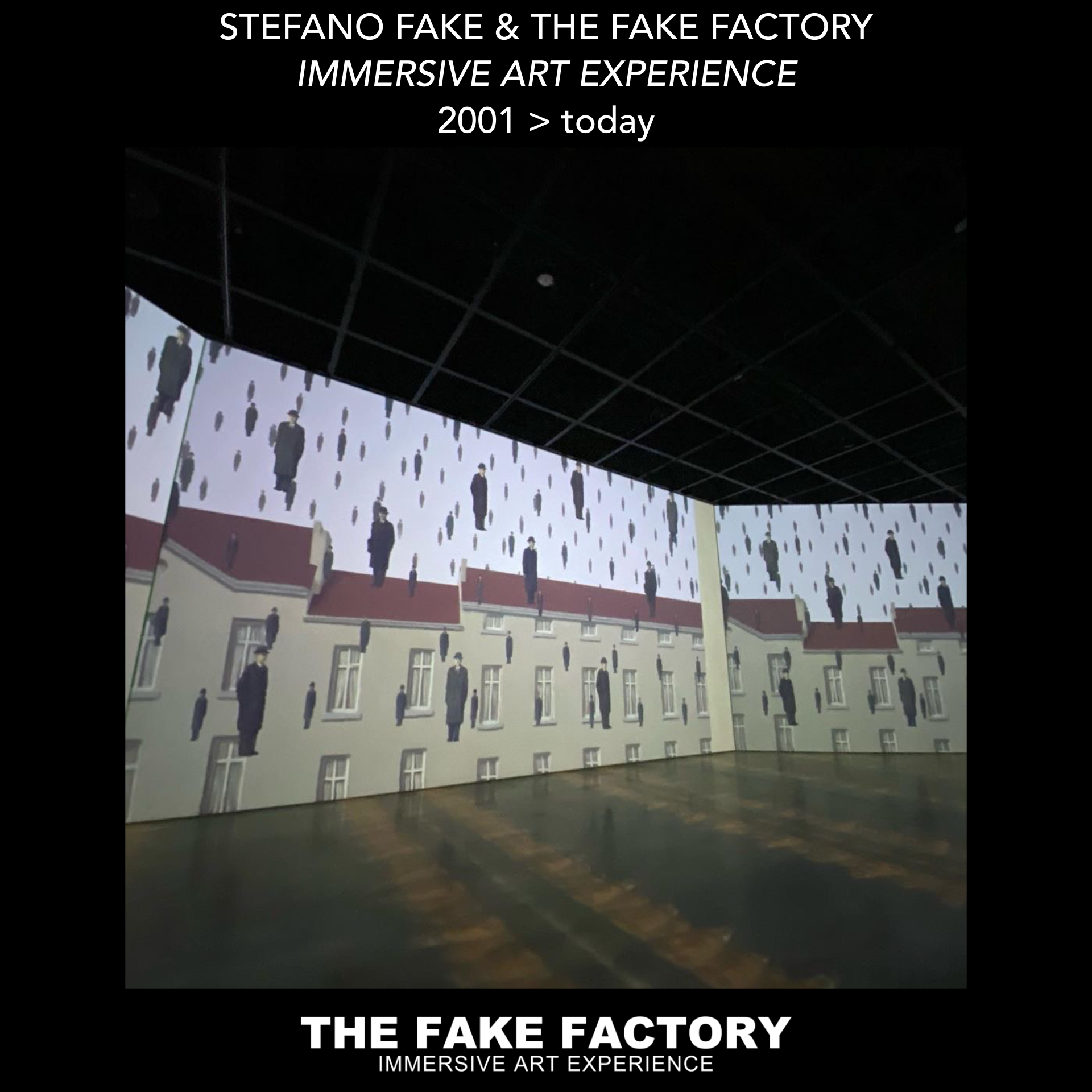
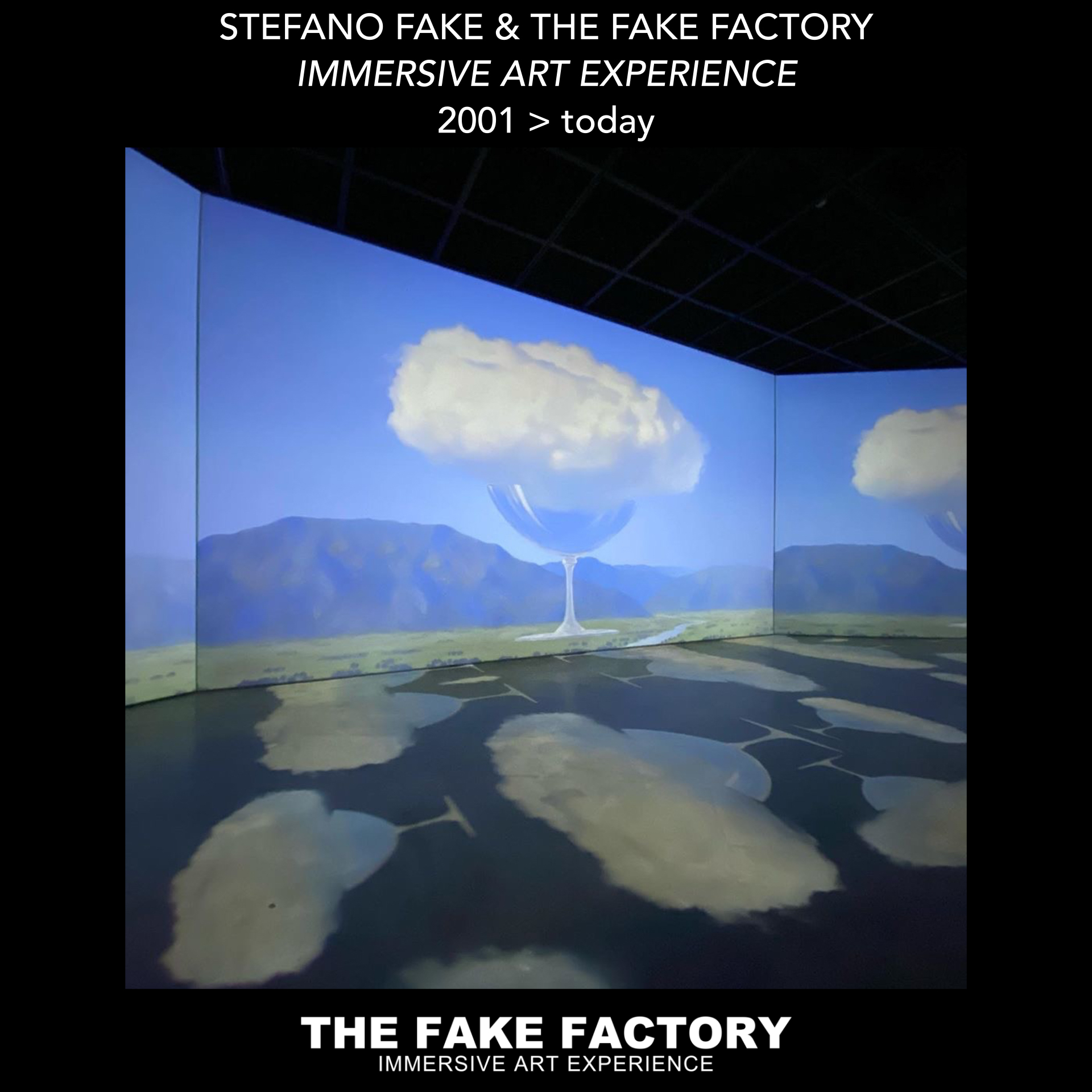
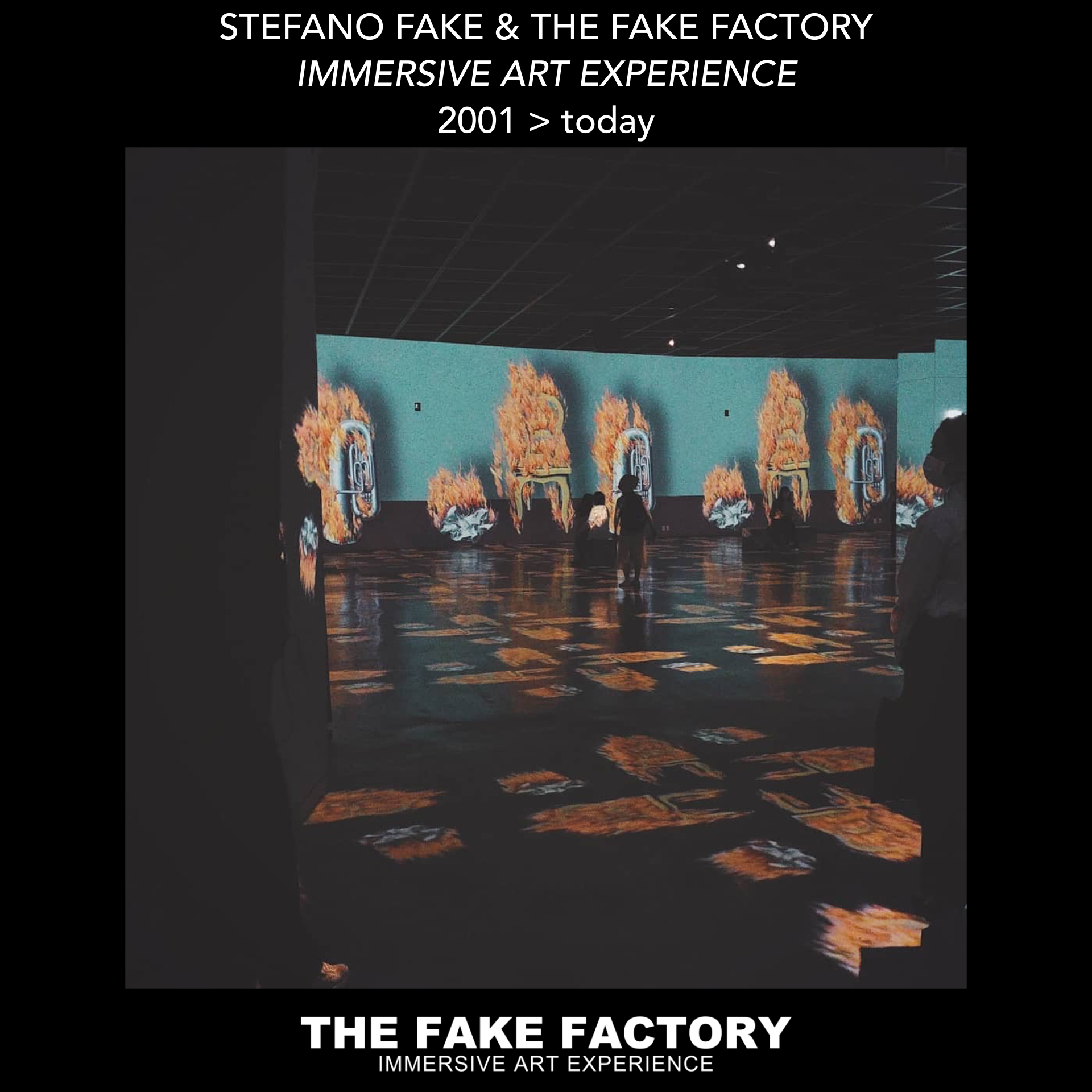
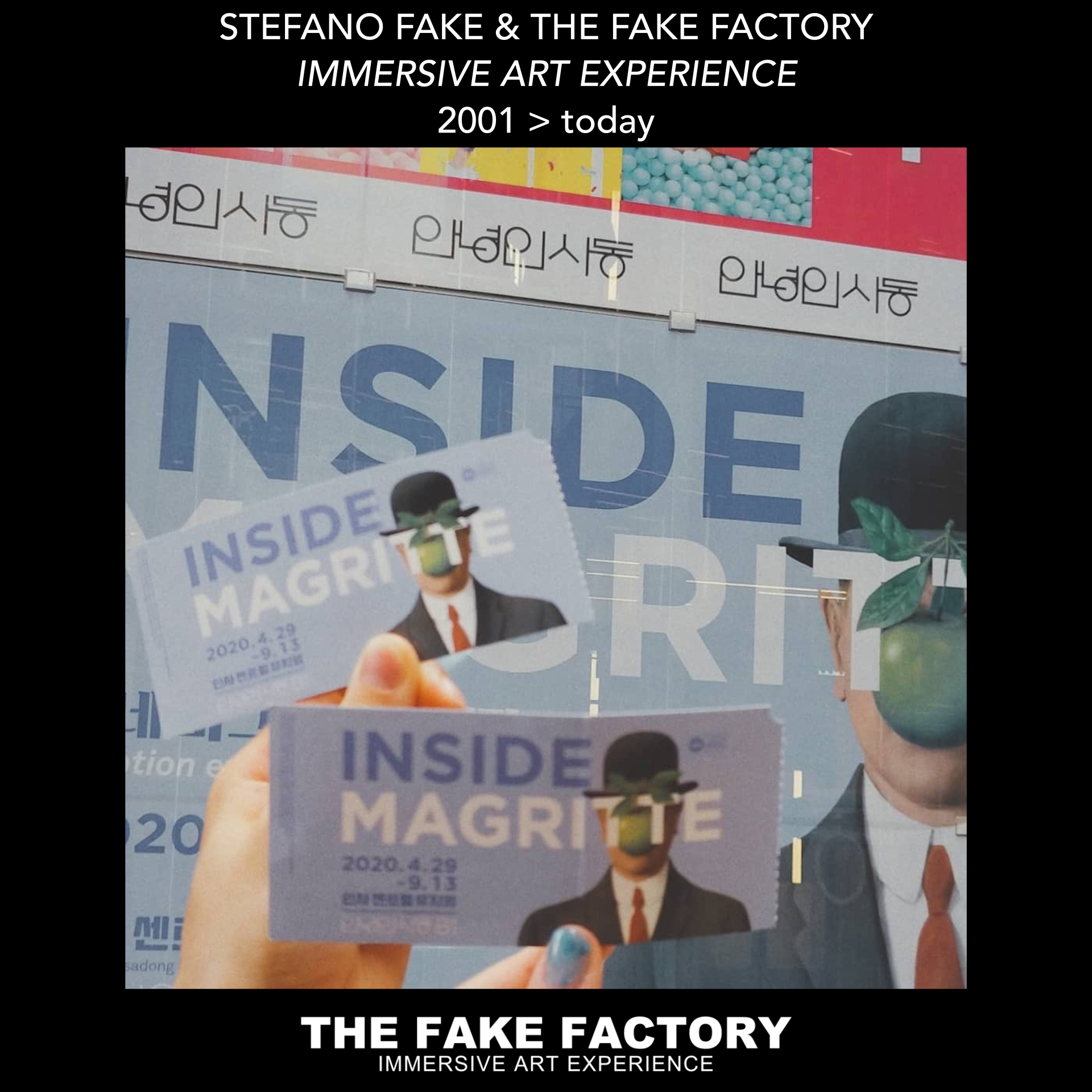
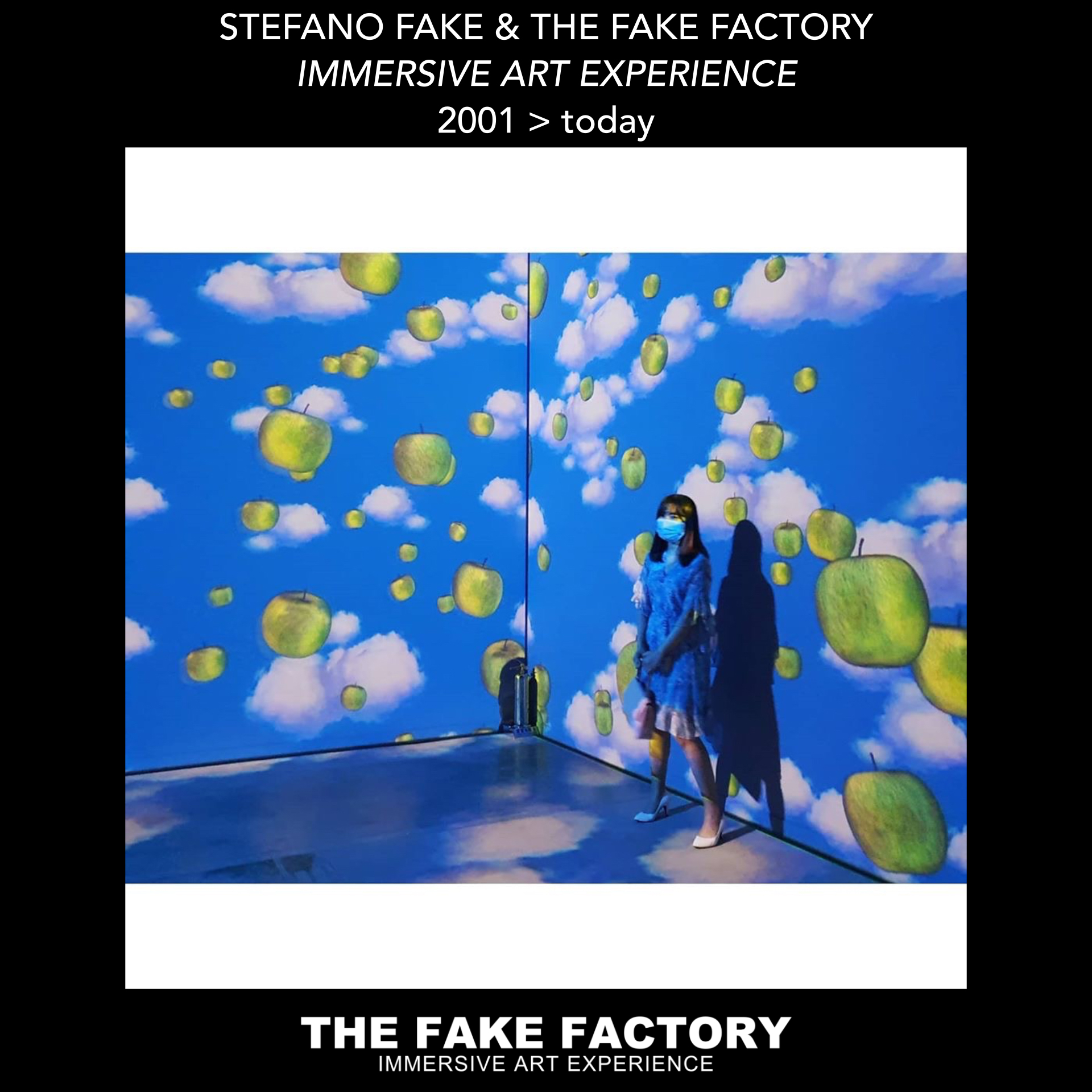
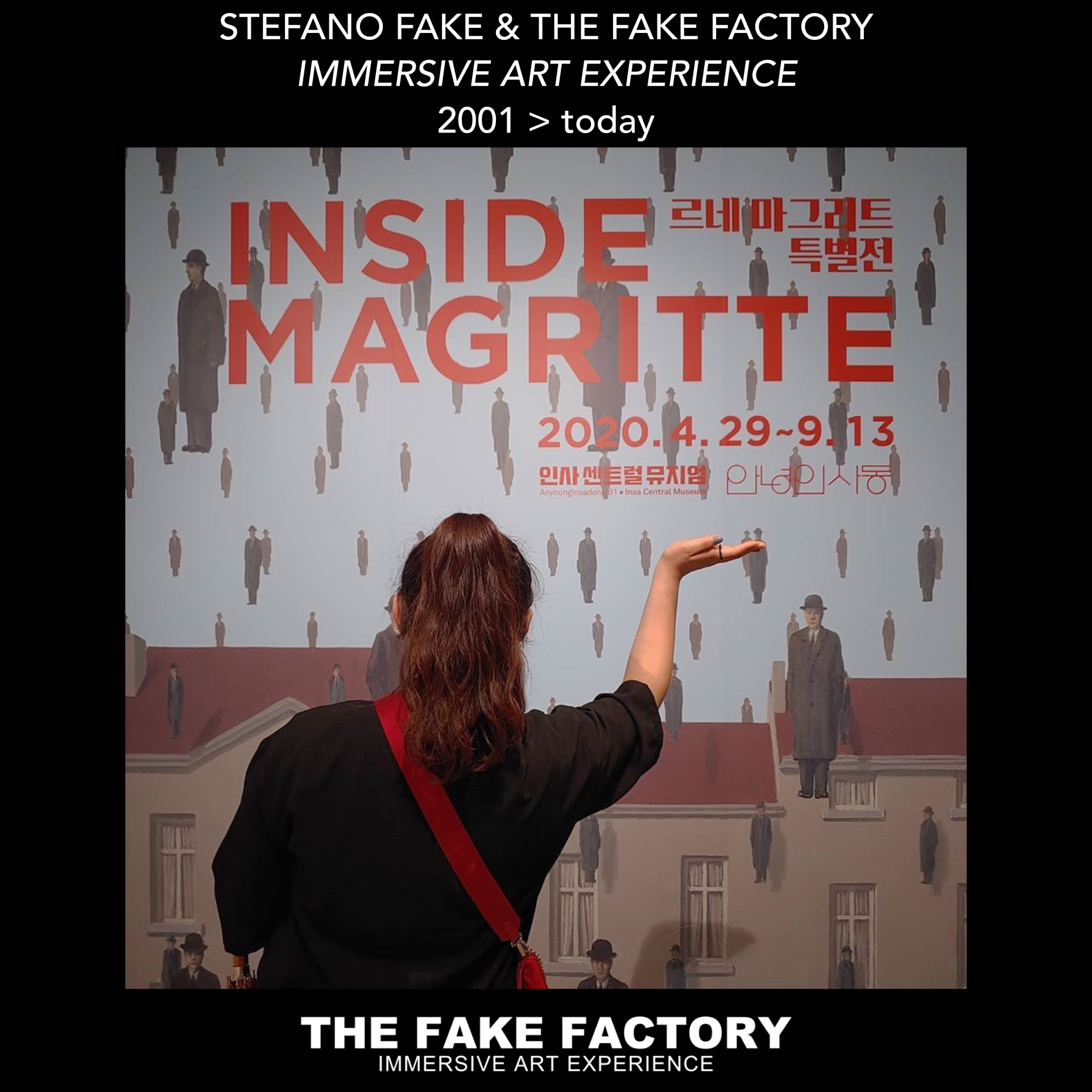
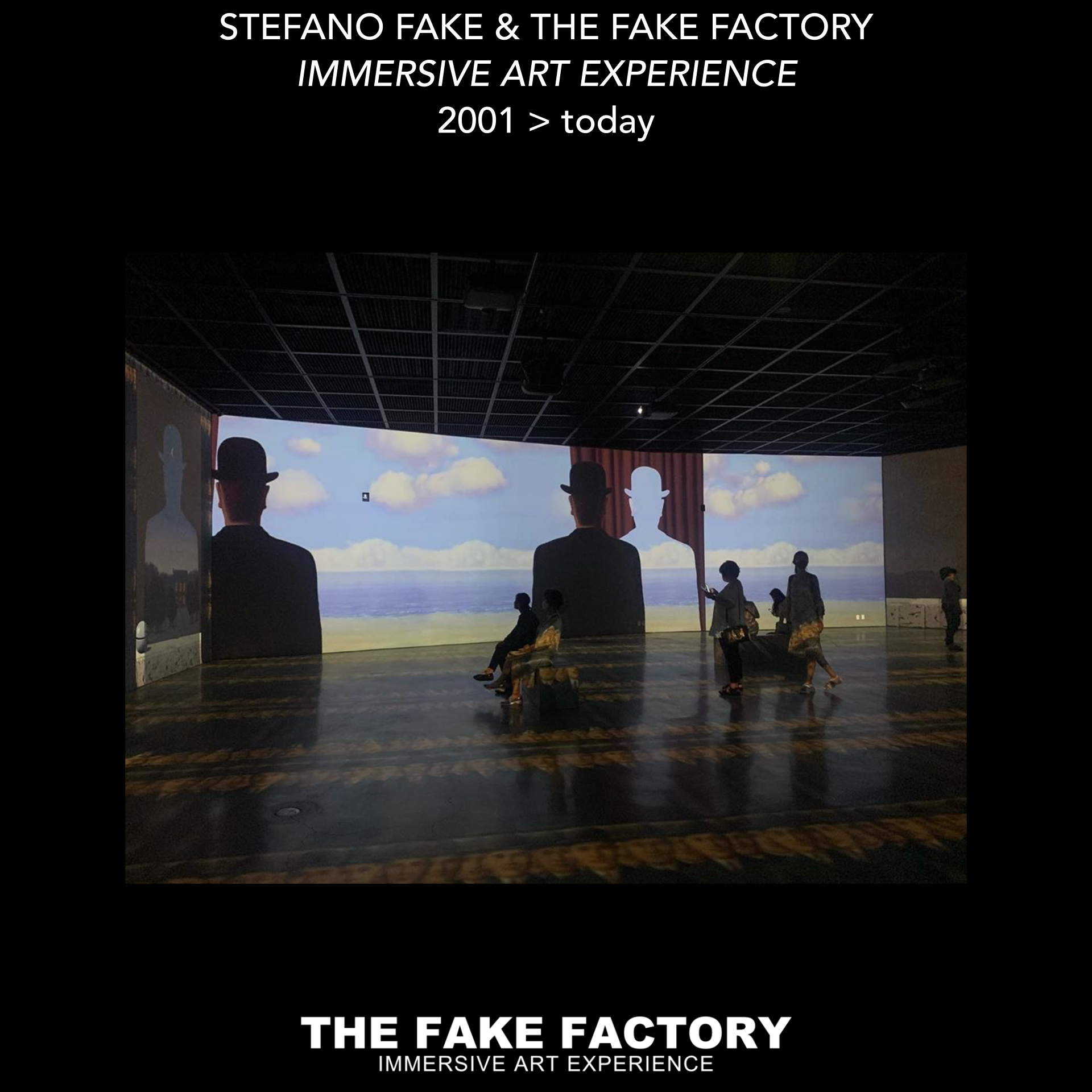
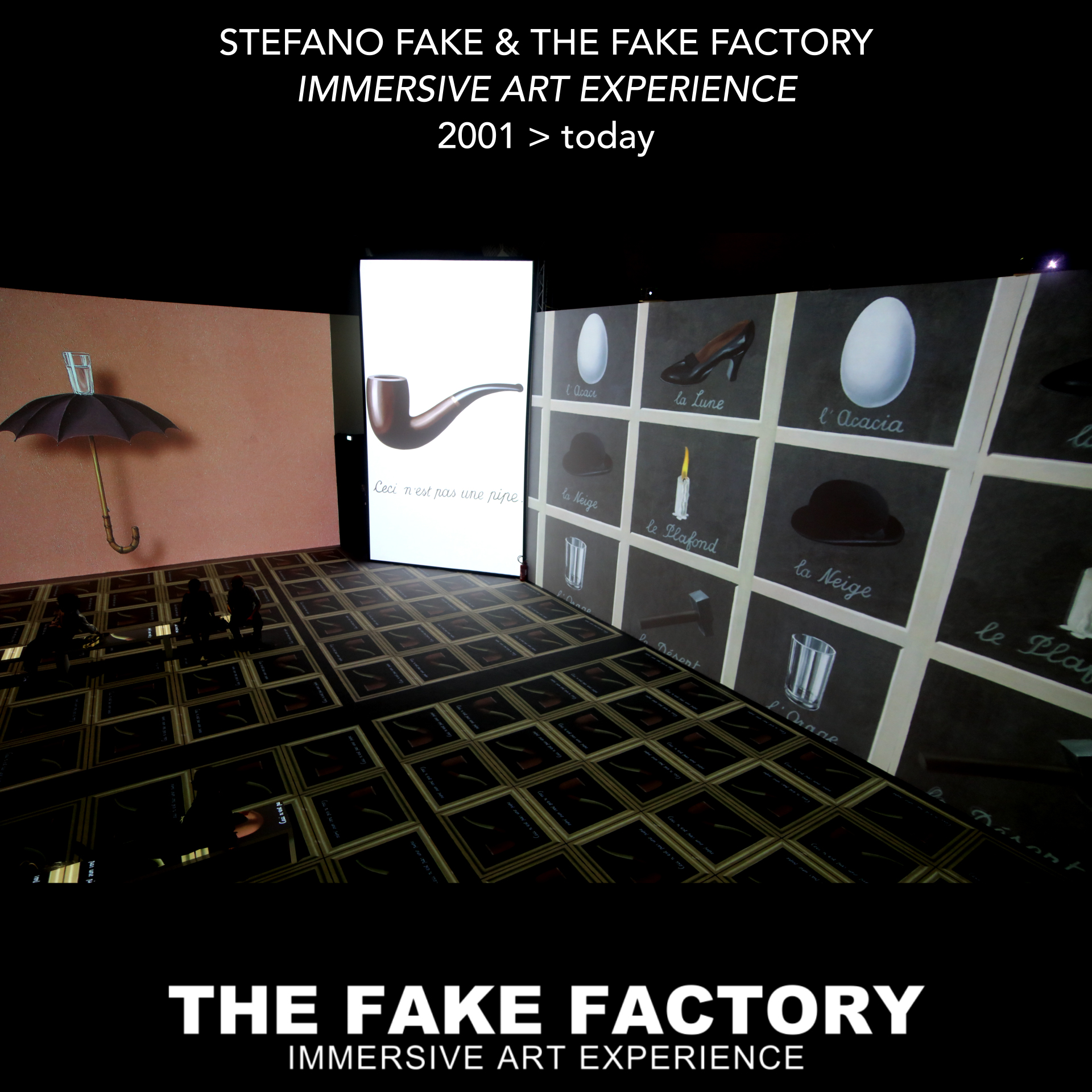
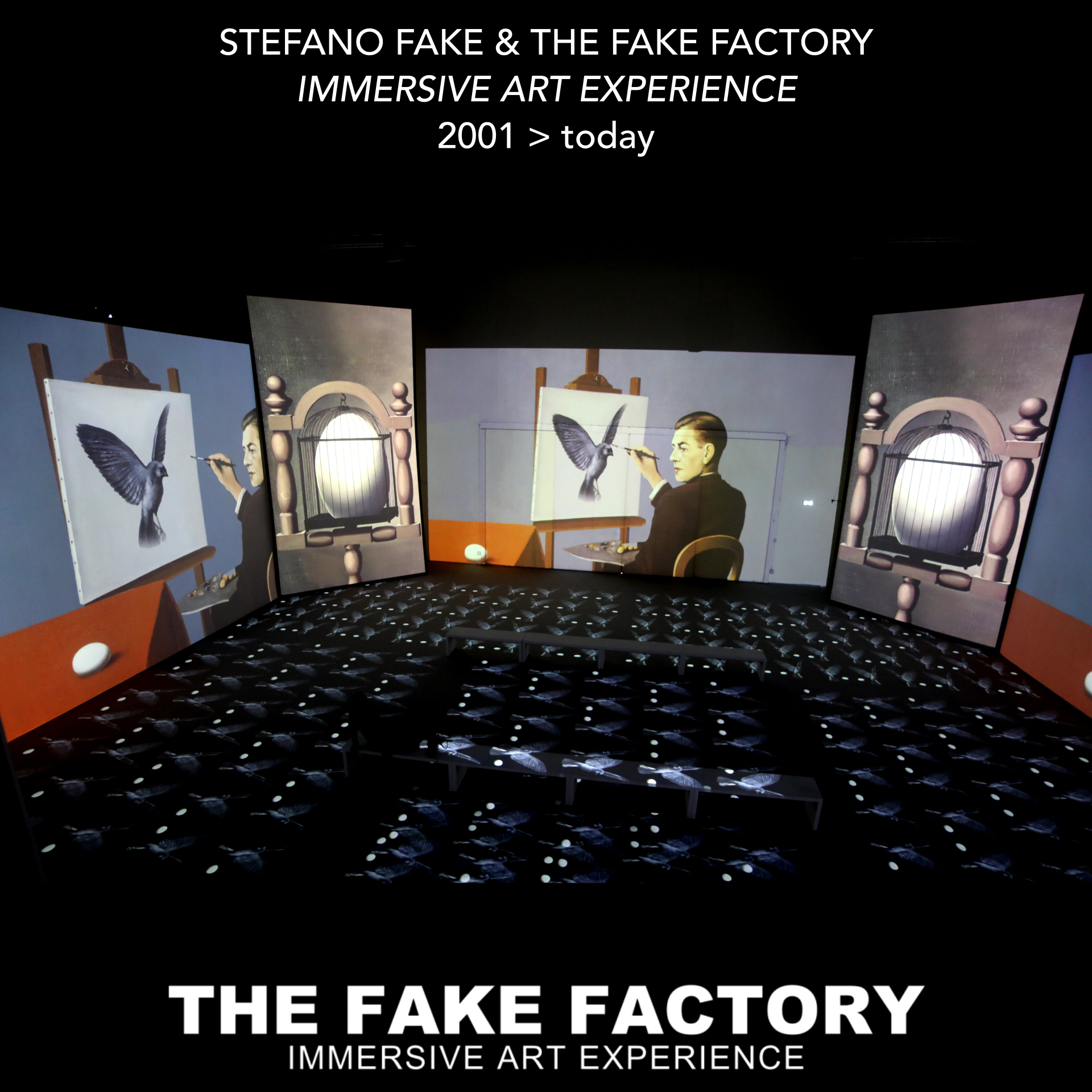
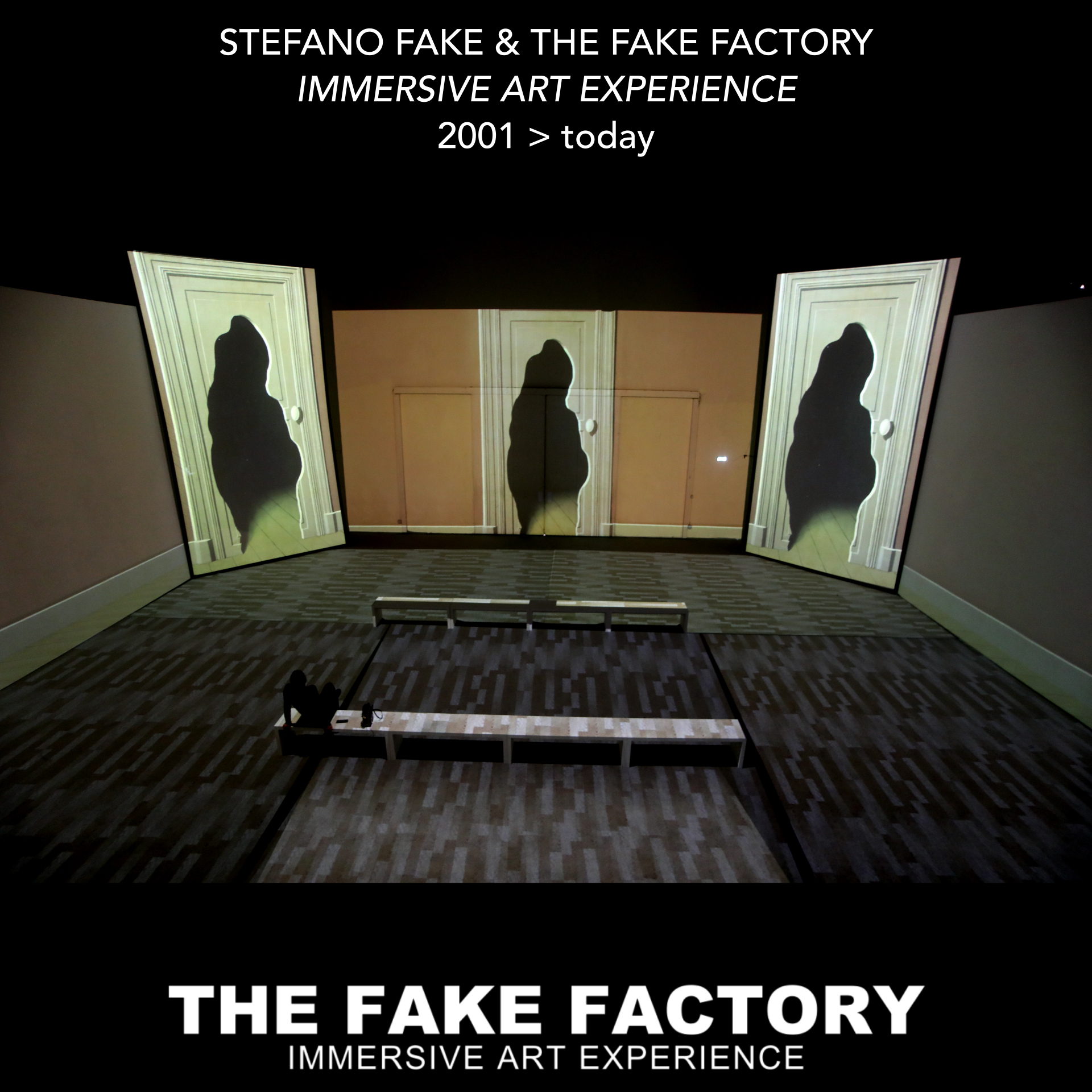
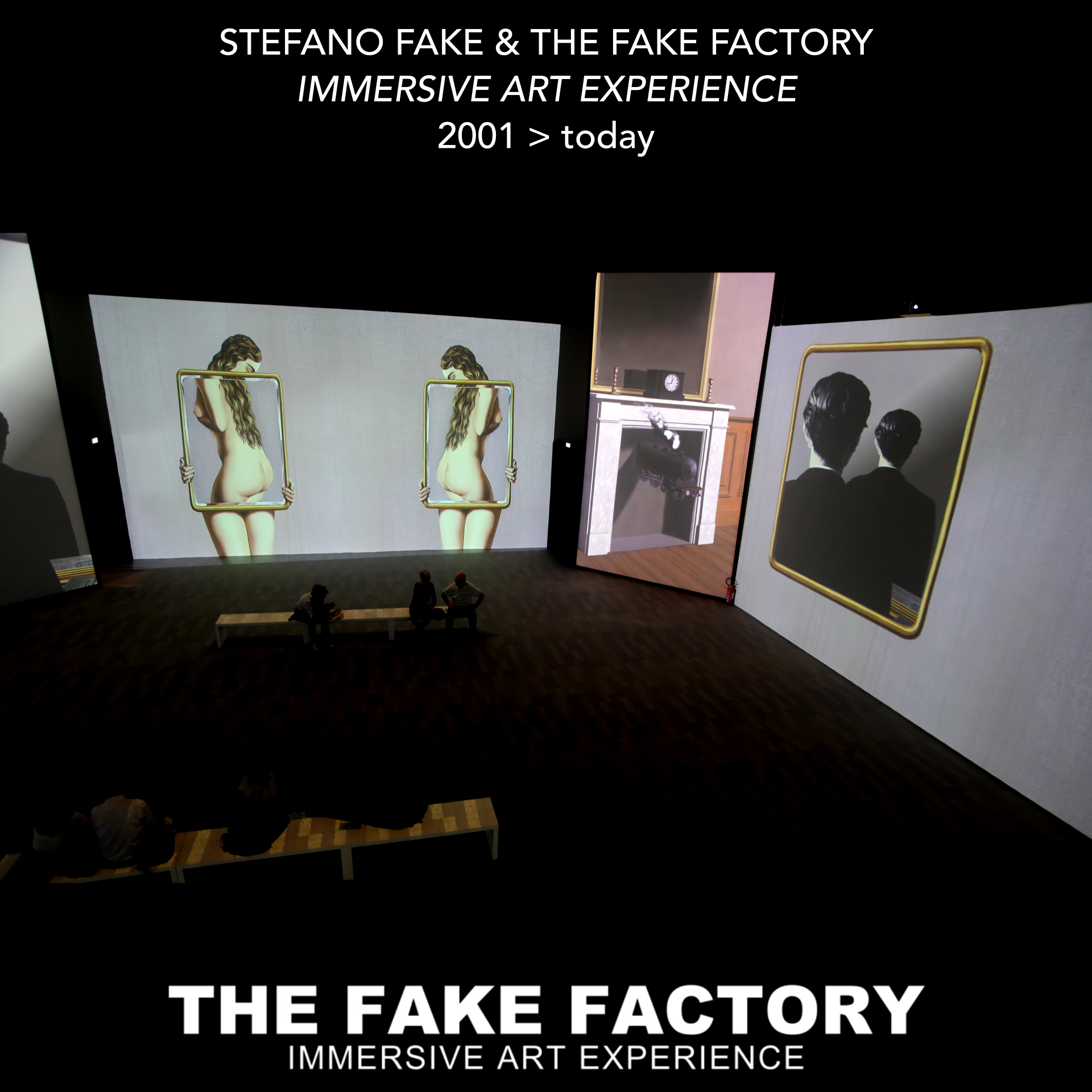
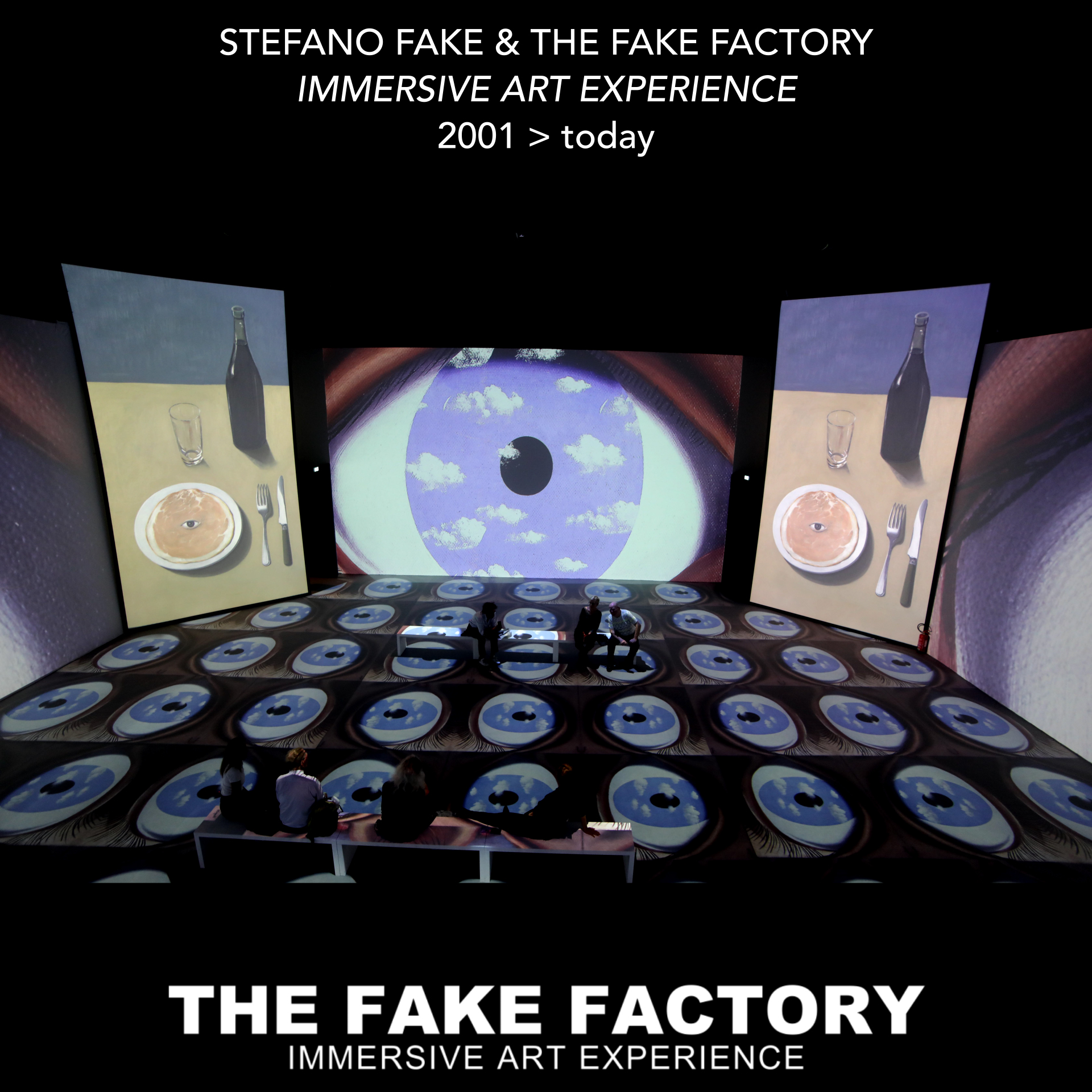
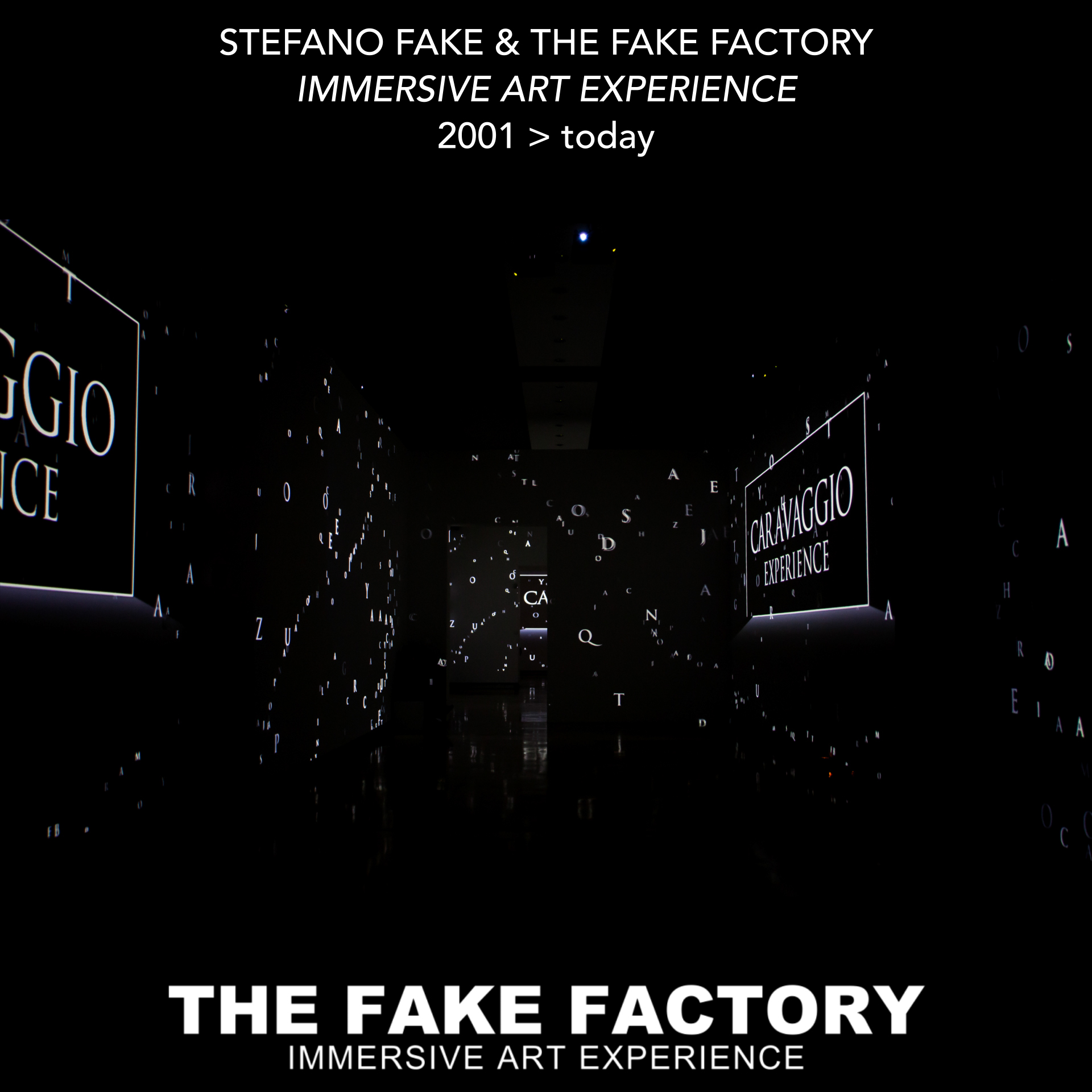
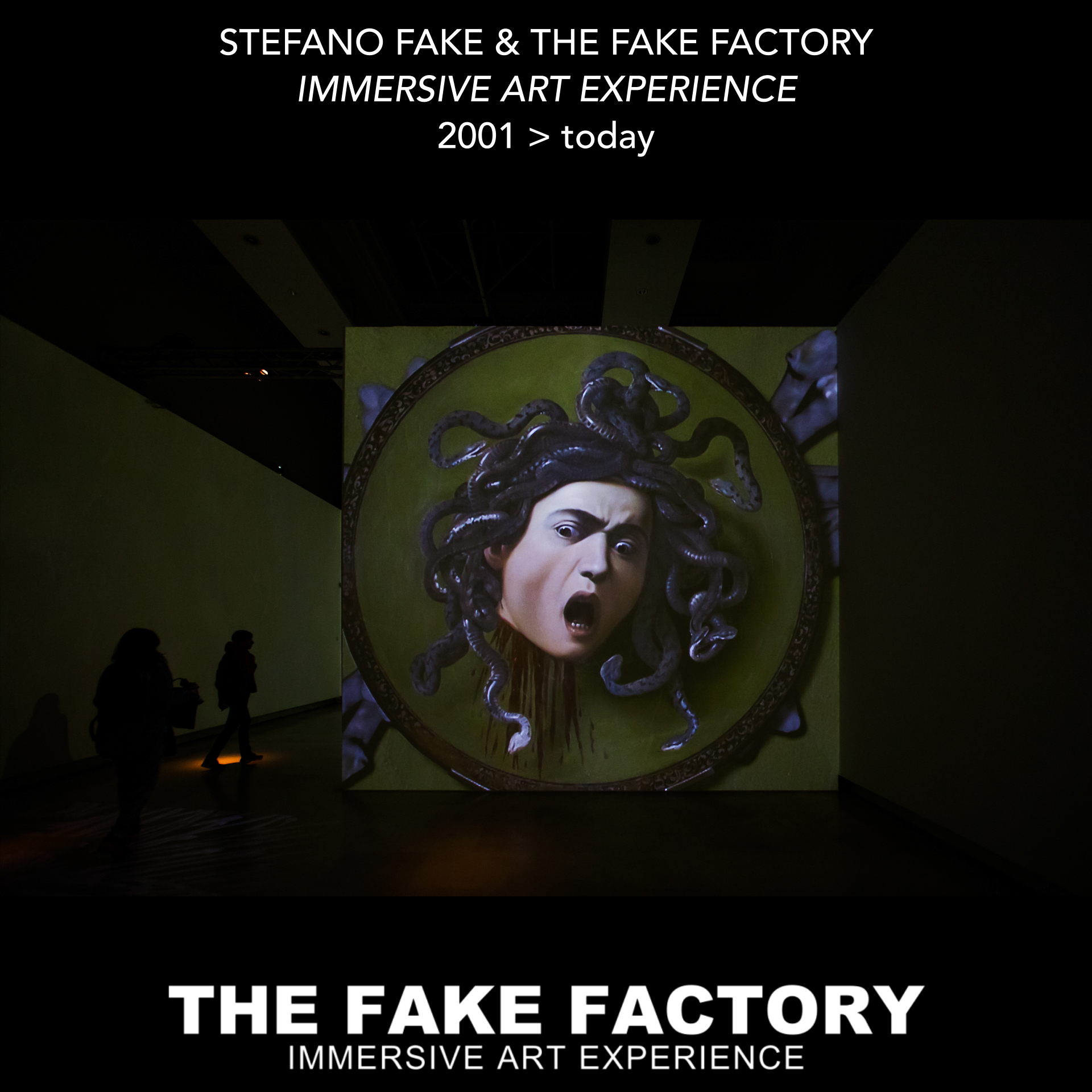
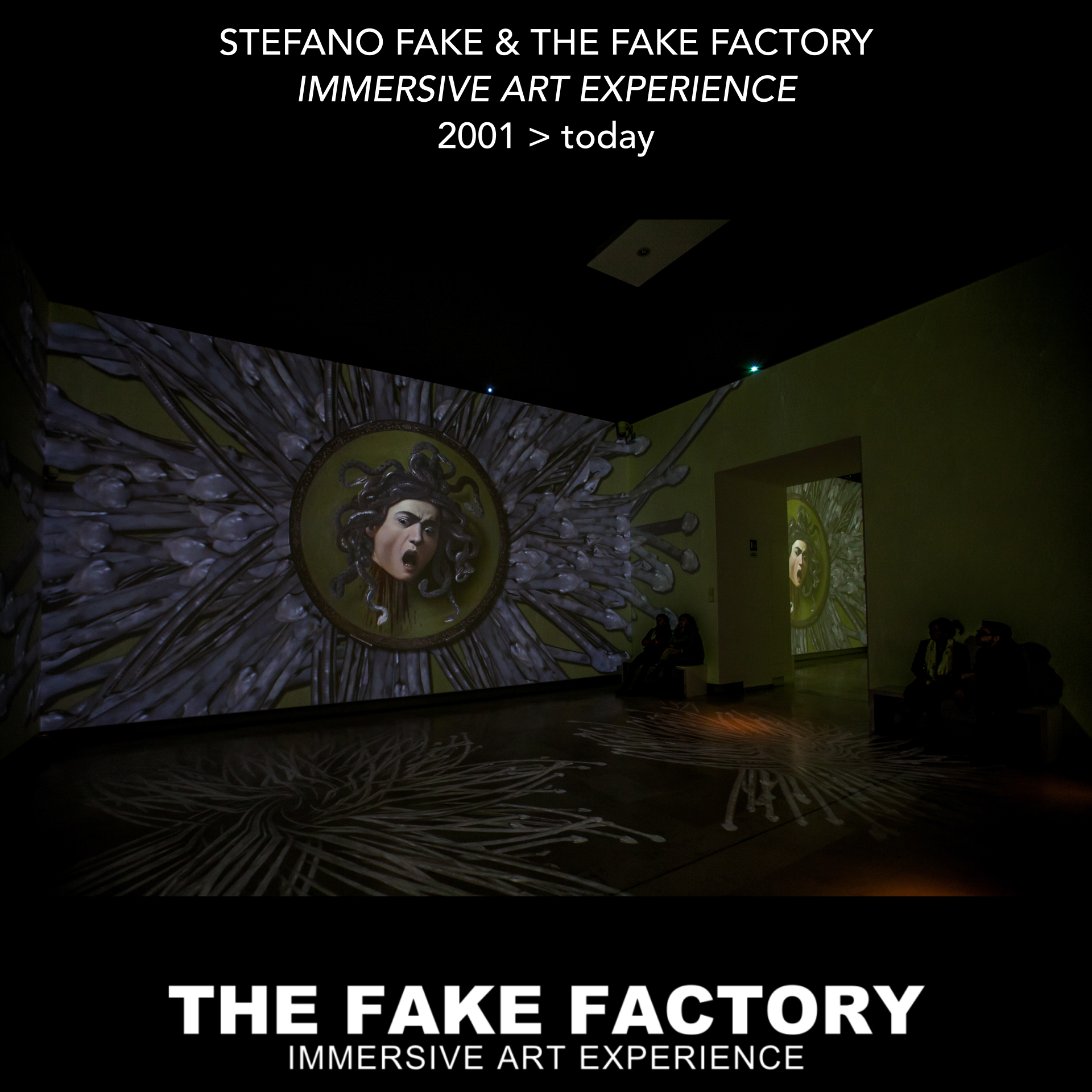
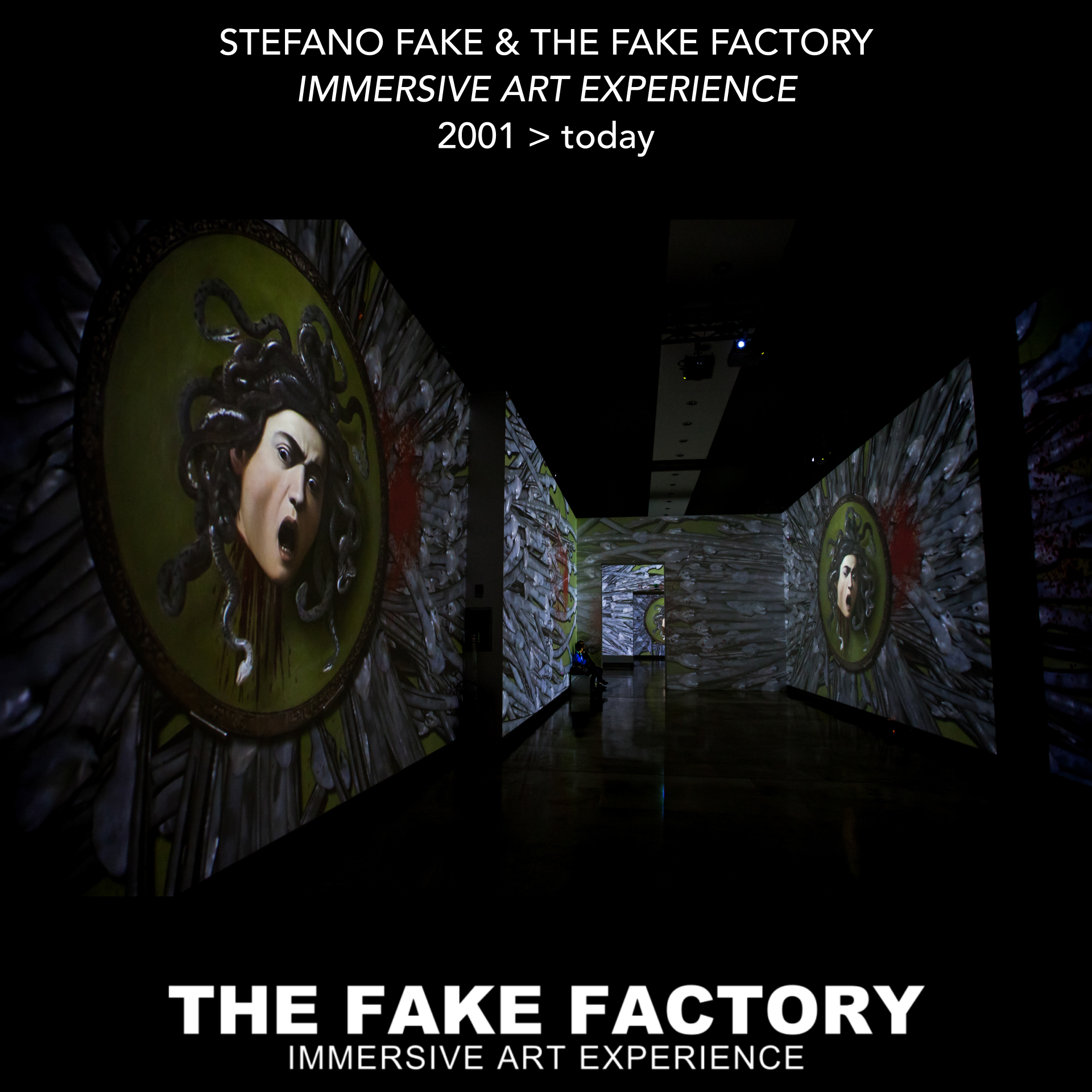
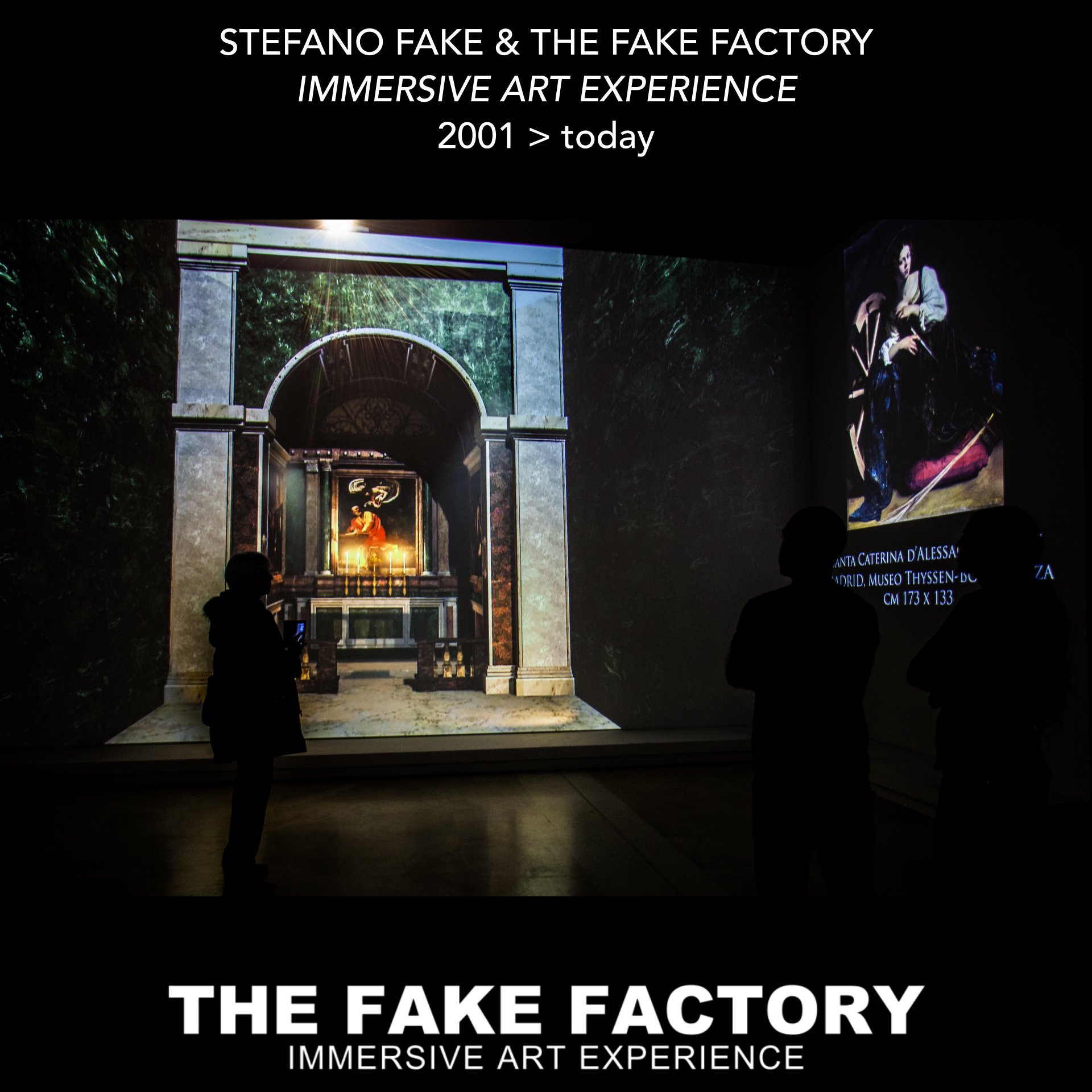
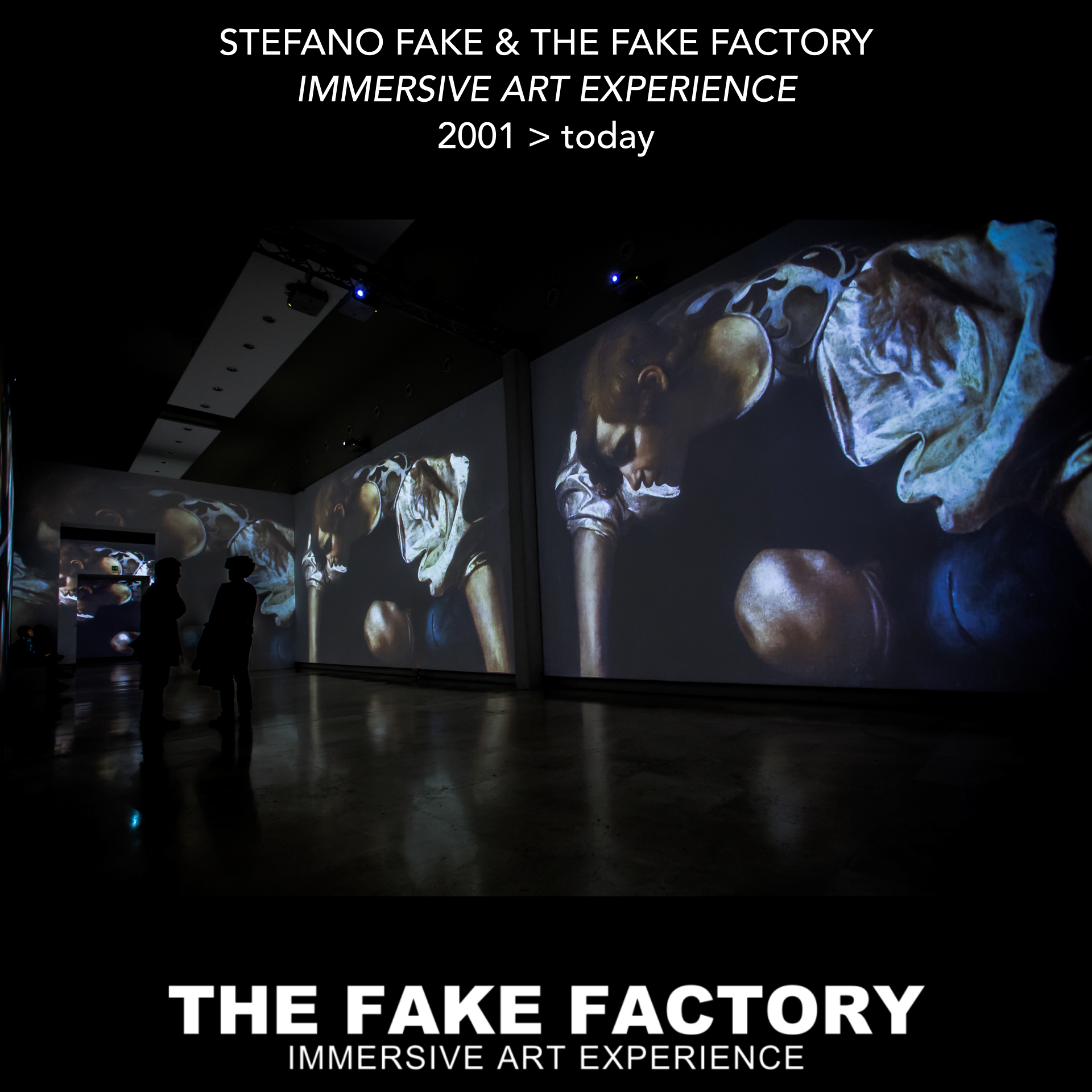
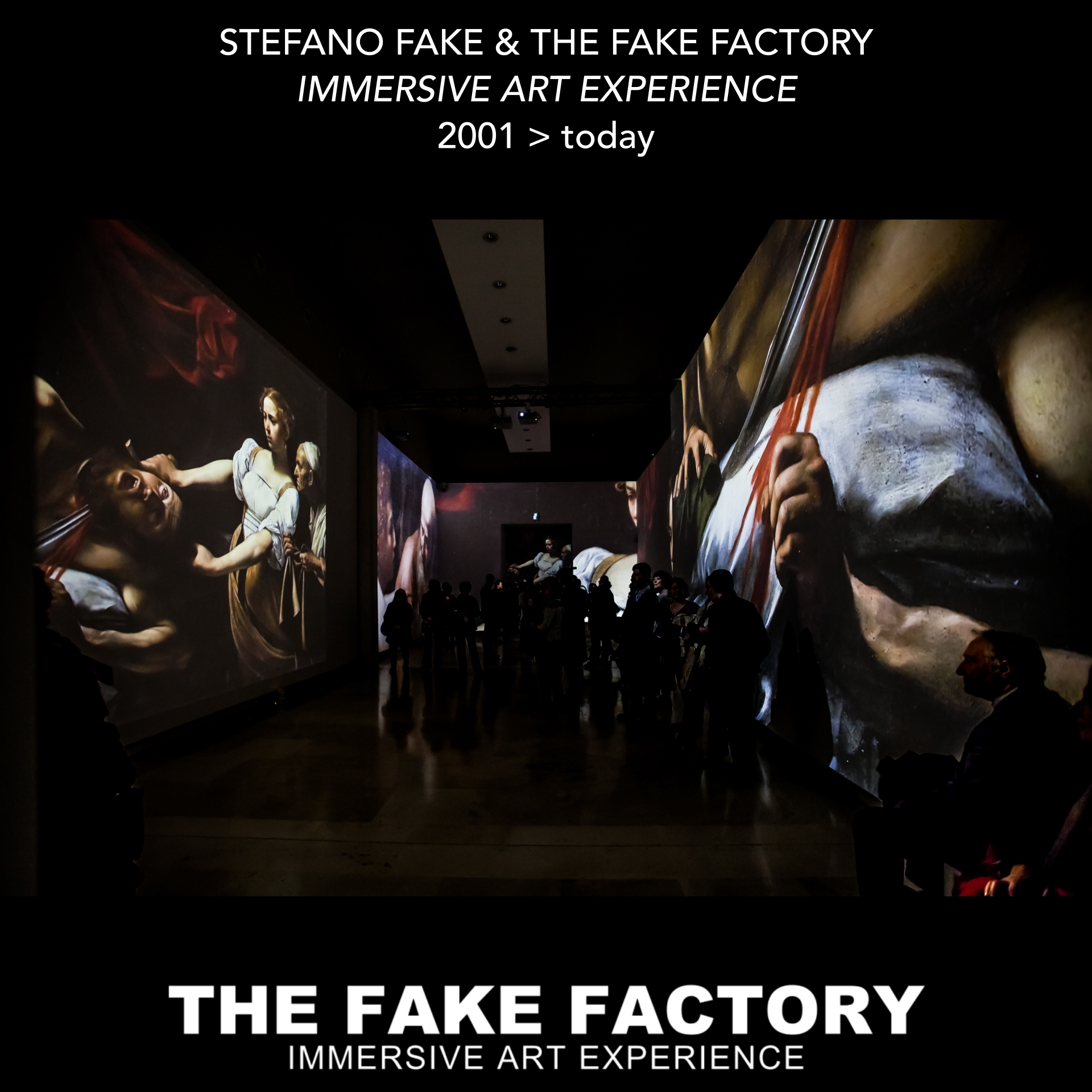
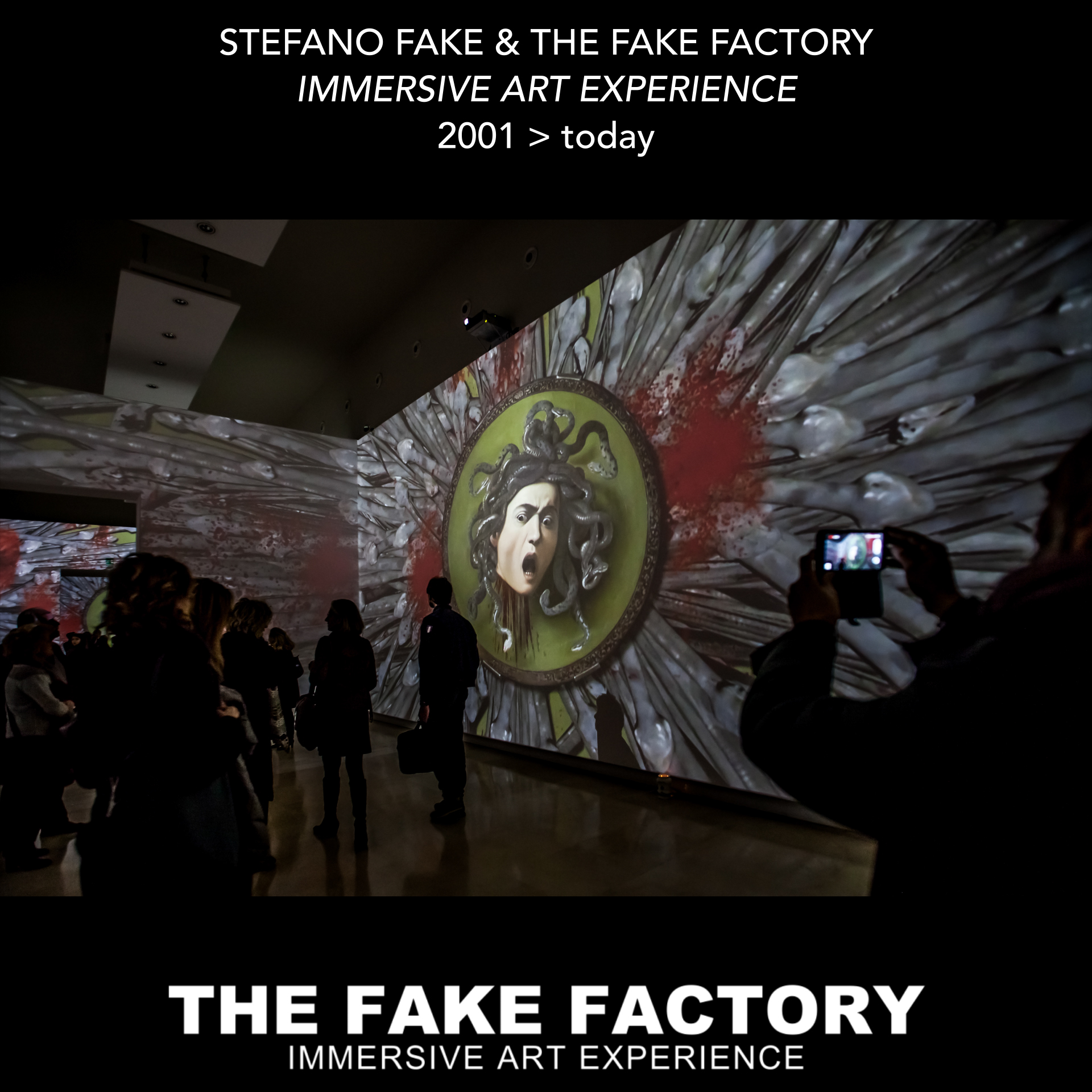
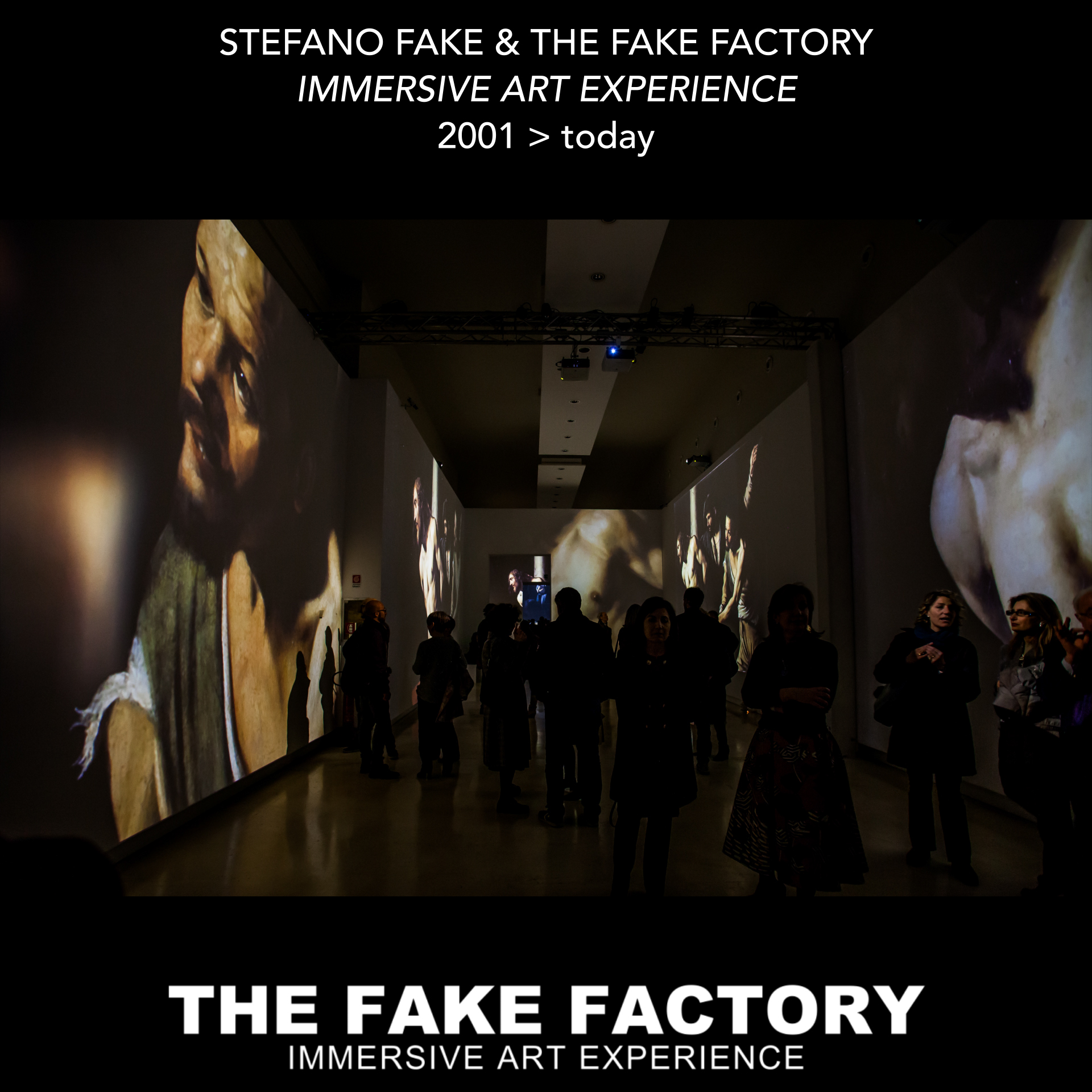
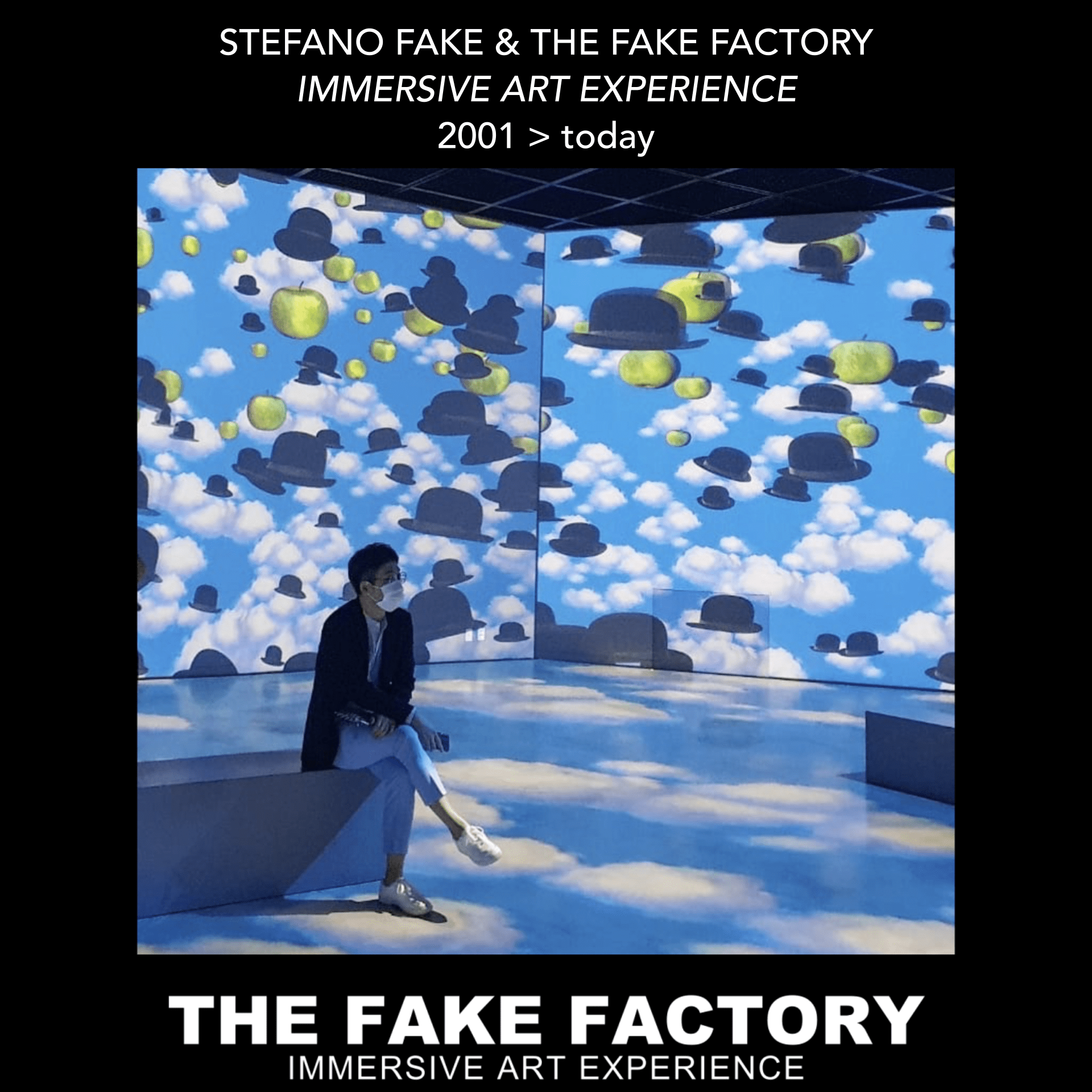
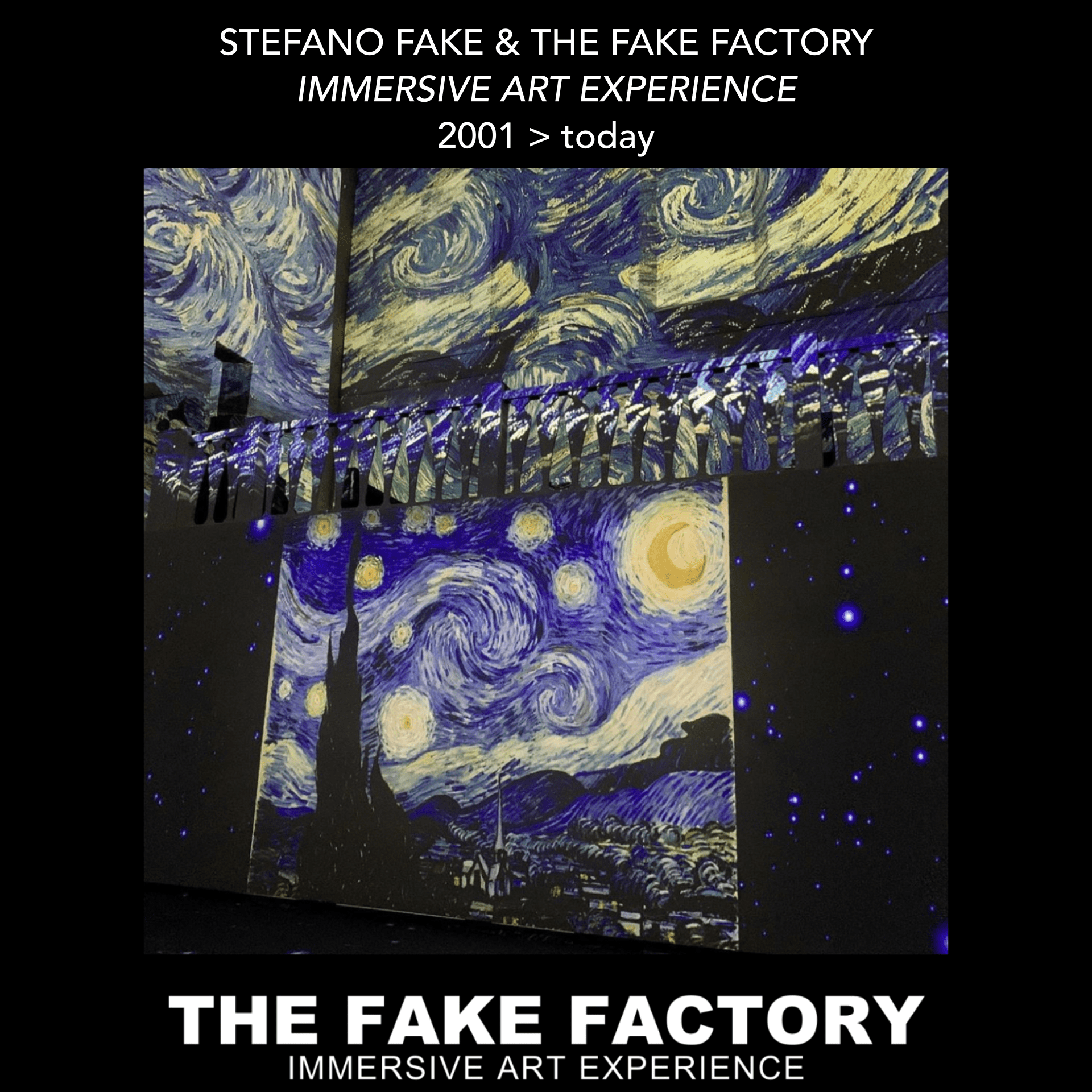
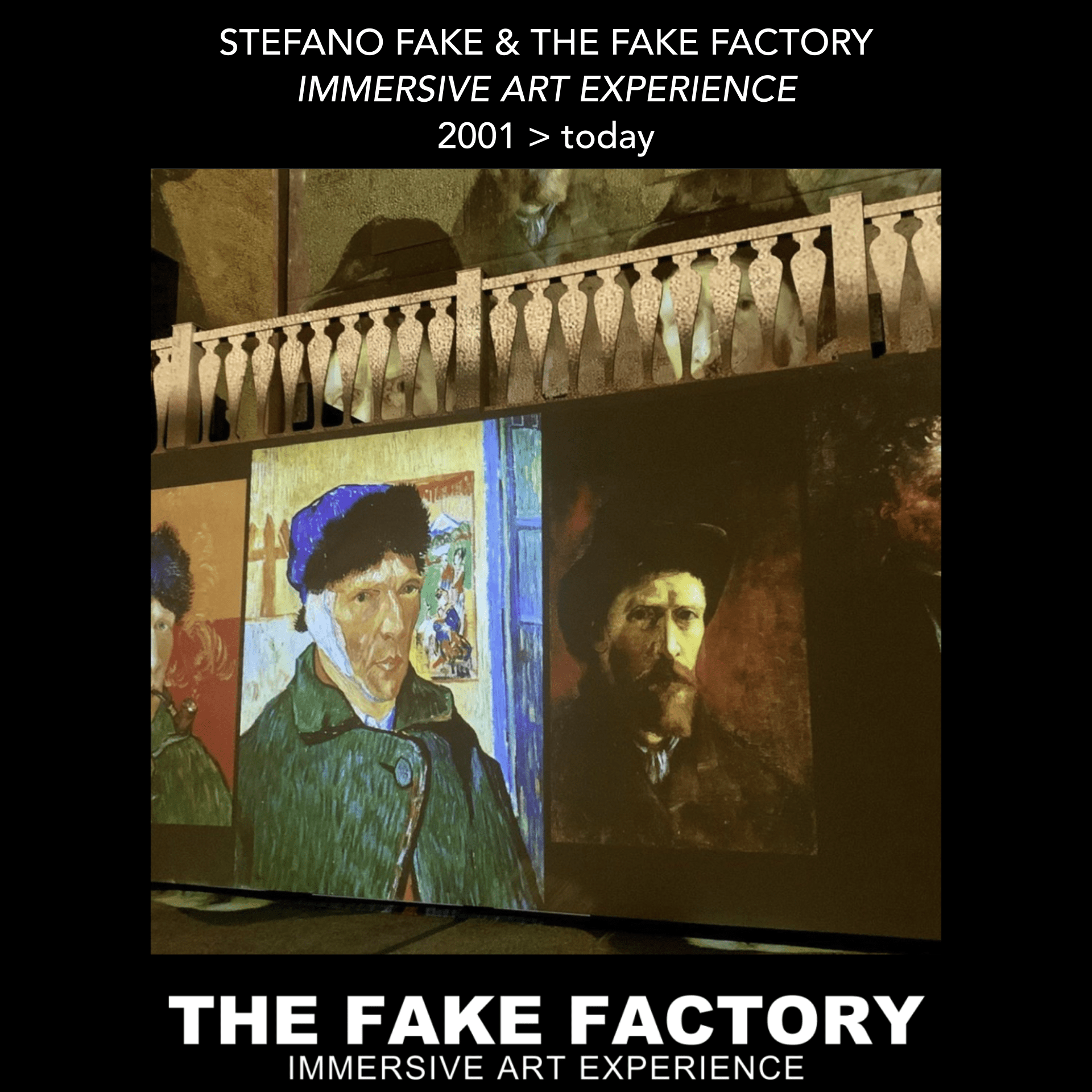
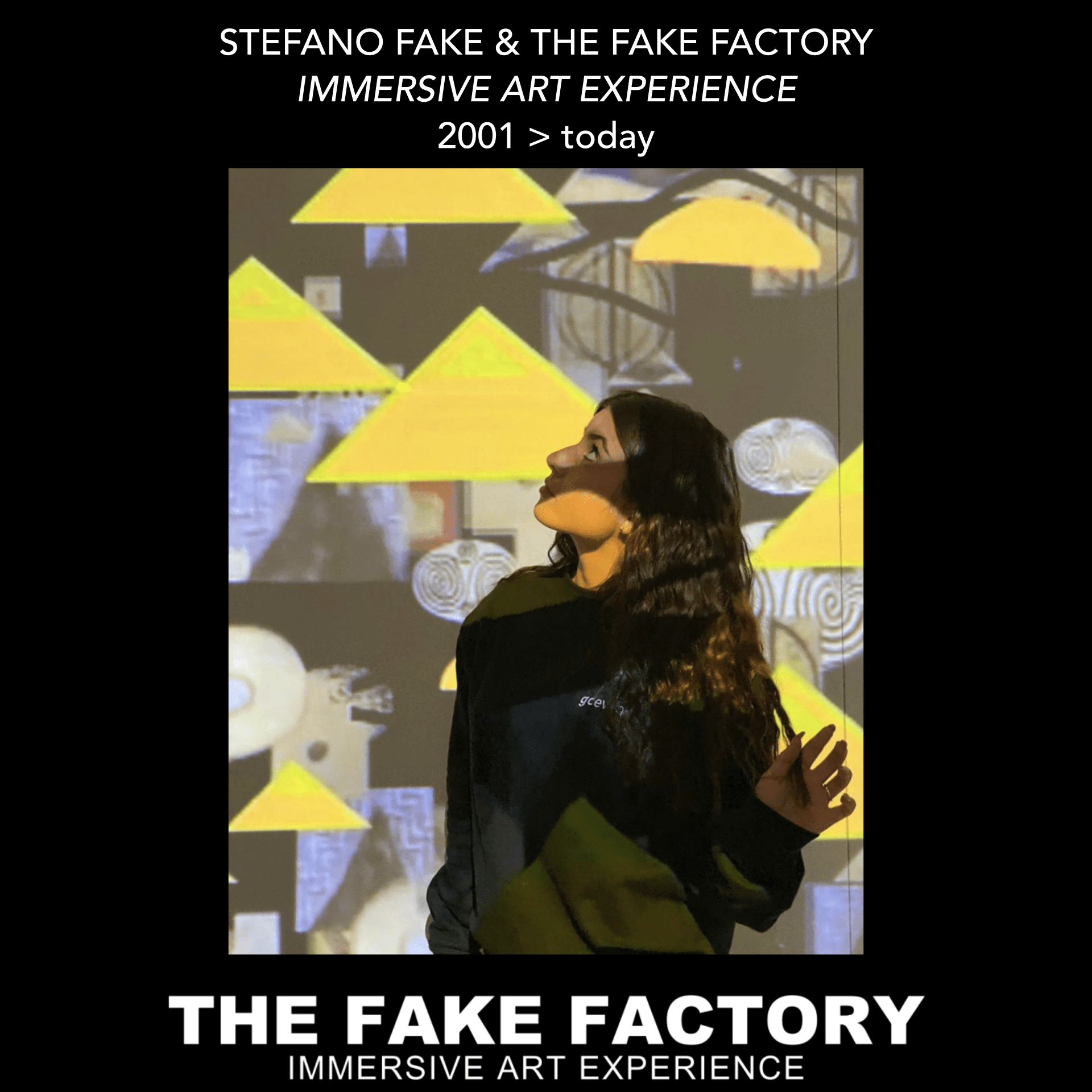
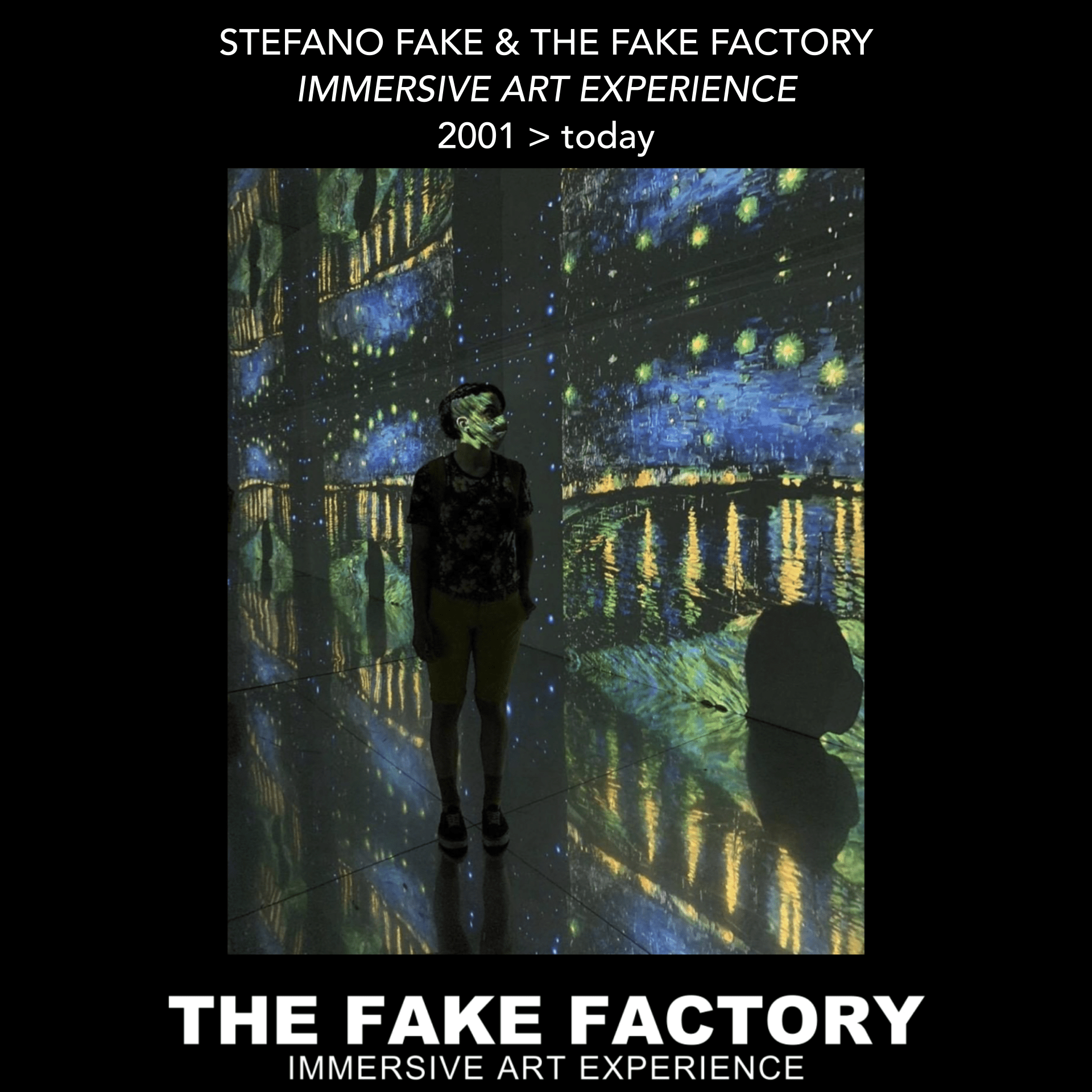
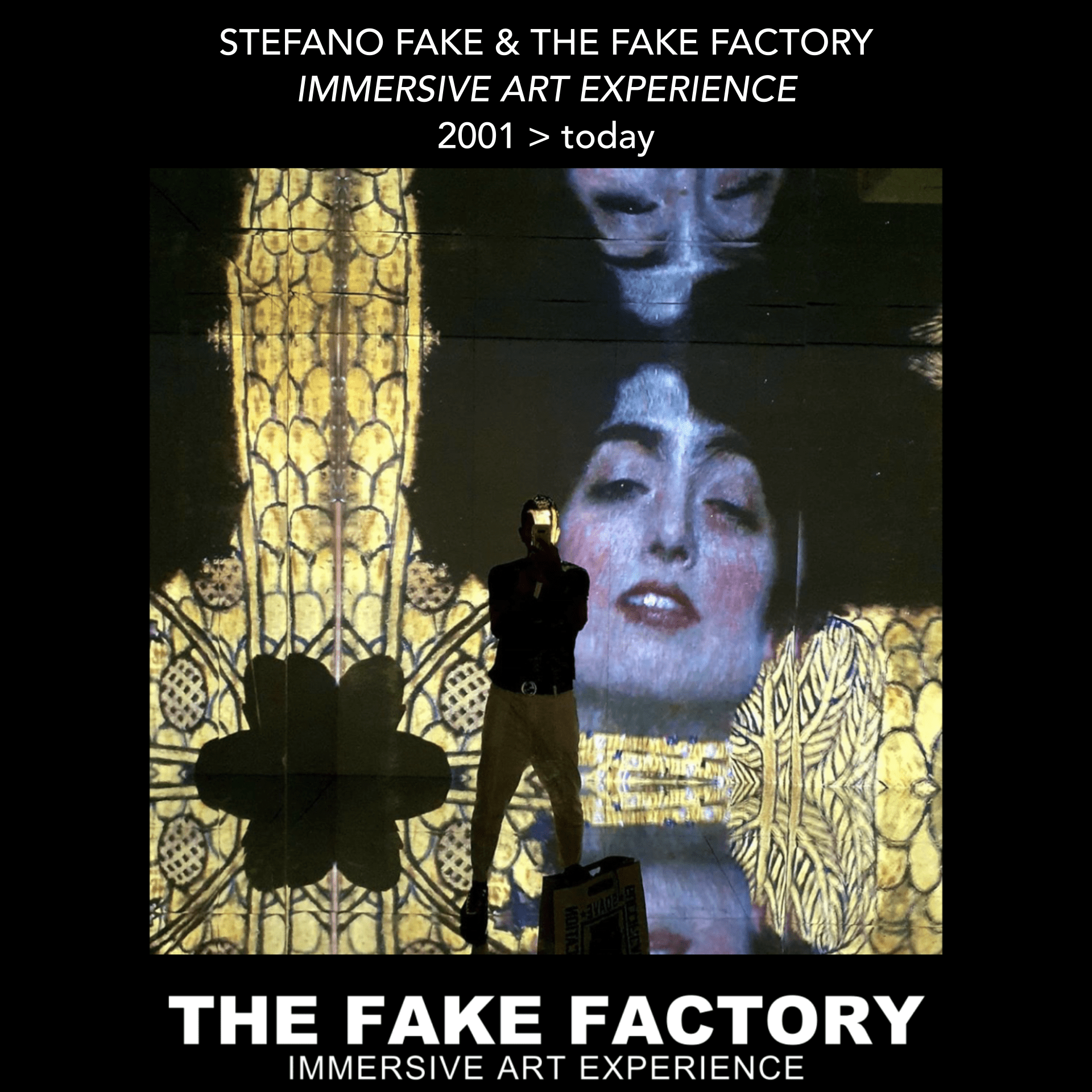
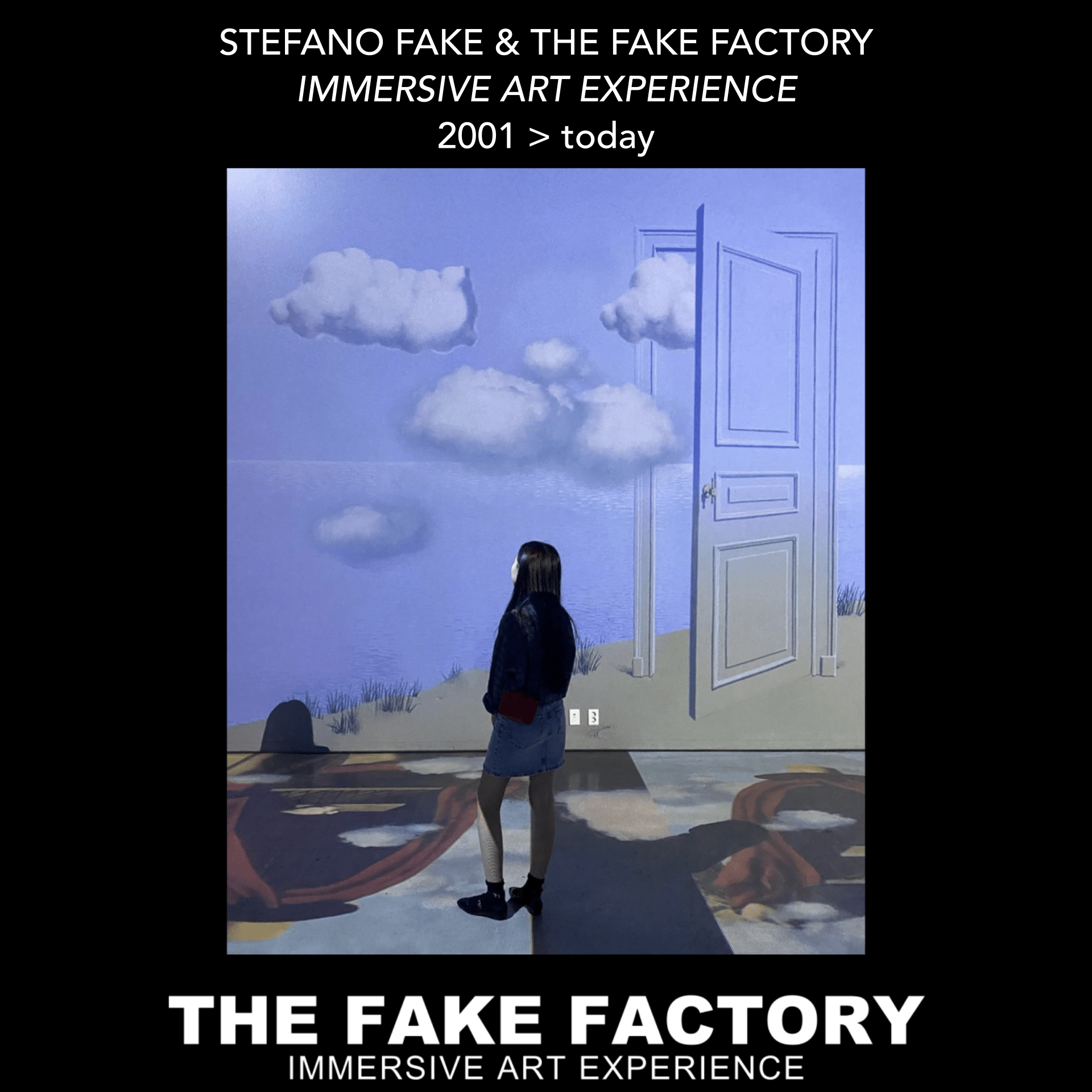
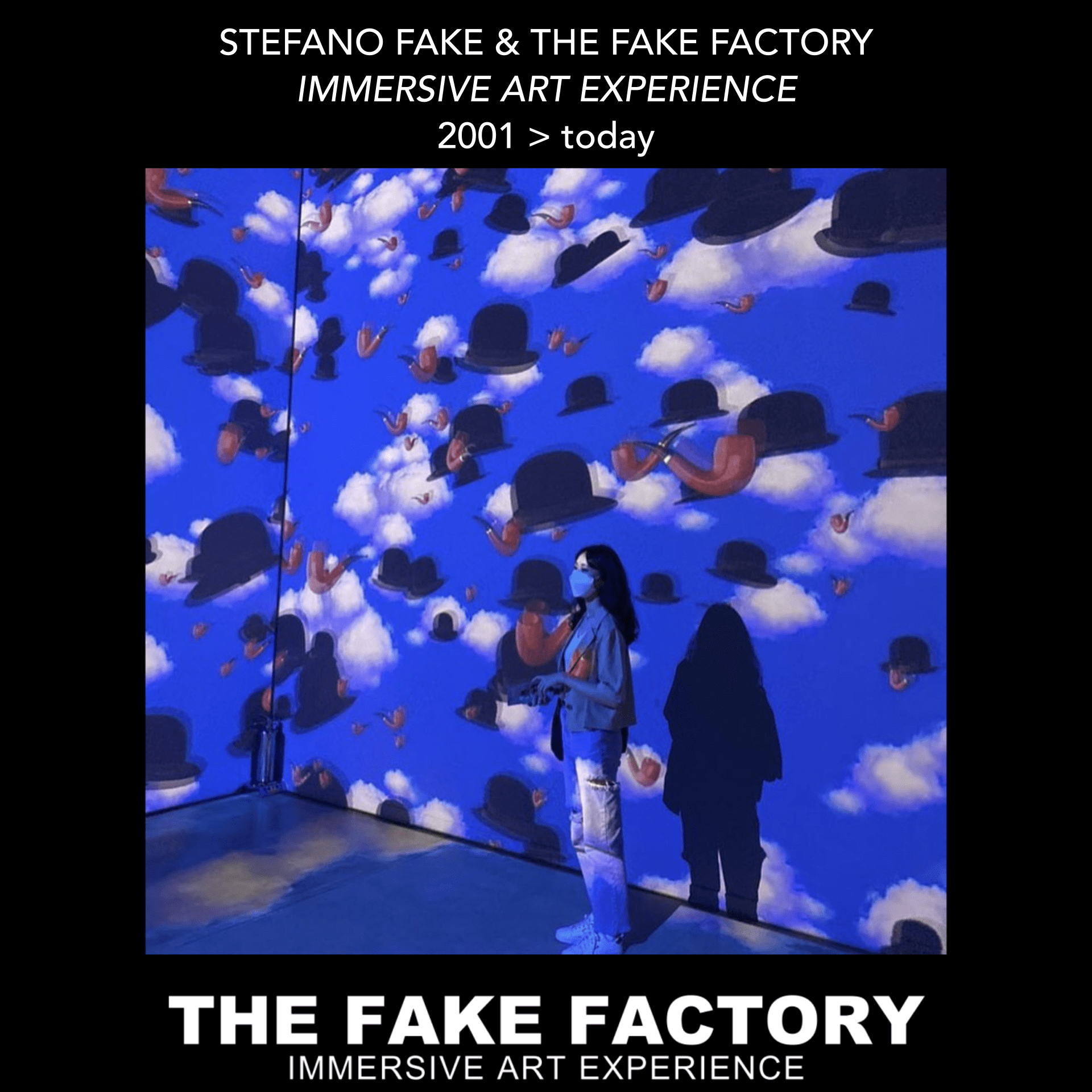
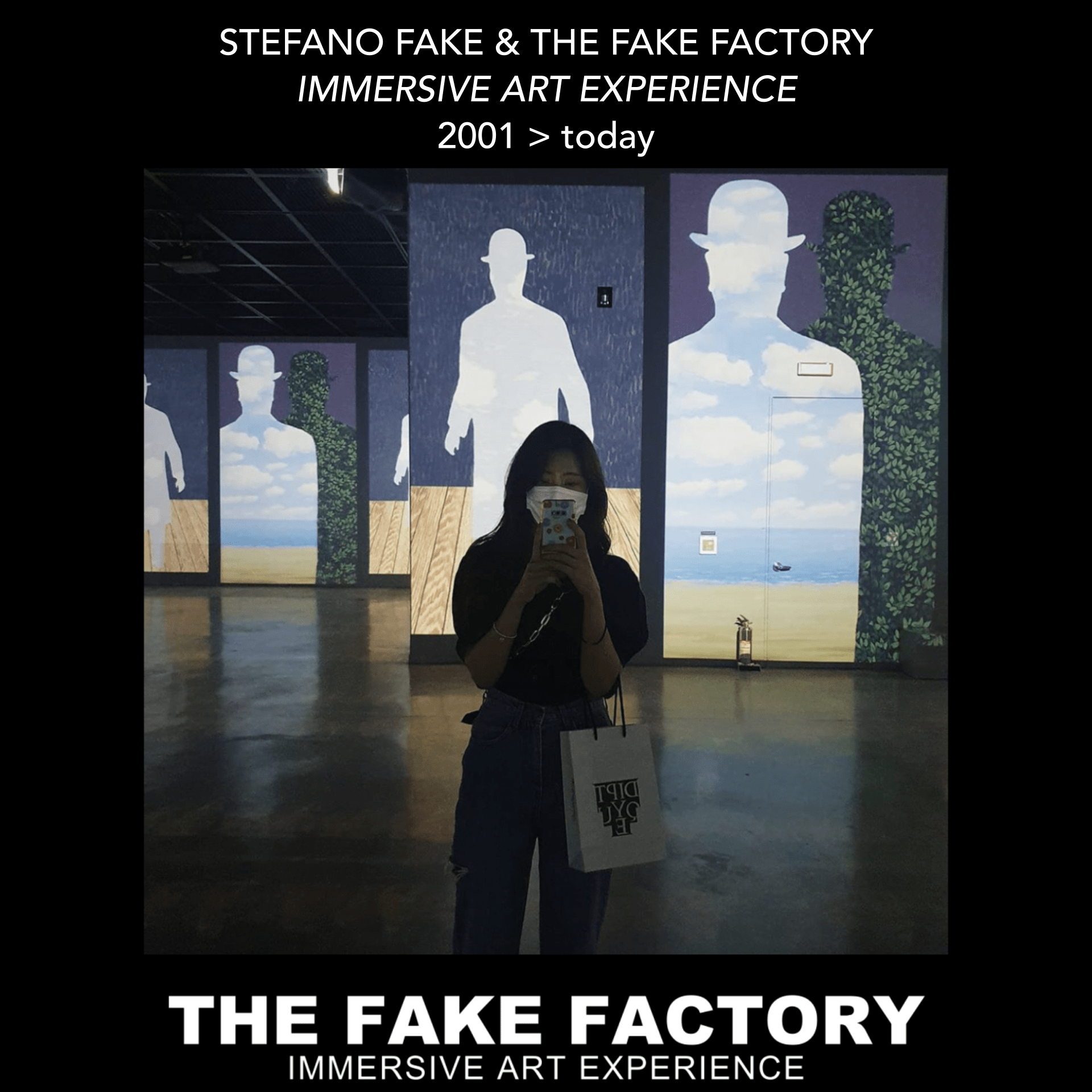
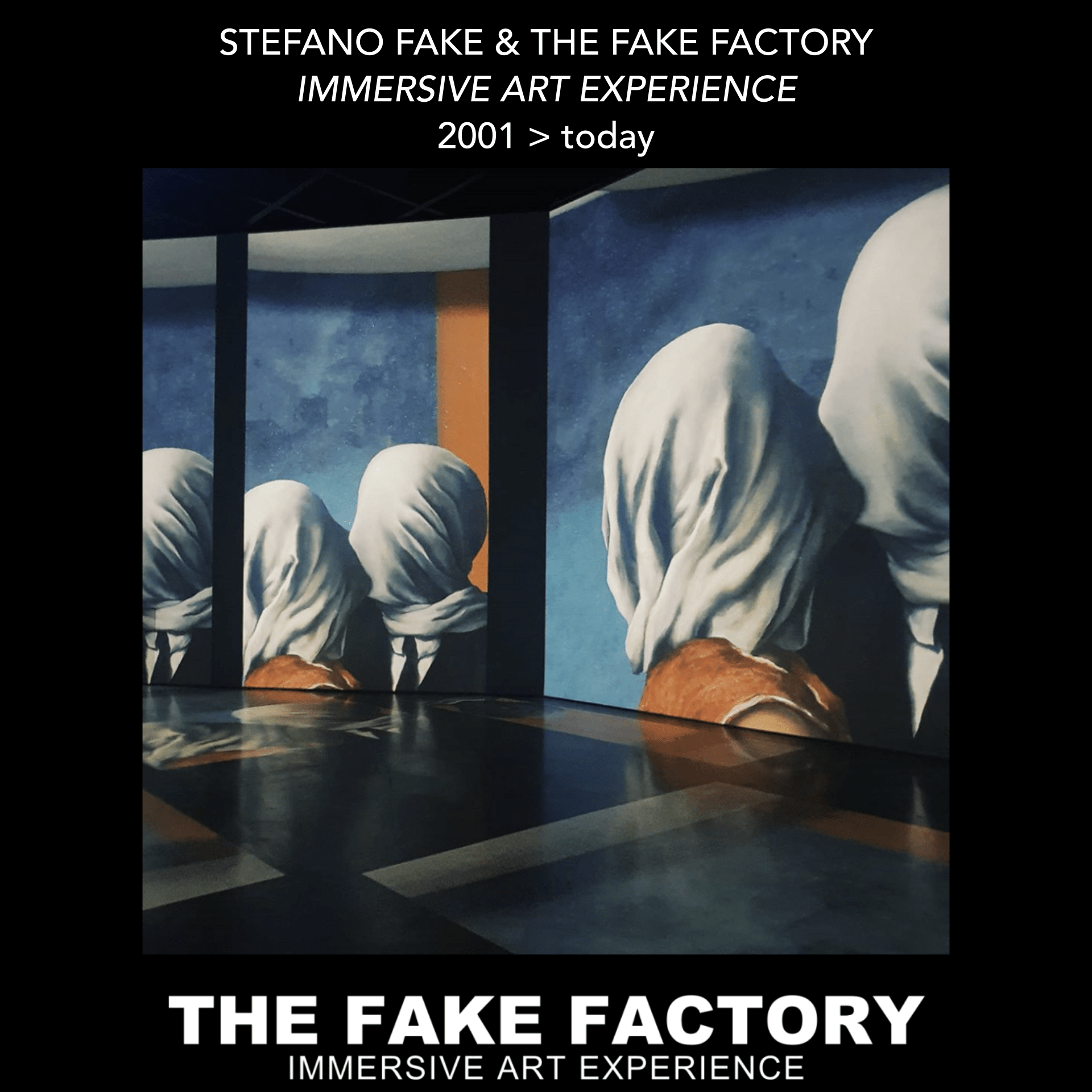
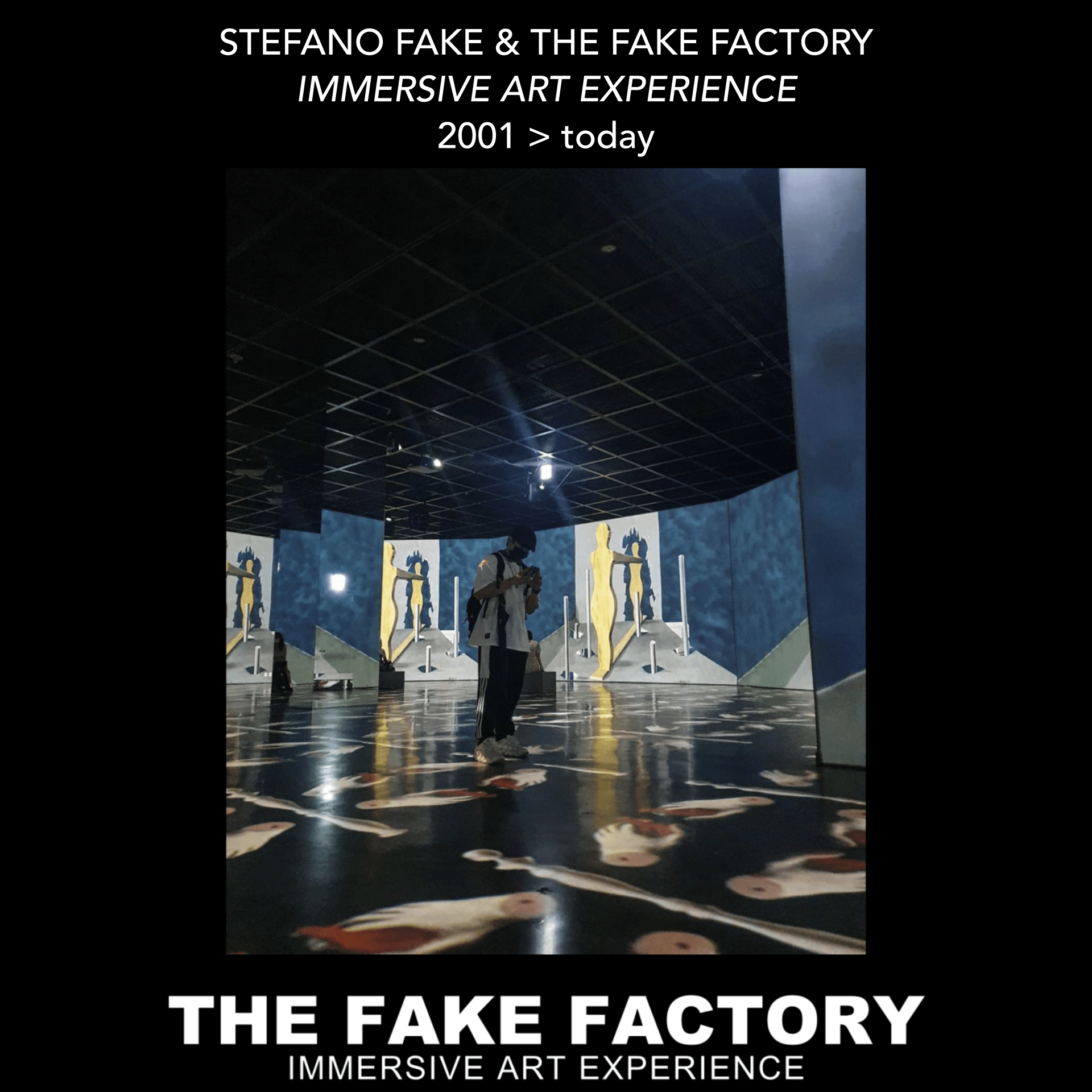
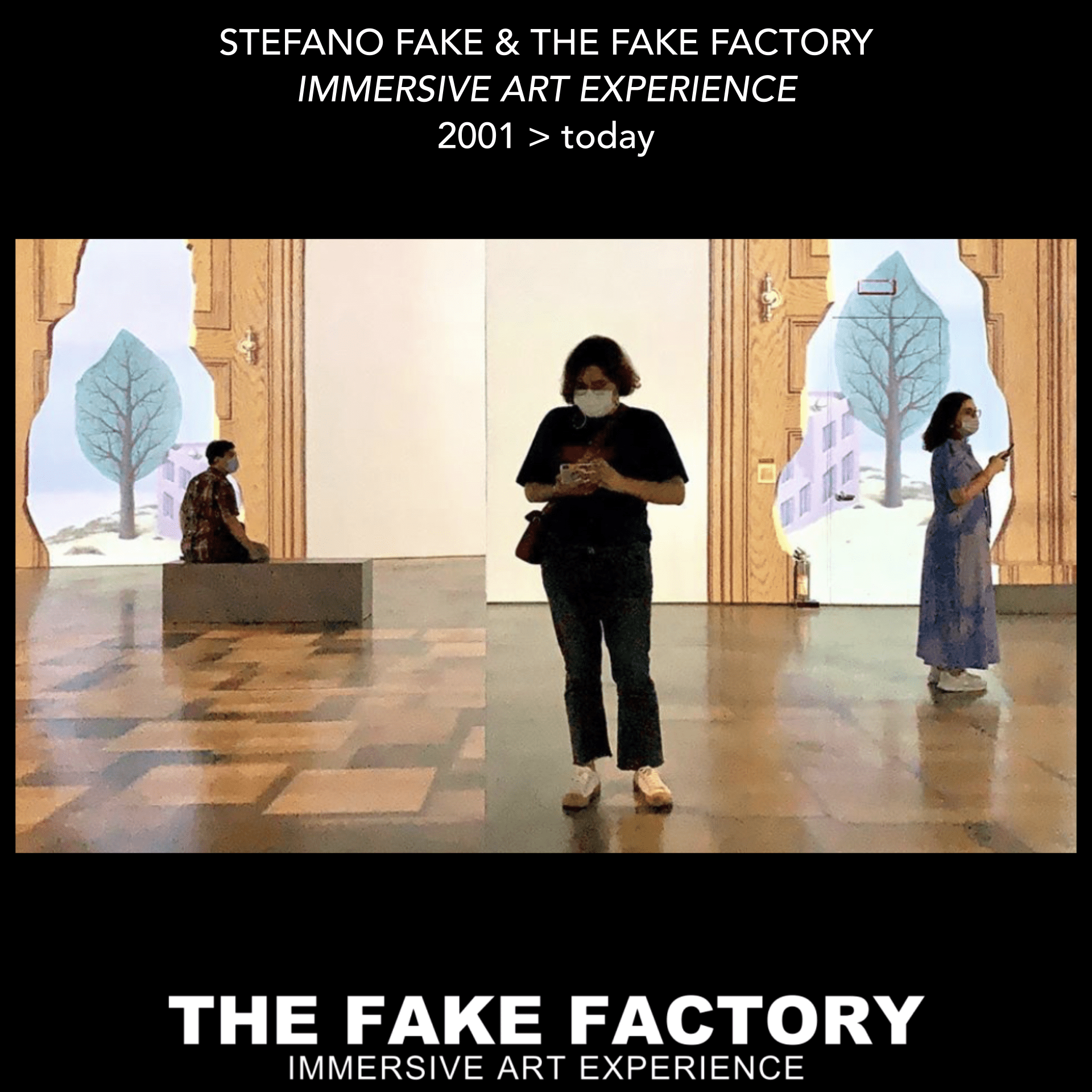
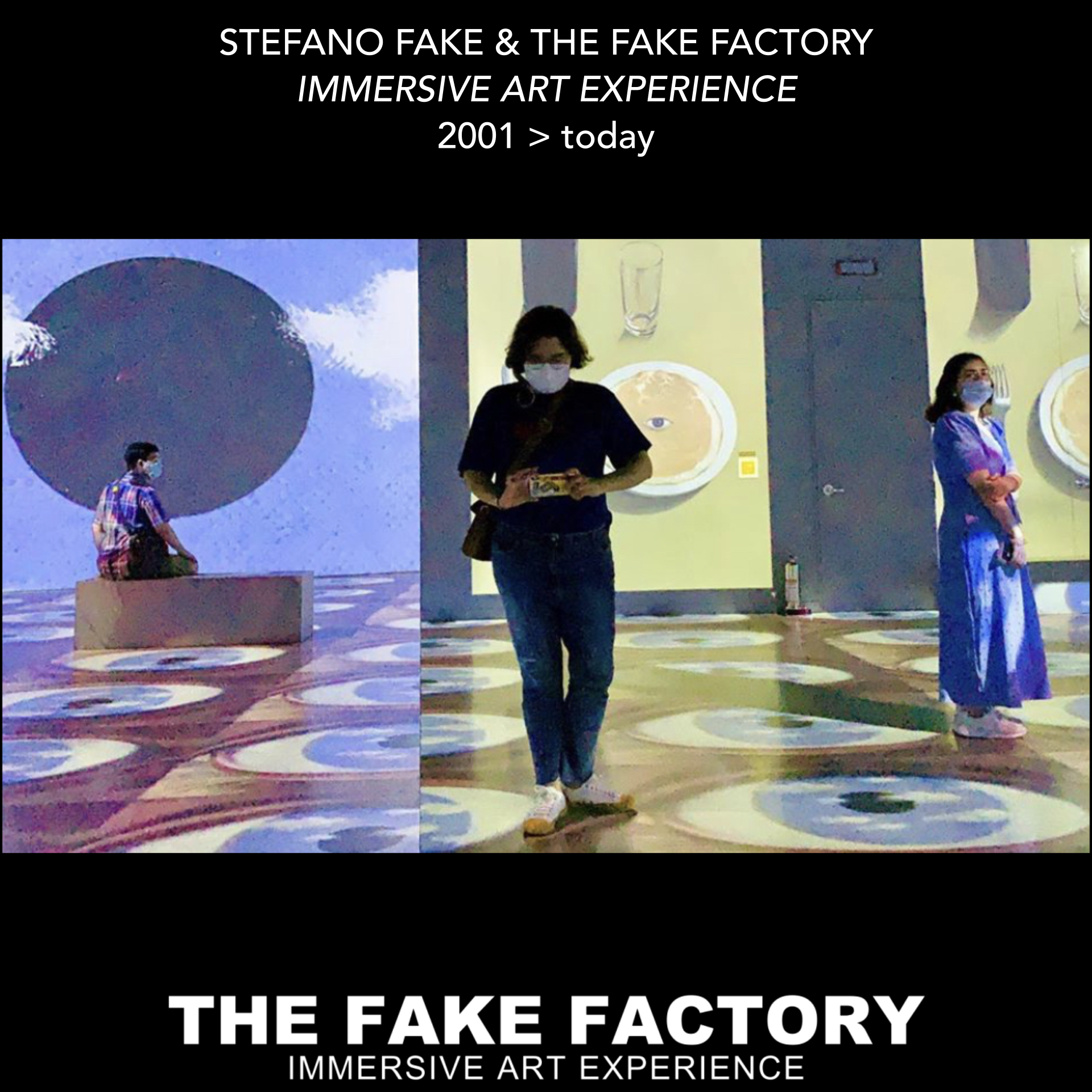
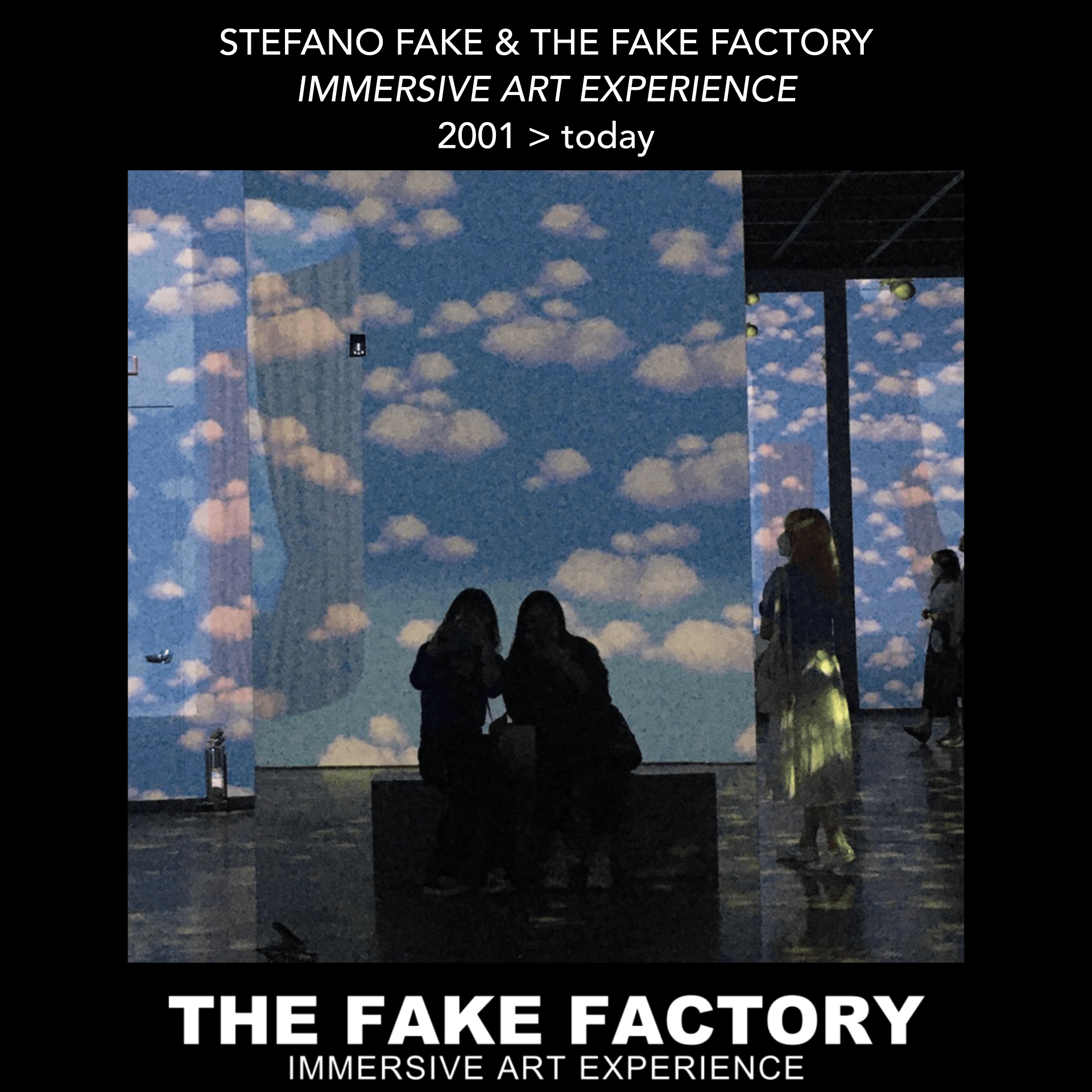
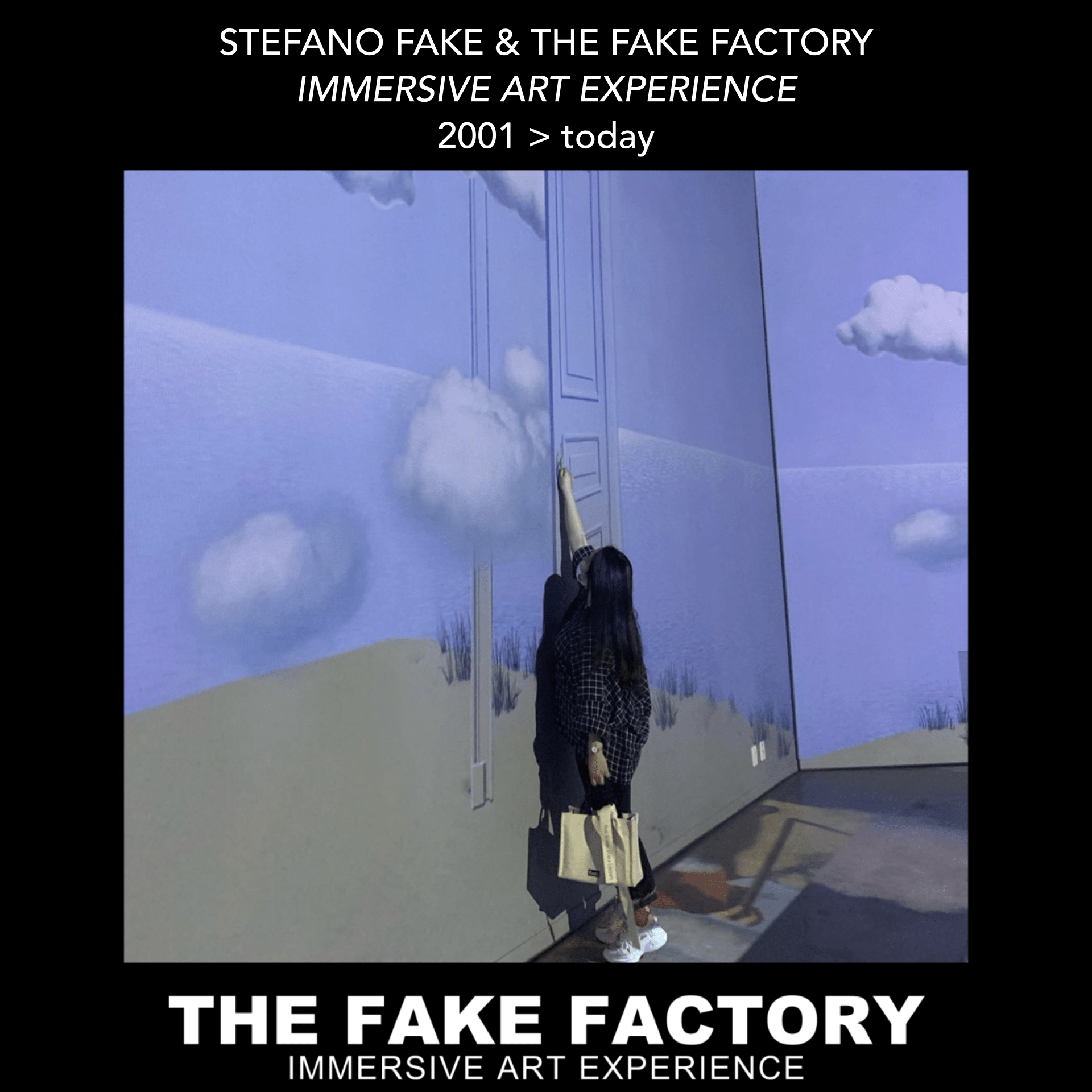
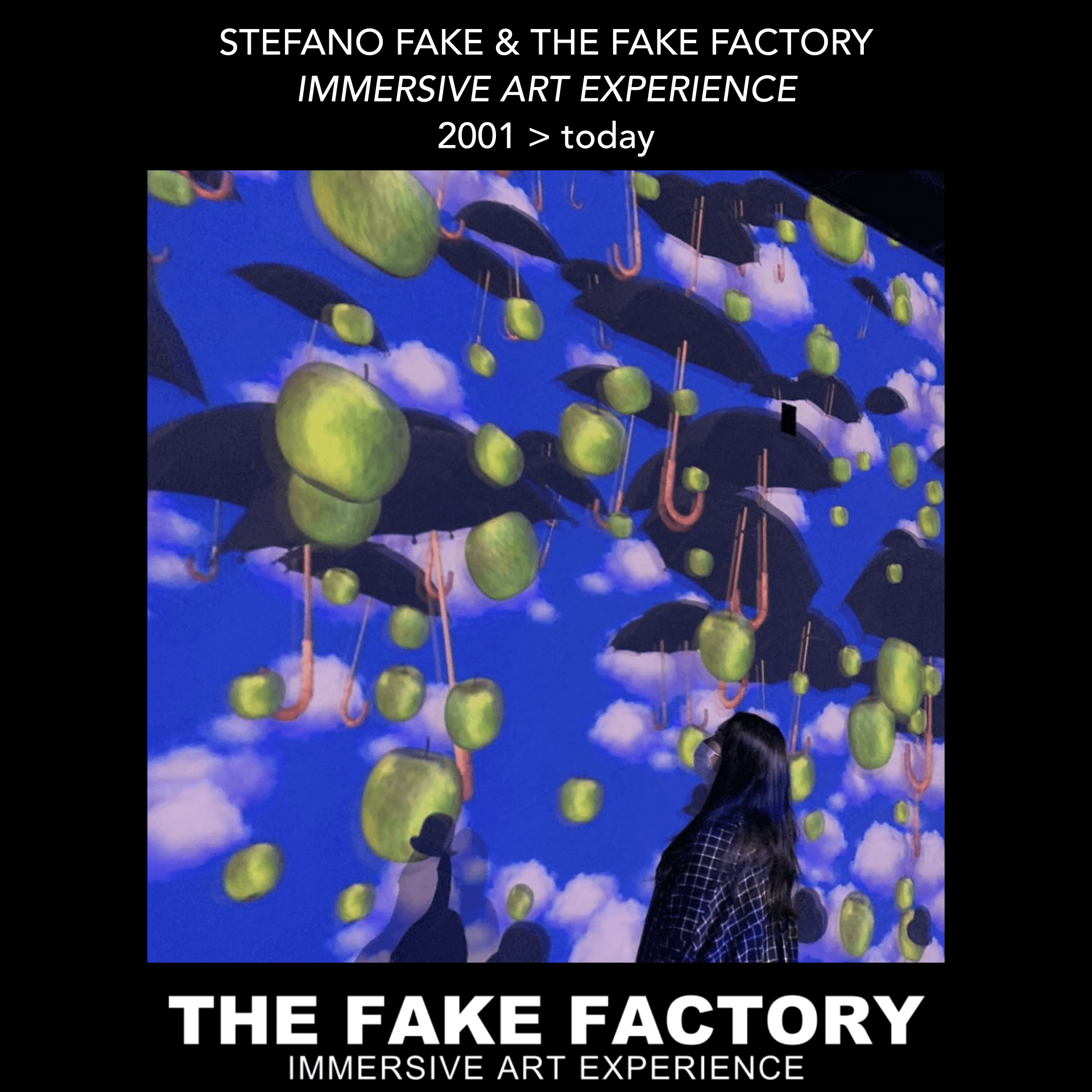
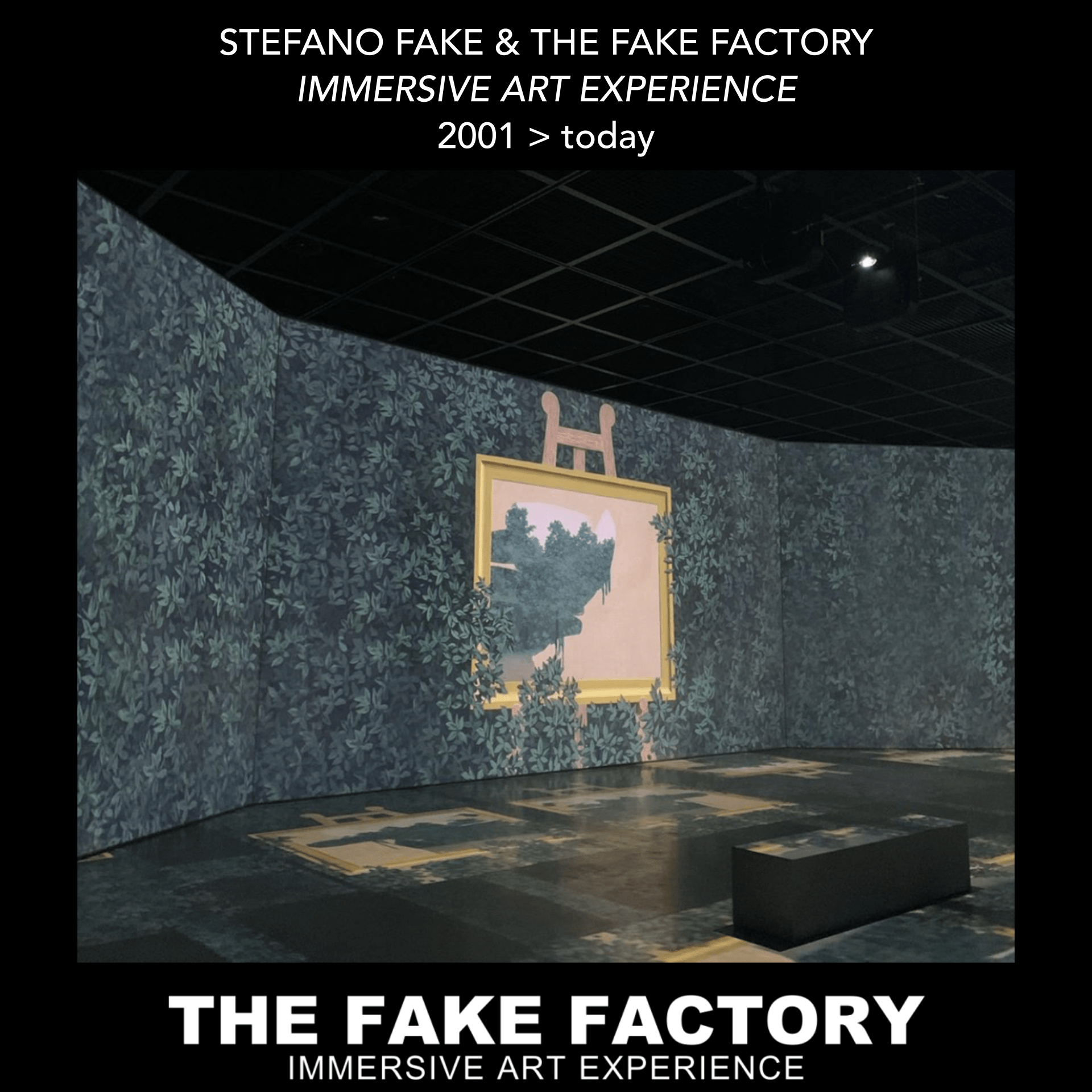
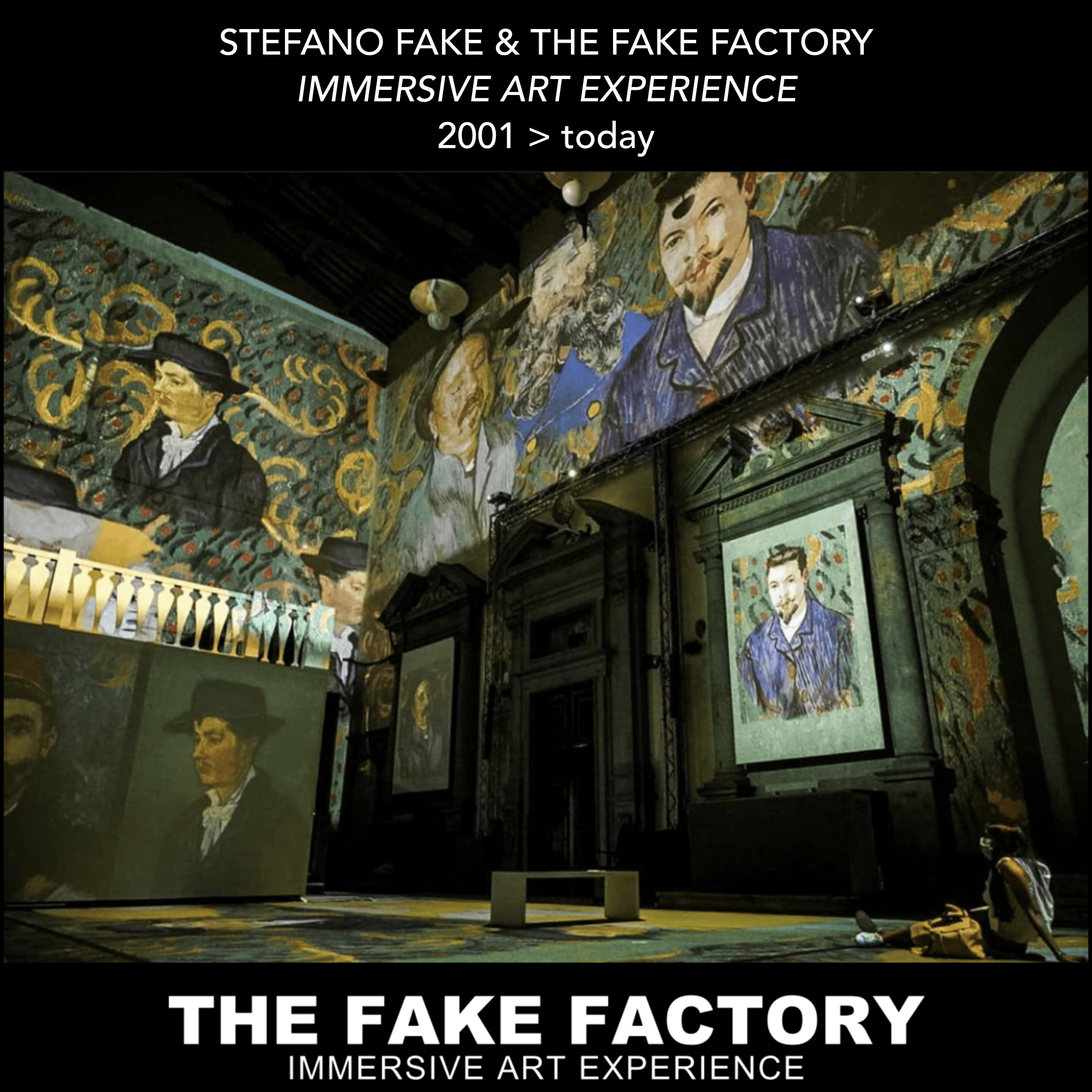
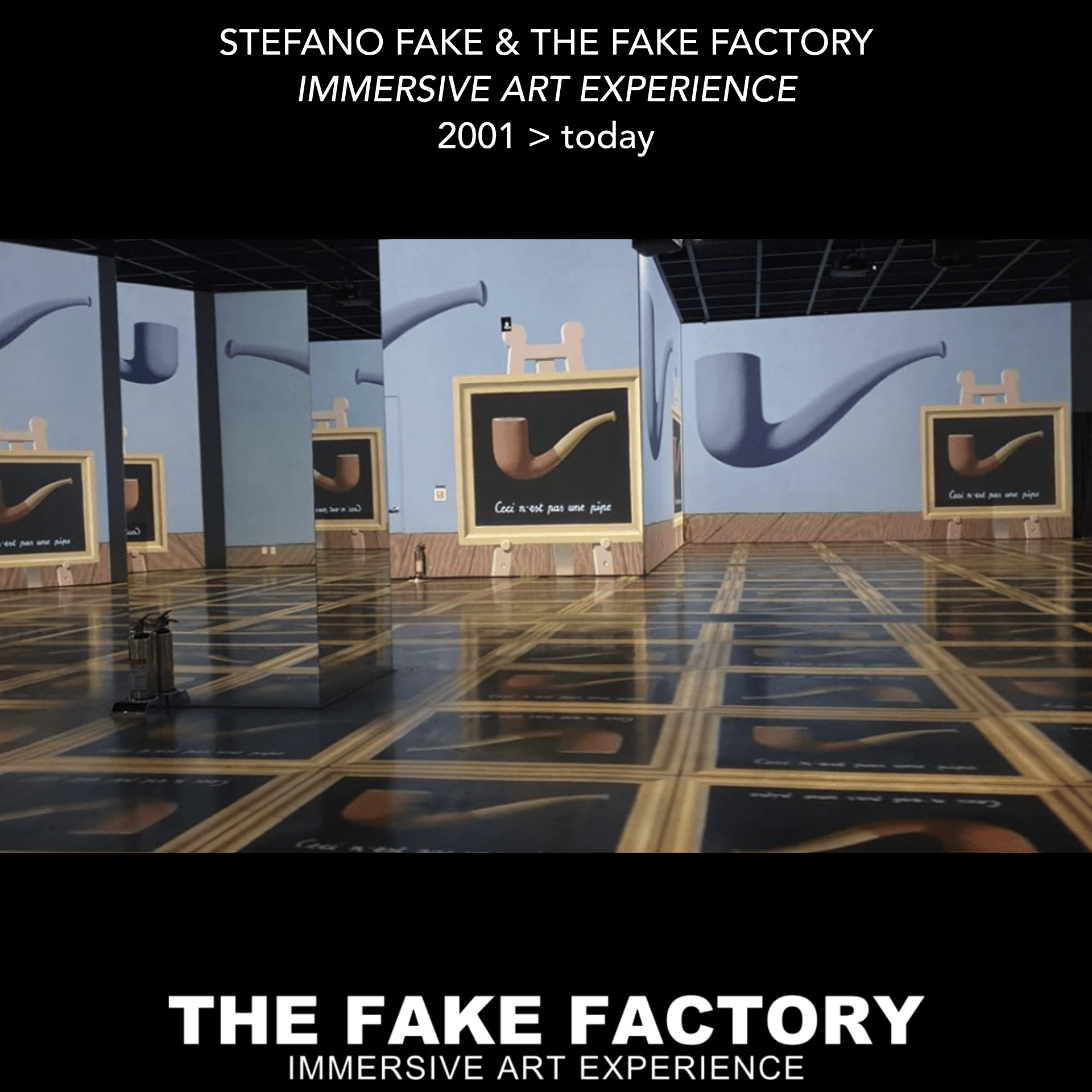
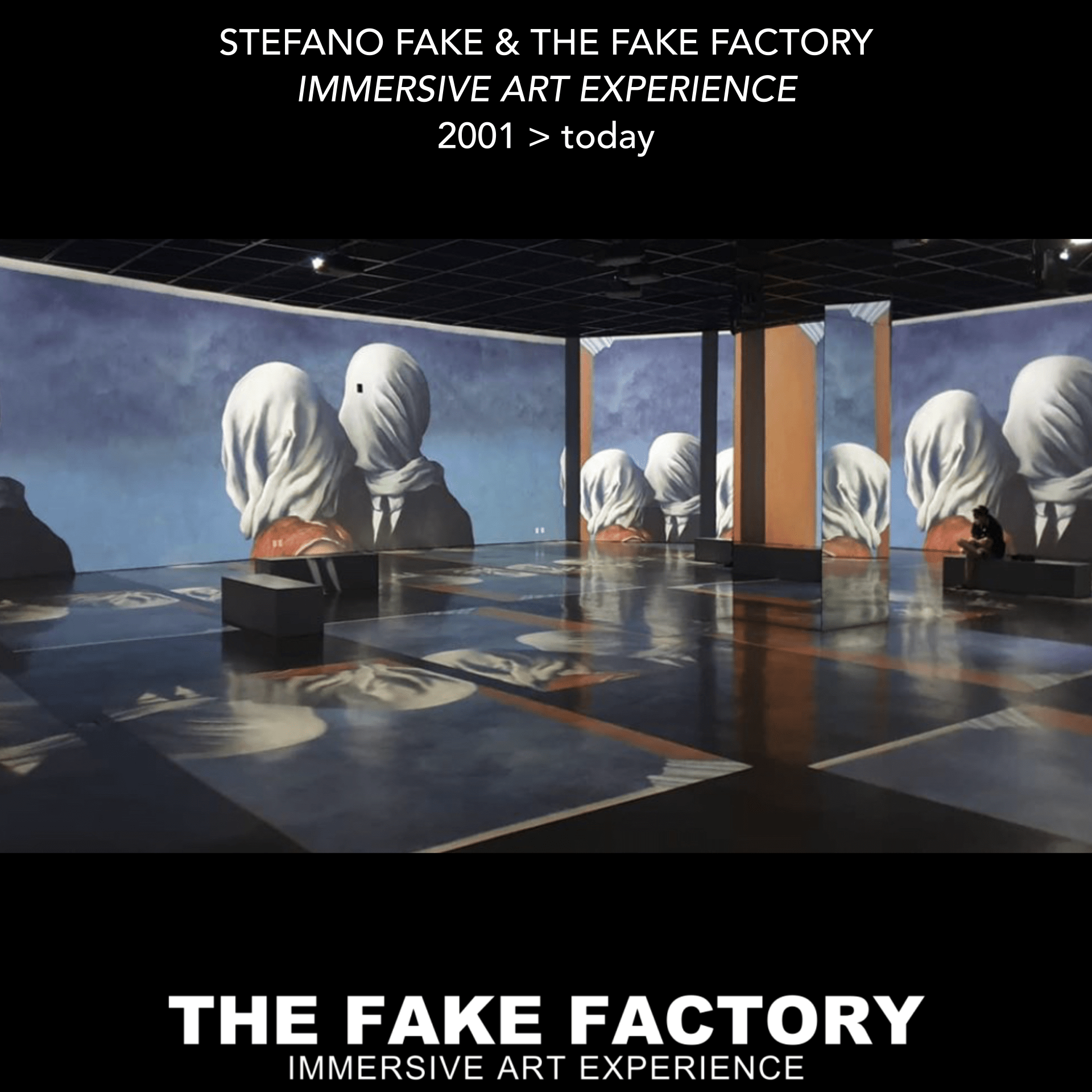
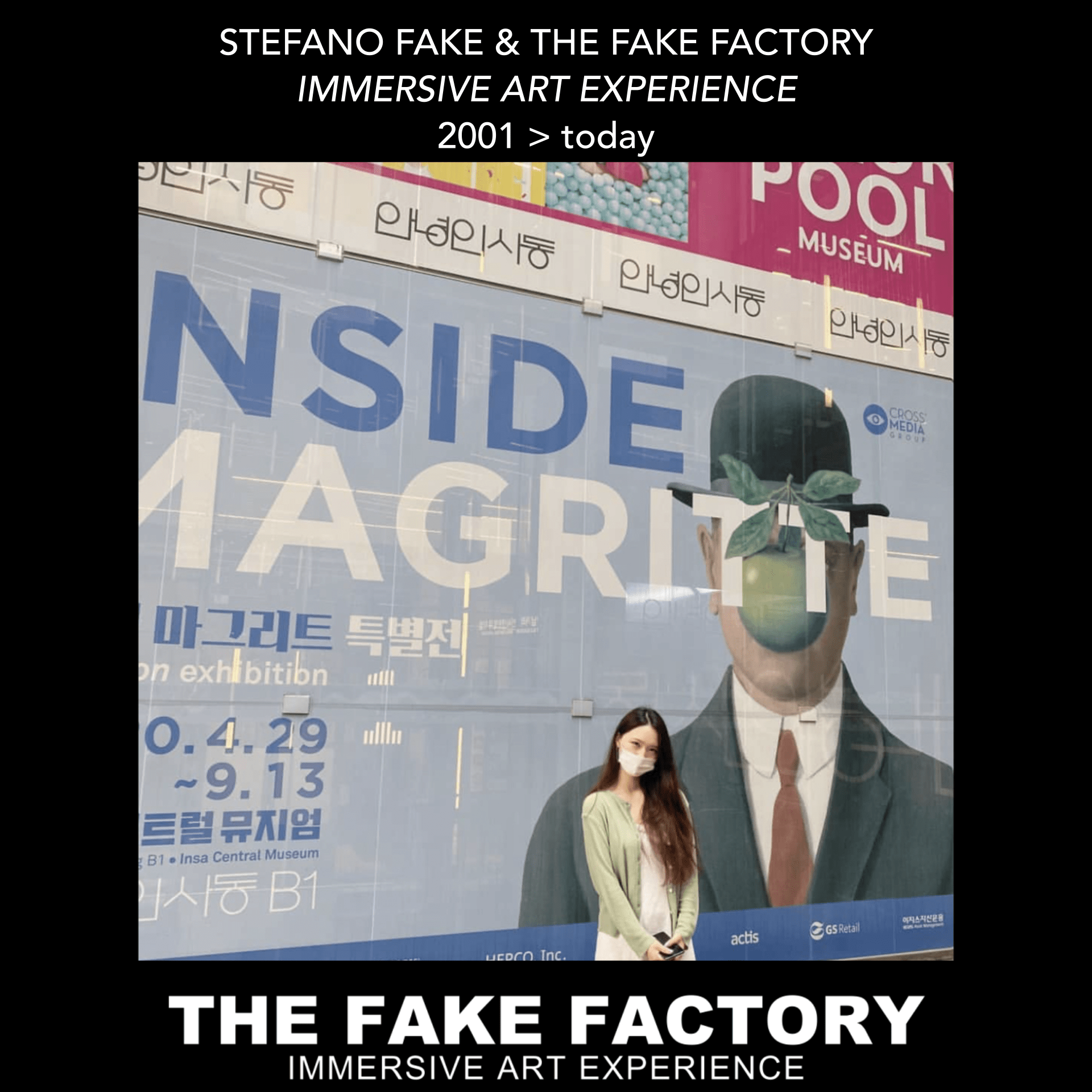
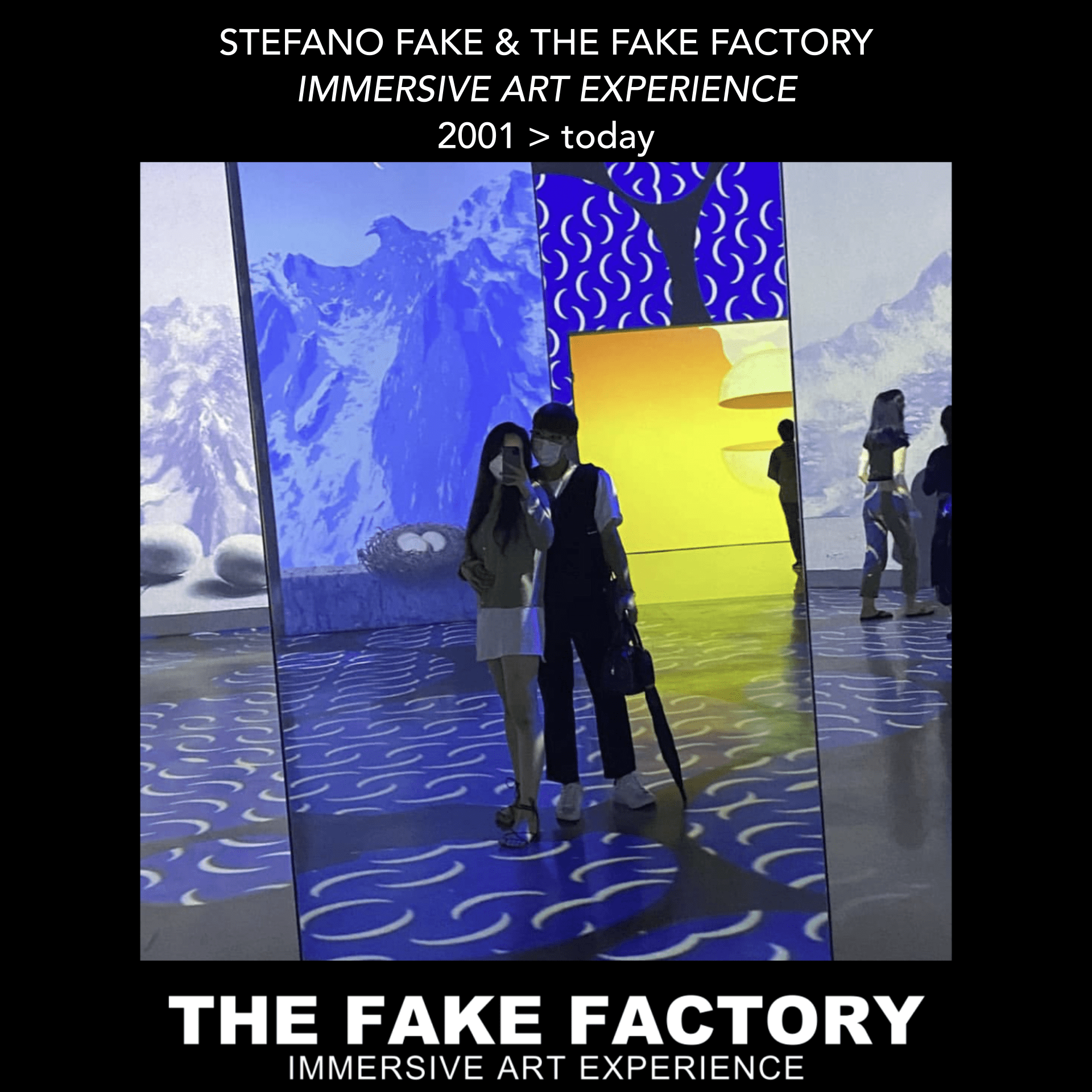
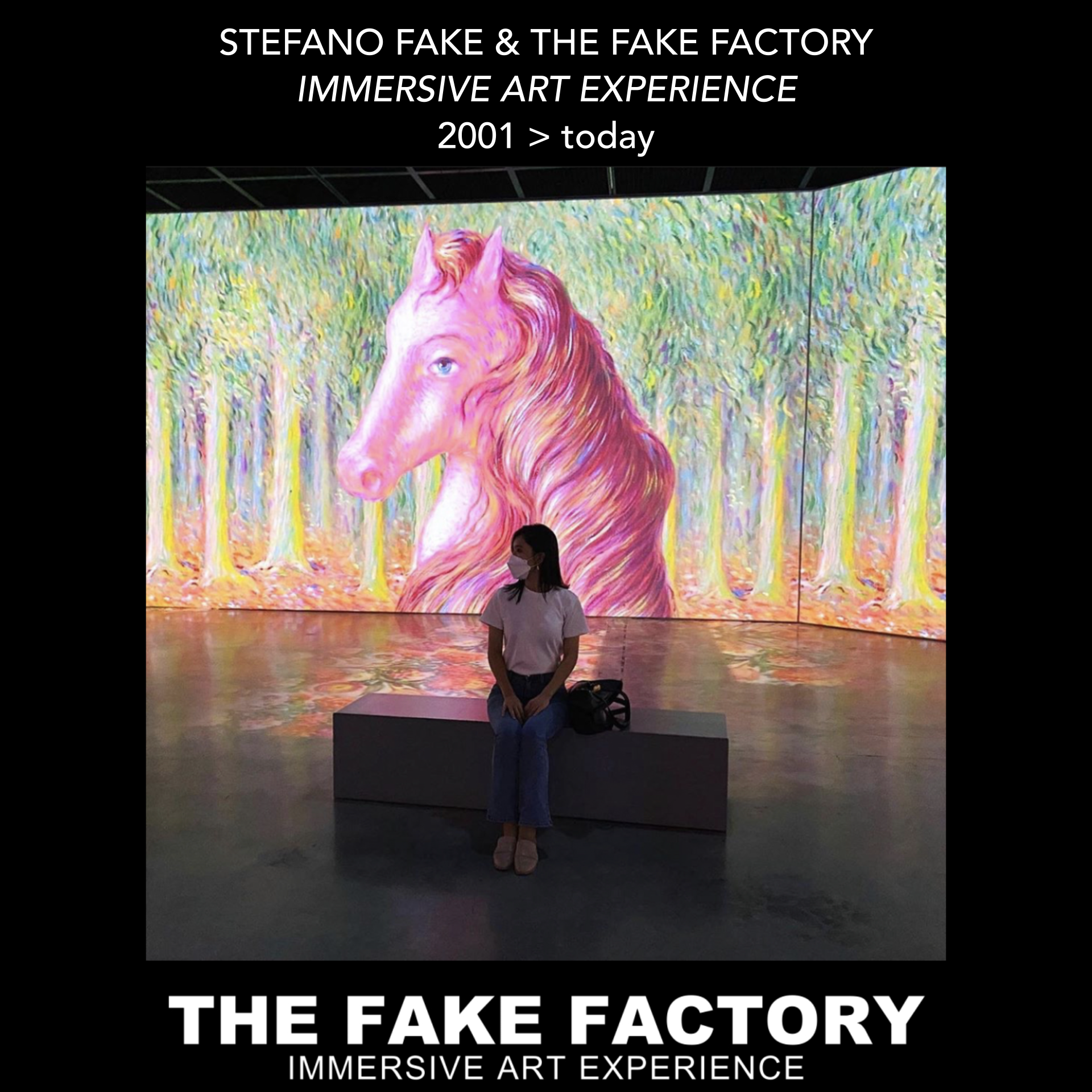
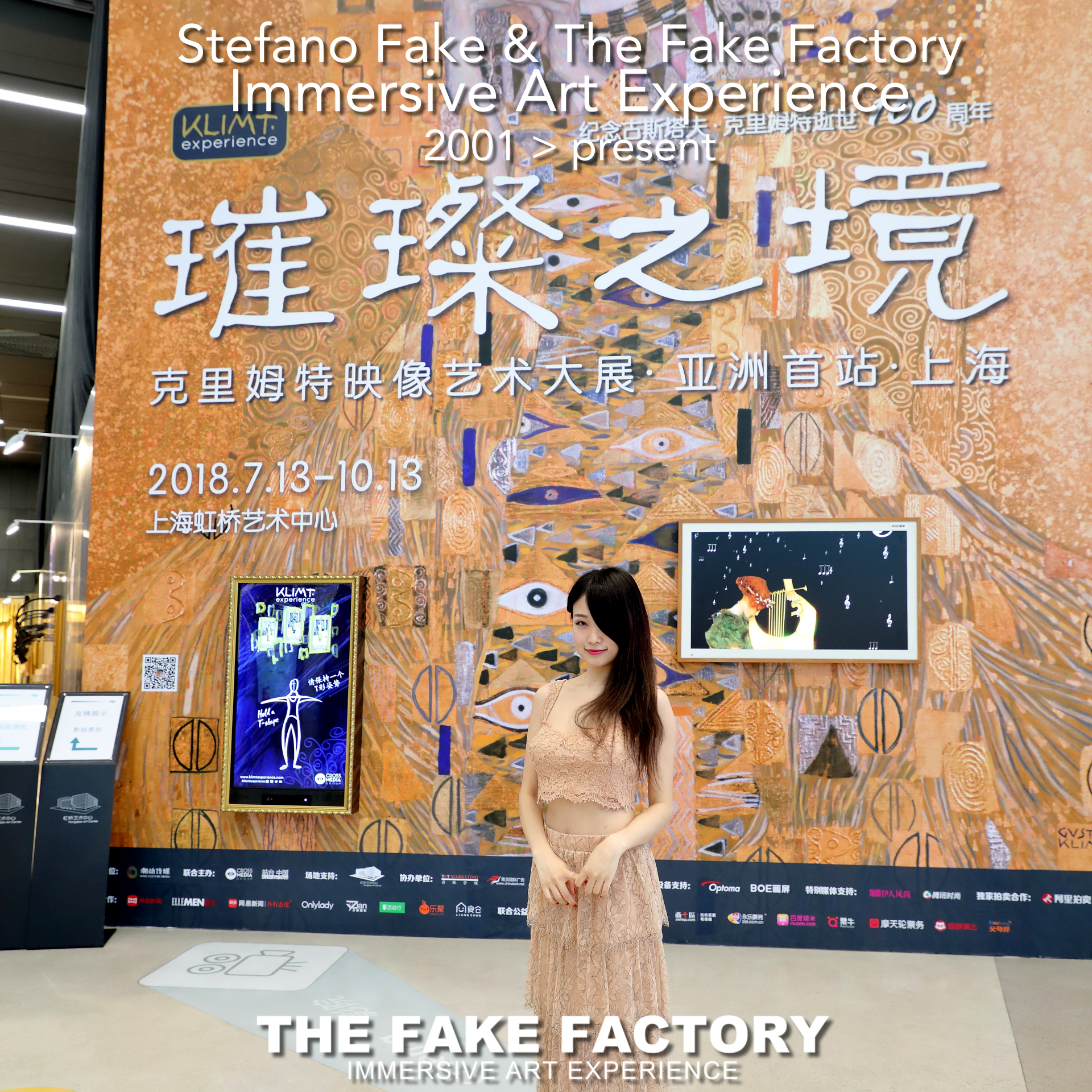
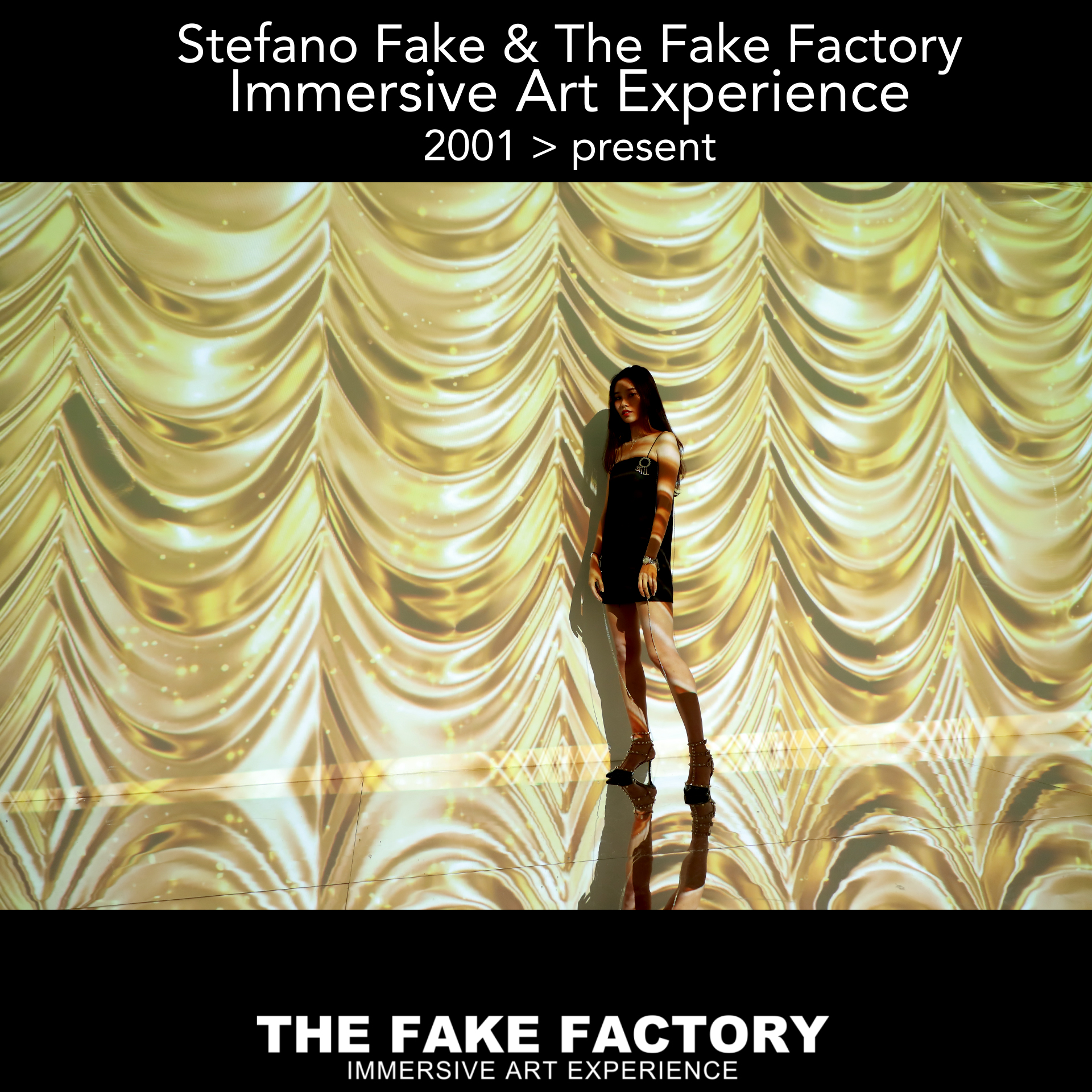
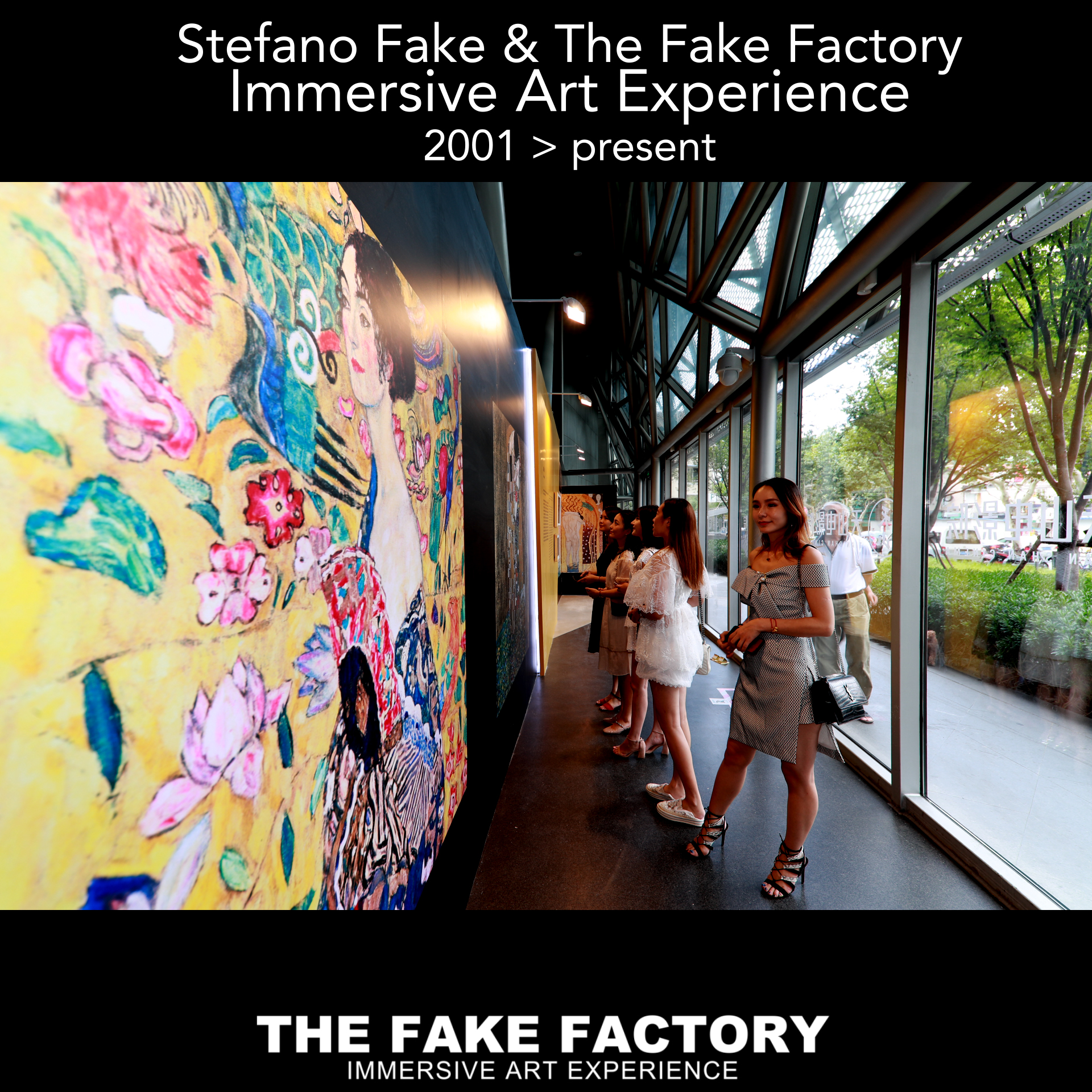
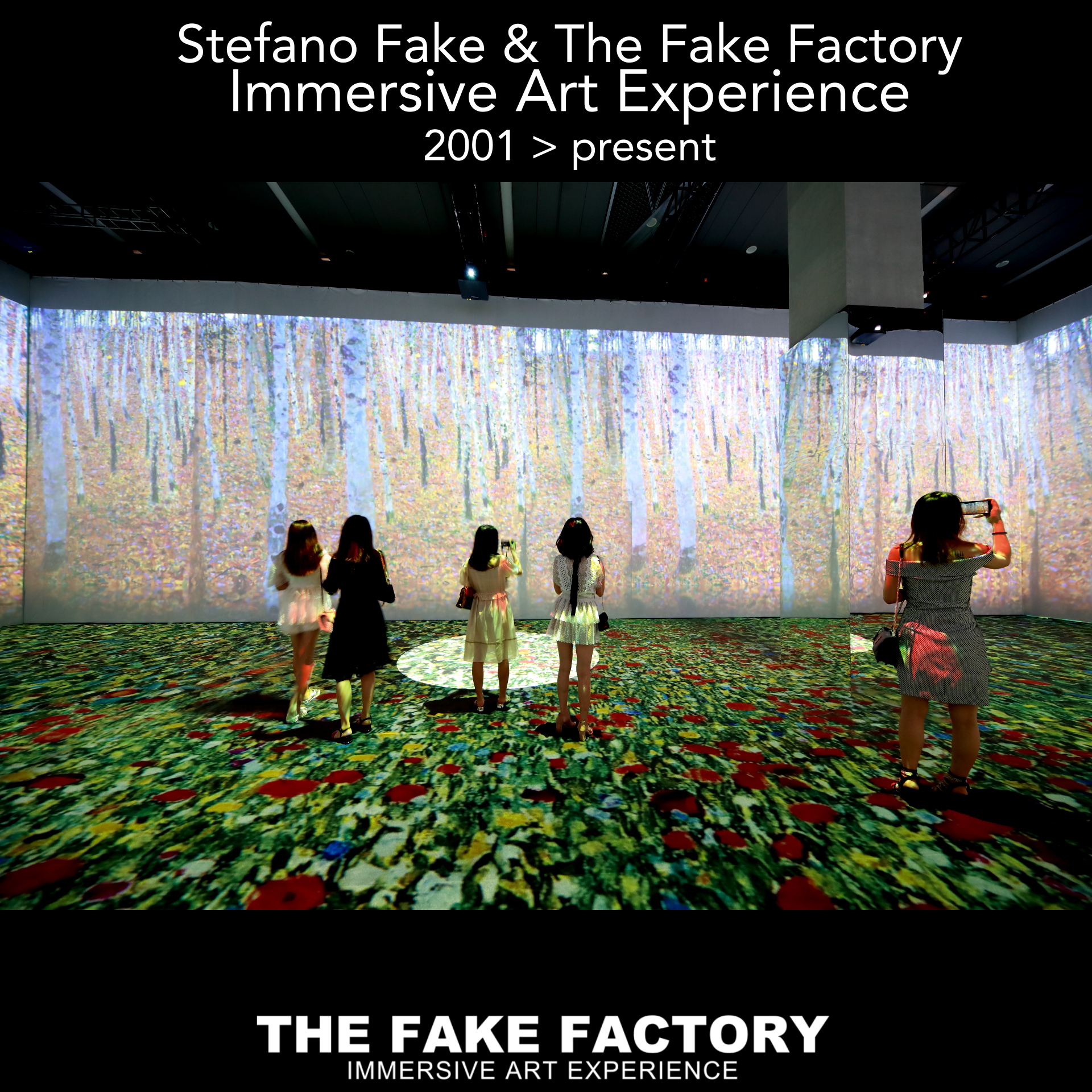
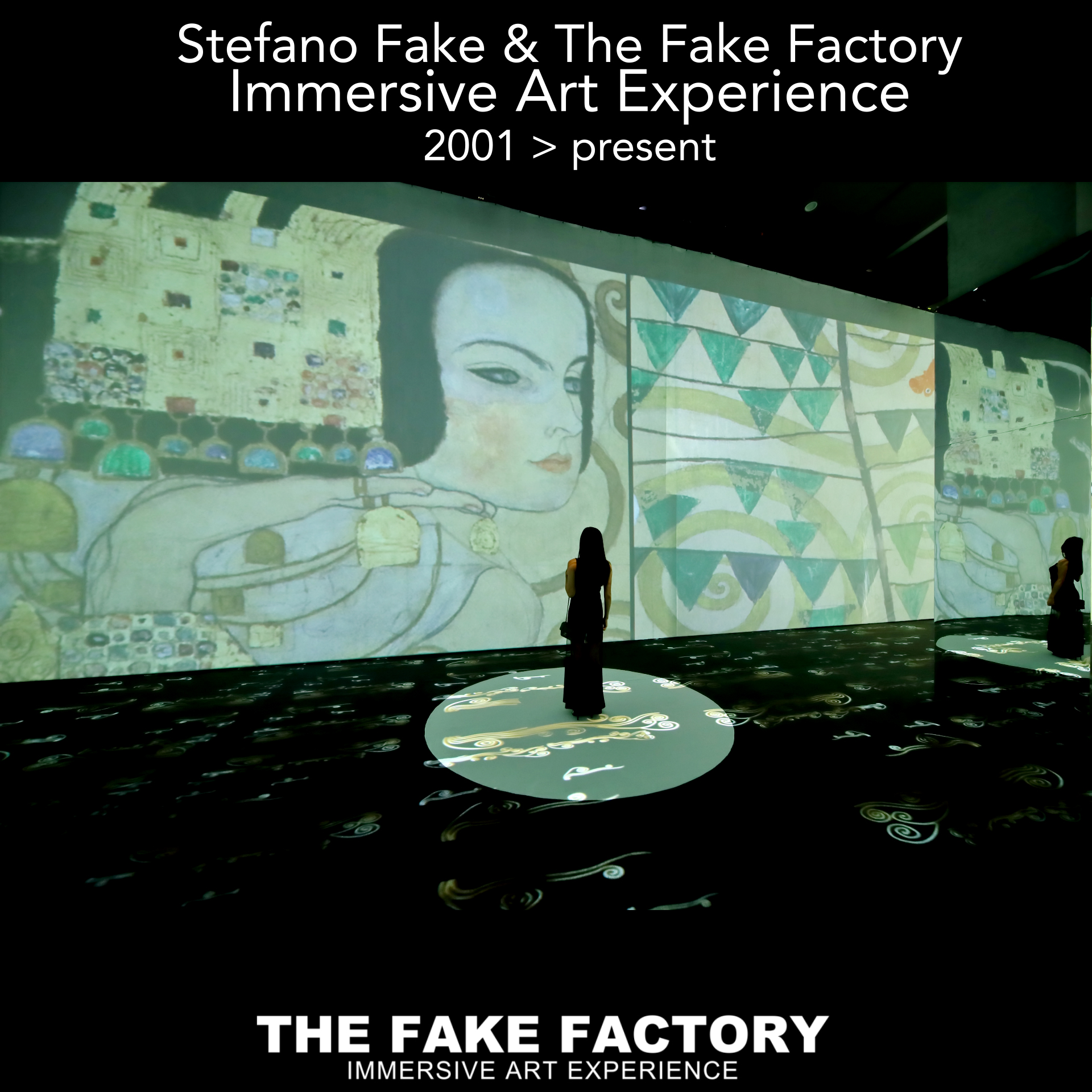
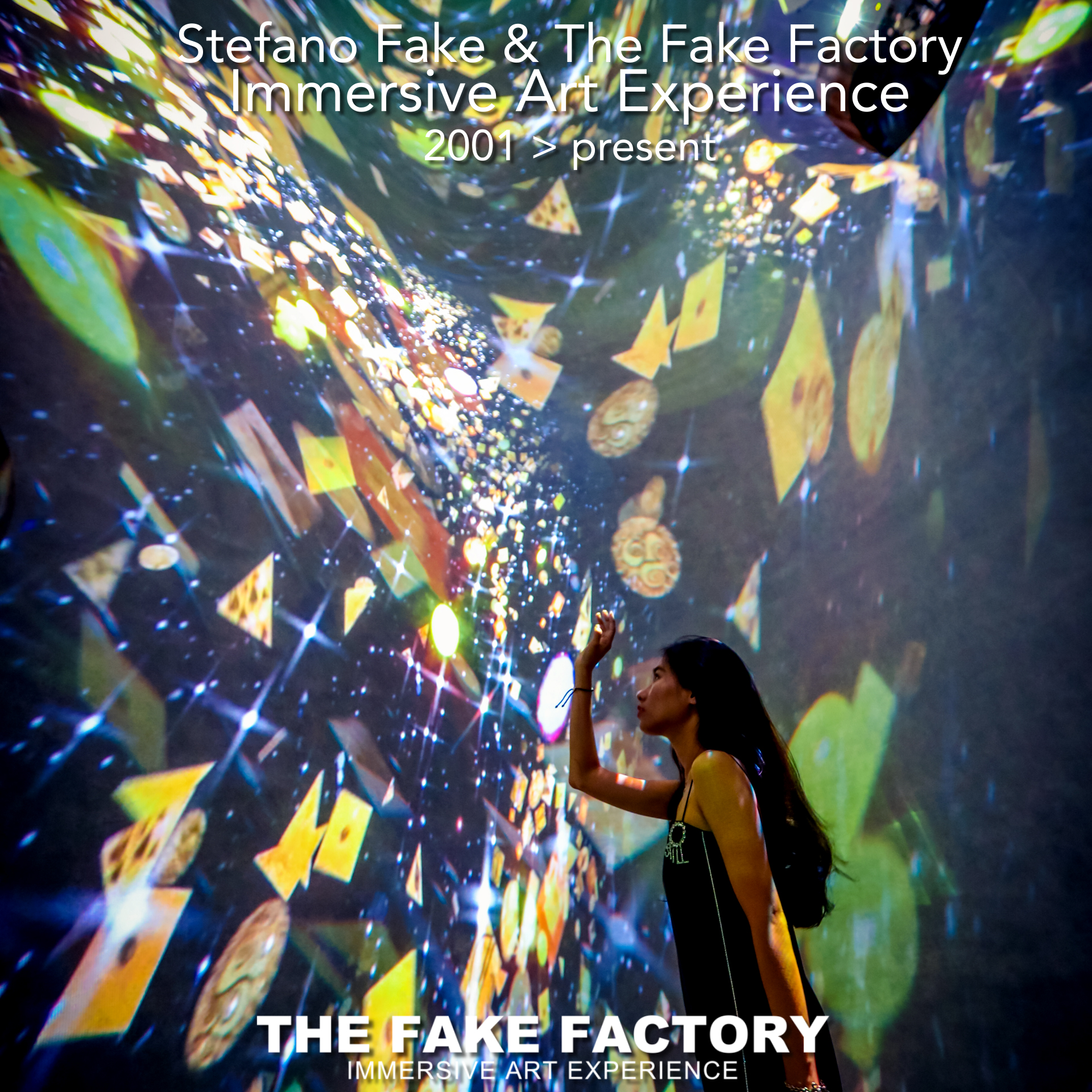
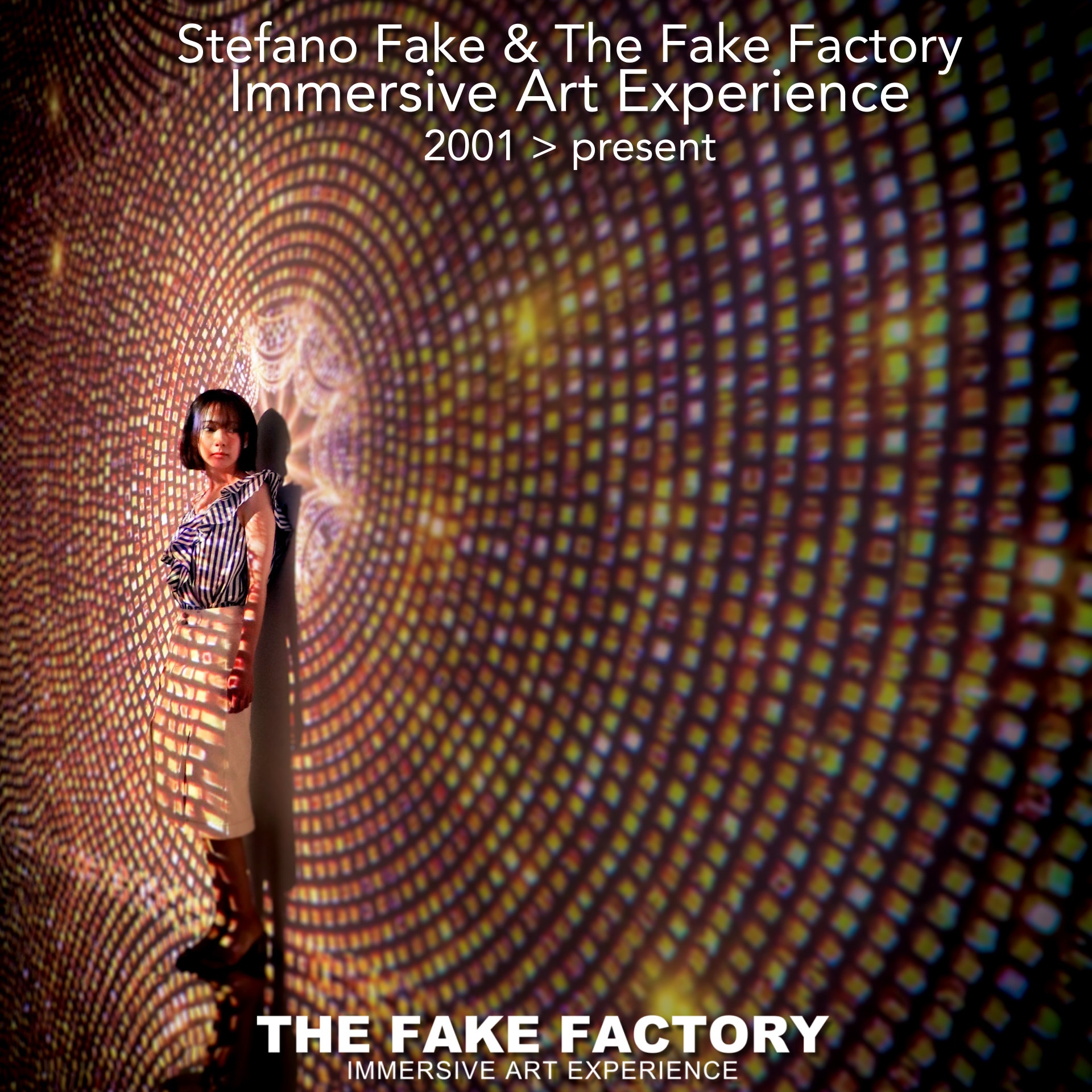
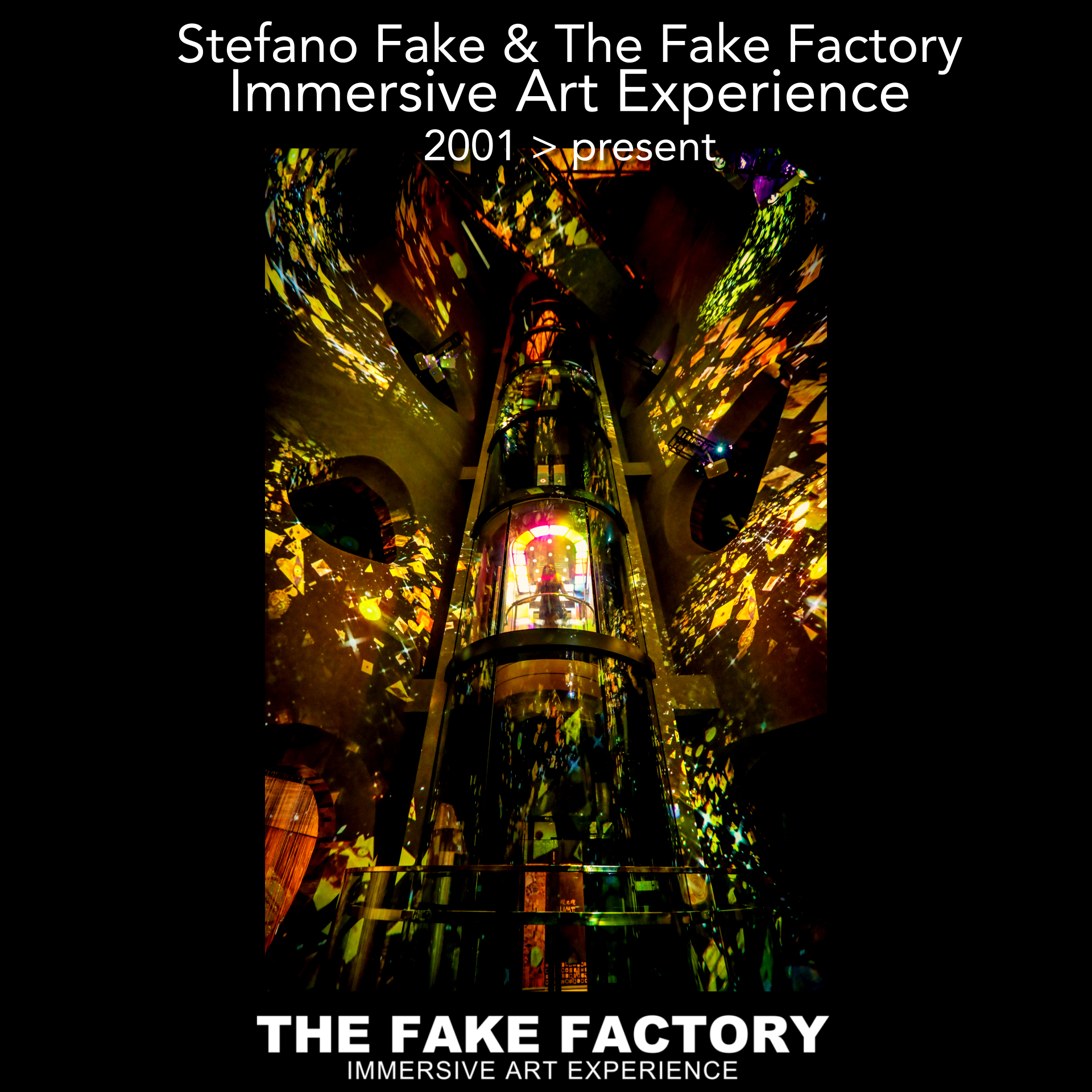
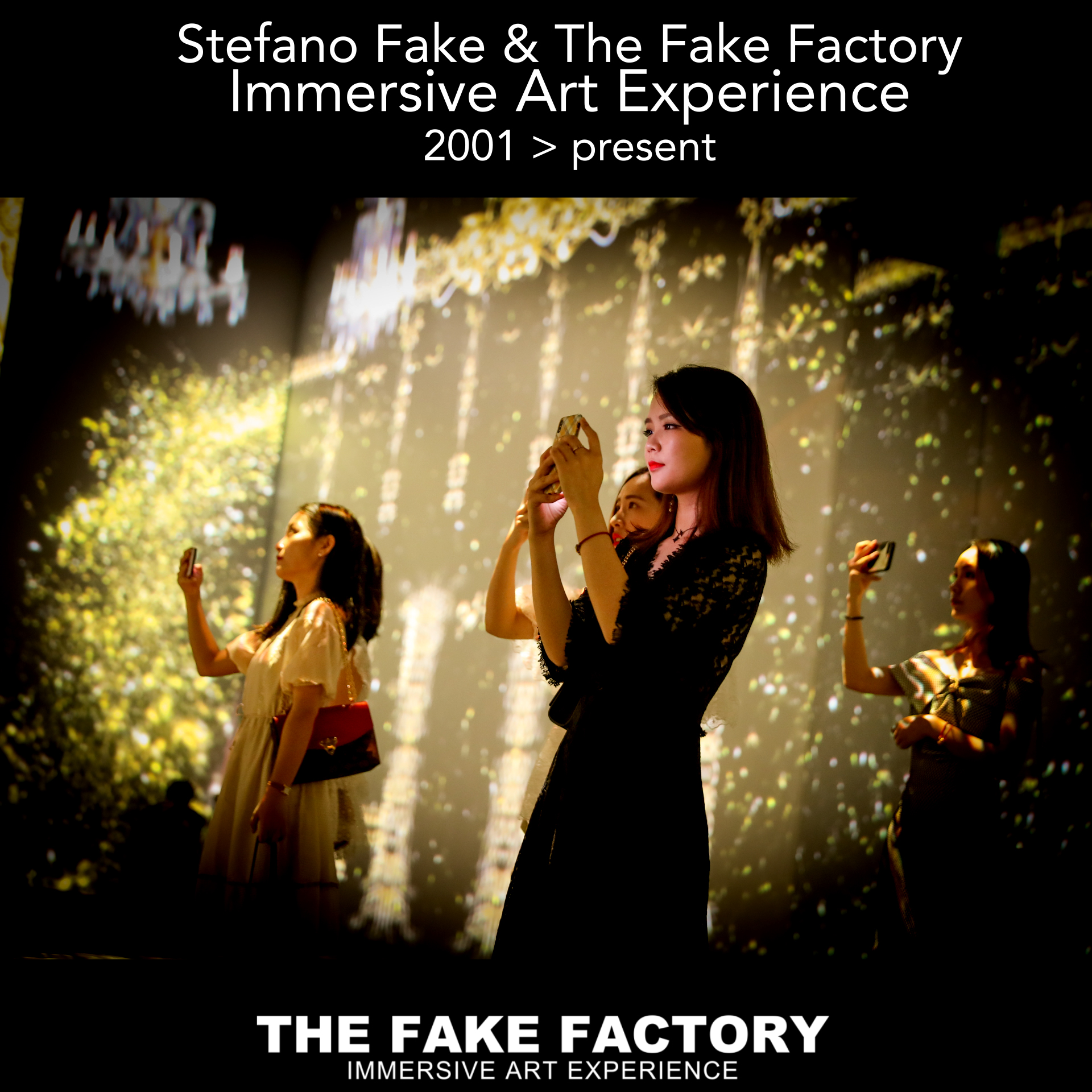
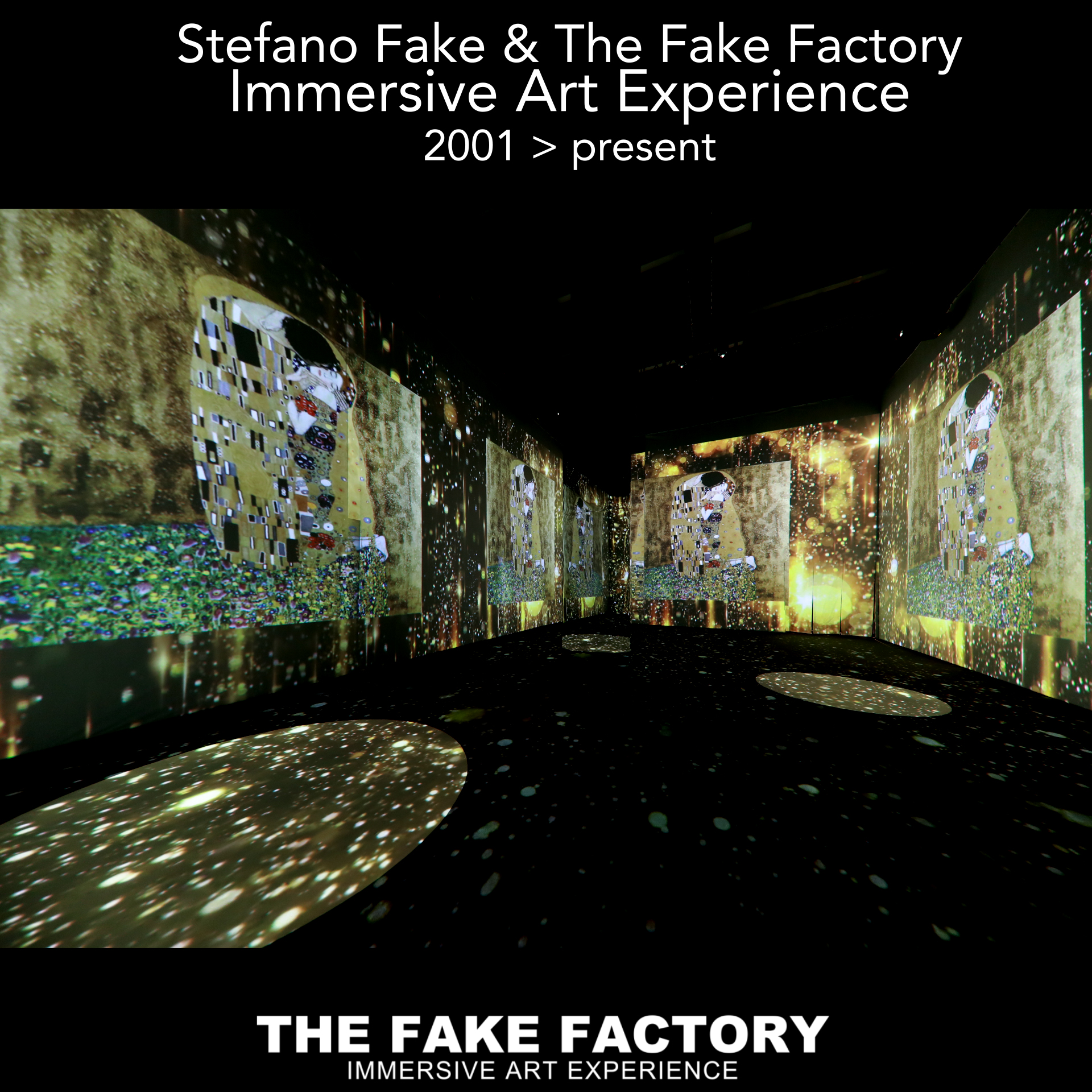
Today, THE FAKE FACTORY operates temporary traveling exhibition spaces around the world, collaborating with local partners, public and private museums, light and digital art festival organisations. Their digital installations around the world had more than 5 millions visitors from 2012 to 2024, setting a record for a single-artist installation in the new millennium. The Italian new media artist Stefano Fake was also one the first media artist creating successful traveling immersive digital exhibitions about Italian Classical Art (The Italian Beauty 2015, Caravaggio Experience 2016), the great masters of European Art (Klimt Experience 2016, Van Gogh Experience 2016, Monet Experience 2017, Magritte Experience 2018). The mix of technology and art, Stefano Fake & THE FAKE FACTORY helped create, is now popping up seemingly everywhere. Exhibits projecting giant renderings of Van Gogh, Klimt, Frida Khalo, Dalì and Monet toured dozens of US cities, while standalone immersive art installations are in scores of galleries and public spaces. Immersive art, it seems, has made a place for itself in the cultural landscape. The installations of Stefano Fake & THE FAKE FACTORY in some Italian museums (Palazzo delle Esposizioni Rome 2016, Venaria Reale Turin 2017, Mudec and Fabbrica del Vapore Milan 2017-2018), the work of Gianfranco Iannuzzi in France for the digital museums of Culture Spaces (Atelier des Lumieres Paris, 2018) are a clear example of how Italian creativity has been able in the last 10 years to create trends capable of conquering the world.
STEFANO FAKE & THE FAKE FACTORY – ESPERIENZE DI ARTE IMMERSIVA: LA NASCITA DI UNA NUOVA FORMA DI ESPRESSIONE ARTISTICA CONTEMPORANEA
Arte immersiva
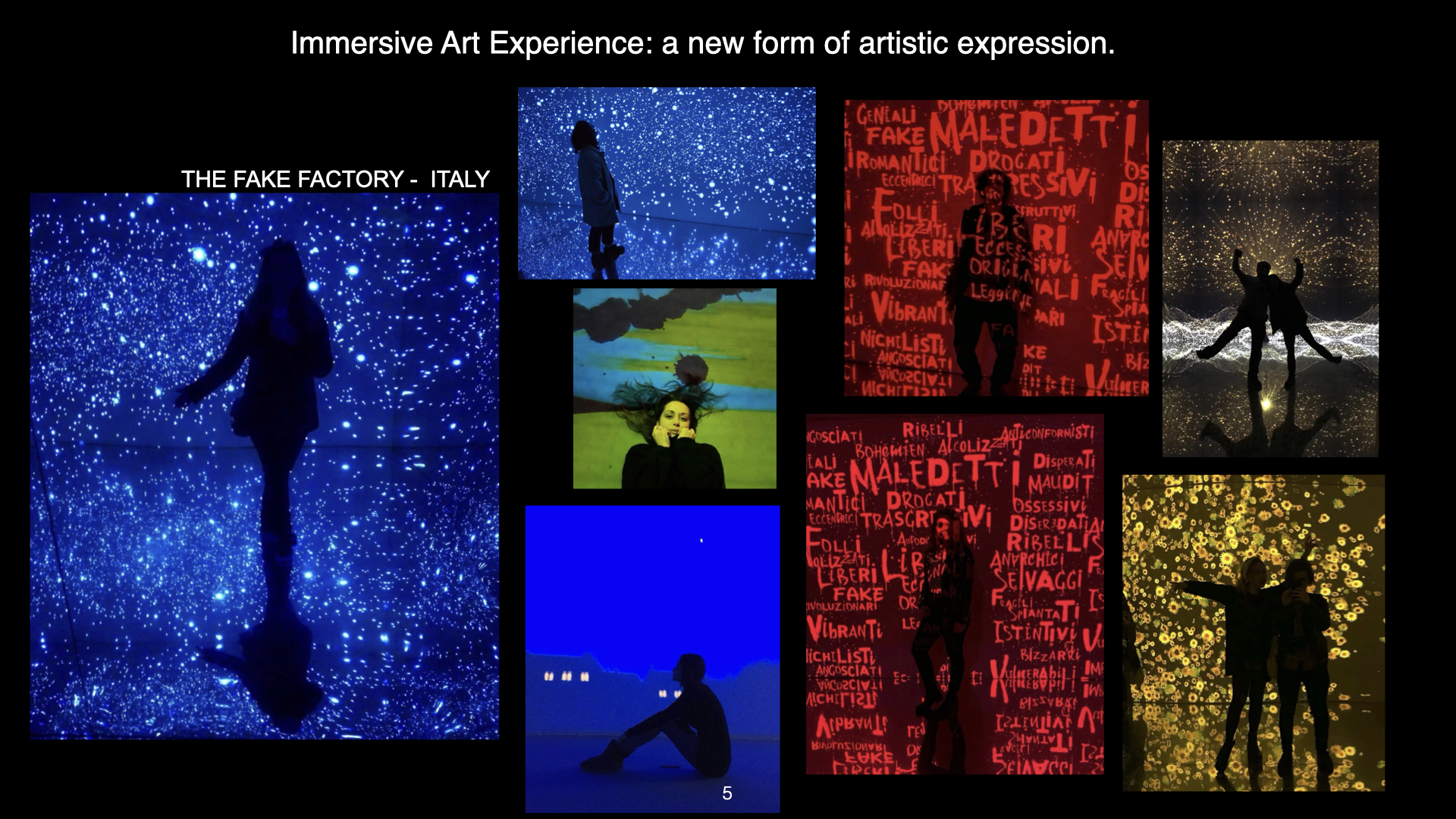
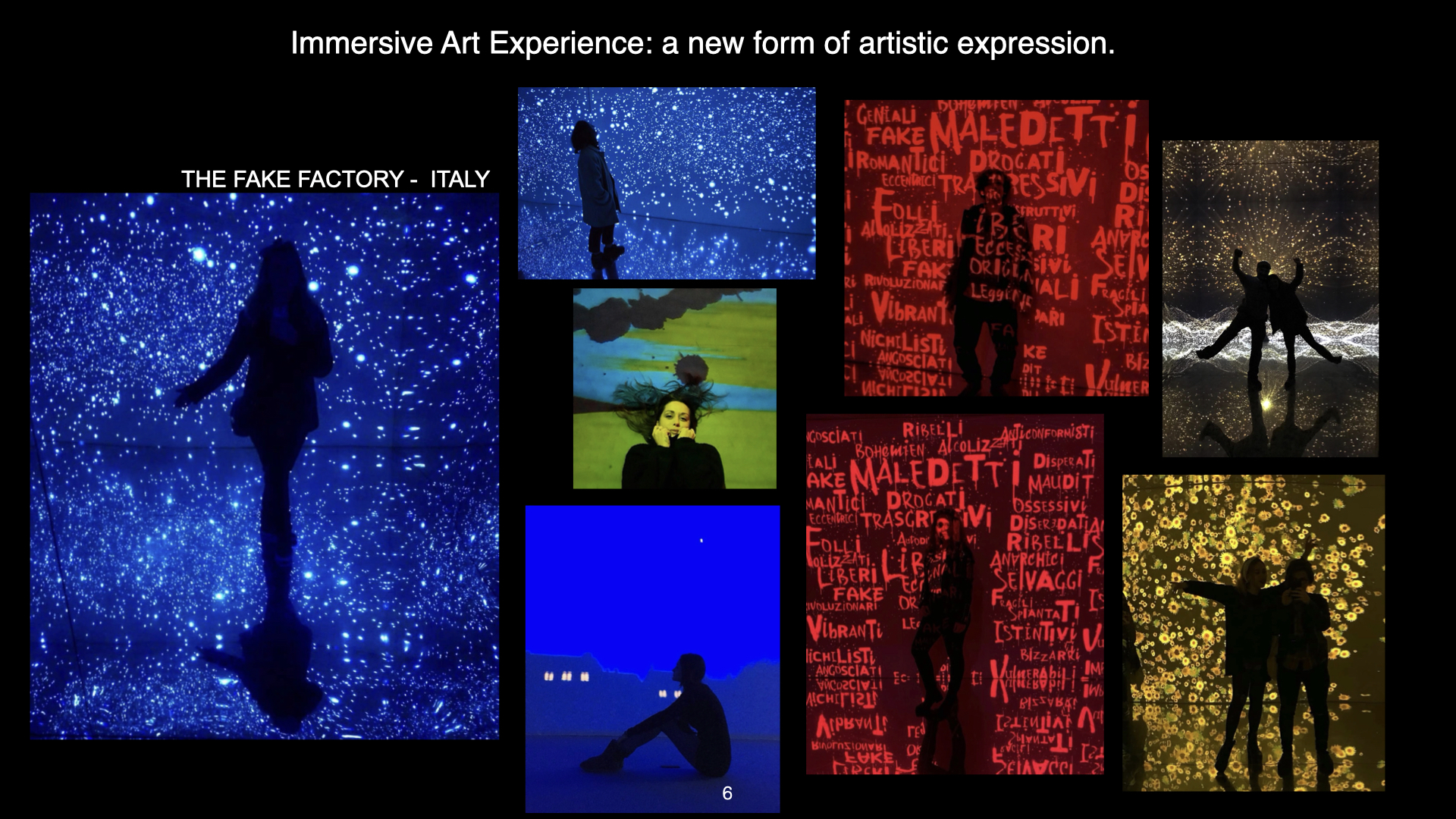
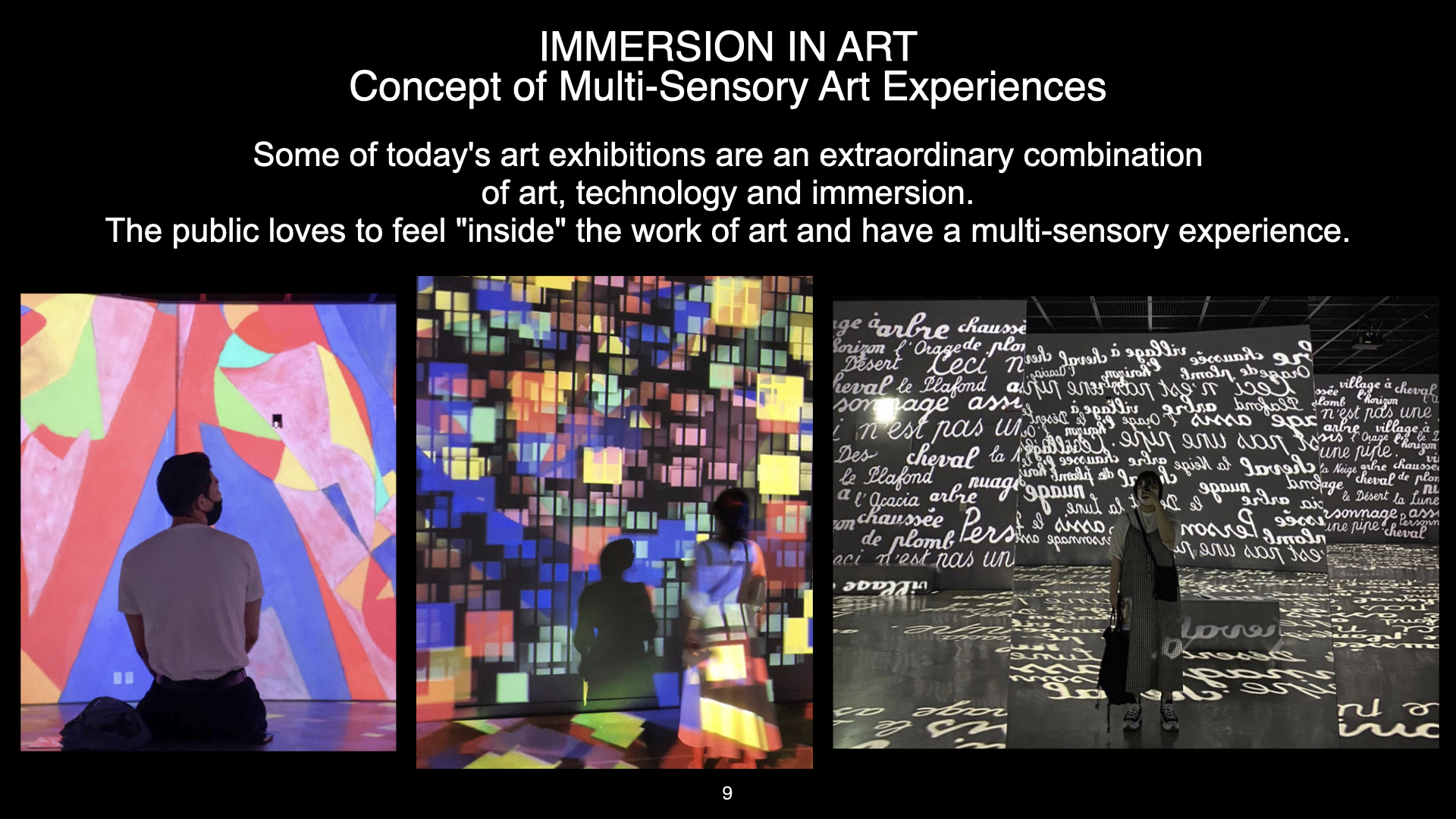
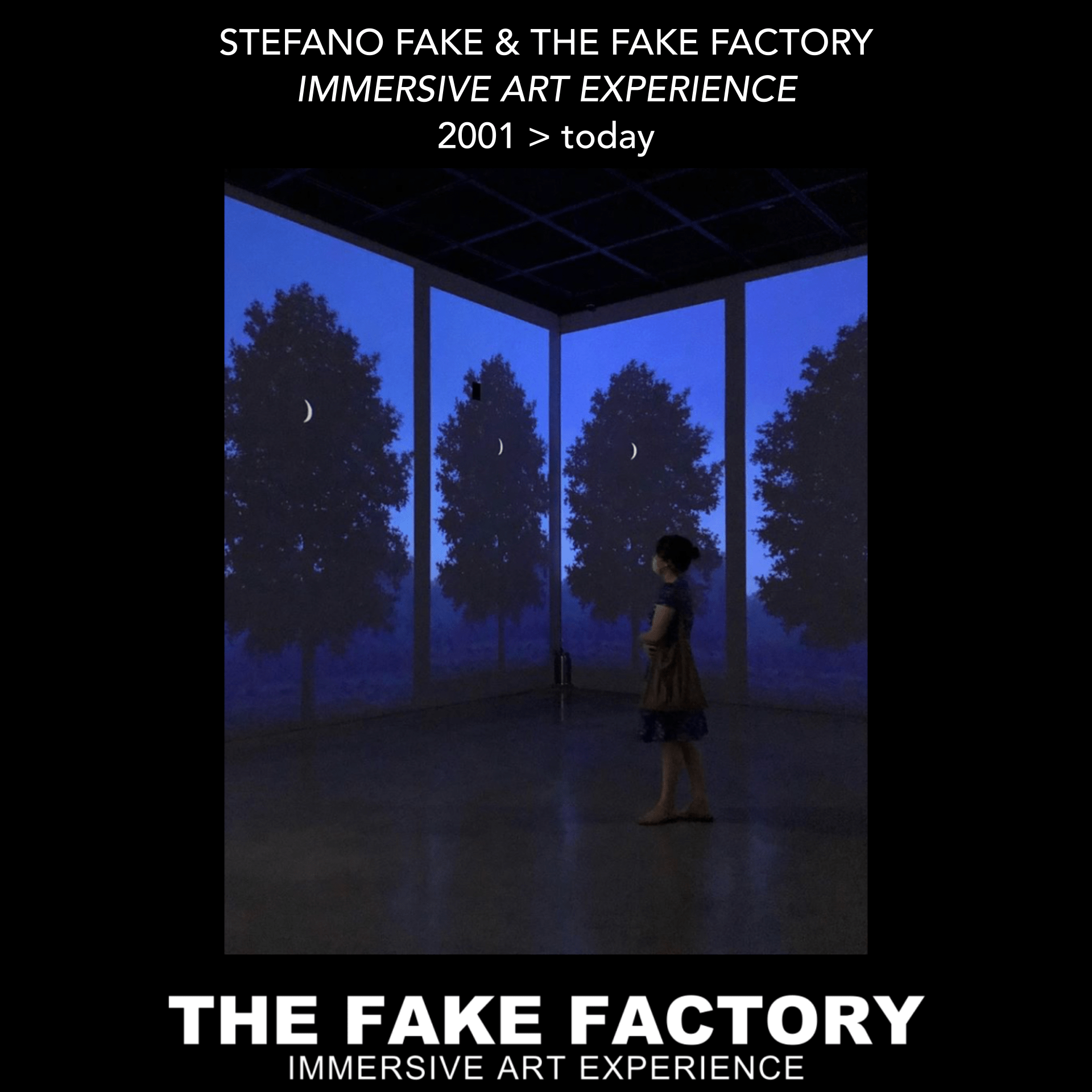
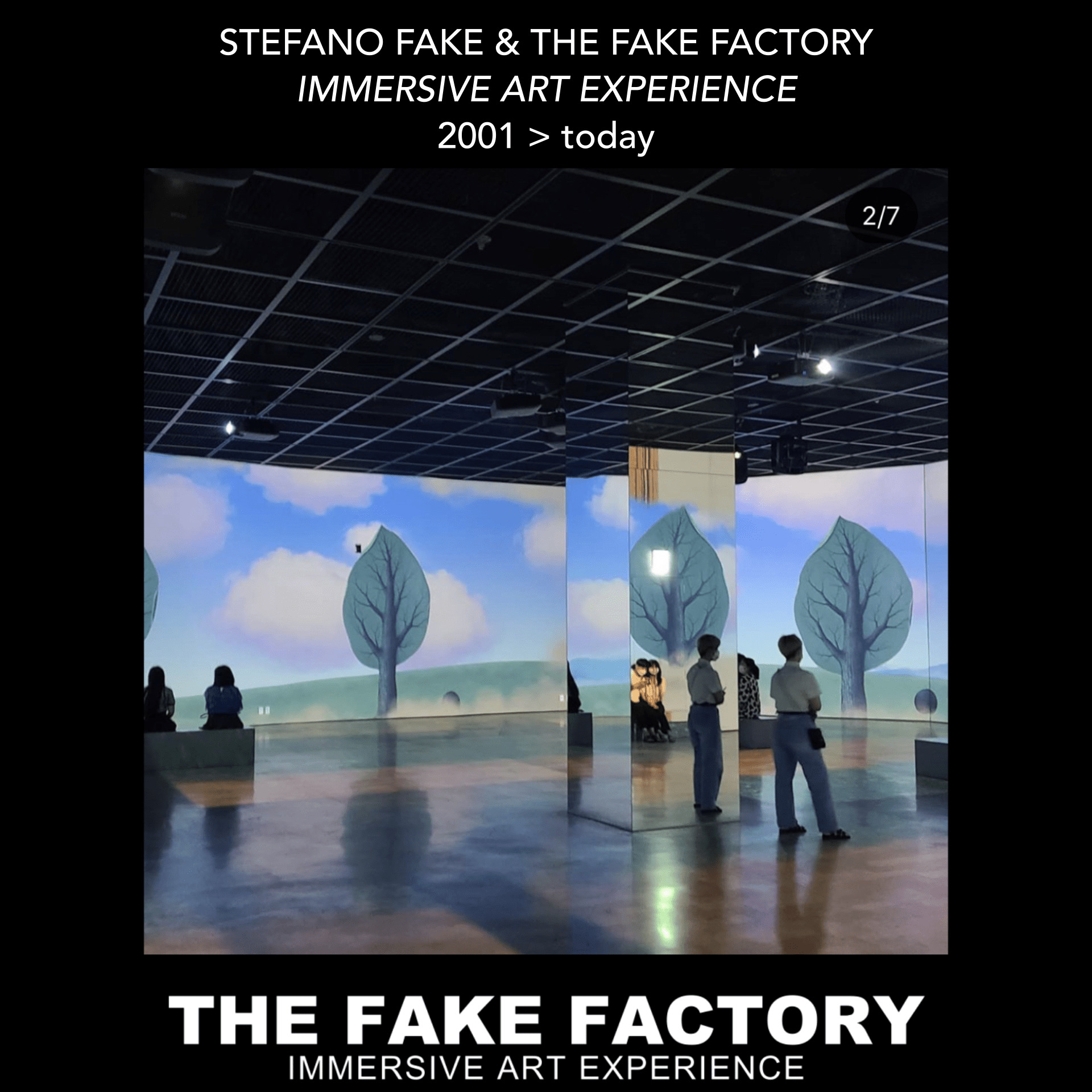
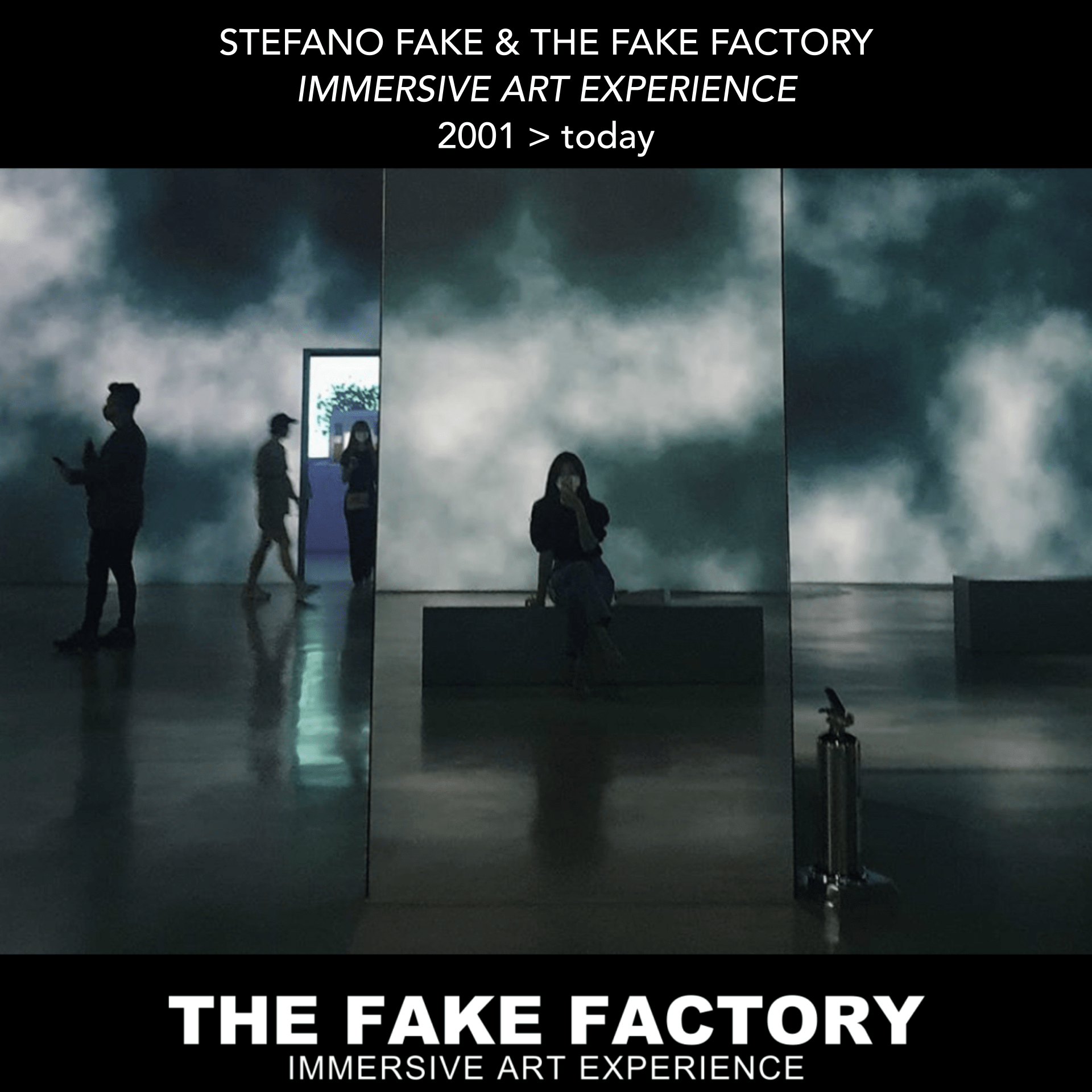
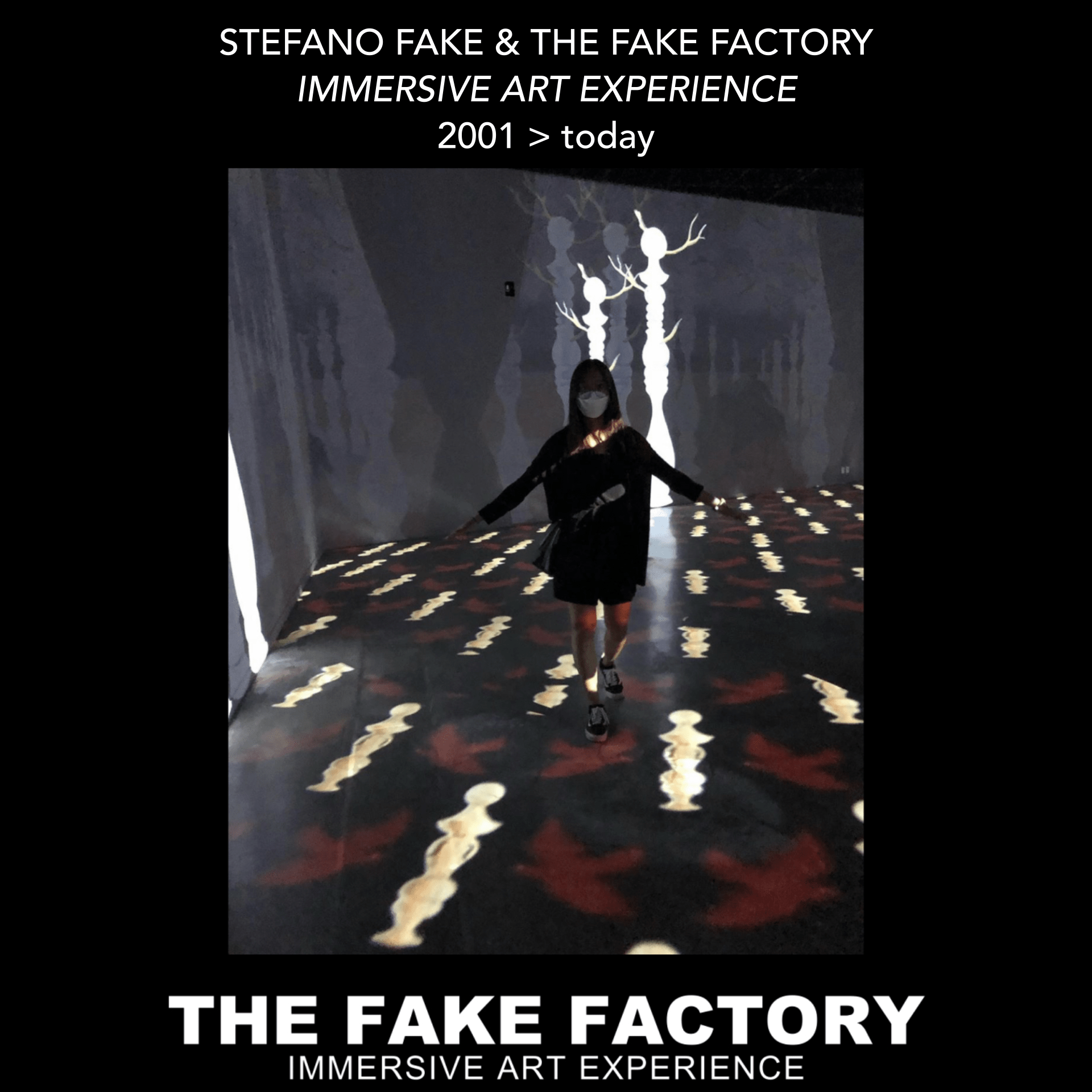
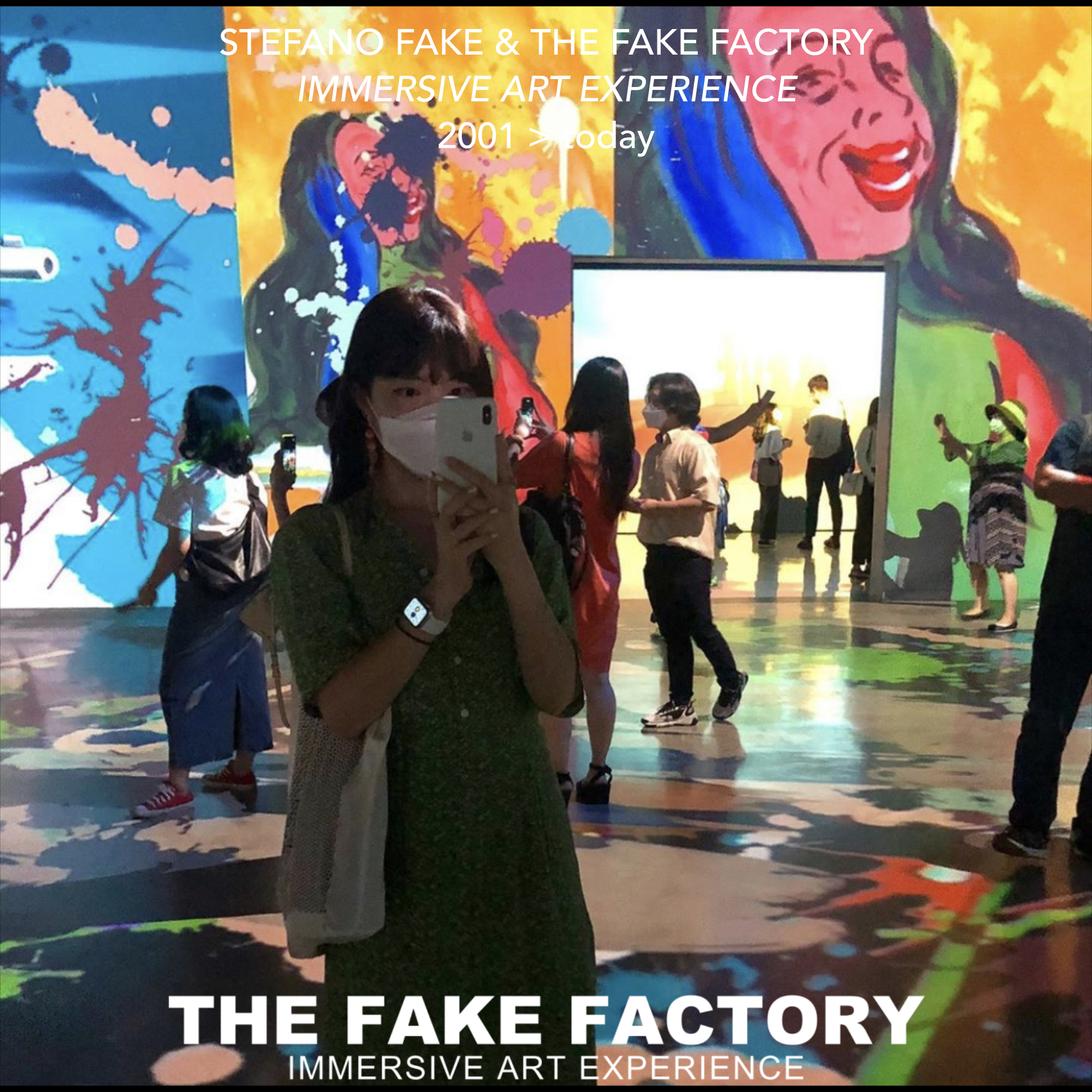
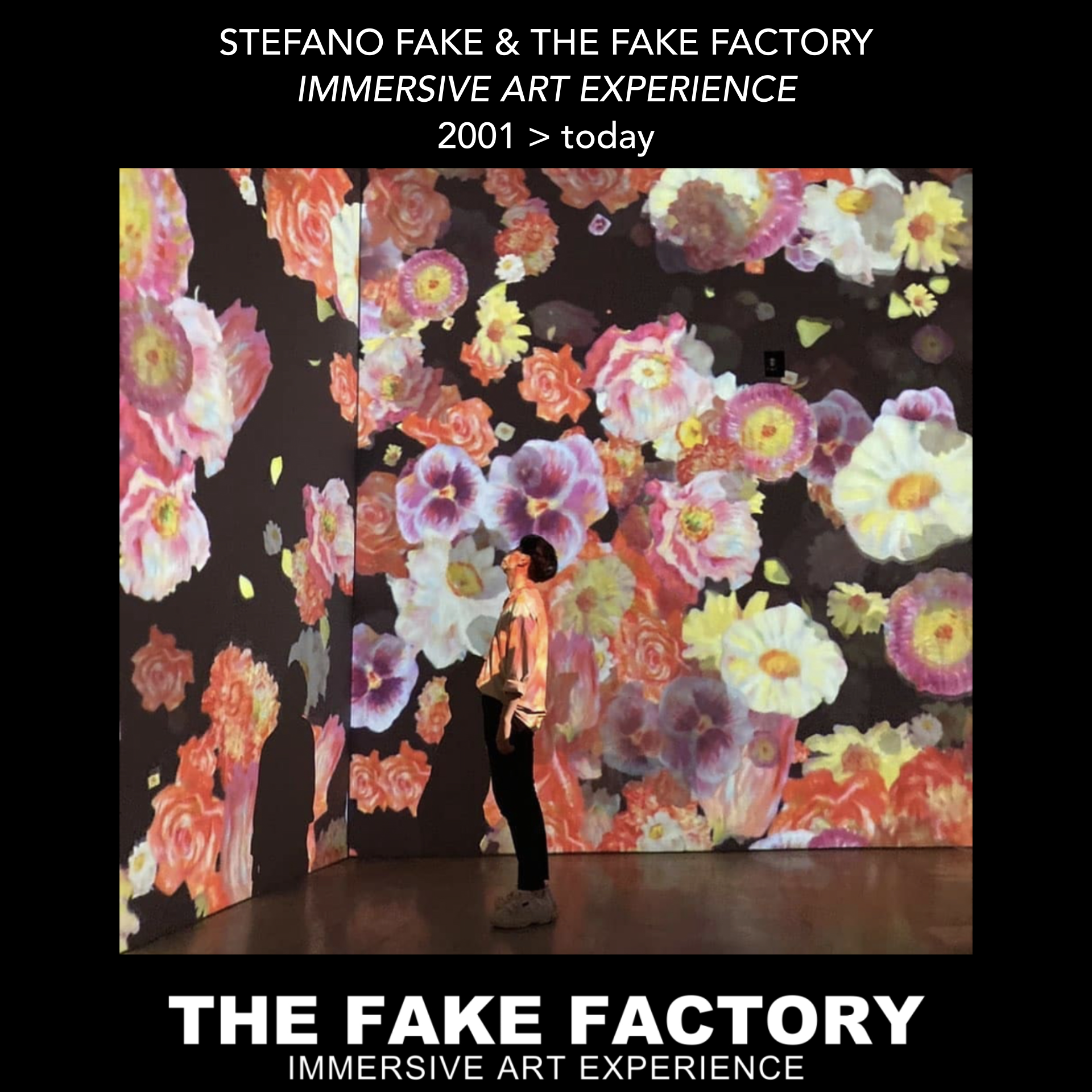
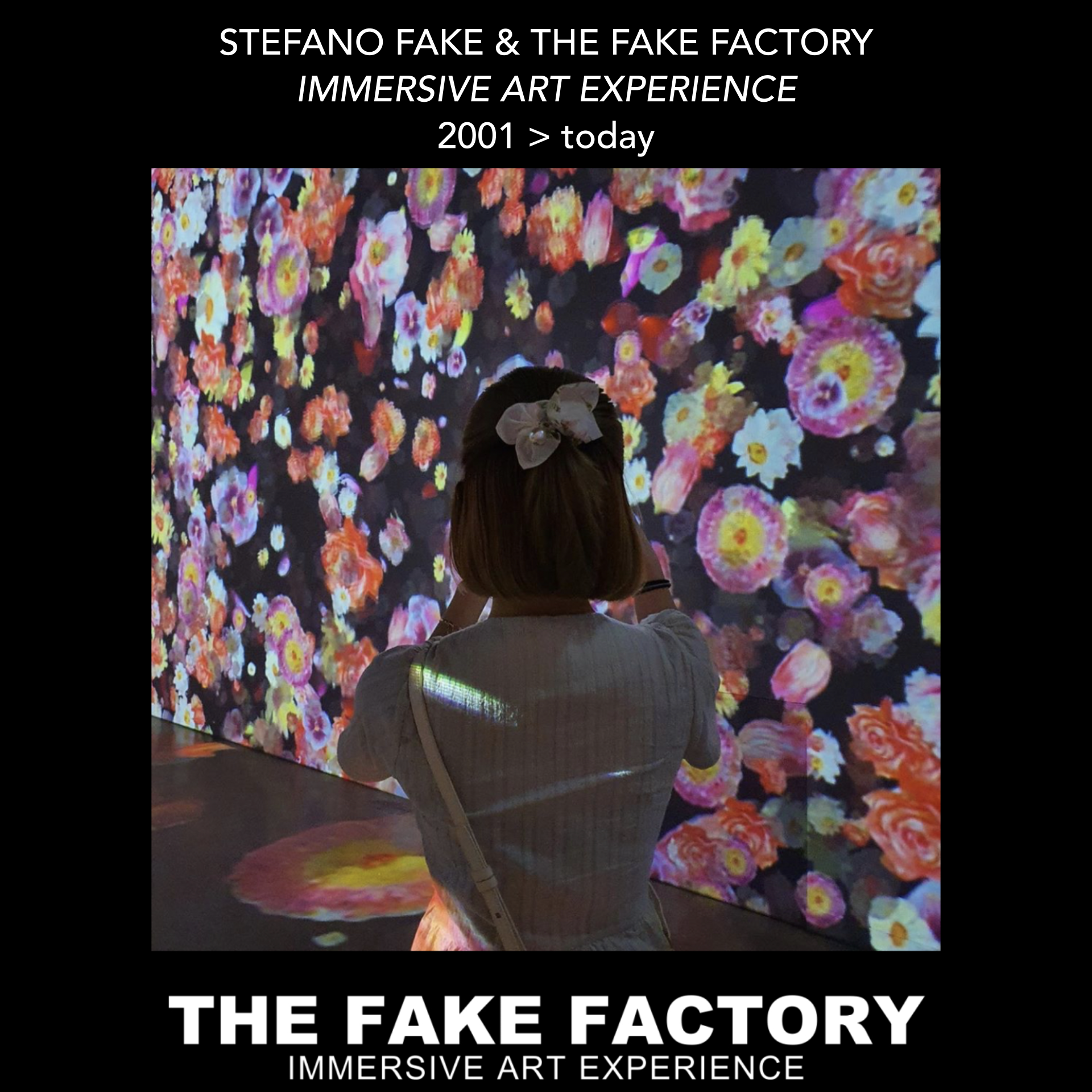
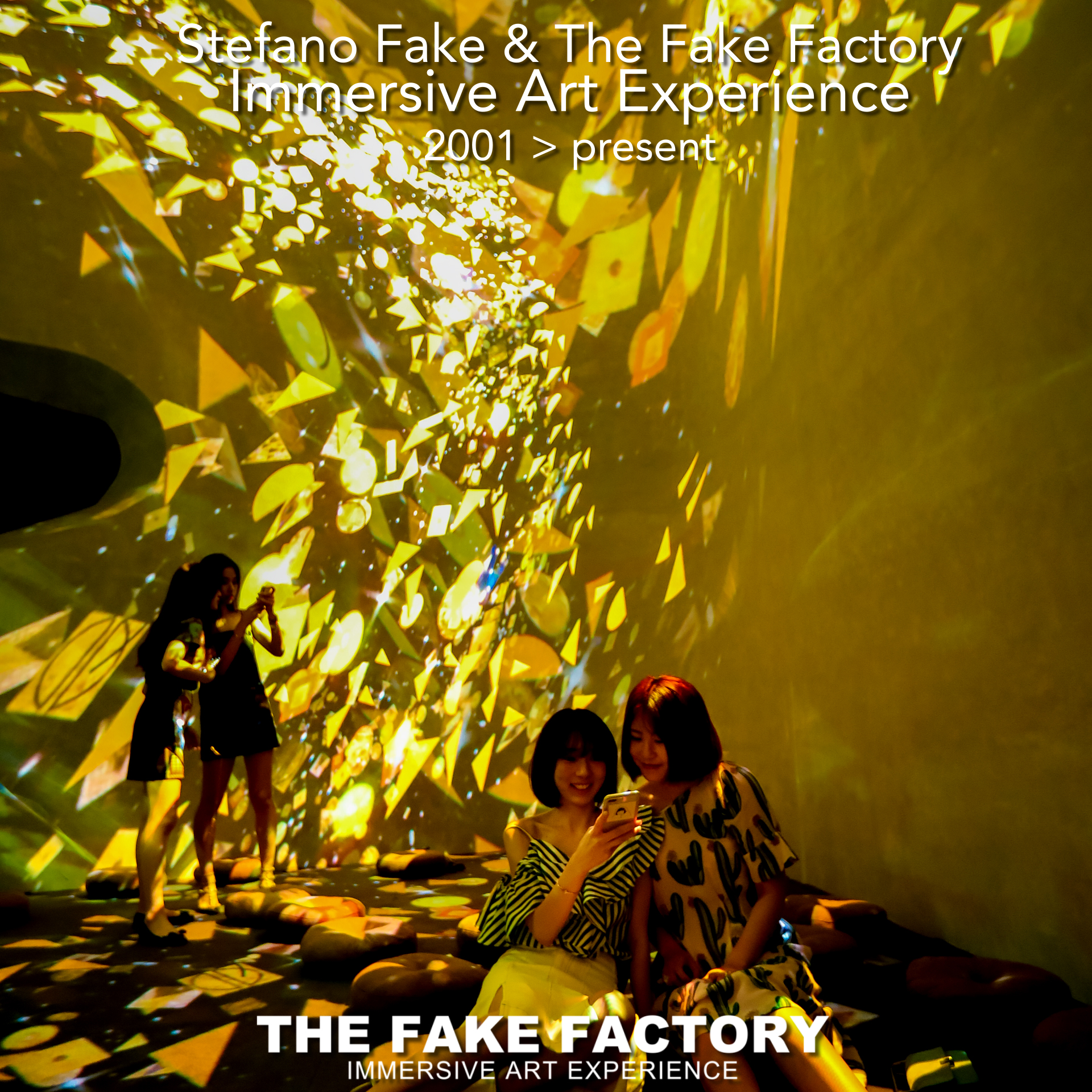
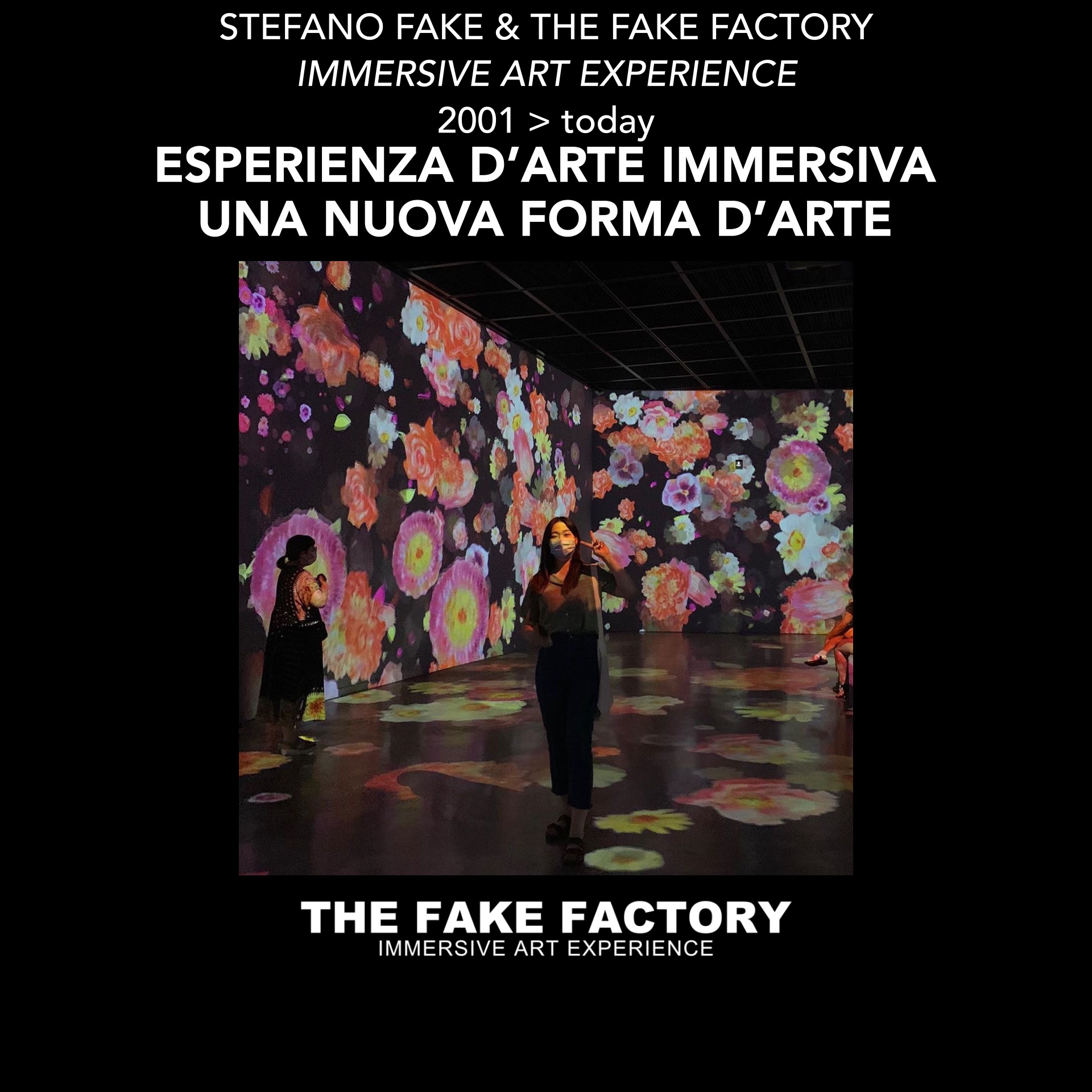
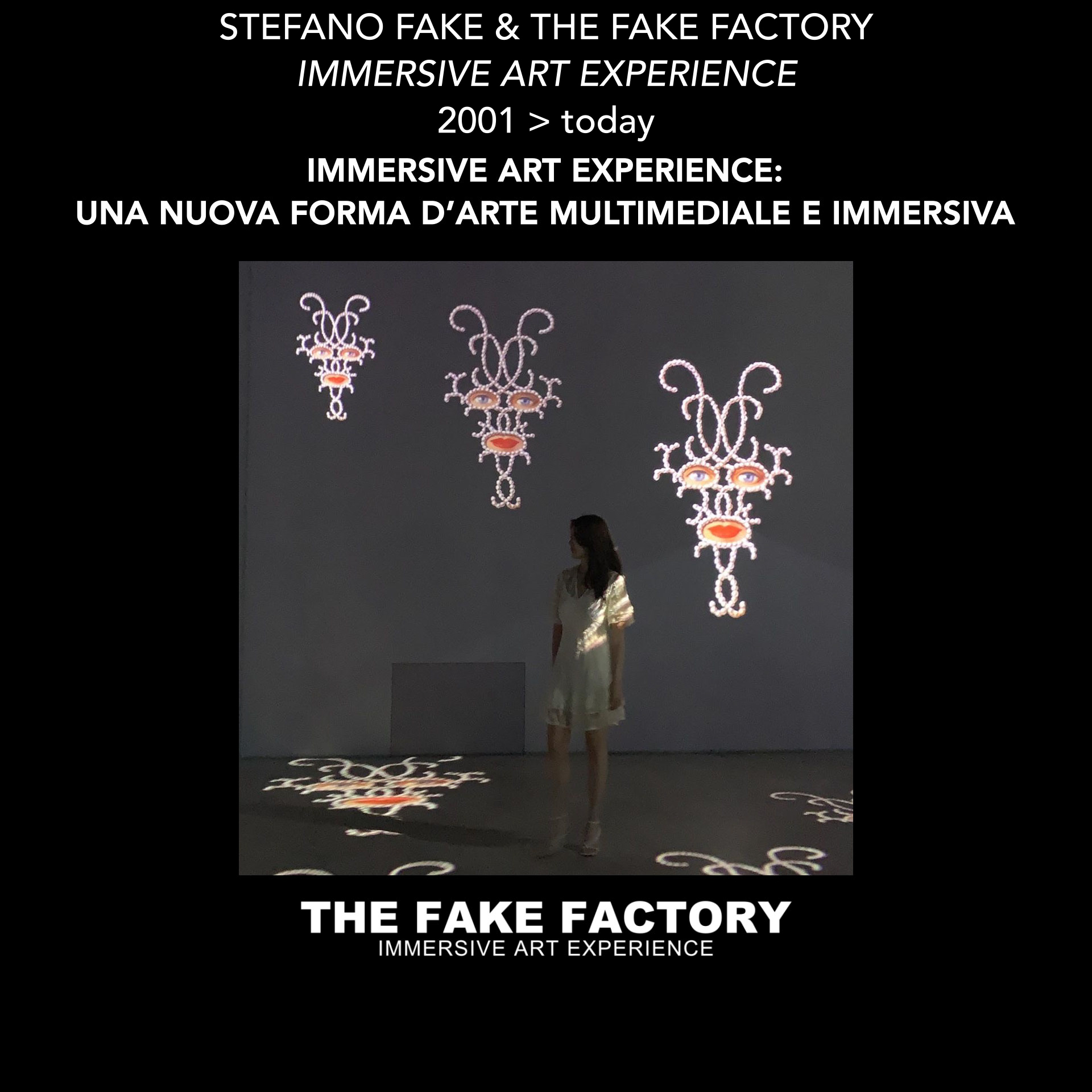
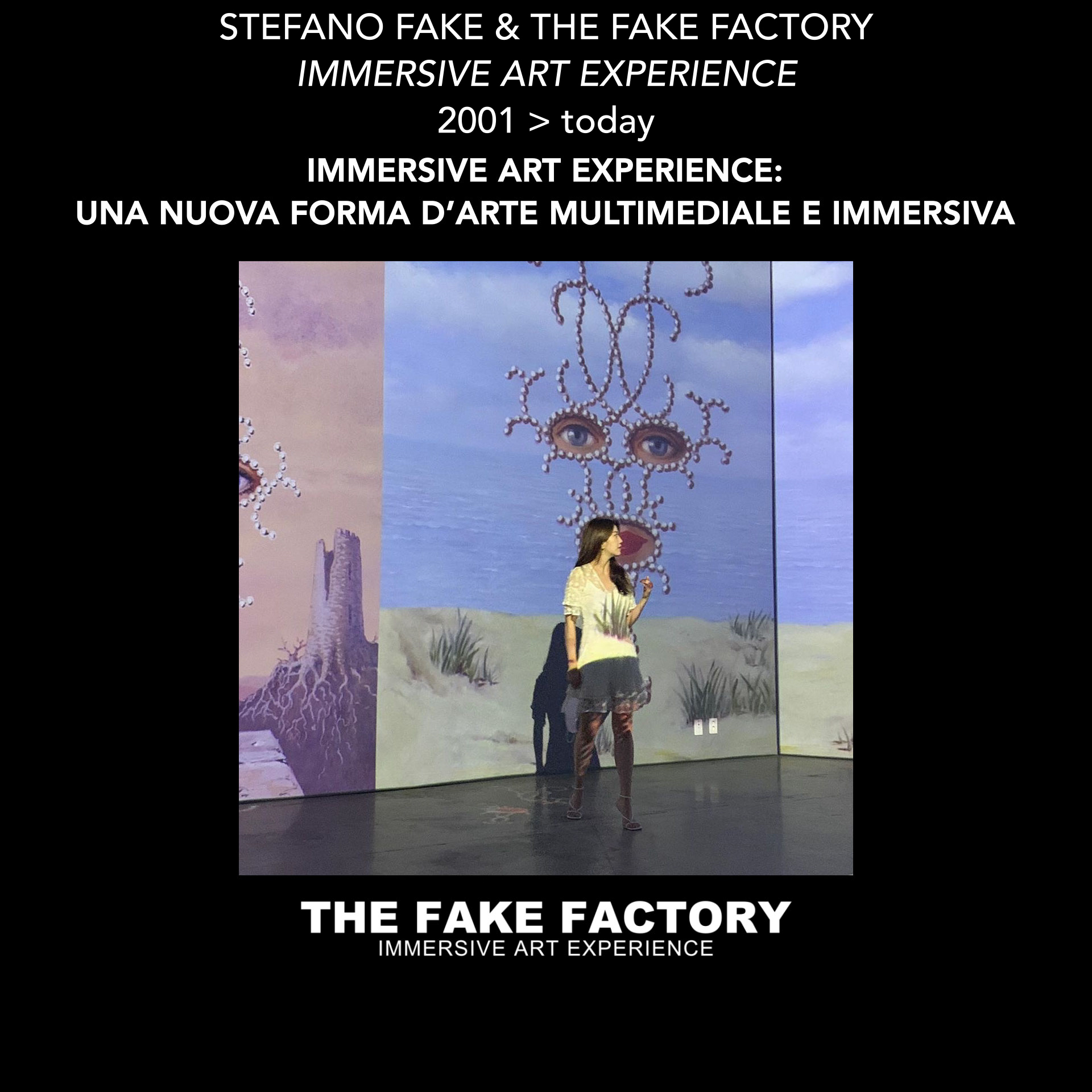
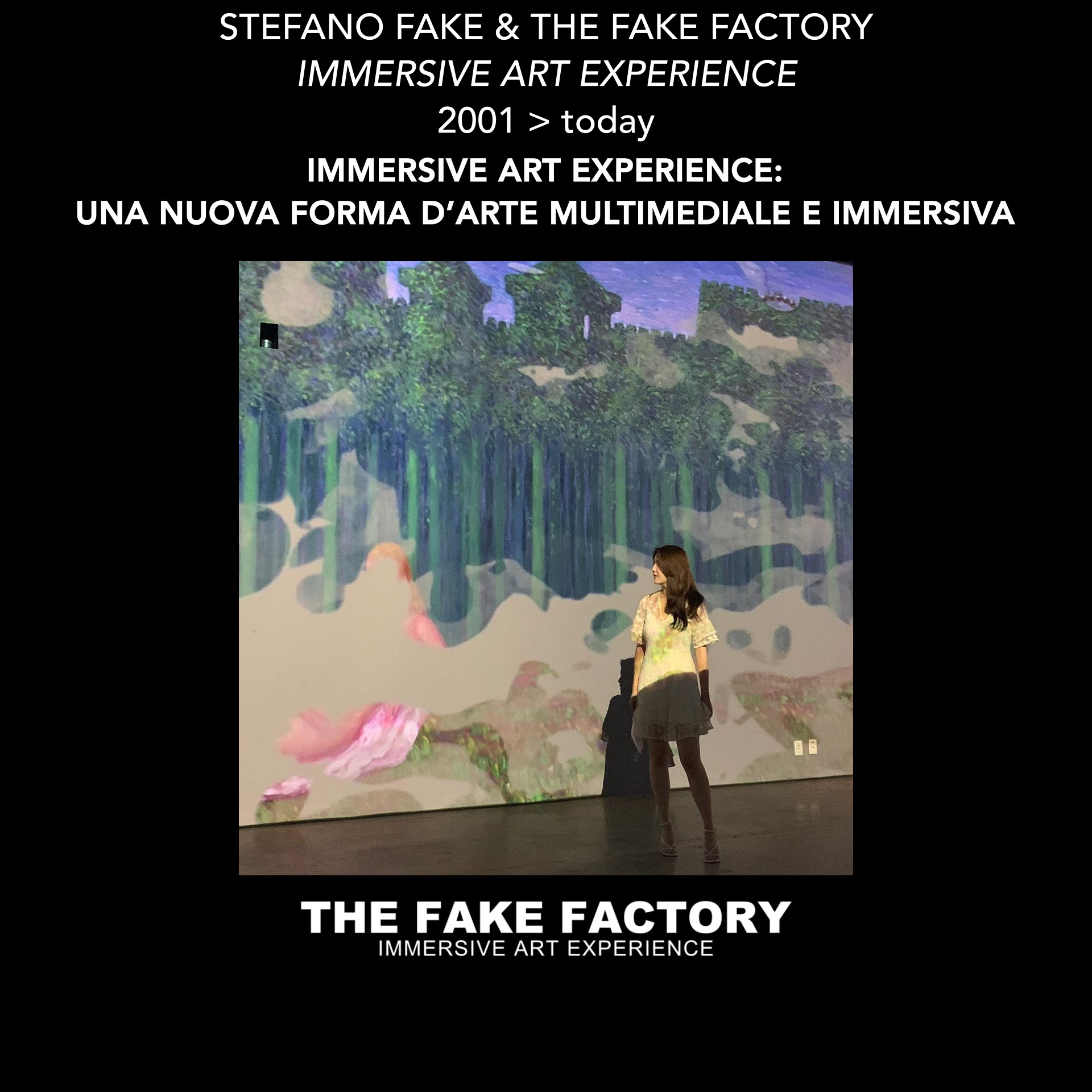
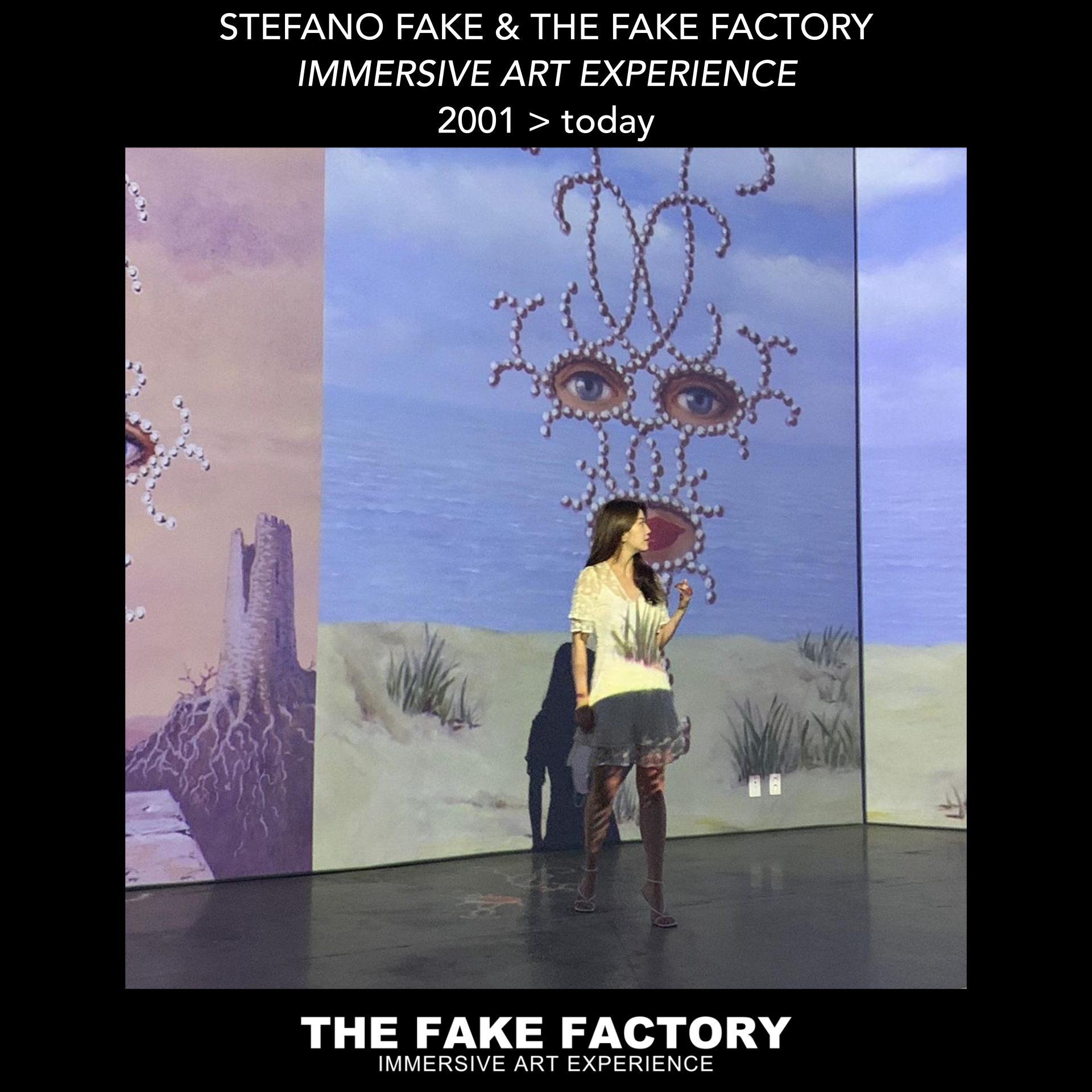
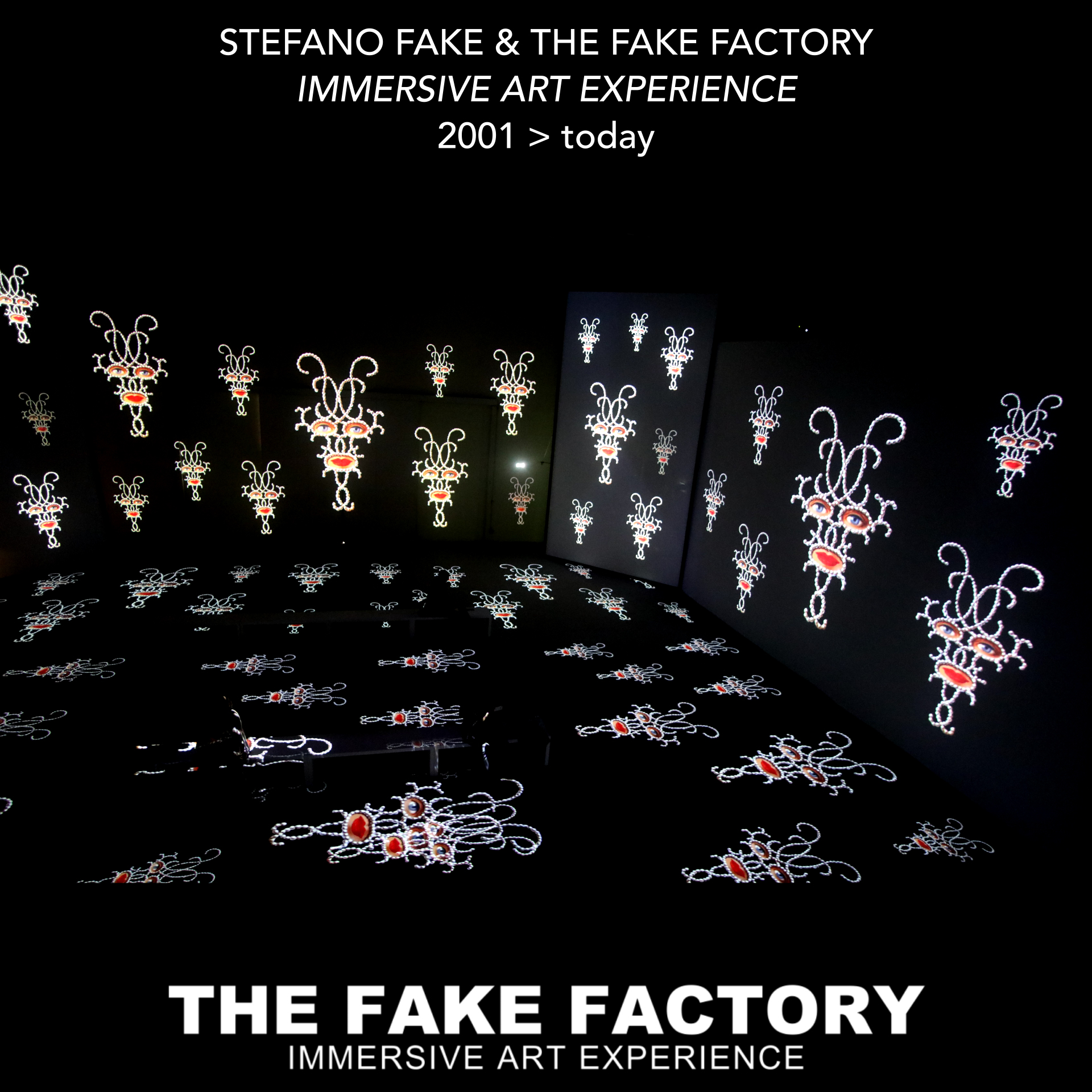
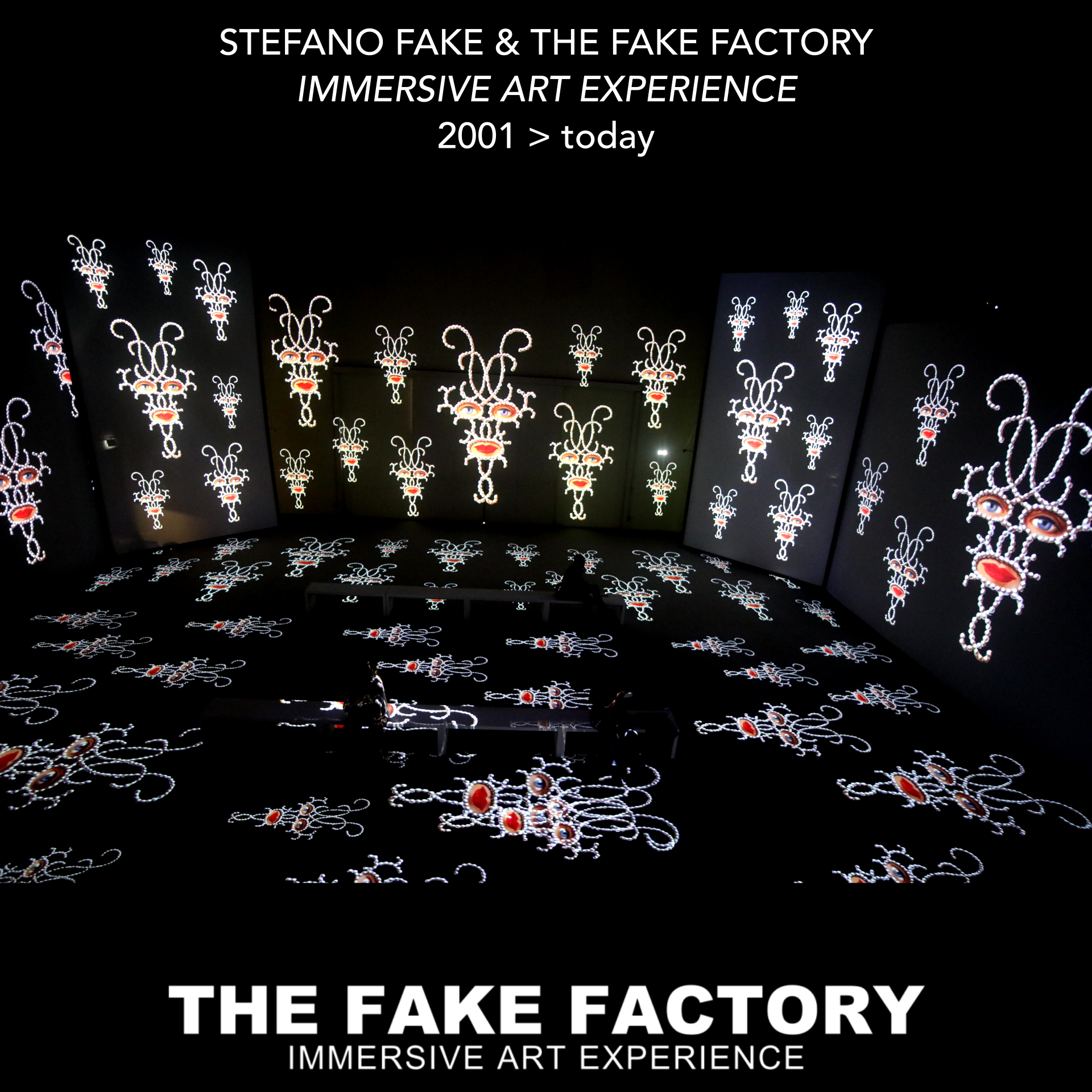
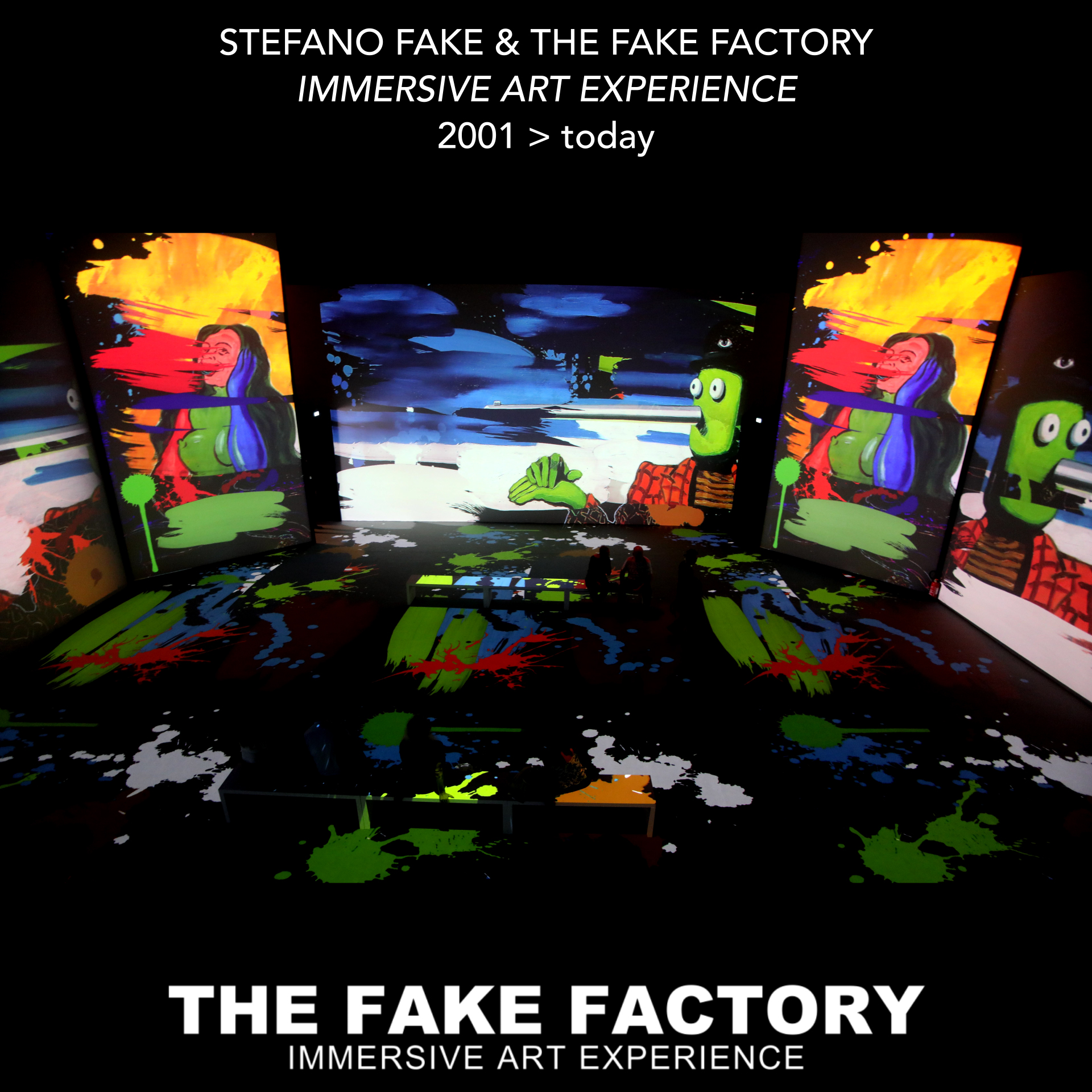
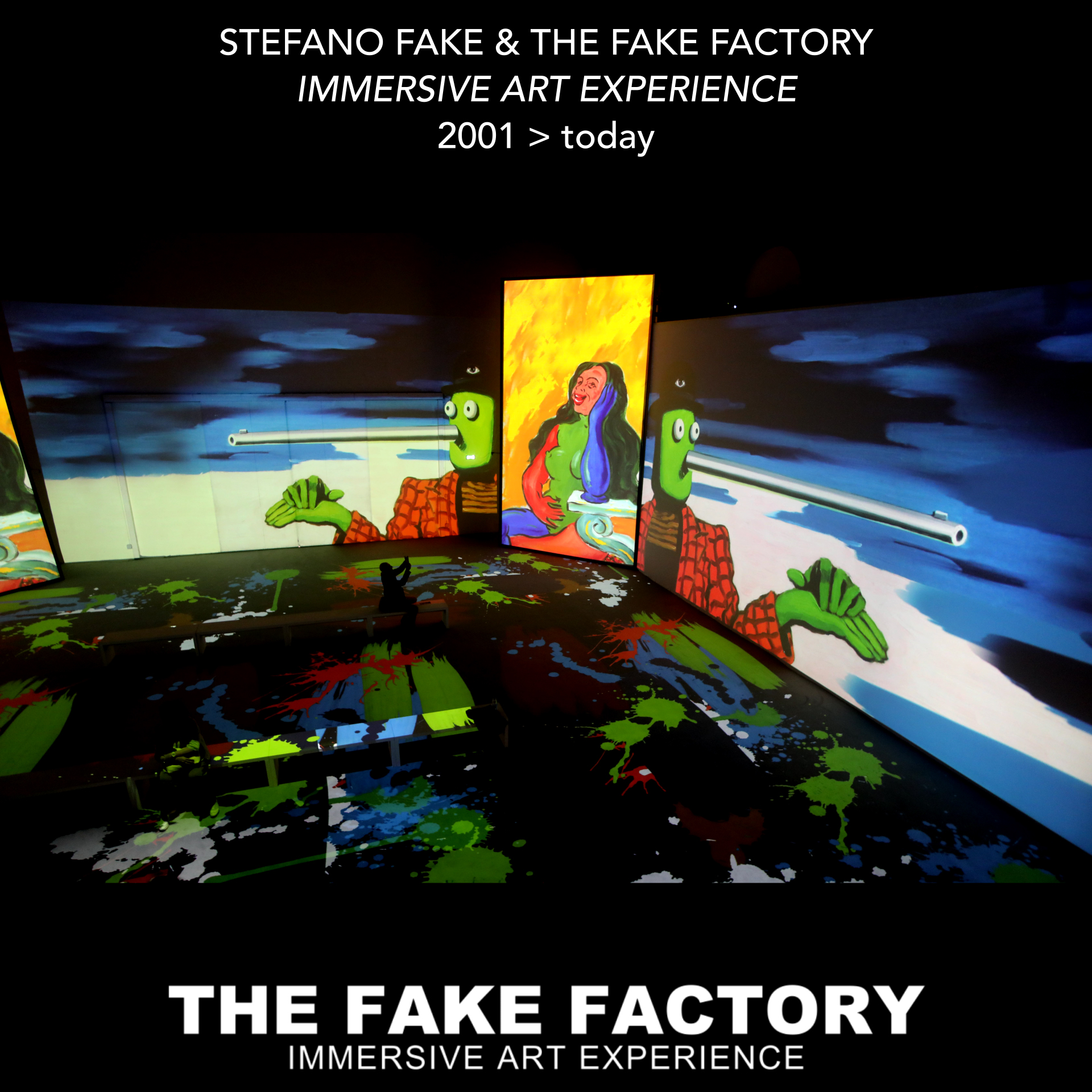
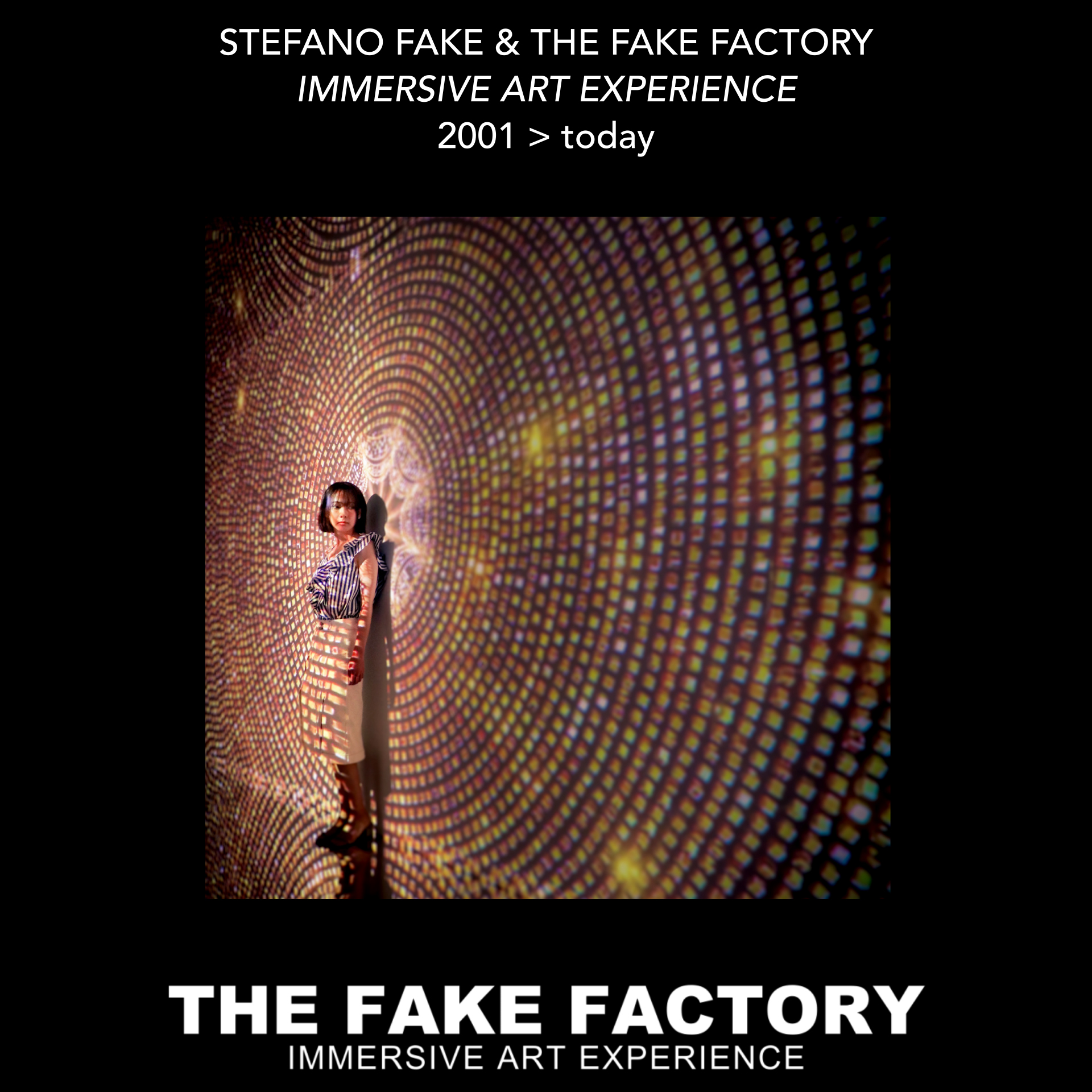
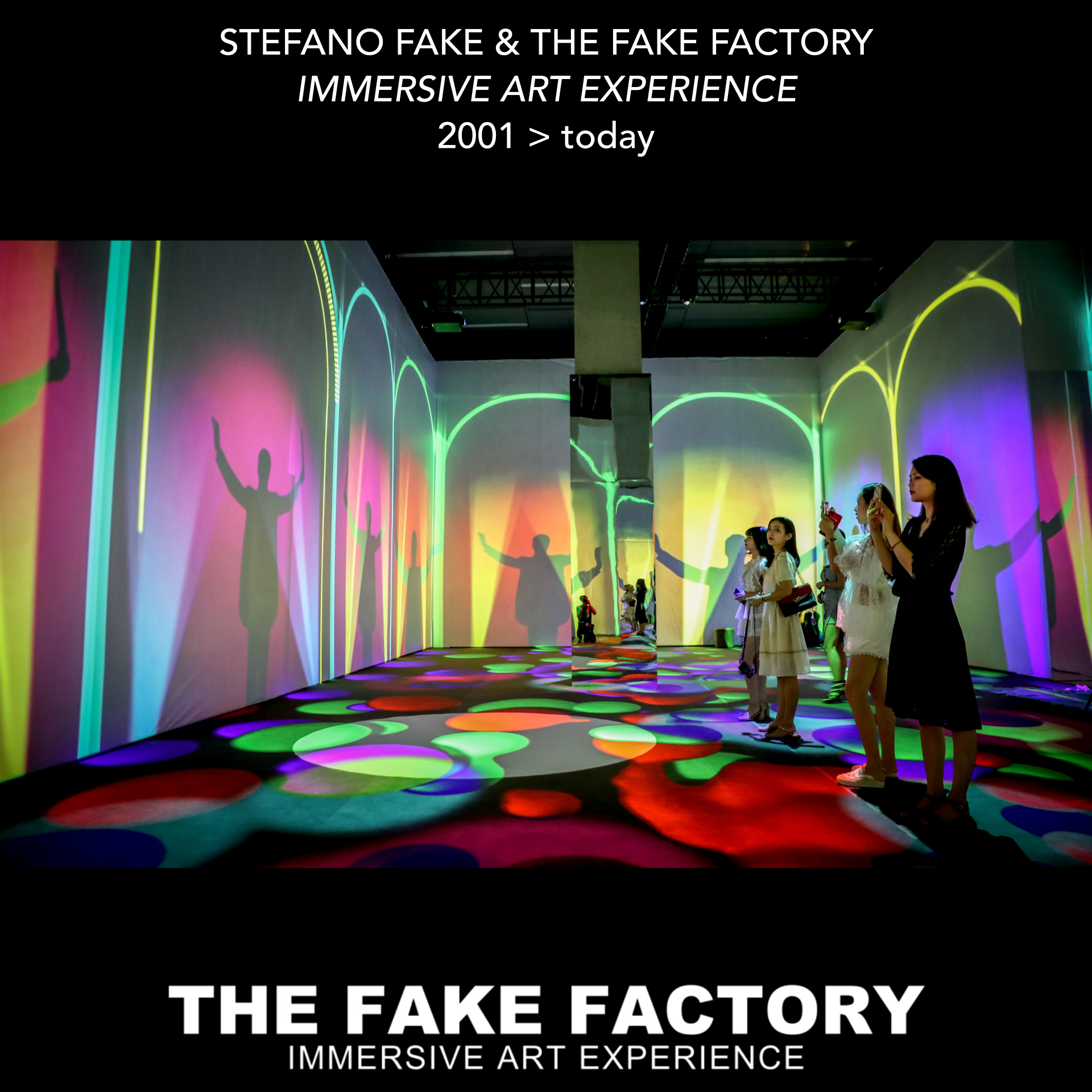
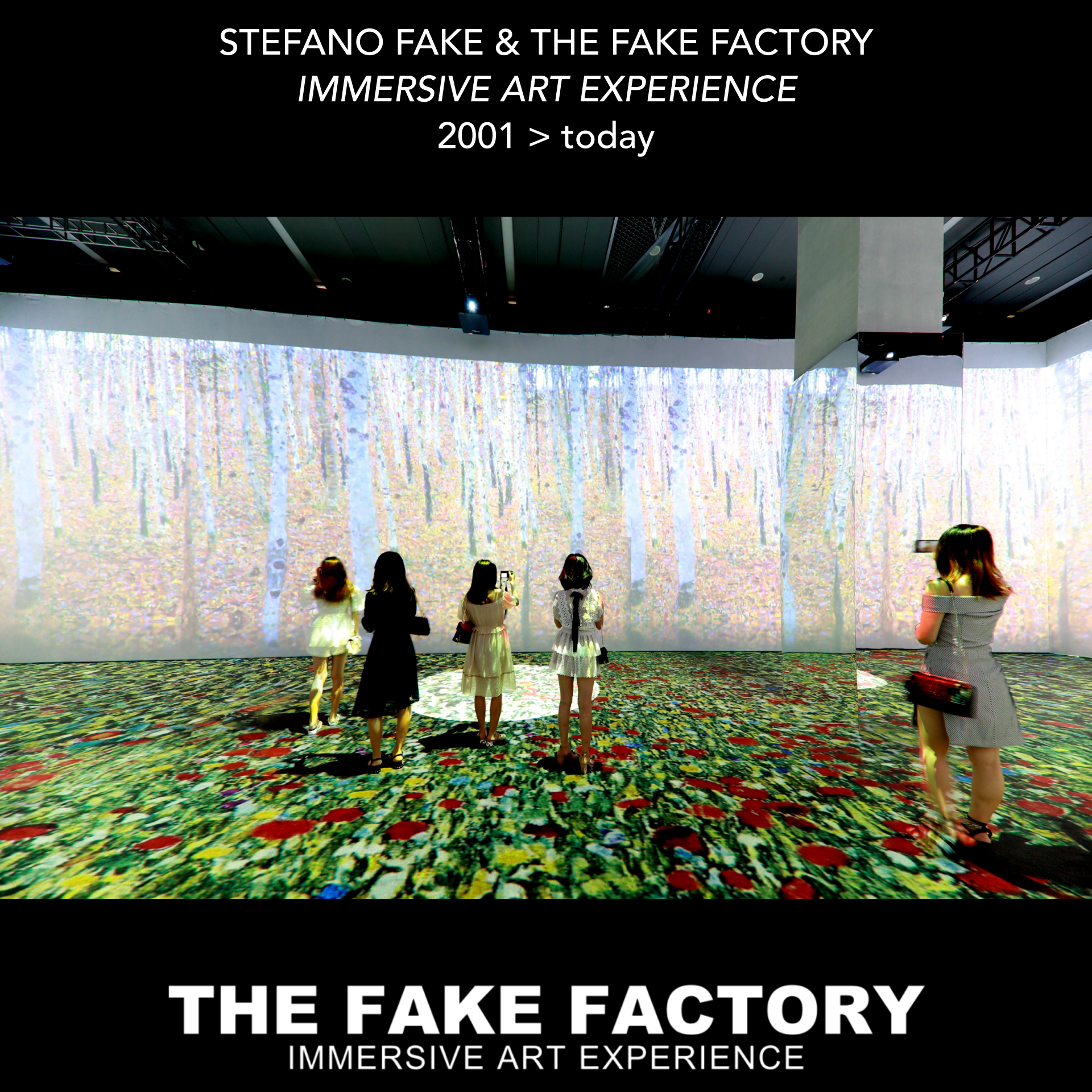
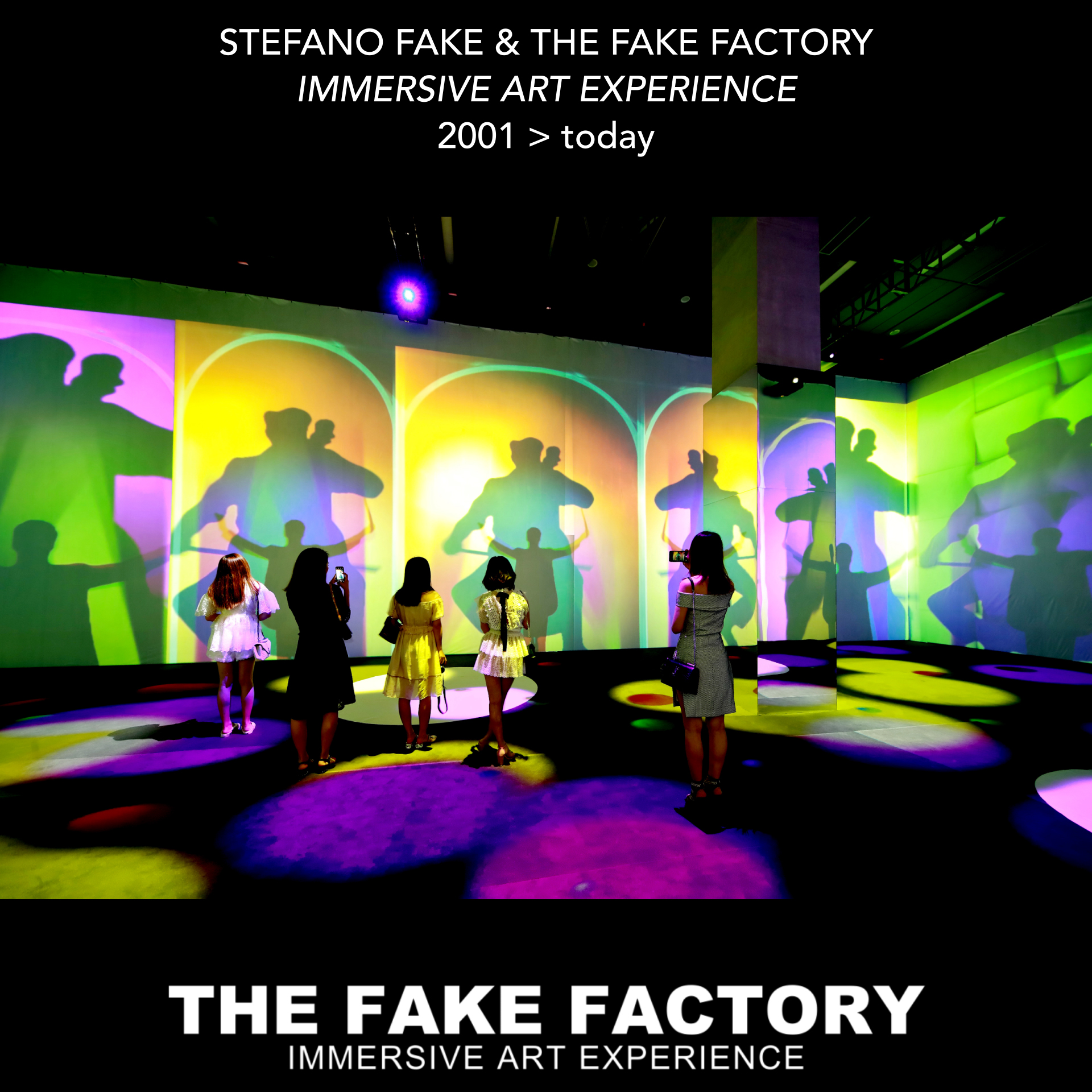
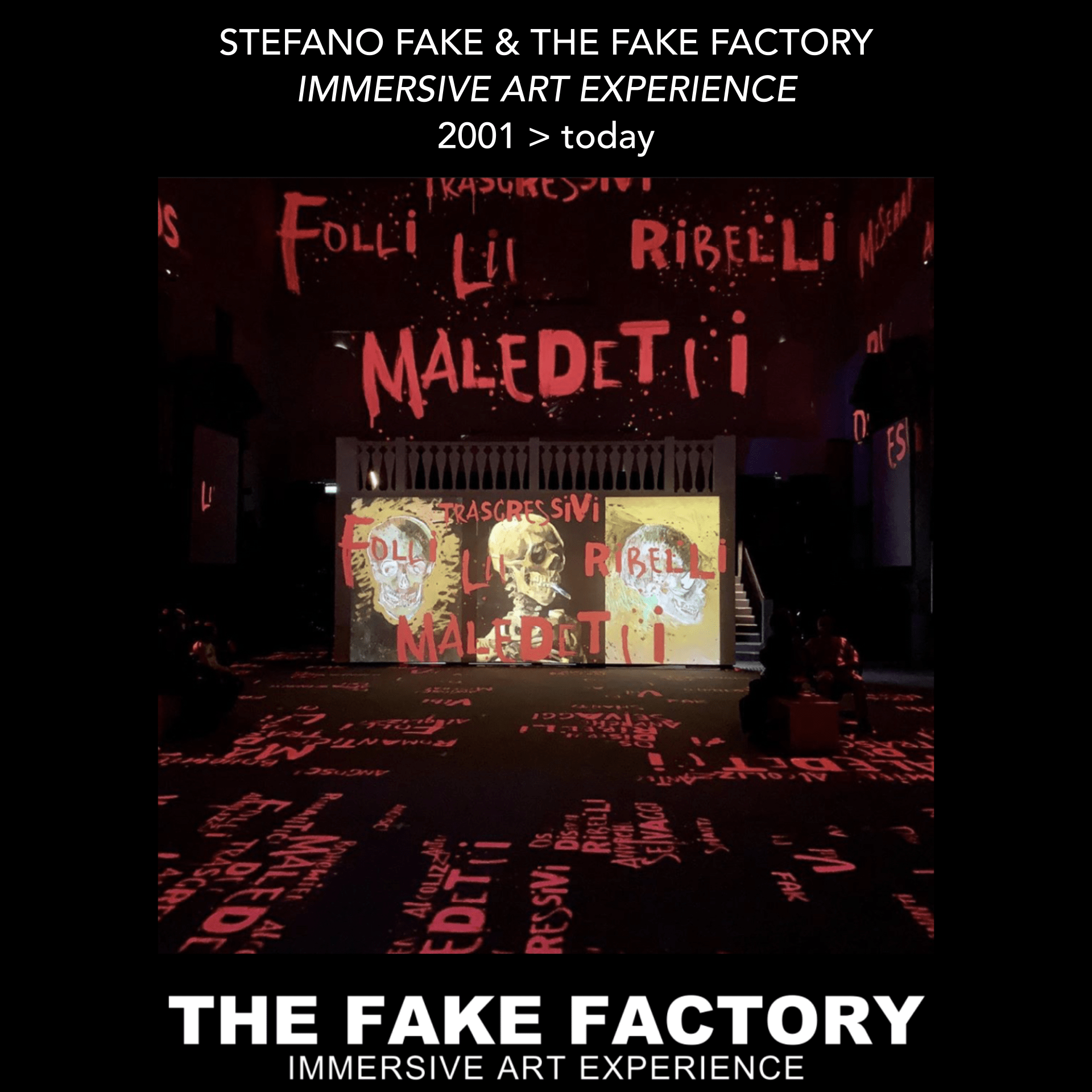
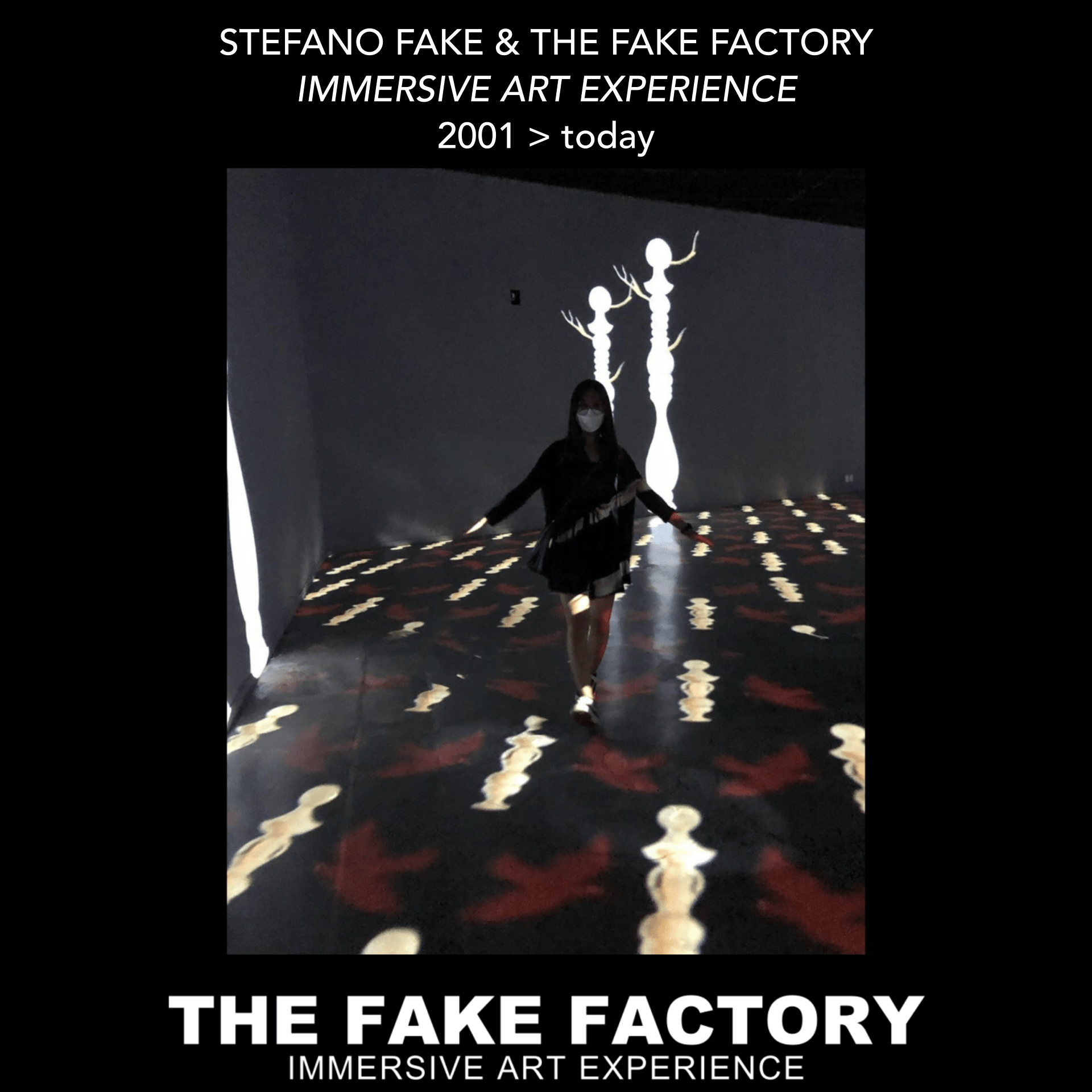
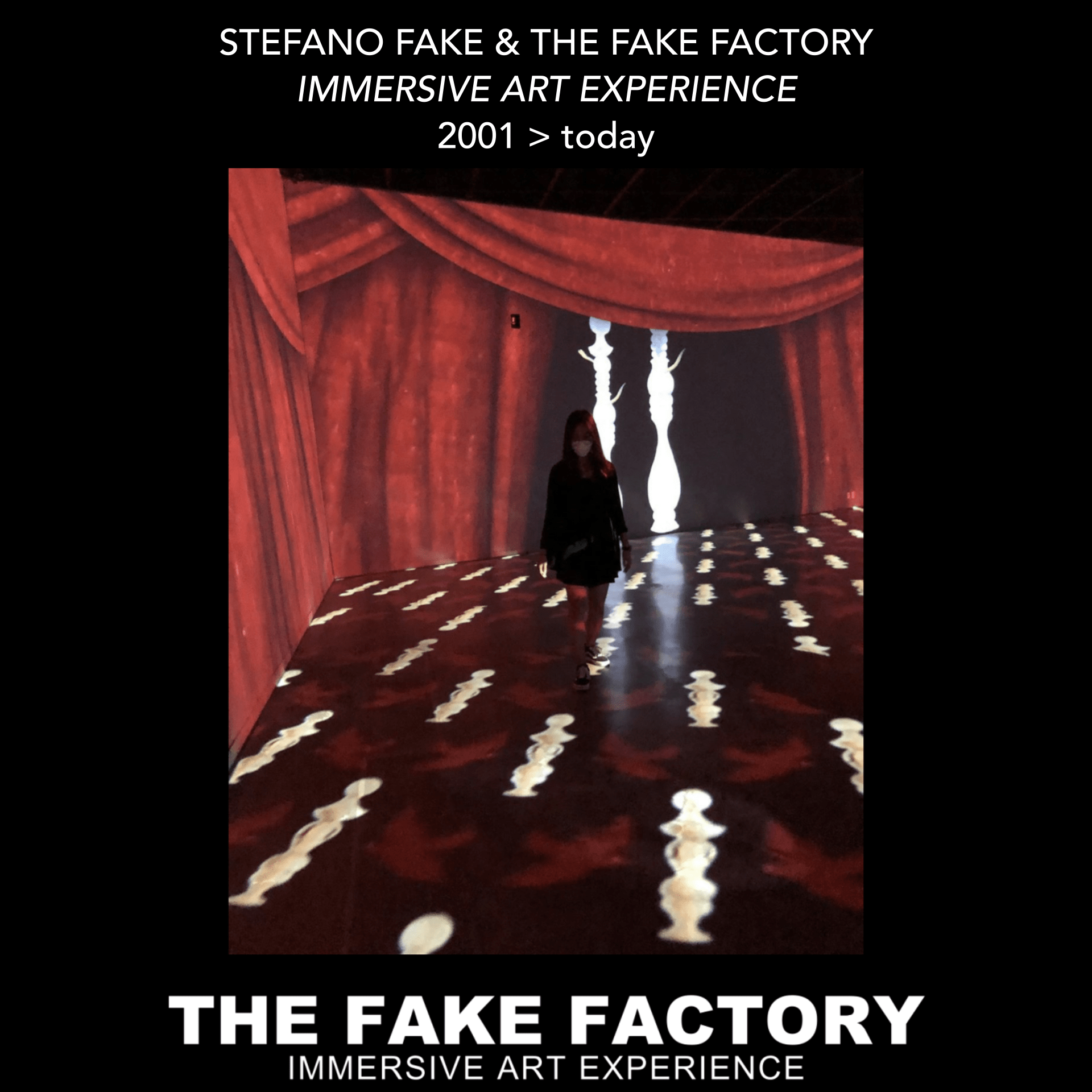
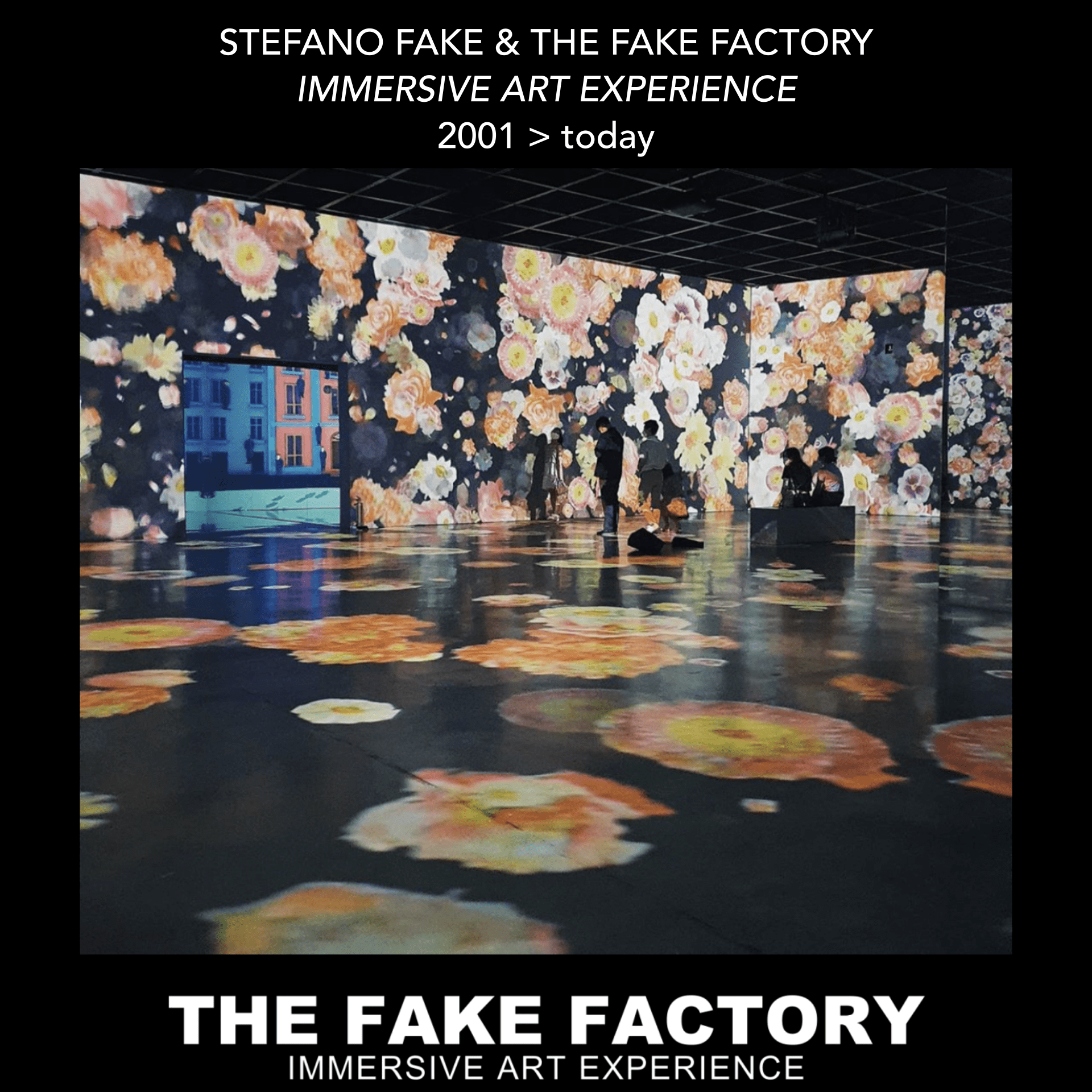
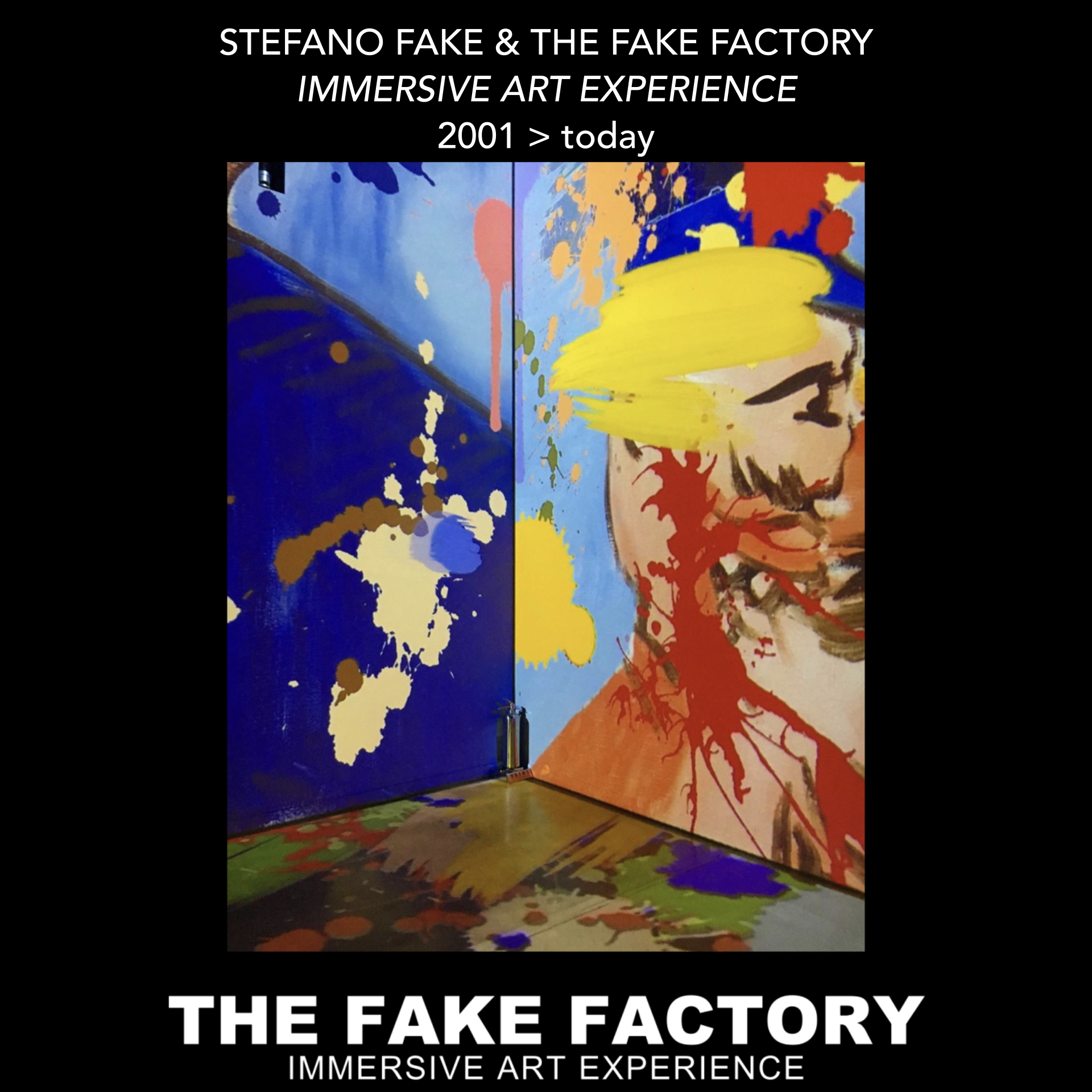
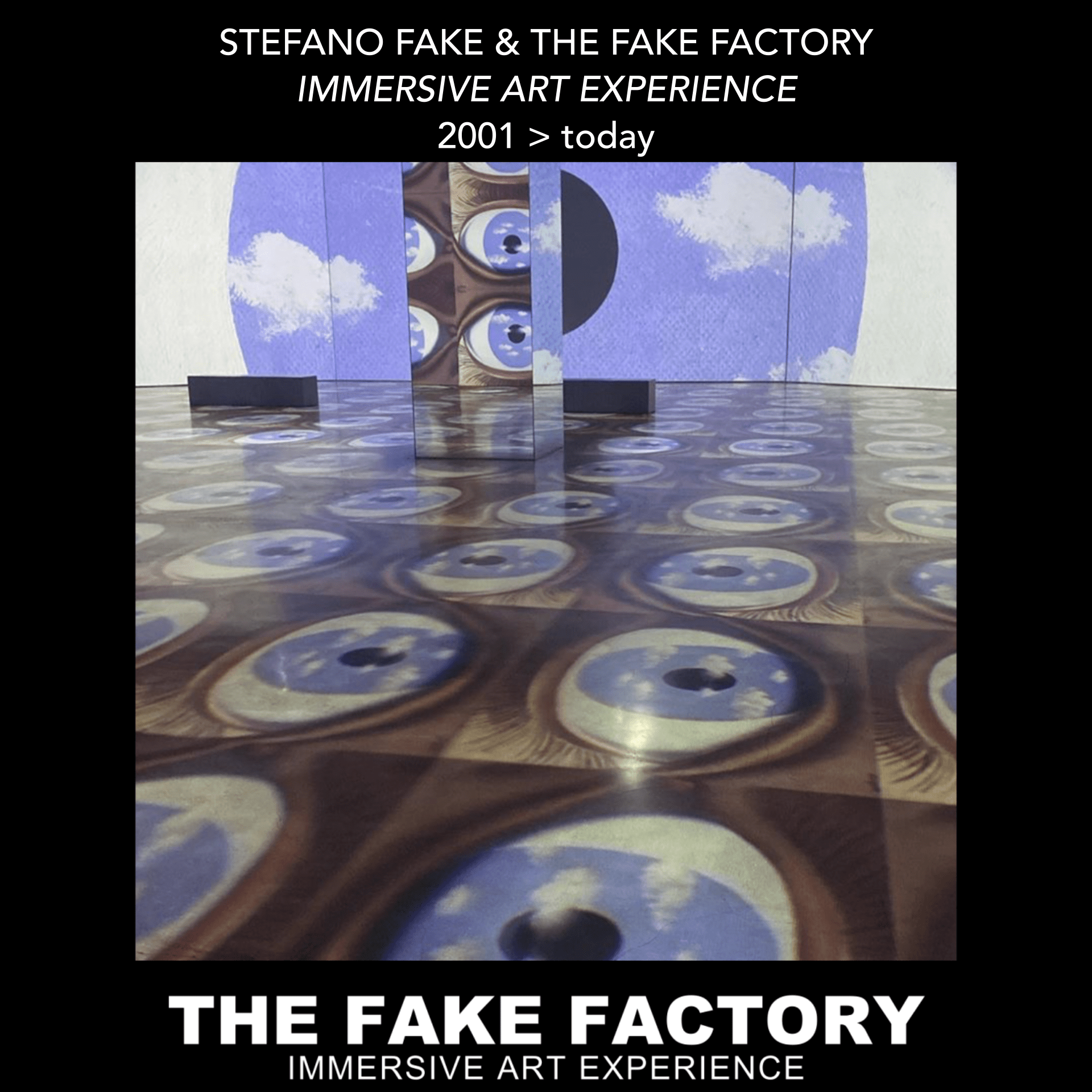
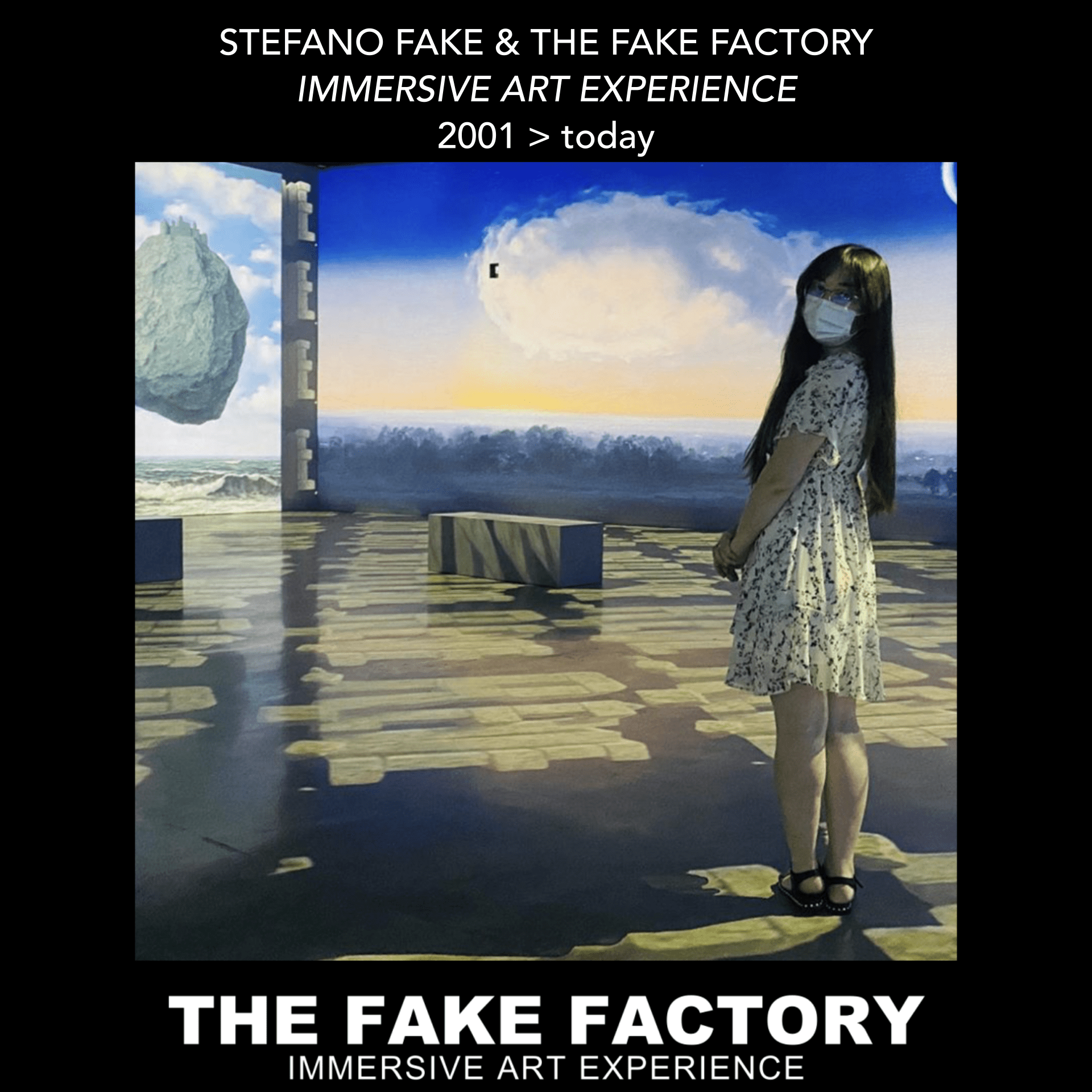
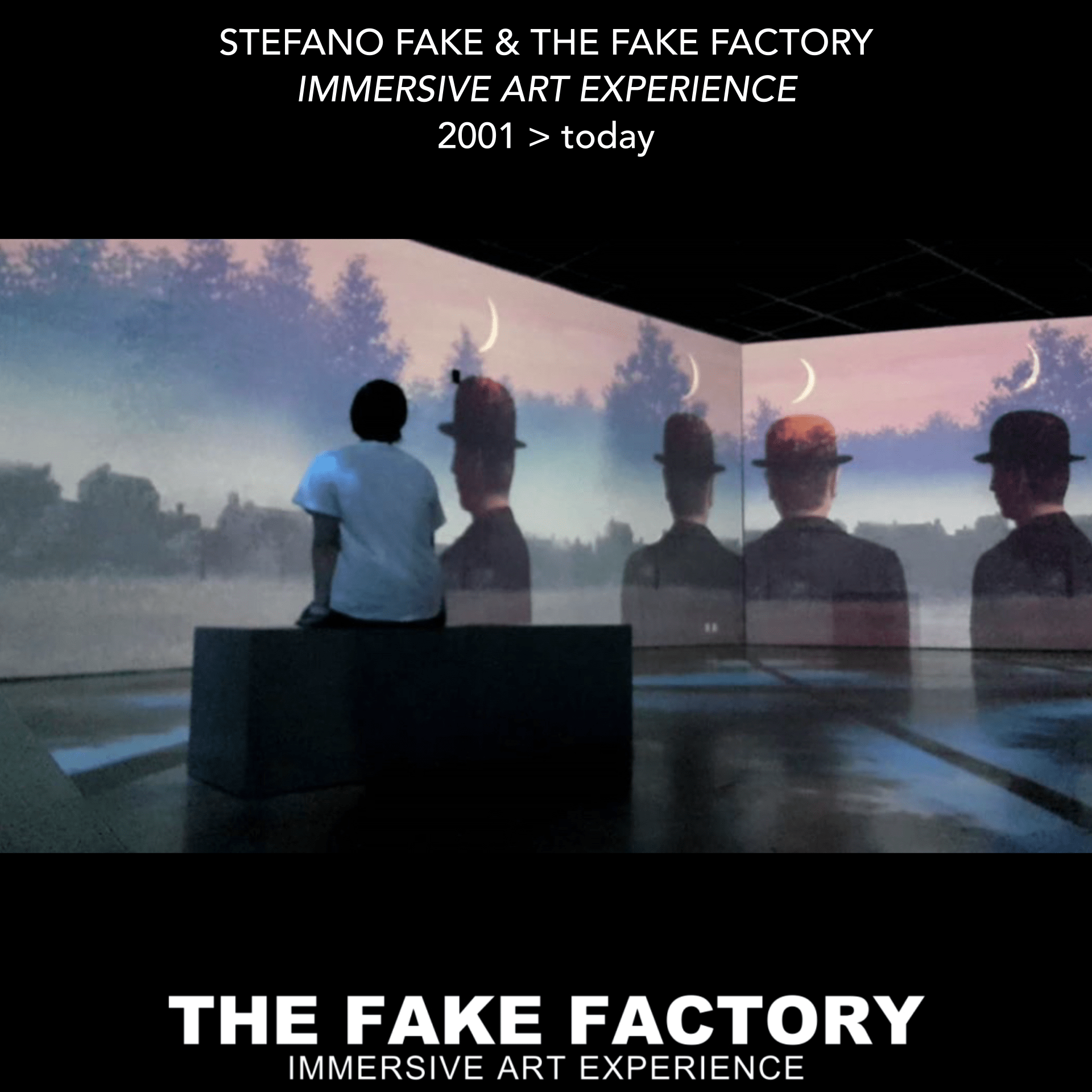
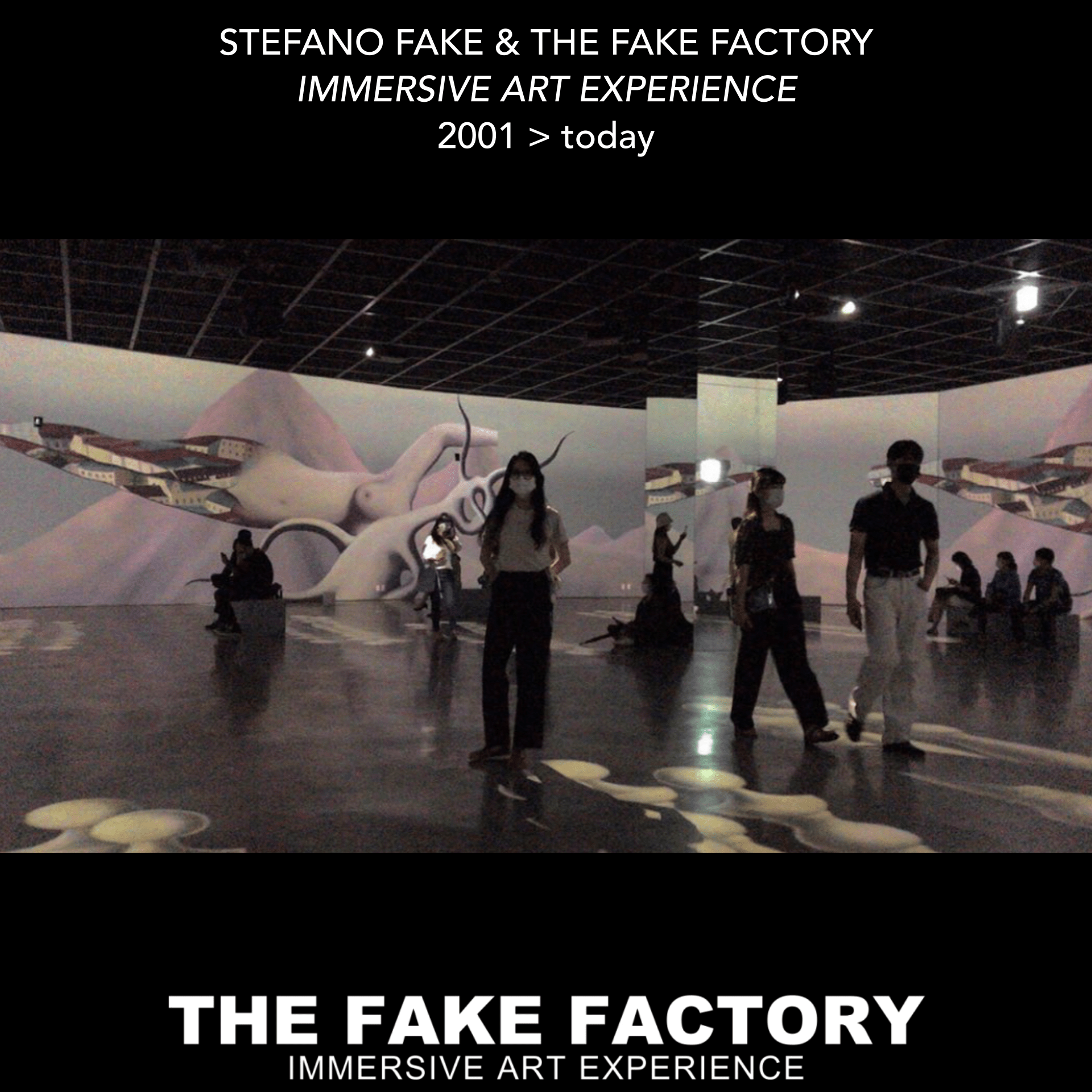
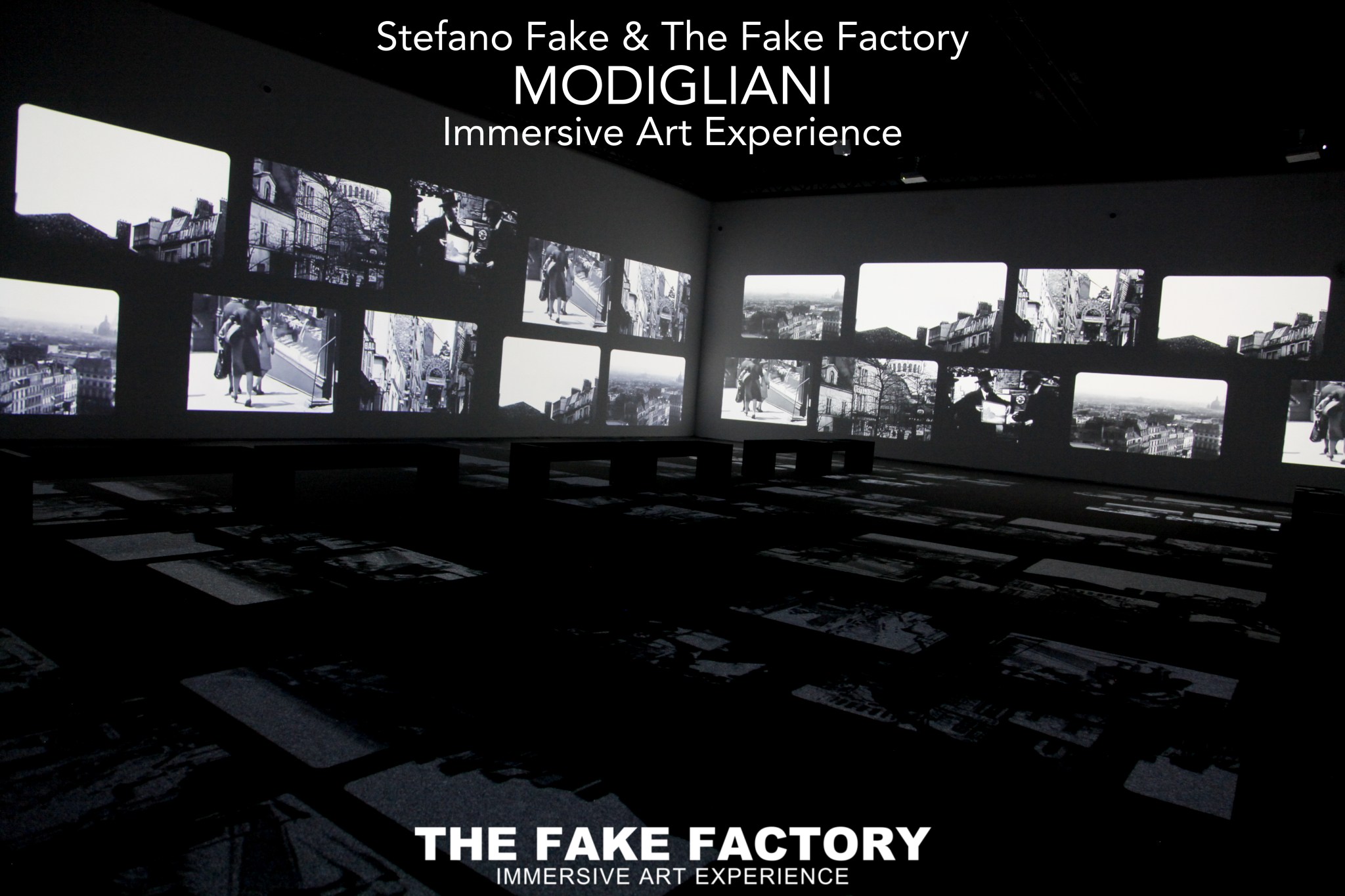
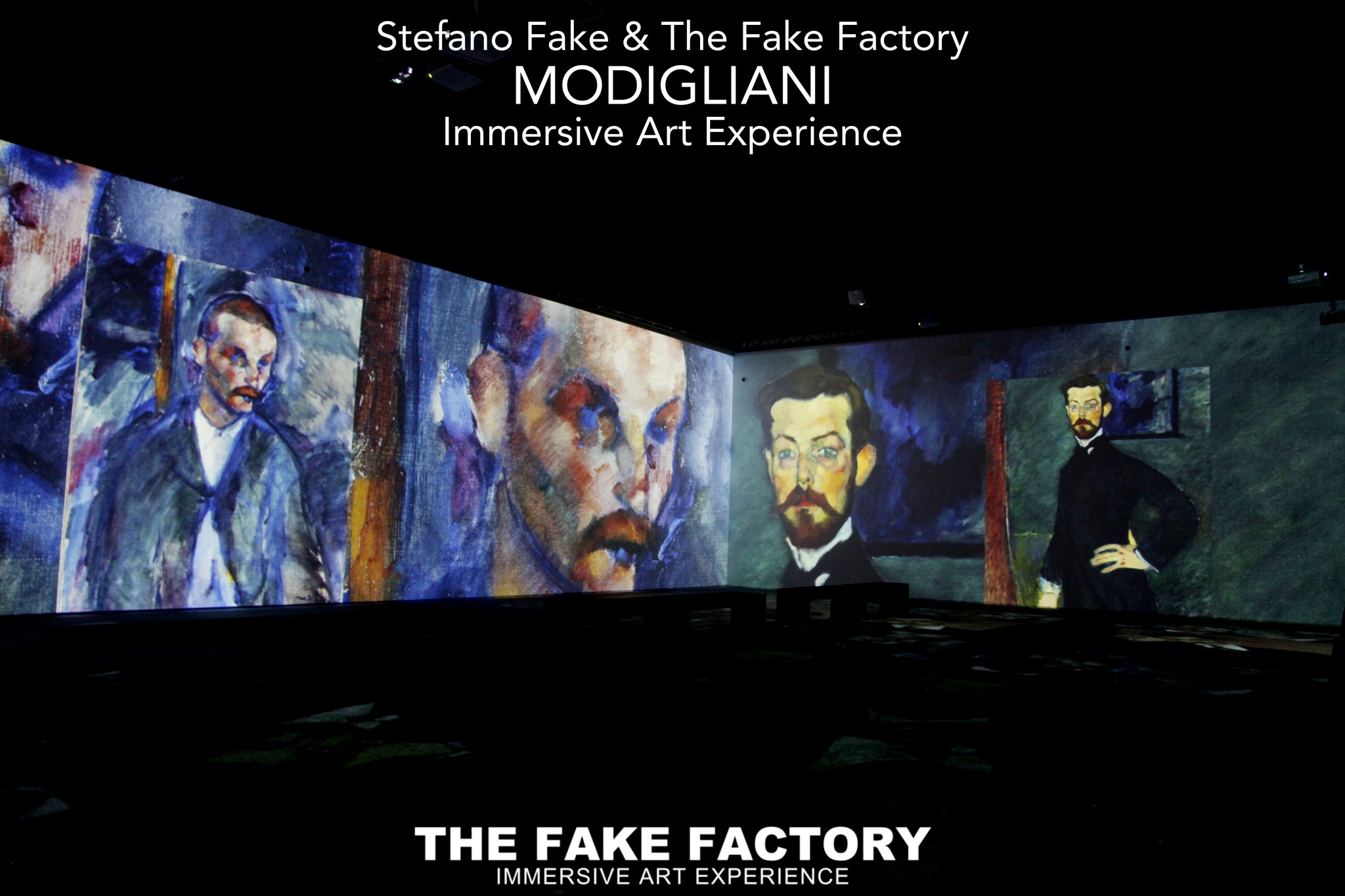
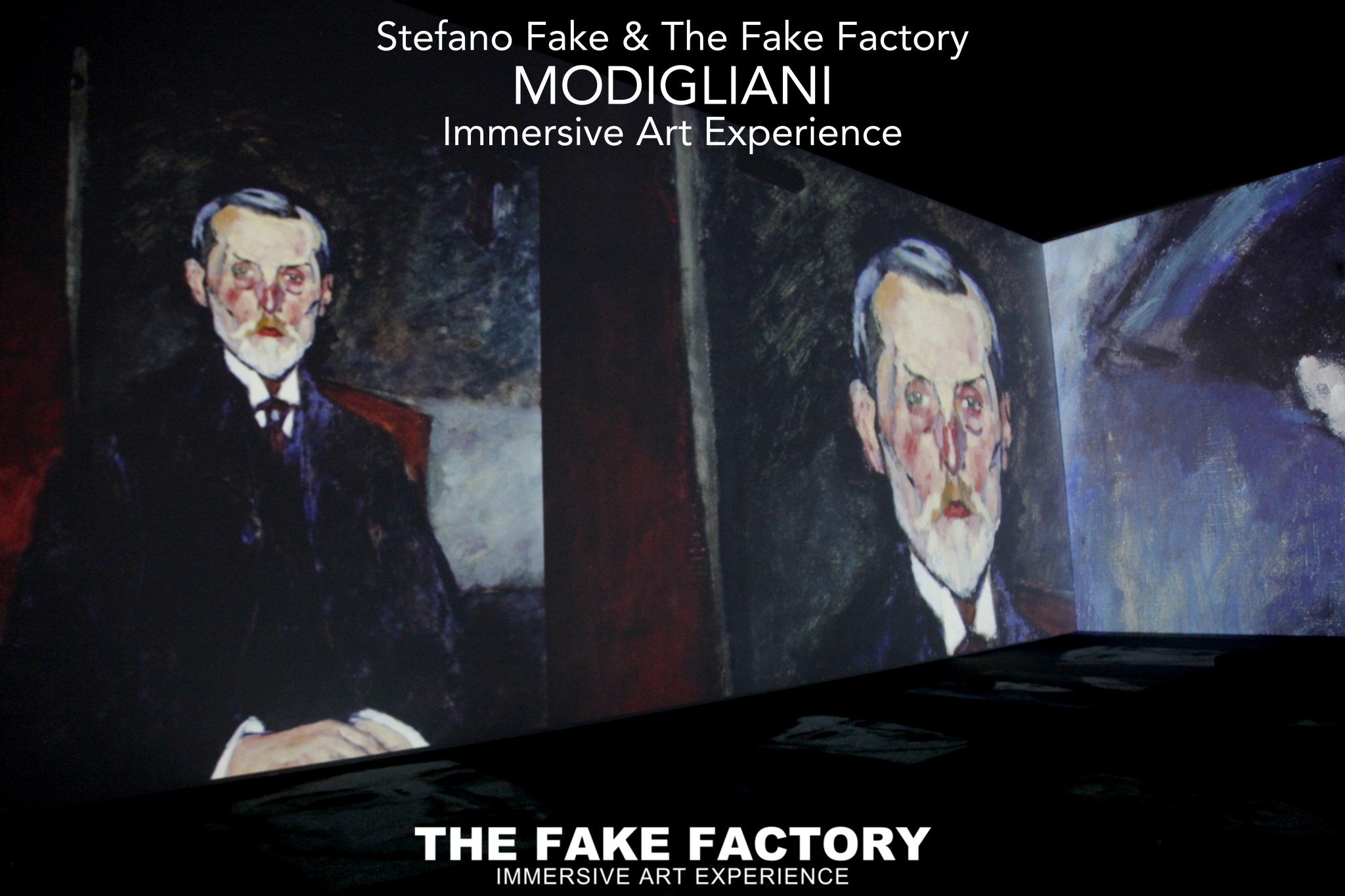
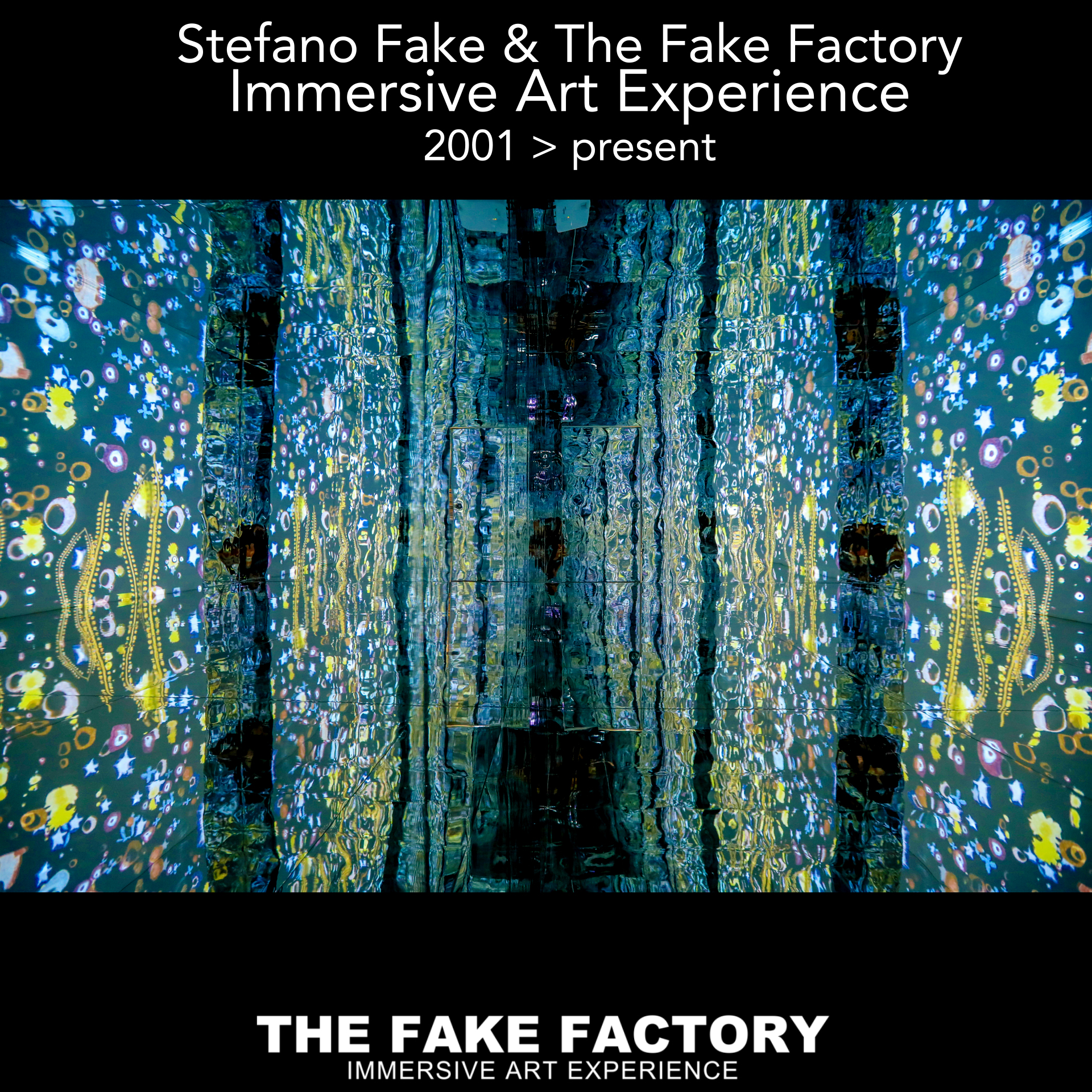
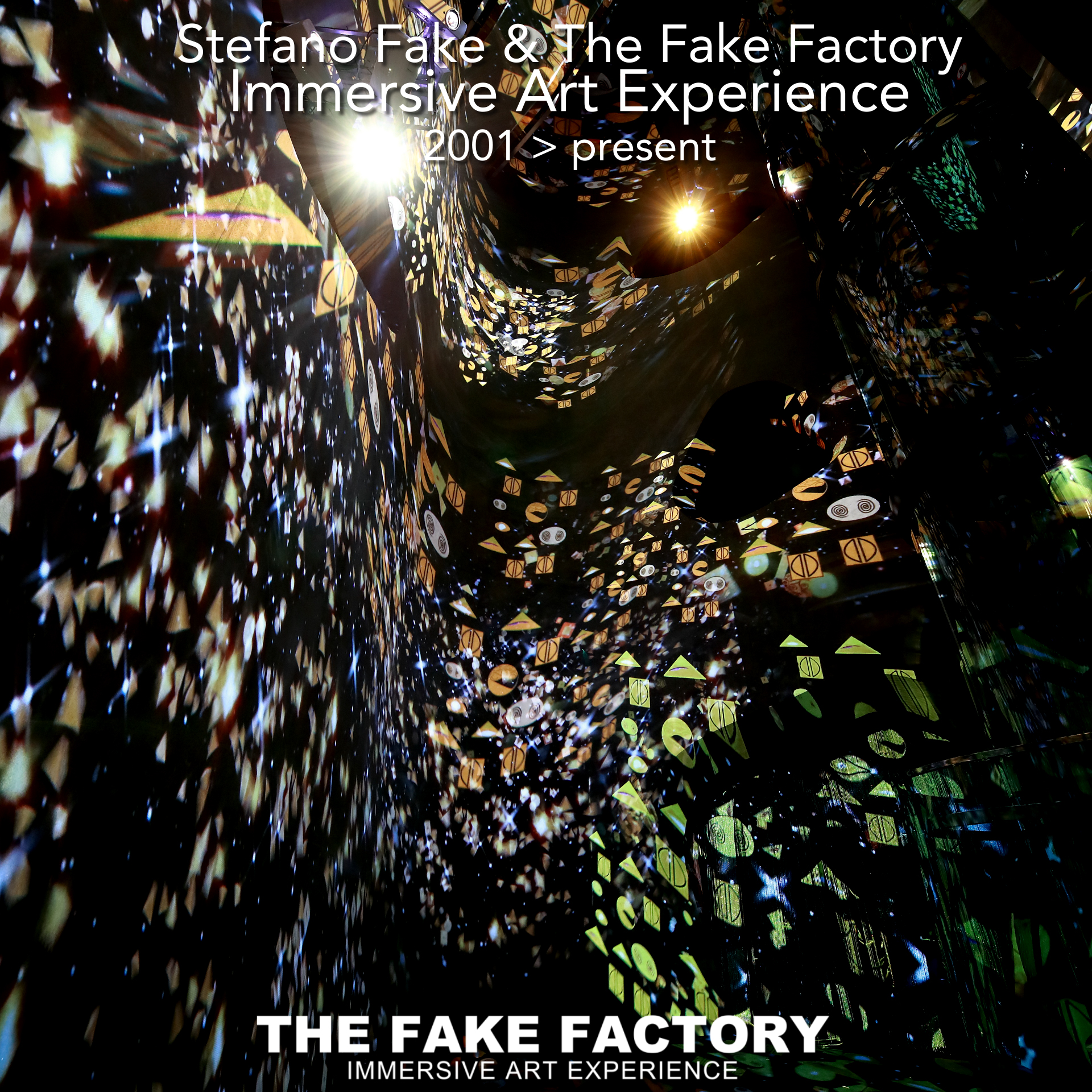
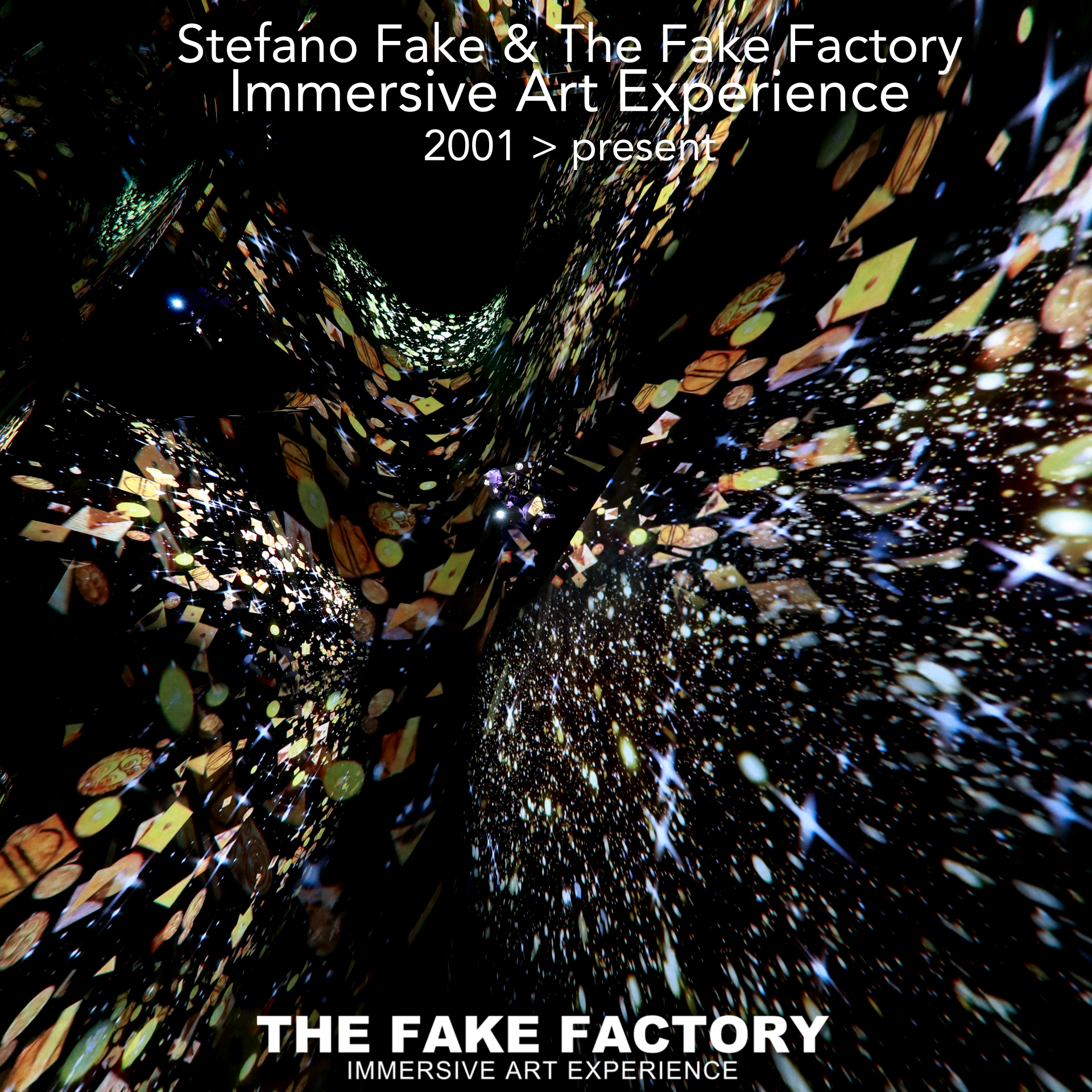
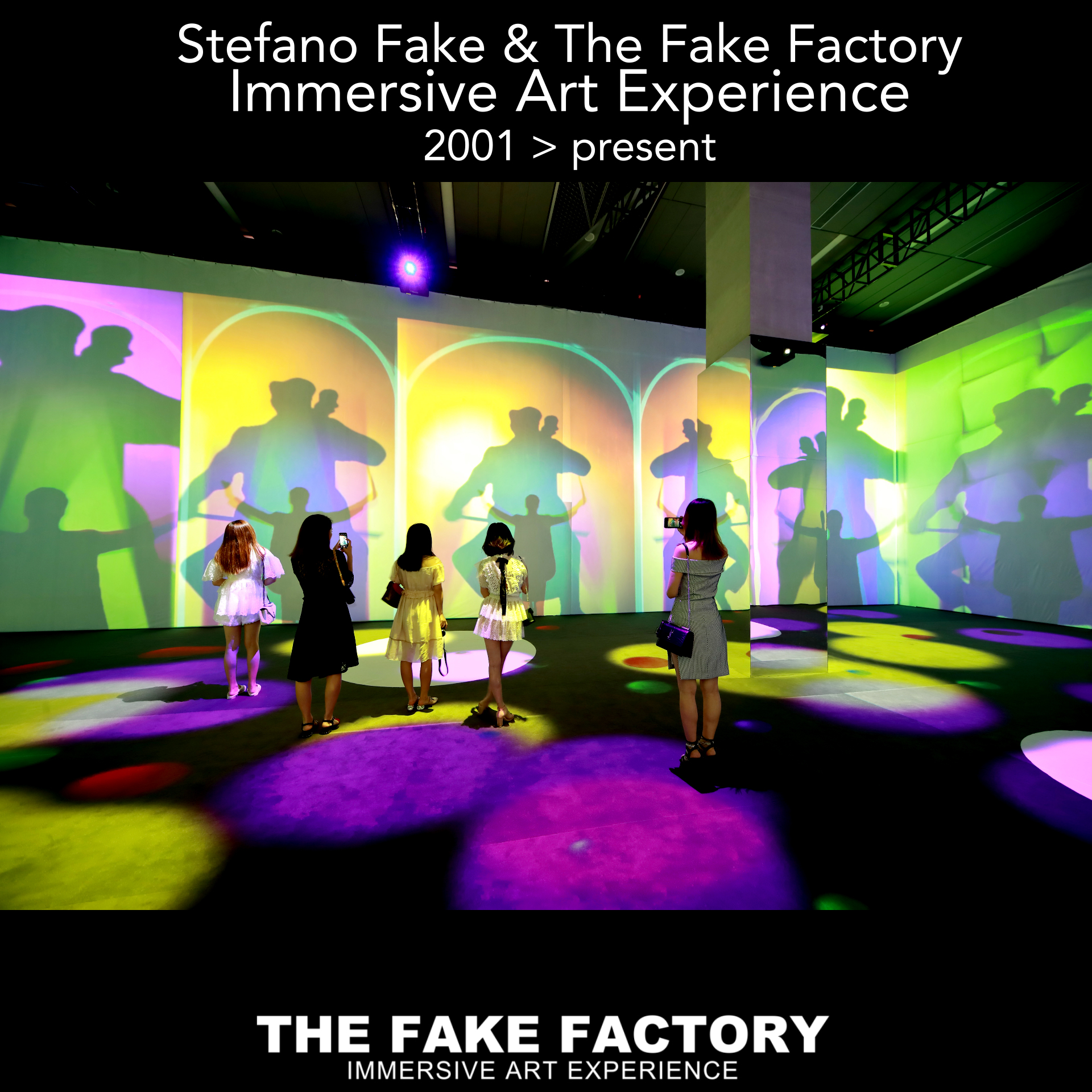
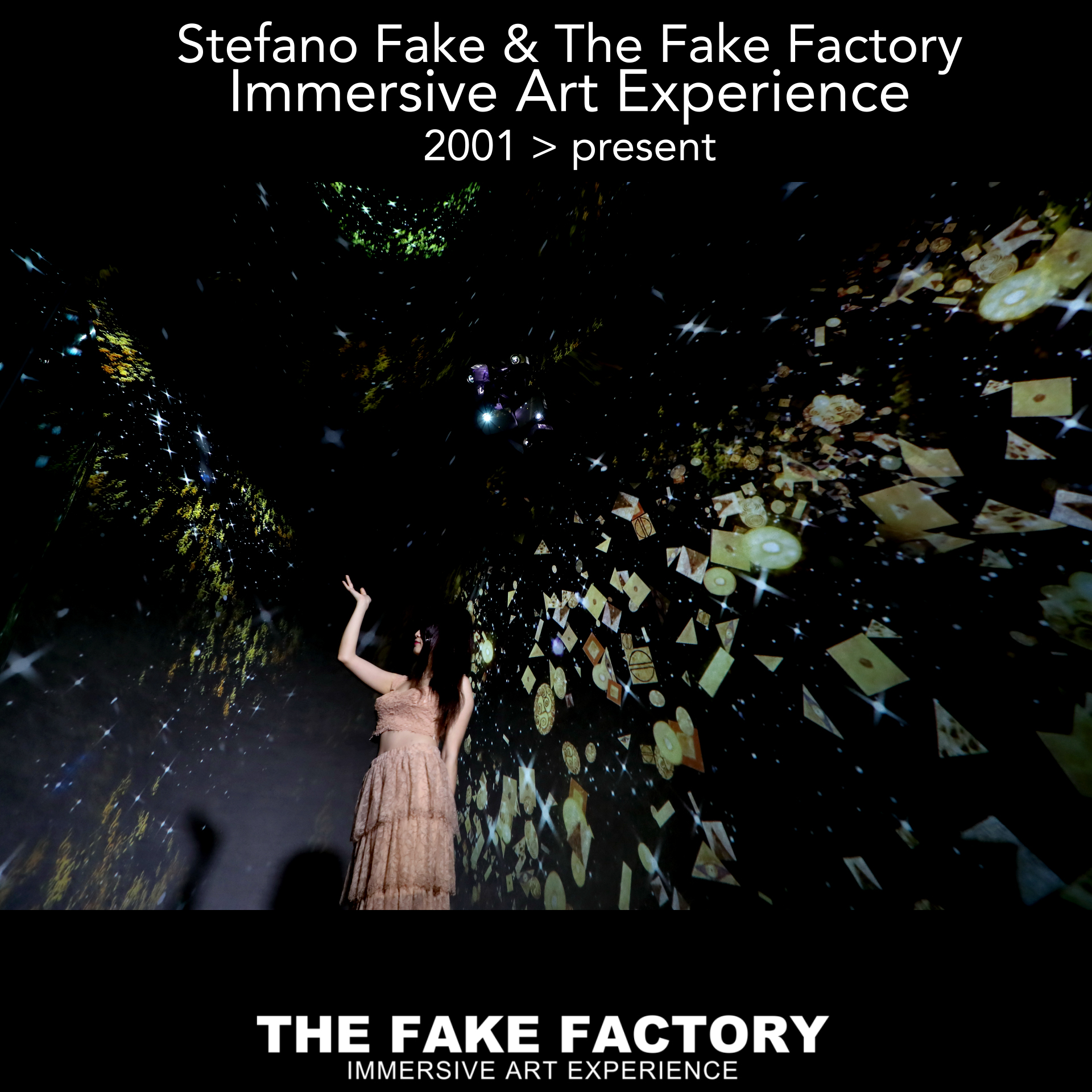
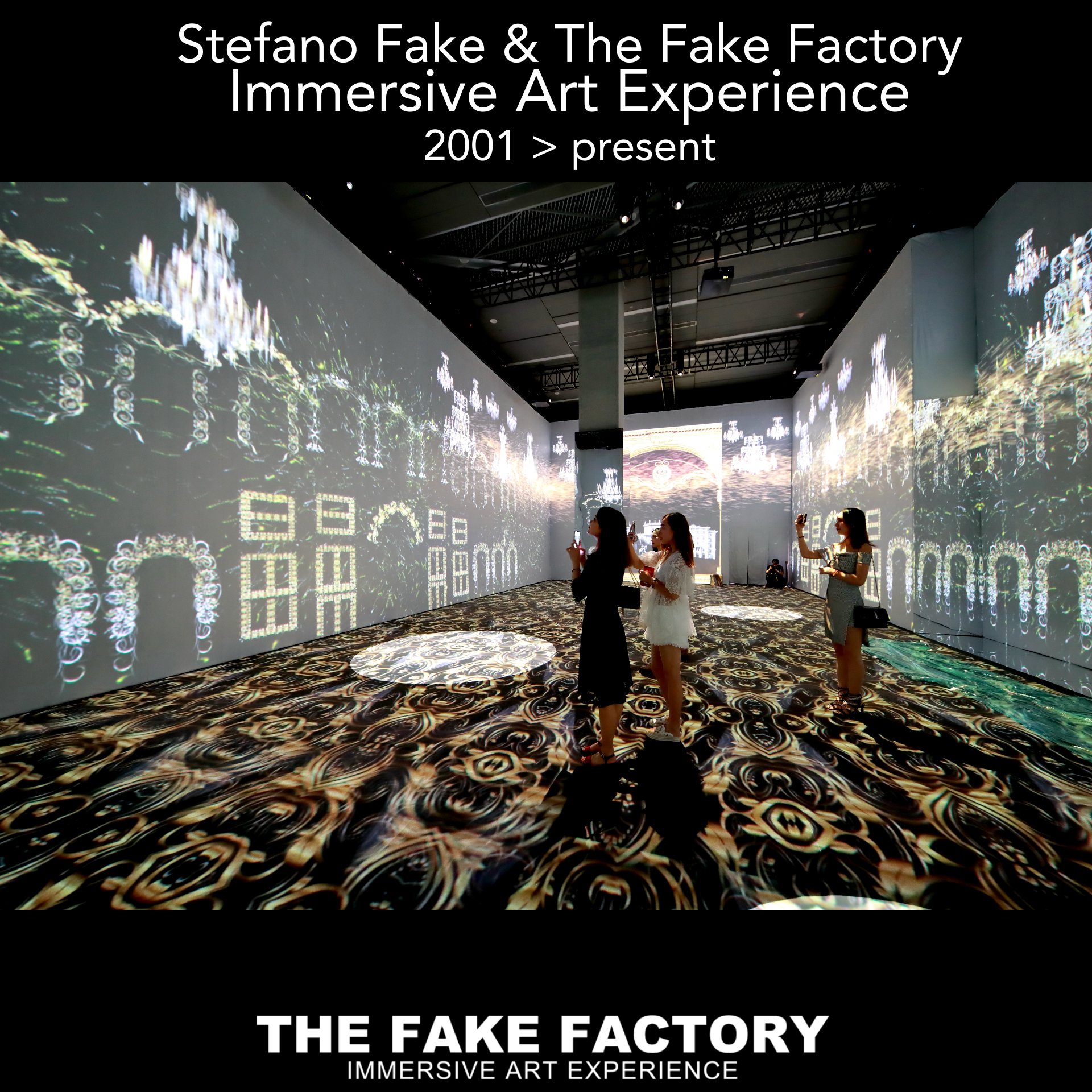
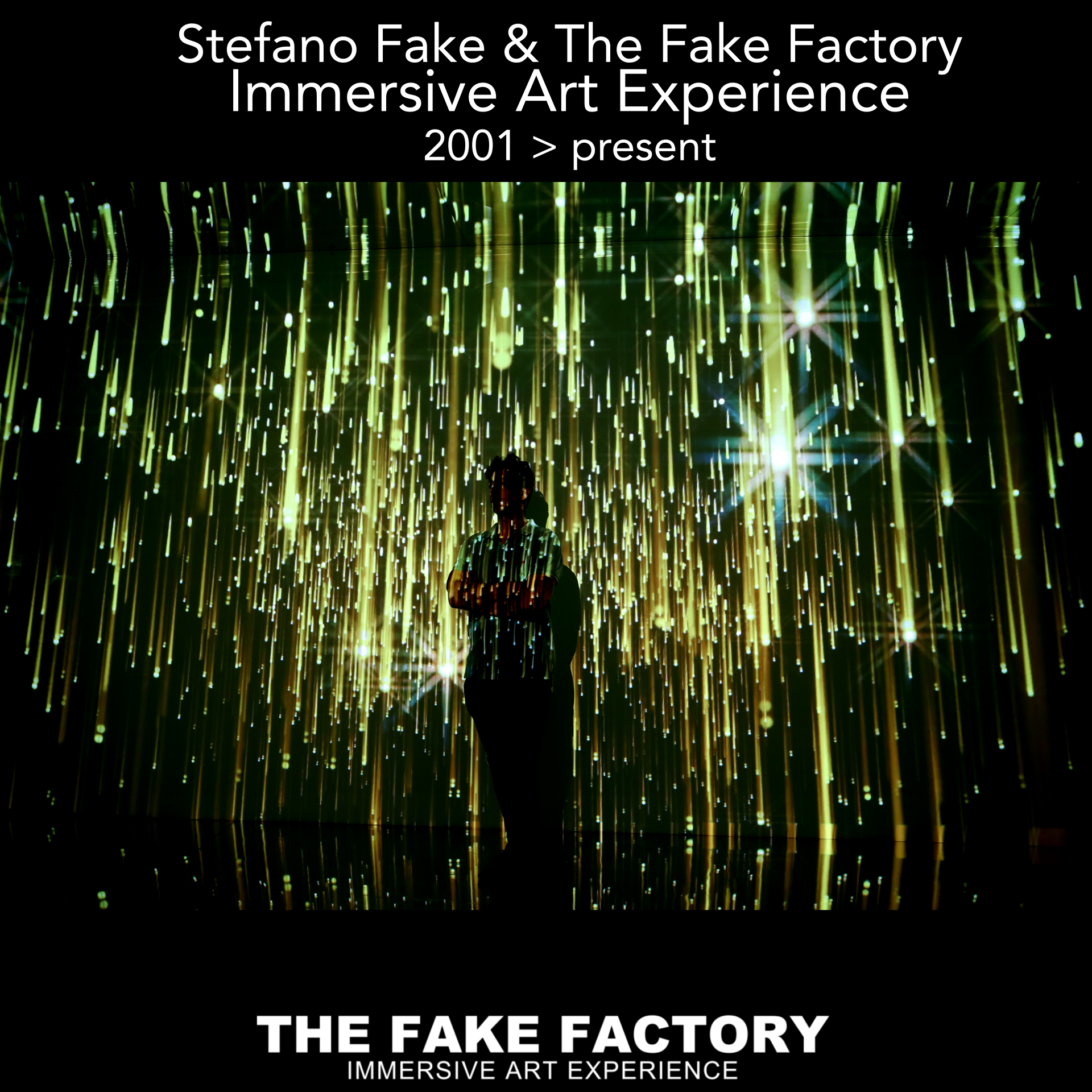
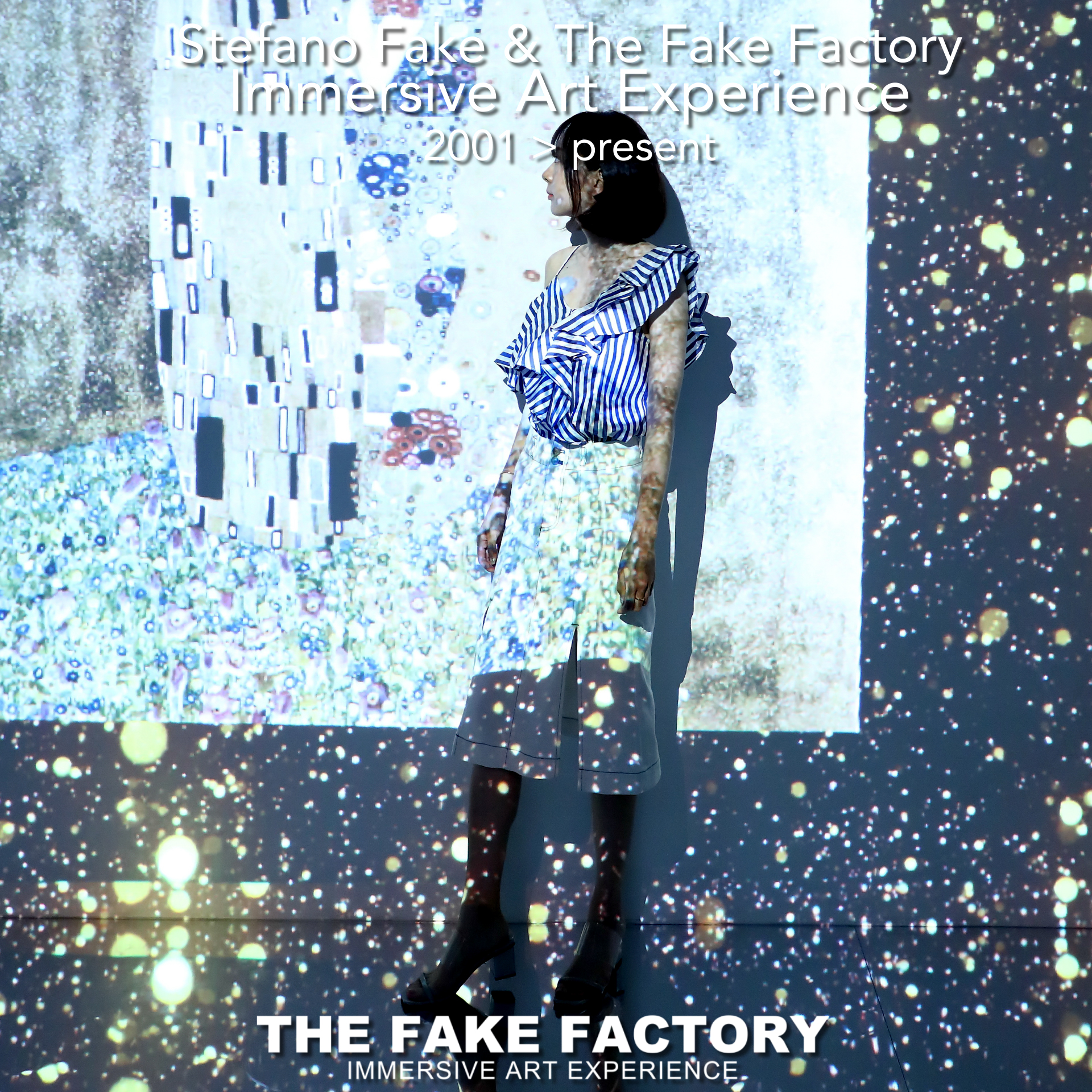
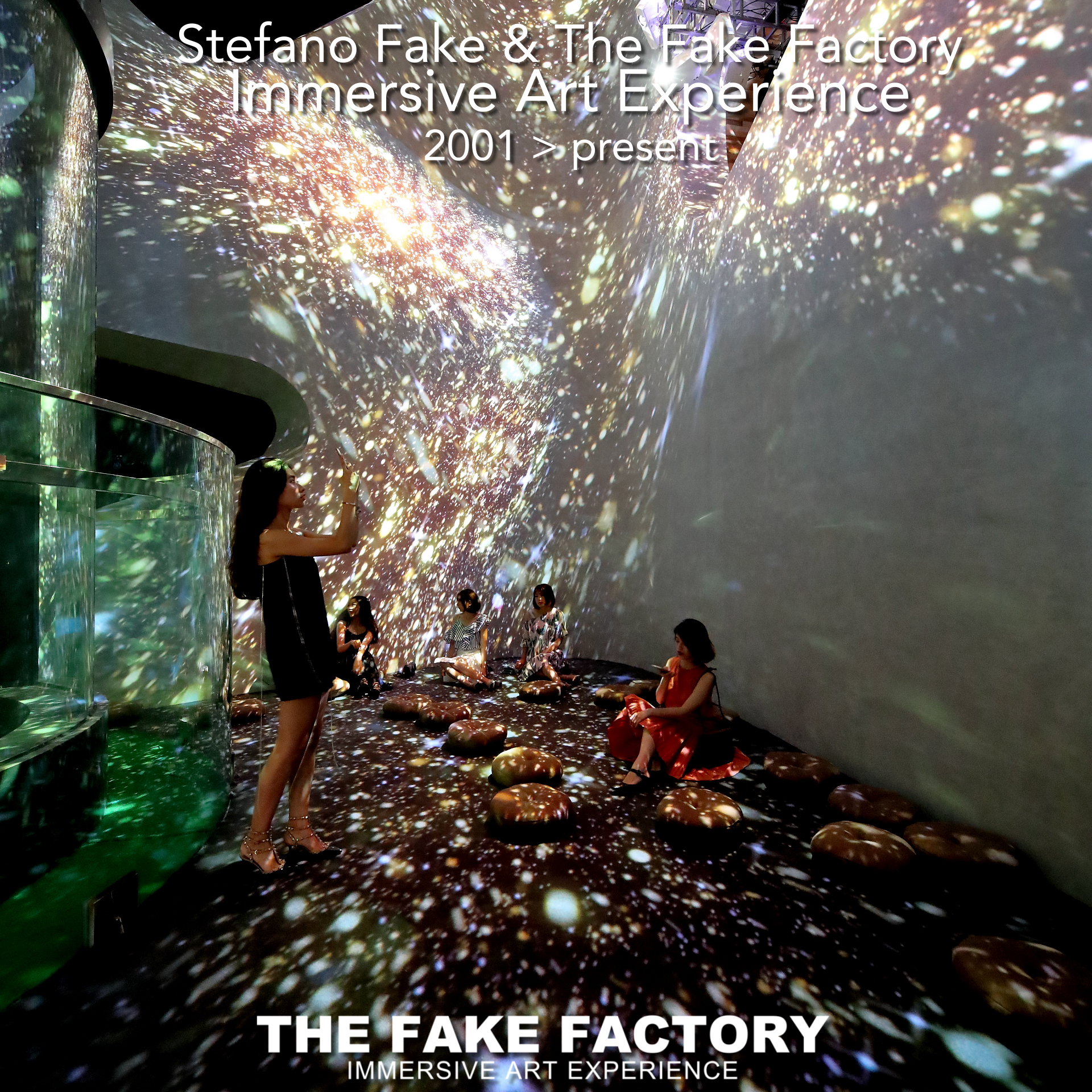
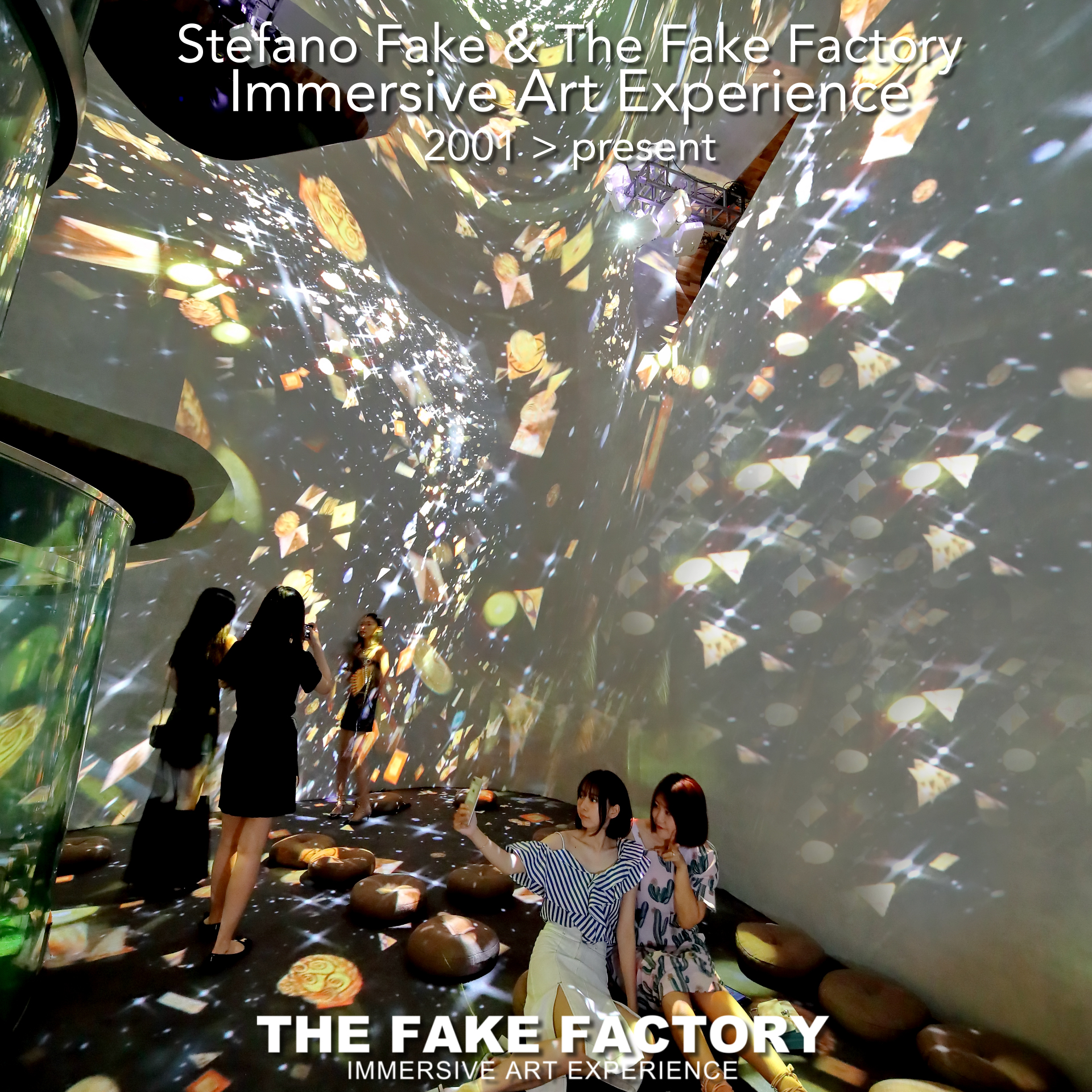
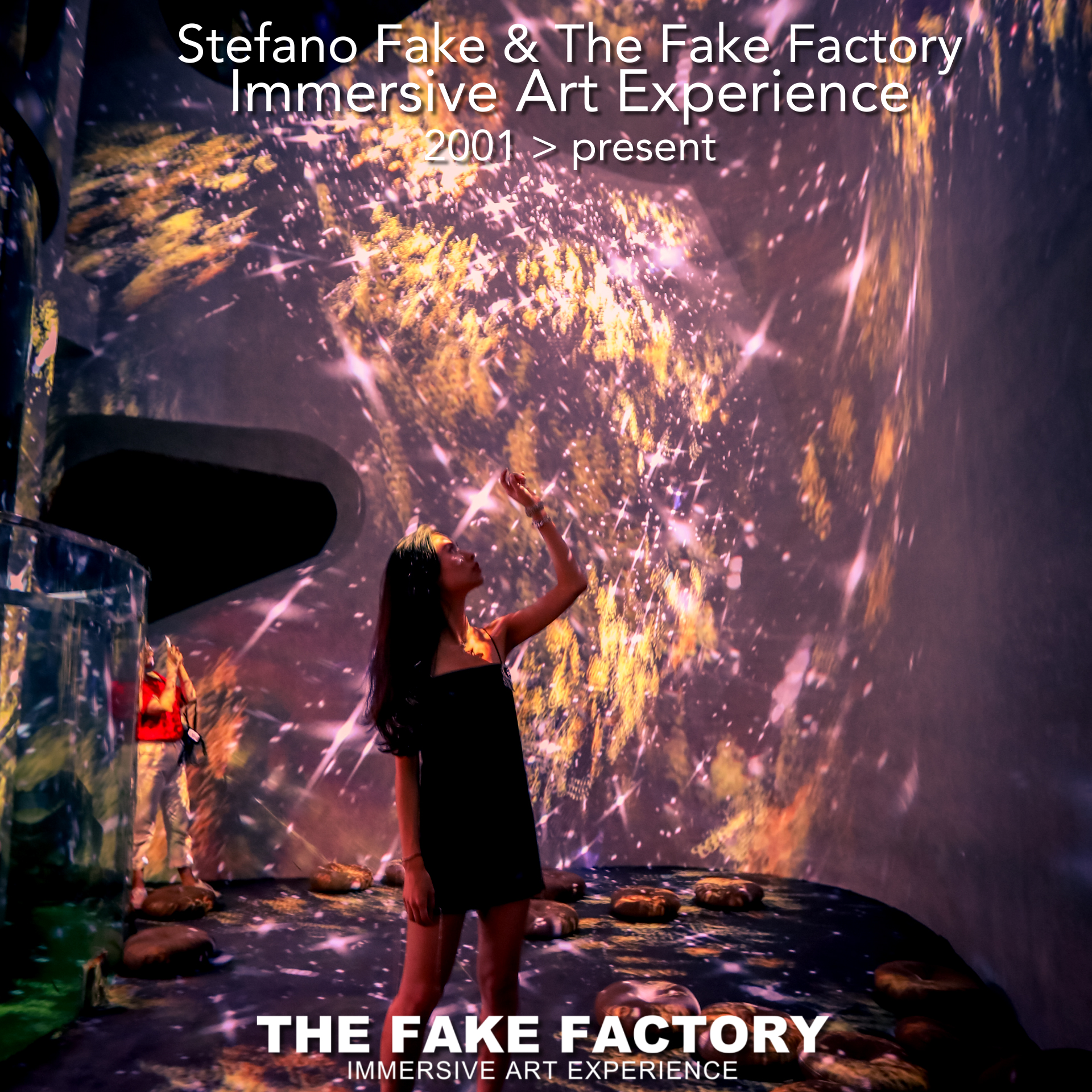
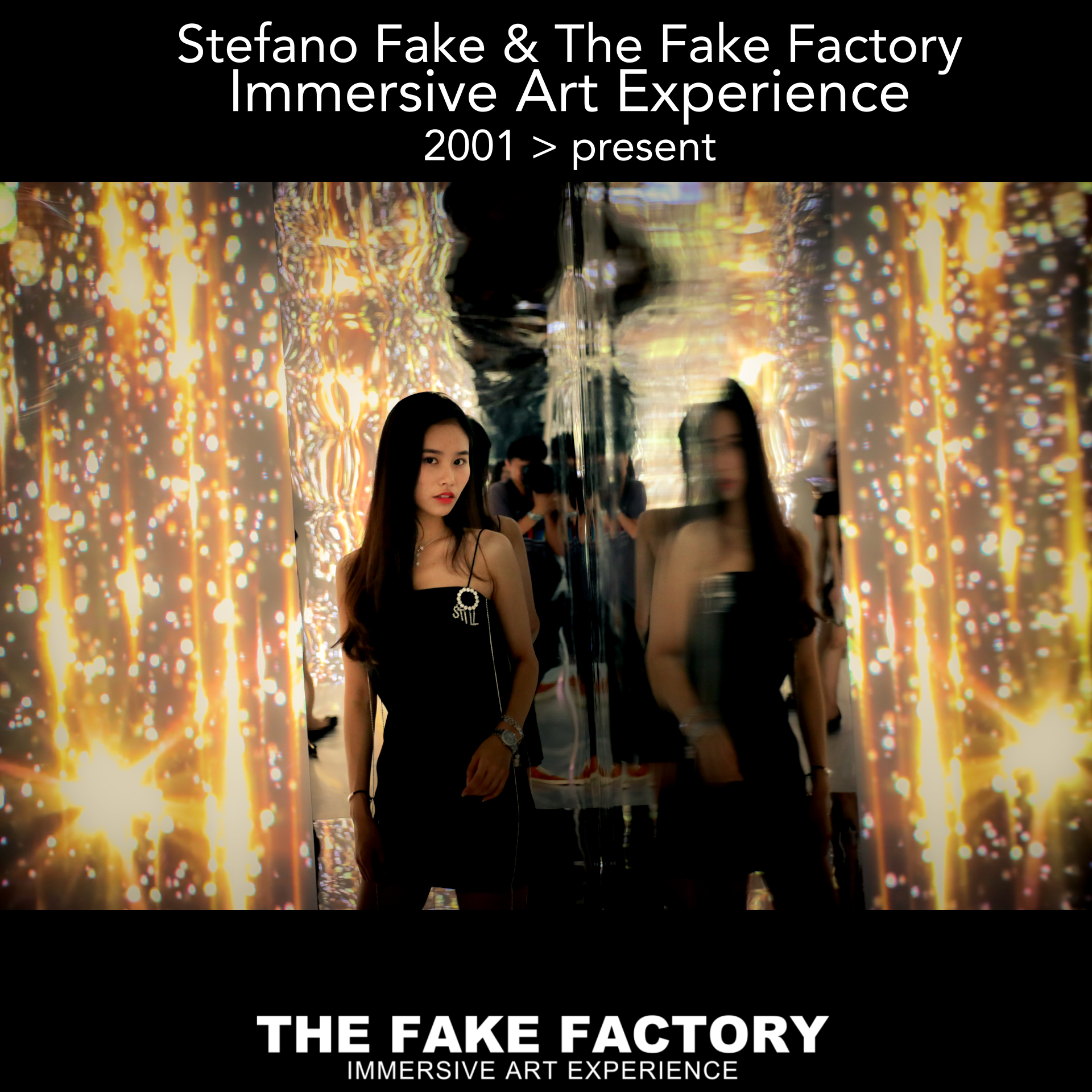
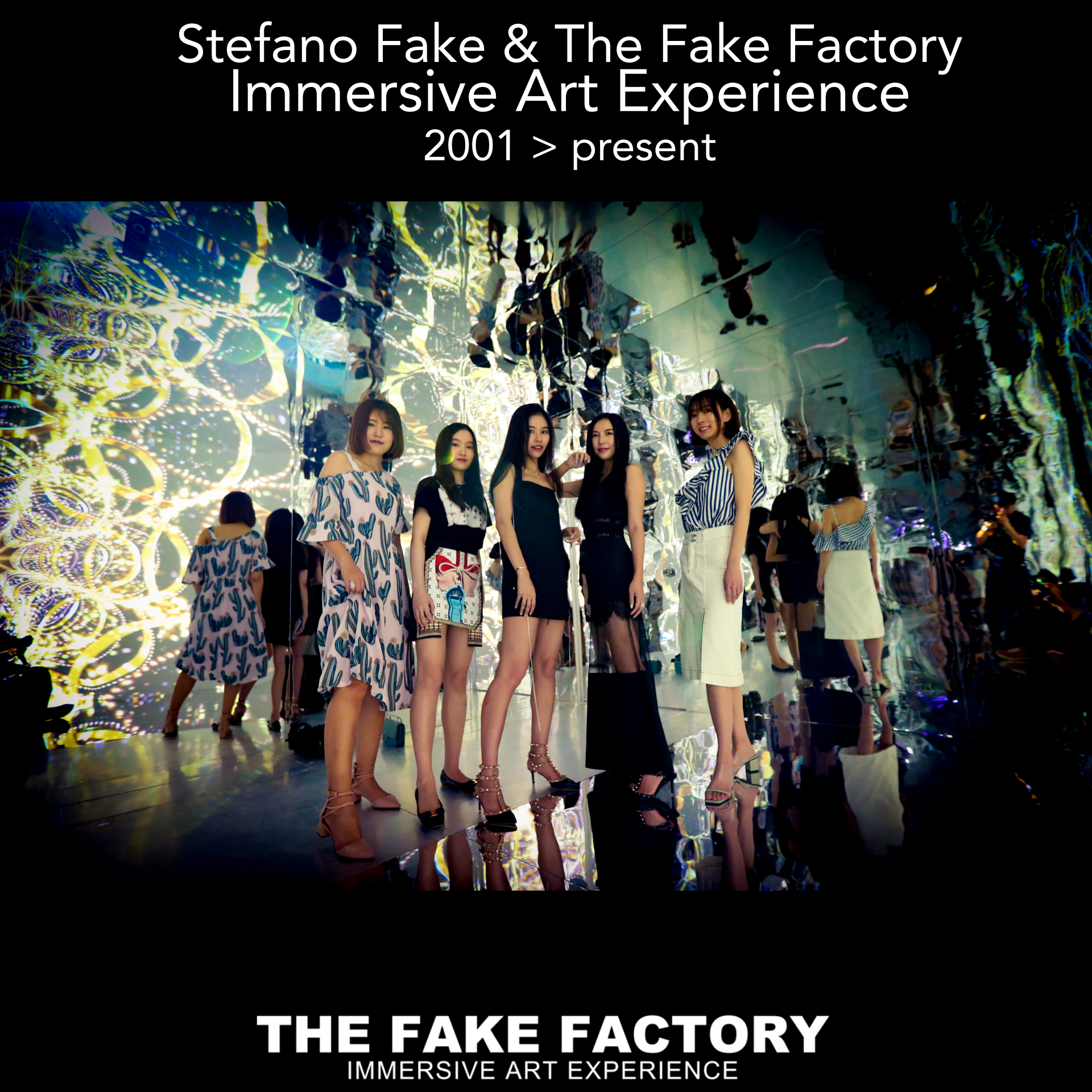
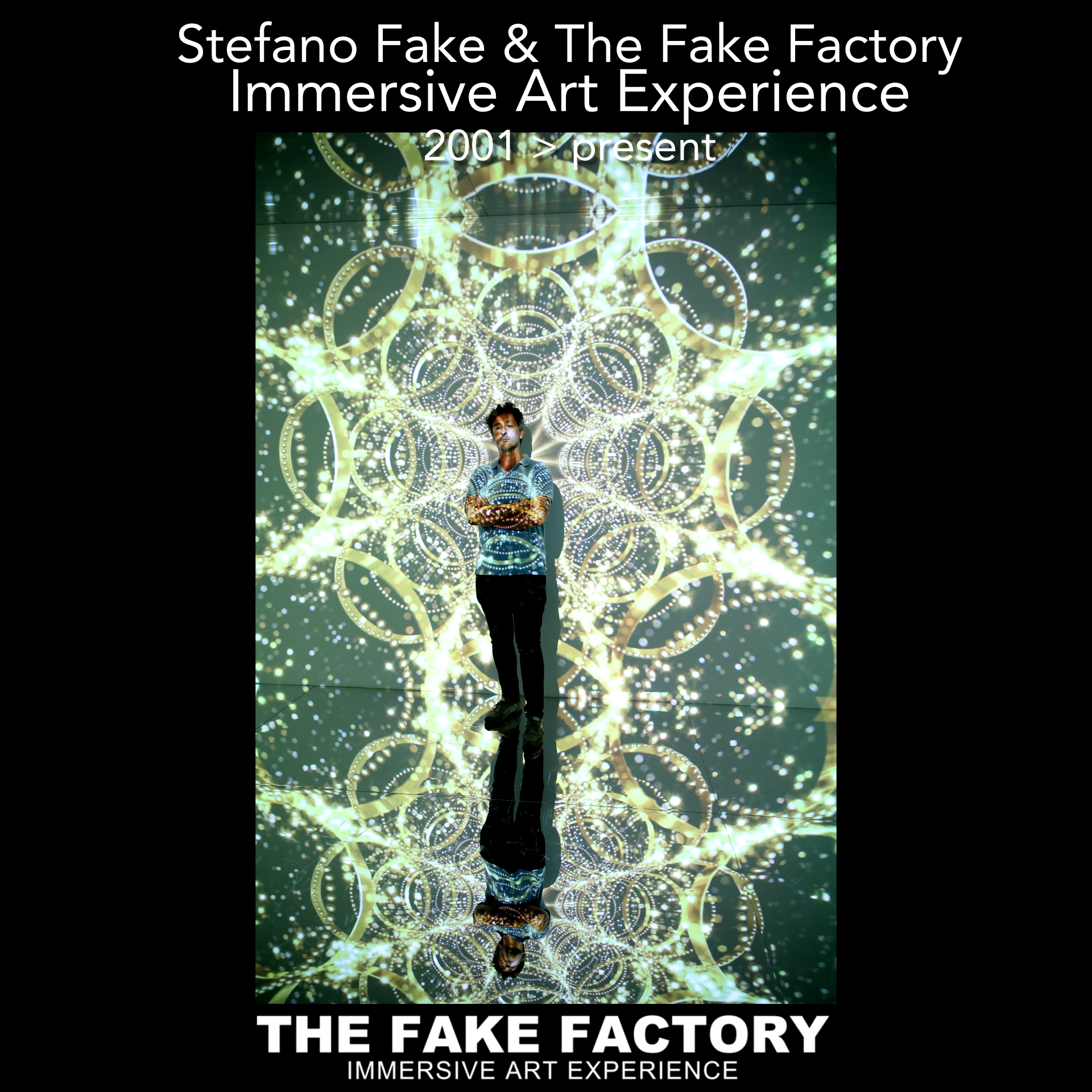
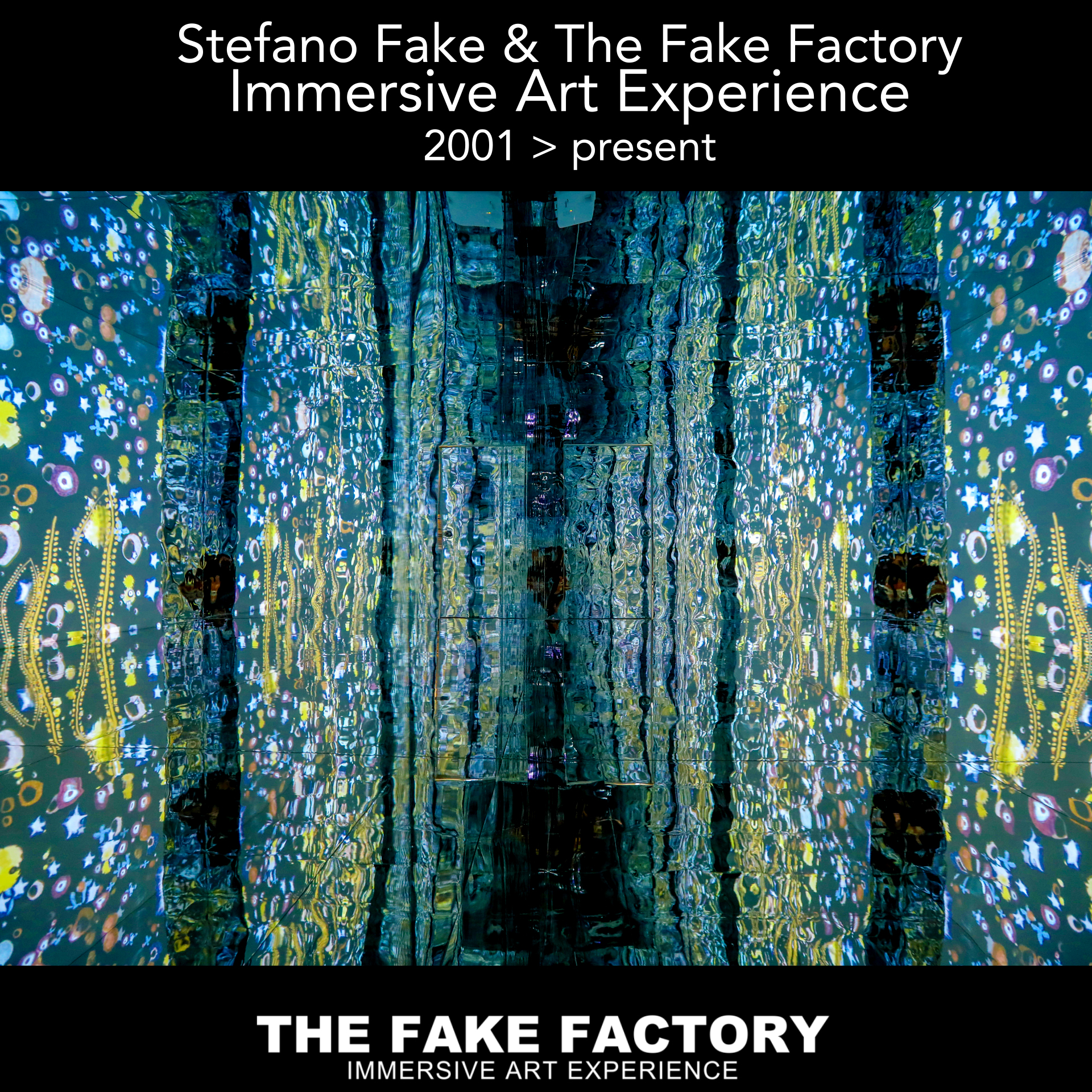
Le opere di Fake consistono principalmente in stanze immersive in cui l’artista interviene con videoproiezioni, effetti luminosi, segni grafici, forme, colori, pareti riflettenti, suoni, rumori e sensazioni olfattive e tattili. L’arte immersiva di Fake fa appello ai sensi del visitatore e lo invita ad un dialogo umano prima che estetico. Ne ricerca la complicità. I suoi ambienti sono soprattutto contenitori di emozioni. La forma è costruita attorno alla presenza umana. La vera forza dell’artista sta nella sua abilità nel raggiungere il cuore dell’esperienza umana. Sicuramente Fake è il primo artista italiano a porre in modo convincente le basi di un’estetica immersiva e relazionale nell’arte digitale, a partire dalla sua prima installazione “Room with colour Tv”, presentato a Weimar nel 2001 e poi con Ambienti (di nuova sensibilità) presentato a Firenze nel 2002. Queste opere prevedono progettualmente la partecipazione del pubblico alla costruzione o alla definizione dell’opera di cui è partecipe. Il lavoro di Fake è appunto un continuo cercare di abbracciare, avvolgere, coinvolgere le persone sensorialmente, mentalmente, spiritualmente, emotivamente, ludicamente. Lo stesso Fake ha indicato in questa frase l’essenza della propria arte : “L’arte è gioco, giochiamo insieme!”, rendendo tributo a Federico Fellini ( “é una festa la vita, viviamola insieme!” – Life is a celebration, Let’s live it together!”) e all’artista concettuale che ha segnato il cambio fra arte moderna e contemporanea, Marchel Duchamp (“L’arte è un gioco tra tutti gli uomini di tutte le epoche”).
Andy Warhol amava spesso ripetere che, dal suo punto di vista, la pop art era soprattutto “un modo di amare le cose”. Parafrasando le sue parole possiamo oggi dire che l’Arte Immersiva realizzata da Fake è soprattutto “amare le persone”. Perché nelle installazioni immersive c’è un importante e fondamentale aspetto relazionale fra l’artista e il visitatore. Il fatto stesso di definirle “Esperienze di Arte Immersiva” (Immersive Art Experience) fa capire il cambio di paradigma messo in atto da Fake.
La qualità realizzativa dell’audiovisivo o gli aspetti puramente tecnologici, pur essendo determinanti nel risultato estetico finale, passano in secondo piano. Per Fake prima di tutto viene l’esperienza del visitatore, il suo essere avvolto nella luce, nelle immagini, e nei suoni, dentro gli ambienti aumentati sensorialmente grazie all’uso poetico delle tecnologie. Non si tratta di circondare lo spettatore con delle grandi immagini o di stupirlo con facili effetti illuminotecnici, ma di portarlo dentro ad un flusso emozionale, modellando la forma delle percezioni sensoriali che lo spettatore vive dentro allo spazio. Forse è questo, in sintesi, l’aspetto distintivo dell’Arte Immersiva realizzata da Fake che lo ha portato ad essere oggi uno degli artisti italiani più importanti e influenti del nuovo millennio.
Evoluzione dell’arte da opera/manufatto a spazio/ambiente, da contemplativa a relazionale ed esperenziale.
I pittori ci hanno sempre mostrato cose e persone poste davanti a noi.
Noi porremo lo spettatore nel centro del quadro.
I vostri occhi abituati alla penombra si apriranno alle più radiose visioni di luce.
(Boccioni, Carrà, Russolo, Balla, Severini : La pittura futurista. Manifesto tecnico” – 11 Aprile 1910)
Vogliamo che il quadro esca dalla sua cornice
e la scultura dalla sua campana di vetro.
A tal fine, con le risorse della tecnica moderna,
faremo apparire nel cielo:
forme artificiali, arcobaleni di meraviglia, scritte luminose.
(Lucio Fontana, Secondo Manifesto dello Spazialismo – 1948)
Forte di una lunga tradizione italiana nella sperimentazione e nell’innovazione nelle arti, Fake opera da sempre un costante lavoro di rilettura della tradizione e di utilizzo delle tecnologie più avanzate per cercare nuove forme d’espressione artistica. Fin dalla loro comparsa negli anni ’90, Fake inizia ad utilizzare i softwares e i video-proiettori digitali di nuova generazione. In questi anni nasce l’estetica che poi esploderà dagli anni duemila in avanti, fino a diramarsi negli ambiti della new media art, della light art, dell’arte digitale immersiva e della crypto arte.
Il nuovo millennio porta con sé anche un cambio di paradigma nell’intendere quella vasta area di produzione artistica che oggi si definisce esperenziale.
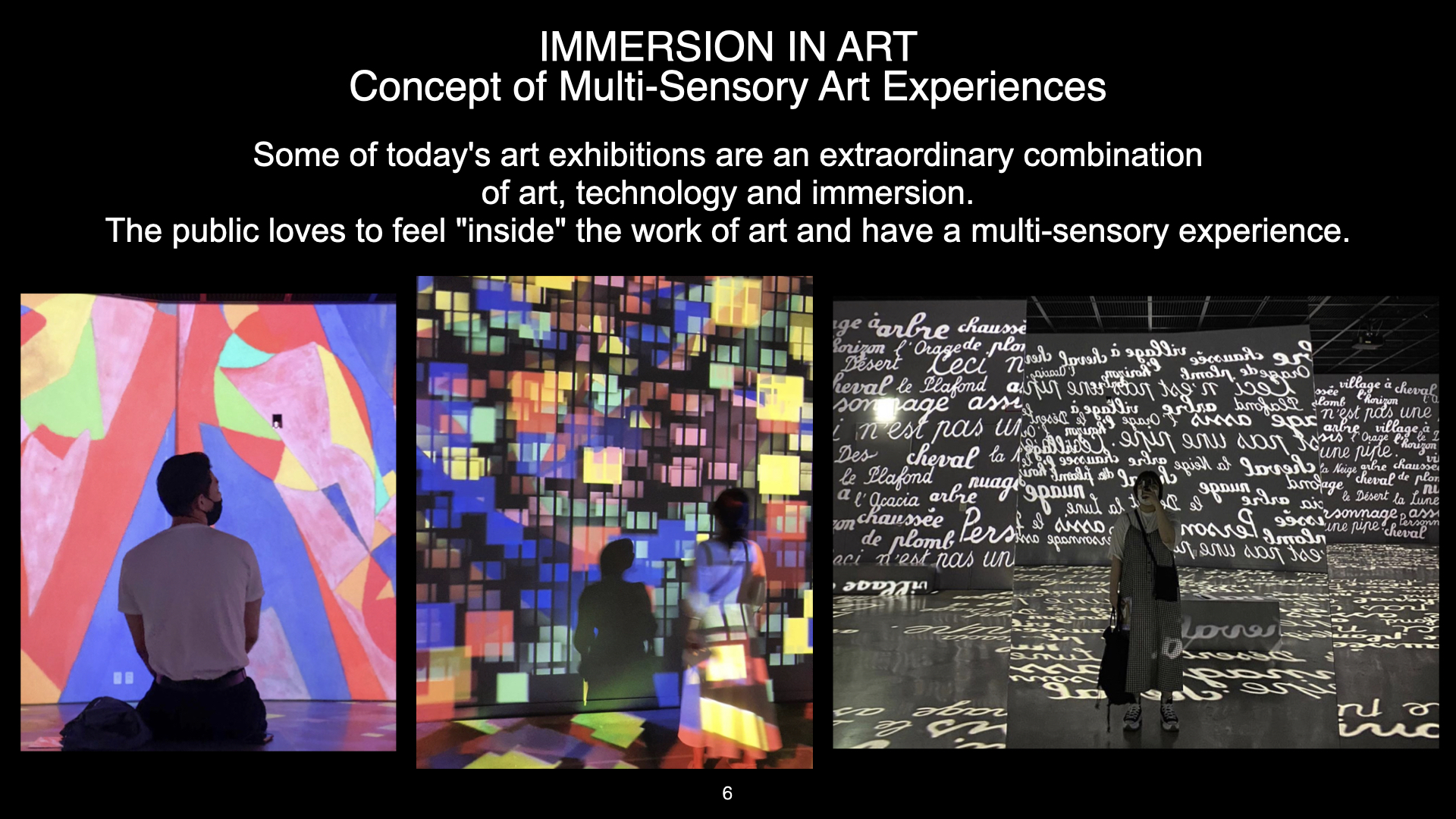
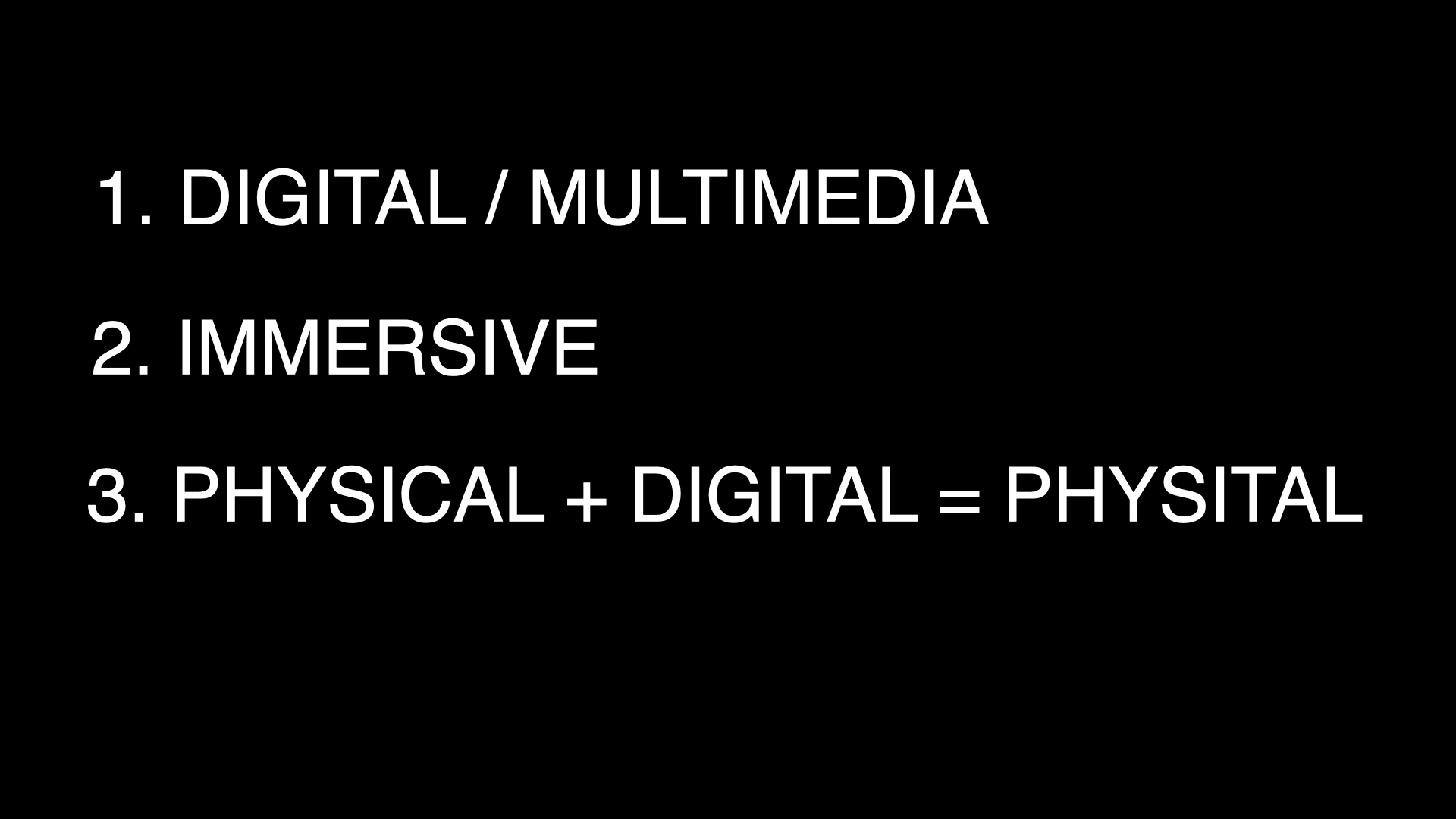
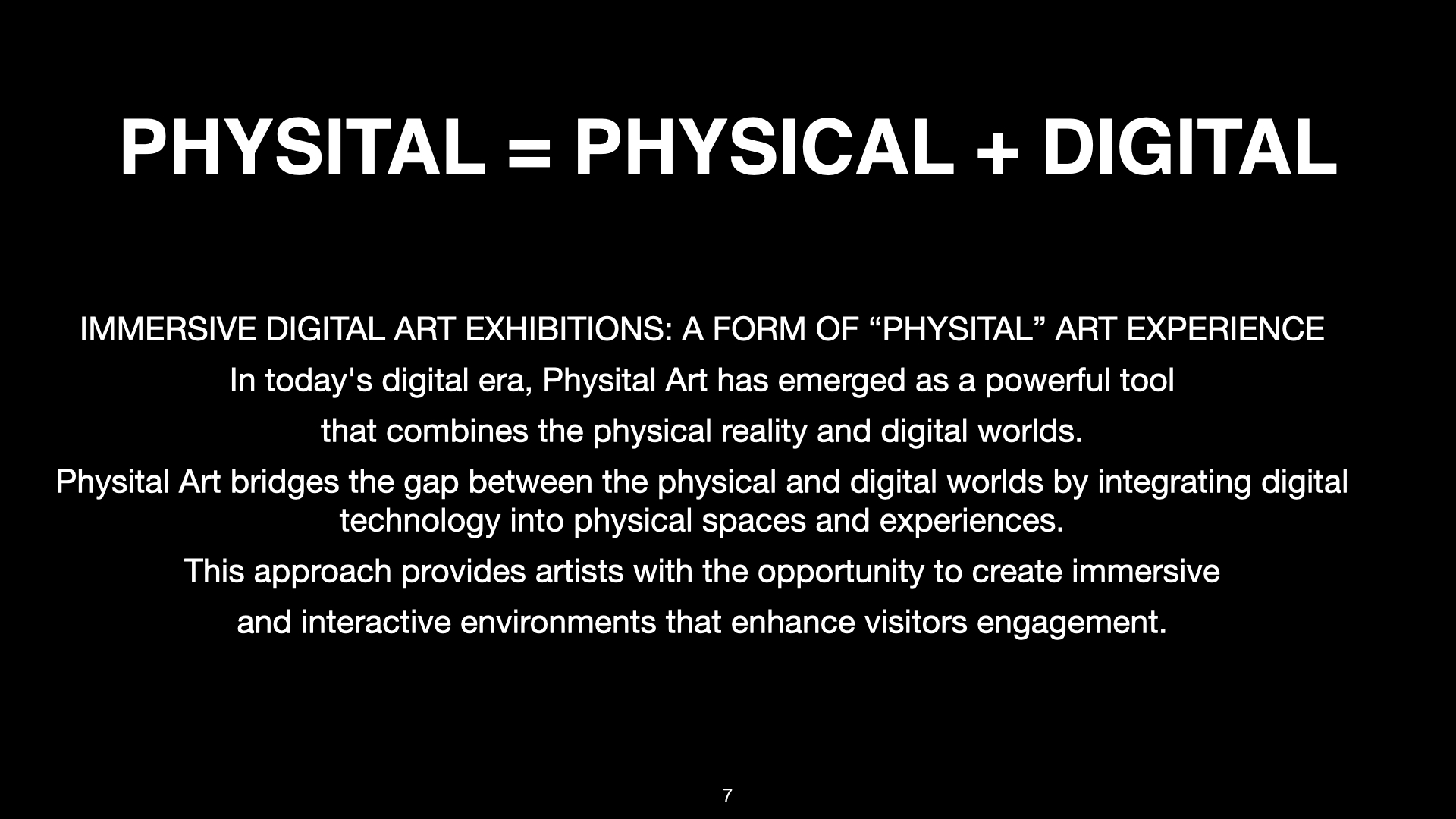
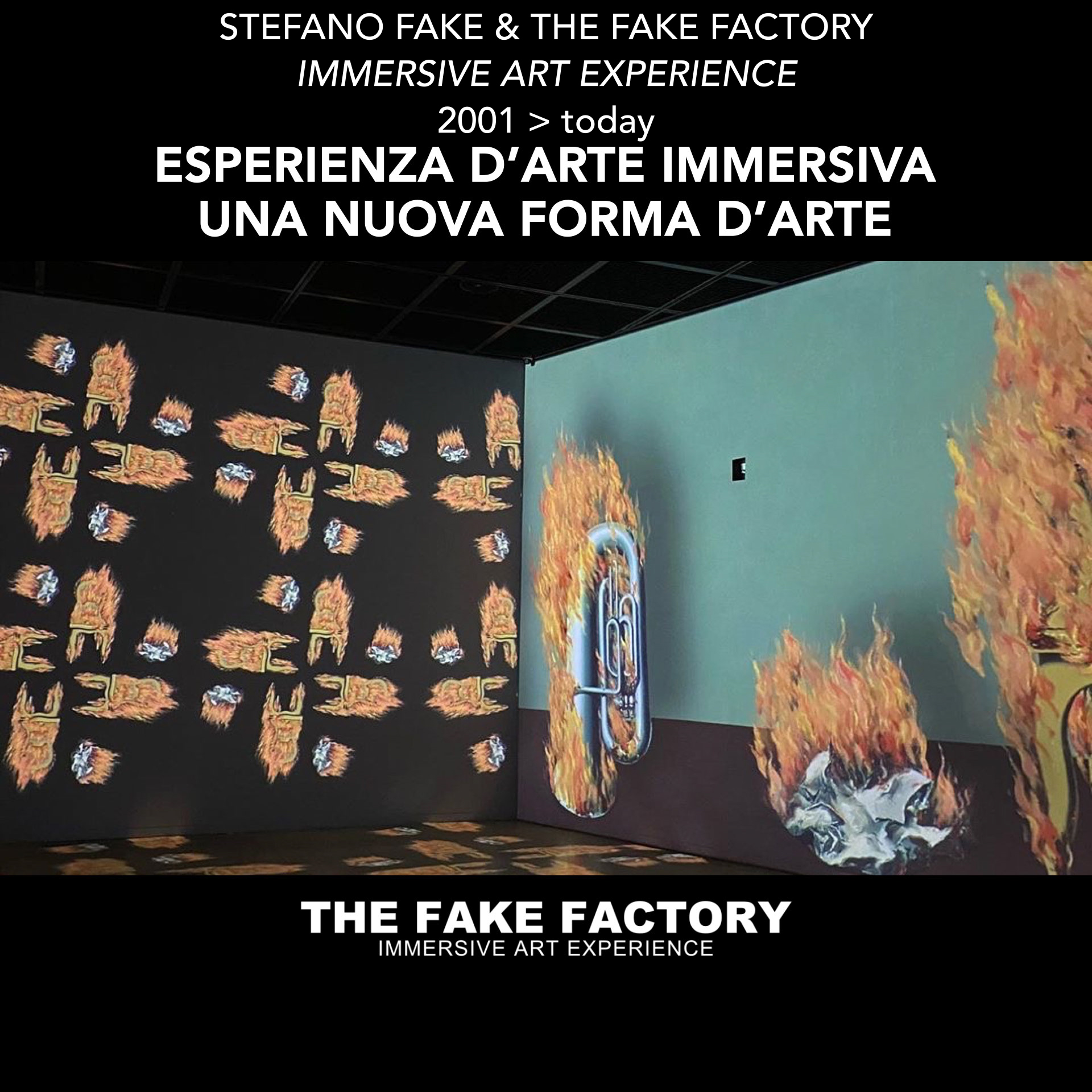
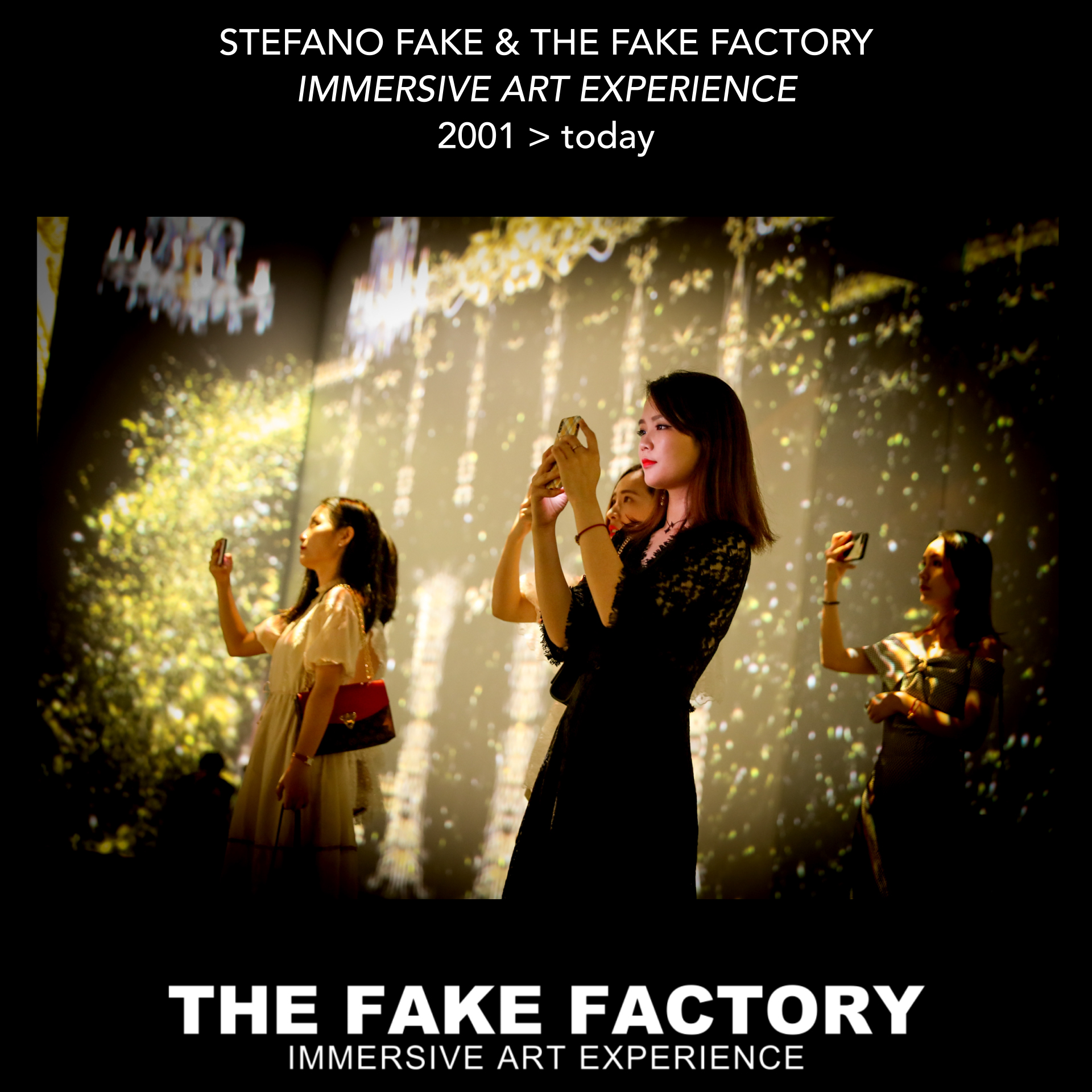
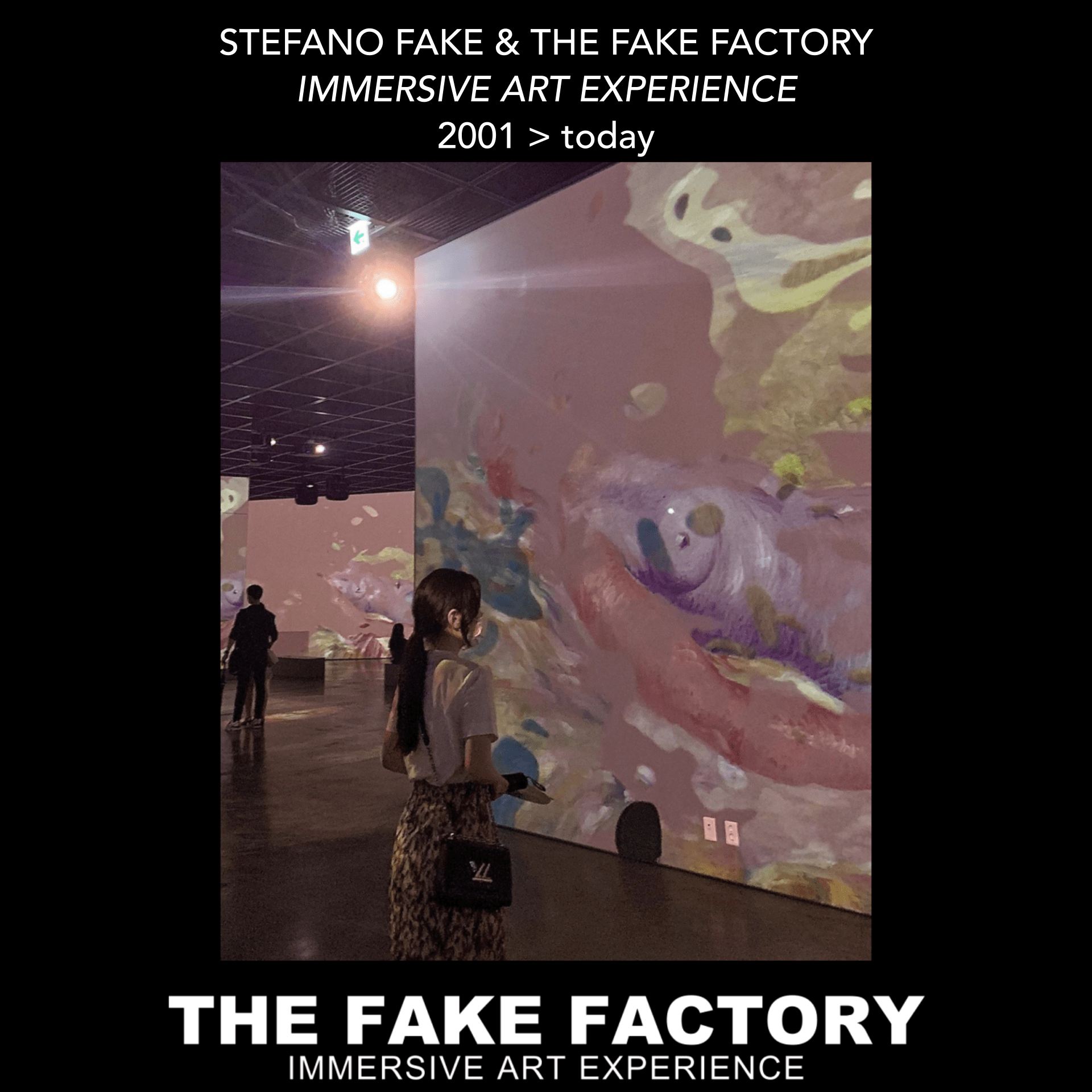
Alcuni artisti iniziano a parlare di “experience” del pubblico e del visitatore, ponendo l’attenzione proprio sull’aspetto esperenziale e sensoriale delle opere multimediali. Il pubblico non va più semplicemente ad una mostra per vedere delle opere, ma si entra nel flusso sensoriale creato dagli artisti all’interno di spazi espositivi o pubbliche piazze. La caratteristica di questi spettacoli, e la loro unicità, sta principalmente nella loro natura ibrida, “physital” come si direbbe oggi. Si tratta nello specifico di pratiche produttive ed espositive che riuniscono il mondo digitale, la creazione dei contenuti in computer grafica, con il mondo fisico, cioè l’utilizzo delle video proiezioni su facciate di palazzi, superfici naturali, schermi, pareti di spazi espositivi. Nell’arte physital, il “dato digitale” diventa materia sensibile attraverso la luce proiettata su superfici reali. La realtà fisica viene “aumentata digitalmente”, permettendo al visitatore un’esperienza estetica mai sperimentata prima. Fake è uno dei primi artisti al mondo che mette in pratica questo nuovo modo di fare arte, inaugurando con il nuovo millennio il concetto di “immersive art experience”.
Nascita dell’arte esperenziale e digitale.
“Ogni opera d’arte è figlia del suo tempo, e spesso è madre dei nostri sentimenti. Analogamente, ogni periodo culturale esprime una sua arte, che non si ripeterà mai più” (Vasilij Kandinskij)
“L’Arte restituisce il mondo come esperienza da vivere” (Nicolas Bourriaud)
A partire dagli anni ’90, le tecnologie digitali applicate alla creazione audiovisiva stavano iniziando a rivoluzionare il mondo delle arti visive. Dal 1989 al 1991 vengono immessi sul mercato Autodesk Maya, 3D Studio Max, Avid Media Composer, Adobe Photoshop e Premiere. Per tutti i decenni successivi, l’evoluzione di hardware e software per la produzione audio-visiva digitale è stata costante e travolgente, contribuendo al processo di democratizzazione e globalizzazione dei processi creativi. L’arrivo del nuovo millennio ha decretato il passaggio definitivo dall’epoca dell’arte “elettronica” alla nuova era dell’arte audiovisiva digitale, caratterizzata dal fatto di essere progettata e realizzata esclusivamente attraverso tecnologie rivoluzionarie.
Fake è stato sempre un pioniere e uno sperimentatore nell’utilizzo di macchine fotografiche con sensore digitale, video camere DV, softwares di editing, compositing e computer grafica monitor a cristalli liquidi e video proiettori. Con il nuovo millennio nelle installazioni in ambito museale, negli eventi di arte pubblica e nell’industria dello spettacolo si stava assistendo ad un processo di integrazione fra tecnologie digitali e dispositivi scenografici. Personal Computers di nuova generazione e video proiettori sempre più performanti divennero gli strumenti nelle mani di una nuova generazione di artisti, video designers, scenografi, video makers e digital creators. Fake è stato uno degli artisti che ha fatto crescere l’attenzione del pubblico verso queste nuove forme di espressione artistica: video mapping, video-proiezioni monumentali, scenografie virtuali, light art, arte immersiva, performance audiovisive, installazioni interattive.
Nei primi due decenni del millennio siamo stati testimoni della nascita di una nuova generazione di artisti che ha saputo sperimentare e innovare nell’ambito di queste nuove forme espressive, la cui nascita è stata favorita certamente dallo sviluppo tecnologico ma i cui risultati trascendono l’aspetto puramente tecnico, per raggiugnere risultati estetici eccezionali e mai sperimentati prima.
Le mostre come esperienze di arte immersiva.
“Una mostra d’arte non è più il risultato finale di un processo, ma un luogo di produzione.
L’artista mette a disposizione del pubblico degli strumenti.
Mettendo alla prova le forme accademiche dell’esposizione, gli artisti della post-produzione considerano il luogo d’esposizione come spazio della coabitazione, una scena a metà strada tra la scenografia, il set cinematografico e un centro d’informazioni.
Il visitatore dovrà inventarsi delle funzioni o scovarle tra il suo repertorio di comportamenti.”
STEFANO FAKE & THE FAKE FACTORY – ESPERIENZE DI ARTE IMMERSIVA: LA NASCITA DI UNA NUOVA FORMA DI ESPRESSIONE ARTISTICA CONTEMPORANEA
Arte immersiva
Le opere di Fake consistono principalmente in stanze immersive in cui l’artista interviene con videoproiezioni, effetti luminosi, segni grafici, forme, colori, pareti riflettenti, suoni, rumori e sensazioni olfattive e tattili. L’arte immersiva di Fake fa appello ai sensi del visitatore e lo invita ad un dialogo umano prima che estetico. Ne ricerca la complicità. I suoi ambienti sono soprattutto contenitori di emozioni. La forma è costruita attorno alla presenza umana. La vera forza dell’artista sta nella sua abilità nel raggiungere il cuore dell’esperienza umana. Sicuramente Fake è il primo artista italiano a porre in modo convincente le basi di un’estetica immersiva e relazionale nell’arte digitale, a partire dalla sua prima installazione “Room with colour Tv”, presentato a Weimar nel 2001 e poi con Ambienti (di nuova sensibilità) presentato a Firenze nel 2002. Queste opere prevedono progettualmente la partecipazione del pubblico alla costruzione o alla definizione dell’opera di cui è partecipe. Il lavoro di Fake è appunto un continuo cercare di abbracciare, avvolgere, coinvolgere le persone sensorialmente, mentalmente, spiritualmente, emotivamente, ludicamente. Lo stesso Fake ha indicato in questa frase l’essenza della propria arte : “L’arte è gioco, giochiamo insieme!”, rendendo tributo a Federico Fellini ( “é una festa la vita, viviamola insieme!” – Life is a celebration, Let’s live it together!”) e all’artista concettuale che ha segnato il cambio fra arte moderna e contemporanea, Marchel Duchamp (“L’arte è un gioco tra tutti gli uomini di tutte le epoche”).
Andy Warhol amava spesso ripetere che, dal suo punto di vista, la pop art era soprattutto “un modo di amare le cose”. Parafrasando le sue parole possiamo oggi dire che l’Arte Immersiva realizzata da Fake è soprattutto “amare le persone”. Perché nelle installazioni immersive c’è un importante e fondamentale aspetto relazionale fra l’artista e il visitatore. Il fatto stesso di definirle “Esperienze di Arte Immersiva” (Immersive Art Experience) fa capire il cambio di paradigma messo in atto da Fake.
La qualità realizzativa dell’audiovisivo o gli aspetti puramente tecnologici, pur essendo determinanti nel risultato estetico finale, passano in secondo piano. Per Fake prima di tutto viene l’esperienza del visitatore, il suo essere avvolto nella luce, nelle immagini, e nei suoni, dentro gli ambienti aumentati sensorialmente grazie all’uso poetico delle tecnologie. Non si tratta di circondare lo spettatore con delle grandi immagini o di stupirlo con facili effetti illuminotecnici, ma di portarlo dentro ad un flusso emozionale, modellando la forma delle percezioni sensoriali che lo spettatore vive dentro allo spazio. Forse è questo, in sintesi, l’aspetto distintivo dell’Arte Immersiva realizzata da Fake che lo ha portato ad essere oggi uno degli artisti italiani più importanti e influenti del nuovo millennio.
Evoluzione dell’arte da opera/manufatto a spazio/ambiente, da contemplativa a relazionale ed esperenziale.
I pittori ci hanno sempre mostrato cose e persone poste davanti a noi.
Noi porremo lo spettatore nel centro del quadro.
I vostri occhi abituati alla penombra si apriranno alle più radiose visioni di luce.
(Boccioni, Carrà, Russolo, Balla, Severini : La pittura futurista. Manifesto tecnico” – 11 Aprile 1910)
Vogliamo che il quadro esca dalla sua cornice
e la scultura dalla sua campana di vetro.
A tal fine, con le risorse della tecnica moderna,
faremo apparire nel cielo:
forme artificiali, arcobaleni di meraviglia, scritte luminose.
(Lucio Fontana, Secondo Manifesto dello Spazialismo – 1948)
Forte di una lunga tradizione italiana nella sperimentazione e nell’innovazione nelle arti, Fake opera da sempre un costante lavoro di rilettura della tradizione e di utilizzo delle tecnologie più avanzate per cercare nuove forme d’espressione artistica. Fin dalla loro comparsa negli anni ’90, Fake inizia ad utilizzare i softwares e i video-proiettori digitali di nuova generazione. In questi anni nasce l’estetica che poi esploderà dagli anni duemila in avanti, fino a diramarsi negli ambiti della new media art, della light art, dell’arte digitale immersiva e della crypto arte.
Il nuovo millennio porta con sé anche un cambio di paradigma nell’intendere quella vasta area di produzione artistica che oggi si definisce esperenziale.
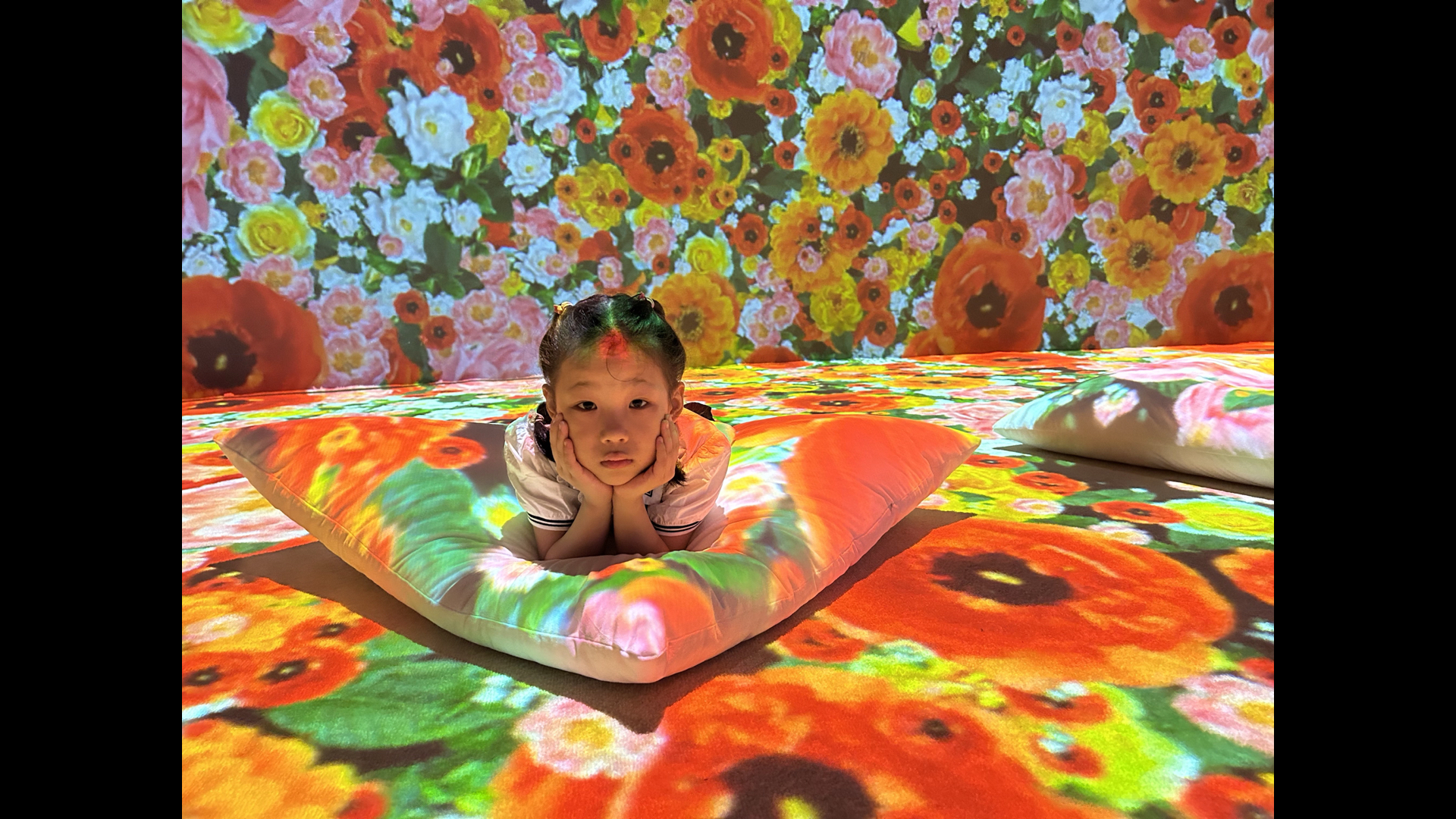
Alcuni artisti iniziano a parlare di “experience” del pubblico e del visitatore, ponendo l’attenzione proprio sull’aspetto esperenziale e sensoriale delle opere multimediali. Il pubblico non va più semplicemente ad una mostra per vedere delle opere, ma si entra nel flusso sensoriale creato dagli artisti all’interno di spazi espositivi o pubbliche piazze. La caratteristica di questi spettacoli, e la loro unicità, sta principalmente nella loro natura ibrida, “physital” come si direbbe oggi. Si tratta nello specifico di pratiche produttive ed espositive che riuniscono il mondo digitale, la creazione dei contenuti in computer grafica, con il mondo fisico, cioè l’utilizzo delle video proiezioni su facciate di palazzi, superfici naturali, schermi, pareti di spazi espositivi. Nell’arte physital, il “dato digitale” diventa materia sensibile attraverso la luce proiettata su superfici reali. La realtà fisica viene “aumentata digitalmente”, permettendo al visitatore un’esperienza estetica mai sperimentata prima. Fake è uno dei primi artisti al mondo che mette in pratica questo nuovo modo di fare arte, inaugurando con il nuovo millennio il concetto di “immersive art experience”.
Nascita dell’arte esperenziale e digitale.
“Ogni opera d’arte è figlia del suo tempo, e spesso è madre dei nostri sentimenti. Analogamente, ogni periodo culturale esprime una sua arte, che non si ripeterà mai più” (Vasilij Kandinskij)
“L’Arte restituisce il mondo come esperienza da vivere” (Nicolas Bourriaud)
A partire dagli anni ’90, le tecnologie digitali applicate alla creazione audiovisiva stavano iniziando a rivoluzionare il mondo delle arti visive. Dal 1989 al 1991 vengono immessi sul mercato Autodesk Maya, 3D Studio Max, Avid Media Composer, Adobe Photoshop e Premiere. Per tutti i decenni successivi, l’evoluzione di hardware e software per la produzione audio-visiva digitale è stata costante e travolgente, contribuendo al processo di democratizzazione e globalizzazione dei processi creativi. L’arrivo del nuovo millennio ha decretato il passaggio definitivo dall’epoca dell’arte “elettronica” alla nuova era dell’arte audiovisiva digitale, caratterizzata dal fatto di essere progettata e realizzata esclusivamente attraverso tecnologie rivoluzionarie.
Fake è stato sempre un pioniere e uno sperimentatore nell’utilizzo di macchine fotografiche con sensore digitale, video camere DV, softwares di editing, compositing e computer grafica monitor a cristalli liquidi e video proiettori. Con il nuovo millennio nelle installazioni in ambito museale, negli eventi di arte pubblica e nell’industria dello spettacolo si stava assistendo ad un processo di integrazione fra tecnologie digitali e dispositivi scenografici. Personal Computers di nuova generazione e video proiettori sempre più performanti divennero gli strumenti nelle mani di una nuova generazione di artisti, video designers, scenografi, video makers e digital creators. Fake è stato uno degli artisti che ha fatto crescere l’attenzione del pubblico verso queste nuove forme di espressione artistica: video mapping, video-proiezioni monumentali, scenografie virtuali, light art, arte immersiva, performance audiovisive, installazioni interattive.
Nei primi due decenni del millennio siamo stati testimoni della nascita di una nuova generazione di artisti che ha saputo sperimentare e innovare nell’ambito di queste nuove forme espressive, la cui nascita è stata favorita certamente dallo sviluppo tecnologico ma i cui risultati trascendono l’aspetto puramente tecnico, per raggiugnere risultati estetici eccezionali e mai sperimentati prima.
Le mostre come esperienze di arte immersiva.
“Una mostra d’arte non è più il risultato finale di un processo, ma un luogo di produzione.
L’artista mette a disposizione del pubblico degli strumenti.
Mettendo alla prova le forme accademiche dell’esposizione, gli artisti della post-produzione considerano il luogo d’esposizione come spazio della coabitazione, una scena a metà strada tra la scenografia, il set cinematografico e un centro d’informazioni.
Il visitatore dovrà inventarsi delle funzioni o scovarle tra il suo repertorio di comportamenti.”
STEFANO FAKE & THE FAKE FACTORY – ESPERIENZE DI ARTE IMMERSIVA: LA NASCITA DI UNA NUOVA FORMA DI ESPRESSIONE ARTISTICA CONTEMPORANEA
Arte immersiva
Le opere di Fake consistono principalmente in stanze immersive in cui l’artista interviene con videoproiezioni, effetti luminosi, segni grafici, forme, colori, pareti riflettenti, suoni, rumori e sensazioni olfattive e tattili. L’arte immersiva di Fake fa appello ai sensi del visitatore e lo invita ad un dialogo umano prima che estetico. Ne ricerca la complicità. I suoi ambienti sono soprattutto contenitori di emozioni. La forma è costruita attorno alla presenza umana. La vera forza dell’artista sta nella sua abilità nel raggiungere il cuore dell’esperienza umana. Sicuramente Fake è il primo artista italiano a porre in modo convincente le basi di un’estetica immersiva e relazionale nell’arte digitale, a partire dalla sua prima installazione “Room with colour Tv”, presentato a Weimar nel 2001 e poi con Ambienti (di nuova sensibilità) presentato a Firenze nel 2002. Queste opere prevedono progettualmente la partecipazione del pubblico alla costruzione o alla definizione dell’opera di cui è partecipe. Il lavoro di Fake è appunto un continuo cercare di abbracciare, avvolgere, coinvolgere le persone sensorialmente, mentalmente, spiritualmente, emotivamente, ludicamente. Lo stesso Fake ha indicato in questa frase l’essenza della propria arte : “L’arte è gioco, giochiamo insieme!”, rendendo tributo a Federico Fellini ( “é una festa la vita, viviamola insieme!” – Life is a celebration, Let’s live it together!”) e all’artista concettuale che ha segnato il cambio fra arte moderna e contemporanea, Marchel Duchamp (“L’arte è un gioco tra tutti gli uomini di tutte le epoche”).
Andy Warhol amava spesso ripetere che, dal suo punto di vista, la pop art era soprattutto “un modo di amare le cose”. Parafrasando le sue parole possiamo oggi dire che l’Arte Immersiva realizzata da Fake è soprattutto “amare le persone”. Perché nelle installazioni immersive c’è un importante e fondamentale aspetto relazionale fra l’artista e il visitatore. Il fatto stesso di definirle “Esperienze di Arte Immersiva” (Immersive Art Experience) fa capire il cambio di paradigma messo in atto da Fake.
La qualità realizzativa dell’audiovisivo o gli aspetti puramente tecnologici, pur essendo determinanti nel risultato estetico finale, passano in secondo piano. Per Fake prima di tutto viene l’esperienza del visitatore, il suo essere avvolto nella luce, nelle immagini, e nei suoni, dentro gli ambienti aumentati sensorialmente grazie all’uso poetico delle tecnologie. Non si tratta di circondare lo spettatore con delle grandi immagini o di stupirlo con facili effetti illuminotecnici, ma di portarlo dentro ad un flusso emozionale, modellando la forma delle percezioni sensoriali che lo spettatore vive dentro allo spazio. Forse è questo, in sintesi, l’aspetto distintivo dell’Arte Immersiva realizzata da Fake che lo ha portato ad essere oggi uno degli artisti italiani più importanti e influenti del nuovo millennio.
Evoluzione dell’arte da opera/manufatto a spazio/ambiente, da contemplativa a relazionale ed esperenziale.
I pittori ci hanno sempre mostrato cose e persone poste davanti a noi.
Noi porremo lo spettatore nel centro del quadro.
I vostri occhi abituati alla penombra si apriranno alle più radiose visioni di luce.
(Boccioni, Carrà, Russolo, Balla, Severini : La pittura futurista. Manifesto tecnico” – 11 Aprile 1910)
Vogliamo che il quadro esca dalla sua cornice
e la scultura dalla sua campana di vetro.
A tal fine, con le risorse della tecnica moderna,
faremo apparire nel cielo:
forme artificiali, arcobaleni di meraviglia, scritte luminose.
(Lucio Fontana, Secondo Manifesto dello Spazialismo – 1948)
Forte di una lunga tradizione italiana nella sperimentazione e nell’innovazione nelle arti, Fake opera da sempre un costante lavoro di rilettura della tradizione e di utilizzo delle tecnologie più avanzate per cercare nuove forme d’espressione artistica. Fin dalla loro comparsa negli anni ’90, Fake inizia ad utilizzare i softwares e i video-proiettori digitali di nuova generazione. In questi anni nasce l’estetica che poi esploderà dagli anni duemila in avanti, fino a diramarsi negli ambiti della new media art, della light art, dell’arte digitale immersiva e della crypto arte.
Il nuovo millennio porta con sé anche un cambio di paradigma nell’intendere quella vasta area di produzione artistica che oggi si definisce esperenziale.
Alcuni artisti iniziano a parlare di “experience” del pubblico e del visitatore, ponendo l’attenzione proprio sull’aspetto esperenziale e sensoriale delle opere multimediali. Il pubblico non va più semplicemente ad una mostra per vedere delle opere, ma si entra nel flusso sensoriale creato dagli artisti all’interno di spazi espositivi o pubbliche piazze. La caratteristica di questi spettacoli, e la loro unicità, sta principalmente nella loro natura ibrida, “physital” come si direbbe oggi. Si tratta nello specifico di pratiche produttive ed espositive che riuniscono il mondo digitale, la creazione dei contenuti in computer grafica, con il mondo fisico, cioè l’utilizzo delle video proiezioni su facciate di palazzi, superfici naturali, schermi, pareti di spazi espositivi. Nell’arte physital, il “dato digitale” diventa materia sensibile attraverso la luce proiettata su superfici reali. La realtà fisica viene “aumentata digitalmente”, permettendo al visitatore un’esperienza estetica mai sperimentata prima. Fake è uno dei primi artisti al mondo che mette in pratica questo nuovo modo di fare arte, inaugurando con il nuovo millennio il concetto di “immersive art experience”.
Nascita dell’arte esperenziale e digitale.
“Ogni opera d’arte è figlia del suo tempo, e spesso è madre dei nostri sentimenti. Analogamente, ogni periodo culturale esprime una sua arte, che non si ripeterà mai più” (Vasilij Kandinskij)
“L’Arte restituisce il mondo come esperienza da vivere” (Nicolas Bourriaud)
A partire dagli anni ’90, le tecnologie digitali applicate alla creazione audiovisiva stavano iniziando a rivoluzionare il mondo delle arti visive. Dal 1989 al 1991 vengono immessi sul mercato Autodesk Maya, 3D Studio Max, Avid Media Composer, Adobe Photoshop e Premiere. Per tutti i decenni successivi, l’evoluzione di hardware e software per la produzione audio-visiva digitale è stata costante e travolgente, contribuendo al processo di democratizzazione e globalizzazione dei processi creativi. L’arrivo del nuovo millennio ha decretato il passaggio definitivo dall’epoca dell’arte “elettronica” alla nuova era dell’arte audiovisiva digitale, caratterizzata dal fatto di essere progettata e realizzata esclusivamente attraverso tecnologie rivoluzionarie.
Fake è stato sempre un pioniere e uno sperimentatore nell’utilizzo di macchine fotografiche con sensore digitale, video camere DV, softwares di editing, compositing e computer grafica monitor a cristalli liquidi e video proiettori. Con il nuovo millennio nelle installazioni in ambito museale, negli eventi di arte pubblica e nell’industria dello spettacolo si stava assistendo ad un processo di integrazione fra tecnologie digitali e dispositivi scenografici. Personal Computers di nuova generazione e video proiettori sempre più performanti divennero gli strumenti nelle mani di una nuova generazione di artisti, video designers, scenografi, video makers e digital creators. Fake è stato uno degli artisti che ha fatto crescere l’attenzione del pubblico verso queste nuove forme di espressione artistica: video mapping, video-proiezioni monumentali, scenografie virtuali, light art, arte immersiva, performance audiovisive, installazioni interattive.
Nei primi due decenni del millennio siamo stati testimoni della nascita di una nuova generazione di artisti che ha saputo sperimentare e innovare nell’ambito di queste nuove forme espressive, la cui nascita è stata favorita certamente dallo sviluppo tecnologico ma i cui risultati trascendono l’aspetto puramente tecnico, per raggiugnere risultati estetici eccezionali e mai sperimentati prima.
Le mostre come esperienze di arte immersiva.
“Una mostra d’arte non è più il risultato finale di un processo, ma un luogo di produzione.
L’artista mette a disposizione del pubblico degli strumenti.
Mettendo alla prova le forme accademiche dell’esposizione, gli artisti della post-produzione considerano il luogo d’esposizione come spazio della coabitazione, una scena a metà strada tra la scenografia, il set cinematografico e un centro d’informazioni.
Il visitatore dovrà inventarsi delle funzioni o scovarle tra il suo repertorio di comportamenti.”
STEFANO FAKE & THE FAKE FACTORY – IMMERSIVE ART EXPERIENCES (2001-today)
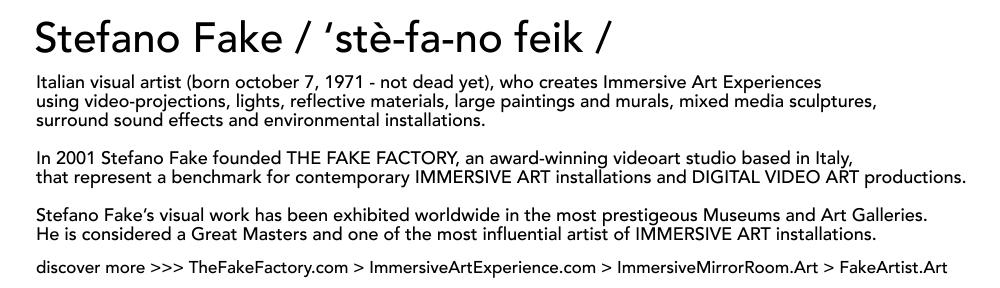
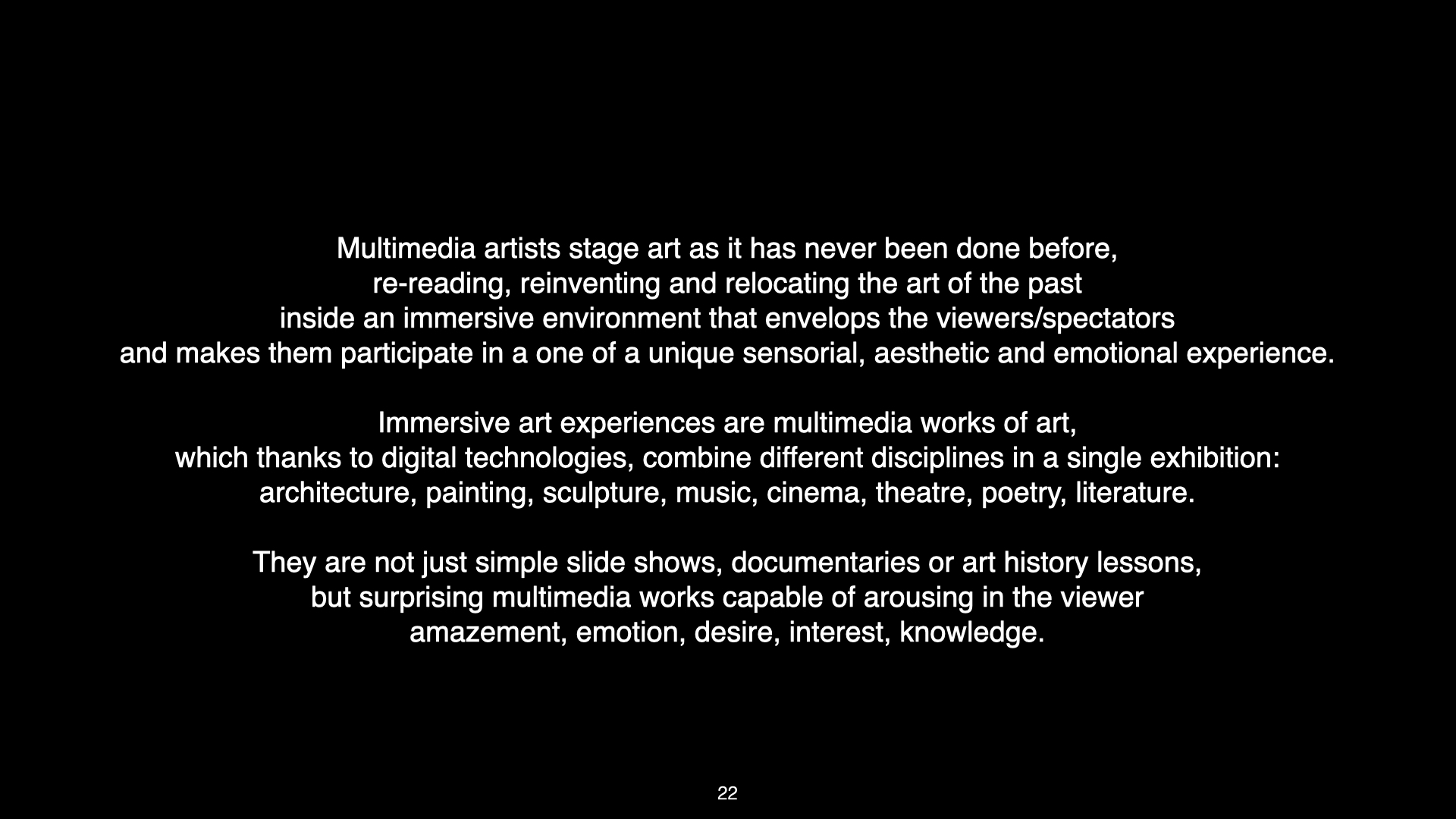
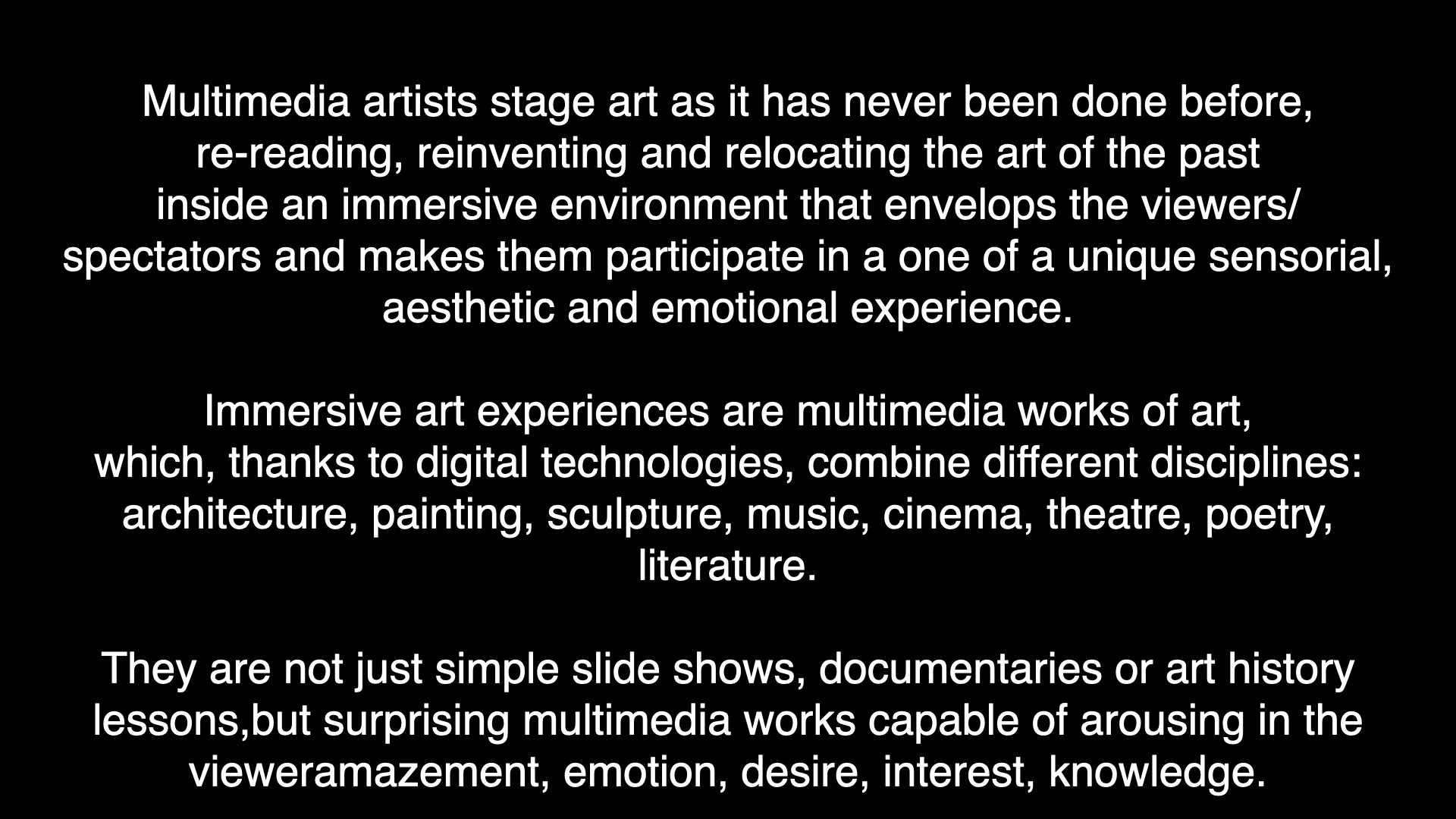
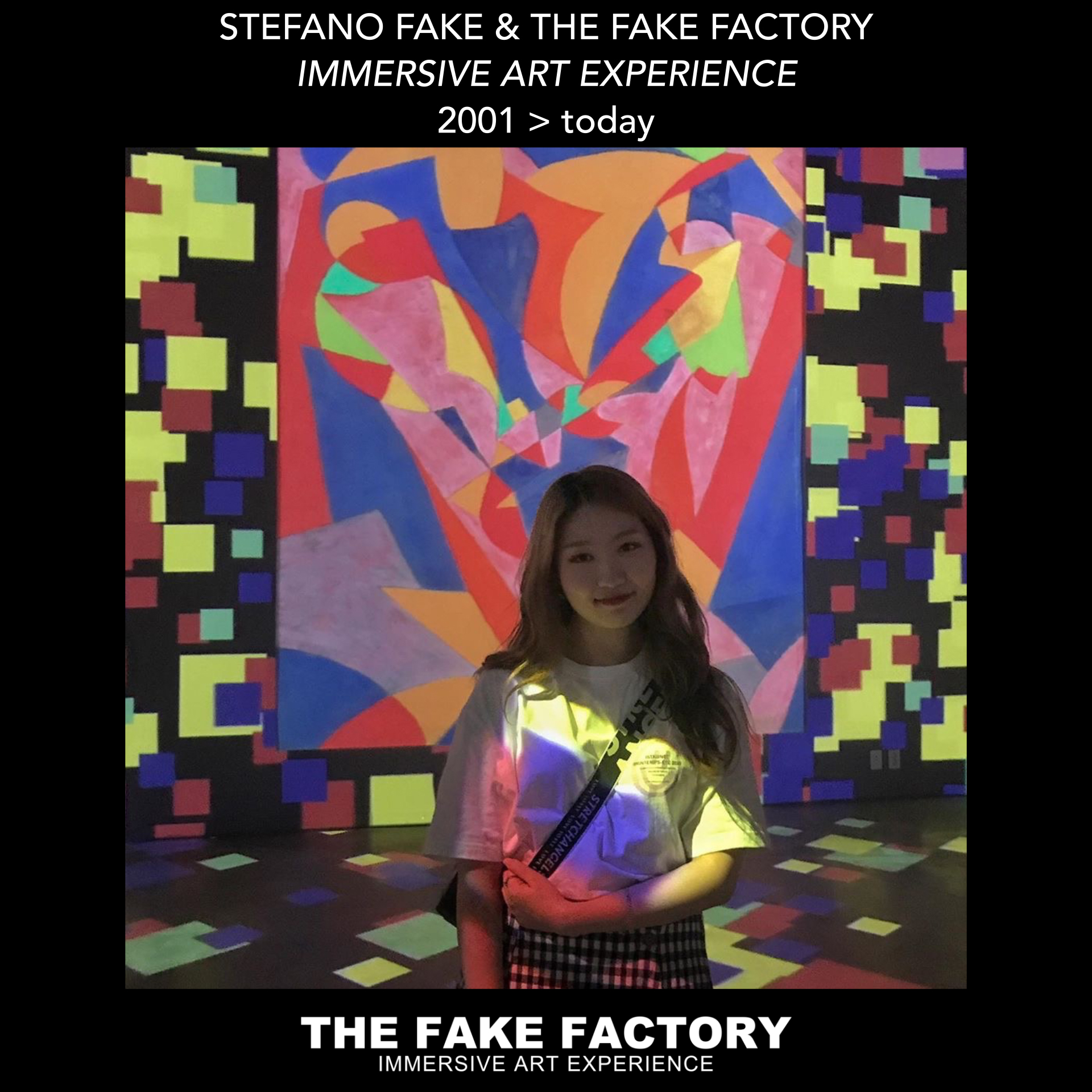
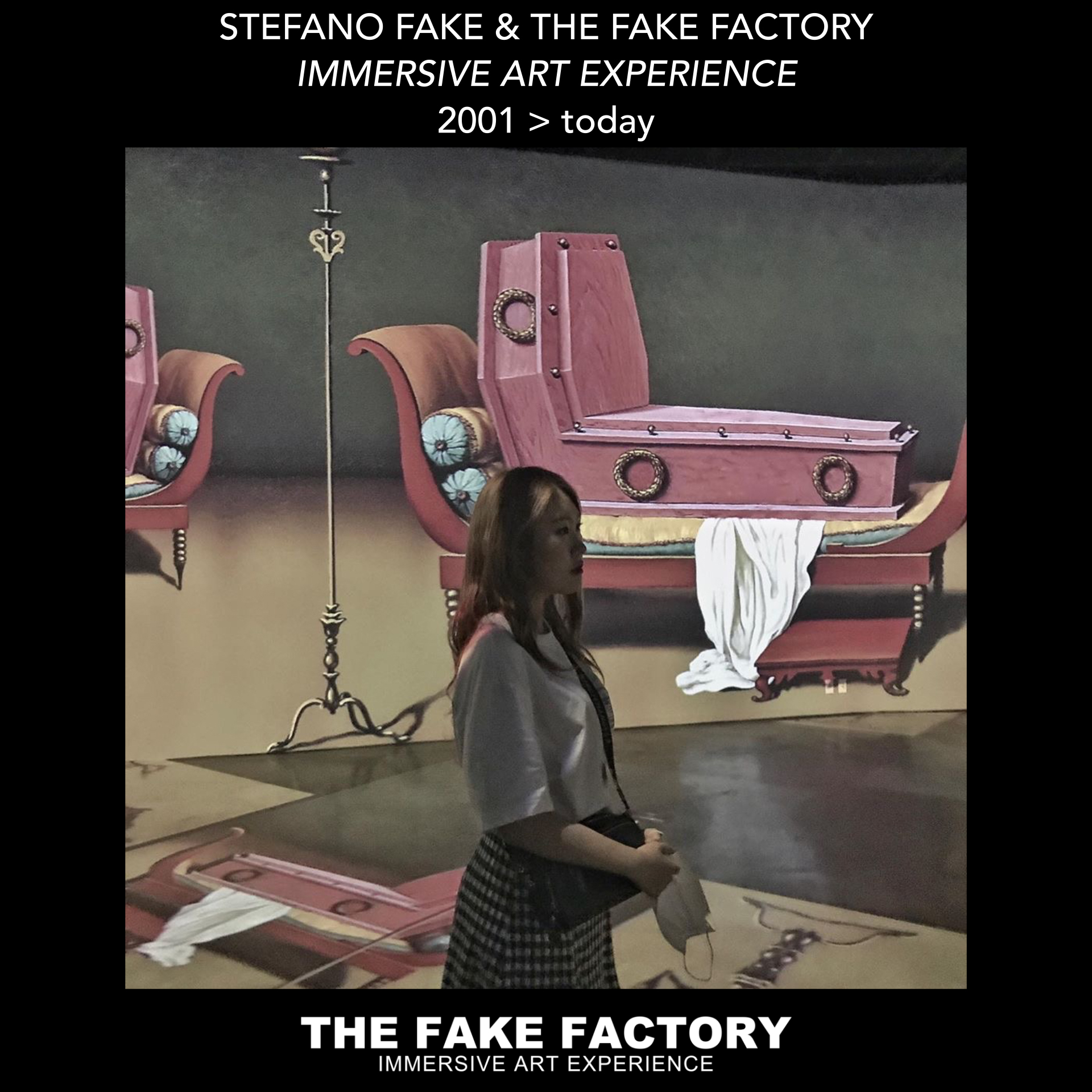
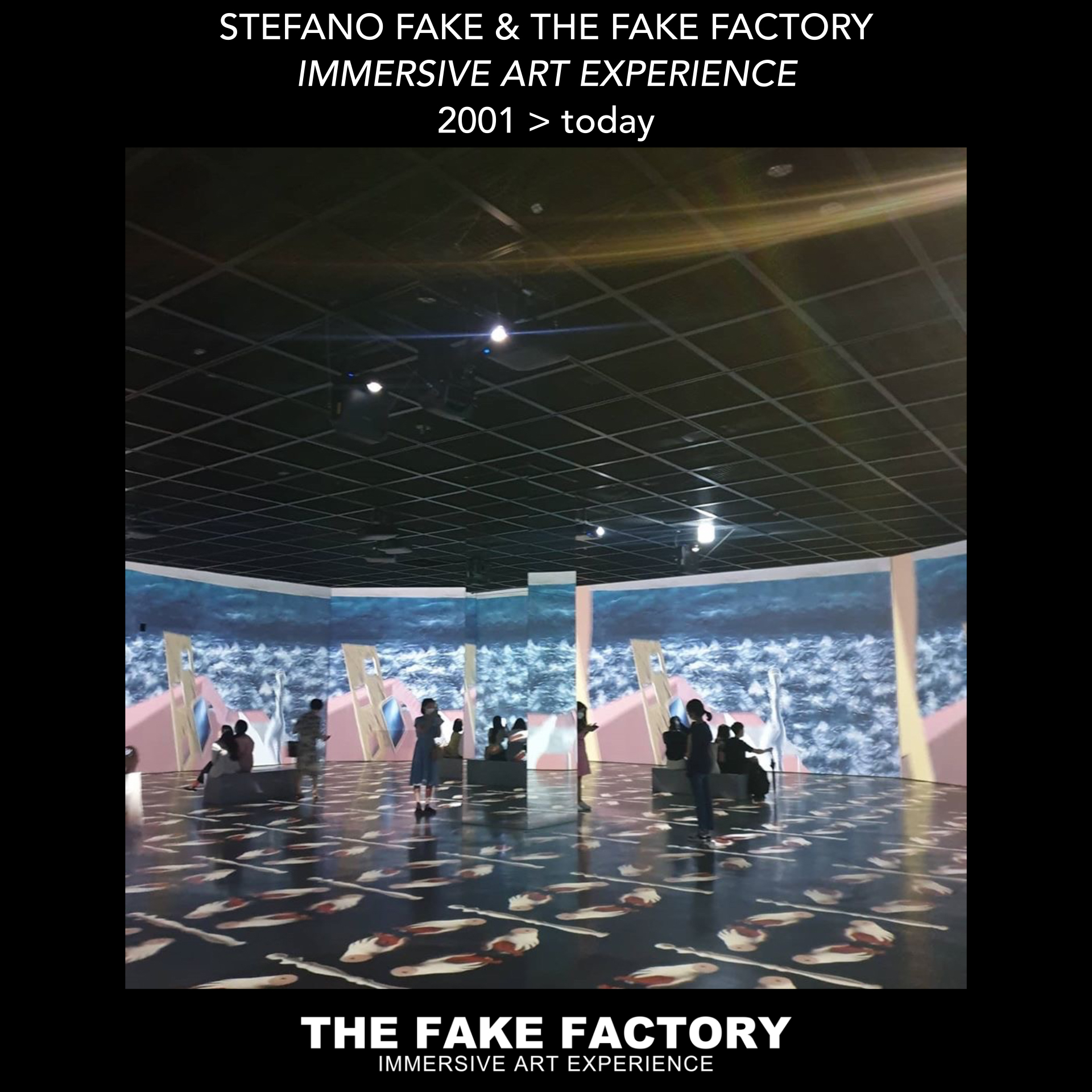
Stefano Fake is an Italian artist and video designer who creates installations using video projections, films, photographs, sculptures, computer graphics and interactive technologies. He is a pioneer and one of the main creators of the immersive art experiences, a new form of artistic expression that consists of the use of audiovisual installations that aim to immerse the spectator in the work itself, through the use of digital technologies and monumental video projections.
In 2001 he founded The Fake Factory, a studio specialized in Immersive Art, Projection Art and Videomapping. In just a few years, this laboratory becomes a point of reference in the context of digital and immersive art at a national and international level, participating in the creation of numerous projects: immersive exhibitions, video mapping, architectural light installations, video production, video scenography for theatres, fashion, visual environments for museums, galleries and cultural events, production of multi-sensory works, video installations, video art works.
With over 20 years of career, Stefano Fake is a pioneer and one of the main creators of the immersive digital art experiences, those audiovisual installations that aim to immerse the viewer inside the work of art itself, through digital technologies and monumental video projections.
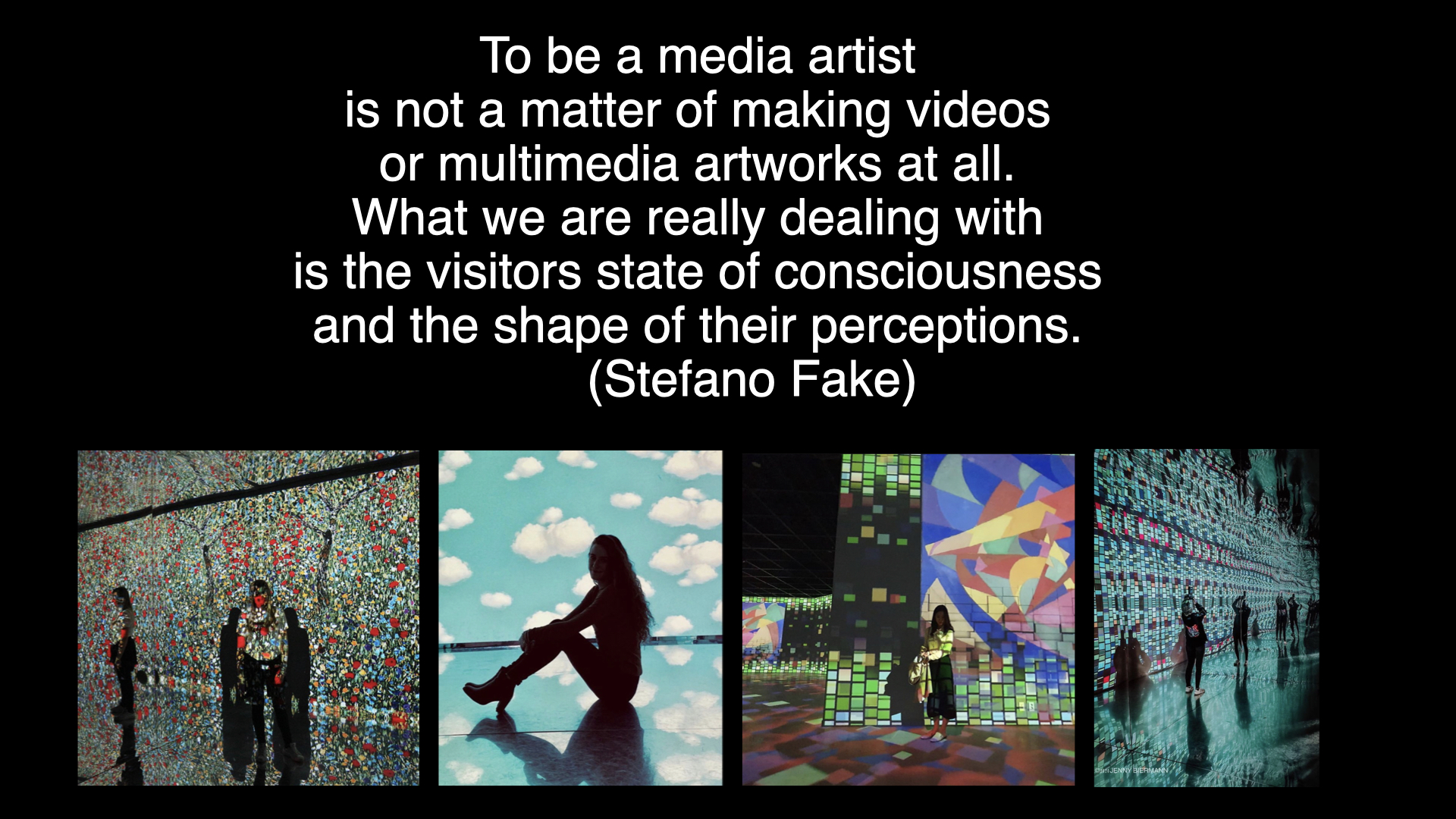
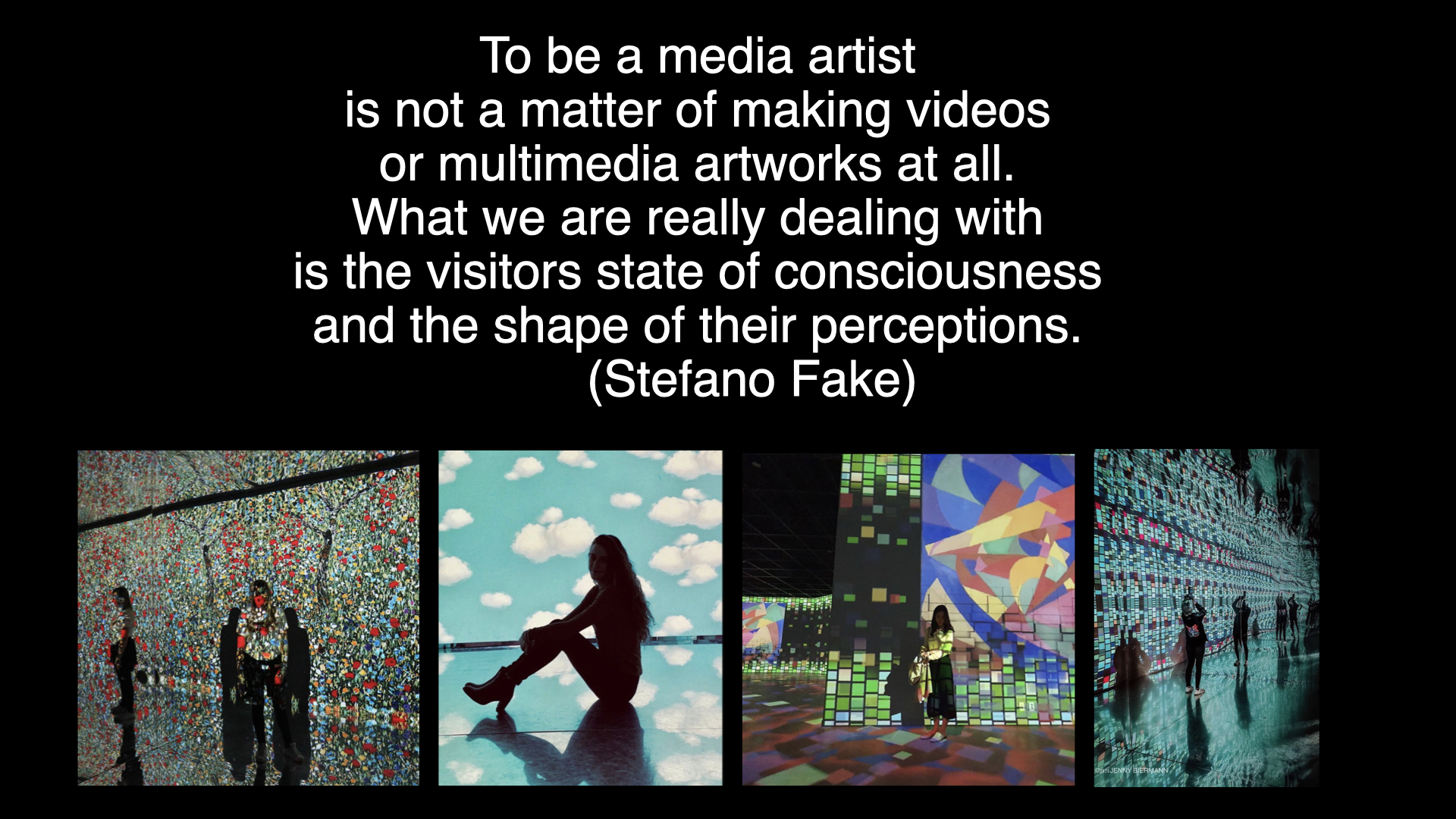
“TO BE A MEDIA ARTIST IS NOT A MATTER OF MAKING VIDEOS OR MULTIMEDIA ARTWORKS AT ALL. WHAT WE ARE REALLY DEALING WITH IS THE VISITORS STATE OF CONSCIOUSNESS AND THE SHAPE OF THEIR PERCEPTIONS.” (STEFANO FAKE, 2015)
The Immersive art experiences created by STEFANO FAKE & THE FAKE FACTORY helped define the format, the language and the global success of the immersive digital art exhibitions, thanks to an unprecedented media exposure and a series of attendance records in Italian and international museums. (+ 5 millions visitors in 2012-2023). Many of The Fake Factory’s installations have become milestones of contemporary immersive digital art.
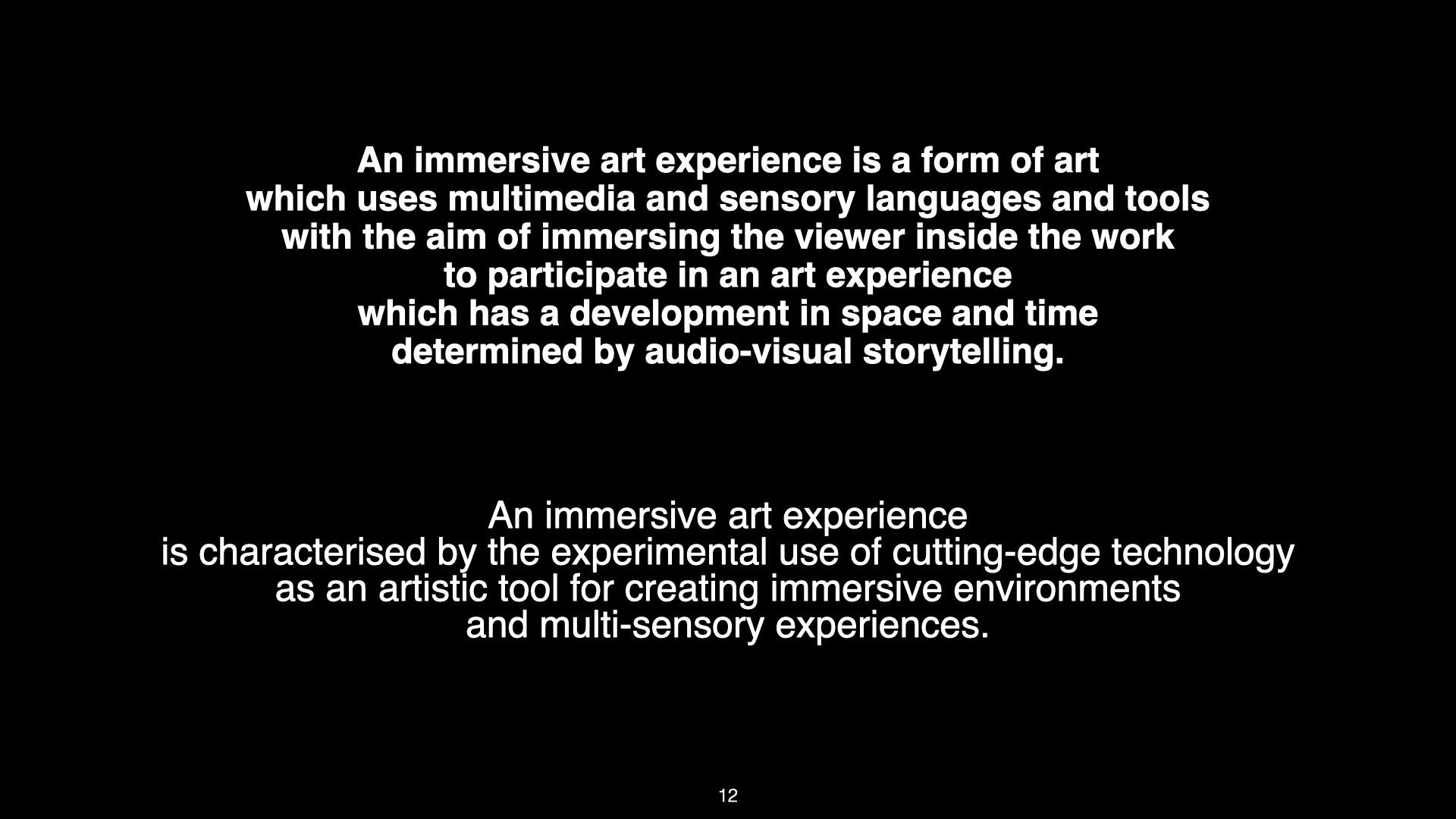
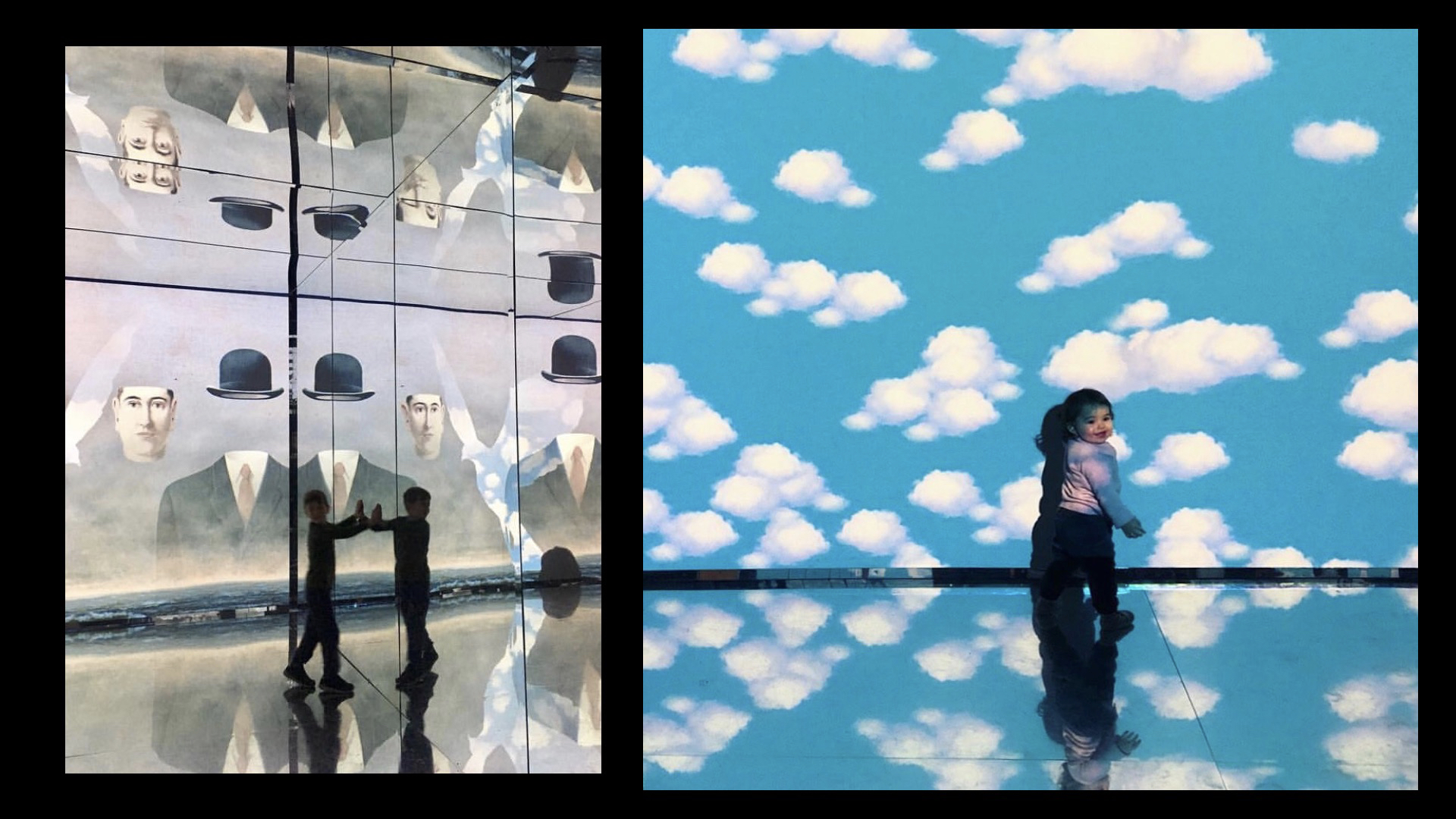
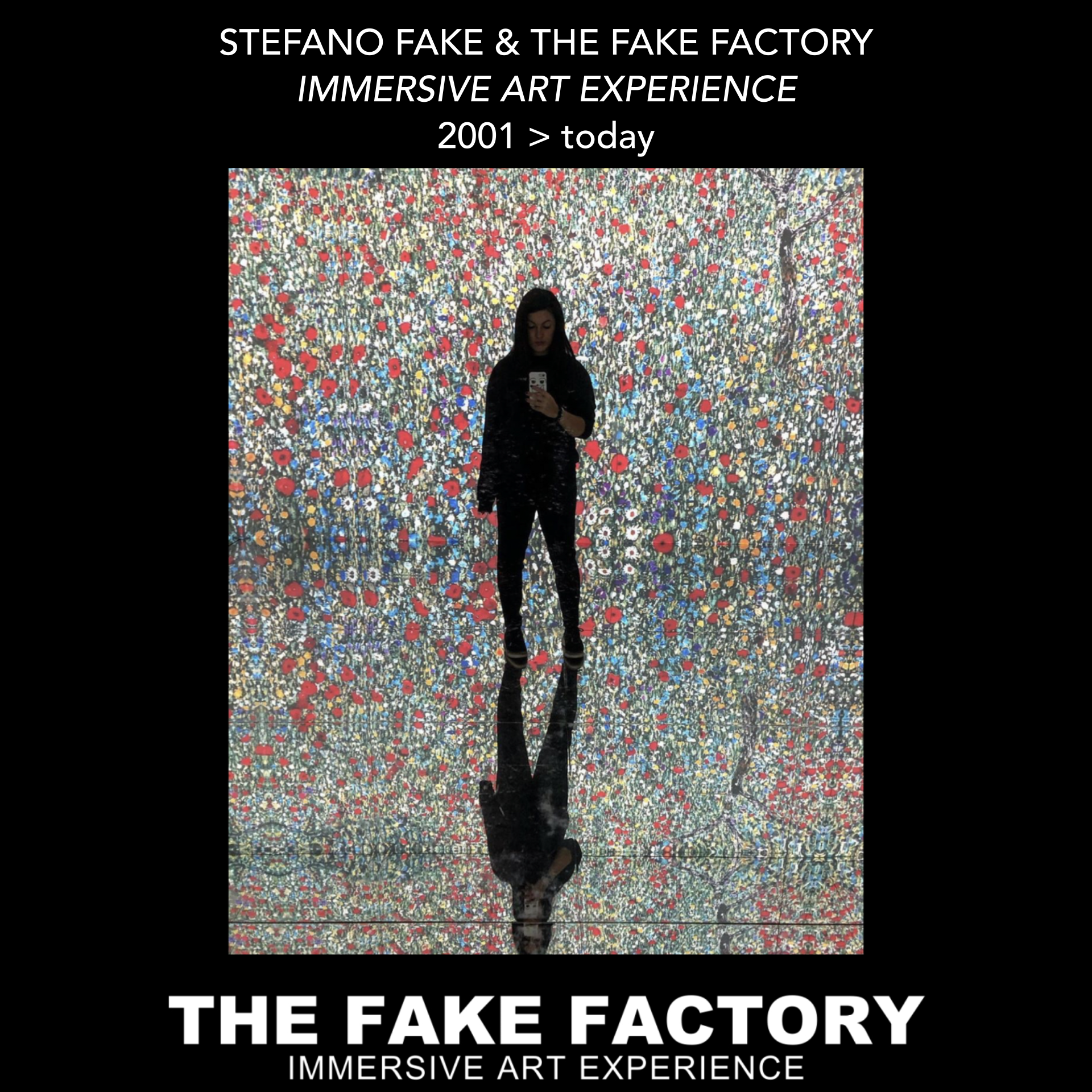
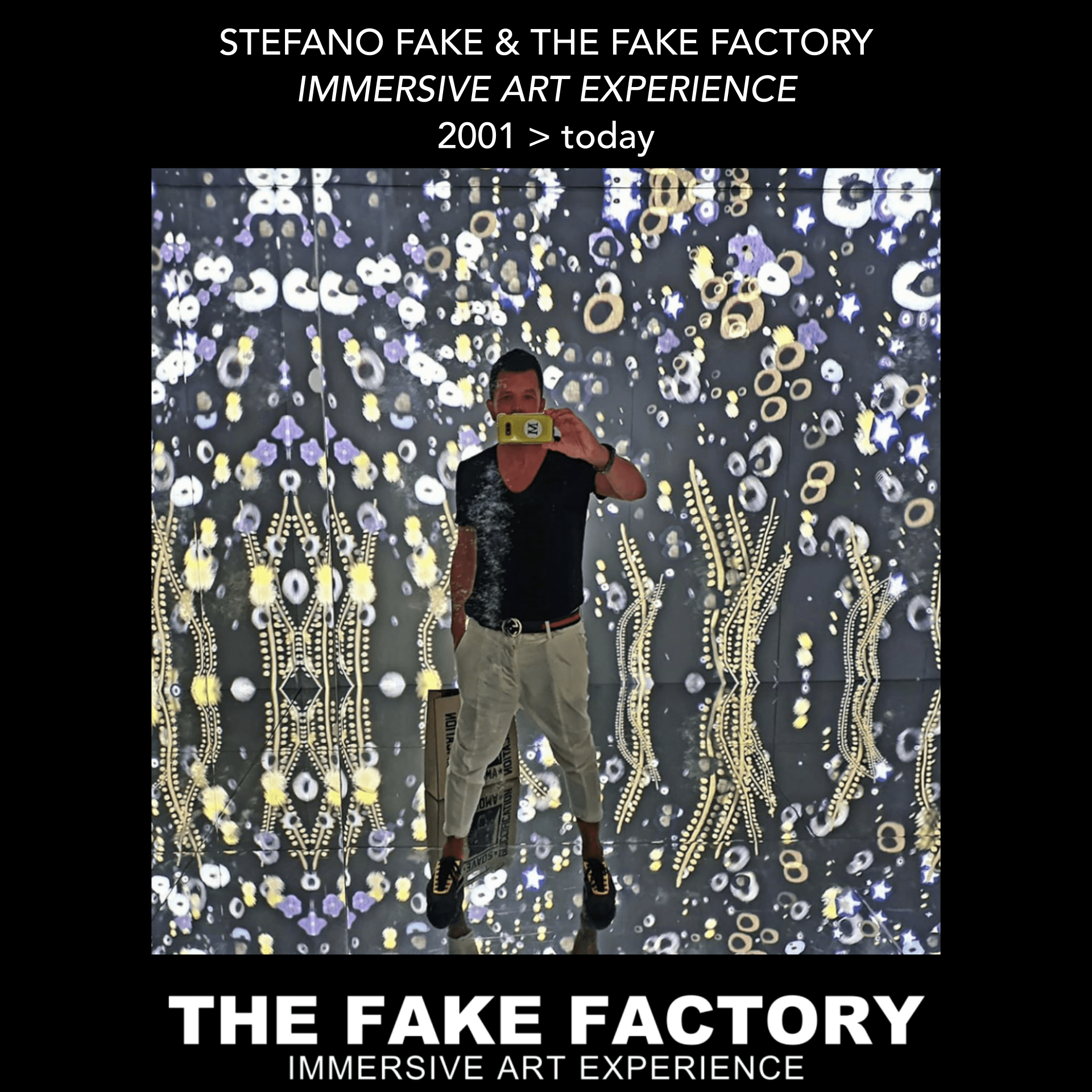
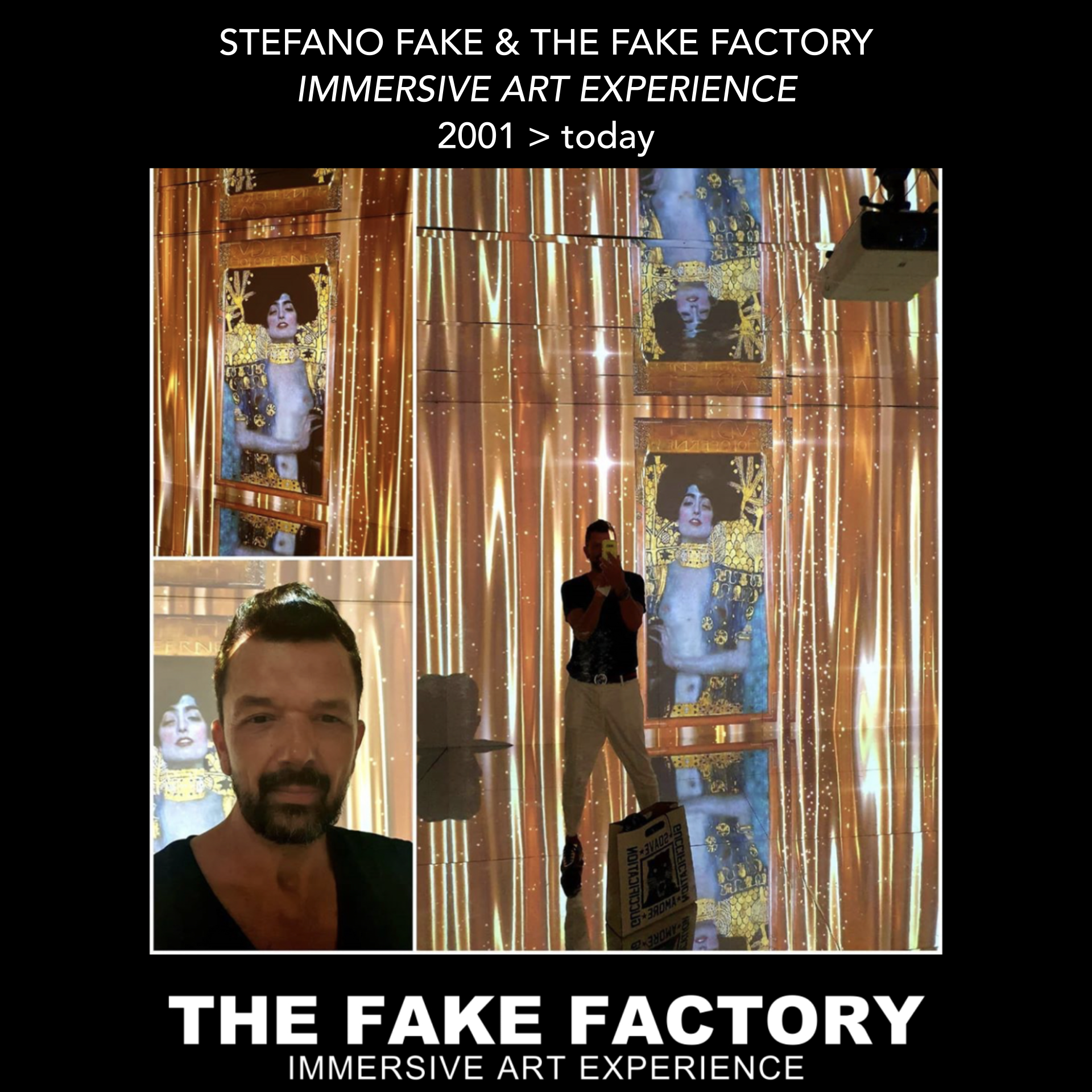
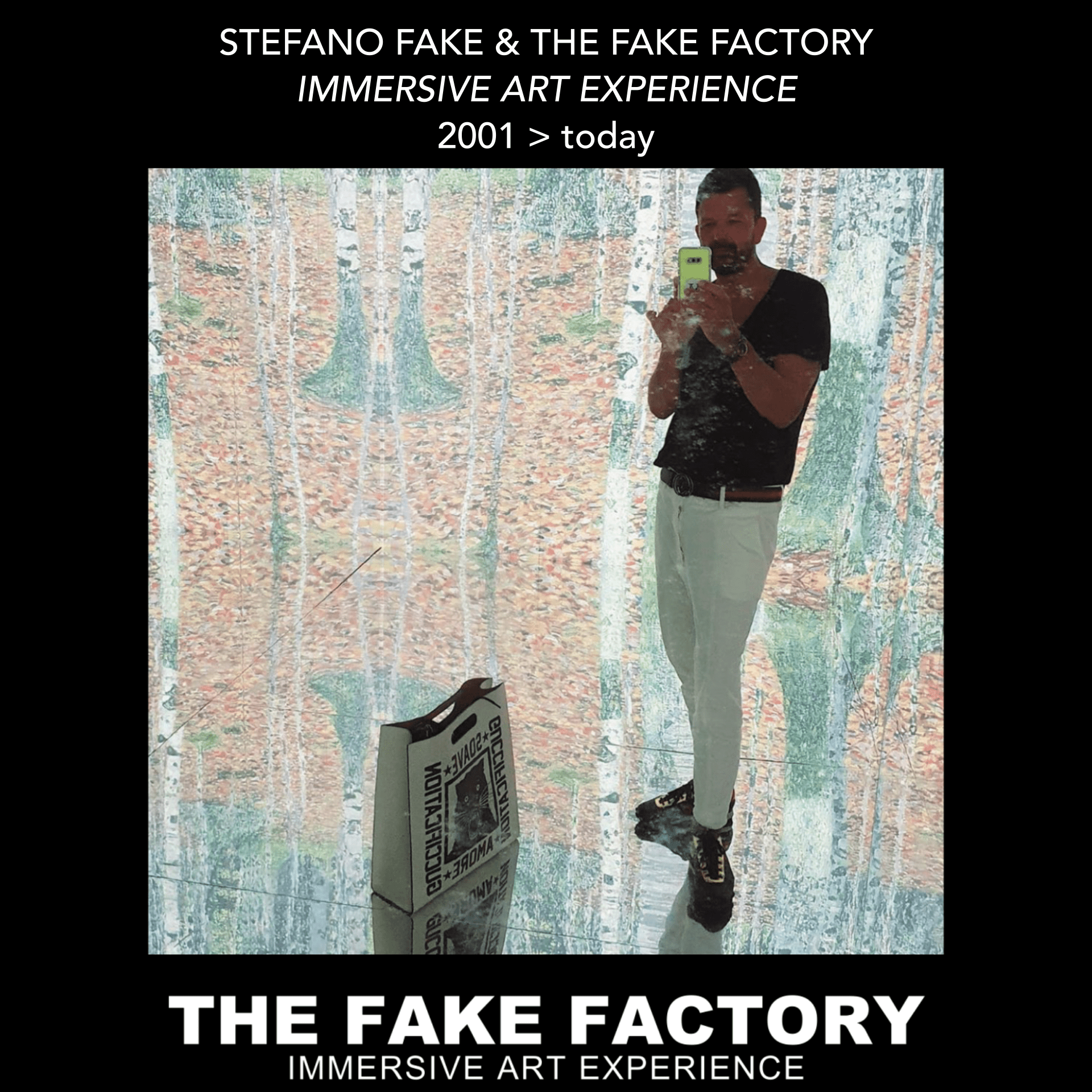
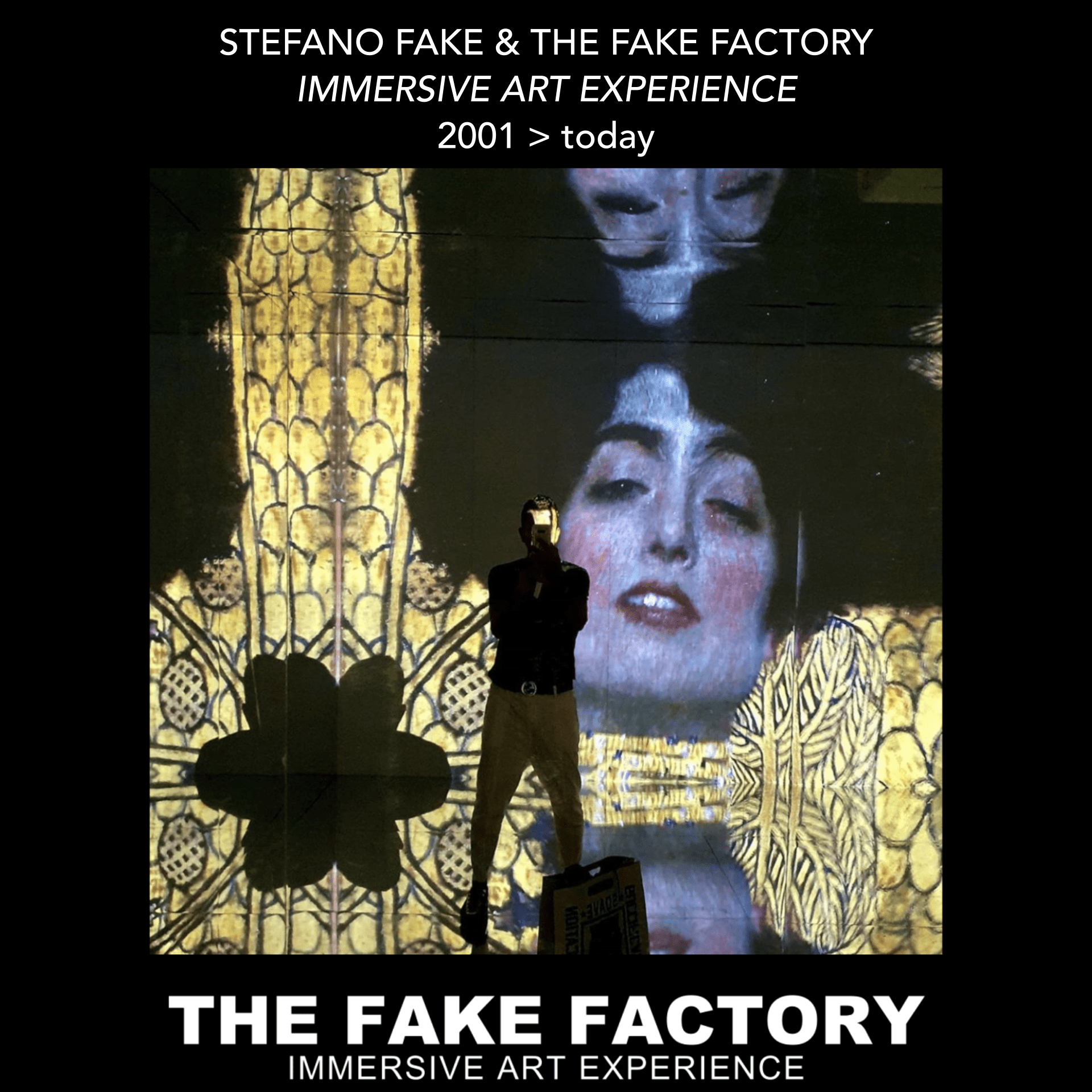
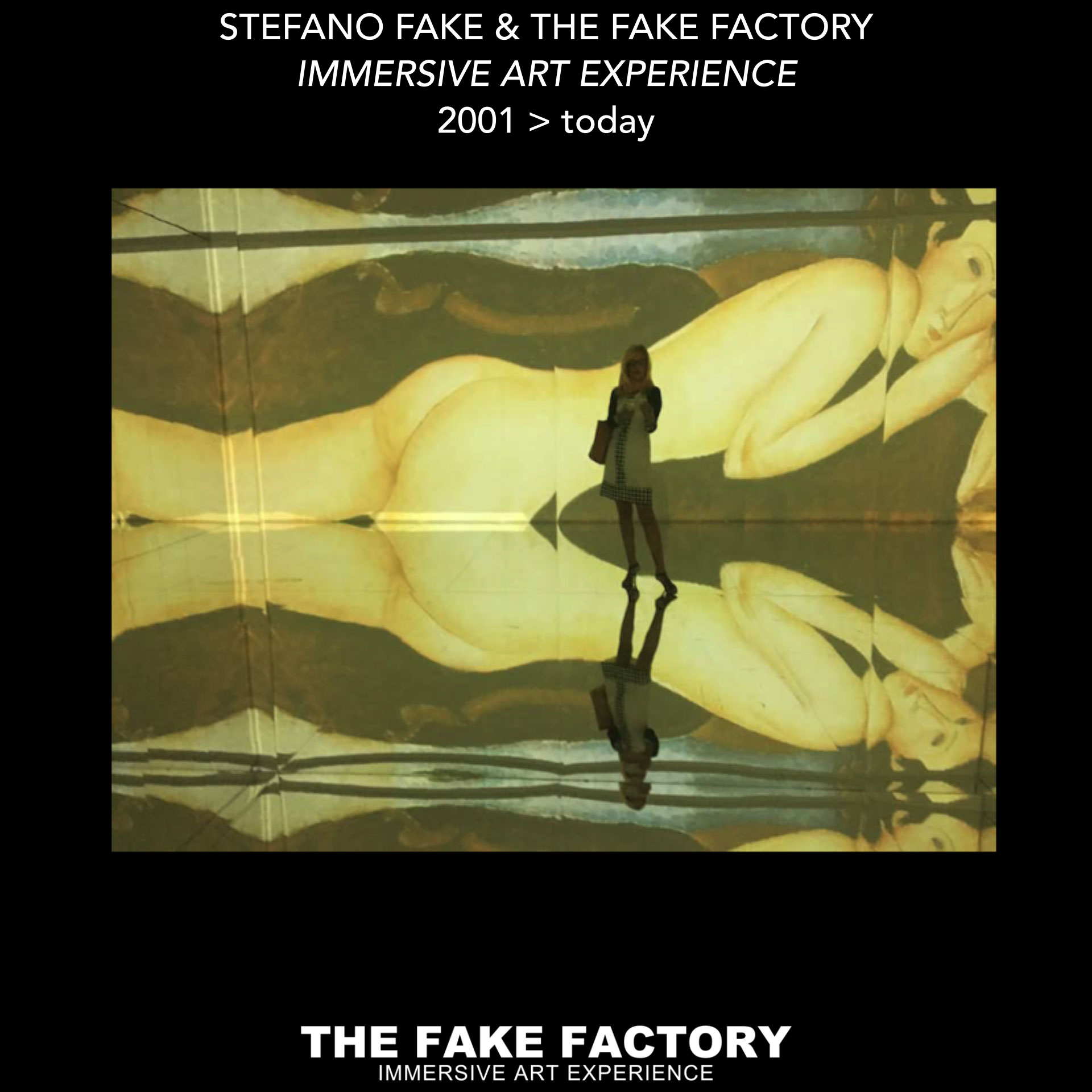
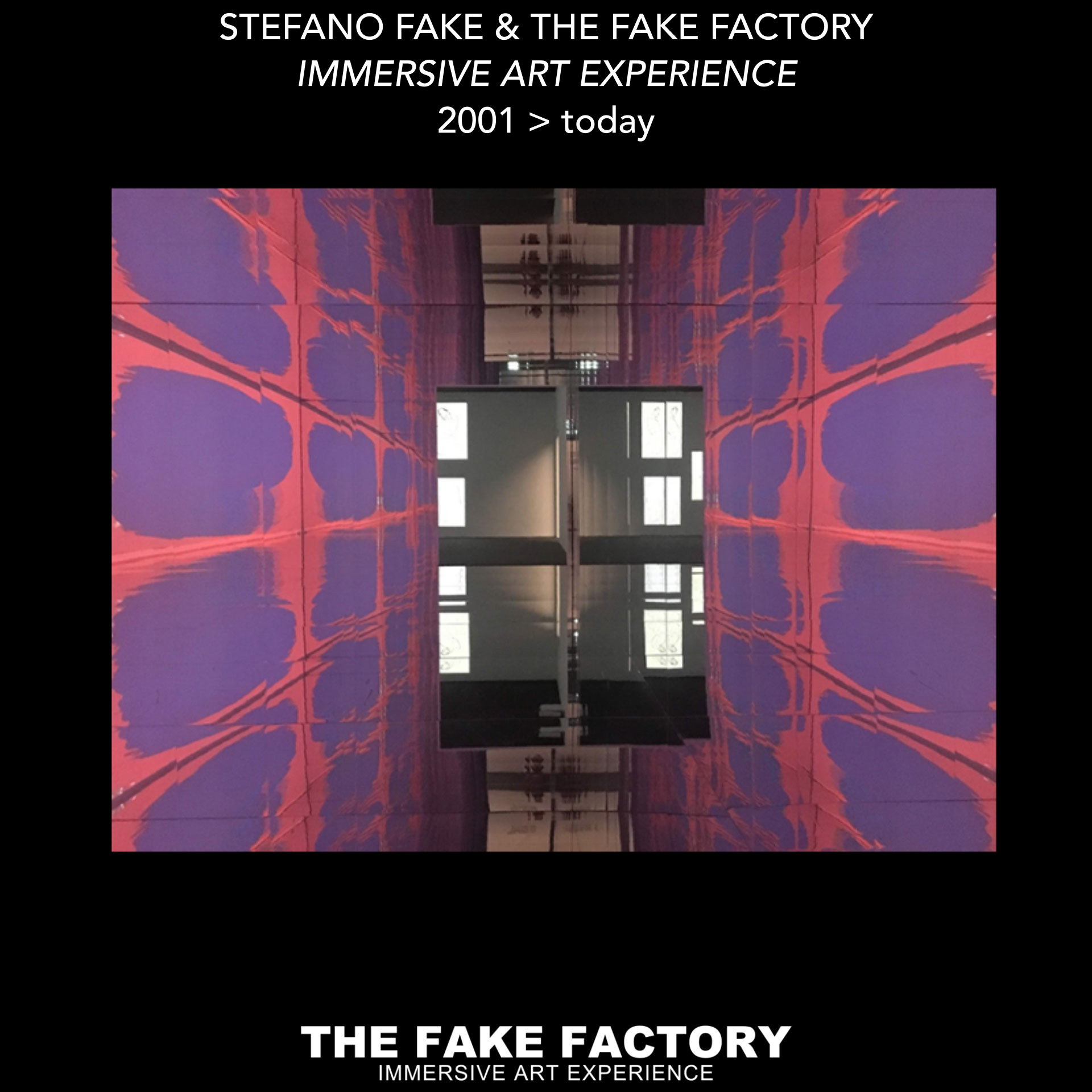
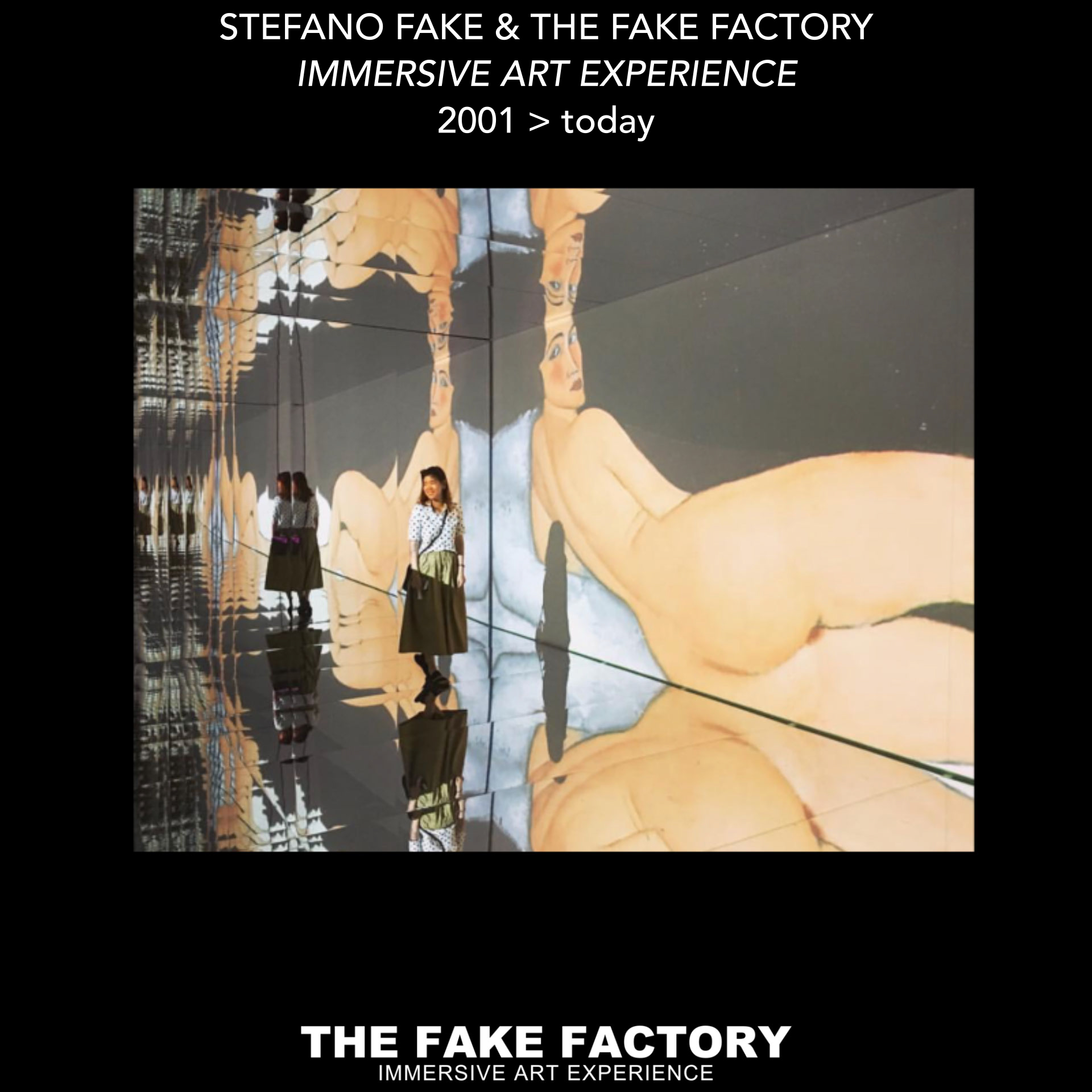
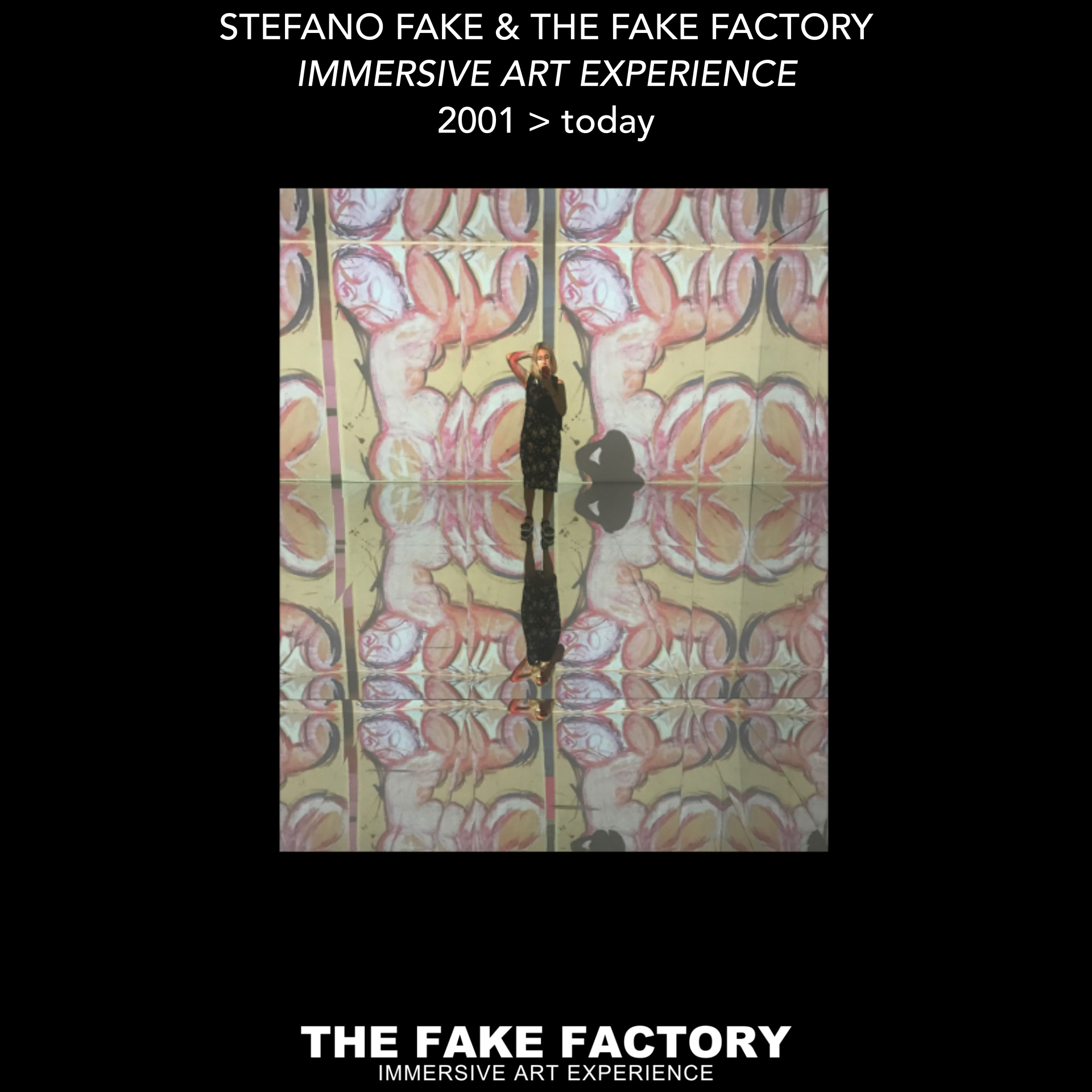
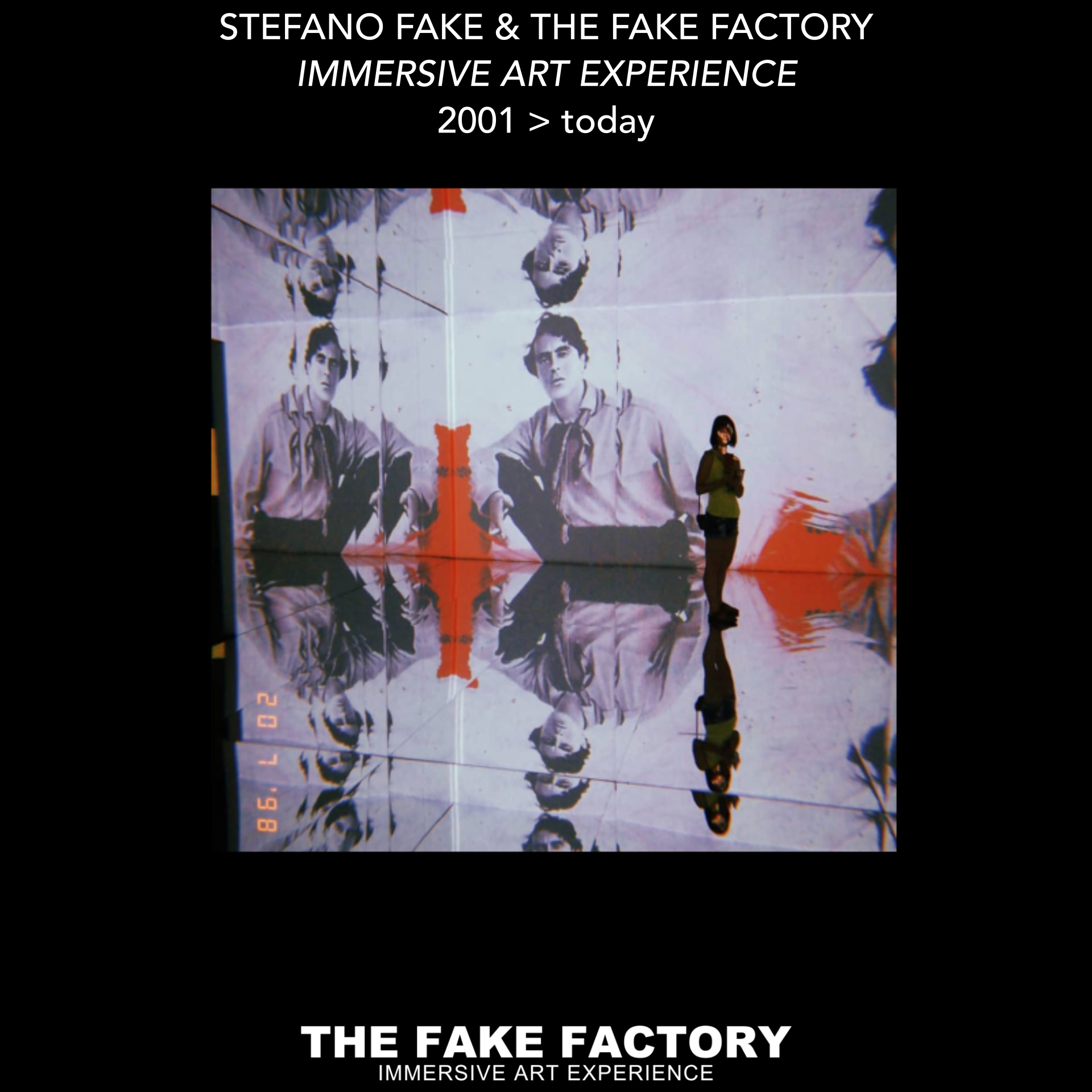
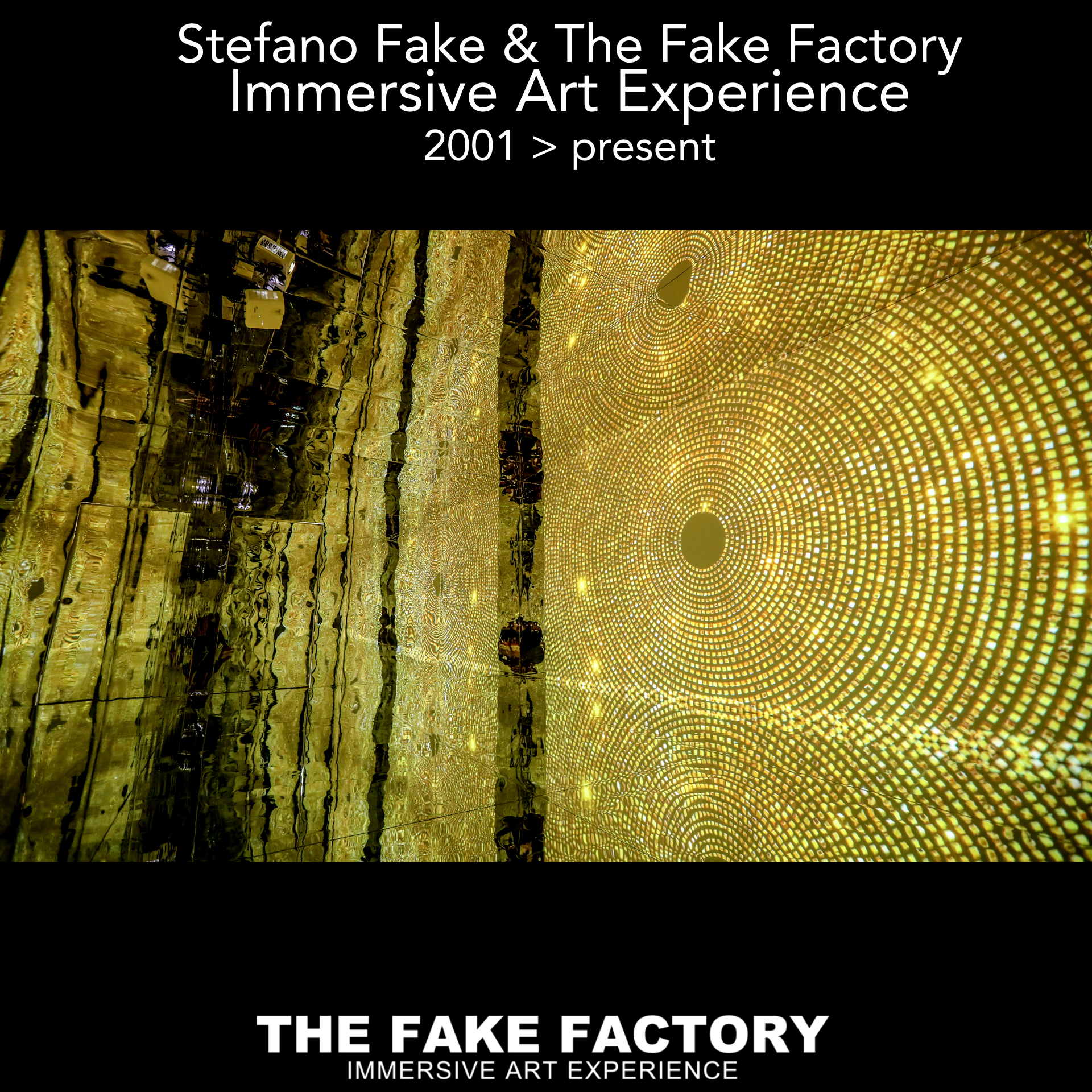
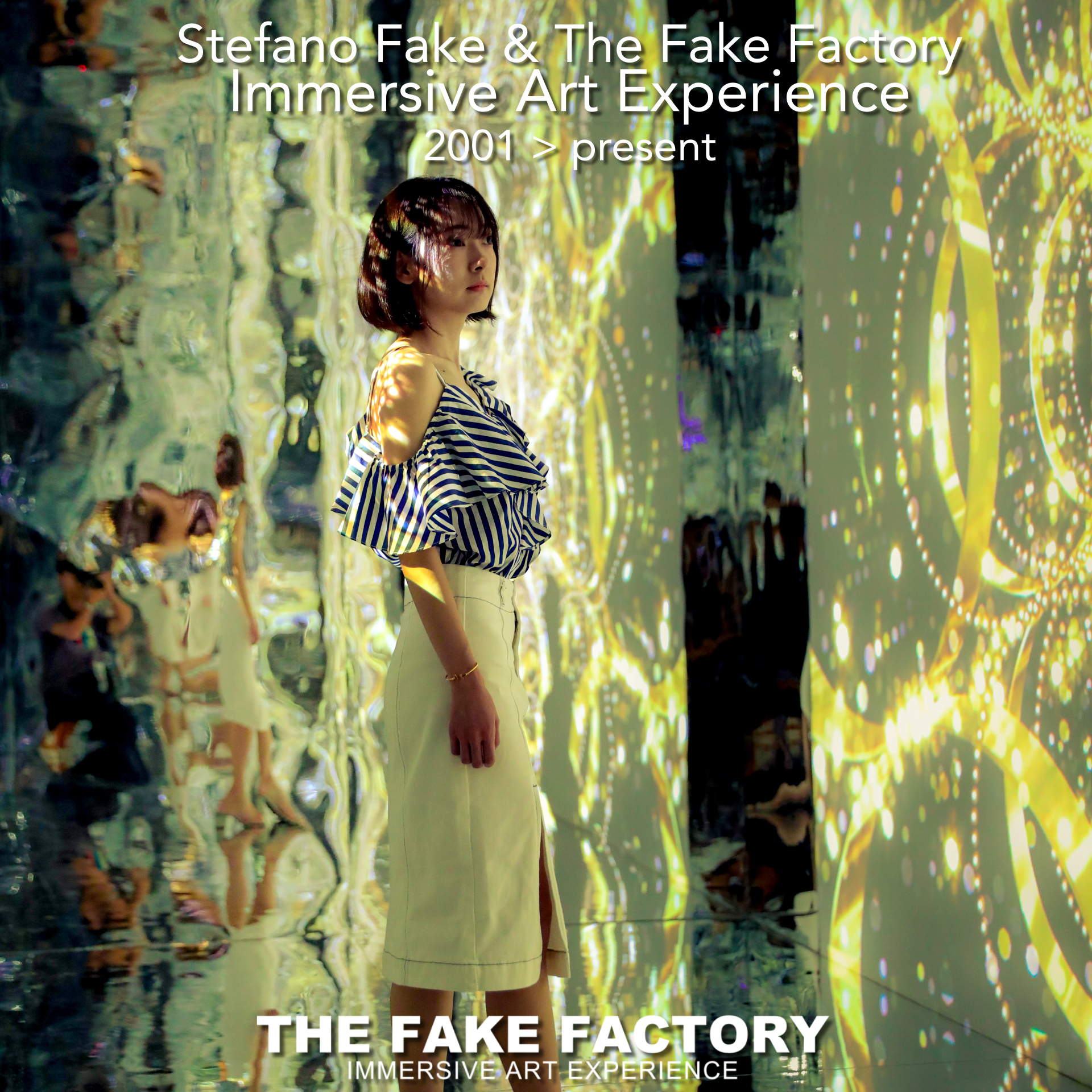
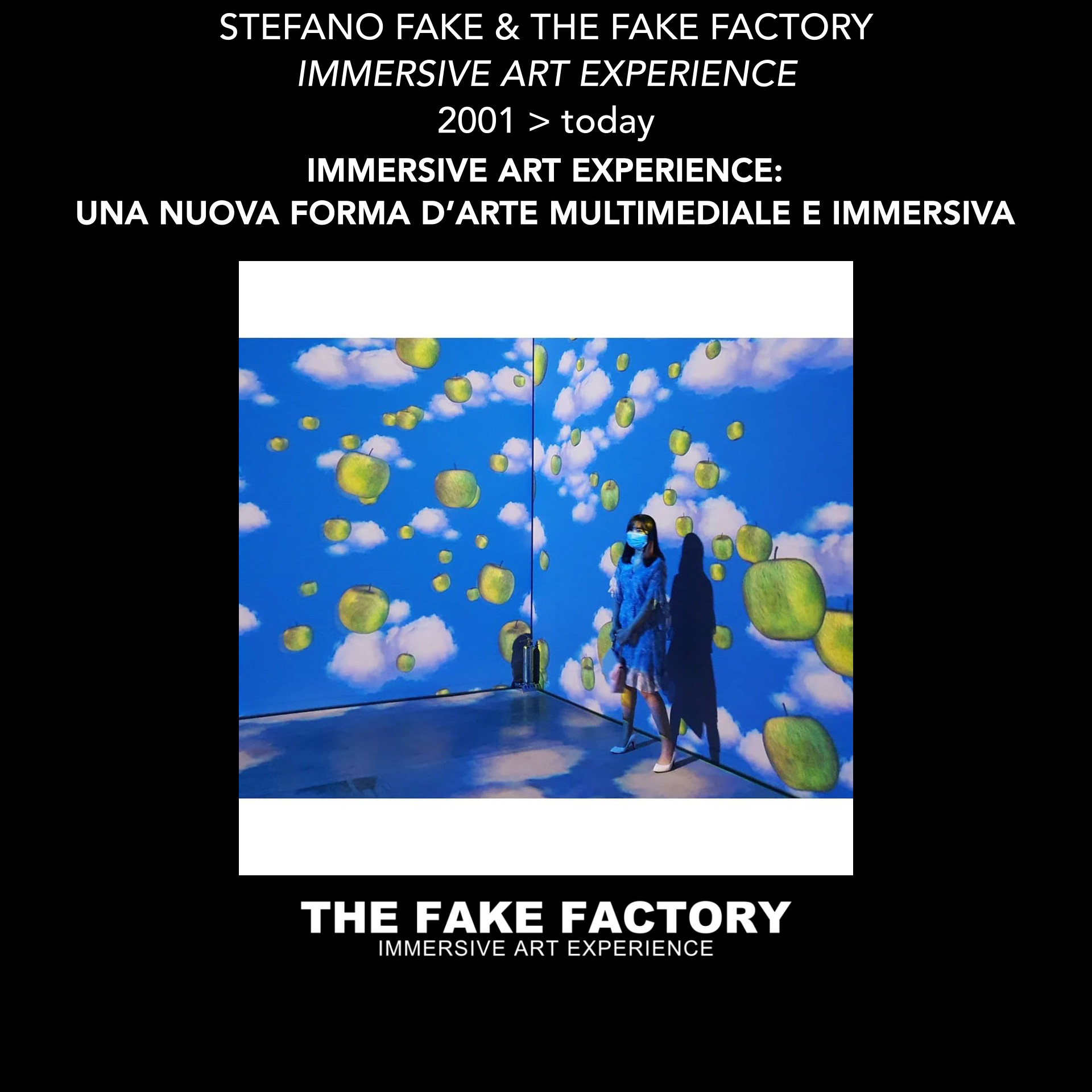
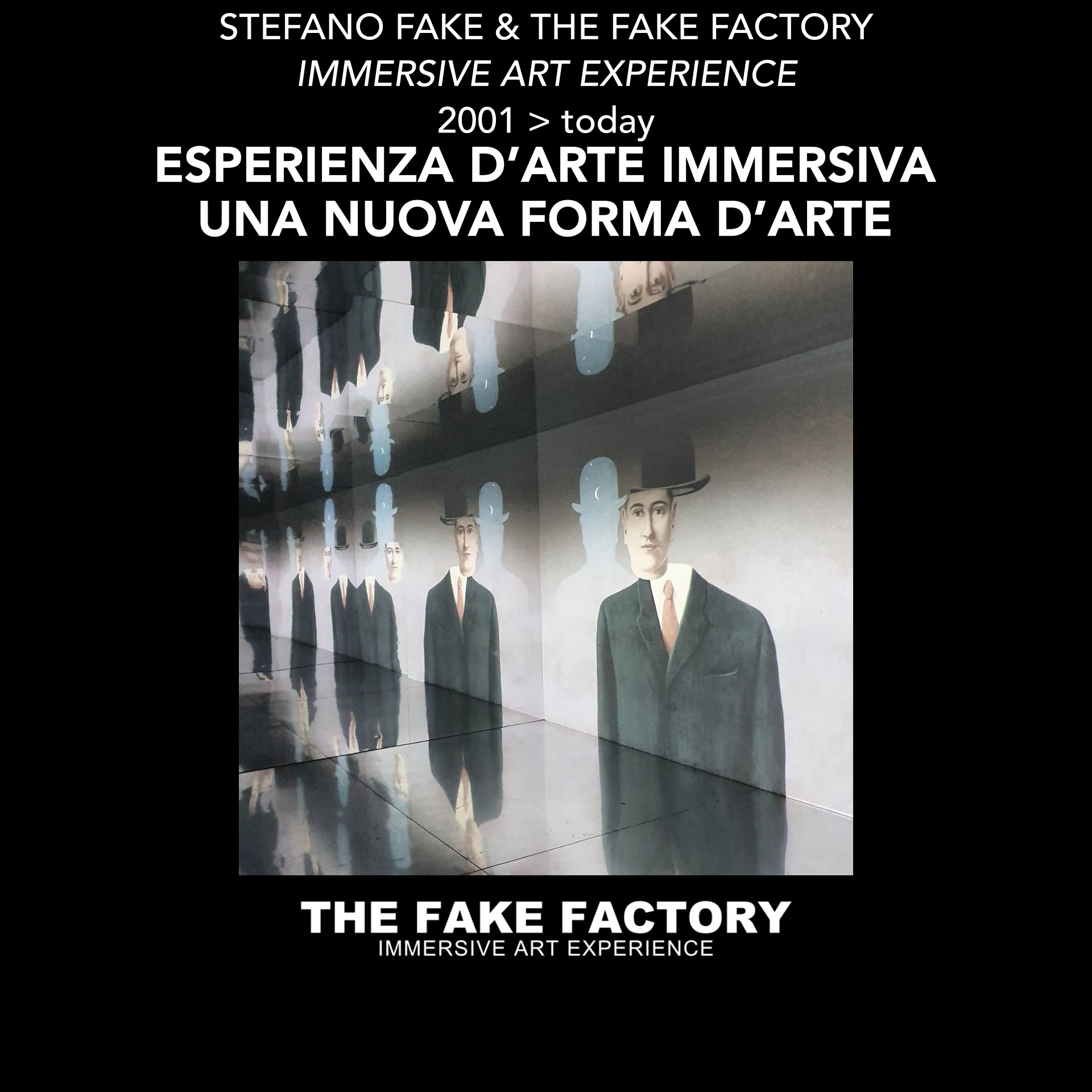
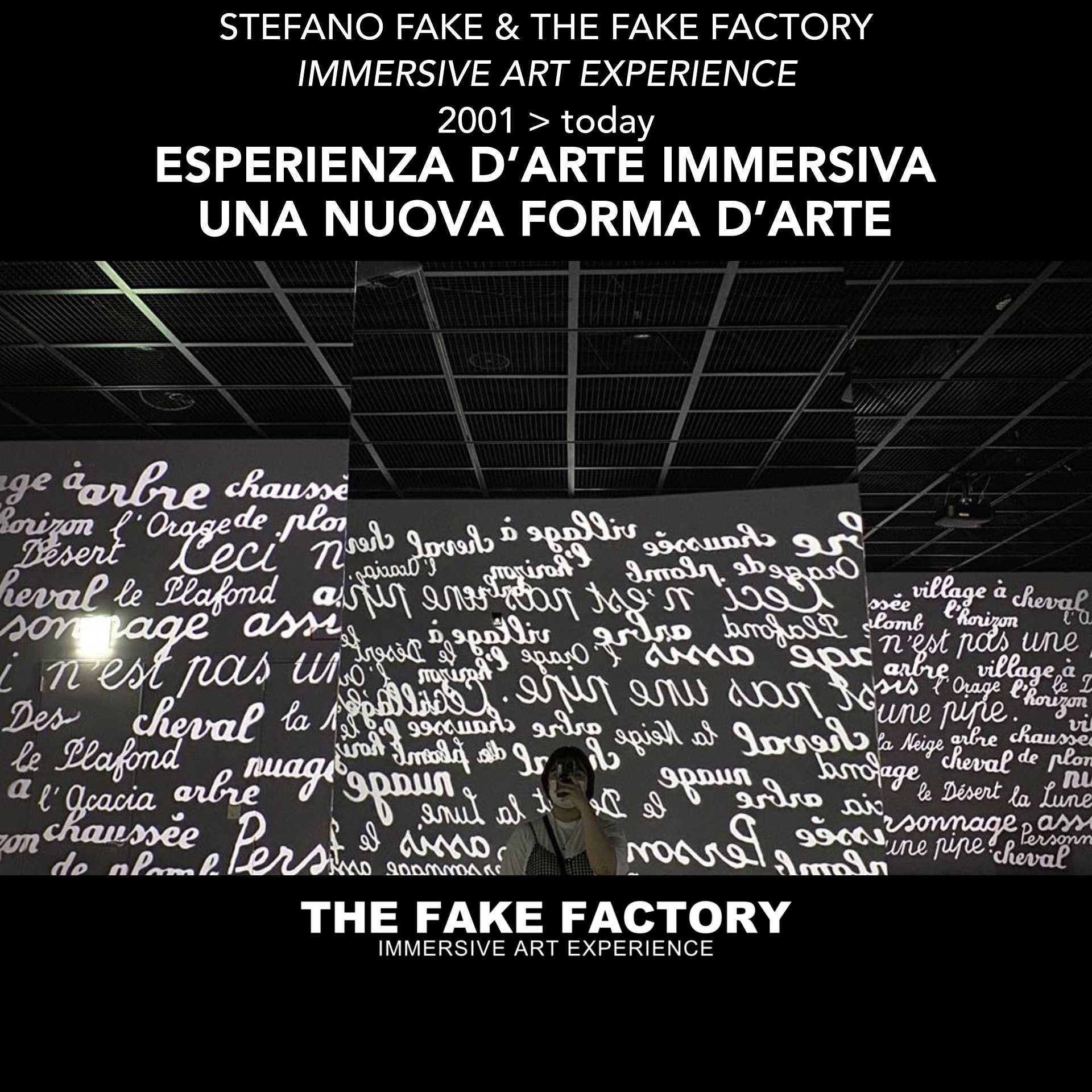
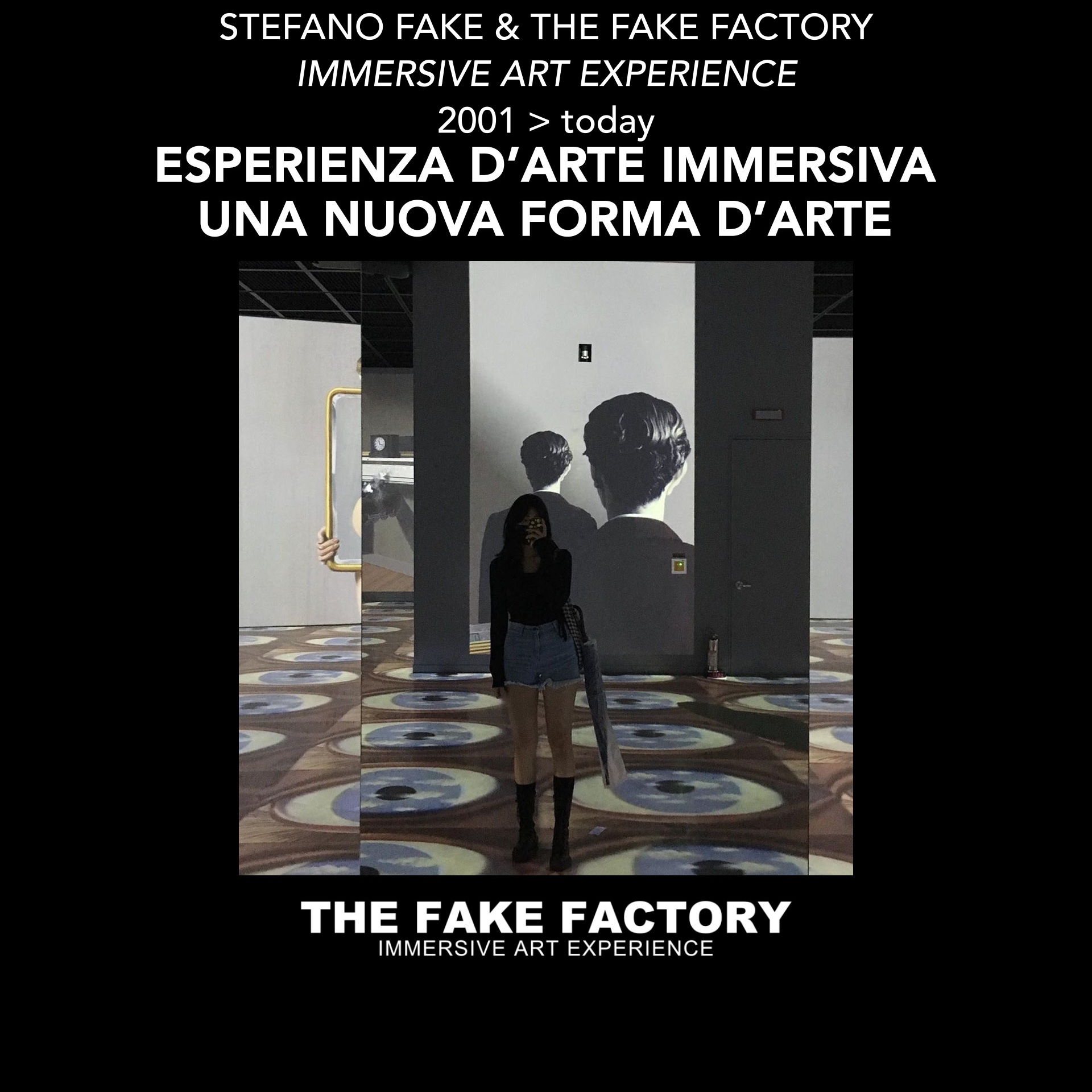
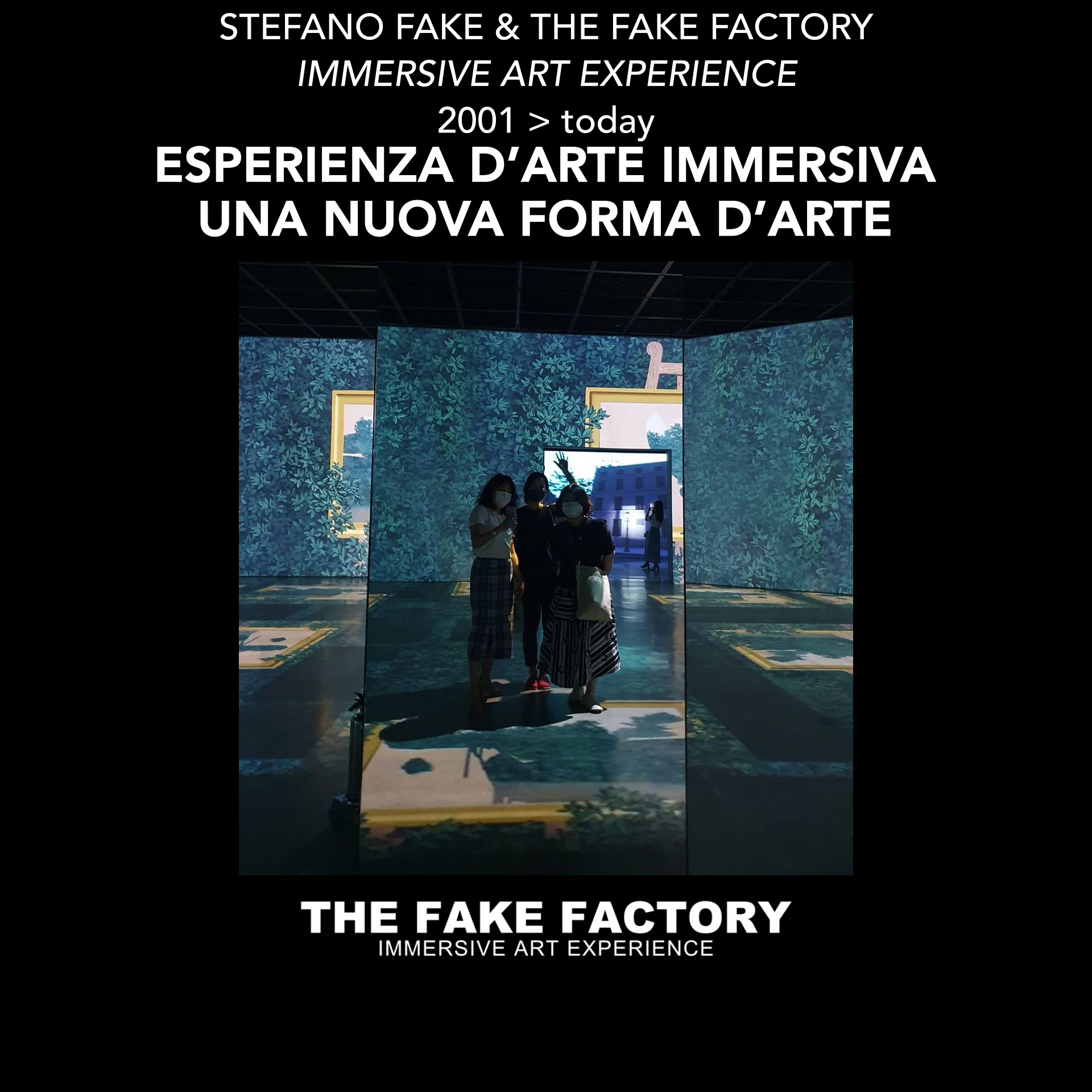
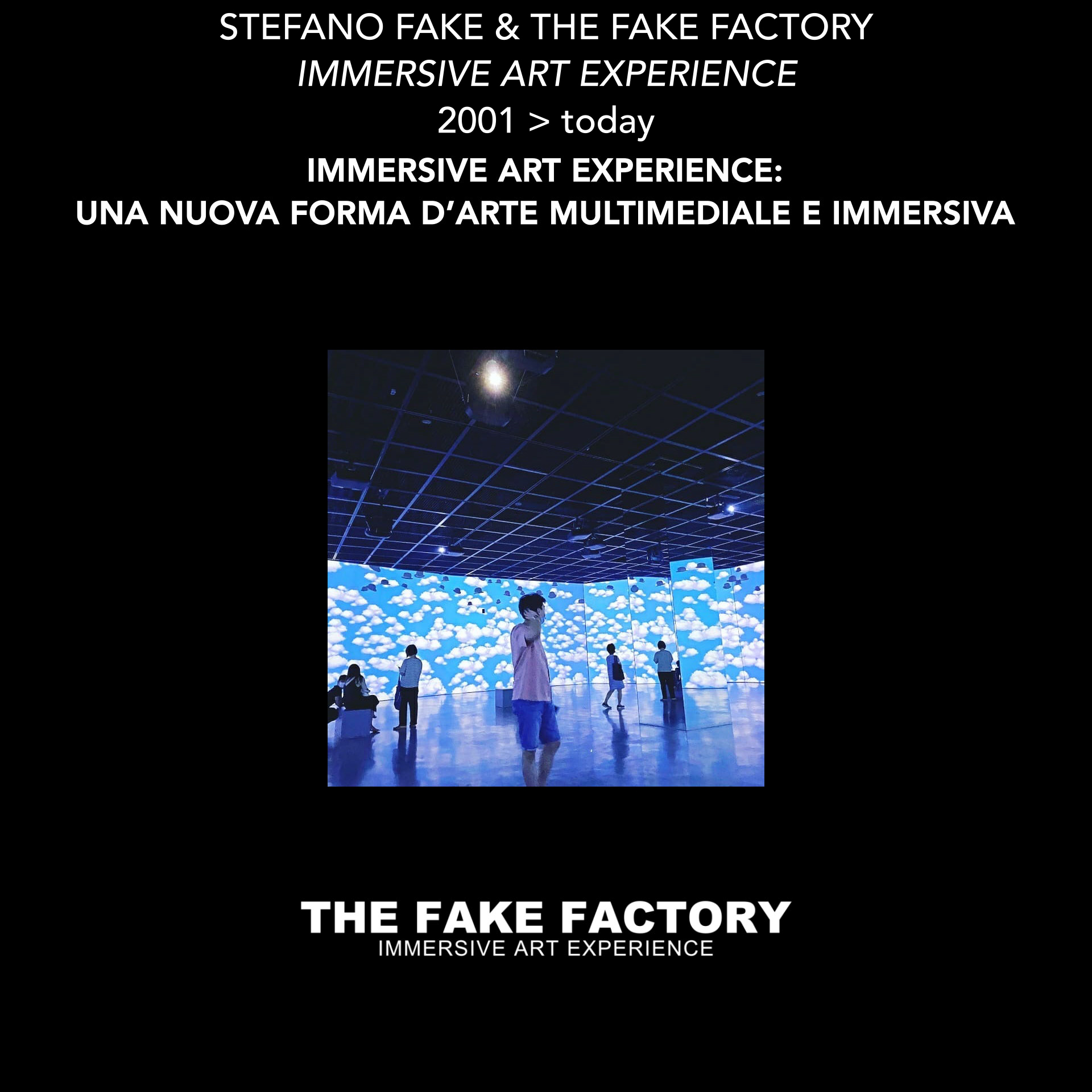
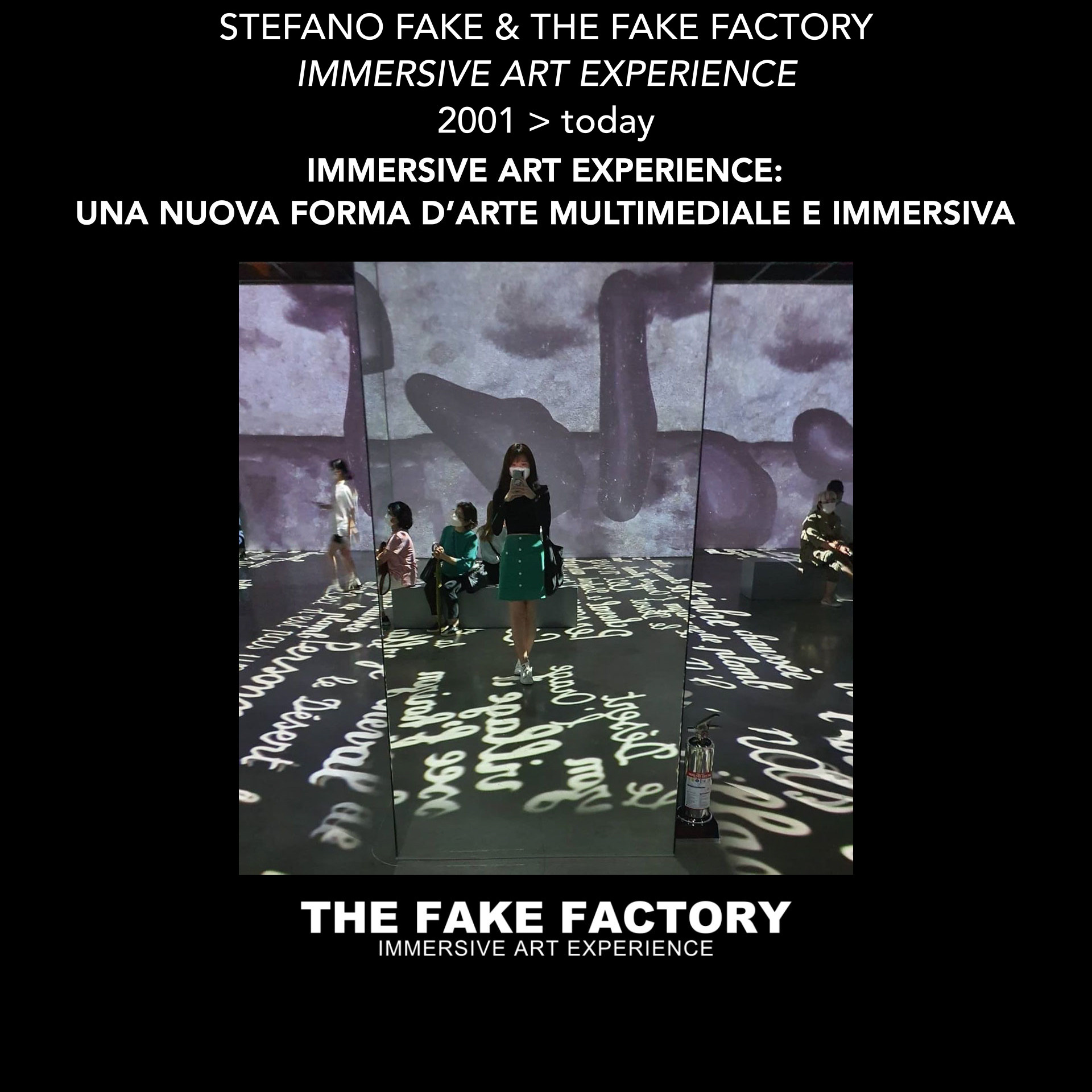
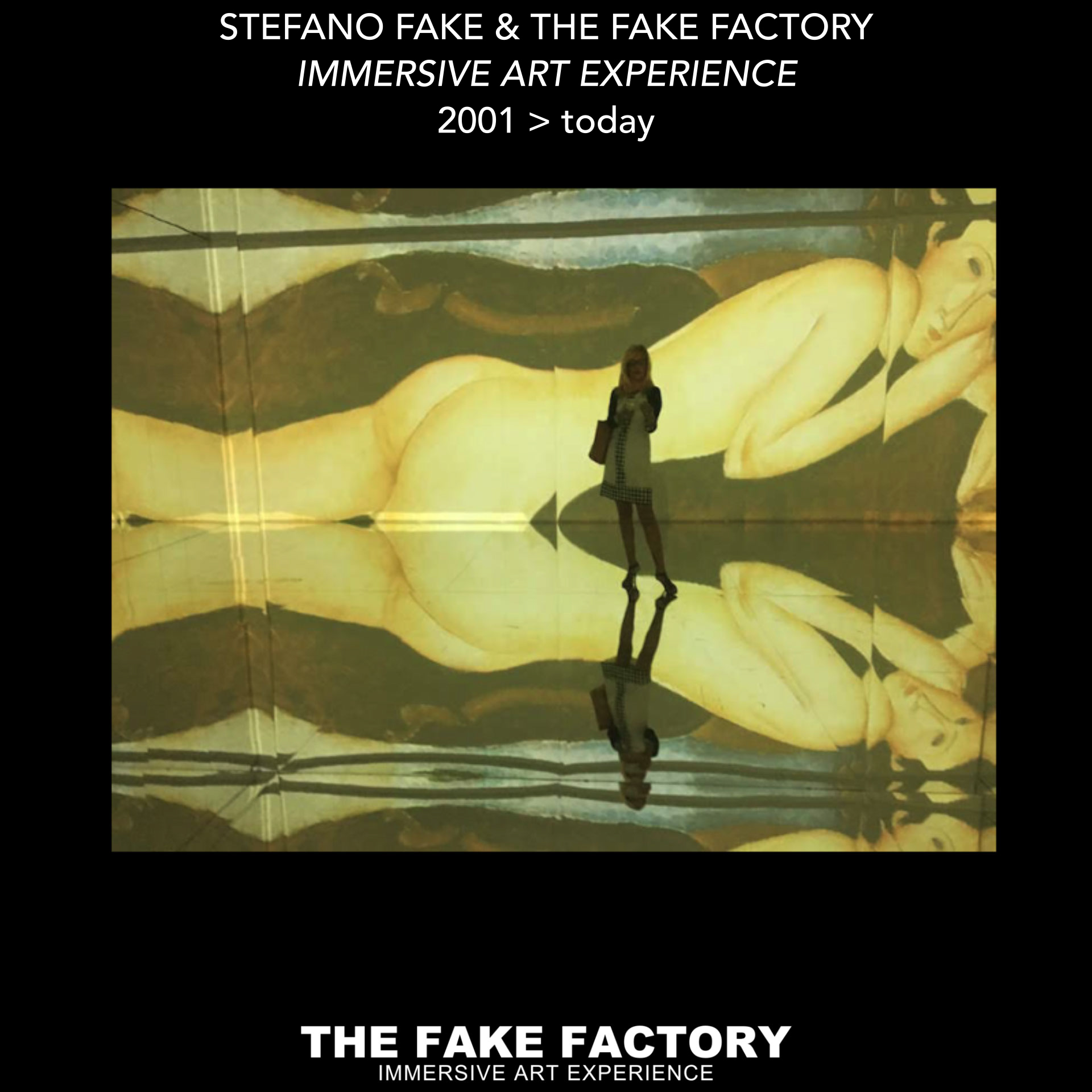
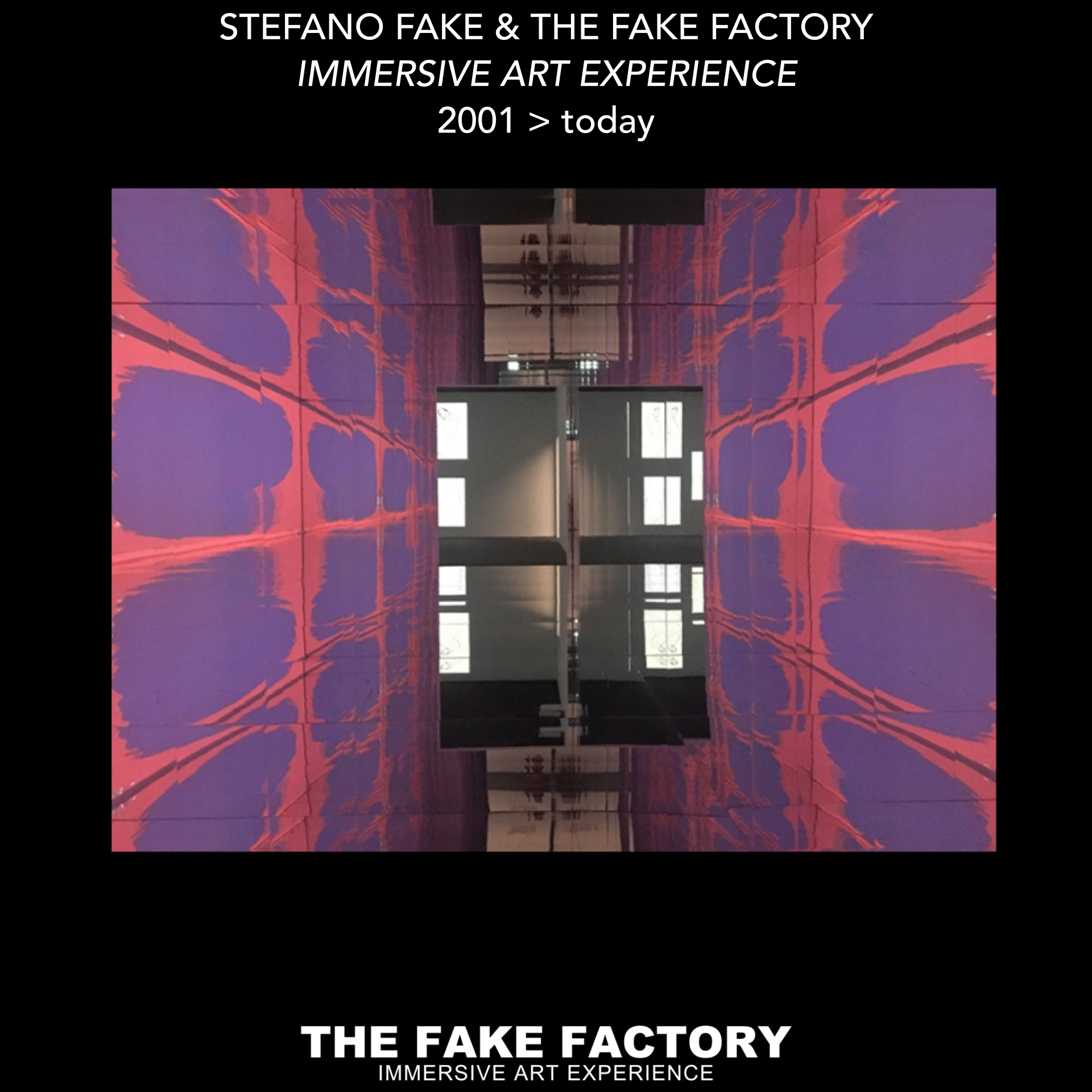
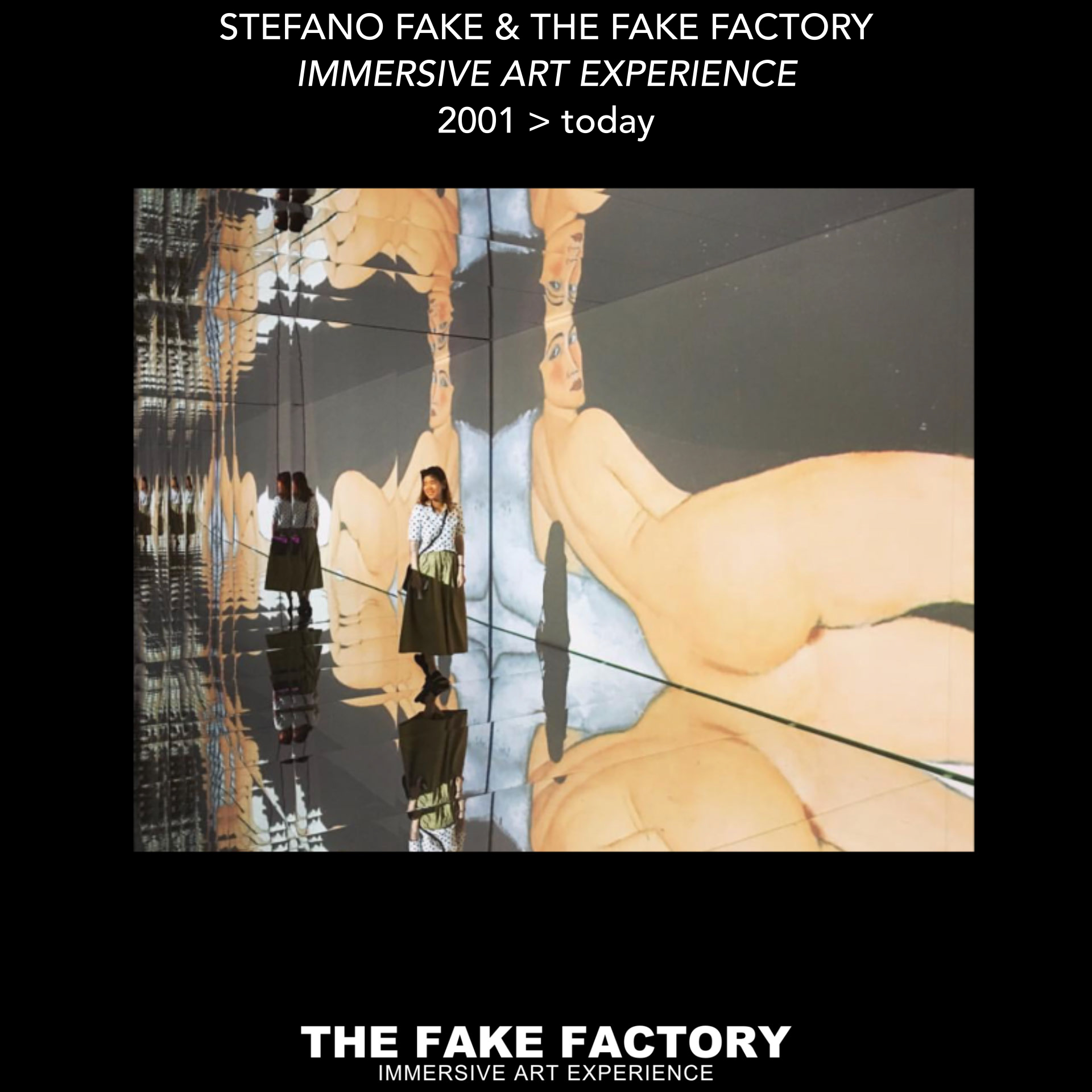
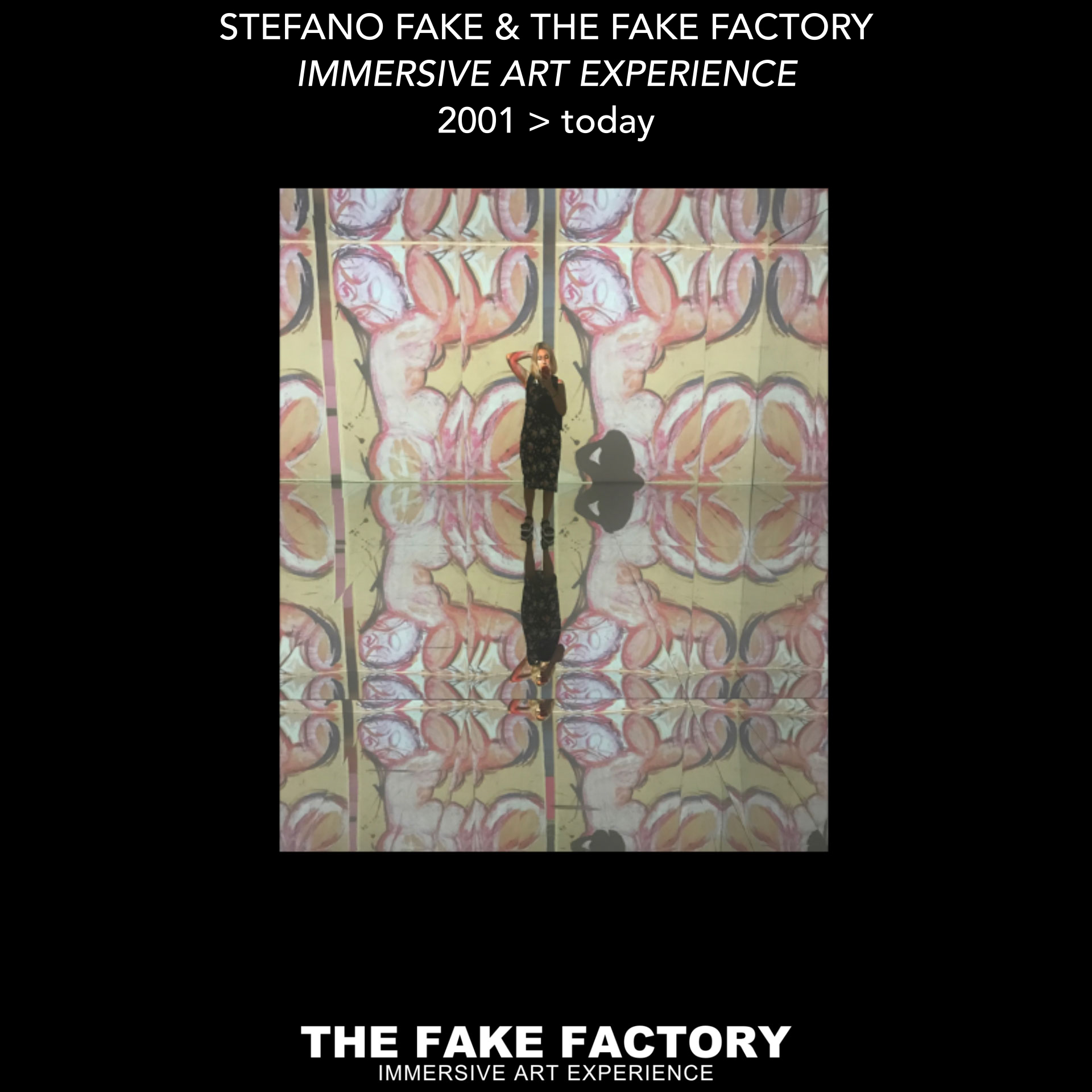
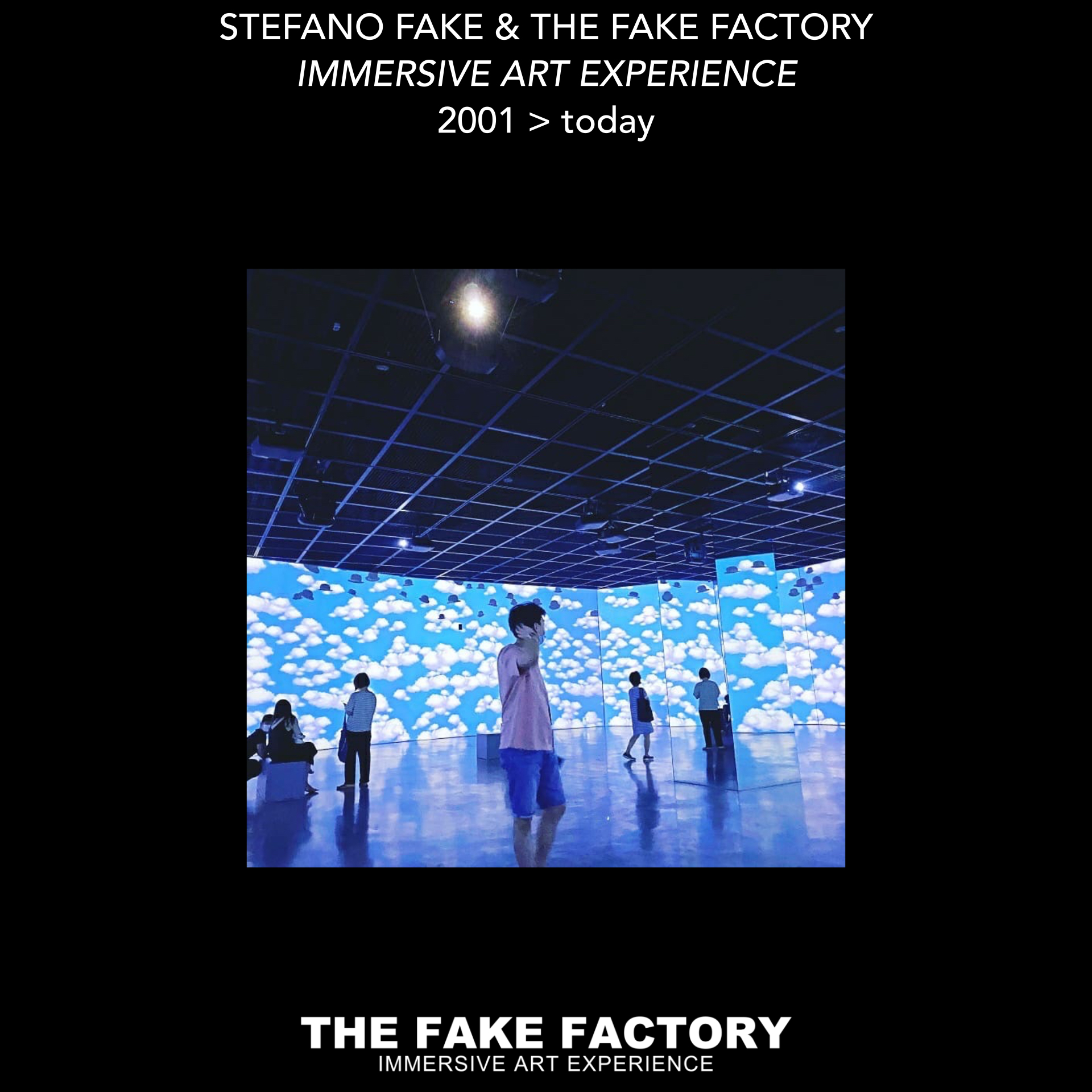
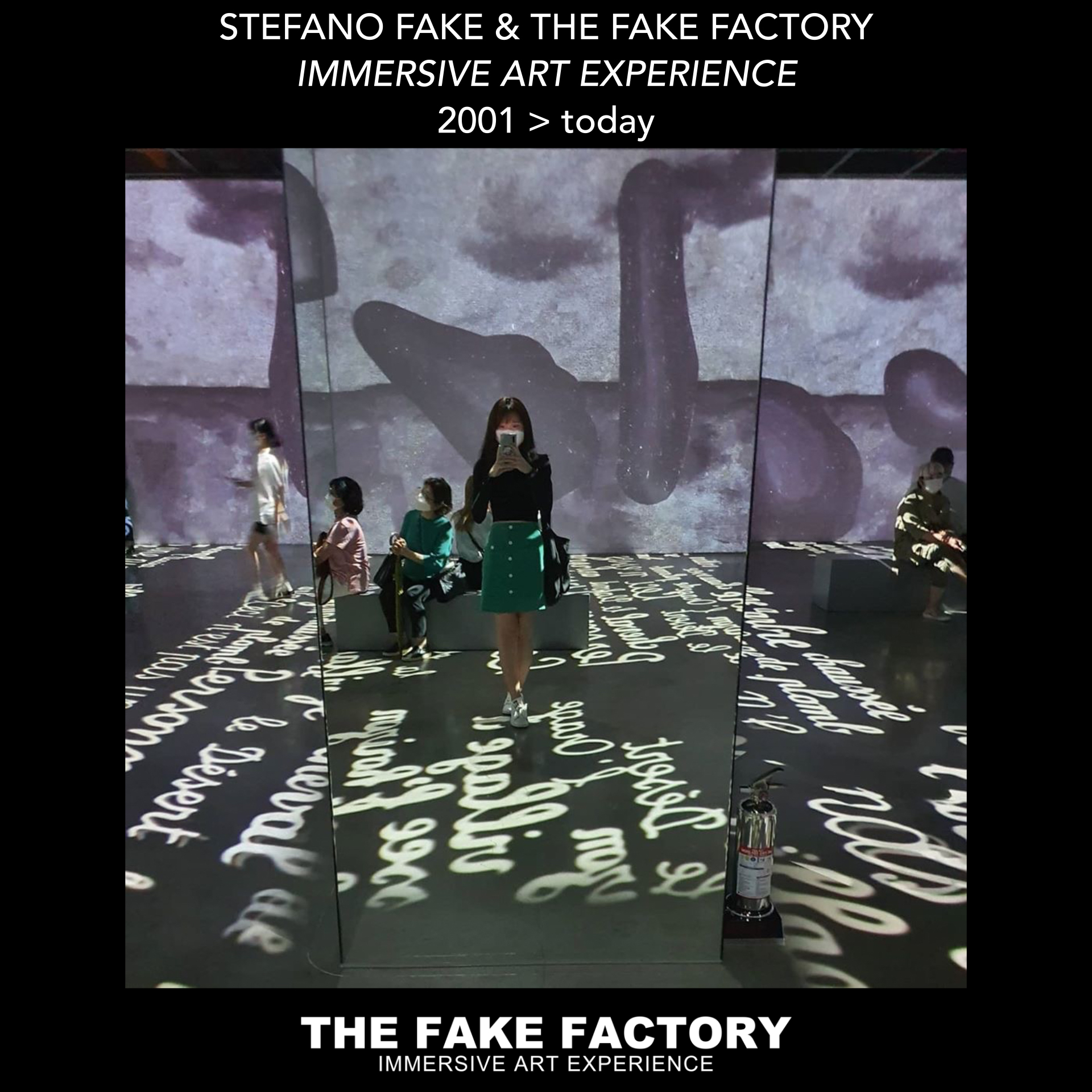
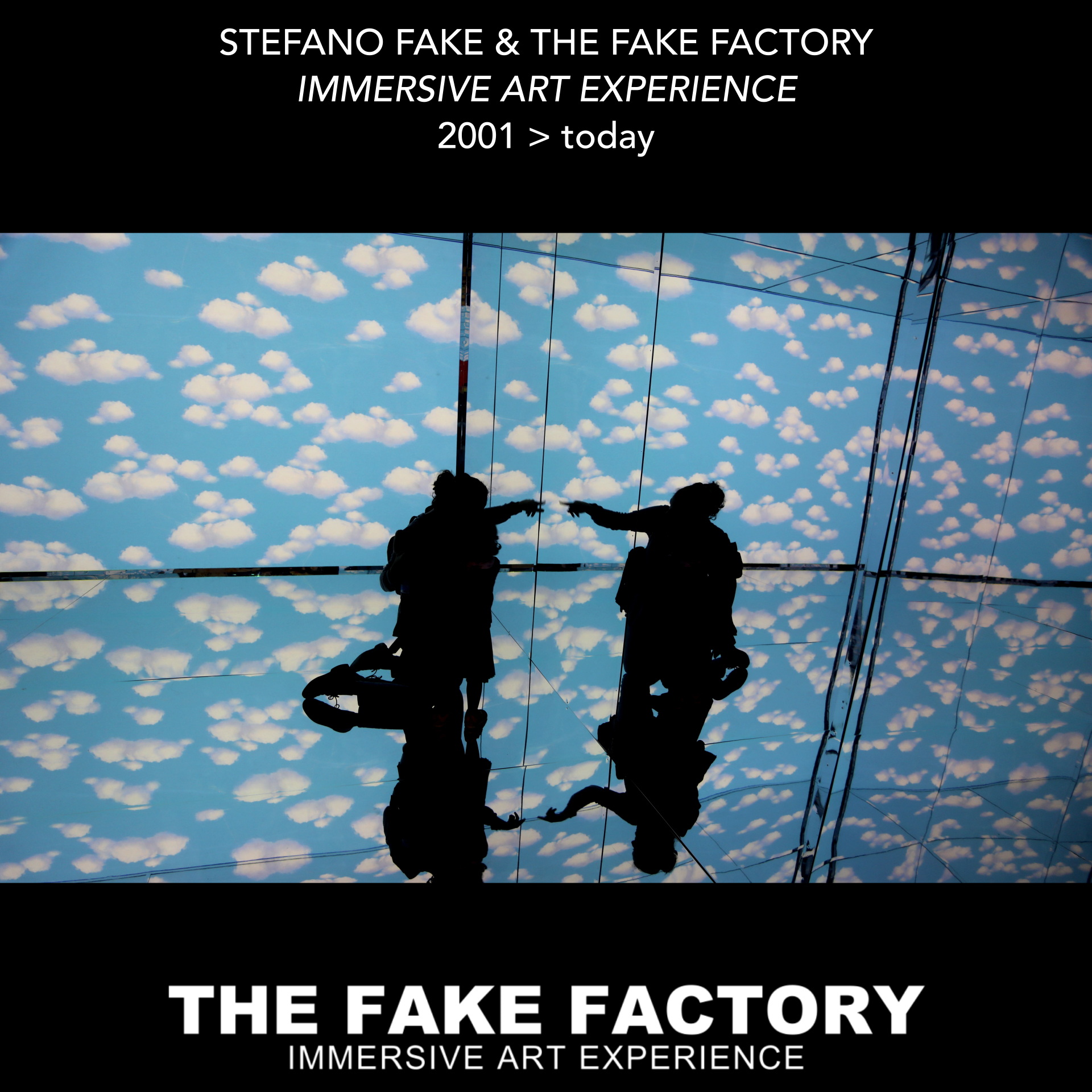
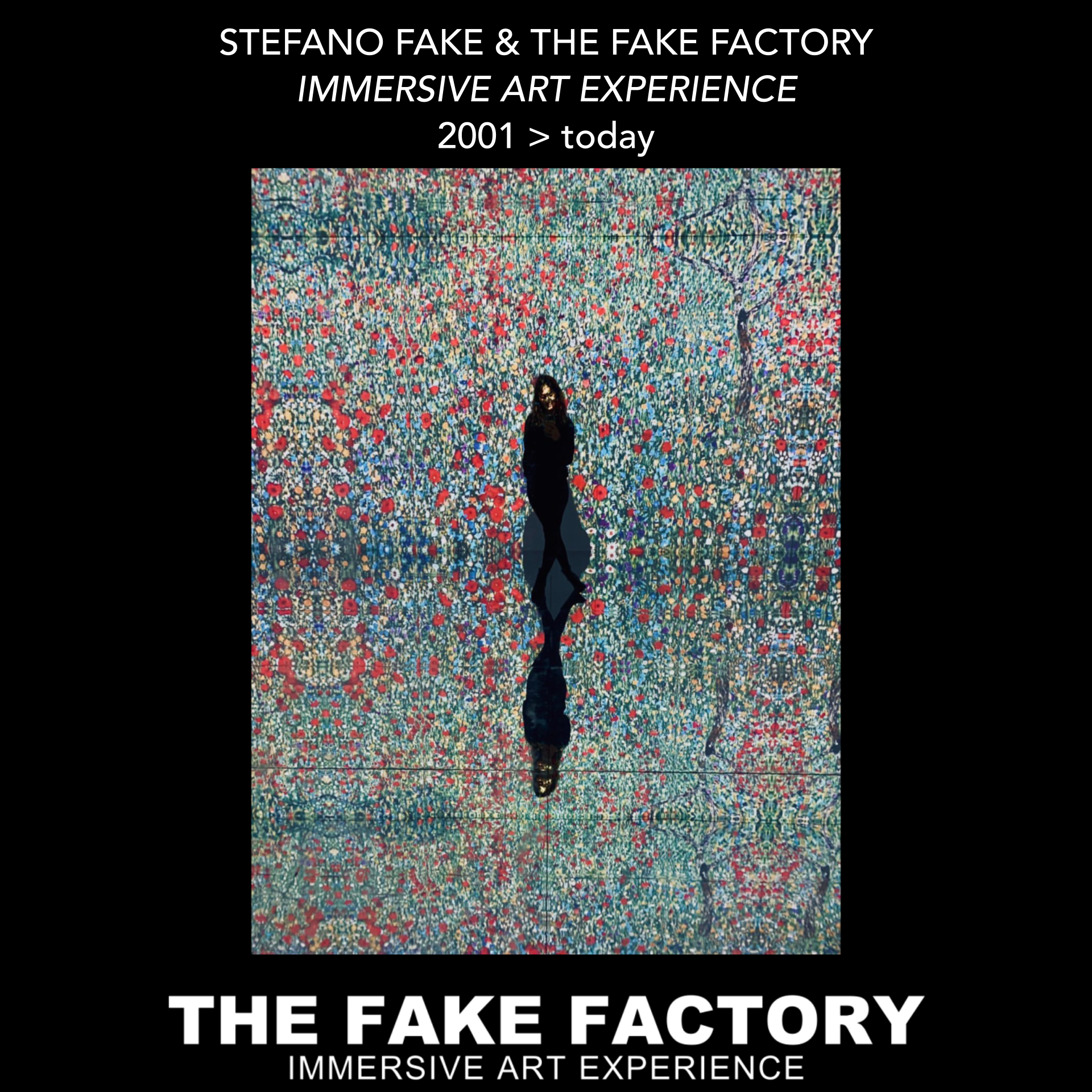
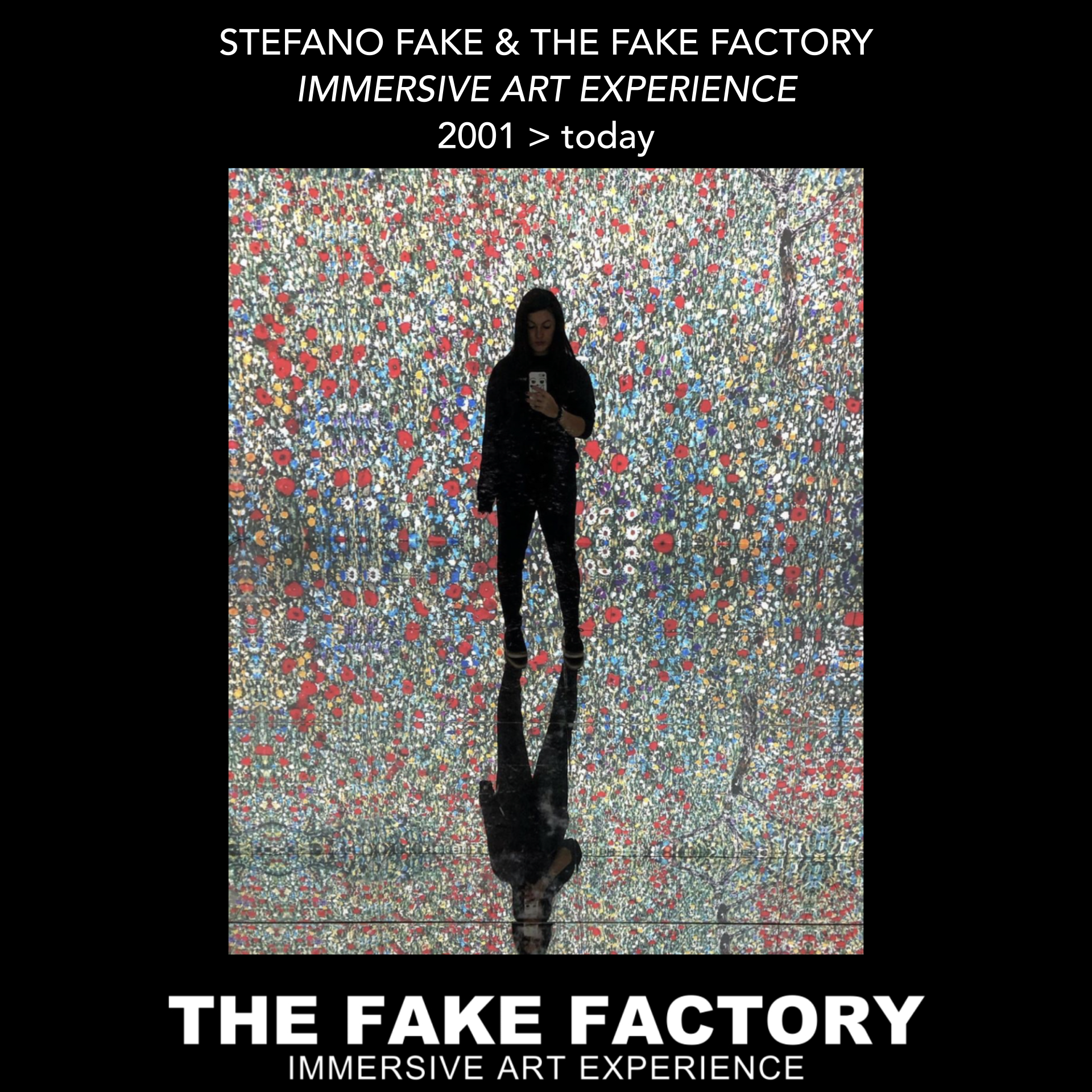
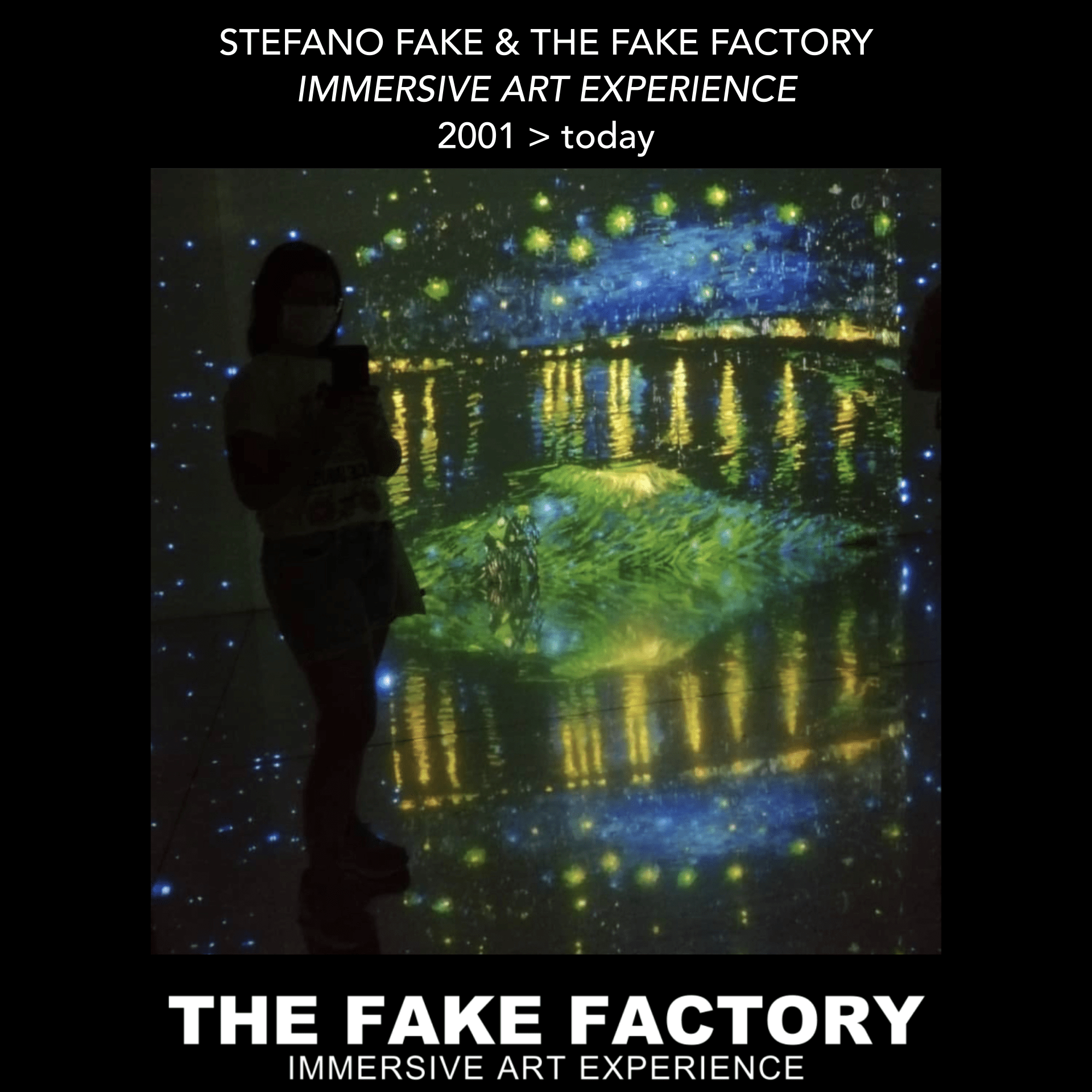
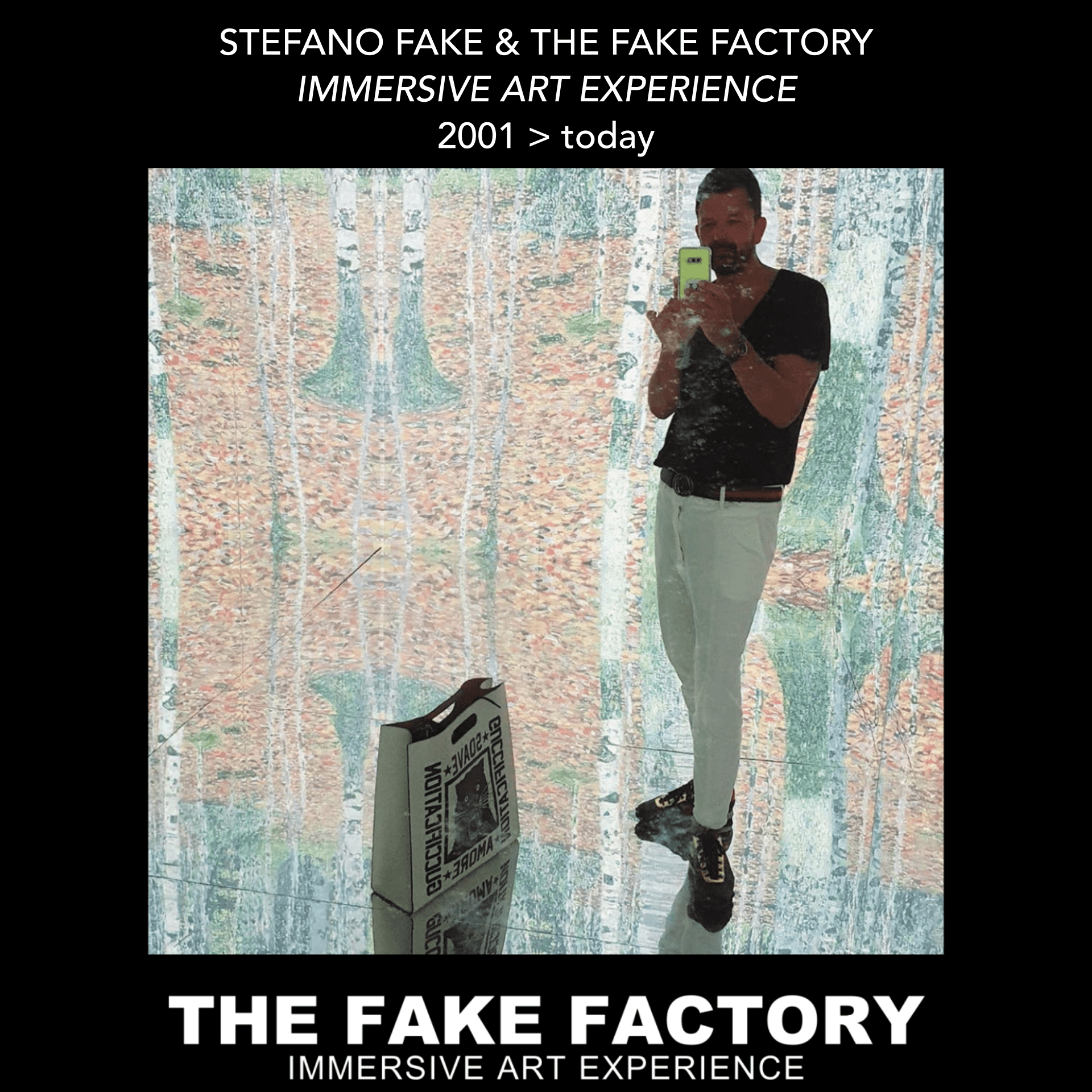
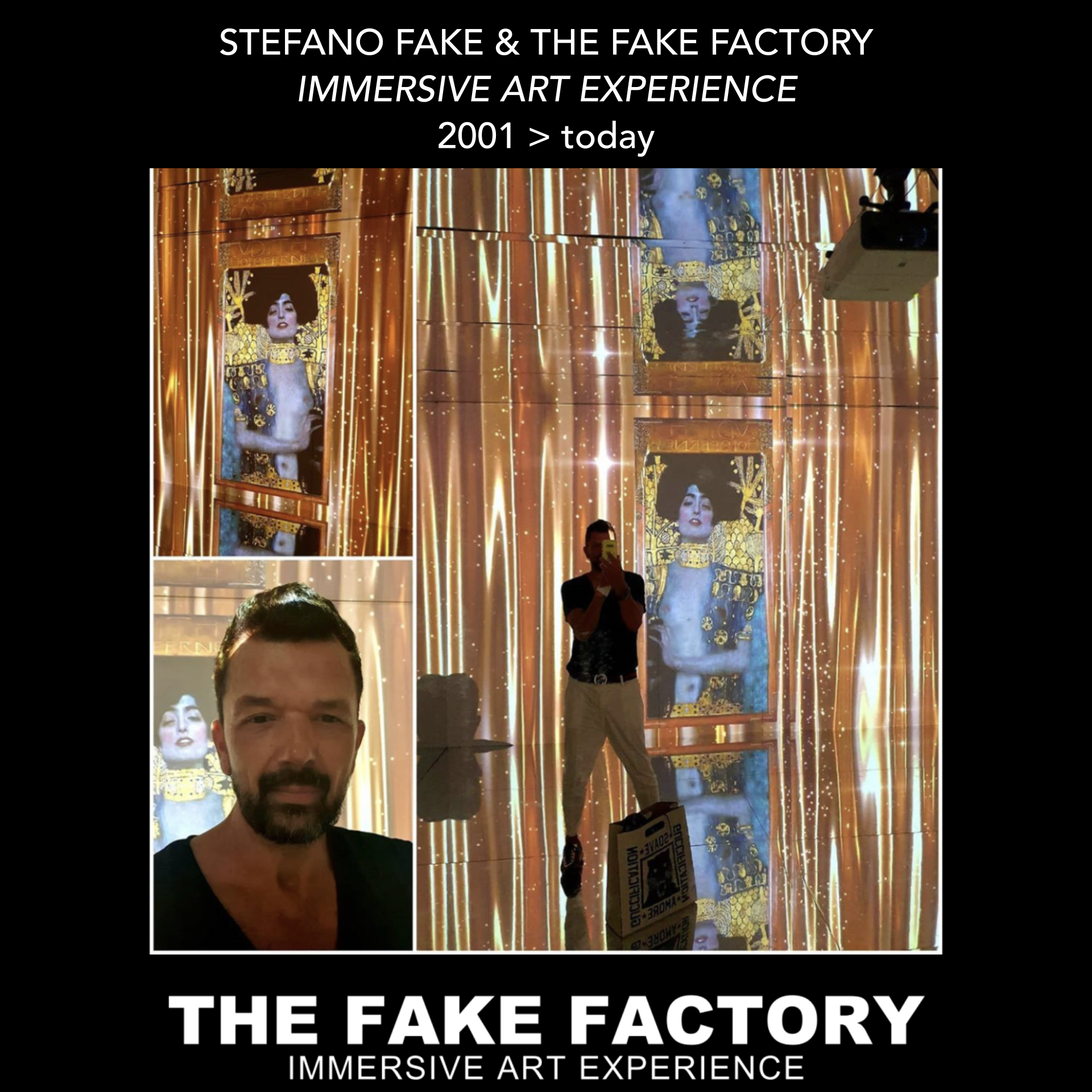
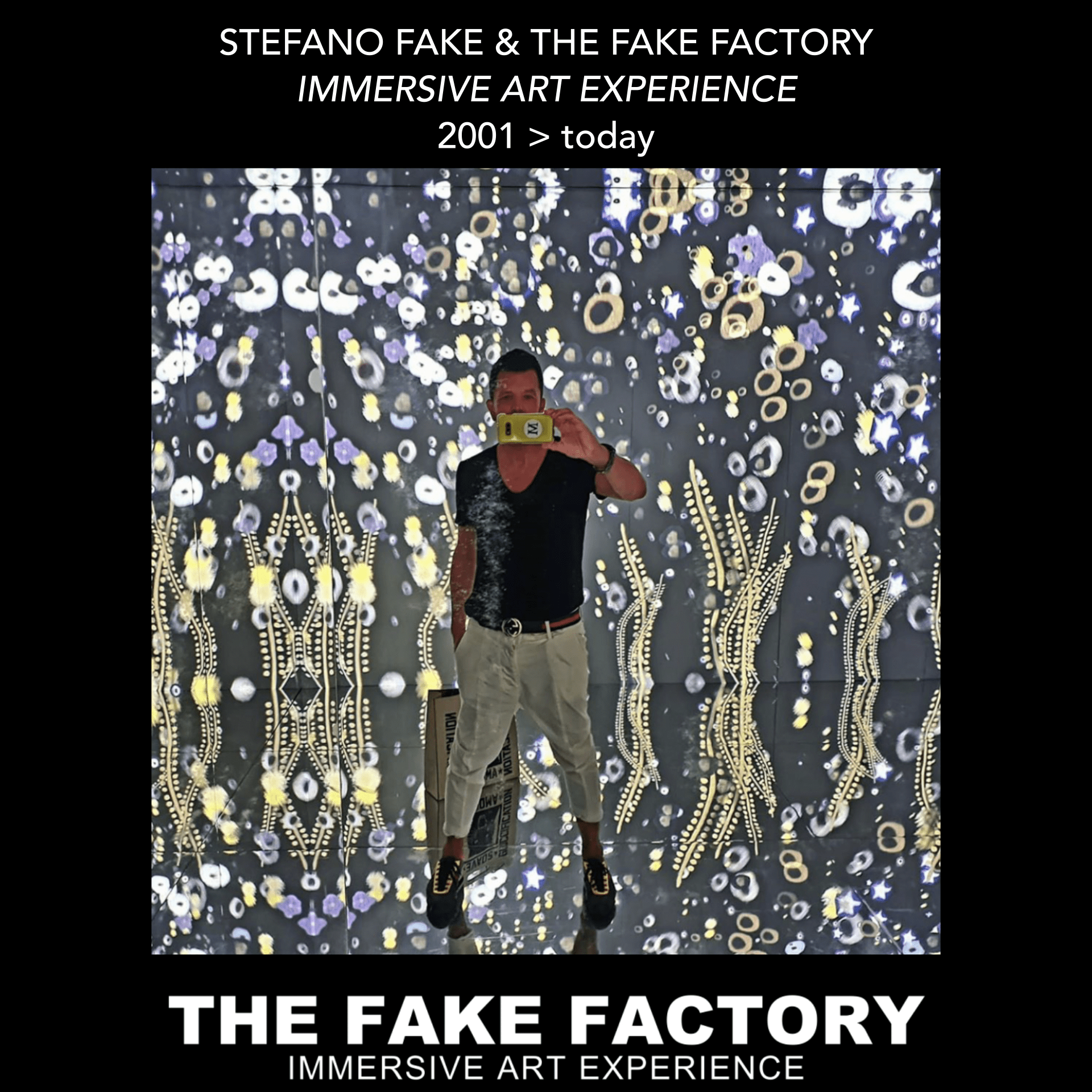
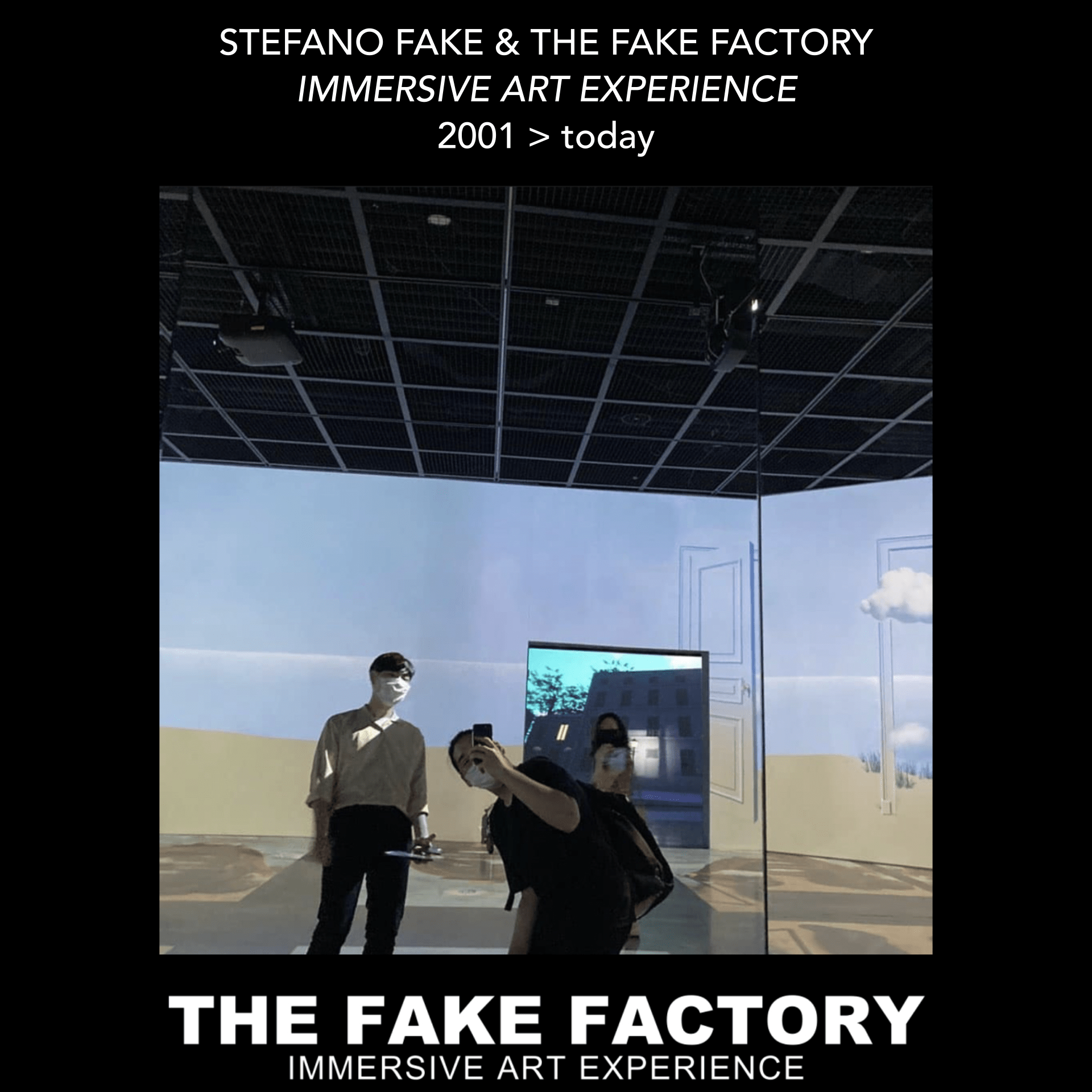
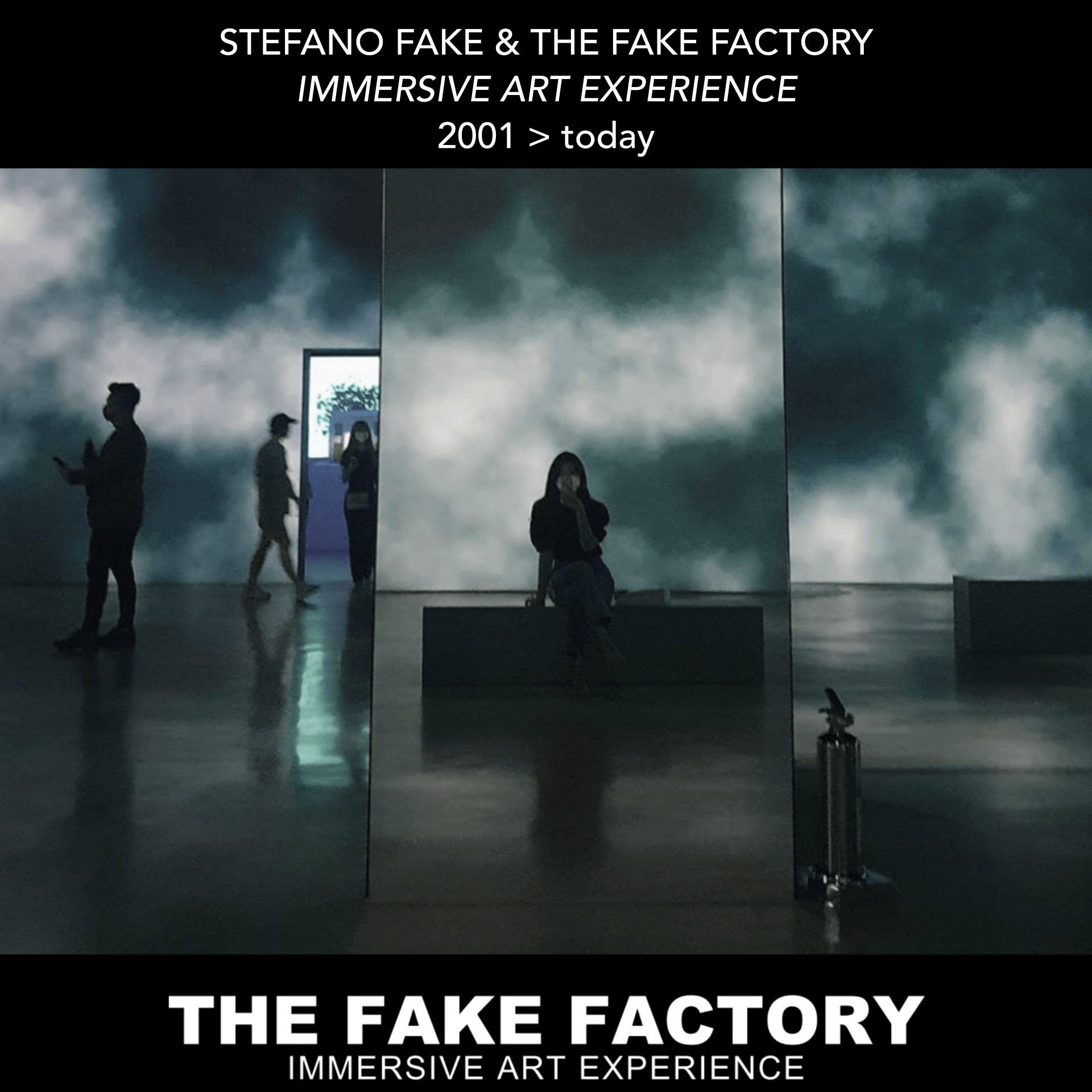
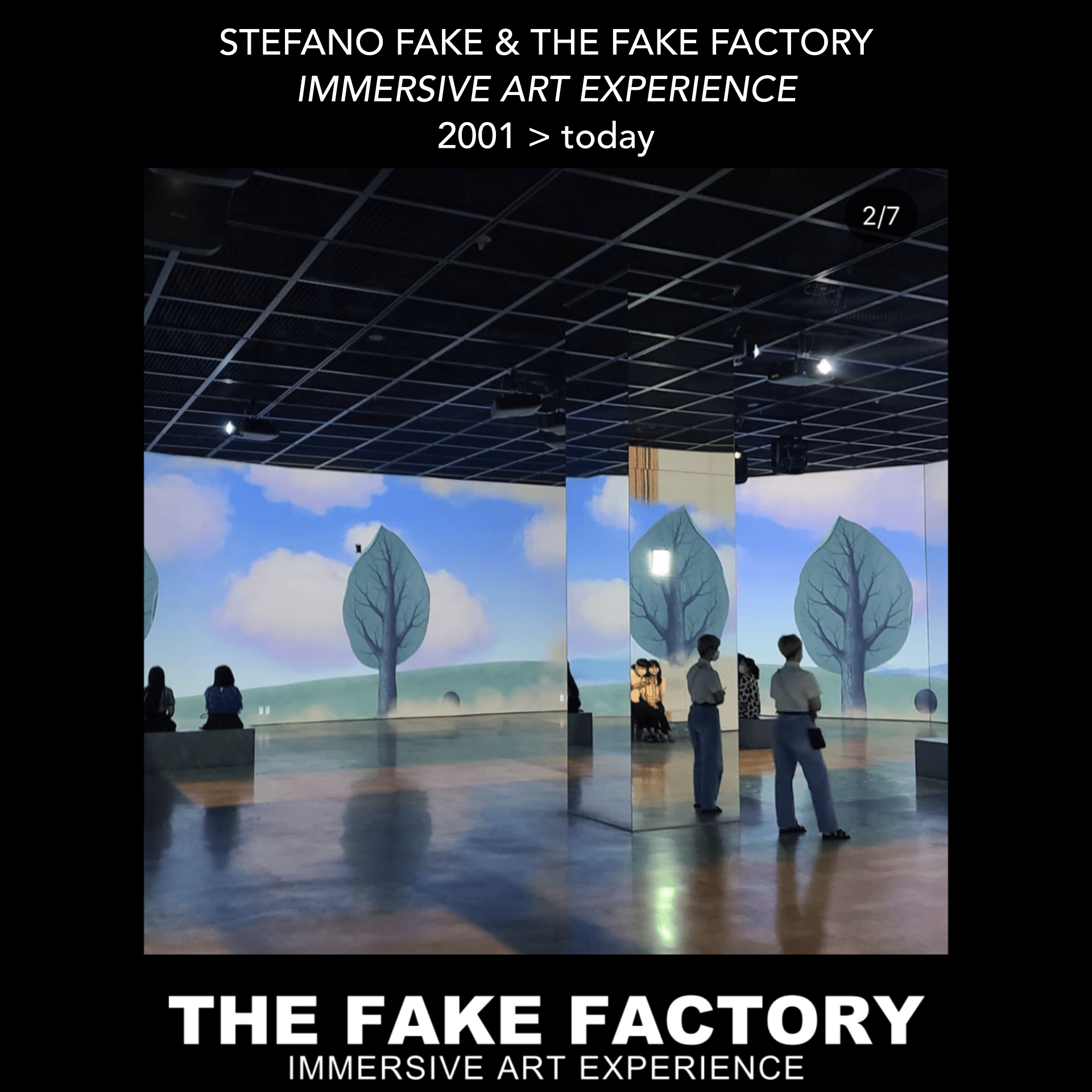
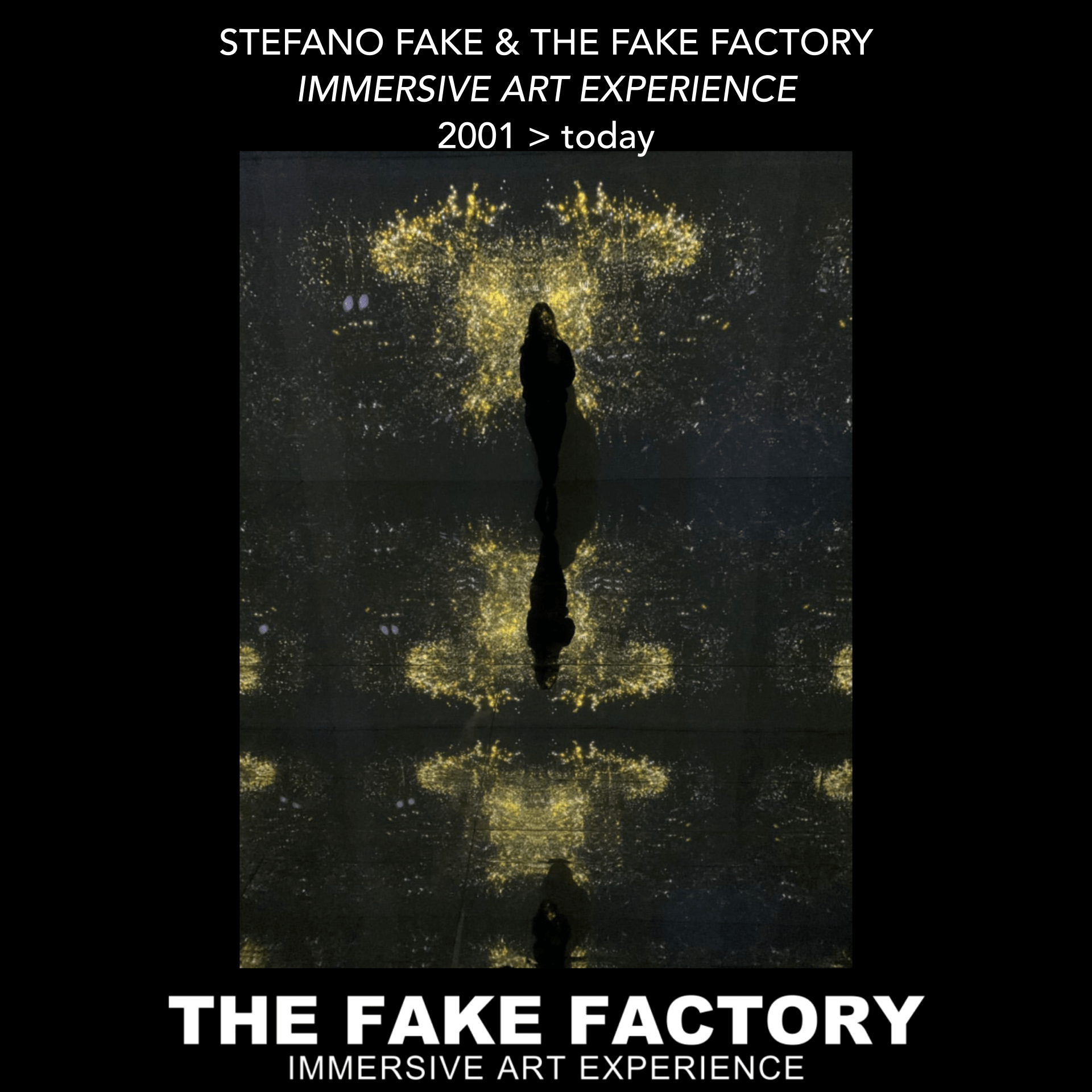
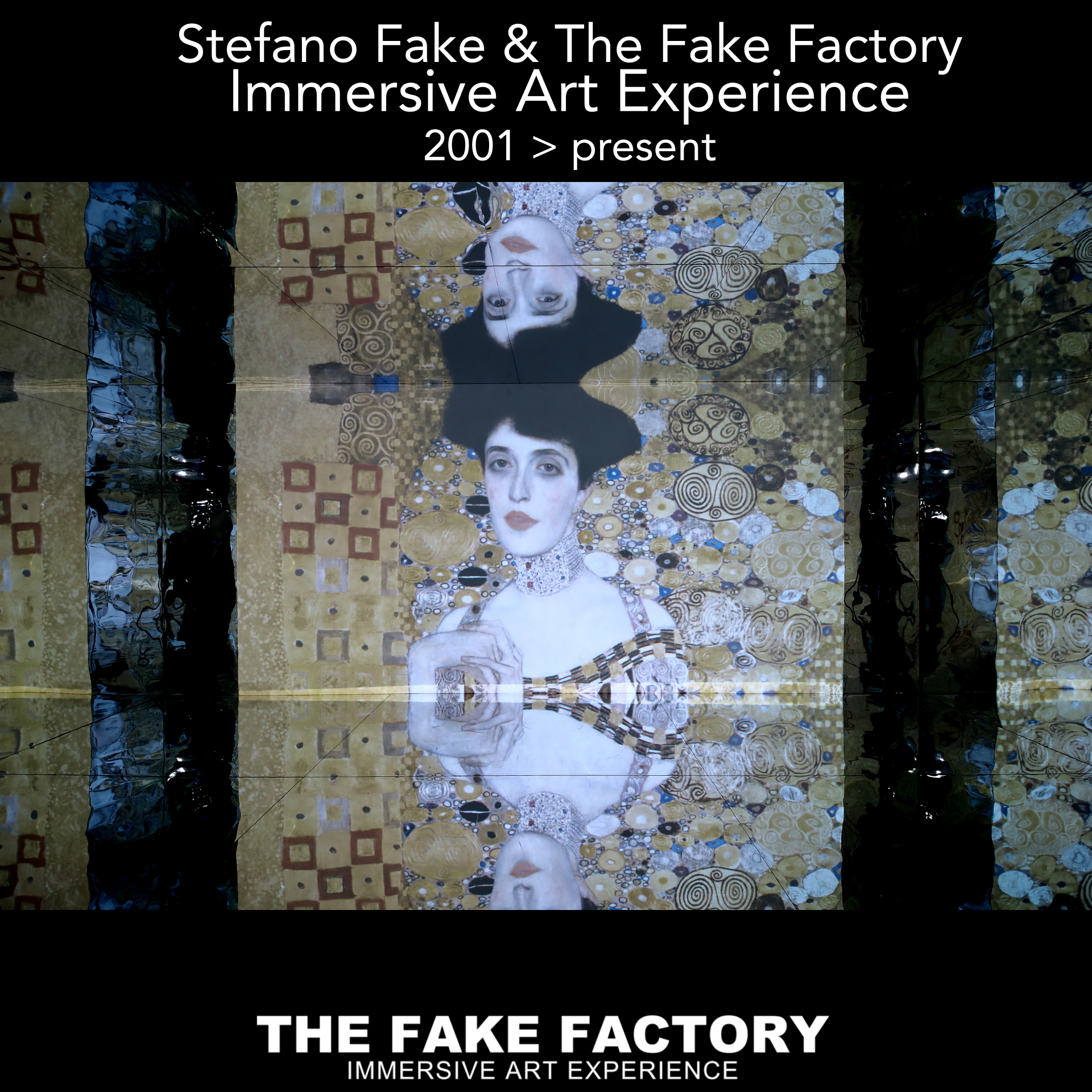
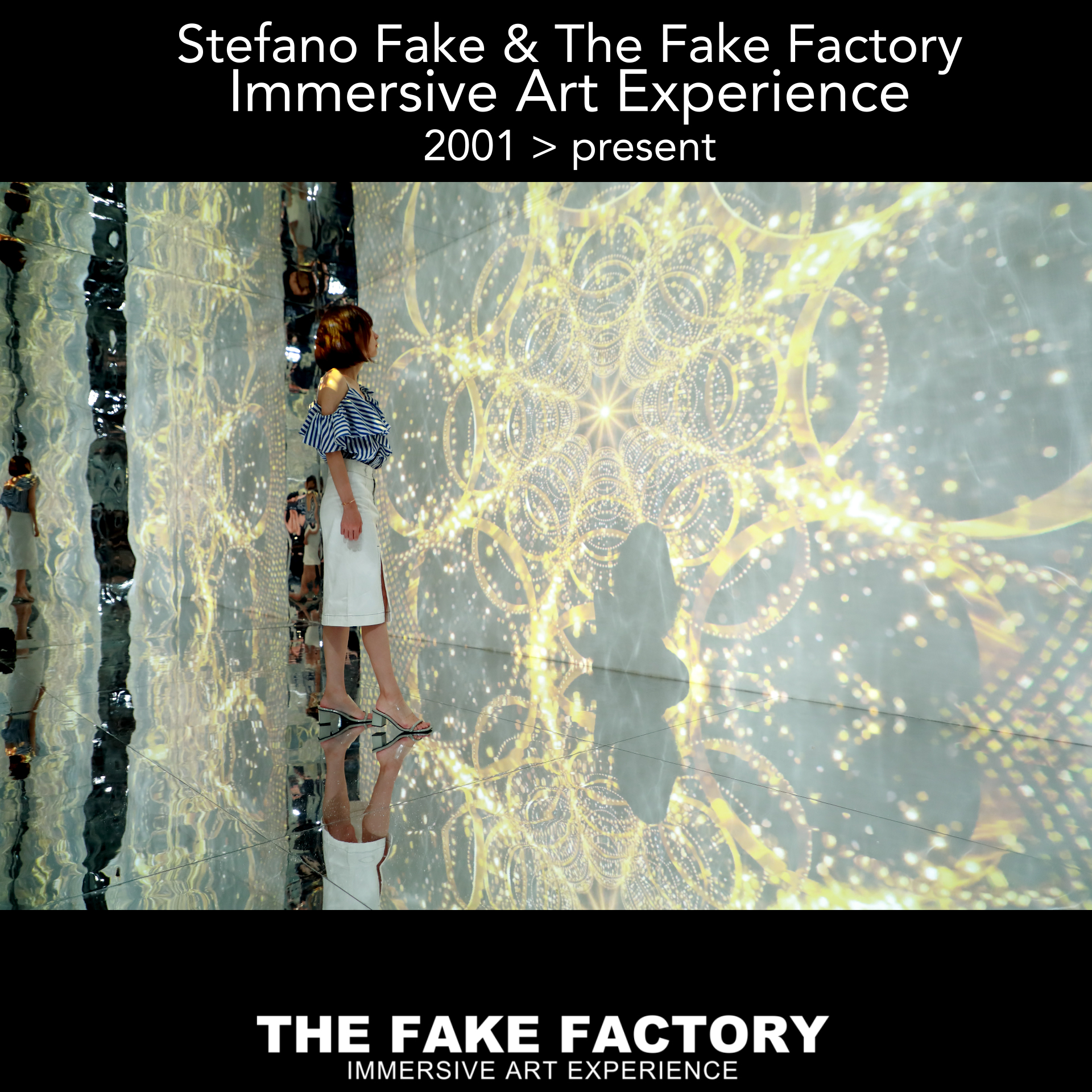
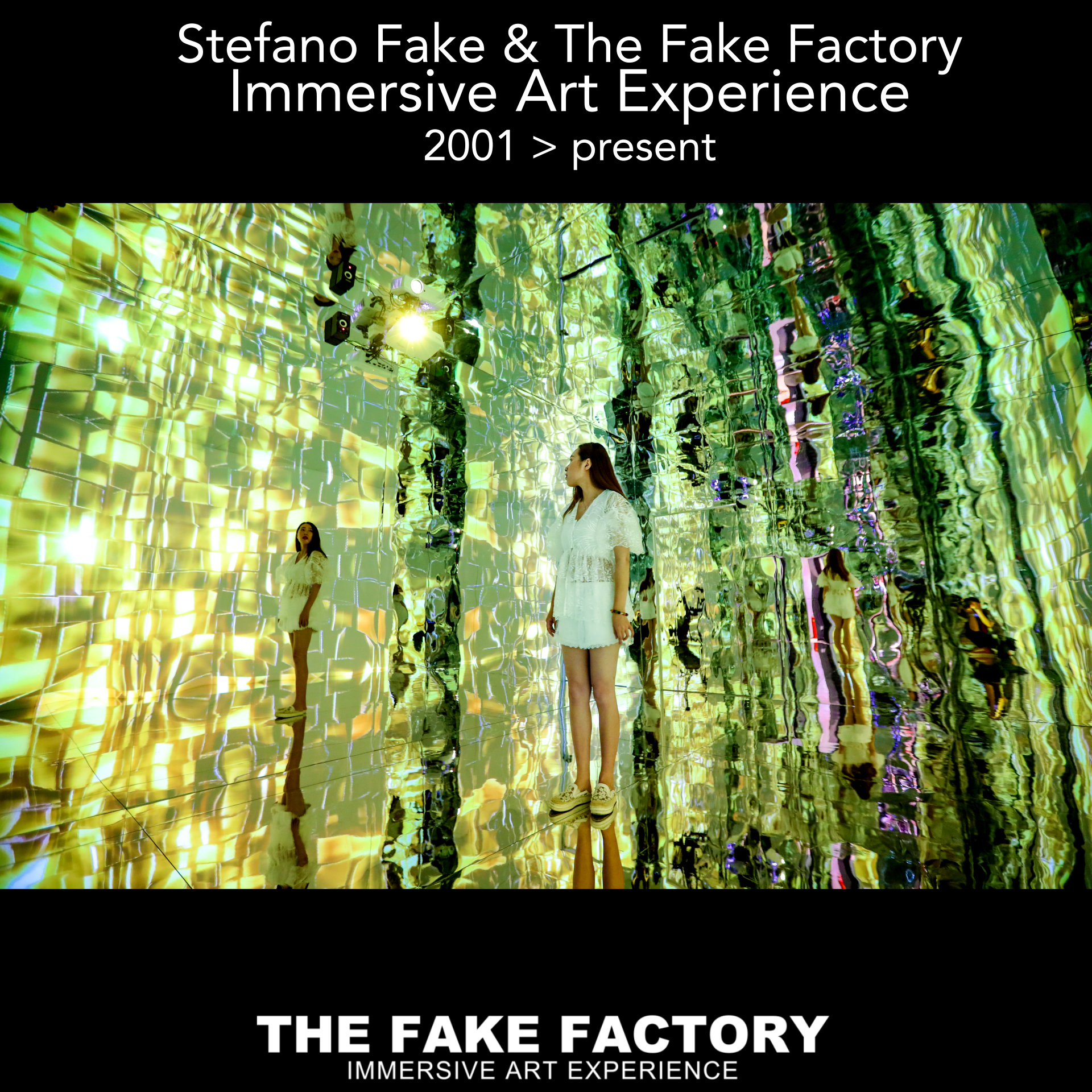
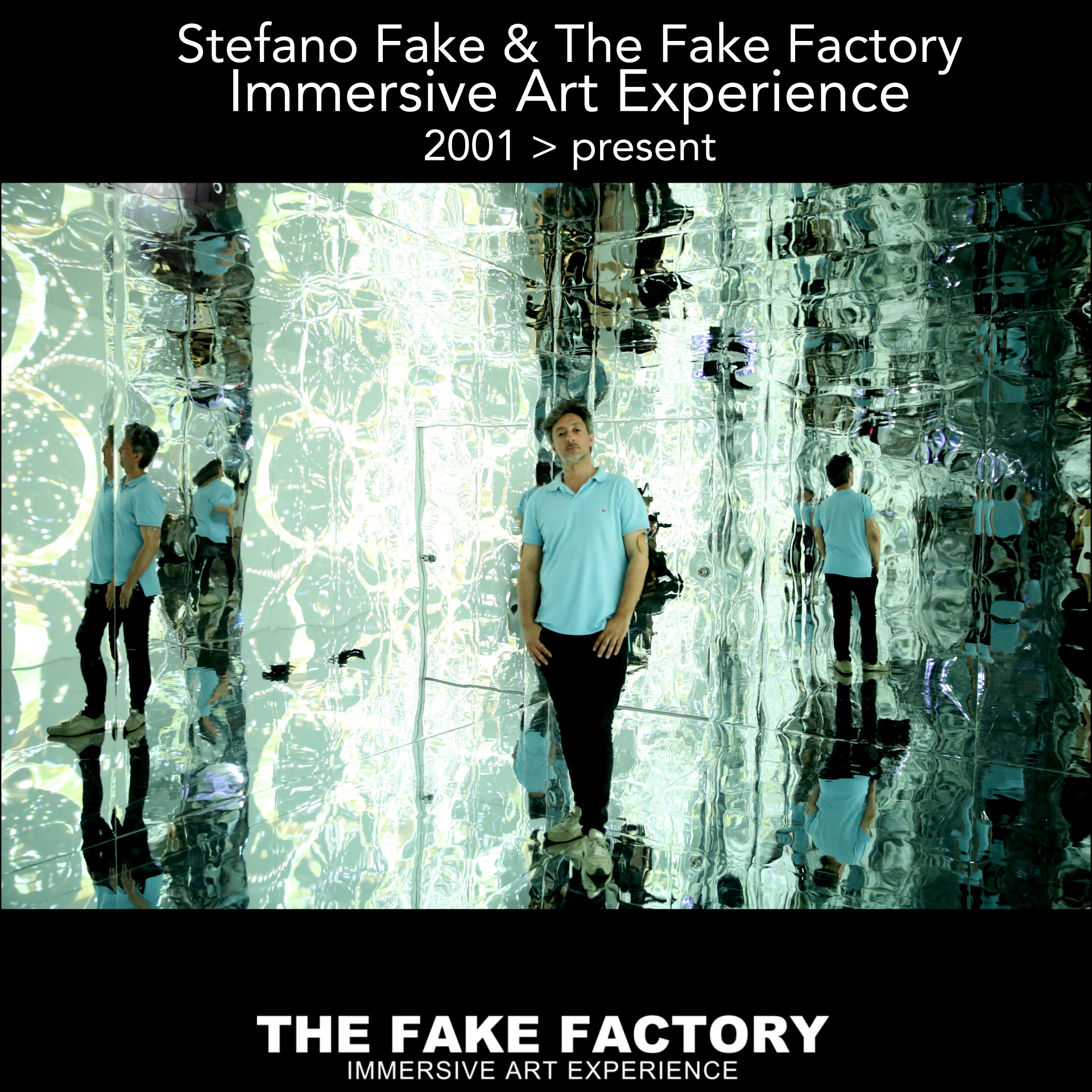
“An immersive art experience can be technically described as “a form of art which uses multimedia and sensory tools with the aim of immersing the viewer inside the artwork itself, which has a development in space and time determined by audio-visual storytelling.” (Stefano Fake, 2012) – In 2001 Stefano Fake was also the first artist to use video projections inside a mirror room, creating a unique and extraordinary mixed-media installation, which today has become one of the most iconic and widespread works of immersive art in many international exhibitions.
“From Andy Warhol’s point of view, Pop Art mostly meant “loving things”.
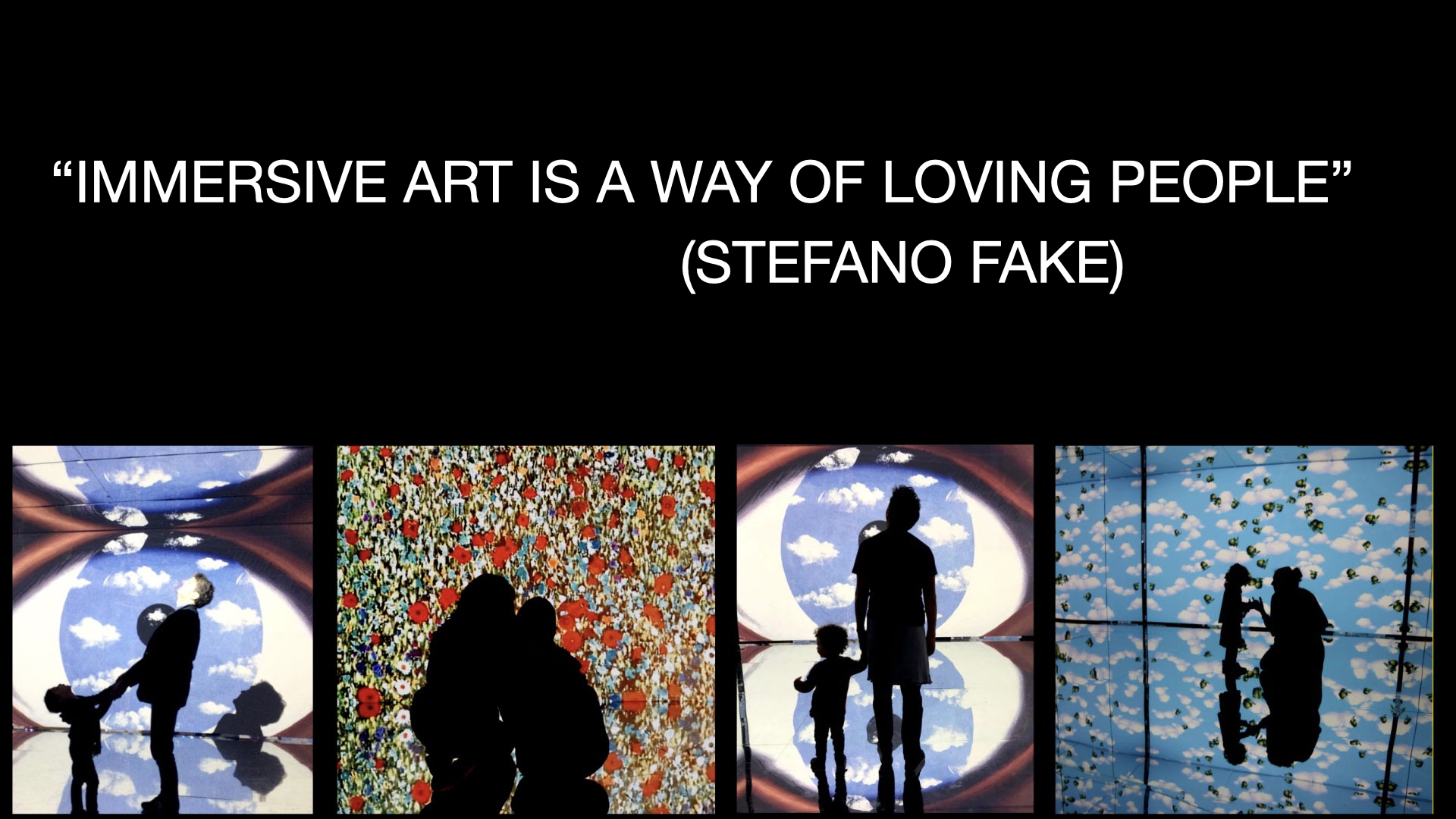
To reuse his words, I would love to describe Immersive Art as “loving people” since in the installations of immersive arts there’s always a very important and fundamental emotional relation between the artist and the audience. The fact itself of calling those exhibitions “Experiences” makes us better understand the paradigm shift. So, the audiovisual’s quality or the purely technological aspect fade in to the background. Before everything else, we put the experience of the audience and them being immersed in the light inside spaces, that thanks to a poetic use of technologies, the art enhancing the audiences senses. It’s not about surrounding the audience with big images, but it’s about taking it inside an audiovisual flow, modeling the shape of sensorial sensations. This is summarizing the distinctive aspect of the Immersive Art that we realized in the course of the last years.” (Stefano Fake, 2020)
Stefano Fake is the artistic director of the FARNESINA DIGITAL ART EXPERIENCE project, in collaboration with the Italian Ministry of Foreign Affairs, with the aim of producing, exhibiting and communicating Italian digital art in the world. Since 2019, Stefano Fake he has been the creator and artistic director of the FARNESINA DIGITAL ART EXPERIENCE project, supported the Italian Ministry of Foreign Affairs, with the aim of producing, exhibiting and communicating Italian digital art in the world.
STEFANO FAKE & THE FAKE FACTORY – IMMERSIVE ART EXPERIENCES (2001-today)
Stefano Fake is an Italian artist and video designer who creates installations using video projections, films, photographs, sculptures, computer graphics and interactive technologies. He is a pioneer and one of the main creators of the immersive art experiences, a new form of artistic expression that consists of the use of audiovisual installations that aim to immerse the spectator in the work itself, through the use of digital technologies and monumental video projections.
In 2001 he founded The Fake Factory, a studio specialized in Immersive Art, Projection Art and Videomapping. In just a few years, this laboratory becomes a point of reference in the context of digital and immersive art at a national and international level, participating in the creation of numerous projects: immersive exhibitions, video mapping, architectural light installations, video production, video scenography for theatres, fashion, visual environments for museums, galleries and cultural events, production of multi-sensory works, video installations, video art works.
With over 20 years of career, Stefano Fake is a pioneer and one of the main creators of the immersive digital art experiences, those audiovisual installations that aim to immerse the viewer inside the work of art itself, through digital technologies and monumental video projections.
“TO BE A MEDIA ARTIST IS NOT A MATTER OF MAKING VIDEOS OR MULTIMEDIA ARTWORKS AT ALL. WHAT WE ARE REALLY DEALING WITH IS THE VISITORS STATE OF CONSCIOUSNESS AND THE SHAPE OF THEIR PERCEPTIONS.” (STEFANO FAKE, 2015)
The Immersive art experiences created by STEFANO FAKE & THE FAKE FACTORY helped define the format, the language and the global success of the immersive digital art exhibitions, thanks to an unprecedented media exposure and a series of attendance records in Italian and international museums. (+ 5 millions visitors in 2012-2023). Many of The Fake Factory’s installations have become milestones of contemporary immersive digital art.
“An immersive art experience can be technically described as “a form of art which uses multimedia and sensory tools with the aim of immersing the viewer inside the artwork itself, which has a development in space and time determined by audio-visual storytelling.” (Stefano Fake, 2012) – In 2001 Stefano Fake was also the first artist to use video projections inside a mirror room, creating a unique and extraordinary mixed-media installation, which today has become one of the most iconic and widespread works of immersive art in many international exhibitions.
“From Andy Warhol’s point of view, Pop Art mostly meant “loving things”.
To reuse his words, I would love to describe Immersive Art as “loving people” since in the installations of immersive arts there’s always a very important and fundamental emotional relation between the artist and the audience. The fact itself of calling those exhibitions “Experiences” makes us better understand the paradigm shift. So, the audiovisual’s quality or the purely technological aspect fade in to the background. Before everything else, we put the experience of the audience and them being immersed in the light inside spaces, that thanks to a poetic use of technologies, the art enhancing the audiences senses. It’s not about surrounding the audience with big images, but it’s about taking it inside an audiovisual flow, modeling the shape of sensorial sensations. This is summarizing the distinctive aspect of the Immersive Art that we realized in the course of the last years.” (Stefano Fake, 2020)
Stefano Fake is the artistic director of the FARNESINA DIGITAL ART EXPERIENCE project, in collaboration with the Italian Ministry of Foreign Affairs, with the aim of producing, exhibiting and communicating Italian digital art in the world. Since 2019, Stefano Fake he has been the creator and artistic director of the FARNESINA DIGITAL ART EXPERIENCE project, supported the Italian Ministry of Foreign Affairs, with the aim of producing, exhibiting and communicating Italian digital art in the world.
STEFANO FAKE & THE FAKE FACTORY > ESPERIENZE DI ARTE IMMERSIVA
Le opere di Stefano Fake consistono principalmente in stanze immersive in cui l’artista interviene con videoproiezioni, effetti luminosi, segni grafici, forme, colori, pareti riflettenti, suoni, rumori e sensazioni olfattive e tattili. L’arte immersiva di FAKE fa appello ai sensi del visitatore e lo invita ad un dialogo umano prima che estetico. Ne ricerca la complicità. I suoi ambienti sono soprattutto contenitori di emozioni. La forma è costruita attorno alla presenza umana. La vera forza dell’artista sta nella sua abilità nel raggiungere il cuore dell’esperienza umana. Sicuramente FAKE è il primo artista italiano a porre in modo convincente le basi di un’estetica immersiva e relazionale nell’arte digitale, a partire dalla sua prima installazione “Room with colour Tv”, presentato a Weimar nel 2001 e poi con Ambienti (di nuova sensibilità) presentato a Firenze nel 2002. Queste opere prevedono progettualmente la partecipazione del pubblico alla costruzione o alla definizione dell’opera di cui è partecipe. Il lavoro di FAKE è appunto un continuo cercare di abbracciare, avvolgere, coinvolgere le persone sensorialmente, mentalmente, spiritualmente, emotivamente, ludicamente. Lo stesso FAKE ha indicato in questa frase l’essenza della propria arte : “L’arte è gioco, giochiamo insieme!”, rendendo tributo a Federico Fellini ( “é una festa la vita, viviamola insieme!” – Life is a celebration, Let’s live it together!”) e all’artista concettuale che ha segnato il cambio fra arte moderna e contemporanea, Marchel Duchamp (“L’arte è un gioco tra tutti gli uomini di tutte le epoche”). Andy Warhol amava spesso ripetere che, dal suo punto di vista, la pop art era soprattutto “un modo di amare le cose”. Parafrasando le sue parole possiamo oggi dire che l’Arte Immersiva realizzata da Fake è soprattutto “amare le persone” (“Immersive Art is a way of loving people” – Stefano Fake). Perché nelle installazioni immersive c’è un importante e fondamentale aspetto relazionale fra l’artista e il visitatore. Il fatto stesso di definirle “Esperienze di Arte Immersiva” (Immersive Art Experience) fa capire il cambio di paradigma messo in atto da FAKE. La qualità realizzativa dell’audiovisivo o gli aspetti puramente tecnologici, pur essendo determinanti nel risultato estetico finale, passano in secondo piano. Per FAKE prima di tutto viene l’esperienza del visitatore, il suo essere avvolto nella luce, nelle immagini, e nei suoni, dentro gli ambienti aumentati sensorialmente grazie all’uso poetico delle tecnologie. Non si tratta di circondare lo spettatore con delle grandi immagini o di stupirlo con facili effetti illuminotecnici, ma di portarlo dentro ad un flusso emozionale, modellando la forma delle percezioni sensoriali che lo spettatore vive dentro allo spazio. Forse è questo, in sintesi, l’aspetto distintivo dell’Arte Immersiva realizzata da FAKE che lo ha portato ad essere oggi uno degli artisti italiani più influenti del nuovo millennio, tanto da far nascere dopo di lui un’intera generazione di giovani artisti che si dedicano oggi a realizzare immersive art experiences.
STEFANO FAKE & THE FAKE FACTORY > ESPERIENZE DI ARTE IMMERSIVA
Le opere di Stefano Fake consistono principalmente in stanze immersive in cui l’artista interviene con videoproiezioni, effetti luminosi, segni grafici, forme, colori, pareti riflettenti, suoni, rumori e sensazioni olfattive e tattili. L’arte immersiva di FAKE fa appello ai sensi del visitatore e lo invita ad un dialogo umano prima che estetico. Ne ricerca la complicità. I suoi ambienti sono soprattutto contenitori di emozioni. La forma è costruita attorno alla presenza umana. La vera forza dell’artista sta nella sua abilità nel raggiungere il cuore dell’esperienza umana. Sicuramente FAKE è il primo artista italiano a porre in modo convincente le basi di un’estetica immersiva e relazionale nell’arte digitale, a partire dalla sua prima installazione “Room with colour Tv”, presentato a Weimar nel 2001 e poi con Ambienti (di nuova sensibilità) presentato a Firenze nel 2002. Queste opere prevedono progettualmente la partecipazione del pubblico alla costruzione o alla definizione dell’opera di cui è partecipe. Il lavoro di FAKE è appunto un continuo cercare di abbracciare, avvolgere, coinvolgere le persone sensorialmente, mentalmente, spiritualmente, emotivamente, ludicamente. Lo stesso FAKE ha indicato in questa frase l’essenza della propria arte : “L’arte è gioco, giochiamo insieme!”, rendendo tributo a Federico Fellini ( “é una festa la vita, viviamola insieme!” – Life is a celebration, Let’s live it together!”) e all’artista concettuale che ha segnato il cambio fra arte moderna e contemporanea, Marchel Duchamp (“L’arte è un gioco tra tutti gli uomini di tutte le epoche”). Andy Warhol amava spesso ripetere che, dal suo punto di vista, la pop art era soprattutto “un modo di amare le cose”. Parafrasando le sue parole possiamo oggi dire che l’Arte Immersiva realizzata da Fake è soprattutto “amare le persone” (“Immersive Art is a way of loving people” – Stefano Fake). Perché nelle installazioni immersive c’è un importante e fondamentale aspetto relazionale fra l’artista e il visitatore. Il fatto stesso di definirle “Esperienze di Arte Immersiva” (Immersive Art Experience) fa capire il cambio di paradigma messo in atto da FAKE. La qualità realizzativa dell’audiovisivo o gli aspetti puramente tecnologici, pur essendo determinanti nel risultato estetico finale, passano in secondo piano. Per FAKE prima di tutto viene l’esperienza del visitatore, il suo essere avvolto nella luce, nelle immagini, e nei suoni, dentro gli ambienti aumentati sensorialmente grazie all’uso poetico delle tecnologie. Non si tratta di circondare lo spettatore con delle grandi immagini o di stupirlo con facili effetti illuminotecnici, ma di portarlo dentro ad un flusso emozionale, modellando la forma delle percezioni sensoriali che lo spettatore vive dentro allo spazio. Forse è questo, in sintesi, l’aspetto distintivo dell’Arte Immersiva realizzata da FAKE che lo ha portato ad essere oggi uno degli artisti italiani più influenti del nuovo millennio, tanto da far nascere dopo di lui un’intera generazione di giovani artisti che si dedicano oggi a realizzare immersive art experiences.
STEFANO FAKE & THE FAKE FACTORY > ESPERIENZE DI ARTE IMMERSIVA
Le opere di Stefano Fake consistono principalmente in stanze immersive in cui l’artista interviene con videoproiezioni, effetti luminosi, segni grafici, forme, colori, pareti riflettenti, suoni, rumori e sensazioni olfattive e tattili. L’arte immersiva di FAKE fa appello ai sensi del visitatore e lo invita ad un dialogo umano prima che estetico. Ne ricerca la complicità. I suoi ambienti sono soprattutto contenitori di emozioni. La forma è costruita attorno alla presenza umana. La vera forza dell’artista sta nella sua abilità nel raggiungere il cuore dell’esperienza umana. Sicuramente FAKE è il primo artista italiano a porre in modo convincente le basi di un’estetica immersiva e relazionale nell’arte digitale, a partire dalla sua prima installazione “Room with colour Tv”, presentato a Weimar nel 2001 e poi con Ambienti (di nuova sensibilità) presentato a Firenze nel 2002. Queste opere prevedono progettualmente la partecipazione del pubblico alla costruzione o alla definizione dell’opera di cui è partecipe. Il lavoro di FAKE è appunto un continuo cercare di abbracciare, avvolgere, coinvolgere le persone sensorialmente, mentalmente, spiritualmente, emotivamente, ludicamente. Lo stesso FAKE ha indicato in questa frase l’essenza della propria arte : “L’arte è gioco, giochiamo insieme!”, rendendo tributo a Federico Fellini ( “é una festa la vita, viviamola insieme!” – Life is a celebration, Let’s live it together!”) e all’artista concettuale che ha segnato il cambio fra arte moderna e contemporanea, Marchel Duchamp (“L’arte è un gioco tra tutti gli uomini di tutte le epoche”). Andy Warhol amava spesso ripetere che, dal suo punto di vista, la pop art era soprattutto “un modo di amare le cose”. Parafrasando le sue parole possiamo oggi dire che l’Arte Immersiva realizzata da Fake è soprattutto “amare le persone” (“Immersive Art is a way of loving people” – Stefano Fake). Perché nelle installazioni immersive c’è un importante e fondamentale aspetto relazionale fra l’artista e il visitatore. Il fatto stesso di definirle “Esperienze di Arte Immersiva” (Immersive Art Experience) fa capire il cambio di paradigma messo in atto da FAKE. La qualità realizzativa dell’audiovisivo o gli aspetti puramente tecnologici, pur essendo determinanti nel risultato estetico finale, passano in secondo piano. Per FAKE prima di tutto viene l’esperienza del visitatore, il suo essere avvolto nella luce, nelle immagini, e nei suoni, dentro gli ambienti aumentati sensorialmente grazie all’uso poetico delle tecnologie. Non si tratta di circondare lo spettatore con delle grandi immagini o di stupirlo con facili effetti illuminotecnici, ma di portarlo dentro ad un flusso emozionale, modellando la forma delle percezioni sensoriali che lo spettatore vive dentro allo spazio. Forse è questo, in sintesi, l’aspetto distintivo dell’Arte Immersiva realizzata da FAKE che lo ha portato ad essere oggi uno degli artisti italiani più influenti del nuovo millennio, tanto da far nascere dopo di lui un’intera generazione di giovani artisti che si dedicano oggi a realizzare immersive art experiences.