



MOSTRA “85 ANNI CON ARTE”
INSTITUTO ITALIANO CULTURA MADRID 2024
STEFANO FAKE & THE FAKE FACTORY “IMMERSE YOURSELF IN ART”
In mostra una selezione di opere digitali immersive realizzate da Stefano Fake dal 2001 al 2024.
THE FAKE FACTORY : L’ESPERIENZA IMMERSIVA DELLA VIDEOARTE.
Stefano Fake è un artista che esplora fino in fondo il potenziale della elaborazione digitale dell’immagine per creare forme d’arte virtuali che abbracciano il concetto di spazio. Attraverso l’uso dell’immersione, dell’interazione e della manipolazione digitale dello spazio fisico e virtuale, The Fake Factory crea potenti ambienti estetici che permettono al pubblico di vivere realtà emozionali alternative. Le installazioni immersive soddisfano il desiderio intrinseco dello spettatore di sfuggire alla realtà fisica e diventare parte dell’esperienza dell’arte stessa.
“Tutto il mio lavoro si potrebbe concentrare in questo concetto: The Fake Factory definisce, crea e manipola lo spazio per creare esperienze estetiche ed emozionali immersive. Invita il pubblico ad immergersi nell’arte con tutti i sensi “(Stefano Fake, cit).
Per immergere lo spettatore in una esperienza estatica ed emotiva, Fake utilizza tutti gli strumenti che l’arte digitale concede nel terzo millennio: forme, luci, colori, suoni, narrazione, astrazioni concettuali ed elementi simbolici, ologrammi, citazioni colte dalla storia dell’arte, specchi, trucchi prospettici e inganni visivi, in una sorta di flusso visivo senza soluzione di continuità.
“Non sono altro che paesaggi visivi, esteriori ed interiori. Qualcosa a metà fra la realtà e il sogno. Tutti i mondi sono simbolici: sia quello virtuale che quello che percepiamo come reale. L’arte digitale è evanescente e concreta allo stesso tempo: l’esperienza immersiva si consuma in pochi minuti ma lascia segni indelebili nello spettatore.” ((Stefano Fake, cit). La sensazione di essere lì in quel momento a vivere l’esperienza, dipende in larga misura dall’assorbimento sensoriale all’interno dell’ambiente. Bisogna sentirsi immersi nello spazio e percepire fisicamente di essere una parte di esso. L’immersione sensoriale è fondamentale per il nostro rapporto con l’ambiente naturale. Sfruttando il potere psicologico dell’immersione, Fake crea spazi visivi che consentono al pubblico di sfuggire verso altri mondi e sperimentare risposte emotive reali. E’, in definitiva, il potere dell’illusione artistica che trova un punto di incontro con il desiderio umano di creare realtà parallele all’interno della realtà in cui vive. Nella metafisica della realtà virtuale, Michael Heim chiede: “Non sono tutti i mondi simbolici? Compreso quello che ingenuamente chiamiamo il mondo reale, che leggiamo via con i nostri sensi fisici? “. Le opere di videoarte immersiva di The Fake Factory sfruttano, in definitiva, il potere dell’illusione artistica che trova un punto di incontro con il desiderio umano di creare realtà simboliche parallele all’interno della realtà in cui vive, creando una fusione fra arte e vita. (International Digital Art Review, gennaio 2015)
Stefano Fake is an Italian artist and video designer, who creates installations using video projections, film, photographs, sculptures, computer graphics and interactive technologies.
He is among the main exponents of IMMERSIVE ART, which aims to immerse the viewer within the work of art itself. In 2001 he founded his laboratory THE FAKE FACTORY in Florence, which in a few years became an international point of reference in immersive arts and digital scenography for theatre, concerts and events. Stefano Fake aims to break the traditional creator-user separation by placing the viewer at the center of the art experience. Using the digital languages and technologies in use in theatrical and cinematographic scenographies, he creates Immersive Rooms, immersive multisensory environments where the audience is not just spectators but becomes protagonist actors of the work itself. Immersive art is an art form that uses video projections, lights, sounds, music, and sometimes even scented essences and microdoses of superfoods to envelop and involve the viewer in an all-encompassing art experience, stimulating their senses and activating their emotions.
For many museums it becomes an opportunity to renew the rules of use.
An innovative project that tends to shock the observer both on a sensory and intellectual level,
suggesting and stimulating new visual, narrative,
critical and pedagogical readings on Modern and Contemporary Art.
TANK U MUSEUM SHANGHAI 2023
STEFANO FAKE & THE FAKE FACTORY : IMMERSIVE ART EXPERIENCES (2001-today)
Stefano Fake is an Italian artist and video designer who creates installations using video projections, films, photographs, sculptures, computer graphics and interactive technologies. He is a pioneer and one of the main interpreters of the immersive digital art experience, a new form of artistic expression that consists of the use of audiovisual installations that aim to immerse the spectator in the work itself, through the use of digital technologies and monumental video projections.
“TO BE A MEDIA ARTIST IS NOT A MATTER OF MAKING VIDEOS OR MULTIMEDIA ARTWORKS AT ALL. WHAT WE ARE REALLY DEALING WITH IS THE VISITORS STATE OF CONSCIOUSNESS AND THE SHAPE OF THEIR PERCEPTIONS.”
(STEFANO FAKE)
In 2001 he founded The Fake Factory, a studio specialized in Immersive Art, Projection Art and Videomapping. In just a few years, this laboratory becomes a point of reference in the context of digital and immersive art at a national and international level, participating in the creation of numerous projects: immersive exhibitions, video mapping, architectural light installations, video production, video scenography for theatres, fashion, visual environments for museums, galleries and cultural events, production of multi-sensory works, video installations, video art works.
“VIDEO IS NOT ONLY SOMETHING WE WATCH, IT’S SOMETHING WE EXPERIENCE”
(STEFANO FAKE)
Since 2012 he has been creating Immersive Art Exhibitions, reinterpreting the works of artists of the past with digital technologies and a contemporary language. His works defined the format internationally, thanks to an unprecedented success with audiences and critics (+ 5 million visitors overall in the period 2012-2024).
“TO BE A MEDIA ARTIST IS NOT A MATTER OF MAKING VIDEOS OR MULTIMEDIA ARTWORKS AT ALL. WHAT WE ARE REALLY DEALING WITH IS THE VISITORS STATE OF CONSCIOUSNESS AND THE SHAPE OF THEIR PERCEPTIONS.”
(STEFANO FAKE)
The Immersive art experiences created by STEFANO FAKE & THE FAKE FACTORY helped define the format, the language and the global success of the immersive digital art exhibitions, thanks to an unprecedented media exposure and a series of attendance records in Italian and international museums. (+ 5 millions visitors in 2012-2023). Many of The Fake Factory’s installations have become milestones of contemporary immersive digital art.
“An immersive art experience can be technically described as “a form of art which uses multimedia and sensory tools with the aim of immersing the viewer inside the artwork itself, which has a development in space and time determined by audio-visual storytelling.” (Stefano Fake, 2012) – In 2001 Stefano Fake was also the first artist to use video projections inside a mirror room, creating a unique and extraordinary mixed-media installation, which today has become one of the most iconic and widespread works of immersive art in many international exhibitions.
Links:
#beamer
#lichtkunst
#Multimedia
#multimediashow
#multimedialelichtshow
#digitalart
#arteinmersiva
#ExperienciaInmersiva
#contemporaryart
#artecontemporanea
#arteitalianacontemporanea
#arteitaliana
#artandtechnology
#visualart
#creativity
STEFANO FAKE & THE FAKE FACTORY : IMMERSIVE ART EXPERIENCES (2001-today)
Stefano Fake is an Italian artist and video designer who creates installations using video projections, films, photographs, sculptures, computer graphics and interactive technologies. He is a pioneer and one of the main interpreters of the immersive digital art experience, a new form of artistic expression that consists of the use of audiovisual installations that aim to immerse the spectator in the work itself, through the use of digital technologies and monumental video projections.
“TO BE A MEDIA ARTIST IS NOT A MATTER OF MAKING VIDEOS OR MULTIMEDIA ARTWORKS AT ALL. WHAT WE ARE REALLY DEALING WITH IS THE VISITORS STATE OF CONSCIOUSNESS AND THE SHAPE OF THEIR PERCEPTIONS.”
(STEFANO FAKE)
In 2001 he founded The Fake Factory, a studio specialized in Immersive Art, Projection Art and Videomapping. In just a few years, this laboratory becomes a point of reference in the context of digital and immersive art at a national and international level, participating in the creation of numerous projects: immersive exhibitions, video mapping, architectural light installations, video production, video scenography for theatres, fashion, visual environments for museums, galleries and cultural events, production of multi-sensory works, video installations, video art works.
“VIDEO IS NOT ONLY SOMETHING WE WATCH, IT’S SOMETHING WE EXPERIENCE”
(STEFANO FAKE)
Since 2012 he has been creating Immersive Art Exhibitions, reinterpreting the works of artists of the past with digital technologies and a contemporary language. His works defined the format internationally, thanks to an unprecedented success with audiences and critics (+ 5 million visitors overall in the period 2012-2024).
“TO BE A MEDIA ARTIST IS NOT A MATTER OF MAKING VIDEOS OR MULTIMEDIA ARTWORKS AT ALL. WHAT WE ARE REALLY DEALING WITH IS THE VISITORS STATE OF CONSCIOUSNESS AND THE SHAPE OF THEIR PERCEPTIONS.”
(STEFANO FAKE)
The Immersive art experiences created by STEFANO FAKE & THE FAKE FACTORY helped define the format, the language and the global success of the immersive digital art exhibitions, thanks to an unprecedented media exposure and a series of attendance records in Italian and international museums. (+ 5 millions visitors in 2012-2023). Many of The Fake Factory’s installations have become milestones of contemporary immersive digital art.
“An immersive art experience can be technically described as “a form of art which uses multimedia and sensory tools with the aim of immersing the viewer inside the artwork itself, which has a development in space and time determined by audio-visual storytelling.” (Stefano Fake, 2012) – In 2001 Stefano Fake was also the first artist to use video projections inside a mirror room, creating a unique and extraordinary mixed-media installation, which today has become one of the most iconic and widespread works of immersive art in many international exhibitions.
Links:
#beamer
#lichtkunst
#Multimedia
#multimediashow
#multimedialelichtshow
#digitalart
#arteinmersiva
#ExperienciaInmersiva
#contemporaryart
#artecontemporanea
#arteitalianacontemporanea
#arteitaliana
#artandtechnology
#visualart
#creativity
STEFANO FAKE & THE FAKE FACTORY : IMMERSIVE ART EXPERIENCES (2001-today)
Stefano Fake is an Italian artist and video designer who creates installations using video projections, films, photographs, sculptures, computer graphics and interactive technologies. He is a pioneer and one of the main interpreters of the immersive digital art experience, a new form of artistic expression that consists of the use of audiovisual installations that aim to immerse the spectator in the work itself, through the use of digital technologies and monumental video projections.
“TO BE A MEDIA ARTIST IS NOT A MATTER OF MAKING VIDEOS OR MULTIMEDIA ARTWORKS AT ALL. WHAT WE ARE REALLY DEALING WITH IS THE VISITORS STATE OF CONSCIOUSNESS AND THE SHAPE OF THEIR PERCEPTIONS.”
(STEFANO FAKE)
In 2001 he founded The Fake Factory, a studio specialized in Immersive Art, Projection Art and Videomapping. In just a few years, this laboratory becomes a point of reference in the context of digital and immersive art at a national and international level, participating in the creation of numerous projects: immersive exhibitions, video mapping, architectural light installations, video production, video scenography for theatres, fashion, visual environments for museums, galleries and cultural events, production of multi-sensory works, video installations, video art works.
“VIDEO IS NOT ONLY SOMETHING WE WATCH, IT’S SOMETHING WE EXPERIENCE”
(STEFANO FAKE)
Since 2012 he has been creating Immersive Art Exhibitions, reinterpreting the works of artists of the past with digital technologies and a contemporary language. His works defined the format internationally, thanks to an unprecedented success with audiences and critics (+ 5 million visitors overall in the period 2012-2024).
“TO BE A MEDIA ARTIST IS NOT A MATTER OF MAKING VIDEOS OR MULTIMEDIA ARTWORKS AT ALL. WHAT WE ARE REALLY DEALING WITH IS THE VISITORS STATE OF CONSCIOUSNESS AND THE SHAPE OF THEIR PERCEPTIONS.”
(STEFANO FAKE)
The Immersive art experiences created by STEFANO FAKE & THE FAKE FACTORY helped define the format, the language and the global success of the immersive digital art exhibitions, thanks to an unprecedented media exposure and a series of attendance records in Italian and international museums. (+ 5 millions visitors in 2012-2023). Many of The Fake Factory’s installations have become milestones of contemporary immersive digital art.
“An immersive art experience can be technically described as “a form of art which uses multimedia and sensory tools with the aim of immersing the viewer inside the artwork itself, which has a development in space and time determined by audio-visual storytelling.” (Stefano Fake, 2012) – In 2001 Stefano Fake was also the first artist to use video projections inside a mirror room, creating a unique and extraordinary mixed-media installation, which today has become one of the most iconic and widespread works of immersive art in many international exhibitions.
Links:
#beamer
#lichtkunst
#Multimedia
#multimediashow
#multimedialelichtshow
#digitalart
#arteinmersiva
#ExperienciaInmersiva
#contemporaryart
#artecontemporanea
#arteitalianacontemporanea
#arteitaliana
#artandtechnology
#visualart
#creativity
STEFANO FAKE & THE FAKE FACTORY “IMMERSIVE MIRROR ROOM” – immersive art experience
TANK MUSEUM SHANGHAI 2023
THE IMMERSIVE MIRROR ROOM is an immersive “physital” art installation, a term used to define art experiences that integrate the physical and digital worlds. Through the use of immersion, interaction and manipulation of physical and virtual space, Stefano Fake (THE FAKE FACTORY) creates environments that allow the public to experience alternative realities: immersive installations satisfy the viewer’s intrinsic desire to escape physical reality alone and become part of the artistic experience itself. A work of art that recreates and amplifies the sensation of vision and infinite space through the use of video projections and transparent and reflective materials. As the visitor moves at will in the space, the projections surround him on all sides, confusing the boundaries of the walls with those of the ceiling and floor. The inner world amplifies outwards. A vital flow of ever-changing images envelops the viewer. In this way Fake leads visitors to perceive themselves and their bodies as tools that contribute to creating and living the aesthetic experience.
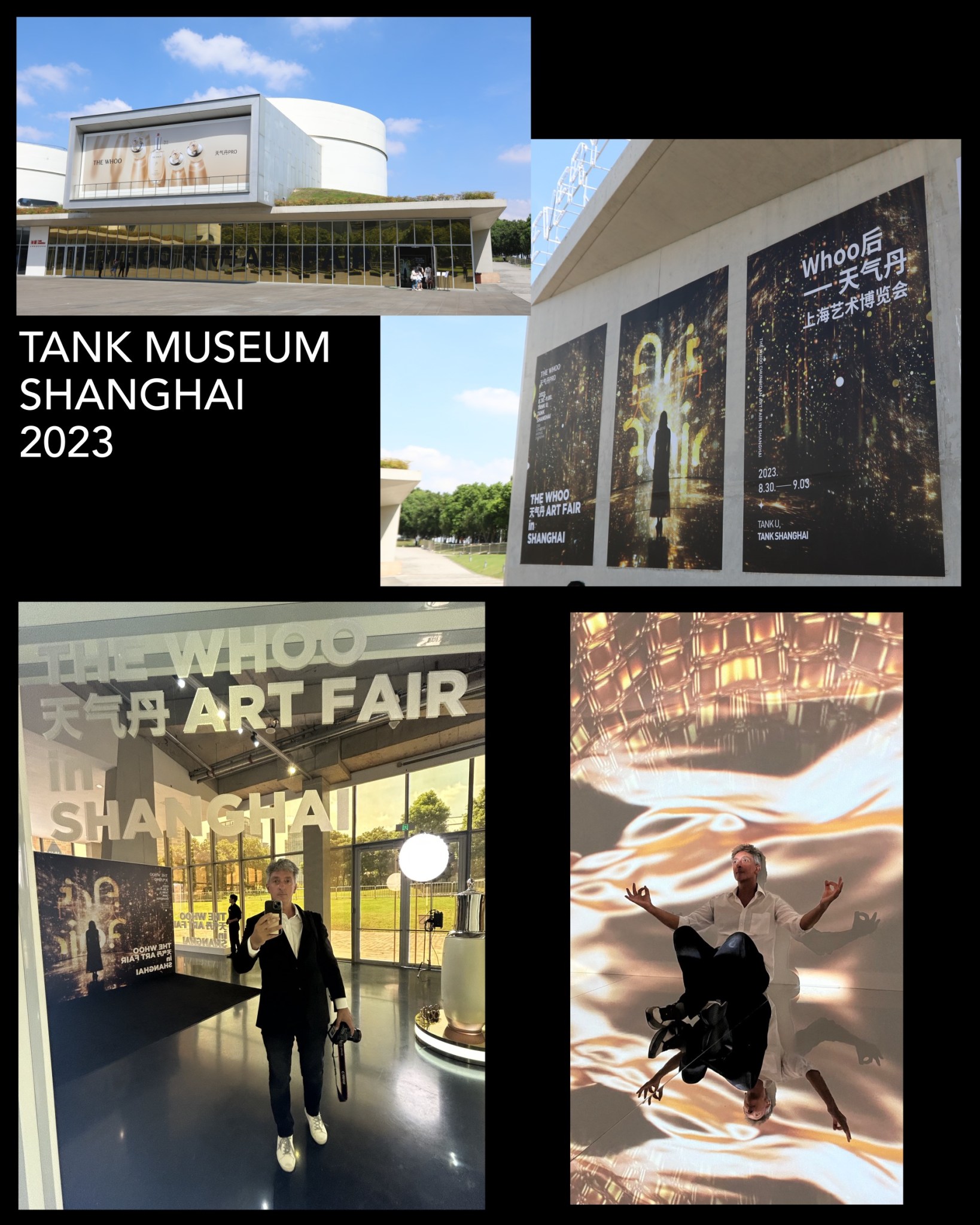
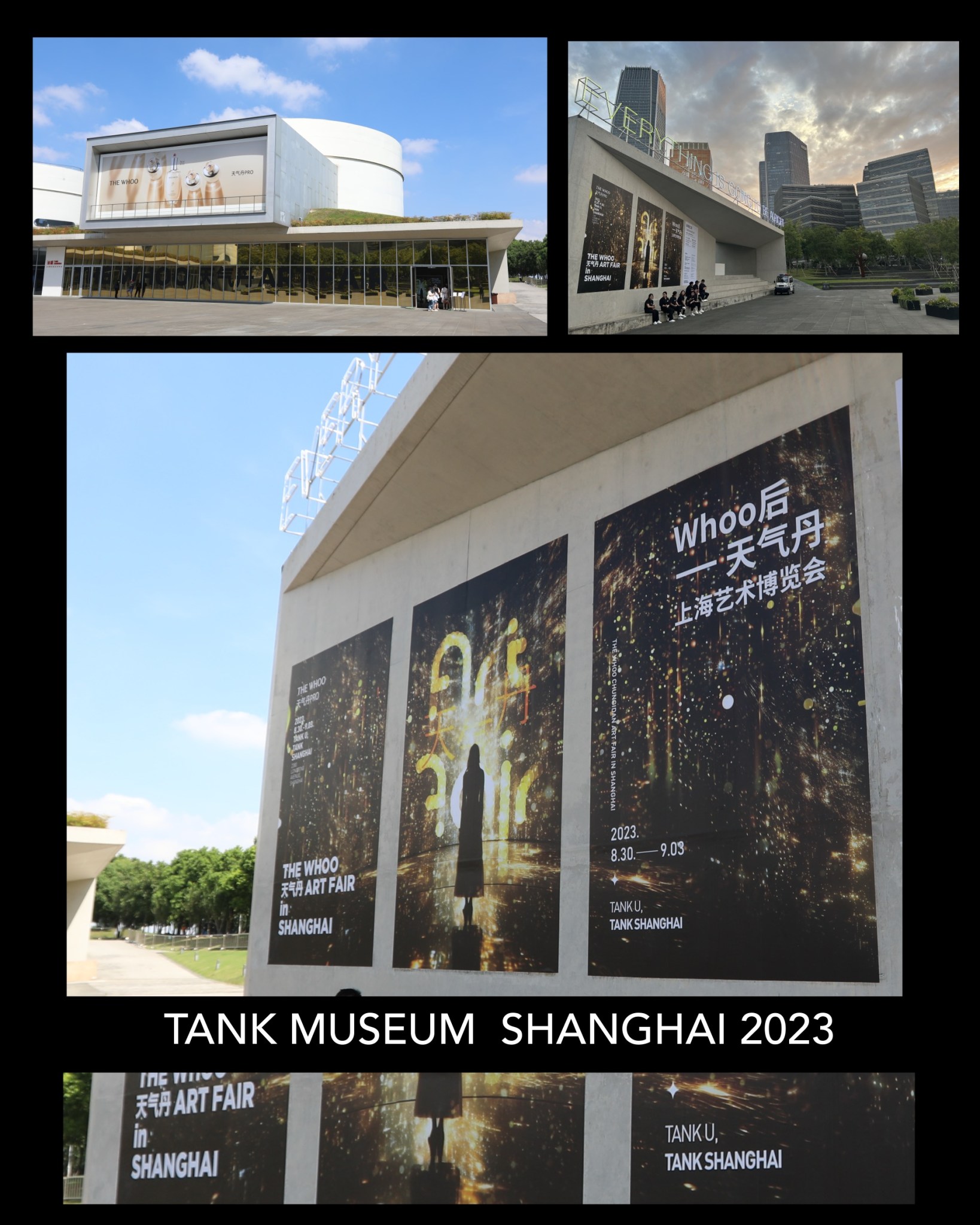
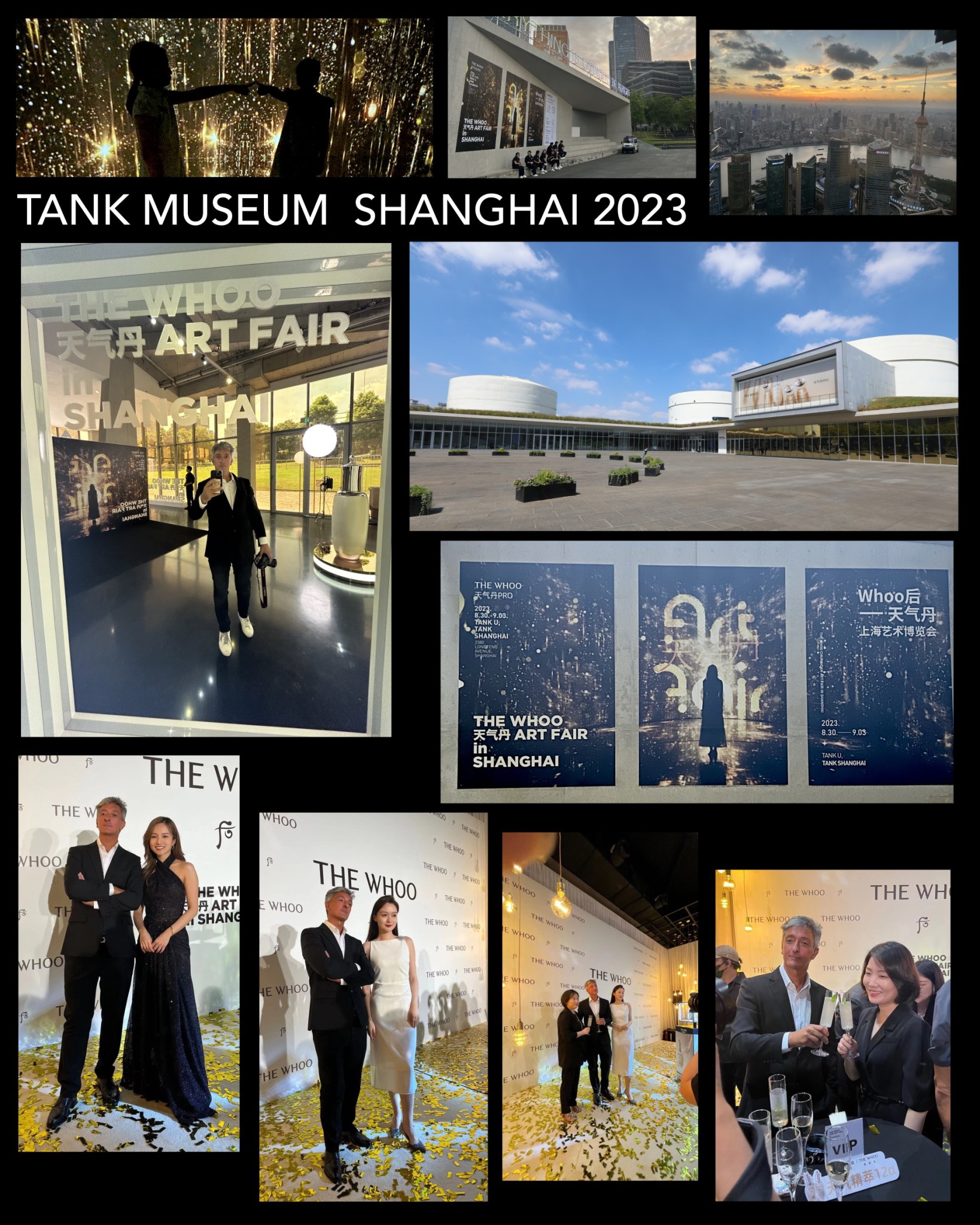
Fake’s Immersive Mirror Rooms have been exhibited in numerous digital and contemporary art exhibitions around the world: Prato 2006 – London 2009 – Milan 2010 – Antwerp 2012 – New York 2012 – Shanghai 2013 – Florence 2015 – Rome 2017 – Shanghai 2018 – Milan 2018 – Amsterdam 2018 – Rome 2019 – Florence 2019 – Vinci 2019 – Leipzig 2019- – Gorizia 2020 – Medellin 2020 – Bogota 2020 – Florence 2022 – Liege 2021 – Auckland 2022 – Taipei 2022 – Rosario 2022 – New York 2022 – Shanghai 2023
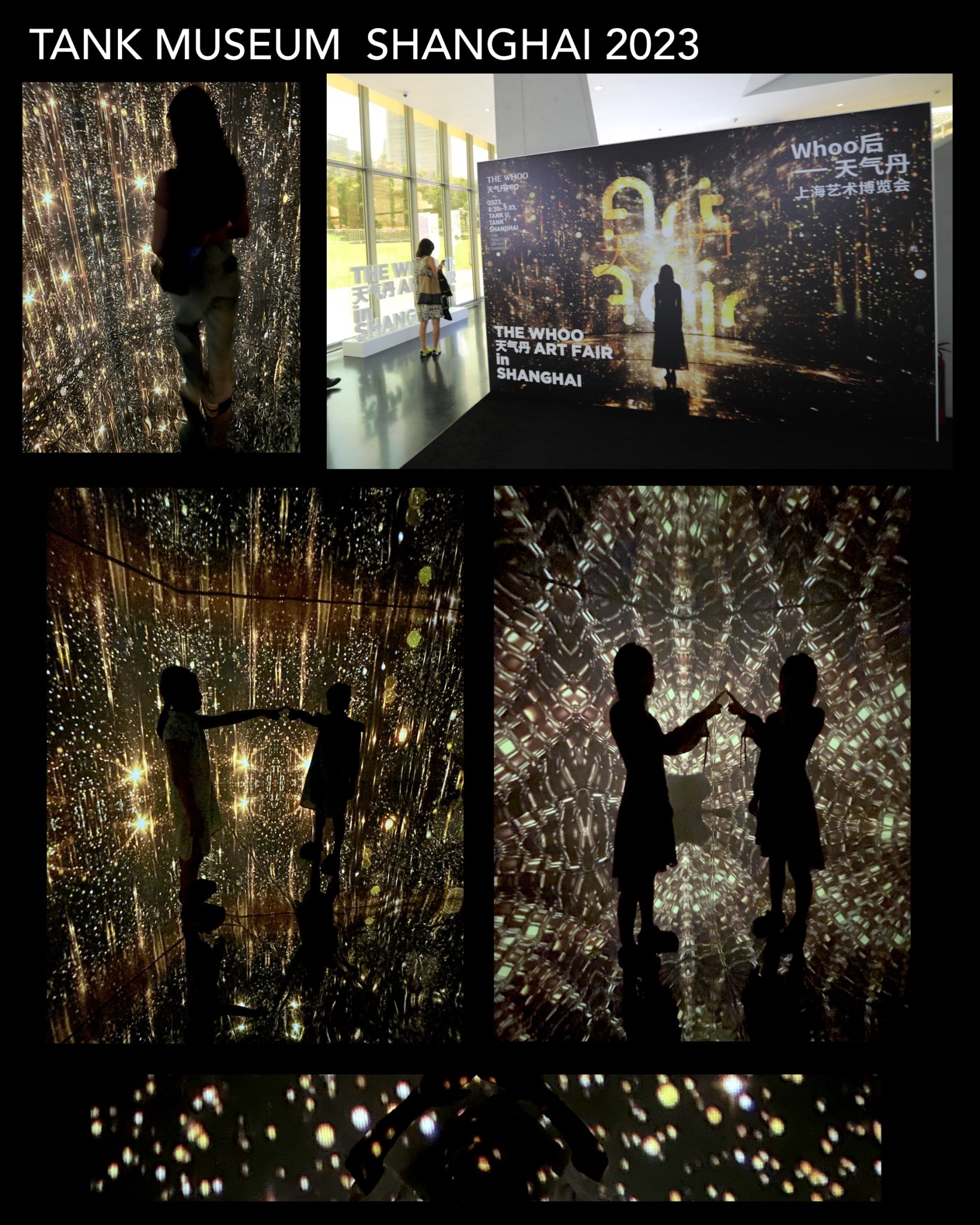
THE IMMERSIVE MIRROR ROOM è un’installazione di arte immersiva “physital”, termine con il quale si definiscono le esperienze d’arte che integrano il mondo fisico e quello digitale. Attraverso l’uso dell’immersione, dell’interazione e della manipolazione dello spazio fisico e virtuale, Stefano Fake (THE FAKE FACTORY) crea ambienti che consentono al pubblico di sperimentare realtà alternative: le installazioni immersive soddisfano il desiderio intrinseco dello spettatore di sfuggire alla sola realtà fisica e diventare parte dell’esperienza artistica stessa. Un’opera d’arte che ricrea e amplifica la sensazione della visione e dello spazio infinito attraverso l’uso di videoproiezioni e materiali trasparenti e riflettenti. Mentre il visitatore si muove a suo piacimento nello spazio, le proiezioni lo circondano da ogni parte, confondendo i confini delle pareti con quelli di soffitto e pavimento. Il mondo interiore si amplifica verso l’esterno. Un flusso vitale di immagini in continuo cambiamento avvolge lo spettatore. In questo modo Fake porta i visitatori a percepire sé stessi e i propri corpi come strumenti che contribuiscono a creare e vivere l’esperienza estetica.
“IMMERSIVE MIRROR ROOM” – immersive art experience
Created by The Fake Factory THE IMMERSIVE MIRROR ROOM is an immersive art installation.
Since 2001, The Fake Factory has explored the computer’s potential to create both virtual and physical art forms that embrace the concept of space.
Through the use of immersion, interaction, and manipulation of both virtual and physical space, The Fake Factory has created powerful aesthetic environments that enable audiences to experience alternative realities. Immersive installations satisfy the viewer’s inherent desire to escape physical reality and become part of the art experience itself.
While the visitor moves in the space, the projections surround him everywhere, confusing the boundaries of the walls with those of ceiling and floor. The inner world is expanding to the outside. A lifelong flow of constantly changing images wraps the spectator.
The entire art installation was created by Stefano Fake to force visitors to think about perception, as well as how they could utilize their bodies as tools.
https://www.lightfieldlab.com/blogposts/all-the-worlds-a-stage
Reading Time:
18 Minutes
The entire illuminated surface of the massive parliament building in Bucharest swims with color, images flow across the front of the university building in Debrecen and changes our perception of the structure, vibrating lines projected onto a building in Lille mutate into changing circles, a sea creature snakes through illusory pillars that magically appear on the façade of a neo-baroque palace in Budapest. Artists using video mapping techniques have created this magic by projecting their artwork onto architectural surfaces.
Video mapping is not new, but in the hands of artists it has become a serious art genre. That’s especially true for the architectural video mapping seen primarily in Europe where light festivals draw huge crowds to city centers. During the curated light festivals, a select group of sponsored artists project their video maps onto historical and sometimes more modern buildings and compete for awards.
“I call it painting with light,” says Stefano Fake, founder of the Florence, Italy-based, The Fake Factory.
The Glow Festival held in Eindhoven, Netherlands, for example, grew from 45,000 visitors in 2006, to 750,000 in 2019. Organizers of the Signal Festival in Prague claim that in 10 years, the event attracted more than 4.5 million visitors.
The pandemic brought a hiatus to the festivals but many began coming alive again in 2022. In September, 2023, iMapp-Bucharest drew 35 projection artists and 50,000 visitors to its festival in Romania. And for 2024, the 45-member International Light Festivals Organization (ILO), lists eight events scheduled in European countries. (The one US member, the Borealis in Seattle, had an inaugural event in 2018, but no future festivals appear on its calendar.)
One of the most important events for these visual artists, the ILO’s seventh Video Mapping Festival, expects 20 creations to be projected in Lille, France on April 4 to 7. The video mapping artworks will then travel to 30 cities throughout the Hautes-de-France region during the year. At the accompanying international video mapping conference IBSIC, 40 speakers will give talks and a jury will select the festival award winner.
To someone in the US, these numbers might seem remarkable. But in Europe, video projection mapping is an area in which 3D computer graphics artists can practice their art and create successful careers and profitable companies.
Inspiring and Training Artists
“Even during the pandemic, I was booked one year in advance,” says Lazlo Zsolt Bordos, an artist based in Budapest. “I have projects now for next year and into 2026. The first generation of architectural projectionists particularly are overbooked.”
Florence-based Stefano Fake, one of those first-generation artists, began his career using video projection for performances. “It was common to have a dance, a ballet, in a square and a projection on the buildings,” he says. “When we have a 3D model of a building, we know where we are projecting a design. The building can do anything we want. We can make it move, dance, fill it with information. That’s video mapping.”
In 2001, the artist founded The Fake Factory, a collective that now works with hundreds of new media artists. Among their ongoing projects is Florence’s Green Line Festival, which Fake initiated in 2012 as the Florence Light Festival. As the festival continued on, he asked other artists to develop content as well. Each year, during the Christmas festival, video projections illuminate Florence’s Renaissance buildings and dance across the famous Ponte Vecchio bridge.
“I’m like the grandfather of the new generation of young artists,” Fake says. With sponsorship from the Italian government, he brings works from these artists to other countries. “In Italy, we have almost 30 studios doing video mapping. We try to go around the world making video mapping, so these new artists can present themselves,” he says.
In 2021, Bordos initiated a class in light art at the Moholy-Nagy University of Art and Design (MOME) in Budapest. And, Limelight studios, another artist collective, also encourages new talent. Until the pandemic hit, Limelight offered masterclasses to professional artists interested in working in this field, and as a means to increase diversity among the artists in the collective. Limelight’s Budapest-based artist Viktor Vicsek began producing immersive light art installations in the late 90’s, founded a VJ group in 2000, and then in 2006 joined with Istvàn Dàvid to co-found their award-winning company. Limelight’s first projections were static, but in 2009, Viesek developed a media server and mapping software, and began creating architectural projections the next year. The collective, which now produces light art installations world-wide, has offices in Washington, D.C., the San Francisco Bay Area, and Budapest. They held their first masterclass in 2018.
“It was the brainchild of Istvàn and David,” says Scott Hallock, managing partner for the Americas. “They wanted to give back to the creative community and realized there was a lack of diversity in the community.”
A festival in Australia signed on as a sponsor for a project that would launch the masterclass that year, and Limelight did an open call for artists with experience in motion design and 3D computer graphics.
“They had a beautiful building with a 3D model already, and all the technology would be set up,” Hallock says. “The artists flew to the location to see where the crowd would be, where the 3D sweet spot was, and where the projectors would be. They spent a week in an intense workshop, and then we mentored them for another three months. The festival was blown away by the quality of the art. The students were all proficient artists. We showed them how to work with this format. Now we can go to them for our big projects.”
When the pandemic hit, Limelight’s light festival partners took big hits and the company moved from one or two masterclasses per year to none. They hope to revive the classes in the future. In 2022, they hired five artists from previous masterclasses to help with a record-breaking, 52-projector project in Las Vegas.
Light and Shadows
“Our most famous artwork, though, without question is “Interconnection,” our iMapp competition winner from 2016,” says Hallock. “It won the jury and the people’s choice award and it still resonates with people.” Projected onto Budapest’s 23,000 square meter Palace of the Parliament, the piece aims, according to its description, “to reopen the dialogue between the internal and external through a cinematic journey from the state of separation to the state of eternal openness.”
“What we did differently then was to use the depth of the building to create visual artwork,” Hallock says. “We used 3D modeling to play with the light. The difference between ordinary projection mapping and something really spectacular is playing with that depth, playing with the shadows, really putting in that extra effort into transforming a physical object. I think it holds up to anything being produced today.”
During that same year, Limelight’s Viktor Vicsek was one of five video mapping artists included in a festival during Debrecen, Hungary’s Flower Carnival. In his work, “Awakening,” the wings of a Debrecen University building vibrate with light and shadows as the central part of the building disappears into black so that a single character can appear and dance. Lazlo Zsolt Bordos organized the event and did so again in 2018 during which five artists mapped their artwork onto the same building, the Reformed Great Church built between 1805 and 1824. The result is a fascinating look at how different artists, including Bordos, use the medium to create new perceptions of an existing building.
Bordos began his career, as did many of the first-generation artists, by projecting still art onto buildings, and then became a “VJ” doing moving video projections in clubs. Once he started doing architectural video projections, a French company, VLS (Video Lumiere Sonorisation) snapped him up and he created artwork for commercial projects, rock concerts, and other shows with them until 2015.
“I was leading a double life,” he says. “I was involved in very large-scale projects at work and that supported my art and projects for friends. But I was always frustrated that the time I wasn’t spending on art would never come back.”
Sculpting with Light, Painting with Light
Inspired by Hungarian-born artist, educator and art theorist György Kepes, who founded and then taught at the Center for Advanced Visual Studies at MIT, and Hungarian-born Bauhaus artist László Moholy-Nagy, Bordos left his job in 2015 and became an independent artist. He was immediately successful and was invited to prestigious light festivals.
“It was a beautiful year,” he says. The success continued with numerous projects, and now, he’s on advisory boards and juries. He takes this genre of art seriously. Two of his most recent projects, Ondes~Waves, an installation for the April 2023 ILO festival in Lille; and Sacra, a September installation that same year for the Shrine of Remembrance in Melbourne, show the range of his work. Ondes~Waves is an exploration of vibrations with sound and light. Sacra, commissioned by Now or Never, memorializes the men and women of Australia who served in armed conflicts and peacekeeping operations. Bordos drapes sometimes gentle, sometimes fierce light across the monument. As the light traces the surface, hiding and then revealing details, the structure seems to weep, collapse, and then become strong again. Until a shadow slides across.
One of Bordos’ 3D mapping projects, “Umbra Triplicata,” became part of the permanent collection in the ZKM Center for Art and Media in Karlsruhe, Germany in 2019. In this exhibit, Bordos uses 3D video mapping to play with how museum visitors see the simple metal frame of a cube attached to a white wall. In the exhibition notes, he writes that the projection derails the viewer’s customary schemes of perception and urges them to create new processes of interpretation. “One of my biggest aims is to show that video mapping, 3D mapping, is a powerful tool for creating the kind of art which Kepes and the old generation were somehow mentioning, dreaming about, speaking about,” he says. “How light and shadows can modulate space, the way we perceive space. This is about sculpting.”
Recently, frustrated by his observation that light art festivals had begun focusing more on entertainment than art and his hope that would change, he delivered a “Light Art Manifesto'” at the Lux Helsinki Symposium on January 4, 2024. “I studied art history, and of course know about manifestos in the history of art,” he says, “so I wanted to create a document that puts into context what my generation is doing. It isn’t meant to change the world, but artists have signed on and I’ve learned that many festivals’ directors and organizers have read it at least.”
Another independent video mapping artist, the multiple award-winning experimental filmmaker Robert Seidel has had his projections, installations and experimental films shown in numerous international festivals, as well as at such galleries and museums as the Palais des Beaux-Arts Lille, ZKM Karlsruhe, Art Center Nabi Seoul, Young Projects Los Angeles, Museum of Image and Sound São Paulo, MOCA Taipei, and others. The Berlin-based artist’s films have received the KunstFilm Biennale Honorary Award and the Visual Music Award.
“I always try to explore ways in which the aesthetic of my film work extends into real space,” he says. “These mapping projects are a good way to do that. Often the events are free for the public, so it works quite well to present my abstract and conceptual work to a wide audience.”
In his first video mapping project for a natural history museum in eastern Germany, he aimed to extend the museum’s architecture to reveal what’s inside, as he has since done for other museums. But he also wants to play with people’s perceptions.
“If you have a building, you always look in a specific direction,” he says. “The audience has a preconceived memory of the building. And then you add movement and color and you can redirect the way we perceive buildings. You can focus light on specific parts that are maybe not interesting in the usual exploration and it can become a new point of interest. This work is about perception and how we construct our world, and I try to break it for a moment.”
His video mapping projects have been included in the ILO Video Mapping Festival in Lille. And, in 2023, he gave an artist talk at the accompanying IBSIC conference about an innovative, immersive video mapping project called “petrichor.” Seidel created petrichor for Hong Kong’s Art Park, West Kowloon Cultural District. A year in the making, the experience debuted in February and continued through March 2023.
With petrichor, Seidel combined video images mapped from six projectors, a soundscape, and choreographed artificial fog and light to create what he calls “a semi-holographic light field of spectral, organic patterns.” The abstract video images appear in and on the mist, on trees, and on structures in the park.
“It was crazy beautiful because you don’t expect a projection in a park,” he says. “Usually, video mapping is done on architecture. People walk by a building. But when the projections are coming from several directions in a park with fog, it changes all the time. Kids were hiding in the clouds. Sometimes it felt like you were walking above the clouds. Architecture is brutal and precise. Projecting onto nature, on water, trees, fog, is more interesting. The wind redistributes things in new ways.”
Although the Hong Kong project was a year in development, most projects are two to three-month efforts, allowing Seidel to work on one to three in a year. “I have friends who do one every two weeks,” he says. “But they are really stressed out, rarely sleeping, and always complaining. This is not an easy thing to do in a constant fashion. There are lots of layers that are not part of the artistic process. But if you have a good crew, know people, and have a good relationship with festivals and institutions, it gets easier. I have done some when I’ve just sent files and wasn’t on location, but I knew the technicians that would make it work.”
Creating the Image
Commercial computer graphics software programs are the primary tools that Seidel uses to create images, utilizing a variety of possibilities to layer, change, and add things together. He also films ink drawings and paper sculptures and then reworks the result in the computer. And he writes software himself.
To create a projected image, he will sometimes work from a 3D scan of a building and architectural plans, but notes that he isn’t too interested in precision. “When I’m doing a fluid simulation, it might be important to keep windows and columns,” he says. “So I would need to outline those, but we are so used to looking at architecture and seeing the lines, I like to break and dissolve them.”
Commercial Projections
In 2021, Limelight created a world record-breaking installation to help Garena celebrate the 4th anniversary of its popular Free Fire mobile game. The video artwork illuminated the Club Tower of the Tropicana of Las Vegas using over 1.6 million lumens produced by 52 Barco 30k+ lumen projectors. In addition to the Free Fire artwork, Limelight couldn’t resist creating their own visual celebration to note their emergence after the long break due to COVID. It acted as a remembrance of the painful time, and as an acknowledgement of an ongoing health crisis. They write, “We are still here, together, standing, and with the help of art, we can share how we feel. It doesn’t get better than this.”
Another large Limelight project called “Sparty,” which they created in 2023 for a late-night spa party at the iconic Széchenyi Bath in Budapest, brings Limelight’s work full circle: It leapfrogged their 20th century VJing in underground clubs into the 21st century. While people partied in the Budapest pools, electronic dance music accompanied mind-blowing visuals, sea creatures swam behind illusory columns, schools of fish flowed past, flames erupted, and the building dissolved and re-formed.
Trends
Will we be likely to see more light festivals in the US with the magnitude and artistic content seen in Europe? Sadly, maybe not. Europe has the luxury of cities arranged in patterns that make them perfect venues for the light shows. “In towns in Europe you can find yourself in a beautiful square with a beautiful church and buildings around,” Fake says. “The US has many streets, but no squares. It’s all lines.”
Bordos tells a story about an ill-fated light festival he was involved with in New York City. The police shut it down because people were moving off the curb, into the street, and interfering with traffic.
Installations in the US also cost more. A lot more. “Something that costs $1,000 in Europe costs $10,000 in the US,” Fake says wryly. And Hallock confirms that projects in the US are significantly more expensive in terms of “labor, equipment, rental, permits, insurance. It’s definitely less expensive in Europe.”
As for artistic trends. Both Seidel and Bordos are interested in doing more projections on nature. Bordos, in fact, has developed a system for projecting onto clouds. And both like projecting onto small objects, like sculptures. Seidel has projected his abstract, colorful video artwork onto Greek sculptures in the Lindenau-Museum (Altenburg, Germany) to create new forms of meaning, and onto his own sculptural laser-cut tissues to create an installation titled “Grapheme.” Four projectors illuminate Grapheme against a mirrored wall in Museum Wiesbaden’s (Germany) permanent installation.
Another trend has more projections moving indoors to create immersive experiences.
“We’re known for architectural projection mapping,” Hallock says. “But our biggest growth is indoor experiences. Most of our new opportunities are requests for immersive experiences and permanent installations. People are trying to do immersive rooms in tech offices and universities. And, we get a ton of requests from restaurants and hotels that want indoor immersive experiences. But, it’s too expensive for most of them right now.”
Fake is especially invested in immersive installations, those that tell stories about painters, like the Van Gogh experience that traveled in the US. But not like that experience.
“If you were to see what we’re doing, you would change your mind about immersive art,” he says. “It’s more like a theater piece. It’s storytelling. We start with his paintings in the countryside, so the colors are dark and brown. Then, he goes to Paris and starts to know impressionists and uses color. And you understand him. It isn’t a documentary, but we are very correct in the way we develop the story. We used music from 19th century France. People want to be in a place with energy, where they feel that they’re inside a story and understand why he painted like he did.”
Permanent architectural installations could happen outdoors, as well, as prices come down. “Cities are investing in permanent outdoor installations,” Hallock says. “You can preserve the architectural integrity of a building while still communicating something pretty with light. This is especially important in Europe where buildings have historical interest.”
Hallock has been talking to a tourist beach town in the U.S., though, about a million-dollar installation system. “The projectors are getting smaller, require lower maintenance, have less power draw, and the enclosures are getting better,” he says.
Fake, too, believes that we will see more permanent architectural installations in the future. “Many places already have towers all year long — churches in France, for example,” he says. “That’s the future. There will be many places with a projector already in place and you can make your own map to put in it.”
If Bordos has his way, that map would be artistic rather than commercial. Until then, people can experience this art largely at the festivals. Limelight studios, the Fake Factory, Bordos, and Seidel are only the tip of the artistic iceberg, a small representation of the numerous artists and studios who have fostered this field, create magnificent art with light, and change our perception of the world through their video projections in public spaces and at light festivals. Although sadly rarely happening in the US, light festivals occur in many other countries. It’s something everyone should experience at least once in a lifetime.
Bright Festival is an Italy-based cultural event, fostering and promoting digital creativity through education and entertainment activities, in collaboration with the industry leading companies, universities and artists from all over the world.
In the 2024 edition held at the Stazione Leopolda in Florence, THE FAKE FACTORY brought some of its iconic works.
KLIMT IMMERSIVE ART EXPERIENCE, created by Stefano Fake & The Fake Factory
Interview with Stefano Fake, who has created over 80 immersive exhibitions in the period 2012-2023
How important do you think, then, is the space in which an immersive exhibition is held?
SF. Immersive art experiences are characterized by being built with five elements that must have the same balance in the final result: space, light, audiovisual dramaturgy, music and, last but not least, the presence of the viewers. We call them “containers of emotions.” So the arrangement of the environment is crucial to create a path for the audience to enter and experience art firsthand. When we designed EmotionHall in 2019, opening with my Van Gogh Immersive Art Experience, we started precisely from the study of the space, with different areas dedicated to different and modular installations. The public has always wanted to be surprised and amazed, not just educated. The museums of the future will necessarily have to be more engaging and tell stories with different languages, to stimulate the public intellectually but also sensory.
In KLIMT IMMERSIVE ART EXPERIENCE,will the visitor find himself immersed only in Klimt’s so-called iconic works or also in lesser-known ones or in images not so closely related to the artist?
The storytelling of the immersive experience on Klimt allows visitors to learn about all aspects related to his production. We see his evolution as an artist: The early Symbolist period with the frescoes in the Burgtheater, the drawings to illustrate the secessionist magazine Ver Sacrum, The Great Beethoven Frieze inside the Palace of Secession, The Golden Period with iconic works such as Judith and the portrait of Adele Bloch-Bauer, The Tree of Life designed for the Stoclet Palace in Brussels, iconic works such as The Kiss and Danae, female portraits, and the last period in which he uses the entire color palette to an extreme, the so-called flowery period. It is a very comprehensive experience that acquaints one with Klimt’s art in all its power.
By what criteria is certain music chosen to go with a certain work?
Music in late 19th-century Vienna is central to understanding the historical period in which Gustav Klimt lived. Music is absolutely studied and used to add meaning and significance to the viewing of the works. To give an example: when the Beethoven Frieze was inaugurated at the Secession Palace, the great composer Gustav Mahler, a great friend of Klimt’s, conducted Beethoven’s Symphony No. 9, the famous Ode to Joy, for the occasion. So we throughout that scene play that very piece, to take the audience back in time and transport them to the sensory dimension that the Austrian spectators had experienced at that time. Technology and audiovisual dramaturgy allow us to create just this kind of synaesthetic atmosphere among all the arts.
What do you think is the goal of an immersive art exhibition and what are the elements that most capture and excite the audience in this context?
As with all exhibitions, the fact of being able to create interest, knowledge, emotion and wonder applies. The goals are no different from traditional exhibitions, but we now-with the great global success of immersive art experiences-have helped shift the exhibition paradigm by putting the viewer’s experience at the center, to try to actively engage them in the discovery of art. It applies to both educated audiences and those approaching art for the first time.
Apart from the prestigious museums where you have exhibited your works, very often you have brought your experiences of immersive art into shopping malls, places frequented by all kinds of audiences and especially unconventional for an exhibition: so do you think an immersive exhibition is potentially more attended than an exhibition set up in a museum venue?
In the last fifteen years I have done more than seventy immersive exhibitions, all over the world and in different contexts. I must say that I have not noticed much difference in audience attendance. The important thing is to keep the quality level of the exhibitions high. This one of Klimt at EmotionHall could easily be hosted at the Palazzo delle Esposizioni in Rome, where I did Caravaggio Experience in 2016 with more than 75,000 viewers. The trend of placing art in “unusual” contexts is driven by the need for people and families to experience and share meaningful moments, and there is nothing more meaningful than the discovery of culture and art. It is an unstoppable global trend. Think of Las Vegas or Dubai, which 20 years ago were just entertainment centers. Today they offer concerts, exhibitions and art installations of the highest caliber. Offering only shopping and entertainment is no longer enough, because people are also looking for more. Seeing people of all ages get excited inside our installations is the best way to understand that we are on the right track in engaging unconventional audiences who are approaching art for the first time.
How long does the immersive experience last and what does the interactivity consist of?
The tour is divided into several rooms: a room with a kinetic light art work, an interactive corridor dedicated to gold, an area with some reproductions of Klimt’s paintings with short educational texts, a magical installation with a dance of windblown cloths, a large immersive room in which one can see the twenty-minute audiovisual symphony on Klimt’s pictorial evolution, and finally the Immersive Mirror Room, inside which one is literally immersed in the color gold in an infinite space. Visiting the entire exhibition takes about an hour, but we give the public the freedom to stay in the exhibition space as long as they wish, to review and interact with the installations as much as they see fit in order to fully enjoy the art experience.
Often art historians are reticent about immersive exhibitions because they believe that seeing the works live is not the same as seeing reproduced images of the works. Where does the innovative element of KLIMT IMMERSIVE ART EXPERIENCE?
These are controversies that we have already overcome in past years. I’m not sure what their reticence was dictated by, but they were almost surreal criticisms, from my point of view. Just imagine a musicologist objecting to music played from a home stereo because “only with a live orchestra can you understand Beethoven,” or a theater critic making criticism of cinema because “there are no live actors” in the theater. I have always thought and said in various lectures on the subject that traditional exhibitions and immersive exhibitions are two completely different experiences, and neither excludes the other. What is quite certain is that if you take an eight-year-old child to a traditional museum after half an hour they will want to leave, whereas in digital experiences they discover art in a much more immersive way.
How is an immersive exhibition created and implemented?
It is a very long process that takes months of study and planning. You have to come to tell the art of the past with the eyes and technological tools of the contemporary world and take into account the compositional elements of an immersive art experience: space, light, audiovisual dramaturgy, music and, last but not least, the way the audience will experience it. It is an alchemy of all these elements.
In your experience, is there a good understanding between pictorial art and new technologies? Will the future in your opinion go more and more in this direction?
The future I really cannot predict. But it will certainly be made by the things that we authors and producers know how to bring, with the perseverance, seriousness, creativity and passion that every successful thing requires.
 Stefano Fake